← Today in Focus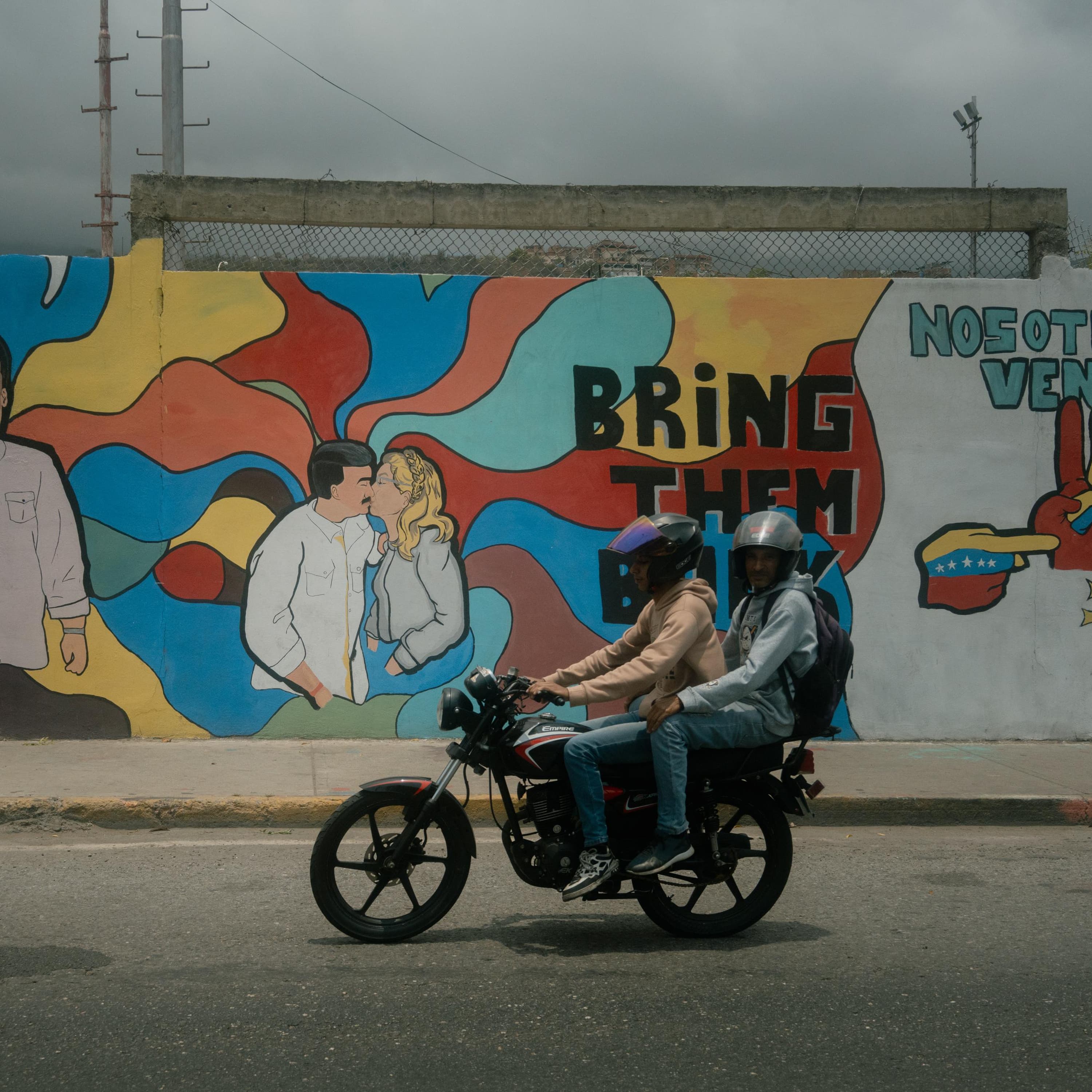
Today in Focus
Did Trump really rescue Venezuela?
00:28:16
Tom Phillips on life in the country four months after the US abduction of the former president Nicolás Maduro
Loading summary
Transcript63 lines
- [00:00]
Annie Kelly
This is the Guardian. Today. Four months on from Maduro's abduction, what next for Venezuela?
- [00:20]
Podcast Announcer
From globalization to innovation sustainability to market volatility, there's always more than one side to a story. Explore different perspectives on today's most important business and economic issues with the Flipside podcast from Barclays Investment Bank. Hear two research analysts in a lively debate and get insights from every angle.
- [00:40]
Tom Phillips
To further inform your view, listen to
- [00:42]
Podcast Announcer
the Flipside on your favorite platform.
- [00:52]
Tom Phillips
The last time I flew out of Venezuela was right at the start of August 2024, just after the disputed presidential
- [01:00]
Annie Kelly
Tom Phillips is the Guardian's Latin America correspondent.
- [01:04]
Tom Phillips
And it was a moment of real turmoil. There was a huge wave of repression that was unfolding as Nicolas Maduro tried to silence any kind of dissent to his bogus claim to have won that election. Thousands were thrown in prison, many were going underground, and journalists were racing to get out of the country. I flew out to Portugal, of all places, on one of the last flights available and we all flew out thinking, what on earth is coming next? We have arrived at Maikadia International Airport. And then nearly two years later, when I come back, the reception could not have been more different.
- [01:50]
Annie Kelly
Now, four months on from the dramatic abduction of Nicolas Maturo by US Special Forces, Tom has returned to the country,
- [01:58]
Tom Phillips
landed, stood in a very short queue, showed them my visa, breezed through immigration and couldn't quite believe that for the first time in years it had felt like I was entering a normal country.
- [02:13]
Annie Kelly
After Maduro's capture, Donald Trump promised Venezuelans an end to tyranny and a bright new future. But with Maduro's second in command, Dalcine Rodriguez, still in charge, American oil tycoons rushing in and no elections in sight, will Venezuelans get real change or is it just an illusion?
- [02:35]
Tom Phillips
Ordinary Venezuelans feel a sense of optimism, but I think alongside this optimism there is also real anxiety and trepidation about what comes next. And it's striking how so many of the interviews that I did whilst I was there end in tears, tears of nervousness about what comes next, that they are not yet fully convinced that they've escaped.
- [03:12]
Annie Kelly
From the Guardian, I'm Annie Kelly. Today in Focus, who is really profiting from Venezuela's bright new future? Tom Phillips, you are the Guardian's Latin America correspondent and you have just returned from a two week trip to Venezuela. I think it's the first time international media have been let back in after the US Audacious capture of President Nicolas Maduro in January. So first, what was it like being back?
- [03:45]
Tom Phillips
Well, it was wonderful being back, because Venezuela is a country that is very close to my heart and a wonderful place to be, despite all of the agony it has suffered over the past few years, particularly since Maduro came to power in 2013. So it was uplifting in some sense to see political activism taking place again, people coming out of hiding, hundreds of political prisoners being released. So very uplifting in very many ways, and yet at the same time troubling, because I don't think it's clear to anyone how long these changes are going to be here for.
- [04:19]
Annie Kelly
And it's kind of so much has happened since January, hasn't it, in terms of kind of world events, that it's probably worth just quickly reminding us of the events of the past few years since your last visit in 2024, when Maduro was very firmly in control. Can you just give us a quick timeline of how everything played out for Venezuela since then?
- [04:43]
Tom Phillips
So, on 28th July, 2024, there was a presidential election, which Maduro is widely believed to have lost by a landslide. And on the night of that election, many opposition activists were out on the streets celebrating because they thought that finally he was finished.
- [05:04]
Political Activist
Con el voto de pueblo quing ano.
- [05:06]
Tom Phillips
Maduro had other ideas, Clung to power, unleashed this massive wave of repression. Thousands of people were thrown in jail and effectively snuffed out any kind of street activism, political activism against his regime after that. Last year, we saw Donald Trump launch a massive pressure campaign with a huge military buildup in the Caribbean, basically saying to Maduro, you know, you're finished. He accused him of being a narco terrorist. He's not. Started bombing boats in the Caribbean. And that culminated on an extraordinary military attack on Venezuela's northern coast and the capital Caracas in the early hours of the 3rd of January.
- [05:58]
Political Activist
Late last night, overwhelming American military power,
- [06:03]
Tom Phillips
air, land and sea, was used to launch a spectacular assault to bring outlaw dictator Nicolas Maduro to justice, in which Special Forces swooped in to the Fuerte Tiuna military base, where Maduro was pulled up, grabbed him and flew him back to the US where he is now in custody.
- [06:37]
Annie Kelly
I mean, it's important to remember that there were civilians who really were on the front line of that attack afterwards, really PR'd by Donald Trump as being this amazing kind of audacious military campaign where no American was killed. Could you tell us what were some of the people that you met? What was their experience of that extraordinary night?
- [06:57]
Tom Phillips
So one of the first places I visited was a housing estate on the Caribbean coast in a Place called Cat Delamar. And we visited a housing estate that had been bombed by US troops in the early hours of that morning. One man, Angel Linares, who we met, he's a firefighter and he's seen a lot in his more than 20 years as a firefighter. He woke up at about 2am to this strange whizzing sound and then an explosion. Neighbors thought a coup was underway. Gunfire started breaking out. He thought it was people celebrating the New Year with fireworks, but pretty quickly realized something more serious was underway when the whole front of his building was ripped off. And he set about saving his mum and his neighbors and one elderly neighbor who subsequently died, who had Alzheimer's and was about 80. And Angel's mum showed us four months later. Oh, wow. That she had turned her shopping trolley into an emergency grab bag filled with her medicine and her clothes. Jesusita is her name. She is ready. And she, 85 years old, will jump out of bed, pick up her bag and take cover out in the streets in case any more American missiles rain down. My goodness. We've stopped at a quaint little beach resort about an hour's drive north of Caracas. It's a very peaceful scene. There's lovely Venezuelan music playing in the background. The waves are lapping up against the shore. And it's just incredible to think that four months ago there was this highly trained assault team sweeping in through the skies and opening fire on air defenses and buildings in the communities around us. Here and now, life appears to have gone back to normal. And the only sign that you see of Maduro, who of course is now in custody in the US are the street corner dustbins, which are, which have been branded with his propaganda. It says super moustache, a reference to Maduro's whiskers painted onto the side. And apart from that, no sign of him whatsoever.
- [09:29]
Annie Kelly
After Maduro was whisked off to the US in chains, Donald Trump, you know, he promised the Venezuelan people this new dawn, you know, an end to tyranny. Just how bad had things got for people under Maduro by the end?
- [09:43]
Tom Phillips
I've spent the last eight years covering the humanitarian and political crisis in Venezuela. And it is very hard to put into words just how bad and how distressing it has been for the people at the eye of the storm. I've attended the funeral of a three month old baby who died of malnutrition because the healthcare system had collapsed. I have watched thousands and thousands of thousands of Venezuelans flee through the borders into Ecuador and Brazil. You know, old Ladies, young men with holes in their shoes and not a penny in their pockets. They don't have water in their homes. I met another woman on this trip and she said to me, and my jaw dropped. She said, we have not had a drop of running water in my house in 21 years.
- [10:30]
Annie Kelly
21 years.
- [10:32]
Tom Phillips
It is unimaginable. And just the trauma is just constantly present. I don't know, seven out of ten interviews that I do end in tears, and it is heartbreaking and sometimes it is very hard to hold back the tears yourself.
- [10:49]
Annie Kelly
And so, you know, Maduro made things really, really hard for people in Venezuela. But what about the people that have been left in charge? How are they running the country now?
- [11:02]
Tom Phillips
So there seems to be a quiet but quite concerted campaign now to airbrush Maduro out of Venezuelan history. And I suspect that deep down, many of his allies, or perhaps former allies, the people now running the show, are frankly glad to see the back of him, to see the back of someone who had become a cartoon book dictator. That's not to say, though, that they are necessarily keen on moving the country towards democracy, because since his capture and in the wake of Donald Trump's decision to recognize members of his party, the government is now led by his former vice president, Delta Rodriguez. We've seen a lot said about the first two stages of Donald Trump's roadmap for Venezuela, which is political and social stabilization, economic recovery, and then political transition. We've heard a lot said about the first two phases, but. But very little said about the third. There is no sense that we are moving towards a genuine democratic transition, the political transition that many Venezuelans had expected on January 3 when they woke up to that stunning news that Maduro was gone. And that while they had expected the opposition leader and Nobel laureate Maria Corinna Machado to be able to come back to the country, her movement having won the 2024 election and take power. That has not come to pass. And in fact, it was Maduro's vice who took power with Trump's blessing after he was gone. And Rodriguez and her allies have also made it quite clear that they are not pushing for fresh elections anytime soon. The acting president was pushed by a New York Times reporter recently to say when there might be fresh elections. And she responded, oh, sometime.
- [12:48]
Annie Kelly
Right.
- [12:49]
Tom Phillips
But that is not to say that there has not been a significant, albeit sort of very ephemeral, political opening which has allowed people to go out onto the streets and express themselves. One of the first places I visited was a very beautiful former shopping centre that had been turned into a torture center and political prison over the last few years. And we went to see something which would have been absolutely unimaginable just a few months ago. A protest involving hundreds of people who had parked themselves on the pavement under the gaze of the police and were placing candles on the street corner to remember the political prisoners who were still inside and were writing the names in chalk on the sidewalk. Some of those names included a 16 year old girl. Those are the people who are still inside. But a few months ago, it would have been impossible for these people to be there without being arrested. There were police watching them, taking their photographs, but they were allowed to gather. They closed the road, they sang the national anthem, they called for freedom. And I was able to speak to some of the families there about the people still behind bars.
- [14:16]
Annie Kelly
You know, do they have any hope of getting their children out? Were they more hopeful that they might see their children released?
- [14:24]
Tom Phillips
There is hope in the sense that they are now able to sit there or stand there and to raise their voices and to talk to the international journalists who have now been allowed into the country about the plight of their loved ones. But I think there's also despair. I mean, we watched ambulances coming in and out of this one prison at nighttime. And I think every time the ambulance comes into the prison, they think, my goodness, has something happened to my son or my partner? And a few days after that visit, we discovered that a political prisoner in the very same prison had died under very mysterious circumstances a year earlier. And only now were authorities owning up to the fact that this person, whose mother, elderly mother, has been looking for him all over, had died within that detention center. So heartbreaking. You know, yes, there is hope, but there is also despair. And people are asking, you know, why have these people not been released yet and what will it take for them to be freed?
- [15:17]
Annie Kelly
How many have been released since January?
- [15:21]
Tom Phillips
About 700 political prisoners now have been released and about 500 are thought to still be behind bars in different parts of the country, Some as young as 16.
- [15:31]
Annie Kelly
Wow.
- [15:31]
Tom Phillips
But, yeah, of course there is absolutely hope. I mean, I met an activist called Jesus Armes who studied in the UK for a period before coming back to Venezuela to join the political fight. Was part of the 2024 election campaign and part of Maria Corina Machado's movement. He was snatched from a cafe after the election, taken to an underground jail, tortured, had a bag put over his head. With secret police trying to get information on Machado's movement and what their next plans were. And then vanished inside El Ali Coid, only to be released after Maduru was gone. So, yeah, I mean, it was very uplifting to sit down with him in a park and to talk about Venezuela's political future. Anyway, thank you for coming.
- [16:16]
Political Activist
Thank you for inviting me.
- [16:18]
Tom Phillips
So I'm back here for the first time in two years, trying to understand what is going on.
- [16:24]
Political Activist
I also want to understand what is going on in Venezuela, because right now, everything is so confusing. Of course, January 3rd happened. Of course, we are really glad. Venezuela are really glad because we saw that the dictator is right now in jail. Nicolas Mauro is a human rights violator. He's a criminal. So to see justice, it's really important for us. But the thing is that his regime is still in power because Del Rodriguez was here, number two. So it's kind of confusing. We are happy also because we see many political prisoners outside of the jail right now, including myself. But we are also very worried because we still got more than 500 political prisoners in different detention centers all around the country. We need a change. We need electoral calendar to bring back democracy to Venezuela, because right now we are still under a dictatorial or authoritarian regime in the country.
- [17:36]
Tom Phillips
Do you think like the opening? Oh, yeah, like the political opening. So, like, you being here because you were released in prison, me being here because I've been finally given a visa for the first time in two years. Is that real or is it a facade?
- [17:54]
Political Activist
Yeah, actually, this feels sometimes like an illusion, you know, because of course I'm free, and I feel great for that. Without any doubt, nobody wants to be in prison, but I still got friends in prison. You know, political activists are in prison. Innocent people are in prison. So this is not freedom. This is not a transition. Right now, the majority of time, I have members of the intelligence police of Nicolas Mauro following me, so. Exactly, exactly. So when I saw that, I knew, okay, this is not a transition. We still need to fight.
- [18:37]
Tom Phillips
It's a very strange moment.
- [18:39]
Political Activist
Yeah, really strange. Really weird.
- [18:53]
Annie Kelly
And that path to democracy is very much contingent on this very, you know, slightly surreal relationship now between the people who are in charge of Venezuela and Donald Trump and his administration. I'm really curious to know what the people that you interview, how they felt about Donald Trump and the US A lot of people.
- [19:15]
Tom Phillips
And you have to remember that Maduro lost the 2024 election by something like 70%. People, broadly speaking, despised him and wanted him gone. So, yeah, many, many Venezuelans are absolutely overjoyed and very grateful, frankly, to Trump for taking him even if quietly, they will say to you, off the record. Yeah, of course, we know that this was completely illegal and sets a terrible precedent. And we don't, frankly, trust Donald Trump. And we know he's only interested in Venezuela because of its massive oil reserves and natural resources. The Americans focus so far has been on phase one of their three step stabilization. Stabilization has meant them leaving in place the bulk of Maduro's regime in order apparently to control the security forces and the military, who don't much like Machador.
- [20:09]
Annie Kelly
Yeah. And I guess it's interesting as well how tenuous their grip on power might be if they do anything to upset Trump or they don't allow him to fulfill his ambitions, which he's been very open about in terms of getting his mitts on Venezuela's oil. Did you see any evidence of that, that kind of lust for Venezuela's oil to be spirited away to the US Is that happening already?
- [20:37]
Tom Phillips
Yeah, I mean, absolutely. Venezuelan oil is now going to the US it is able to sell it. It has been selling huge, huge amounts of Venezuelan oil. And I saw scenes that, frankly, I had to pinch myself to believe that it was really happening. On my first day there, I drove down to the airport, and the whole airport was decked out in red, white, and blue balloons symbolizing the American flag. And the airport was full of American officials waiting for the first direct flight from the US in more than seven years to arrive. I'd certainly never thought I would hear New York, New York, and Hotel California playing in that airport. Yet there they were, and there were Venezuelan diplomats saying, oh, you're very welcome here. We're thrilled to have you here. To the journalists, the US Officials came in, their message was basically, drill, baby, drill. We're here. And this is a wonderful new era under President Trump's leadership. The United States remains fully committed to Venezuela's economic recovery. Today, the results speak for themselves. Direct flights are back. Commerce is flowing. Venezuela's economic engine is ramping up, and we're just getting started. Thank you very much.
- [21:55]
Annie Kelly
That must be so surreal.
- [21:57]
Tom Phillips
It was absolutely surreal. And then a few days later, I went to the Marriott Hotel in Caracas, which has become the nerve center of the US it's basically the de facto US Embassy in Caracas now. And it is absolutely filled with a mixture of US Diplomats, officials, spies, Marines. You go down to breakfast and there are these sort of burly, tattooed guys sitting around on tables with walkie talkies on their hips, and you hear, you know, the lingua franca in the hotel is English, not Spanish. And you listen to some of the conversations, and it is Americans talking about what they are going to do with the future of Venezuela.
- [22:35]
Annie Kelly
Yeah, I mean, it sounds like something of a movie or something.
- [22:38]
Tom Phillips
Absolutely is. And who could have imagined it? And there's another nearby hotel where rooms are even more expensive. And I've spoken to people who've been there, and they say that they are seeing foreign billionaires arrive, sort of people who won't give you their surnames, they won't give you their business card, but they are obviously absolutely stinking rich. And they have come to Venezuela because they are interested in the opening of its mining sector privatizations and this economic opening that is obviously underway under this bizarre sort of joint presidency between Delsey and Donald Trump.
- [23:09]
Annie Kelly
And considering the kind of quagmire he's got himself into in Iran, do you think that there's a sense that he kind of needs his Project Venezuela to work out?
- [23:19]
Tom Phillips
Absolutely. I think from his point of view, there's a real sense among people that Donald Trump needs a win, a win, win, win. And he wants to show Venezuela off on the global stage as his big foreign policy success. And that means no violence, no internal power struggles, no coup. It means US and foreign business people being able to come to Caracas and develop oil and gas projects, mining projects, make money, money, money, without any trouble on the streets.
- [23:54]
Annie Kelly
Coming up, what will this American win mean for ordinary Venezuelans?
- [24:09]
Podcast Announcer
A History of the United States in 100 Objects is a brand new podcast from 99% Invisible and BBC Studios. Each week we're looking at a different object from across American history with a unique story to tell about who we've been, what we've built, and what we've allowed ourselves to forget. Some of these objects are well known, many are not. But all of them carry the story of how we got to this moment. Find a history of the United States and 100 objects on the 99% invisible feed, wherever you get your podcasts.
- [24:46]
Annie Kelly
So there's obviously quite a lot of people expecting to get very rich pretty quickly off this new dawn for Venezuela. But what about Venezuelans themselves? You know, what kind of conditions are they still living in? Have they reaped any of the economic benefits yet of Maduro's abduction?
- [25:06]
Tom Phillips
Yeah, absolutely. I mean, huge amounts of money are already being made. And there are wheeler dealers and fortune hunters flocking from far and wild into Caracas to make lots of money. But one day I went through a street protest being organized by teachers unions. And when you talk to them, you realize that actually, for Ordinary people, very little, if anything, has changed. People who are struggling to make ends meet, and the teachers who are earning something like 25 US cents per fortnight to work in Venezuelan schools which don't have electricity. We visited one school during our trip. We walked into the classroom, saw these lovely, enthusiastic teenagers, but they were sitting in the shadows and there were no light bulbs. And I said, well, what's going on? Why is there no light? And they said, oh, someone stole the cables. So we've not had light in this school in over a year.
- [25:55]
Annie Kelly
So it sounds from everything you've told me that there's this really kind of dizzying disconnect, really, between Trump and the government, presenting this kind of glitzy new dawn and new relationship that is going to pave the way for this beautiful future for the country and the really ongoing terrible hardship that is faced by many Venezuelans with no real solid prospect that that's going to change anytime soon.
- [26:22]
Tom Phillips
A lot of people spoke of an illusion. Other people spoke of a mirage. And it's easy to see why they say that. I guess the event that I saw that best captured that illusion was another very surreal moment where one evening the ruling party called a pop concert at La Carlota, which is the big air base right at the heart of Caracas. And it's one of the locations that was bombed on January 3rd. As the US moved in on Maduro, very sensitive military location, they decided to hold this kind of weird Glastonbury like festival on the Runway. So you had five or six stages, all this loud music, electronic music, salsa, merengue, and they were calling it the Festival of Peace. We turned up at about 2 or 3 in the afternoon, and the event had started at 9am that morning. Lots of music, lots of bands, obviously playing repeated, reportedly receiving rather large amounts of money to play there. And the one thing that was lacking was an audience. There were, I don't know, when we arrived, a few hundred people sort of dancing rather unenthusiastically around these huge stages. When one turned on state TV the following day, the event was billed as a resounding success. And the images had been shot close up so that you couldn't quite tell how many people. And it looked like there was this absolute sea of support for the government. But actually, if you went there, you saw that basically no one turned up. A mirage, a facade.
- [28:09]
Annie Kelly
Pretty telling. Thanks for all your reporting on this.
- [28:13]
Tom Phillips
Thank you. It's a pleasure.
- [28:18]
Annie Kelly
And that's it for today. My thanks again to Tom Phillips and you can read his reporting along with fantastic photography of his time in Venezuela. Theguardian.com before you go, you might have missed that. Our New York office has launched a new video podcast, Stateside with Kai and Carter. It's hosted by our colleagues Kai Wright and Carter Sherman. And each week they're going to be trying to make sense of some of the biggest stories happening right now. Their latest episode is called Hantavirus isn't the next Covid, but here's why we should worry. And that's it for today. This episode was produced by Tom Glasser and presented by me, Annie Kelly. Sound design was by Rudy Zagadlo. The executive producer was Homa Khalili. And we will be back later on this afternoon with the latest.
- [29:11]
Tom Phillips
This is the Guardian.
- [29:24]
Podcast Announcer
A History of the United States in 100 Objects is a brand new podcast from 99% Invisible and BBC Studios. Each week we're looking at a different object from across American history with a unique story to tell about who we've been, what we've built and what we've allowed ourselves to forget. Some of these objects are well, well known, many are not. But all of them carry the story of how we got to this moment. Find A History of the United States in 100 objects on the 99% invisible feed. Wherever you get your podcasts.