← Today in Focus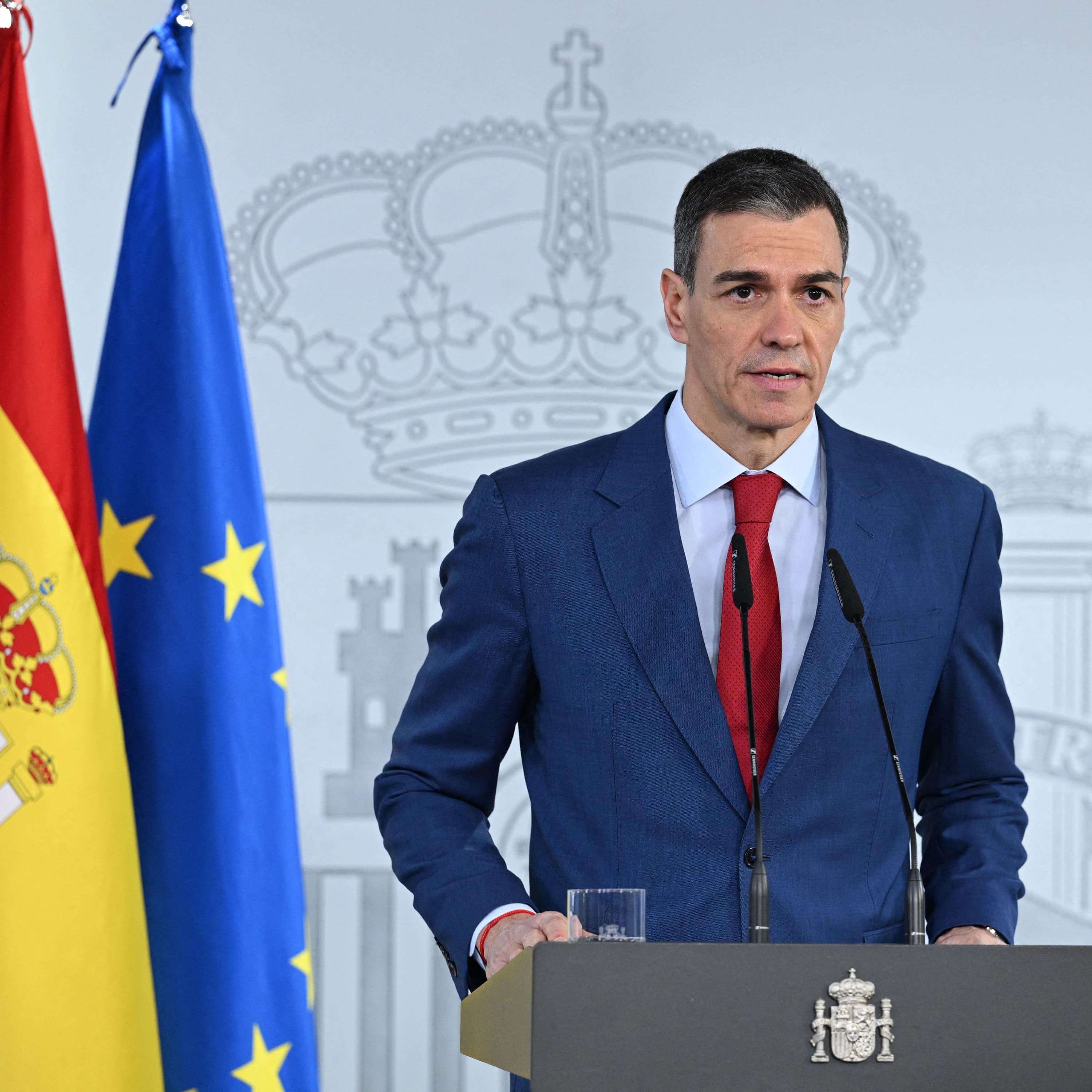
Today in Focus
‘El Guapo’: The Spanish PM standing up to Trump
00:21:29
Madrid-based journalist Guy Hedgecoe explains why Pedro Sánchez has been one of the few European leaders to challenge the US president on Iran
Loading summary
Transcript77 lines
- [00:00]
Guardian Announcer
This is the Guardian.
- [00:09]
Noshi Nikbal
Today, the one European leader brave enough to stand up to Trump.
- [00:20]
Patient
Lunch was great, but this traffic is awful. Can we stop at a bathroom? Are you all right? I keep having stomach issues after eating, like diarrhea, gas and bloating, abdominal pain, and sometimes oily stool.
- [00:33]
Guardian Announcer
Sound familiar? Those stomach issues may actually be a pancreas issue called exocrine pancreatic insufficiency, or epi. Creon may help manage epi. Creon is a prescription medicine used to treat people who can't digest food normally because their pancreas doesn't make enough enzymes.
- [00:49]
Creon Medication Voiceover
Creon may increase your chance of fibrosing colonopathy, a rare bowel disorder. Tell your doctor if you have a history of intestinal blockage or scarring or thickening of your bowel wall, if you are allergic to pork, or if you have gout, kidney problems, or worsening of painful, swollen joints. Call your doctor if you have any unusual or severe gastrointestinal symptoms or allergic reactions. Take Creon as directed by your doctor and always with food. Do not chew capsules, as this may cause mouth irritation. Other side effects may include blood sugar changes, gas, dizziness, sore throat and cough. These are not all the side effects of Creon. Call 863911 or visit CreonInfo.com to learn more. That's C R E O-N-Info.com I'm asking
- [01:18]
Patient
my doctor about EPI and if Creon could help.
- [01:26]
Noshi Nikbal
When the US and Israel audaciously attacked Iran just over two weeks ago, there was very little in the way of condemnation from Western leaders. Wary of riling Trump and careful not to jeopardize alliances, most opted to stay quiet.
- [01:43]
Guy Hedgeko
I can say we're doing everything and have done everything we can at speed to make sure that we are properly protecting our citizens. And the British working together to protect both the US and the British in joint bases where we're jointly located.
- [02:06]
Noshi Nikbal
Except for one Pedro Sanchez.
- [02:14]
Pedro Sanchez
We will not be complicit in something
- [02:16]
Guy Hedgeko
that is bad for the world and that is also contrary to our values
- [02:20]
Pedro Sanchez
and interests just because we might fear reprisals from some.
- [02:27]
Noshi Nikbal
And it's not the first time the Spanish prime minister has criticized the Trump administration. He objected to the capture of President Nicolas Maduro in Venezuela.
- [02:36]
Guy Hedgeko
President Trump seems to be the one who's saying, I'm making the decisions about Venezuela.
- [02:41]
Pedro Sanchez
Yeah, And I think this is a mistake.
- [02:43]
Noshi Nikbal
He condemned Israel's decimation of Gaza.
- [02:45]
Pedro Sanchez
It's in Israel's interest to work for peace and Today, peace means the establishment of the Palestine state.
- [02:59]
Noshi Nikbal
When much of Europe has toed Trump's line, Spain's leader has become an outlier on the world stage. How come and why now? From the Guardian, I'm Noshi Neqbal. Today in Focus, how Pedro Sanchez became Trump's fiercest criticism. Guy Hedgeko, you're a journalist based in Madrid, the former editor in chief of El Pais's English edition. Welcome to Today in Focus. Now, first things first. Who is Pedro Sanchez?
- [03:36]
Guy Hedgeko
Well, Pedro Sanchez is a trained economist. He's someone who worked his way up through the Spanish Socialist Party, and then he became prime minister in 2018. The social has become Spain's seventh PM since retirement of democracy and the first to take office after a no confidence vote. Quite soon after that, it became clear that he had a pretty progressive agenda in many areas. For example, when it came to feminist reforms or reforms to promote the rights of LGBTQ people. And he was very committed to the green economy as well. And so he started to be seen much more as a fairly strident left wing, which I suppose at the time was quite unusual in Europe.
- [04:22]
Noshi Nikbal
And for people who don't know him or what he looks like or what he sounds like, you know, if you imagine that, you know, Trump is described as sort of this orange permatan guy with the toupee, incredibly bellicose, how would you describe Sanchez?
- [04:33]
Guy Hedgeko
I suppose one of the most eye catching things about Sanchez is he's good looking. And many people would say we haven't had many particularly good looking prime ministers in Spain in the democratic era. He's very suave as well. He looks very much at ease in front of the camera. He seems comfortable when he's communicating. That sets him apart, for example, from Mariano Rajoy, his immediate predecessor, who is very awkward. Sanchez speaks very good English. He's the first Spanish prime minister to speak good English.
- [05:04]
Pedro Sanchez
Thank you very much. Good morning. I've come to Munich to meet with friends and allies.
- [05:09]
Guy Hedgeko
So, you know, on the international stage, he looks very much at ease as well. You could argue that his looks at times have even worked against him. People call him El Guapont, you know, the handsome one. And they almost use that as a weapon against him to sort of suggest that he's a bit vacuous.
- [05:25]
Noshi Nikbal
Right.
- [05:26]
Guy Hedgeko
But I think overall it probably hasn't done him all that much harm.
- [05:29]
Noshi Nikbal
So, as you've said, he's served as prime minister since 2018, been head of the country's Socialist Workers Party, Charming, suave, handsome, all that stuff. Guy how has he actually done in the job?
- [05:41]
Guy Hedgeko
Well, it all depends on who you talk to, because Spanish politics, it's so divided and so polarized. It was before Pedro Sanchez became Prime minister. And I think that has a lot to do with the reforms he's pushed through, whether it's feminist reforms or the Green transition, or, for example, being really the first Spanish Prime Minister to tackle thoroughly the issue of historical memory. In terms of the legacy of the dictatorship of Francisco Francois, he's really gone for those issues pretty head on. And that has drawn a massive backlash from the right, who suggests that he's deliberately trying to divide the country, deepening existing divisions. I think the left would say that he simply made necessary reforms. One of the issues which has really set him apart has been immigration. He has made the argument that Spain needs immigrants. Its economy, its Social Security system, its pensions will need a large influx of migrants contributing to the economy in order to sustain the Spanish state. At the beginning of April, his government is beginning a legalisation process, a mass legalization of undocumented migrants, which is expected to benefit at least half a million undocumented migrants and quite possibly up to a million or so. That obviously makes him something of an outlier in Europe, because even in the uk, Keir Starmer isn't talking about immigration in those terms.
- [07:08]
Pedro Sanchez
Some say we've gone too far, that we're going against the current. But I would like to ask you, when did recognizing rights become something radical? When did empathy become something exceptional? Spain is above all, a welcoming country and this is the path we choose. Dignity, community and justice.
- [07:31]
Guy Hedgeko
However, he has had a lot of problems, I suppose, over the last year or two years, in particular in terms of corruption scandals. There has been a judicial investigation by a judge into his wife, Begonia Gomez, into her business affairs. So far, no charges have been brought against her, and there is a feeling, certainly among many on the left that the judge who is carrying out this investigation is doing it for political motives, because so far he hasn't been able to bring anything concrete against her. But Pedro Sanchez's brother, David Sanchez, is due to go on trial in a few weeks over allegations of using his brother's influence to get a job. Also, two very senior figures in the Socialist Party are both facing allegations of running a graft scheme and they have both been in custody.
- [08:23]
Noshi Nikbal
So quite a messy political situation for him at home. And as you've said, you know, he's quite polarizing within the country itself. But Guy, just how popular is he and has he been?
- [08:34]
Guy Hedgeko
Well, the polling reveals that he's doing okay in polls. He's doing better than the opposition leader, Alberto None Fero, and he's doing better than the far right leader, Santiago Abascal as well. So he's doing okay. But what polls don't reflect is how much of a figure of hate he has become for the right. And the right believes that he's running this sort of government that's bogged down by corruption. They've been saying that he's using the National Statistics Institute, which carries out polling, and it's been carrying out these skewed polls in his favor. So they say that he's been using institutions in his favor.
- [09:16]
Noshi Nikbal
He has been making waves outside of Spain for taking pretty robust positions on global affairs over the last couple of years. What kind of things has he been saying?
- [09:26]
Guy Hedgeko
One of the most obvious issues that he's spoken out about has been the issue of Gaza. And very soon after Israel began its military response to the October 7 attacks, he was being quite vocal about warning Israel against violating human rights.
- [09:43]
Pedro Sanchez
The whole world is shocked at the image that we see coming from Gaza every day. The number of Palestinians killed is truly unbearable.
- [09:55]
Guy Hedgeko
And I think quite early on, he was one of, if not the most vocal European leader in that sense. And then in 2024, along with Ireland and Norway, the Spanish government acknowledged Palestinian statehood.
- [10:08]
Pedro Sanchez
With this decision, Spain joins the more than 140 countries that already recognize Palestine. This is a historic decision that has a single goal to contribute to achieving peace between Israelis and Palestines.
- [10:25]
Guy Hedgeko
That was before a number of other European countries followed suit. So his government liked to feel that it was taking a lead on that issue. And then that clash with Israel has really intensified. And he was actually encouraging Spanish protesters to come out onto the streets and protest against Israel last year as well. And that angered Israel even more.
- [10:49]
Noshi Nikbal
The US has carried out a large scale strike against Venezuela and its leader, President Nicolas Maduro, who has been, along with his wife, captured and flown out
- [11:01]
Guy Hedgeko
of the country on other issues. For example, when the United States carried out the military incursion into Venezuela, he and his government spoke out against that, saying that it was breaching international law as well.
- [11:14]
Pedro Sanchez
The future of Venezuela has to be decided by the people of Venezuela, of course, with the commitment of the international community.
- [11:24]
Guy Hedgeko
He's spoken out in favour of Greenland's sovereignty or Denmark's sovereignty over Greenland, and against the United States ambitions when it comes to Greenland. And also the area where tensions between Sanchez and Trump have sort of really arisen has been defense spending as a NATO country, because around the middle of last year, Sanchez refused to agree to Trump's calls for NATO members to raise their defense spending to 5% of GDP. He refused outright, said that Spain had to spend that money on hospitals and schools and so on. And that really is what seems to have riled Trump.
- [12:07]
Donald Trump
It started when every European nation, at my request, paid 5%, which they should be doing. And everybody was enthusiastic about it. Germany, everybody. And Spain didn't do it.
- [12:18]
Noshi Nikbal
Well, they didn't have the greatest relationship before the US Attacked Iran. And then you have Sanchez making even bolder statements. I mean, Guy, can you tell me about what he said about that war?
- [12:31]
Guy Hedgeko
It seems that Sanchez and his government were prepared for the eventuality of the United States attacking Iran, because they came out very soon after the attack to say that they disagree with it and they didn't believe that it was based on international law. Now, Sanchez also refused to allow the United States to use two military bases in the south of Spain. These are bases that the United States has traditionally used over the decades.
- [12:58]
Donald Trump
And now Spain actually said that we can't use their bases, and that's all right. We don't want to. We could use their base if we want. We can just fly in and use it. Nobody's gonna tell us not to use it, but we don't have to. But they were unfriendly.
- [13:13]
Guy Hedgeko
That really angered Trump. And that was where Trump spoke out and said that he was going to break off all ties with Spain, was what he said at the time, although it wasn't clear what that meant. Rather more specifically, he said, we're going to cut off all trade with Spain.
- [13:28]
Donald Trump
In fact, I told Scott to cut off all dealings with Spain. Spain, first of all.
- [13:36]
Guy Hedgeko
So that, in turn, drew a response from Sanchez, who elaborated on why he'd taken this decision, insisting that this invasion was violating international law. It had no legal basis. He Talked about the 2003 invasion of Iraq, which was extremely unpopular in Spain and drew thousands of people out into the streets. And so he really sort of took a more strident position, and that has really laid out Spain's position on this issue.
- [14:04]
Noshi Nikbal
Well, let's talk about that for a moment, because it's quite tempting to be impressed by a world leader operating with some level of moral compass. But politically, why do you think it is that Sanchez has taken such a strident stance on all of this?
- [14:19]
Guy Hedgeko
I think you can't ignore the problems that Sanchez has at home. The opposition is constantly calling for him to resign and call elections. He is struggling to keep his parliamentary majority together as well. So you could see it from that point of view. Certainly whenever he makes a sort of dramatic announcement on the international stage, the opposition is saying this is just a smokescreen for his own problems at home. But I think Sanchez does genuinely see himself now as this sort of left wing figure on the international stage. Pretty much a lone left wing figure, certainly within Europe, who is speaking out against what he sees as as a tide of radical right wing politics. He's the only leader of a major European Union economy on the political left and I think he's taking that role very seriously within Spain. He's constantly sort of reminding voters, if you don't have the Socialist Party governing, then what we will have is a radical right running the country. And he seems to have taken that argument to the international stage, saying these kind of values that I'm espousing, these left wing values, embracing immigration, embracing the green economy, embracing feminism, opposing the invasion of Iran, these are sort of left wing values. And if we ignore these, we'll be allowing this sort of radical right wing tide to wash over Europe. And he's taken that even further now, and he's sending that message across the Atlantic as well.
- [16:02]
Noshi Nikbal
And given that, I wonder how he is perceived by the rest of Europe and other European leaders, given that there is this creeping rightwards march, as we're aware.
- [16:12]
Guy Hedgeko
Well, in Brussels, I think he's seen as someone who has more influence as a Spanish leader than many of his predecessors. And so in that sense, perhaps he's taken rather more seriously in a way, perhaps also seen as something of a problem because he can be an outlier on some of these issues. On the Iran situation, that can make the position of Ursula von der Leyen a bit uncomfortable.
- [16:36]
Noshi Nikbal
We will always defend and uphold the rules based system that we help to build with our allies, but we can no longer rely on it as the only way.
- [16:46]
Guy Hedgeko
And in terms of his fellow leaders in Europe, I think they're sort of walking something of a tightrope because they're trying to maintain a good relationship with Trump, but they don't want to get too involved in this conflict. I mean, the obvious example is.
- [16:58]
Noshi Nikbal
Starmer, you're just about to preempt my next question, Guy. We do hear a lot about the fact that the UK is in a difficult spot with Trump because in security terms, it's so dependent on the US how vulnerable though is Spain to US Pressure?
- [17:13]
Guy Hedgeko
When Trump says he's going to cut off all trade with Spain, we still don't know what that means we don't even know if Trump is going to follow up on that. But also, if he did follow up on it, it's unclear what he would do, because in theory, if he was going to carry out any economic reprisals against Spain, then he would have to do so against the whole of the European Union or somehow find a way through that, and it could get complicated. So it looks as if that sort of trade punishment that he would like to mete out to Spain could be difficult to implement in terms of other areas. Diplomatically, obviously it's not great for Spain in terms of it has a bad relationship with the United States. But clearly Sanchez seems to feel that that is a risk worth taking because Trump is an unpopular US leader, certainly within Spain. I mean, a recent poll showed that three quarters of Spaniards had a negative view of him. So in that sense, this is not bad for Sanchez. But diplomatically, of course, it could create a bumpy ride. But I think the fact that Sanchez has laid out his stall so early, in a way it makes things more straightforward for Sanchez. Meloni in Italy or Starmer are sort of having to walk this delicate line where they're trying to maintain a good relationship with Trump but not wanting to get too burned by the Middle east conflict. For Sanchez, it's much more straightforward because his situation has been much clearer from the start.
- [18:37]
Noshi Nikbal
But I wonder, when it comes to Sanchez's policy itself, I mean, has it shifted at all since the war began?
- [18:43]
Guy Hedgeko
I suppose you could argue it has, in the sense that Spain has deployed a military frigate to defend Cyprus.
- [18:50]
Pedro Sanchez
La fragata Cristobal colonos proximos dias para contrivuir.
- [18:57]
Guy Hedgeko
It did so very much with the Spanish government drawing a distinction between that and supporting the Israeli and US attacks on Iran. The Spanish government there said that it was deploying that frigate because it was defending a fellow EU country. So what Sanchez has been trying to insist on is this idea that Spain is a reliable partner when it comes to NATO and the eu, but it's not willing to accept anything which might be seen as a violation of international law. And it's very keen to draw that distinction.
- [19:34]
Noshi Nikbal
Coming up, will standing up to Trump save Pedro Sanchez?
- [19:48]
Patient
Lunch was great, but this traffic is awful. Can we stop at a bathroom? Are you alright? I keep having stomach issues after eating, like diarrhea, gas and bloating, abdominal pain and sometimes oily stools.
- [20:00]
Guardian Announcer
Sound familiar? Those stomach issues may actually be a pancreas issue called exocrine pancreatic insufficiency, or epi. Creon may help manage EPI Creon is a prescription medicine used to treat people who can't digest food normally because their pancreas doesn't make enough enzymes.
- [20:17]
Creon Medication Voiceover
Creon may increase your chance of fibrosing colonopathy, a rare bowel disorder. Tell your doctor if you have a history of intestinal blockage or scarring or thickening of your bowel wall, if you are allergic to pork or if you have gout, kidney problems or worsening of painful swollen joints. Call your doctor if you have any unusual or severe gastrointestinal symptoms or allergic reactions. Take Creon as by your doctor and always with food. Do not chew capsules as this may cause mouth irritation. Other side effects may include blood sugar changes, gas, dizziness, sore throat and cough. These are not all the side effects of Creon. Call 8639110 or visit CreonInfo.com to learn more. That's C R E O-N-Info.com I'm asking
- [20:45]
Patient
my doctor about EPI and if Creon could help.
- [20:53]
Noshi Nikbal
Guy, you said that Trump is unpopular with about 3/4 of the Spanish population, but Trump in general, how has Sanchez's approach and the way that he's taken on all these different positions, how has it gone down with the public in Spain?
- [21:06]
Guy Hedgeko
The opposition has accused him of using this as a smokescreen. I think there'll be many voters on the political right who, whatever Sanchez does, they're not going to see him positively. But most Spaniards have a negative view of Trump. Most Spaniards, polls show, have a negative view of the attacks on Iran as well, and that economic repercussions of the Middle east conflict. So in that sense, what Sanchez is doing does cut across party lines. Some people are suggesting that Sanchez might suddenly call a snap election and try and capitalize on this support that he has over this international issue. I think that's unlikely. I think an international issue alone is not enough to win him an election. At the moment, his party is behind the conservatives in polls. The big question is whether in an election the left as a whole could beat the right. At the moment, it looks as if the political right would have enough support to form a new government. It would take something bigger than an international issue to swing things back towards the left in order to win an election, allow him to form a new government, I think.
- [22:12]
Noshi Nikbal
And so ultimately, Guy, are you saying that perhaps standing up to Trump isn't going to hold back the tide of the right in Europe and that Sanchez, as one of the lone left voices on the Continent might actually be due to be voted out soon.
- [22:25]
Guy Hedgeko
I think it would take something pretty extraordinary to win the next election, for Sanchez, for his Socialist party to win the next election and be able to form a new government. But it's very hard to tell what will happen between now and the next election, which in theory, you know, wouldn't be for at least another year. But Sanchez, he's a very astute politician. He's been written off on a number of occasions previously, as we've seen. This issue has given him a certain amount of political capital. I wouldn't rule him out. You never know with Sanchez. He's a survivor.
- [22:59]
Noshi Nikbal
Well, we'll keep watching. Guy, thank you so much for your time.
- [23:02]
Guy Hedgeko
It's a pleasure.
- [23:04]
Noshi Nikbal
That was Guy Hedgeko from Madrid. My thanks to him again. This episode was presented by me, Noshi Nikbal. It was produced by Ned Carter, Miles, Eleanor Biggie and Sundar Sabdi. Sound design was by Tom Glasser. The executive producer was Sammy Kent. We'll be back again with Stay in Focus tomorrow morning and in the meantime this evening you can tune in to the latest.
- [23:32]
Guardian Announcer
This is the Guardian.
- [23:42]
Patient
Lunch was great, but this traffic is awful. Um, can we stop at a bathroom? Are you alright? I keep having stomach issues after eating like diarrhea, gas and bloating, abdominal pain and sometimes oily stools.
- [23:54]
Guardian Announcer
Sound familiar? Those stomach issues may actually be a pancreas issue called exocrine pancreatic insufficiency, or epi. Creon pancrelipase may help manage epi. Creon is a prescription medicine used to treat people who can't digest food normally because their pancreas doesn't make enough enzymes.
- [24:11]
Creon Medication Voiceover
Creon may increase your chance of fibrosing colonopathy, a rare bowel disorder. Tell your doctor if you have a history of intestinal blockage or scarring or thickening of your bowel wall, if you are allergic to pork, or if you have gout, kidney problems or worsening of painful swollen joints. Call your doctor if you have any unusual or severe gastrointestinal symptoms or allergic reactions. Take Creon as directed by your doctor and always with food. Do not chew capsules as this may cause mouth irritation. Other side effects may include blood sugar changes, gas, dizziness, sore throat and cough. These are not all the side effects of Creon. Call 863-9110 or visit creoninfo.com to learn more. That's C R-O-N-Info.com I'm asking my doctor
- [24:39]
Patient
about EPI and if Creon could help.