← Today in Focus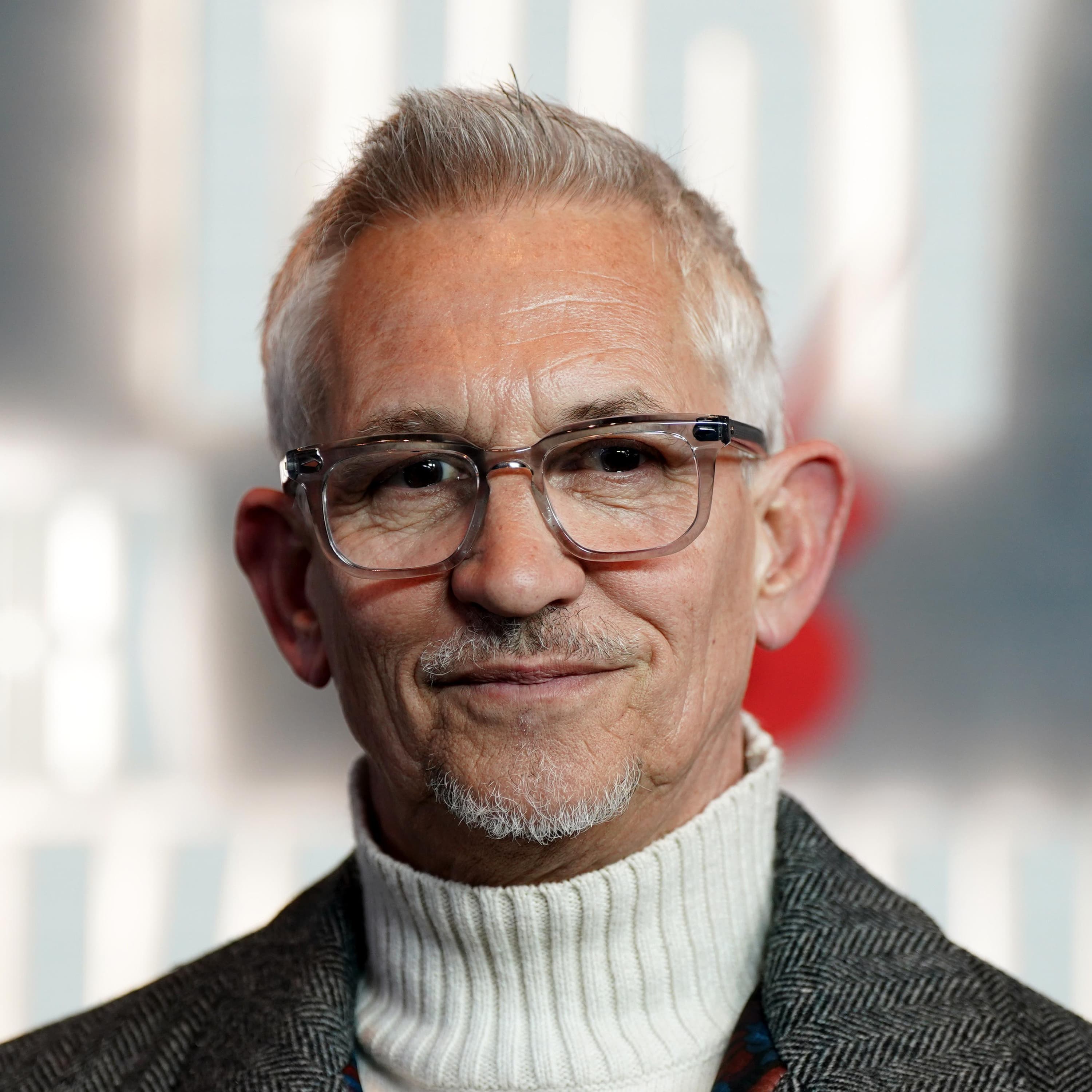
Today in Focus
Gary Lineker joins calls for wealth tax - The Latest
00:11:41
Millionaires including Gary Lineker are asking Andy Burnham to tax them more. So should the new prime minister introduce a wealth tax? And why is the idea getting more popular? Nosheen Iqbal speaks to columnist and senior economics commentator Aditya Chakrabortty
Loading summary
Transcript43 lines
- [00:00]
Aditya Chakraborty
This is the Guardian.
- [00:11]
Podcast Narrator
From globalization to innovation sustainability to market volatility, there's always more than one side to a story. Explore different perspectives on today's most important business and economic issues with the Flipside podcast from Barclays Investment Bank. Hear two research analysts in a lively debate and get insights from every angle. To further inform your view, listen to the flip side on your favorite platform.
- [00:41]
Aditya Chakraborty
Something called a wealth tax does capture the imagination and it does speak to a frustration that lots of people have. Why is it me that's always getting taxed? Why isn't other people economically, what can you do differently? A wealth tax, possibly of the super rich? I'm not going to rule things out right now. I do believe we need a greater sense of fairness. It's really interesting to see Andy Burnham's stance on this because. Because they do need to raise more money. The idea of something that is wrapped up in fancy wrapping and is called a wealth tag, I think that's for
- [01:11]
Noshi Nikbal
the birds from the Guardians today. In Focus. This is the latest with me, Noshi Nikbal. Gary Lineker has put his name to a letter calling for millionaires like himself to be taxed more, I should say. Aditya Trukravorti, you're the Guardian columnist, senior economics commentator and recently rewarded an MBE for public service for your under public understanding of economics. No, it's an honor, literally. Who. So who better to explain to us the concept of a wealth tax? Namely, let's start with why is the idea of it become so popular again,
- [01:54]
Aditya Chakraborty
it speaks to a huge frustration that I think is felt not just in this country, but across rich countries. In Britain, it's. We haven't had much in the way of growth in our wages for nearly 20 years since the banking crash. It's a very high, highly unequal economy we see in the news. And in fact our news is increasingly controlled by billionaires. We're going to go on a platform which is owned by billionaires. Right? And the wealth tax speaks that great frustration. Like what? Why do these people get to run our world? How do we get to have more of a degree of power back and how do we get some more money back? Why am I being taxed all the time for all these things? And it feels like my life is very hard and I can see these people at the top and their life's not hard. And not only is their life not hard, they're taking more and more stuff. And the wealth tax speaks to all of that.
- [02:52]
Noshi Nikbal
And so before we get to the mechanics of how it works, there's this idea that it would raise about £15 billion for the Treasury. Treasury is something that Zach Polanski, leader of the Green Party, has also put forward as something that he would absolutely back. Does that sound about right?
- [03:09]
Aditya Chakraborty
So just to be really clear, what Zach Polanski is proposing is an annual tax on people's wealth and he's saying that would raise about 15 billion pounds.
- [03:18]
Advertisement Voice 1
Okay.
- [03:18]
Aditya Chakraborty
Estimates really vary. They're all over the shop on, on this stuff machine. We haven't had a wealth tax in this country for so long that I wouldn't take any of the figures too seriously. So yes, it could be 15 billion, it could be 10 billion, be it could be more or less. I've seen independent experts come out with a figure which is closer to 10 billion, but there's no reason to believe that Zach Plansky's wrong.
- [03:40]
Noshi Nikbal
Okay, so to the question of how, what exactly would be taxed? How much, how will it work? What is Gary Lineker saying take more of? And how would the government do it?
- [03:51]
Aditya Chakraborty
So the wealth tax that's been proposed by the likes of Zap Polanski and Gary Lineker and the economist Gary Stevenson, is basically that someone comes around with a form once a year and they say, so how much have you got in assets? Which means everything from your house to your fine art, your stock portfolios, maybe a collection of wines, I don't know,
- [04:13]
Noshi Nikbal
Nisheen sounds very much like me, of course, yeah, all of these things.
- [04:17]
Aditya Chakraborty
Collection of bikes, who knows? But the, but the, but the point is they say, okay, over a certain threshold, let's say £10 million, you'll pay 2% of a levy on that. Now what I should say is that the best and most comprehensive study of wealth taxes in this country, which was done during the COVID pandemic by a group called the Wealth Tax Commission, said that is not the way to go. Right, that will raise you some money, about £10 billion was their estimate. But if you really wanted a wealth tax and you really wanted to raise cash, you go hard and you do a one time raid. So taxman all of a sudden at the stroke of midnight tonight says, okay, everyone who's got assets over a certain threshold, actually their threshold is a lot lower. It would be someone who owned a house in, in London, say, or Manchester, you pay a certain levy and then that's it, there's no more wealth taxes ever again. And they reckoned you could raise about £300 billion back up.
- [05:21]
Noshi Nikbal
I'm not sure I understand. Tell that to me again. So the more you own, the higher you pay or.
- [05:27]
Aditya Chakraborty
No, no.
- [05:28]
Noshi Nikbal
Okay. It's just a one off flat rate.
- [05:29]
Aditya Chakraborty
So the key thing about the one off thing is it really is just one time. It's done at the dead of night. You cannot plan for it. You do not have time to get your accountants and lawyers on the line. Right. You can't dodge it. And it applies to a lot more people than the supposed billionaires and multi, multi millionaires. It applies to people who might think of themselves as living perfectly ordinary, if comfortable lives in C, who will have to pay a lot more. But the other big advantage of that, they said, is you could just raise so much money, you could raise something close to £300 billion in one go.
- [06:05]
Noshi Nikbal
Wow.
- [06:05]
Aditya Chakraborty
Now that's a sizable chunk of change.
- [06:08]
Noshi Nikbal
I mean, with a huge caveat that it'd be so unpopular with a grand swathe of people who aren't, as you say, they don't consider themselves to be rich but would definitely be stung by it.
- [06:18]
Aditya Chakraborty
That's such an interesting point, Nisheen. I. Because my sense of how a lot of people feel whether they're rich or poor is they feel taxed out already. And every time a tax comes around, whether it's done by Rishi Sunak or Rachel Reeves, people go, oh God, this again. And if you look at the figures, the tax burden, as some economists call it, is at its highest since the Second World War. So we're paying more in tax as a share of our pay packets than we, than we have done for 80 years. Now there is also a big problem in this country that it is completely obvious to anyone who walks around that our public services, our public infrastructure, the public realm, our parks, our nurseries, our schools, none of them in the best of repair. Right? This is what having years of austerity does to you.
- [07:09]
Noshi Nikbal
Inequality is stark.
- [07:10]
Aditya Chakraborty
And not only is inequality stark, but the deterioration of our public realm is really, really obvious to anyone who tries to use it. So we've got to get money from somewhere. And that wealth tax people say, well, this is how you do it. I guess my kind of chief quibble with this is that they say the wealth tax is basically how you go about doing all sorts of different things. Not only do you raise a bit of money, you can you start to turn back the forces of inequality, you rein in the billionaires, but what else
- [07:39]
Noshi Nikbal
then could be done? I mean, from what I understand from passing your pieces, Aditya, that you aren't necessarily a huge fan of the wealth tax in its current proposal because you don't think it raises enough money. But for a lot of people, even the symbolism of what would be seen as an act of courage by any government to try and address the disparities in wealth would be taken, you know, I'd say, you know, pretty positively. But what are the other alternatives that you would propose?
- [08:05]
Aditya Chakraborty
A tax on wealth and attacks on the money that you make from properties and financial assets. That's all good, right? That will raise you some money, but it won't achieve all the various things that wealth tax campaigners are calling for, because for that you need to do a lot more. This is a highly unequal country. It did not just happen overnight. It happened because we sold off our public sector, we squeezed our unions, we took away working rights from people. So. So actually, if we continued on the same share of wealth and worker power that we had in the 70s, the average household would be something close to 10 grand a year better off. That's how far back we've gone. So if you want to reverse that, then what do you need? Well, you need to have more services back in hands in public. You need to have stronger trade unions, you need to have a better news and information ecosystem, which is not in the hands of tech oligarchs, which means more publicly owned media. And you need generally to have a shift in relations between Labour and capital, back towards capital, as we used to have in our past.
- [09:14]
Noshi Nikbal
And how confident are you, given about a week in the new Prime Minister and every day there's a new announcement, how confident are you that this is something that the Burnham administration, Cabinet may consider?
- [09:26]
Aditya Chakraborty
It's really interesting to see Andy Burnham's stance on this because he said to Gary, Gary Lineker, look, I'm not against the wealth tax, but I would not be sure that there will be anything marked a wealth tax that in any budget between now and the next election.
- [09:40]
Noshi Nikbal
Right.
- [09:40]
Aditya Chakraborty
I would not be betting on that.
- [09:42]
Noshi Nikbal
Okay.
- [09:42]
Aditya Chakraborty
However, what I could easily see is him doing exactly the kind of things that Rachel Reeves and Keir Starmer did before, which is they did raise taxes on wealth. You know, they did change inheritance tax, they did change capital gains tax. I expect those changes to continue because they do need to raise more money to keep our public services running. The idea of something that just is cool, is wrapped up in fancy wrapping and is called a wealth tax. I think that's for the birds.
- [10:10]
Noshi Nikbal
Really?
- [10:11]
Aditya Chakraborty
Yeah. Because I do not think.
- [10:14]
Noshi Nikbal
But it captures the imagination, doesn't it?
- [10:16]
Aditya Chakraborty
Yes. Something called a wealth tax does capture the imagination and it does speak to Frustration that lots of people have with our politics and economics. Why is it me that's always getting taxed? Why isn't other people? The thing is, is that if you're sat in the treasury and you're imagine you're a civil servant in treasury trying to do, trying to get a budget together, well, you have these taxes already that you use on wealth. Why would you not just use those taxes which are already there, and raise them, which would get you more money in, as opposed to just trying to confect a new tax, entirely new, and say, let's call that a wealth tax. For that you need an actual popular mandate. And that was not something that the Labour Party campaigned on in 2024. In their manifesto, there's no mention of wealth tax. And so it'd be very difficult for Burnham to bring something like that in.
- [11:10]
Noshi Nikbal
So make the taxes we have more efficient, make them pay better, rather than spend political capital on creating an entirely new one.
- [11:16]
Aditya Chakraborty
But what I would love to see from Andy Burnham is I'd love to see stronger trade unions, I'd love to see more public services back in the hands of the public and I'd love to see something done on media regulation so we have less of the will of Elon Musk and Mark Zuckerberg running
- [11:30]
Noshi Nikbal
things remains to be seen. Aditya Chakraborty, thank you so much for your time.
- [11:35]
Aditya Chakraborty
Thank you.
- [11:37]
Noshi Nikbal
That's it for today. My huge thanks again to Aditya Chakraborty, Guardian columnist and senior economics commentator. Thanks for listening to this episode of the latest Today in Focus. We'll be back with you as usual tomorrow morning and we'll be back tomorrow night. This episode was produced by Angus Neal. The senior producer is Ryan Ramgobin, the executive producer is Zoe Hitch and it was presented by me, Noshi Nikbal.
- [12:04]
Aditya Chakraborty
This is the Guardian.
- [12:14]
Advertisement Voice 2
When everything is moving all at once, your workforce, your tech stack, your business, you don't need more tools. You need one solution. That's why Paylocity built a single platform to connect hr, finance and IT with AI driven insights and automated workflows that simplify the complex and power. What's next? Because when everything comes together in one place, growth comes easy experience. One place for all your HCM needs. Start now@paylocity.com 1.
- [12:44]
Advertisement Voice 1
Summer smells like salt in the air and warm sand. Restore your sense of place with Pura's new summer fragrance collection. Discover transportive clean scents@pura.com Most people don't realize how much of their personal information is being bought and sold every day. Data brokers are making billions pulling details about you from public records and the Internet, then packaging and selling it, usually without your consent. That's how your information lands in the hands of scammers, spammers, even stalkers. It's why you get endless robocalls and why ads seem to follow you everywhere. That's where Aura comes in. Aura actively removes your data from broker sites and keeps it off. They also instantly alert you if your information shows up in a breach or on the dark web. But Aura goes beyond data protection. With one app you get a vpn, antivirus, password manager, spam call protection, dark web monitoring and even up to 5 million in identity theft insurance all backed by 24. 7 US based fraud support. Other companies might sell just credit monitoring or even just a vpn. Aura gives you all of it together at the same price Competitors charge for just one service. Start your free trial today at aura.com safety protect yourself now@aura.com safety.