← Today in Focus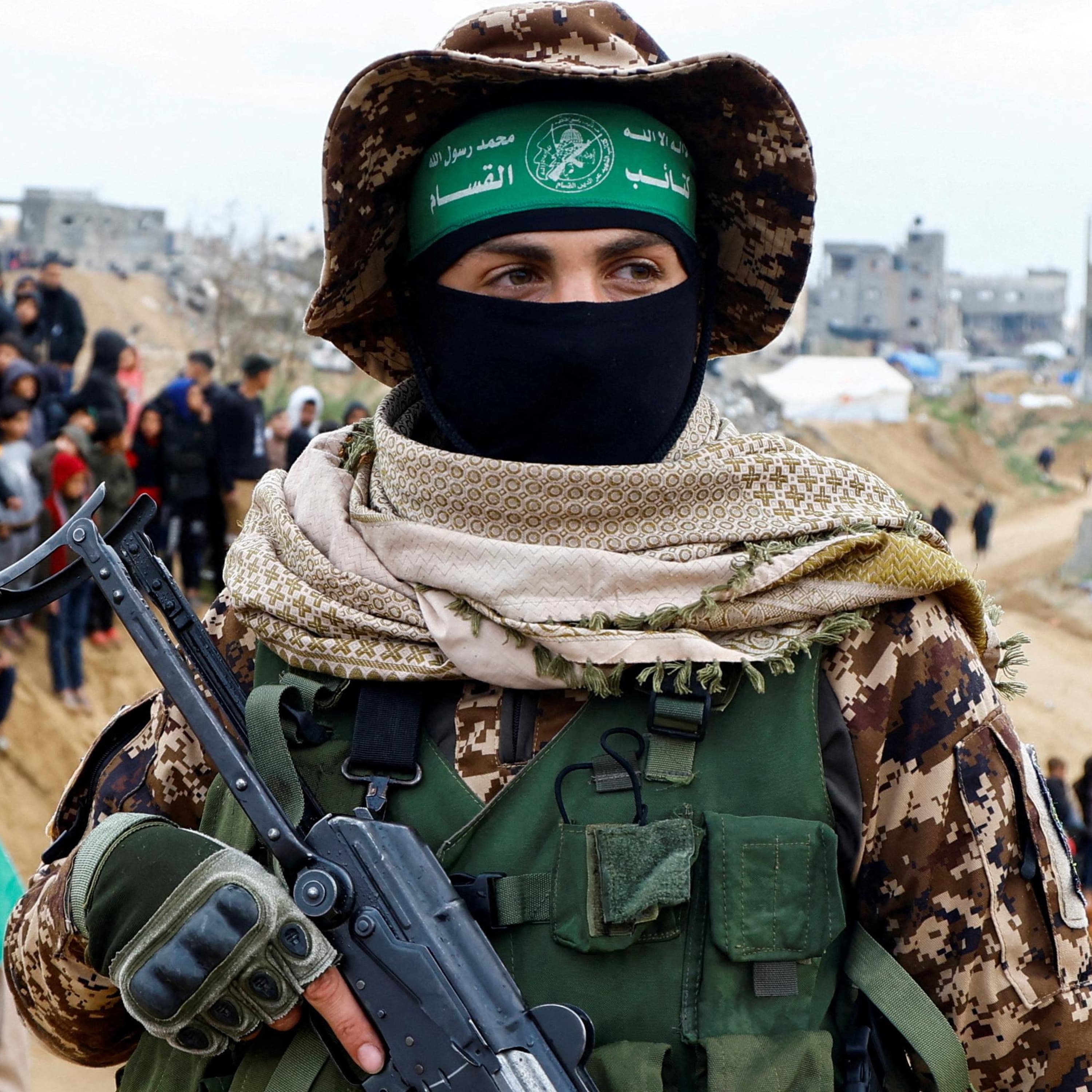
Today in Focus
Hamas agrees to Trump’s plan to disarm in Gaza – The Latest
00:10:25
Donald Trump has declared a breakthrough in negotiations over the disarmament of Hamas in Gaza and the withdrawal of Israeli forces, but Israeli government officials have voiced scepticism over the deal. Lucy Hough speaks to Julian Borger, the Guardian’s senior international correspondent
Loading summary
Transcript21 lines
- [00:00]
Podcast Host
This is the Guardian. Today in Focus is supported by Paramount. Plus. This isn't the end of a fight, it's the start of one. Lioness, the critically acclaimed original series from Taylor Sheridan, returns August 2nd only on Paramount. In the new season, hidden networks, foreign operatives and personal betrayals collide. Meanwhile, Jo walks the line between duty and family as unseen forces circle her world, leaving her to reckon with a war that now reaches into every part of her life. Don't miss the new season of Lioness, starring Zoe Saldana and Michael Kelly, with Morgan Freeman and Nicole Kidman. Streaming August 2nd only on Paramount. Plus.
- [01:06]
Julian Borger
What seems to be in the agreement is that there will be phased withdrawal in step with disarmament. But when is it going to happen? When is it going to begin? That's really unclear. And Israeli media have been pouring cold water on it, saying it's just a Hamas play for time. Netanyahu at the moment is in a bind. This is something Donald Trump is asking him to do, but he knows it's not palatable to much of his coalition.
- [01:32]
Lucy Hoffman
From the Guardians today In focus this is the latest. With me, Lucy Half. Donald Trump has announced that his board of peace has reached an agreement for the complete disarmament of Hamas, which was a key term for the withdrawal of Israeli troops groups from Gaza. Julian Borgia, you're our senior international correspondent. What do we know about this agreement?
- [02:01]
Julian Borger
Well, this has been brokered by the border peace, as you pointed out, which was set up by Donald Trump as a way of implementing the Gaza ceasefire first agreed back in last October. There was a time when Trump was hinting it might address lots of conflicts and be a sort of alternative UN but that seems to have died down and it does seem to have focused since then on the Gaza ceasefire and in particular the main sticking point of the ceasefire up to now, which has been the issue of Hamas disarmament. Israel has said that Hamas has refused to disarm and then use that really as the justification to carry on bombing to keep severe restrictions on the flow of aid going into Gaza and keep on moving their front lines forward. But now they do seem to have come to an agreement about Hamas disarmament at the same time as Israeli withdrawal. But when is it going to happen? When is it going to begin? That's really unclear. There's a two week period now where a verification commission is going to be set up to make sure that everyone is abiding by the agreement. But then there needs to be an entry into Gaza of a technocratic Palestinian administration, the National Committee for the administration of Gaza that's been waiting to take over for a long time. But to move in, they also need a police force, and that hasn't been properly trained yet. And the police force needs the support of an international stabilization force, and that hasn't begun arriving.
- [03:41]
Lucy Hoffman
So let's talk about that. So the kind of choreography of that, because Hamas say they will hand over their weapons to a body that's been created by the Board of Peace, but it is contingent on Israeli troops withdrawing from Gaza. So do we have any sense of how that will work? Because that doesn't sound like it's going to be a straightforward process by any stretch.
- [04:05]
Julian Borger
Yes, I mean, what seems to be in the agreement is that they will be phased withdrawal in step with disarmament. No one is going to do everything on their side before the other side does everything on theirs. Had various sorts of noises coming out of Hamas representatives, but that seems to been. This seems to be what's been agreed, that it will be phased, that there won't be any disarmament before or without a corresponding withdrawal. And so this has been a sticking point up to now.
- [04:39]
Lucy Hoffman
Julian, we're talking at lunchtime on Friday. So there may be developments before we air this evening, but we haven't heard from Israel yet about this withdrawal. But what is your sense about how they'll react and what that withdrawal might look like?
- [04:57]
Julian Borger
Well, the Israeli officials being quoted anonymously on Israeli media have been pouring cold water on it, saying it's just Hamas play for time. You've had the National Security Minister, Itamar Ben gvir, saying the only thing to do with Hamas is destroy them and encourage emigration from Gaza. The hard line of the five sides of the coalition have never accepted this ceasefire and can be expected to carry on opposing it. So Netanyahu at the moment is in a bind because this is something Donald Trump is asking him to do, but he knows it's not palatable to much of his coalition.
- [05:44]
Lucy Hoffman
But he was in Washington this week, wasn't he, for the first time since February, the start of the war with Iran. We don't know whether this was discussed between. Between Donald Trump and Netanyahu, but it seems striking, the timing that this has happened in the same week Netanyahu is facing these very crucial elections in October. Do you think those are playing a part in all of this? Because, as you say, domestically, he's facing pressure from the far right of his coalition cabinet.
- [06:15]
Julian Borger
Yeah, very much so. The elections loom large in Netanyahu's calculations, and any Sign of apparent weakness in the face of Hamas will lose him votes in his base and in the core, in his core support, which is mostly on the right. So he's in a difficult position now. Up to now he has tended to agree with things and then drag. The Israelis on the whole have dragged their heels. They've not allowed a lot of the aid going into Gaza, they have pushed forward their front lines. So up to now the tactic has been agree on paper and then create as many problems in the system as possible. Now.
- [07:04]
Lucy Hoffman
Right.
- [07:05]
Julian Borger
Whether this will be possible in this, in this case, for him to agree officially is really up in the air. And we don't know as we, as we've talked now, we, we don't know how he's going to play it, but he's obviously taking some time to think about it.
- [07:20]
Lucy Hoffman
Yeah, yeah. And crucial to all of this is the elections of Hamas who have appointed a new set of a new leadership. Has that been a sort of key part of why the Board of Peace has been able to come to this agreement?
- [07:38]
Julian Borger
Yeah, it does seem like that put it the other way, it's one of the reasons why it took so long to come to agreement. Hamas been saying we've got to be able to carry our elections to produce a new leadership before we can make big decisions like this. And they carried out a vote in Gaza in which a lot of the people trying to, or some of the people trying to organize that vote got bombed. And so it was a drawn out process carrying out those elections. But now they do have a new leader in Khalil Al Haya based in Doha, formerly associated with the sort of Gaza wing, a more hardline wing. He was close associate with the IHA Sinwar who launched the war in October 23 to begin with and so triggered the conflict. But Al Hayye himself is under a lot of pressure from Qatar, from Turkey, from Hamas's not backers, but his hosts. And so without with pressure from both Qatar, Turkey to come to an agreement, it looks like there was not much choice. And from Al Haya's point of view,
- [08:47]
Lucy Hoffman
and just lastly, Julian, I mean what is the situation in Gaza now? Because we know that Israel is in control of more than half of the Strip, 53% and that even in the hours after this agreement from the Board of Peace, there were Israeli strikes that wounded several Palestinian, which again just makes the this feel very fragile and very free barrel.
- [09:12]
Julian Borger
Yeah, very much so. And in fact they control more than 53%. Since the October ceasefire, they've been pushing forward their lines into Hamas controlled territory. And so it's now thought they control more than 60% and also sort of created a buffer zone beyond that through which international organizations have to coordinate with them. And it's dangerous for Palestinians to enter, so they control a lot of the territory. They have continued to impose severe restrictions on what can go in. Humanitarian aid has been going in in greater quantities than during the war, but nothing that would help Gaza rebuild. No heavy equipment, not even water pipes, anything like that, which could, in the eyes of the Israeli authorities, have a dual use, be of some advantage to Hamas. So for people, for the 2.1 million Palestinians still locked into this shrinking area, life and life conditions are still horrendous. And you know, there's no sign in this document when that is going to change.
- [10:26]
Lucy Hoffman
Yeah. Which is very, very distressing to hear. Julian, thank you so much for your time.
- [10:31]
Julian Borger
Thank you.
- [10:32]
Lucy Hoffman
That's it for today. My huge thanks again to Julian Borger, the Guardian's senior international correspondent. You can keep up with all his report over@wtheguardian.com and I really recommend today's episode of our sister podcast, Politics Weekly America. Jonathan Friedland will be discussing whether Alexandria Ocasio Cortez will be running for President in 2028. Thanks for listening to this episode of the latest Today in Focus. We'll be back in your feeds as usual on Monday morning. The latest will be back on Monday night. This episode was produced by Annie Levesper and Angus Neal. The senior producer was Ryan Ramgobin and it was presented by me, Lucy Hoffman.
- [11:12]
Podcast Host
This is the Guardian.
- [11:22]
Aura Advertiser
Most people don't realize how much of their personal information is being bought and sold every day. Data brokers are making billions pulling details about you from public records and the Internet, then packaging and selling it, usually without your consent. That's how your information lands in the hands of scammers, spammers, even stalkers. It's why you get endless robocalls and why ads seem to follow you everywhere. That's where Aura comes in. Aura actively removes your data from broker sites and keeps it off. They also instantly alert you if your information shows up in a breach or on the dark web. But Aura goes beyond data protection. With one app, you get a vpn, antivirus, password manager, spam, call protection, dark web monitoring, and even up to $5 million in identity theft insurance, all backed by 24, 7 US based fraud support. Other companies might sell just credit monitoring or just a vpn. Aura gives you all of it together at the same price. Competitors charge for just one service. Start your free trial today at aura.com safety protect yourself now@aura.com safety.