← Today in Focus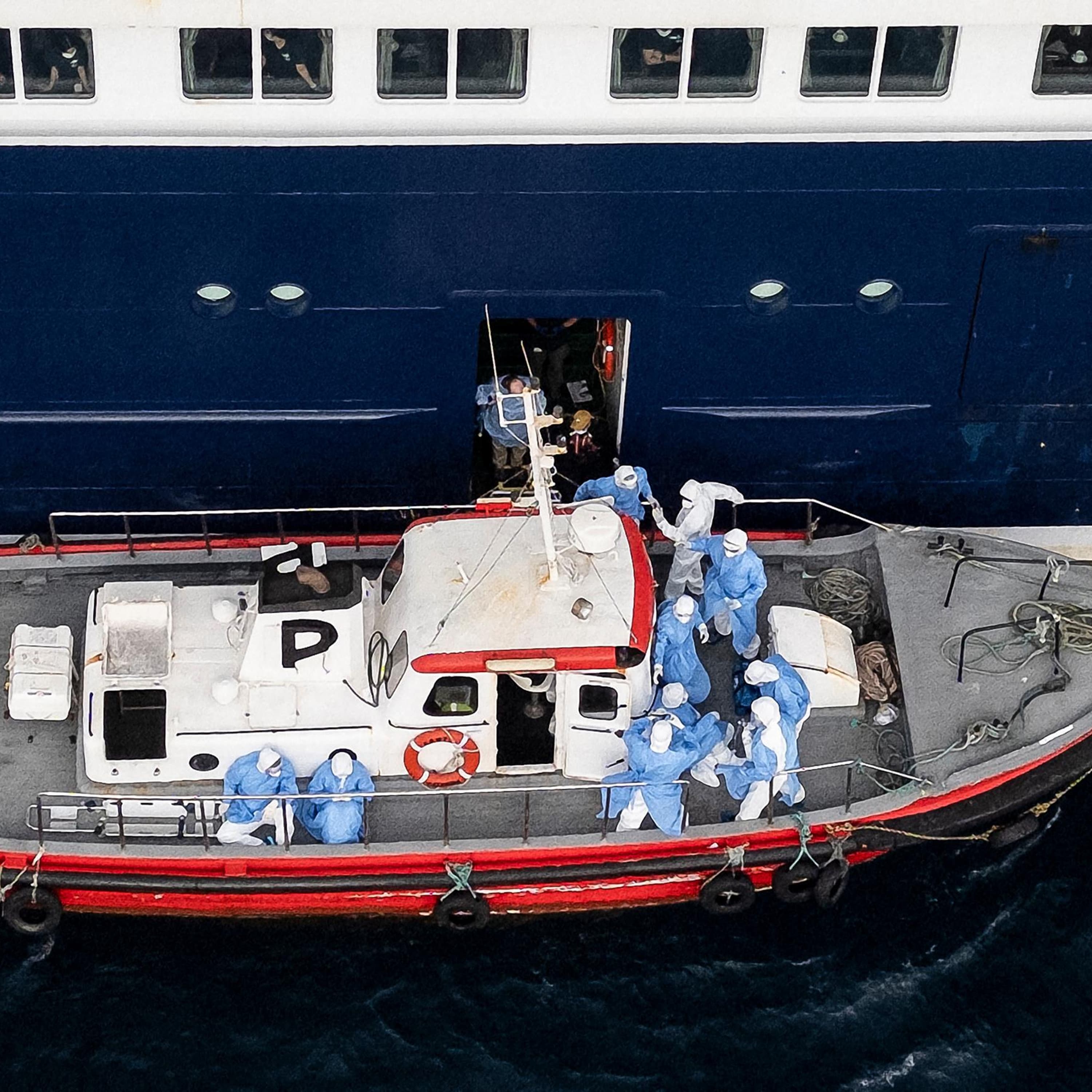
Today in Focus
Hantavirus hell: deadly virus takes hold of cruise ship – The Latest
00:10:42
Three people have died and several others have been medically evacuated after an outbreak of hantavirus on a luxury cruise ship. So how worried should we be about the spread of the virus? Lucy Hough speaks to the Guardian reporter Oliver Holmes
Loading summary
Transcript23 lines
- [00:00]
Lucy Hoffman
This is the Guardian.
- [00:11]
Oliver Holmes
The reason why everyone is really worried about this story is because we all remember what happened during COVID when there were cruise liners stranded. Three people are dead after a suspected outbreak of what's called hantavirus aboard a cruise ship. Nearly 150 people on board. It's now been confirmed as this Andes strain of this virus. A 70 year old Dutch man got sick and then eventually died. Everyone's going to be isolating in their rooms. Some of the rooms are very small, they've just got little portholes. There's going to be a lot of worry. And then of course, the ship still needs to operate.
- [00:44]
Lucy Hoffman
Three people have been evacuated from a cruise ship with an outbreak of a deadly virus. What do we know about the situation on board from the Guardians today? In Focus, this is the latest. With me, Lucy Hoffman. Well, joining me is Oliver Holmes, who is a Guardian reporter who's been across this for us. I mean, Oliver, this is just a nightmare scenario, isn't it? I was surprised to read, given that this story has been making headlines in the last few days. The outbreak of the infection of hantavirus, this virus that is transmitted by rodents but has spread on this cruise liner. Actually, people set off on this cruise liner in early April to tell me about the trajectory, what's happened since then?
- [01:27]
Oliver Holmes
Yeah, so they set off from Argentina and somebody, a 70 year old Dutchman, got sick quite quickly after that. It's clear that he got sicker and sicker and then eventually died. But the ship carried on. It's a sort of luxury cruise ship.
- [01:43]
Lucy Hoffman
Yeah, the MV Hondius, it's called.
- [01:45]
Oliver Holmes
Exactly, it's a Dutch ship and it's actually not the type of mega cruise ship that you might imagine. It's much smaller, it's got capacity for 150 people and it explores the Arctic and Antarctic regions and the Atlantic. So it's a small ship and what will have happened is that this man would have got sick and then other people will have got sick. And I think there was possibly this slow realisation that something very serious was happening.
- [02:09]
Lucy Hoffman
So, Ali, how many people have died? Because it's being reported that there are eight suspected cases on board.
- [02:16]
Oliver Holmes
So there was this one man who died. His body remained on the ship for multiple days and then his wife, who was clearly sharing a cabin with him, also started feeling sick and disembarked the boat with his body. She later collapsed and died herself. And then later another man died on the ship. And then there's also a British person who's in Intensive care, who left the ship. And there are other suspected cases on the ship as well. And some more people have been evacuated.
- [02:46]
Lucy Hoffman
Yeah, I mean, it just sounds like a sort of living nightmare. And as you say, a very small luxury cruise ship, so very cramped environment. What kinds of things have we been hearing from people trapped on board?
- [02:58]
Oliver Holmes
Well, very little, apart from this one man who is a travel vlogger and he posted this video.
- [03:05]
Travel Vlogger
I am currently on board the MV Hobbyists. And what's happening right now is very real for all of us here. We're not just a story. We're not just headlines. We're people. People with families, with lives, with people waiting for us at home. There's a lot of uncertainty, and that's the hardest part.
- [03:29]
Oliver Holmes
I will say that. The next day, he posted a photo update with him smiling, saying he's being looked after by the crew and the company that runs the ship. So I think there's this effort to make it look like the situation is under control, but we don't have a huge amount of information from the ship, but we do have information about the ship, which is that it's relatively small. It does have a doctor on board, it has a medical room. And so the ship was also quite, well, in a way, prepared for this because it's used to quite extreme situations. In general, the people who go on these cruises tend to be quite adventurous and a little bit younger than your average large, large cruise ship. To actually board this ship, the company that runs it says you need to be in quite good health. You need to be able to get into one of these little inflatable Zodiac boats to do excursions to the shore, and also walk several hours a day. But life will be very tough. I mean, I was looking at the deck plans of the different levels of the ship, and some of the rooms are very small. They've just got little portholes. Everyone's going to be isolating in their rooms. There's going to be a lot of worry. And then, of course, the ship still needs to operate.
- [04:37]
Lucy Hoffman
Yeah. And of course, it's not just passengers that have been impacted by this, but also the crew who we know, some of whom have been infected and some of whom have been evacuated and who must be working under enormously difficult conditions.
- [04:51]
Oliver Holmes
So there's a large amount of crew. Everyone needs to be fed. The ship needs to be cleaned. So it kind of gives you this sense of, you know, trapped on this ship. It's almost like this old story from olden days when people were on ship for months and months and months. And I think that's what really makes people sort of shake when they think about what's happening.
- [05:11]
Lucy Hoffman
So you said that a ship like this is already quite well set up to handle kind of medical emergencies. But we do know that there are two specialist doctors that are being transported onto the ship today. There have been these kind of extraordinary images of people, these small boats arriving at the cruise liner with people in hazmat suits, both to evacuate people and to enter the ship. What do we know about how the specialist doctors will be treating people? Presumably it's about containing the cases. And will that expedite things in terms of whether people are able to get off? Eventually, yes.
- [05:45]
Oliver Holmes
Well, hopefully the doctor on board is qualified to deal with real kind of emergency situations. But ultimately they're going to be a generalist. They're going to have to deal with everything. Right. So they've got these specialists who are coming on board now, tropical disease specialists, and they're going to know exactly, you know, the symptoms of this disease, how it spreads. I assume they're going to be advising the crew on how to clean the ship, how to monitor the people on board, and also they'll be liaising with medical authorities back on land to say these are the people we need to get off and these are the type of supplies that we might need. Because this is also going to be potentially a days or weeks long operation. There's a long incubation period for this virus. So it could be that these specialist doctors might need to advise on the long term planning as well.
- [06:38]
Lucy Hoffman
And in terms of the ship's movements, so it was traveling to Cape Verde off the coast of Africa. Right. But it was close to the Canary Islands who have refused to allow it to dock. So where is the cruise going now? Do we know? Do we have information about where it's going?
- [06:55]
Oliver Holmes
So it intends to continue to the Canary Islands. What's happened is that the local authorities on the Canary Islands heard that the Spanish government had announced that they would allow it to dock there. And they said, absolutely not. We do not want this ship with this virus on it to come and dock here. But it looks like the Spanish government have put their foot down and said, no, we're going to help these people on this ship. We're going to allow it to cruise up here. It takes about three days for it to get up there and then they're going to start assessing the people on the ship. But there have already been doctors going out to the ship and going back. And so there has Been quite a lot of work already while it's been stationed where it is.
- [07:34]
Lucy Hoffman
In terms of hantavirus itself, I would recommend people, if they want to understand more about the virus, that they listen to yesterday's episode of Science Weekly, which looks at the virus in more detail. But it is a virus that comes from rats and mice, so rodents, and is rarely transmitted from humans. But clearly in this instance, this virus that's been spreading on this ship is a very serious strain of it. What do we know about what could happen now that the medics are on board? Will that kind of speed up the process of people being able to get off?
- [08:06]
Oliver Holmes
Yes, hopefully. I mean, this. It's now been confirmed as this Andes strain of this virus, it does spread through rodents, and it is very rarely transmitted from human to human. But this particular strain, it can transmit from human to human. But the World Health Organization and other experts just keep on reminding people that the risk to the general public is low. I mean, the big fear, the reason why everyone is really worried about this story is because we all remember what happened during COVID when there were cruise liners stranded, and also just how the virus just started in one spot and then just spread everywhere. Experts don't expect that to happen with this type of virus. We've got people in cabins with each other, in very, very close quarters, and so they can, or there could be human to human transmission, but there's no indication that once it arrives into port, and especially now it's being dealt with by multiple governments, multiple medical agencies, that it would suddenly spread out into the world. There seems to be a very, very low risk of that, according to the World Health Organization.
- [09:16]
Lucy Hoffman
Well, as you say, the WHO being clear that this is not something like the COVID outbreak, so sort of damping fears of another global pandemic, but nonetheless horrifying for those trapped on board the MV Hondius. Oliver, thank you so much for your time for your reporting.
- [09:30]
Oliver Holmes
Thank you.
- [09:32]
Lucy Hoffman
That was Oliver Holmes, guardian reporter. You can keep up with his work and our live blog on this story over@theguardian.com and as we mentioned in the episode, I really recommend yesterday's episode of our sister podcast, Science Weekly on what hantavirus is and how it spreads. Before we go, I just wanted to tell you about a new video podcast that our New York office is launching. It's called Stateside with Kai and Carter, and it's hosted by our colleagues Kai Wright and Carter Sherman. Each week they're going to be making sense of some of the biggest stories happening right now. The show will feature conversations with some of the smartest thinkers and reporters, not just from the Guardian, but across the world. It's launching on the 13th of May, with episodes every Monday, Wednesday and Friday. You can find it in full video on YouTube and wherever you get your podcasts. That's it for today. Today In Focus will be back in your feeds as usual tomorrow morning. The latest will be back tomorrow night. This episode was presented by me, Lucy Hoff. It was produced by Sam Grouet. The senior producer was Bryony Moore. The lead producer was Zoe Hitch. This is the Guardian.