← Today in Focus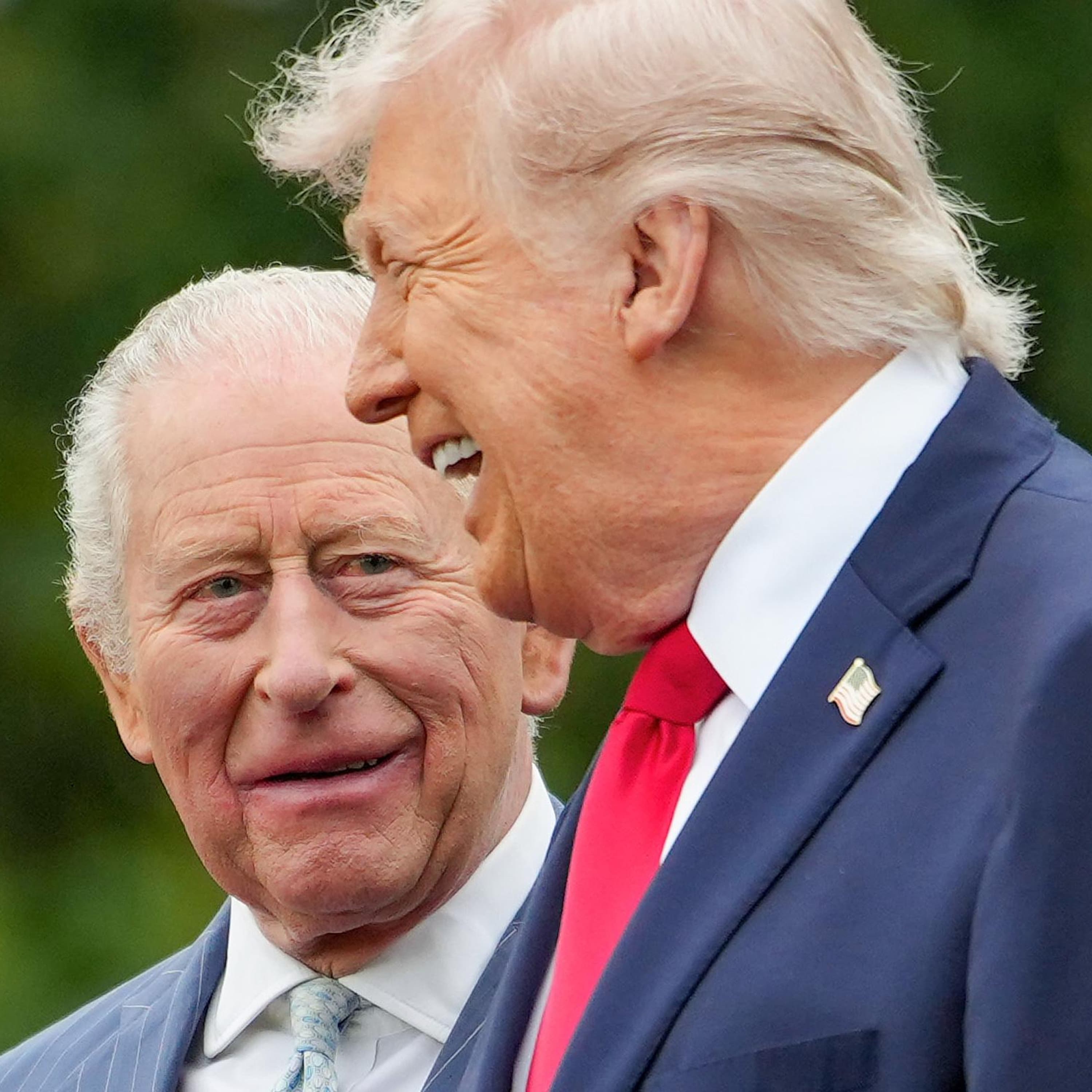
Today in Focus
Has King Charles salvaged special relationship with Trump? – The Latest
00:15:20
It was a historic day for King Charles as he became the first British monarch to address a joint session of Congress in 35 years. Helen Pidd speaks to the Guardian columnist and host of Politics Weekly America, Jonathan Freedland
Loading summary
Transcript39 lines
- [00:00]
Jonathan Friedland
This is the Guardian. They do go a bit weak kneed at the sight of a monarch. It's that notion of history. Remember Americans, history is quite short.
- [00:18]
King Charles
The Founding Fathers were bold and imaginative rebels with a cause. 250 years ago, or as we say in the United Kingdom, just the other day, they declared independence.
- [00:32]
Jonathan Friedland
It was quality stuff, coded, but not that coded by royal standards. It was actually pretty direct, this visit and the rave reviews he's getting, the ovations, the laughter at the White House will represent a big moment for him in his own life story.
- [00:47]
Helen Pitt
A historic day for King Charles, sent to Washington to salvage the ever shakier special relationship. There were jokes, there were digs. The supposedly apolitical monarch even appealed to Trump on NATO in Ukraine. But was the President listening to what the King was really saying? From the Guardians today In Focus, this is the latest. With me, Helen Pitt. Joining me today is Guardian columnist Jonathan Friedland, who's also the host of our Politics Weekly America podcast. Lovely to see you, Jonathan.
- [01:17]
Jonathan Friedland
Good to be with you.
- [01:18]
Helen Pitt
So Tuesday was a pretty historic day for King Charles. He was the first British monarch to address the US Congress since his mum 35 years ago, when the first George Bush was in the White House. We're going to get to that speech a bit later, but let's start with his, I'd say more of a barnstormer of a speech, the one that he gave at a very lavish dinner at the White House. I genuinely laughed, I think five times while I was watching it. It was, it was sort of Notting Hill meets the Darkest Hour. A lot of subtext and also a lot of jokes. What did you make of it?
- [01:50]
Jonathan Friedland
Yeah, it was a chance for King Charles stand up. I mean, it was his Washington debut of his comedy routine and it went down extremely well. I mean, they were very well judged jokes.
- [02:00]
King Charles
You recently commented, Mr. Mr. President, that if it were not for the United States, European countries would be speaking German. Dare I say that if it wasn't for us, you'd be speaking French.
- [02:14]
Jonathan Friedland
You know, the speechwriters at the palace, I've thought this for a long while, are really the best in the uk, I think better than any politician has. And that includes the gag writing. It was quality stuff and it played on the idea that he is this historical figure and his audience will have thought of, you know, his great, great, I think he said five great grandfather George III and the, the character from Hamilton. He was sort of playing that, in a way, you know, with these references, as if the 18th century had only just happened and so playing into leaning into the fact he is 77 and that he represents the old world and that the Americans who broke from Britain, they have a kind of nostalgia, they can, you can tickle their tummy with jokes about the, the royal past. Yeah.
- [03:03]
Helen Pitt
And there was one bit where Charles dared to make a joke about Trump's plans to build this fantastic new ballroom in the East Wing of the White House.
- [03:13]
King Charles
And I'm sorry to say that we British, of course, made our own small attempt at real estate redevelopment of the White House in 1814.
- [03:25]
Helen Pitt
For those whose American history isn't great, what was he getting at?
- [03:27]
Jonathan Friedland
Well, there was a war between Britain and the United States and it did culminate in British forces burning down the White House. And that is still remembered in some quarters. And so he was nodding to that. And it was just those jokes that appear to be self deprecating in which, you know, he's having a poke at his British forebears for daring to burn down the White House, but really having a little sly dig at what is controversial in the United States, which is Donald Trump's rather vain plan for a ballroom in, you know, to glorify his own image. And they were. The jokes all had that quality all the way through where, you know, he. A reference to the fact that his mother had had to be, you know, charged with resetting, putting the special back in the special relationship after there'd been a war in the Middle East. He was referring to Suez in 1956, but he said, you know, 70 years on, who could imagine such a thing happening now? And, and it's just that, that deft ability that he had, I thought, which was to, yes, name the elephant in the room, but to do it in a light enough way that everyone could laugh and join together rather than being pull.
- [04:38]
Helen Pitt
Yeah. And he, by the time he stood up at the dinner, he'd already had to deal with a few curveballs from Trump, who had given his own speech. And the U.S. president put Charles on the spot a little bit, didn't he, when he raised what Trump called. And what a euphemism this is. A little Middle east work, the war in Iran.
- [04:55]
King Charles
And we're never going to let that opponent, ever. Charles agrees with me even more than I do. We're never going to let that opponent have a nuclear weapon.
- [05:03]
Jonathan Friedland
Yeah. I mean, a massive violation of protocol. Every British Prime Minister knows, for example, that what is said in the audience with the monarch is utterly confidential. Must never get out. That's been followed by British Prime Ministers and It's been followed by American presidents, that convention, and it enables the monarch to speak very candidly. And we're only now beginning to discover that the Queen really was, you know, quite focused in her political comments to world leaders, but knowing it would stay in the room. Of course, the one person you can't trust with a confidence of any kind is Donald Trump, who immediately then goes and blabs it. And I think that could have been very awkward for the King. I think where he's lucky is people will assume, you know, what Donald Trump hears, what he wants to hear. He probably exaggerated what Charles said to him, but he may be more guarded in their private conversations from now on.
- [05:57]
Helen Pitt
Yeah. And remind us, why is Charles there anyway?
- [06:00]
Jonathan Friedland
Well, it's the 250th anniversary of the.
- [06:02]
Helen Pitt
The semi quincentennial anniversary, as Charles put it.
- [06:05]
Jonathan Friedland
Yeah, he did. And again, leaning into that image of the sort of quite fust. Older, more formal Britain and sort of playing on that role. 250 years since the Declaration of Independence, of course, when the United States broke from Britain. And so the running gag through the whole visit has been, well, we're still a little bit annoyed with you for leaving us, but we've got over it. And therefore that's a model for our whole relationship. We can have these differences of agreement. The whole relationship began with a difference of opinion and we've got over it and had a good relationship anyway. Which is a very timely message for when the British government refusing to go in with the war in Iran and on Iran, is at odds with the American government in a way. Here's the King to say, that's been our whole history all along, from the beginning, and it's okay.
- [06:53]
Helen Pitt
Yeah. And so it seems that this visit is basically yet another attempt to shore up the fated special relationship which it seems even our own new ambassador to Washington, UK Ambassador, doesn't even believe in. He was caught on some kind of hot mic from some school children, I think, according to the ft, saying that the real special relationship that the US have is with Israel and not the uk.
- [07:15]
Jonathan Friedland
Yeah, I mean, terrible timing from the point of view of the royal visit. Somebody leaked that, obviously trying to cause trouble, because it was a while ago, I think it was in February that the new replacement ambassador, the replacement of Peter Mandelson, made these remarks. I suspect what he was saying, not very diplomatically, was if you actually think about military cooperation, now the Israelis and the Americans are working closely, hand in glove, more than any two countries, I think probably ever before in The Middle east, in the war in Iran and therefore that's more special. But I think again, such is the separate, distinct category a monarch is put in. I think in a way the American political class will look past that because they, they treat Charles differently. If this was Keir Starmer coming and now those remarks had surfaced, that would have been trouble. But instead it's people are prepared to put all that aside. And as our colleague David Smith wrote, they do go a bit weak kneed at the sight of a monarch. And he's the first British king. Of course, he' mother did it to speak to Congress. It's that notion of history. Remember, American history is Quite short, it's 250 years old. Notice how Charles played on that. Said this happened 250 years ago, or as we put it in Britain just the other day, it's that idea that America knows it's not that long established a country. It feels like an infant on the world stage compared to Britain or France. And so there is a kind of deference even to a visiting British monarch. And we've seen this week why that is such a powerful weapon in the diplomatic armoury.
- [08:52]
Helen Pitt
And so the speech at the White House dinner was only the second one that Charles gave on Tuesday. The first one was to Congress, which is historic for reasons that we've already mentioned. And even though he, as the monarch is supposed to stay out of politics, there was kind of, you would say, potentially a thinly veiled plea for the US to return to its traditional values when he was discussing the importance of NATO and the defence of Ukraine. How significant do you think that was?
- [09:17]
Jonathan Friedland
I thought that was very significant, particularly by nature, naming Ukraine now, usually the royal style, like that reference to the past is. Is sort of elusive. It just sort of nods to something where you work out.
- [09:29]
Helen Pitt
Yeah.
- [09:29]
Jonathan Friedland
What it might be.
- [09:30]
Helen Pitt
You need to be able to speak British.
- [09:31]
Jonathan Friedland
That's right. And Royal British, which is a separate dialect.
- [09:34]
Helen Pitt
A subtext. Of a subtext.
- [09:36]
King Charles
Yes.
- [09:36]
Jonathan Friedland
Where you have to really read between the lines. And for example, there was a reference to the victims of Jeffrey Epstein, which I think most people, it would have passed them by. But it was briefed afterwards that. That there was a line in there about those who suffer from, you know, bad things that happen on both sides of the atl. So normally it's extremely coded, but on the contrary, with Ukraine, it was named. It's very specific where the King spoke, as if this was absolutely a shared cause. In fact, it isn't. There are plenty of Republicans who are. Who've gone very cold on aid to Ukraine, but he put it right back on the agenda. And I also thought there were even again coded, but not that coded references, even domestically. And there was one passage where he talked about the importance of Magna Carta and how that has been cited in over 160 Supreme Court judgments, especially he said, those that relate to checks and balances on the power of the Executive. Democrats in the hall got the message, leapt to their feet, applauded, thinking here is the King of England, of Great Britain, of the Commonwealth, who is joining the no Kings movement in America. The irony, but the irony of it, by siding with the idea that Donald Trump, the executive, the president, cannot be a king. So by royal standards, it was actually pretty direct.
- [11:01]
Helen Pitt
And you mentioned the rather oblique reference actually to the Epstein case. What Charles actually said was that both the UK and the US support victims of some of the ills that so tragically exist in both of our societies today. I mean, it's probably not a surprise that he wasn't going to name Epstein, given his own brother's well documented relationship with the late sex offender and indeed Trump's own relationship with him. I mean, do you think that that was still quite a bold move because when he was arriving in the US he was under quite a lot of pressure, him and Camilla, to actually meet with some of Epstein's victims.
- [11:33]
Jonathan Friedland
Yes. And they've said that there are sort of legal reasons why they can't really do that. I'm not so sure about that. But when I heard that line, I did picture those speechwriters in Buckingham palace sitting around with officials. And I suspect that's the diluted version. We heard that there was probably one originally that was much more unmistakably about the Epstein victims. And this became so general. I mean, it really could be the victims of drug addiction or poverty or homelessness. It could be anything ills that exist in both our countries. So that felt to me like a very carefully sort of lawyered and diplomatic version of it. But it was something I think he probably could have gone a little bit further.
- [12:17]
Helen Pitt
And so we're talking on Wednesday, day three of this four day visit. What else is in store for the King and Queen, Camilla?
- [12:23]
Jonathan Friedland
Well, they're going to visit Virginia, which is obviously where a lot of this history happened, the colonial period and the Independence War. And then he's going to go to New York, various commitments there, unclear whether he's going to have a one on one meeting with the Mayor of New York. It would be fascinating if that did happen. You know, the self described socialist mayor of New York, Zoran Mamdani, figure of the left, increasingly the global left. You could imagine the thinking behind that if it did happen, which would be, look, he's met Donald Trump, who is obviously for people back home in Britain, for many of them, a hate figure associated with the right, with the authoritarian right, nationalist, populist right. How do we balance that? Well, what better way than by meeting with a figure of the left in Zoran Mamdani so that he would be able to come back if this were to go ahead and say, look, this was not a party political thing or an ideologically one sided thing. I met figures from the left and right in the United States. The palace are very careful to make sure the king maintains this sort of equipoise is between left and right, that he's just a figure of the centre as they see it and that you could imagine that being the thinking. I think one other subtext of this whole visit, of course, we're talking about repairing the relationship between Britain and America. We've talked about Starmer and Trump. The other dynamic at play here is about Charles and his mother. That Charles for a long time was just waiting to take over this job and inevitably was therefore in the shadow of Queen Elizabeth, Elizabeth ii. This visit and the rave reviews he's getting, the ovations, the laughter at the White House speech will make him feel that he has, I think at last emerged as a big figure in his own right, the equal in terms of just doing the job of his mother, in terms of just this diplomatic and smoothing out ruffled feathers. I think this will be a big moment for him. He's 77. He hasn't yet got to be the king on the world stage really until now. And the fact that people like us are saying it's gone pretty well will represent a big moment for him in his own life story.
- [14:33]
Helen Pitt
Definitely. Jonathan, thank you so much.
- [14:35]
Jonathan Friedland
Thank you.
- [14:36]
Helen Pitt
That's it for today. My thanks to Jonathan Friedland. You can find all of our coverage of the state visit@theguardian.com and while I've got you, do listen to this morning's episode of Today in Focus where Nasheen talks to our US Tech correspondent, Blake Montgomery about the future of Apple after Tim Cook. Thanks for listening to this episode. Episode of the latest Today in Focus is back tomorrow. The latest is back tomorrow night. This episode was presented by me, Helen Pitt. It was produced by Bryony Moore and Nicola Alexandru. The senior producer was Ryan Rangobin and The lead producer was Zoe Hitch.
- [15:13]
Jonathan Friedland
This is the Guardian.