← Today in Focus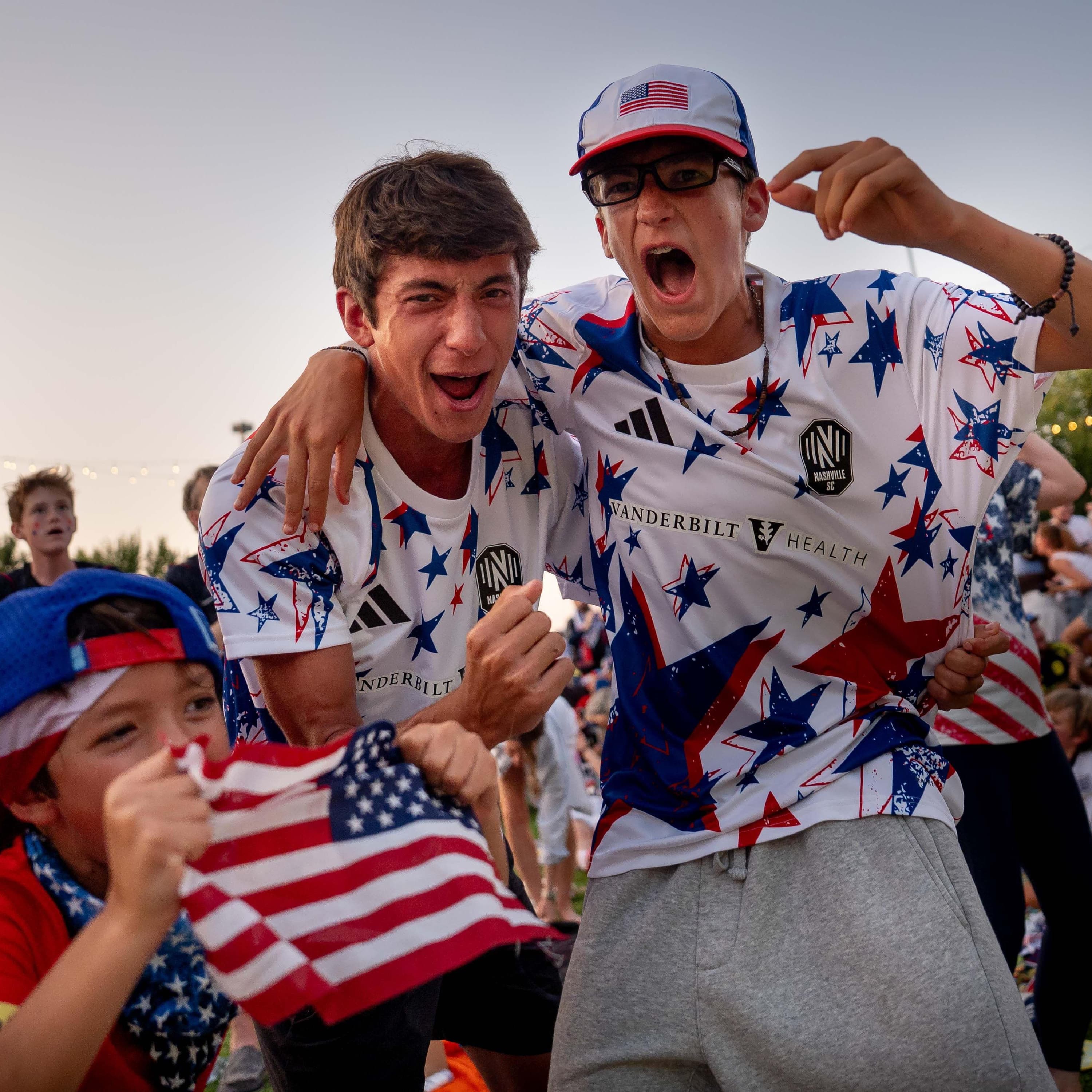
Today in Focus
Has the US finally fallen in love with football?
00:26:20
Has the success of the US men’s team – and hosting the World Cup – finally made Americans fall in love with football? With Guardian US soccer correspondent Jeff Rueter
Loading summary
Transcript83 lines
- [00:00]
Jeff Rutter
This is the Guardian.
- [00:09]
Helen Pitt
Today, how Americans fell in love with football, even if they still insist on calling it soccer. From globalization to innovation, sustainability to market volatility, there's always more than one side to a story. Explore different perspectives on today's most important business and economic issues with the Flipside podcast from Barclays Investment Bank. Hear two research analysts in a lively debate and get insights from every angle.
- [00:44]
Jeff Rutter
To further inform your view, listen to
- [00:46]
Helen Pitt
the Flipside on your favorite platform. For a long time now, most Americans have not really got the world's most popular game.
- [01:03]
Jeff Rutter
Guess what starts the World Cup?
- [01:05]
Helen Pitt
You excited?
- [01:06]
Jeff Rutter
Not really. Hey, dad, how come you never taken us to see a soccer game? I don't know. The Continental Soccer association is coming to Springfield. It's all here. Fast kicking, low scoring, and ties. You bet. Let's just be honest. The reality is, when the World cup is over, soccer is not going to be a dominant sport in the United States. Boring. Come on, you Schnorrs, do something.
- [01:34]
Helen Pitt
But with a home World cup in full swing, some Americans at least are being infused with the spirit of football.
- [01:44]
Jeff Rutter
People love soccer. They just don't know it yet. And the thing is, we have good players now. We didn't even know we had good players.
- [01:52]
Helen Pitt
Okay? Their chants need a little work because
- [01:55]
Jeff Rutter
we support the U.S. the U.S. the Usw, and that's the way we like it. We like it. We love it.
- [02:03]
Helen Pitt
But finally, it seems the USA is waking up to the majesty of the beautiful game.
- [02:10]
Jeff Rutter
But for the United States of America, the dream continues, Their World cup ambitions very much alive.
- [02:27]
Helen Pitt
From the guardian, I'm helen pitt. Today in focus. Ole, ole, ole, ole. Usa. Jeff Rutter, welcome to Today in Focus.
- [02:42]
Jeff Rutter
Hi, Helen. Thanks for having me.
- [02:44]
Helen Pitt
So you're a reporter at the Guardian and your official title is Soccer Correspondent, which of course for us Brits is Football Correspondent. Can you just start by telling me, when did your love for the beautiful game begin?
- [02:56]
Jeff Rutter
I'm very fortunate to have grown up in a rare sort of 1990s American soccer family. My aunt was a goalkeeper who would often advance deep into state tournaments in Minnesota, but usually would run into shootouts and lose to Brianna Scurry, who went on to be the starting goalkeeper at the 1999 Women's World Cup.
- [03:13]
Helen Pitt
Oh, wow.
- [03:17]
Jeff Rutter
At that point, I vividly remember faces painted and everyone cheering for my aunt's old rival, who obviously then becomes a national and frankly, international hero in her own right for her exploits against China in the shootout. So just stuck with it from there and kind of harbored an interest. Was Able to follow along with the sparse sightings of Ferguson's United and Wenger's arsenal throughout the 2000s. A little bit of Champions League, and then Major League Soccer picks up in earnest after David Beckham arrives, and it's a little easier to find something closer to home.
- [03:46]
Helen Pitt
And you grew up in the magnificently named St. Cloud in Minnesota.
- [03:50]
Jeff Rutter
That's right.
- [03:51]
Helen Pitt
I confess I've never been, but I'm imagining it wasn't a major footballing hub when you were growing up.
- [03:56]
Jeff Rutter
No.
- [03:57]
Helen Pitt
What did your friends think of you? Were they like, yeah, he's got this, like, sort of weird, esoteric hobby. We don't get why he's into it.
- [04:05]
Jeff Rutter
You know, I actually, it's funny, I was more interested in the arts, the performing arts, the written arts, and that was not part of my grade's pack of interest. Everyone was kind of disparate, but no one was really going into theater, speech, writing, all these sorts of things. So I was already a little bit on the periphery. And then when you throw in soccer, it's just like, okay, I'm just. I don't even know where to begin with this guy. So it's very funny now, you know, reconnecting with classmates, to your point, and they're just like, you can do that. That's the whole job is you just write about soccer and that's all you do. And they just. They still can't quite conceptualize.
- [04:37]
Helen Pitt
Yeah. What was the state of football in the US at that point in time?
- [04:40]
Jeff Rutter
Ramshackle would be an understatement, I think. I would say there was a point in the mid aughts where it did feel like Major League Soccer was going to crater. There wasn't terrible public interest after its initial launch in 1996, but soccer really benefited from the American broadcast expansion into streaming, with greater diversity of cable channels as well, where eventually live programming. You've got baseball, basketball, football. Those are always the most expensive broadcast rights in the United States. But soccer was something that was on midday because of the time difference with Europe. It was something where there were so many different pockets of it, there would be a natural audience for it in a nation of immigrants. Right. And so I think that it just grew and grew its foothold on the back of broadcasting.
- [05:21]
Helen Pitt
And what is it about football, our football, that Americans don't quite get?
- [05:27]
Jeff Rutter
That's a really good question. And I think that it's. It's more to do with the sports that they grow up with. Like, you know, Mauricio Pochettino has always said this thing where, you know, in Argentina, in England, around the world, most of the place, the first place that a young person, a child will feel a ball is at their feet. Right. Well, in America, it's in your hands. Right. And so you're very used to, all right, baseball, you throw it. Football, volleyball, you bump it over the net, whatever the case may be. And so there's that component of it. It's just a very different style of sport. There's also the continuous play model, which is now being hampered with the hydration breaks at this World Cup.
- [06:00]
Helen Pitt
But yeah, well, we're going to get to. As we should.
- [06:03]
Jeff Rutter
They like being kind of cued in to say, this is a big moment. This is third down in American football and this is big. We're the bottom of the ninth. In baseball, it's the fourth quarter of this game, whatever. We have these sort of like stage setting moments in our games. Whereas in soccer, once you know the sport, they're there, they're there aplenty. But for the average consumer, you just see the clock continue to go and go and go until it stops at 45 plus something. Right. Or 90 plus something. So I think that that makes it a little bit more of a barrier for entry, possibly.
- [06:31]
Helen Pitt
And I've also heard Americans complaining about matches that end nil. Nil, which is basically impossible. Right. In American football or in baseball.
- [06:41]
Jeff Rutter
Yeah. In baseball, they'll just keep playing until every player has tried to throw a ball and then they'll make up new rules so that the manager has to go out because they just refuse to let ties happen. Right. And in hockey, there's a shootout, so you at least award a point. Football to your point, you play overtime, and there's maybe one tie a year at most in the entirety of the NFL. So that's a foreign concept to them. I think that they don't understand the scoring structures. But I will say I think that it's getting a lot more sophisticated over time. The exposure to soccer. Now, like I said, since the 2000s, you have generations, plural, that have actually grown up with it being seen as a viable sort of fifth sport, if you will, for major professional sports, men's or women's, in the United States.
- [07:25]
Helen Pitt
So the World cup began in June against a very contentious political backdrop that we will get to in a minute, but on a level of 1 to 10. How pumped were Americans about this World Cup? Or was it more of like a shrug?
- [07:39]
Jeff Rutter
It really depended who you talk to. Right. And I think that by and large, there's just Too much entertainment in the United States in particular, to really focus on any one thing until it's actually happening. Right. For example, the NBA Finals was still ongoing when Mexico and South Africa kicked off the tournament. And even when the United States opened its tournament against Paraguay, there was a lot of the country that was still really focused on whether or not the New York Knicks would win for the first time in a quarter century, for example. Right. And so the general sports public shifted over after the Knicks won that championship, and it became a much bigger deal. I think that there was also some reluctance because a lot of Americans knew, yes, Lionel Messi and Argentina would be big, England would make a run. Spain, Portugal, France arrived in good form, but the United States, very few people knew what to expect. When you hear the U.S. men's National Team hasn't advanced beyond the quarterfinal since 2002. They haven't advanced beyond the quarterfinal since 1930. They haven't. All these sorts of facts. It's just, okay, well, they'll have a couple of games and then they'll lose, and then I'll just tune in for the final. So there might have been a little reluctance to join before that, but I think they've really gotten there since then, and the referee has brought the match to a conclusion. USA 4, Paraguay. The United States of America, the dream continues. Their World cup ambitions very much alive. USA 2, Bosnia and Herzegovina, nil.
- [09:03]
Helen Pitt
And this time, they are three to the final 16. They face Belgium tonight. What has been behind their success?
- [09:10]
Jeff Rutter
Midway through the World cup cycle in 2024, the US made a coaching change. They fired the predecessor, Greg Burholter, who had led them in Qatar in 2022, and then replaced him with Maurizio Pochettino, who is an Argentinian who previously had coached Tottenham Hotspur, Chelsea, Espanyol.
- [09:25]
Helen Pitt
So a big fish.
- [09:26]
Jeff Rutter
Yeah, yeah, a big fish, certainly. And somebody that would be expected to get this team to play to a higher standard than it had before.
- [09:34]
Helen Pitt
And is there a standout player in Team usa? Like, do you guys have Harry Kane or a Lionel Messi?
- [09:41]
Jeff Rutter
Neither. Nor. There certainly isn't yet. And there is a desperation for it. He does say that's one of the questions he gets most when he goes to dinners with people who maybe invest in the program, let's say. And they'll say, why don't we have a Lionel Messi? As if that's something that every other country isn't asking themselves. Right. Right now.
- [09:55]
Helen Pitt
Right. And a favorite, relatively new pastime of English football fans is to make fun of The American chants. What's the deal there? Why are they so rubbish?
- [10:12]
Jeff Rutter
It's. Look, I. To be fair, I think it's. It's a little precious just to get caught up in chance, right? I. I think that it's, it's. It's a thing where it's very easy to just get a whole stadium to say, usa, usa. Usa. Usa. Usa. As very benign and basic as it may seem, it's effective. It's something that'll get people involved in it if they don't go to the sport. We're not necessarily trying to change the lyrics of Christmas songs over here. I think that we're very fine keeping that part of our songbook to just the months of late November and December. So I think that's also a little bit. There are other parts of the culture, I think. I wish that the songs book of the American soccer supporter emulated more than England's, if I'm completely honest. I think it's much more humming and hypnotic, sort of South American flair. The Latin verb of the drum beats and the whoa, whoa, ohs. There's an allele, I think, that goes around the world.
- [11:03]
Helen Pitt
The Norwegian Viking boats are a little more fun.
- [11:05]
Jeff Rutter
The Viking boats is fun. These things, I think, feel more organic, right. And I think that ultimately this is a culture that's looking for something organic that they can relate to and really embrace. And all that we've got so far is USA, USA, USA. But when you have 60, 70,000 people chanting that while they are down a man trying to protect a one goal lead against Bosnia, you really do appreciate this is the moment these players have been training for. And you can just see how much it means to players like Christian pulisic and Weston McKinney, who make sure to applaud every corner of the stadium whenever they exit during this tournament. Right. You see it with McKenney and Sebastian Berhalter going to take me home country roads with the fans and lead them and waving their arms and that sort of thing, Right. I think that there's finally an acceptance in America that we don't just have to copy what England does and we can still have a lot of success doing it.
- [12:07]
Helen Pitt
And are you willing to defend hydration breaks?
- [12:10]
Jeff Rutter
Nope.
- [12:12]
Helen Pitt
That's an American invention, isn't it?
- [12:14]
Jeff Rutter
It's a FIFA invention. I want to clarify that right away. That is a FIFA invention. That was agnostic of it being in the United States, but it was the return of a summer World cup after they had moved it out of the summer months for Qatar. And so the idea was, if are going to have to return this to June and July, Climate change is unmissable, of course, and so in theory, there is a necessity to keep the whistles wetted. I do understand that, but I think where it gets difficult is the mandatory three minutes. They're going to say it's for the good of the competition. I think that you and I and everyone watching knows it's for the good of the. The bankroll.
- [12:46]
Helen Pitt
Right.
- [12:46]
Jeff Rutter
To be able to sell these adverts, if you want to, and be able to bring in a very different sort of, I don't know, stream of revenue that FIFA hadn't previously had available to it before because the game wasn't split. But I will say, in stadium, this doesn't always come through the broadcast because FIFA has gotten awfully quick with the mute button on the crowd. The boos are getting louder and louder at every game. I've been at eight matches thus far in this World cup, and every single one, the hydration breaks have been greeted with boos that are louder and louder. The first hydration break, it is so unpopular, but that's one where, unfortunately, I'm sure that FIFA will keep it because the World cup will continue to be held in the summer and they will continue to hold it in warm climates next year. It's going to be very close to the equator and then portions of it in South America. But, yeah, I. I understand that it's easy to look and say, oh, those Americans. This is not an American concept. This is fully on FIFA.
- [13:40]
Helen Pitt
Yeah. Okay. Shade on Gianni Infantino, then.
- [13:43]
Jeff Rutter
You're here.
- [13:44]
Helen Pitt
Yet another thing to give him a stern look about. Let's talk about how the US has been welcoming the fans and the teams, because I've really enjoyed. I've really enjoyed hearing about this.
- [14:03]
Jeff Rutter
Yeah. I mean, I think that you start with Scotland and Boston. Soccer fans are flooding Foxborough tonight ahead of Boston's first match of the World Cup. It's like they overnighted Scotland flags. All these bars are like, hey, Scotland, go on Amazon, Get Scottish flags.
- [14:20]
Helen Pitt
Put them up. The people of Boston have been so welcoming to us. Everyone's so friendly. Everyone's like, congrats on the game.
- [14:26]
Jeff Rutter
No Scotland, no party. There's no party if we're not there. They're excellent stories of a lot of bars in Boston, which are known to be some of the best stock bars in the country, running out of kegs of beer because of all the Scottish fans. So that's excellent. I also think about Algeria getting To train in Lawrence, Kansas City, Algeria. Welcome to Lawrence, Kansas, which is a college town. It is like a basketball town through and through. They're called the Jayhawks and they have a chant, that's Rock chalk Jayhawk. And eventually there were signs all over town that were Rock Chalk, Algeria. I want to say thank you to team Algeria for choosing our hometown, Lawrence, Kansas, to come here. And so welcome and this great welcoming to the point where the Algerian fans for their final group stage match, which they did end up advancing from the group, but they did put thank you, Lawrence, you know, in front because they had felt so welcome in a home away from home. And then you just look and it's little things like Brazilian fans and American neutrals alike trying to join Japan in their post game custom of cleaning up the stands afterwards to leave the spot better than they found it. And you find a lot of camaraderie. You know, the lager might be overpriced, but the number of times that I've seen, you know, fans in rival jerseys toasting and trying to chat about it, it's really refreshing when you look at what has become, you know, the era of Trumpism has really been one of isolation. It has been one that has been trying to make it easier to target with advertising, with influencing political views. If you are alone and staring at your screen. And I think that there has been this, like, just intoxicating sort of community around a World cup where it will be very interesting to see how many people who did experience any portion of it. Again, whether you're in Lawrence, Kansas, or you're at the stadium for the final, how will you be able to go back to that sort of isolatory, I don't understand my neighbor, sort of complex. And I think that it's been a very refreshing thing. You know, again, I'm from Minnesota. I live in St. Paul. I was there when ICE was running its raids in Operation Metro Surge in January. And I was out watching for my neighbors, right? And you see this inverse of it, where you go from being targeted for who you are, from being embraced because of who you are. And this is more of the America I recognize. This is more the United States that a lot of us grew up being told this country was supposed to be.
- [16:39]
Helen Pitt
I find it very moving to hear you describe it as such. And I'm not ashamed to admit I teared up the other day watching a video from Lawrence in Kansas. And I don't know if it was the college state band or something that they'd learned the Algerian national anthem and, oh, I've got. I feel like I'm good to see you up now, the signs in French to welcome them.
- [17:00]
Jeff Rutter
Yeah, like, it's the personal touches and details. Right. And it's this idea of making them feel like home. And I wish I could say all 48 teams had that experience, but Iran has had such a different tournament that that will be a stain on this tournament and its record in history is the idea that they were forced to leave, play all their games in the United States, but couldn't train in the United States. They would have to fly in with kind of a skeletal squad. They couldn't bring press officers, their full medical staff, because of the Trump's policies on the Trump administration's policies on their immigration visas and the tourist visas and their working visas. And so they, two, three hours after the whistle, would immediately have to get back on a plane to go to Mexico. Do you know if you have to
- [17:40]
Helen Pitt
go back to Tijuana tonight?
- [17:41]
Jeff Rutter
Yeah, we have to beg. We always complain about these things since the beginning. It's a disaster.
- [17:50]
Helen Pitt
World cup, we love people of the Mexico. We love Tijuana. It's so good. They are so humble people.
- [17:58]
Jeff Rutter
We love them.
- [17:59]
Helen Pitt
But as a professional player, professional competition, it's not right. And I guess when it all started, there were headlines about that unfortunate Somali referee, Omar Artan, who was denied entry, unable to do his job. My heart broke for that guy.
- [18:18]
Jeff Rutter
It did. It did. And I was so grateful and so touched to tears to see him get that hero's welcome when he did return to Somalia. Right. And them draping the national flag over his shoulders and cheering for him because he had qualified for a World Cup. Right. And that's just another case where FIFA would say, are we supposed to change the laws? Yes, you have. Throughout your entire history, you have made it where if you qualify for a World cup as a player, as a coach, as a staffer, as a journalist, as a referee, doesn't matter who you are, if you are going to a country for World cup purposes, FIFA has a waiver that they will have and say, this person is here for World cup purposes. Please respect. They are only here for this sort of purpose. They will leave at the end of the tournament. You know, let them in.
- [19:06]
Helen Pitt
Coming up, he won the FIFA peace prize. But why hasn't trump attended any of the games?
- [19:27]
Jeff Rutter
He's dribbling the ball with everything on the line. He's driving down the pitch, he's facing price hikes, it cuts past him, carrier contracts, tries to block him. Oh, he leaves him in the dust. He's at the edge of the box. He cuts past the nonstop group chat, trash talk. He clears on goal. He shoots no unlimited data for $25 a month forever. Visit your local Boost Mobile store today to get unlimited data with a price that never changes. Boost mobile after 30gb customers may experience lower speeds. Customers will pay $25 a month as long as they remain active on the Boost $25 Unlimited plan.
- [20:04]
Helen Pitt
Let's talk a bit about Trump. He was famously given an honestly real peace prize by Gianni and Fatino and FIFA and he seemed to be kind of a little bit into soccer. He was very chuffed that the USA was going to co host the thing. Has he been watching the games?
- [20:21]
Jeff Rutter
He hasn't been posting about it, if so. But there's this Ben. He has been sending delegates on his behalf. He's been sending the Secretary of State, Secretary of Defense. He's been sending treasury secretaries. Vice President's wife, for example, has also attended a US match, but he hasn't gone yet. And to reference the NBA Finals inexplicably for a second time in this podcast right before the tournament, when the New York Knicks first hosted a game in the Madison Square Garden famous venue in New York City, Donald Trump attended that game and he was loudly booed. Anytime he was on the jumbotron, He is shown on that saluting the flag. He never served. You're not supposed to salute the flag as a president unless you served in the military. And so even the veterans are looking at booing him because he is disrespecting the protocol there. But then the general crowd, almost unanimously to a person aside from the players on the court, I suppose, were booing him. And I think that did send a message to a global audience that was just starting to pay attention to American culture a little bit more on the eve of the World Cup. Hey, this guy isn't as popular as maybe we assumed, and he isn't going to resonate with the rank and file who is attending this tournament in a way that maybe made them feel more comfortable going into these spaces knowing it wouldn't be essentially a Trump rally. The flip side is he hasn't wanted to go to a space that doesn't feel like a Trump rally. And so he has not yet attended games. But the further the United States advances, the more the question gets begged of when, not if, he does want to go.
- [21:50]
Helen Pitt
And let's end by talking about the legacy of this World Cup. Do you think it's going to be lasting in terms of a new generation of American fans.
- [22:00]
Jeff Rutter
I would guess that there will be. I don't know what that will mean for the domestic leagues, who, again, I think, have been really negligent in their eagerness to be part of this tournament. But I do think that you will have a lot more people watching Champions League games, finding a club in the Premier League or La Liga or any other part of the world where they maybe found a national team that won over their heart on days where the United States wasn't playing, for example. I think that this has been very great for Canada. Now, of course, we haven't even really talked about Canada and Mexico in this because they have been very much pushed to the sideline of this tournament by FIFA and by the United States as organizers. And so the legacy of it ultimately will be that this was a tournament that the United States sort of wrestled into its control. It was one that FIFA was very happy to cozy up with the Trump administration and to extend its policies and its rapid changes of the American approach globally. FIFA was very happy to give it their stamp of approval and say, if you disagree with it, you're being overly political, which is a shame and unproductive. And I think that the legacy will also be that the lead up to the tournament was incredibly cynical and it was hard not to be because it was incredibly capitalistic and it was incredibly exploitative.
- [23:12]
Helen Pitt
Yeah. Those prices, the prices just for like just to park your car if you wanted, because obviously there's not very good public transport, is there, in many of these places?
- [23:19]
Jeff Rutter
No, absolutely not. I think I've had to pay about 90, $95 when I've had a rental car. And so for the most part, I
- [23:25]
Helen Pitt
have been finding, sorry, $90 just to park, sorry, rewind. $90 to park your car a mile
- [23:30]
Jeff Rutter
and a half away. And that was less than half of every other parking lot and garage I could find. This was a person's driveway who charged $95. Yeah.
- [23:39]
Helen Pitt
And do you think these sky high prices, the precedent's been set and FIFA's presumably getting even richer. Do you fear that these sky high prices are here to stay along with the hydration breaks?
- [23:52]
Jeff Rutter
I hope not. I hope neither stays to be absolutely clear. I think that FIFA has said that this is a rare opportunity for them. They treat North America essentially as an atm. This is where they go in. The infrastructure is already there. These are world class facilities. We can go in. It's been the cheapest tournament to operate, I believe, since it was held in Germany in 2006, given the lack of stadia necessary to be built, as we've seen in every World cup in between. And so it has been pure profit for them. But I think that they do recognize that if you're holding this, for example, rattling off six countries here, Argentina, Paraguay, Uruguay, Spain, Portugal, Morocco, for the 2030 installment for its 100th anniversary, you cannot possibly price these tickets so lavishly. And so the idea is that this is the bankroll, and then the rest of the tournament can operate. And I think that that's a shame on how they're treating the North American soccer fan, frankly, as saying, if you want to enjoy this the way the rest of the world does, you have to pay it in a way that no part of the world could possibly afford to. And I think that's just a shame.
- [24:51]
Helen Pitt
Yeah, that is a shame. And finally, can you envisage any world in which, in your hopefully long and storied career, you will have a job title change and that you will become football correspondent, and that when Americans think about football, it won't be that with the little padded bottom leggings and the helmets and the funny face paints and the quarters.
- [25:13]
Jeff Rutter
I mean, don't worry. I'm not an American football fan either. So this is all fine. We're not tiptoeing around dangerous territory with me one bit. I don't know if it will, but there is a much greater portion of this country that is embracing it and pushing it into the mainstream than ever before. I think that when you look at this tournament, finally seeing all of these great players who are certainly past their best, but are the players who were their gateways into falling in love with the sport, when you think of Lionel Messi. Messi. When you think of Luka Modric, when you think of, for some, Cristiano Ronaldo, Ronaldo. When you think of Neymar Jr. For the first time in a long time, Neymar takes to the field for the, you know, these players making a grand return to North America and being able to play even for 20 minutes off the bench once in a while is something that is just crystallizing what had become this sort of curiosity about the sport. And so, you know, we'll call it different things. There are portions of the country that call it football as well. Right. Like, it's. It's a very different melting pot with multiple different terms for this thing, but it has never been more popular in the United States. And so if I have to bear soccer correspondence as long as it is, I'll bear it with pride.
- [26:26]
Helen Pitt
Brilliant. Well, thank you for tolerating my Anglocentric questions. It was lovely to have you. Thank you.
- [26:31]
Jeff Rutter
Absolutely, Alan, anytime.
- [26:35]
Helen Pitt
That was Jeff Reuter. You can follow his coverage and of course, all of our World cup coverage on theguardian.com and on the Guardian's Football Weekly podcast, which is actually daily throughout the World Cup. And while I'm here, did you know that Today in Focus, somewhat belatedly, is now on social media? If you've always wondered what my hair looks like, follow us on Instagram todayinfocuspod and on YouTube todayinfocuspodcast. And that is all for today. This episode was produced by Alex Atak, Tom Glasser and Casey McGlaw. Presented by me, Helen Pitt. Sound design was by Ross Burns, and the executive producer was Sammy Kent. We'll be back in your feeds this afternoon with the latest.
- [27:19]
Jeff Rutter
This is the Guardian. He's dribbling the ball with everything on the line. He's driving down the pitch. He's facing price hikes and cuts past him. Carrier contracts. Tries to block him. Oh, he leaves him in the dust. He's at the edge of the box. He cuts past the non stop group chat trash talk. He clears on goal. He shoots. No unlimited data for $25 a month. Forever. Visit your local Boost Mobile store today to get unlimited data with a price that never changes. Boost mobile after 30gb, customers may experience lower speeds. Customers will pay $25 a month as long as they remain active on the boost. $25 unlimited plan.