← Today in Focus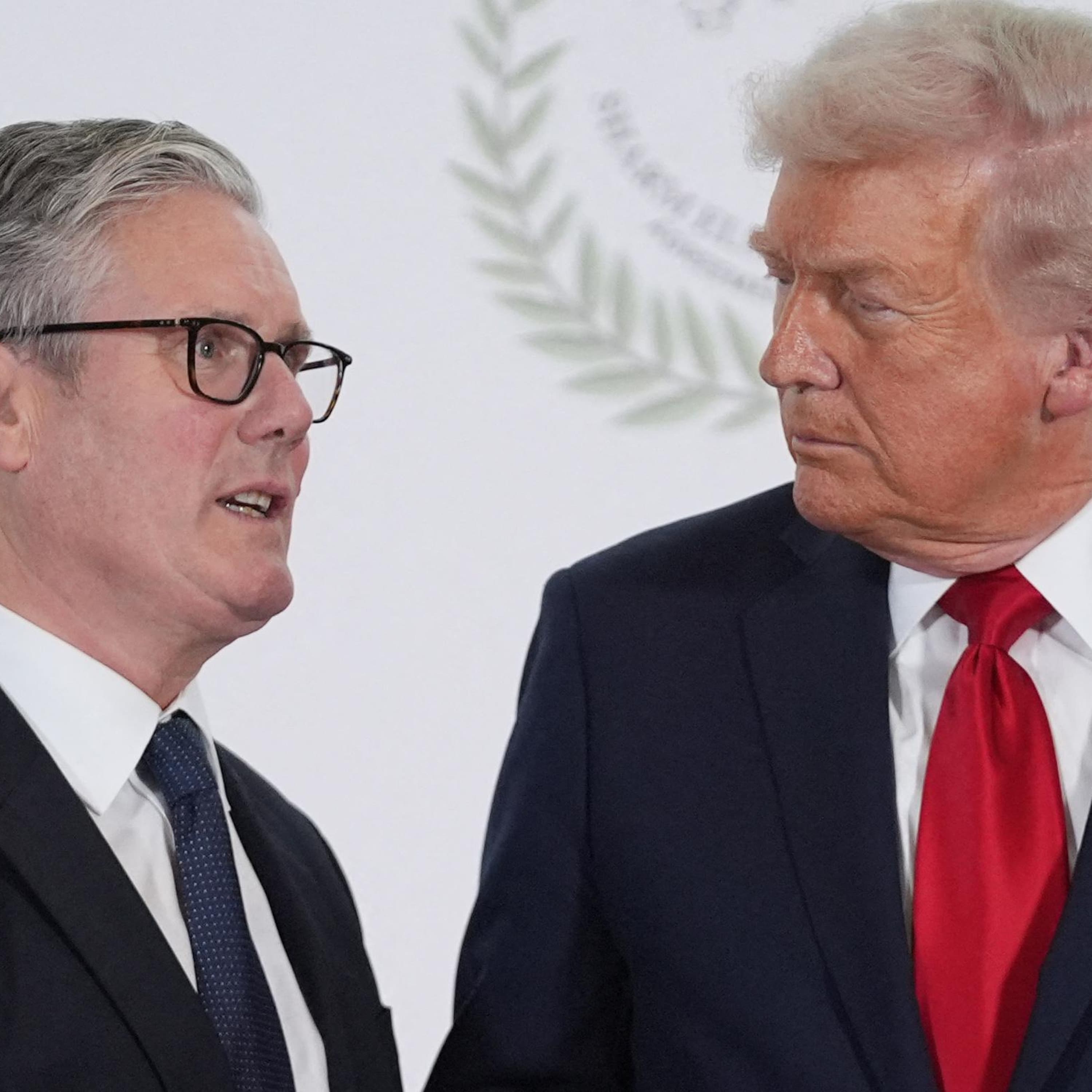
Today in Focus
How Labour diverted billions from NHS services to appease Trump – The Latest
00:12:13
The NHS will divert billions of pounds from essential services to pay for new medicines under the terms of the US-UK trade deal agreed last December, which could lead to more than 200,000 excess deaths, analysis has found. Lucy Hough speaks to columnist Aditya Chakrabortty
Loading summary
Transcript43 lines
- [00:00]
A
This is the Guardian.
- [00:13]
B
The most rapacious president in American history now has his little hands on our nhs. So that may well mean that you get fewer doctors and nurses than you'd like, fewer ambulance than you like, fewer cancer scans than you'd like. It could lead to something like 220,000 avoidable deaths. It's basically a massacre made in Whitehall. Buffer the shareholder returns of multinational pharmaceutical
- [00:36]
A
companies from the Guardians today. In focus, this is the latest. With me, Lucy Hoff. Last December we had the headline that there had been this deal signed between Donald Trump and Keir Starmer on medicine exported from the US that was going to come at some cost, although we knew very, very little information at that time. You, Aditya Chakraborty Guardian columnist, were hot on this warning and that there were likely to be some problems. We'll come onto what we now know. But what was alarming to you at that point, you know, the thing that
- [01:11]
B
really struck me, Lucy, was Donald Trump doesn't give away trade deals for free. Right. He wants his cut. And the health economists, I'm an economics guy and the health economists I was talking to were pretty worried about it, whether they would think tanks knock academia. They were worried. And there was all kinds of suggestions about what it might cost for the nhs. Donald Trump had already said that America was paying too much for its pharmaceuticals and he wanted essentially America to be paying less than other countries.
- [01:42]
A
Okay.
- [01:43]
B
So there was quite a lot of signs that things were wrong. But when I listened to what government ministers were saying, whether it was Patrick Valance, yeah, he SPEAKS in science or Wes Reading, the Health Secretary, it was all as if there's been a tremendous triumph.
- [01:58]
A
Yeah.
- [01:58]
B
And I was really struck by the difference between the two because economists don't tend to make numbers up out of air and politicians generally tend to have some kind of relationship with reality. And yet here we were with this weird situation in which Wes Reaching was going around saying he didn't recognize any of the figures that the various think tanks had put forward.
- [02:19]
A
And so what kind of figures were they? Because they're in the multi billions. Right?
- [02:23]
B
Yeah. Let's start with a gun position. Wes Retain went on Radio 4 actually, just after the deal was signed and as a health secretary said, yes, it will end up costing in NHS more money. It will cost a billion pounds between now and 2028. He said two other things he said beforehand, the NHS is not on the table in any trade deal. Well, clearly he's just accepted that now. It is. The other thing he said was this money's not coming out of NHS budgets. He was emphatic on that point. So he said, I know other people are talking about it being worth £3 billion or whatever. I don't recognize those figures. I don't understand where they got them from. He was very forceful on that one point. Right now, Lucy, just to bring the story a bit up to date, two things happened.
- [03:08]
A
Yeah.
- [03:08]
B
The deal came into force in April this year. At that time, we still had very little in the way of detail. After the deal came in force, the government published some of the headline facts and figures around it, and they in themselves are pretty worrying. Bear in mind, the government pushed this deal through without presenting to Parliament. There was no debate between MPs, there were no awkward backbenches, there were no caveats from the House of Lords. None of that, no readings. It just went straight into law through what they call a statutory instrument. They rubber stamped it basically into law. And we only had our first debate on it in Parliament this week, which is unbelievable.
- [03:48]
A
And so let's talk about some of the concerns from MPs who've now had the opportunity to scrutinize the details of this, but also medical experts, because they are enormous about effectively how this goes against those three promises from the former Health Secretary.
- [04:06]
B
Right. This is very, very sensitive stuff because it's about the nhs, which is one of this country's greatest achievements, brought into effect by a Labor government. And we're now under labor government again, obviously. And this is also about the kind of health care that you and I and our families and our communities get. Right. So this is about. This directly affects the medicines and the health care that you get.
- [04:26]
A
Yeah.
- [04:27]
B
So what's been said about it? I'm going to concentrate to begin with on what the experts have been saying about it.
- [04:34]
A
And it's all a bit technical.
- [04:36]
B
I'll try and keep the jargon out. What the experts say is two things. One, West Reading's figures are wrong. In fact, they're wrong to the point where you actually have to ask yourself whether the government's been misleading some of this stuff. They say that the billion pound figure that he talked about between now and 2028 is completely wrong. In fact, it's more likely almost triple that. Near close to 3 billion that he said he didn't recognize.
- [05:00]
A
Gosh.
- [05:01]
B
And then over 10 years, it's worth something close to £45 billion.
- [05:08]
A
£45 billion.
- [05:10]
B
And, and Lucy, the money for this, certainly upfront, is all coming from within the United Budget. So to pay Donald Trump for The trade deal that he, he forces sign, we are going to effectively be losing. We have to lose services elsewhere, nhs. So that may well mean that you get fewer docs and nurses than you'd like, fewer ambulances, fewer cancer scans than you'd like, all sorts of mental health support that you might like. And what the academics say is that has a direct health cost and the health cost estimate is it could lead to something like 220,000 avoidable deaths over the period, which is more almost double what we saw over the COVID period. Yeah. Now, remember, Lucy, when Covid happened and afterwards, there was an awful lot from Keir Starmer, West Streeting and Labour politicians at the time. This must never happen again. We must learn the lessons. There's no way we should be having that amount of avoidable loss of human life. Well, now you have academics say, as a result of a treaty signed between Whitehall and Washington, you have the possibility, the prospect of a huge amount of human life being lost and a huge amount being drained out of our health service as a result. I write in my column in today's paper that it's basically a massacre made in Whitehall at the behest of Donald Trump and to buffer the shareholder returns of multinational pharmaceutical companies.
- [06:41]
A
Gosh. And so you will have gone to the government on this. You've spoken to the Department of Health. What do they say to your reporting?
- [06:52]
B
You're completely right. I went to Department of Health and what really strikes me is how little information they'll give you.
- [06:58]
A
Yeah.
- [06:58]
B
The Department of Health has conducted something called an impact assessment on this trade deal. However, it will not share the details of that impact assessment. It will not share with MPs.
- [07:09]
A
Is that unusual?
- [07:11]
B
It's unusual for that amount of secrecy about something that affects all of our lives.
- [07:16]
A
Yeah.
- [07:17]
B
Now, every now and then, yes, government departments do try and keep impact assessments away from the public. They say, oh, it's commercial sensitivity. I would just ask you to consider, Lucy, think about your own family in this case, which matters to you, finding out how it affects your lives and lives, your family, or whether or the commercial sensitivity of GlaxoSmithKline, AstraZeneca, Novartis and other very well funded pharmaceutical companies. You make that choice. People watching can make that choice. Right. They can think about what. So I find it really unusual to be in a situation where you have very well respected world leading experts warning about the impact, the possible impact this could have. And on the first go round, ministers have been shown that they were wrong. Like they said the NHS was Not on the table. It was on the table. They said it would cost far less than it now looks like it's going to cost. And they said the money would not be coming from the NHS on all three counts. Completely wrong. And now they're saying, well, we don't recognize these figures, we don't understand where these guys got it from. The, the, the, the analysis is published in something called the British Medical Journal, very well established, very well respected journal. It's been conducted by three world leading researchers, one of whom has got an intimate association with a body which actually sets the medicines that we get through nhs. These are not like guys after a quick headline. These are people who've been working it for decades. Right. So I tend to take their analysis very seriously, especially when the Department of Health is not able to give me any serious answer to the charges they make.
- [08:55]
A
So just to get this straight, Aditya, 45 billion in NHS funding over the next 10 years will be heading overseas to the United States in a deal done with the most profiteering. Brazen. You've called him rapacious.
- [09:12]
B
US President, the most rapacious president in American history now has his little hands on our nhs.
- [09:19]
A
How on earth has a Labour government justified a deal of this nature? What is their justification?
- [09:24]
B
Pharmaceutical companies operating this country, multinational pharmaceutical companies operate in this country, have been saying for some time that they find the NHS doesn't allow them to make enough return for drugs they sell.
- [09:36]
C
Right.
- [09:37]
B
They do say that. Two, the government would say, well look, Trump wanted to sign a trade deal with us. You have to do some give and take. We thought it was worth us signing this pharmaceutical deal with him if it means that we get this guaranteed need, reduce tariffs on, on other areas. Right, that's, that's what they would say against all that. I would just say one thing. Trump is quite capable of reneging on trade deals when he likes. Right. He signed a deal on AI with us, which he then decided because he hated our online safety stuff. I don't want to do that. I'm welch on that. He constantly rips up bits of paper, throws it to the wind and says, right, you deal with it. So we're not doing a deal with a very stable, ordered, rational, safe actor here. We're doing it with a very tempestuous guy who seems to be running, I would say American politics for the benefit of him and a select group of cronies and business people that he likes. Right. And this looks like a classic trade deal along those lines.
- [10:37]
A
So a deal signed with a very unpredictable president to say the least, that will be in the in tray of the likely successor to Keir Starmer, Andy Burton. Let's hope he he has some choice on whether he can reverse it.
- [10:50]
B
Well, we've got three weeks to find out what he's going to do about it.
- [10:52]
A
Yes, certainly do. And you'll be right across that. Thank you, Aditya.
- [10:55]
B
Thank you, Lucy.
- [10:57]
A
That's it for today. My huge thanks again to Aditya Chakraborty. I really recommend reading his column on this story over@theguardian.com and do head over to our sister podcast Politics Weekly. Today, Pippa Kreira and Kieran Stacey will be rounding up the week's news, including the 5 billion hole in the defence investment plan. Thanks for listening to this episode of the latest Today in Focus. We'll be back in your feeds as usual tomorrow morning. The latest will be back tomorrow night. This episode was presented by me, Lucy Half. It was produced by Hannah Williams, Leo Schick and Sam Grouet. The senior producer was Ryan Ramgobin.
- [11:37]
C
The World cup is back. And because we have no off switch, Football Weekly is going daily. If you want a podcast with more footballing heritage than a Brazil number 10, more talent than a French starting and more predictable than an England penalty shootout, look no further. We'll have 33 daily episodes covering not just the goals and the glory, but the politics and the problems of this year's tournament. Can England and 60 years of hurt? Join me, Max Rushton, our expert panel and Barry every day of the tournament World Cup Daily. Listen wherever you get your podcasts or watch the full episodes on YouTube.
- [12:06]
A
This is the Guardian.