← Today in Focus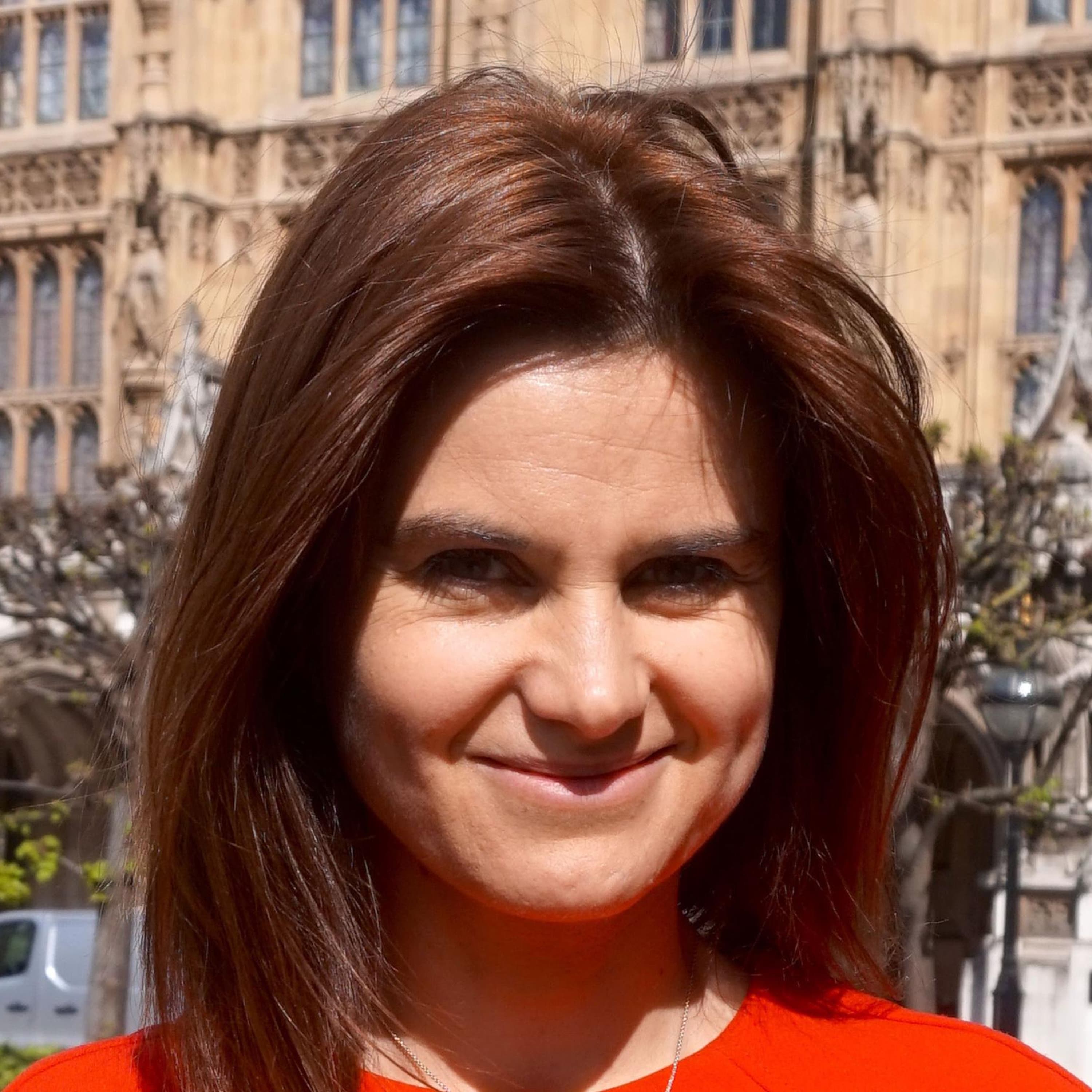
Today in Focus
How the murder of my sister, Jo Cox, changed Britain
00:29:08
It’s a decade since the MP for Batley and Spen was killed by a far-right extremist. Her sister, Kim Leadbeater, who took over her parliamentary seat, explains what lessons are still to be learned
Loading summary
Transcript88 lines
- [00:00]
Kim Leadbeater
This is the Guardian.
- [00:08]
Nosheen Iqbal
Today 10 years on Kim Leadbeater on the murder of her sister, the MP Jo Cox.
- [00:20]
Podcast Announcer
Today In Focus is supported by Paramount plus the agency. All episode streaming June 21st on Paramount Plus. In the world of espionage, truth is a moving target and every decision carries a dangerous consequence. This new mission explores what it means to live as a double agent. Twice the lies, twice the risk. The lines between ally and enemy blur like never before and. And survival depends on trusting no one. Starring Michael Fassbender, Jeffrey Wright, Jodie Turner Smith and Richard Gere. Don't miss the Agency. All episode streaming June 21st on Paramount +.
- [01:21]
Kim Leadbeater
On the 16th of June we were at home and we were about to watch football but I'd taken my car in for an MOT and I was trying to be all healthy and I ran down to collect my car from the garage and just as I arrived at the garage my phone rung and I got the call saying that Jo had been attacked.
- [01:39]
News Reporter
Reports of a stabbing, reports of a shooting in Birstall near Leeds. And we do know that the labour MP Jo Cox has been injured. She has been airlifted to hospital in Leeds. Still awaiting.
- [01:57]
Kim Leadbeater
And to be quite honest, I don't remember a great deal after that moment. I remember I started shaking and I just couldn't stop shaking and instinctively I knew this was not good. And I don't know if that's a sister thing, I don't know if it's just an instinct thing. I don't know what it was, but I just knew straight away. I remember saying to my partner who was saying, as people do, it's going to be okay, it's going to be okay. And I just remember saying I just don't think it is going to be okay. And I sort of knew.
- [02:26]
News Reporter
Just before one o' clock today, Jo Cox, MP for Batley and Spenborough was attacked in Market Street, Birstall. I am now very sad to have to report that she has died as a result of her injuries. Before going into further detail, I would like to express our deepest sympathies to her family and friends at this tragic time.
- [02:54]
Kim Leadbeater
To be honest, I probably don't remember a huge amount about the next six to 12 months because it's all a bit of a blur and I think your body and your mind just go into autopilot. They go into self protection, self preservation. We obviously had to deal with the first few days, weeks and months and look, everybody loses people. We all have our own experiences of death and loss and bereavement but what happened to Joe was just unbelievably horrific and so incredibly public that literally within hours, the world's media descended on Birstall and us as a family.
- [03:32]
Nosheen Iqbal
Jo Cox was a Labour MP for Batley and Spencer, the place she'd grown up and known her whole life. She was firmly pro Europe, a passionate campaigner for social justice and the mother of two young children who were five and three years old. On 16 June 2016, at the height of a toxic Brexit campaign, Joe was murdered by a far right extremist. He shot and stabbed her several times outside Birstall Library in West Yorkshire, shouting, this is for Britain. She was 41 years old
- [04:06]
Kim Leadbeater
and all I remember thinking was, I've just got to look after my mum and dad and do whatever I can for Jo's kids during that time and for our community, because, you know, people talk about us as a family, but our whole community was literally shaken by what had happened to Joe. And so many people were impacted by that day, not just us, the shopkeepers, the witnesses, the people who were there, the people who'd worked with Joe while she was an mp, people who, you know, we hadn't heard from for years, saw it on the news. So we ended up doing this massive press conference in Birstall and this was me, like, I'd never done anything like that before in my life. They came, they said, because they wanted to focus on that which unites us and not which divides us.
- [04:48]
Nosheen Iqbal
Jo Cox's father, her mother and sister.
- [04:52]
Kim Leadbeater
There are some things in life you should never have to do. Last night, I had to go and identify my sister's body. Yes, this was Jo Cox, mp, and she was many things to many people in her too short life, but she was my sister, my only sibling, my parents, firstborn child, a wife and a mum.
- [05:24]
Nosheen Iqbal
I think it says something about your family and your sort of need and drive to do that, but one of the things that really stood out is that she sort of begged her staff to leave and to escape and said, you know, I think the quote was, get away, get away, you two. Let him hurt me, don't let him hurt you. Those were her last words.
- [05:42]
Kim Leadbeater
That is who Jo was. Jo was an incredibly selfless, lovely, kind, compassionate person. She was full of nothing but goodness. And she'd spent years working in humanitarian organizations around the world, in some of the world's worst war zones and, you know, really dangerous places, often which she didn't tell us about as a family. And I think one of the Things certainly my dad really struggled with was having done all that, how could she be killed in Birstall, literally five minutes from where we live? You know, that just felt so cruel on so many levels and it is just so wrong, isn't it? But then really bad things sometimes happen to really good people.
- [06:25]
Nosheen Iqbal
From the guardian, I'm nosheen iqbal. Today in focus, remembering the mp jo cox. Kim Leadbeater, you are Labour MP for Spen Valley in Yorkshire, which you've represented since 2021. It is a constituency that your sister held technically when it was Batley and Spen. Can we go back a bit and find out more about who Jo was and specifically, you know, what she was like as a child and what kind of big sister she was to you?
- [07:01]
Kim Leadbeater
Well, Jo and I were really close growing up, probably too close in some ways. So when eventually she went to university, we both really desperately missed each other. And I think that was when Joe first experienced loneliness and an issue that she came to work on a lot later in life. But we were really close and I've got nothing but an abundance of happy memories when we were kids and we didn't have anything fancy. We weren't from a posh, privileged family or anything. We certainly worked from any sort of political dynasty. You know, we just went. We played out on our BMX bikes, we climbed trees, we pretended we were in the A team, we made up dance routines to 80s pop music. You know, we just had a really lovely childhood. And then going through school, Jo was really popular, she was academic, she was sporty, but she was always thinking about what she could do to make a difference.
- [07:49]
Nosheen Iqbal
Jo, as you said, was really academic.
- [07:51]
Kim Leadbeater
She went to Cambridge. But when she went to Cambridge, she did find it really difficult. You know, it's a different world and it does remind me of Parliament in lots of ways. Like, if that is not your background, if you're from a, you know, fairly basic working class background in the north of England, that is not your world. And she really struggled. But what I love about Jo is that she stuck it out and she didn't give in. And eventually she found her people. She found other students there who'd come from similar backgrounds, and she found students who weren't from similar backgrounds, but actually they bonded and connected and became really good friends.
- [08:22]
Nosheen Iqbal
Why do you think she went into politics?
- [08:25]
Kim Leadbeater
I think she went on her own journey through her education, through Cambridge, but then also working for charities and humanitarian causes. And I think she had always been very interested in politics and we did joke about her Coming back and being our MP one day, probably from a relatively young age, but she didn't do that straight away. I think what she saw through the humanitarian work that she did was that, you know, you can make a difference in lots of ways, but politics is where the big levers are. And if you want to make a difference on issues that affect the country and indeed the world, that is where you need to be. She also really wanted to come back to Yorkshire and reconnect with her roots. And she would not have been an MP for anywhere else. She was very clear about that. She wanted to come back and represent Batley and Spen. And when the seat became available and the previous MP retired, the timing was pretty bad, actually, because her children were so tiny. And she really did wrestle with whether she could do it because her absolute priority was being a mum. But, you know, she did go for it and then, you know, she did that job with such determination but such compassion.
- [09:32]
Political Commentator
Fatley and Spain is a gathering of typically independent, no nonsense, proud Yorkshire towns and villages. Our communities have been deeply enhanced by immigration, be it Irish Catholics across the constituency, or Muslims from Indian, Gujarat or Pakistan, principally from Kashmir. And whilst we celebrate our diversity, the thing that surprises me time and time again as I travel around the constituency is that we are far more united and have far more in common than that which divides us.
- [10:02]
Kim Leadbeater
I think, you know, you couldn't have got a better person to go into politics, but there is a reality which is you never switch off, you never leave work. And I think that is one of the things that she struggled with the most. But what she also loved was, like I say, coming back to Yorkshire and reconnecting with us and we were just starting to build up, you know, that. That closeness again. And her diary manager, Fazila, would say, right, I'm booking an hour out, you're gonna go see your sister, you're gonna go have a cup of tea with your mum and dad. And we were just sort of starting to get into. Into that routine.
- [10:33]
Nosheen Iqbal
Do you remember the last time you spoke to her and what you guys talked about?
- [10:36]
Kim Leadbeater
Yeah. So I saw her, I think it was the week before, and she came around to our house and she turned up and she was knackered and stressed and rushing around and crazy. And she came into the house and she never had any cl. Used to forget things. She was just dashing around like crazy. So she put one of my hoodies on and she was tiny, was Jo, and she just snuggled up in our armchair and we just chatted and talked. And when she left to go back to the place that she had, she said, oh, let me give you your hoodie back. And I said, no, no, it's fine. Just give me it next time you see me. And then I didn't see her again after.
- [11:18]
Nosheen Iqbal
Kim. It's difficult to recall that sort of exact chronology of that period of the Brexit campaign, and it has been 10 years. But what do you remember about what things were like when it all kicked off and how involved Jo was in that Remain campaign?
- [11:34]
Kim Leadbeater
There was a really sort of febrile atmosphere at the time. Shame on you, Shame on you.
- [11:42]
Nosheen Iqbal
Shame on me.
- [11:46]
Advertisement Voice
Bye. Bye.
- [11:51]
Kim Leadbeater
And I wasn't involved directly in any of the campaigning around Brexit. I had a few very honest conversations with Joe about it, because Joe was a very strong Remainer. And she said, look, you know, whatever else you think, this is not going to be good for our country economically. And I think that's probably how things have played out.
- [12:08]
Nosheen Iqbal
Exactly.
- [12:09]
Political Commentator
And.
- [12:09]
Kim Leadbeater
And she was heavily involved in the campaign. I mean, I was sorting through some things recently and I found some of the things that she had with her on the day she was killed. And her better in T shirt was in there, crumpled up in her bag, which I hadn't sort of been there for 10 years. She'd been out campaigning that morning in the constituency to Remain, but the atmosphere around it was just. It just wasn't a good feeling. I remember seeing the signs outside parliament when MPs were trying to walk in and they were being mobbed in the street. I thought, this does not feel safe and it does not feel like a good place to be as a country. And then what happened was we were sort of pushed into camps very quickly. We were sort of here or there
- [12:52]
Nosheen Iqbal
and within families as well.
- [12:54]
Kim Leadbeater
Families, friendships.
- [12:55]
Nosheen Iqbal
Yeah.
- [12:56]
Kim Leadbeater
And I think a lot of those divisions have not been healed. That is just so sad. And I think that has continued and been replicated on a range of issues. And this is one thing that I get really sort of frustrated about. Most things are not black and white. Most things are not either here or there. And most people are not here or there. Most people are somewhere in the middle, you know, weighing things up. But sadly, the media, often social media particularly pushes us to the extremes and it pushes us to take a position, and that is really dangerous. But it's easier, and it's easier for, you know, for. For some politicians to say to people, it's simple, just pick a side. And actually, I can't think of many issues in life where it is simple.
- [13:41]
Nosheen Iqbal
Kim Jo's murder was obviously shocking and after her death, there was this cross party call for a calm and kinder politics. However, the very next day, after she'd been killed, the Leave campaign launched this widely condemned poster. I don't know if you remember the one that showed, you know, this line of brown men with the words Breaking Point and a photo of Nigel Farage imposed at the front, demanding we take back control of our borders. How did you process what was happening in the week leading up to that Brexit vote?
- [14:13]
Kim Leadbeater
I mean, again, after Joe's murder, I probably wasn't processing very much at all. So I have a recollection of that kind of climate and that environment and I do remember that particular poster. But again, that feeds into what we were just saying. That isn't what Brexit was ever about. And people were made to think it was, rightly or wrongly, and they were making decisions on information that I don't believe was accurate. It just wasn't. And, you know, the £350 million on the side of the bus for the NHS was another example of that. And that's never happened, you know, so I don't mind whatever opinions people hold, that's absolute, their prerogative, but let's have informed opinions based on facts and that.
- [14:54]
Nosheen Iqbal
I mean, that's. Facts sort of went out of the window at that time. Experts were completely derided. It was.
- [15:00]
Kim Leadbeater
And that's just got worse. I mean, that has got worse. I've read so many things that are just not true, just not accurate, but once it's out there, it's out there and the question is what we can do about that. And that, I suppose, is my focus, looking forward to the Next sort of 10 years, how we can pull back from that misinformation, disinformation, polarization and what responsibility we've all got to play in that.
- [15:20]
Nosheen Iqbal
Were you shocked by the result? How did you feel when it came in?
- [15:24]
Kim Leadbeater
I mean, again, I didn't really know what day it was at that time. I probably wasn't shocked because, you know, I was in an area where there was a lot of people who were clearly going to vote to leave.
- [15:37]
Podcast Announcer
Right.
- [15:38]
Kim Leadbeater
And maybe there was some complacency within the remaining campaign that, oh, it'll all be all right in the end.
- [15:42]
Nosheen Iqbal
I mean, looking back, there was quite a bit of complacency, wasn't there?
- [15:44]
Political Commentator
Yeah.
- [15:45]
Kim Leadbeater
And that is something I've really taken with me into politics. You've got to listen to people and you can't Just label people, you know, because they are basing their views on their lived experience, they're basing their views on things they've been told, whether that's true or not true. But what you can't do is dismiss people, you know, and, and we, I think, as a, you know, as a society, have got to be more open to listening to people who might have different opinions to us. And, you know, and it feeds into, to the words that Joe said in Parliament about having more in common. Yes, I do believe we have more in common than that which divides us. But actually, where we do disagree, let's explore that. And if your life isn't going very well, let's look at why that is. Not just trying to find someone to blame for that, because what we do is we blame people who don't look like us, we blame people who've got a different life story, and that is dangerous. And that does push people towards the extremes. But sometimes that means having difficult conversations, nuanced conversations, listening, empathizing, all those things that, you know, we're too busy to do. And I think that's what we've got to try and recapture.
- [16:54]
Nosheen Iqbal
Kim, you had a whole other life outside of politics. You know, you joined late, you know, by anyone's standards, as it were. But why, why did you choose to become an mp, especially given everything your family had also gone through? Like, how hard was that decision and what motivated it?
- [17:08]
Kim Leadbeater
Yeah, look, I had a great life as I started my career in the private sector as a national sales manager. I then went back to university When I was 25, I did my degree in a subject I felt passionate about, health, fitness, taught. I became a lecturer. So I worked in further and higher education. I absolutely loved it. I ran my own business, teaching exercise classes and personal training, cheesy 80s aerobics, boxer size legs, bums and tums. You know, I had a really full life and Joe would always say to me, yeah, but Kim, you should be doing more. You should be stepping up and getting involved in politics. And I used to say, look, Joe, people make a difference in different ways. And I know that I was making a difference to the people that I worked with. And I was about to go back to do a master's degree, actually, and the open morning for the university was the week that Joe was killed. So I never made it. And she was really encouraging of that. Go, yeah, go do it. Go on to your next challenge. And then for the first five years after Joe was killed, I spent time working for the Jo Cox Foundation. The charity that was set up. And I couldn't go anywhere near politics, partly because it wasn't my world, but obviously mainly because of what it had taken from us. And, you know, Jo was killed because of her political beliefs. You know, that's an absolute fact. But then after five years doing that, you know, having watched Joe do the job of an MP and seeing how people centered, it can be, and it should be, I thought, well, when the MP that took over from Joe went on to be the mayor of West Yorkshire, there was a by election and a number of people came to me and said, have you thought about it?
- [18:33]
Nosheen Iqbal
Why?
- [18:33]
Kim Leadbeater
Why don't you do it? And I was initially incredibly dismissive and said, absolutely not. You know, it's just not for me. And then I reflected on it and I spoke to my mum and dad, I spoke to my partner and Joe's kids. And they must have been hard conversations.
- [18:46]
Nosheen Iqbal
Oh, yeah, hard conversations rather to have.
- [18:47]
Kim Leadbeater
Yeah, difficult conversations. But, you know, all Mum and Dad have ever wanted is to. For me to be happy and for me to do what I believe is the right thing to do. And the rest of my family were the same. And what I did feel was if I don't go for it, I don't want to regret not going for it. And I didn't want somebody who had got no connection to Batley and spent, didn't know the community. Like, you know, that is my community. I'm from the area, I know the streets, I know the shops, I know the schools and I know the people.
- [19:14]
Nosheen Iqbal
As much as it was a safe labor seat, there was a huge risk of that happening, right?
- [19:17]
Kim Leadbeater
Massively, because Labour was not in a good place at the time. They just lost the Hartlepool by election, there was a good chance they could lose battle in Spain. So the pressure was actually a lot more intense than I realized at the time. And so having talked it through, you know, I thought, well, let's give it a go. And we did give it a go and it was a horrible by election campaign. We had people coming over, sowing division, we had far right candidates walking the streets.
- [19:44]
Nosheen Iqbal
That's so frightening. Given, given what you'd gone through, given what the family had gone through, given what the Jo Cox foundation was calling for, it seemed that all those lessons were, well, they just weren't learned in that by election. And, you know, you've talked before about how you've channeled so much of your energy into the foundation and I kind of wanted to know, how did it help with your loss? And Your grief. And what is the purpose of the Jo Cox Foundation?
- [20:10]
Kim Leadbeater
Yeah, I mean, I think when something so horrific happens, you've got choices to some degree. And we chose to try and create as much positive energy and action as possible because that is who Jo was and that is who we are as a family. And we also did not want our community and our country to be defined by Jewel's murder, because that isn't what our country looks like and that isn't who we are. That was one individual, one heinous individual who committed a horrific act. But that isn't what battling Spain was like. That isn't what the most of this country is like.
- [20:44]
News Reporter
And.
- [20:45]
Kim Leadbeater
And we needed to show that and we needed to tell those stories. So the foundation has worked on lots of different issues. It started really looking at things that Joe had worked on. So the money that was donated, we gave to three different organizations. We gave to Hope Not Hate, Tackle, Far right extremism. We gave it to the White Helmets in Syria because Joe had done a lot of work on the conflict in Syria. And we gave money to the Royal Voluntary Service who work on loneliness. So we set the foundation up continuing a lot of those themes of work, particularly on loneliness.
- [21:13]
Nosheen Iqbal
Right.
- [21:13]
Kim Leadbeater
And this was an issue that Jo had started working on. She set up the Commission on Loneliness when she was in Parliament. That work was then continued on a cross party basis with Seema Kennedy for the Conservative benches. But then the other big thing that the foundation does is the great get together. Barbecues, picnics, iftars, you know, family fun days with face painting and bouncy castles. It's whatever works for you in your community. There is an appetite across the nation for people to come together in a really positive way. And as Jo said, think about the things we've got in common and not the things that we fall out about.
- [21:42]
Nosheen Iqbal
The loneliness aspect I find really interesting because, you know, one of the first characterisations that there was of the neo Nazi who did murder Joe, the police described him as a classic loner and that that was, you know, one of the many reasons that fueled him becoming who he was. I guess now in his sentencing, whole life tariff, the judge declared that it was an act of terrorism. You've said to me before that the fact that Joe was murdered by a neo Nazi with fascist right wing views because of her basic beliefs is something that you think the family and yourself didn't talk about enough. Why does it feel important to talk about now?
- [22:18]
Kim Leadbeater
So look again, we've spent a lot of time over the last 10 years, putting a brave face on it, being really positive about Jo and how brilliant she was and the things that we've done in her name. And I'm really proud of that work. What we probably haven't directly addressed has been why Joe was murdered. And, you know, if we reduce Joe's murder to an isolated act, you know, then we are misunderstanding the context within which it happened and we are misunderstanding and misrepresenting the views of the individual who killed Joe. You know, this is someone who was a far right extremist and we have to call extreme extremism out, whatever that looks like. We have to have an honest conversation about that. But I think it is a fair point to say the intersection between extremism and loneliness and isolation is very real. Because if we have communities where people don't feel that they belong, they don't have a sense of identity, they don't feel that anyone's interested in their lives. You know, the sad version of that is that they spend a lot of time on their own and they're not very happy. But the really dangerous, serious version of that is that they are pushed to the extremes. And if we don't give people a home and an identity, extremists will.
- [23:33]
Nosheen Iqbal
Coming up, did British politics learn anything from the murder of Jo Cox?
- [23:50]
Advertisement Voice
Par le tu francais, hablas espanol? Parl italiano? If you've used Babbel, you would. Babbel's conversation based technique teaches you useful words and phrases to get you speaking quickly about the things you actually talk about in the real world world. With lessons handcrafted by over 200 language experts and voiced by real native speakers, Babbel is like having a private tutor in your pocket. Start speaking with Babbel today. Get up to 55% off your Babbel subscription right now at babbel.com acast spelled B-A B-B-E-L.com acast rules and restrictions may apply.
- [24:29]
Podcast Promo Voice
A History of the United States in 100 Objects is a brand new podcast from 99% Invisible and BBC Studios. Each week we're looking at a different object from across American history with a unique story to tell about who we've been, what we've built, and what we've allowed ourselves to forget. Some of these objects are well known, many are not. But all of them carry the story of how we got to this moment. Find A History of the United States and 100 objects on the 99% invisible feed. Wherever you get your podcasts,
- [25:04]
Podcast Announcer
Given the
- [25:05]
Nosheen Iqbal
current Political climate and the sort of mainstreaming of views that seemed even back then to be just wildly out of the realms of public discourse. I'm thinking about discussion of remigration, the forcible removal of non white people to their, you know, so called place of ancestry, mass deportations, this myth of two tier policing biased against white people. All of this now is in the public realm in a way that when the leave campaign was being conducted, wasn't even remotely in the mainstream. How do you feel, Kim, about the way politics has been conducted since Jo's death?
- [25:40]
Kim Leadbeater
I think you alluded to it earlier. After Jo was killed, there was a period where people said all the right things and said we need to do things differently, we need more compassion, we need more understanding. And it was very short lived. And sadly and regrettably, I think over the last decade, if anything, things are worse. And I think we have to be honest about that. And what I would say to everybody now, 10 years after Joe was killed, is let's have a look at how we can change that narrative. And everybody has a responsibility in that regard, including politicians and people in public office. You know, we have a voice. We're very lucky to have a voice and to have a platform. But with that voice and with that platform comes a very significant level of responsibility. You know, and recently we saw the horrific murder of that wonderful young man, Henry Novak, and what his family said about, please don't do that, please don't do that either.
- [26:31]
Nosheen Iqbal
The opposite happens.
- [26:32]
Kim Leadbeater
And then the opposite happened. Only from certain quarters, though. And this is the thing that you've got to remember. Those voices who are sowing the division are in the minority. And it doesn't always feel like it, but very loud. But they're very loud.
- [26:43]
Nosheen Iqbal
They're very loud.
- [26:44]
Kim Leadbeater
But the rest of us then have got a duty to drown them out and tell the good stories of this country, call out bad things where they happen. Absolutely. Be angry. I've got no problem with people being angry. I am really angry about what's happened to my life. I'm pretty furious, to be honest. But you then have a choice what you do with anger. And you can use that anger for good. You can use it to make a difference. You can use it to address some of the challenges that we face and tackle some of those problems that we've got in society. But you can also use it to unite people and you can use it to celebrate the many, many good things and the many millions of people across this country who are out there day in, day out you know, whether that's the scout leaders or the sports instructors or the, you know, volunteers at the library or whatever it is, whoever those people are, let's celebrate them. Because that is the story our country, and we need to be a bit prouder and a bit louder in telling it.
- [27:30]
Nosheen Iqbal
Looking back at that moment, it feels like something broke in British politics the day that Jo is murdered and something that hasn't quite been fixed since. And I guess I hear what you're saying about, you know, the responsibility we all have to make public life better. But do you worry that things are more dangerous now that we're in an era that something that, that unspeakable could happen again?
- [27:55]
Kim Leadbeater
Oh, I think we're in a dangerous era, yeah. We're in an era where, you know, safety and security has become an intrinsic part of being an mp. It's become an intrinsic part of being a local councillor, sadly. And I've had some horrible incidents in my constituency and elsewhere across the country where councillors have been subjected to really horrible abuse and attacks. Sadly, these horrific things have happened to other families, including Sir David Amis's family, the MP that was murdered in 2021. But we did take the decision and we felt we had the strength to do lots of things in Jo's name to make sure that she was never forgotten and her values were never forgotten. And I guess that's where we are 10 years down the line. But again, you know, there is a broader issue around society and how we treat each other as human beings. So yes, I do worry about it, but equally, we can't give up hope and we've got to remain optimistic about the role that we can all play in sort of rolling things back, back a little bit, finding the spaces for human connection as well, where we can. It's much harder to hate somebody once you've met them and once you've had a conversation with them. And I think, you know, from a government perspective, we need policies which enable human connection to take place. We've seen things close down like youth clubs and community centers and things like that. So we're not able to connect with our fellow human beings maybe in the way that we used to. Even when you go to the supermarket and it's self service checkouts, we're not. I hate it. I hate it. You know, so the opportunities where we could chat to each other and connect as a human being, whatever the differences might be, just don't exist in the same way that they did, you know, when I was a lot younger. It needs political leadership, but it also needs really strong grassroots work as well. One of the things I've been involved with since I've been an MP has been the Keep Britain Tidy campaign at the Great British Spring Clean.
- [29:34]
Nosheen Iqbal
Right.
- [29:35]
Kim Leadbeater
And I absolutely love it. Yes, it's partly about litter picking, which is disgusting. You know, we've got to sort that out.
- [29:40]
Nosheen Iqbal
I'm sexy. But it needs being done.
- [29:41]
Kim Leadbeater
But it needs to be done. But actually, when you get together a bunch of people to go litter picking and tidy up the street, that sense of togetherness and that sense of, like, shared endeavor is so incredibly powerful. And, you know, the people that I've met doing things like that, doing all the events that we've done over the last 10 years, shows what we are really like as a country. But again, it goes back to telling those stories and making sure those voices are the loudest and not the voices. And there are some voices who are intentionally trying to drive us apart and push us towards the extremes. But we've got to fight back and we've got to push back against it.
- [30:15]
Nosheen Iqbal
Well, Kim, I'm going to end on that note of hope and optimism and encouraging everyone to pick up their litter and be together.
- [30:21]
Kim Leadbeater
Absolutely.
- [30:22]
Nosheen Iqbal
Well.
- [30:23]
Kim Leadbeater
Joining with a great get together. It takes place on what would have been Gill's birthday weekend, the 19th to the 21st of June. But again, you can organise a great get together whenever and wherever you want and just connect with your fellow human beings.
- [30:34]
Nosheen Iqbal
No argument against that. Kim, thank you so much for your time.
- [30:37]
Kim Leadbeater
Thank you.
- [30:40]
Nosheen Iqbal
That was the MP Kim Leadbeater. My thanks to her. You can find out more about the great get together and the work of the Jo Cox foundation at its website, jocoxfoundation.org and that's it for today. This episode was presented by me, Noshi Nikbal. It was produced by Elena Biggs, Mae Robson, Claudia Femny and Aisha Riaz. Sound design was by Rudy Zagadlo and the executive producer was Huma Khalili. We'll be back this afternoon with the latest.
- [31:15]
Kim Leadbeater
This is the Guardian.
- [31:24]
Podcast Promo Voice
A History of the United States in 100 Objects is a brand new podcast from 99% Invisible and BBC Studios. Each week we're looking at a different object from across American history with a unique story to tell about who we've been, what we've built and what we've allowed ourselves to forget. Some of these objects are well known, many are not. But all of them carry the story of how we got to this moment. Find a history of the United States in 100 objects on the 99% invisible feed. Wherever you get your podcasts.