← Today in Focus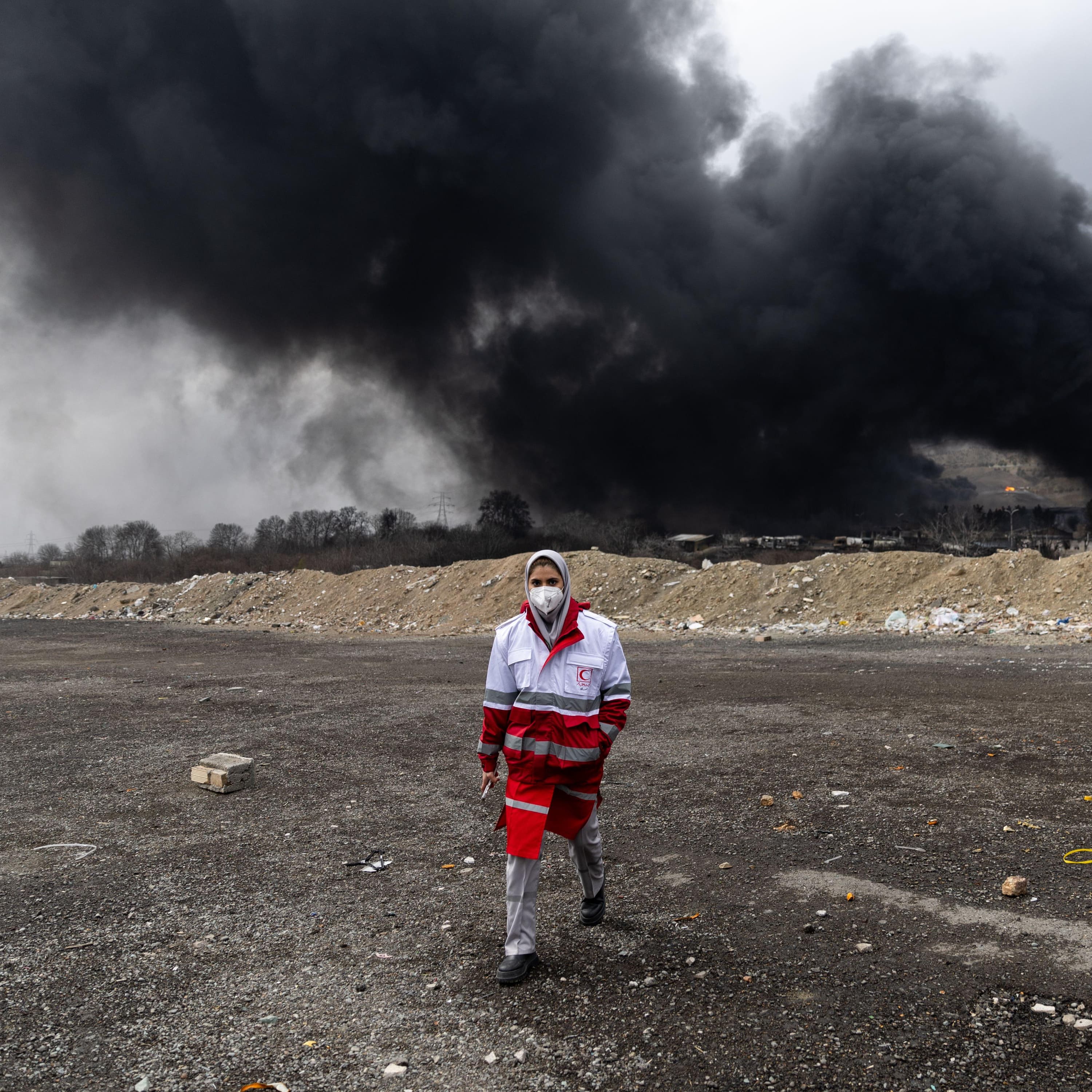
Today in Focus
Inside Iran as the bombs fall
00:31:35
Annie Kelly speaks to ordinary Iranians about the attacks on their country, and peace strategist Sanam Naraghi-Anderlini explains her fears for the future
Loading summary
Transcript61 lines
- [00:00]
Sanam Negari Andolini
This is the Guardian.
- [00:09]
Annie Kelly
Today inside Iran as the bombs fall.
- [00:20]
Farnoosh Tarabi
Hi, this is Farnoushtrabi from so Money with Farnoosh Tarabi. And today I want to talk to you about Boost Mobile. Quick money tip stop paying a carrier tax. It's if your phone bill feels trapped in a pricey plan, this is your sign to unlock savings. Boost Mobile helps you reset your spending. With the $25 Unlimited Forever plan, you can bring your own phone, pay $25 and get unlimited wireless forever. And that simple switch can unlock up to $600 in savings a year. That's money you could put towards paying down debt, investing or something that actually brings you joy that those savings are based on average annual single line payment of AT&T, Verizon and T Mobile customers compared to 12 months on the Boost Mobile Unlimited plan as of January 2026. For full offer details, visit boostmobile.com.
- [01:19]
Sanam Negari Andolini
On Saturday morning, you know, you get up and suddenly my, you know, my phone was blowing up with friends and family saying, it's started, it's just started. And, you know, you didn't need to say anything more.
- [01:32]
Annie Kelly
For the past week, Sanam Negari Andolini, like millions of Iranians living outside their country, has found herself split in two, existing in some kind of shadow world. She gets up and she goes to work, but her mind and her heart are thunder, thousands of miles away with her family and friends as airstrikes rained down on her homeland.
- [01:58]
Sanam Negari Andolini
And honestly, the last week for all of us has been one of, how do I explain waking up in the morning and you feel literally as if your legs weigh a ton and you feel paralyzed, you feel like you're constantly not unable to breathe foreign.
- [02:21]
Annie Kelly
Since last Saturday when the US And Israeli bombardment began, the Internet's been down. Only the occasional message or voice note has got through.
- [02:30]
Sanam Negari Andolini
So what happens is that I send a message to somebody that I know and sometimes it's one tick, sometimes it's two ticks. I'll ask, you know, one, one relative, how is everybody? And you know, how are the ones in the city or wherever they are? And then he'll say, well, I talked to so and so, and they say, they're fine, everybody's fine. I was reminded of the 1980s when my father was there and it was the, was in the middle of the Iran Iraq war. I would get to speak to him every three weeks when I came home from school and the conversation was basically, baba, how are you? And he would say, I'm fine. And then over here we would say, yes, we're fine, too. And nobody said more than I'm fine because you didn't want, you know, I didn't want him to feel bad for us. And he obviously didn't want us to be afraid for him. And we're seeing how unfined many people probably are now.
- [03:33]
Annie Kelly
The US and the Israelis say they want regime change and complete strong surrender. The regime says it will fight on to the end. Caught in the middle are 93 million Iranians whose fate hangs in the balance. Like Sanam. All week we've been trying to talk to some of them about what's happened to their lives and what they want the world to know.
- [03:56]
Iranian Resident 1
We are going through very frightening days. The Internet has been cut off. It feels like we have fallen into a black hole.
- [04:11]
Annie Kelly
From the Guardian, I'm Annie Kelly. Today in focus, what next for Iran and its people?
- [04:27]
Iranian Resident 2
For past few months, every day was about war. Every day was a shadow of war. Like we knew tensions were very high and that something could happen. The scale and timing still surprised many of the people. Everything changed very quickly.
- [04:45]
Annie Kelly
Throughout the week, we've been receiving voice notes from people inside Iran. They were all really nervous about speaking. We've altered their voices.
- [04:54]
Iranian Resident 1
During all these days, I have been waking up in the morning to the sound of exposure. The area around the hall was bumped and armed house keep shaking. At all hours of the day and night, the sound of fighter jets echoes throughout the city. And suddenly there are explosions. And with every explosion, we call each other to make sure everyone is safe.
- [05:22]
Iranian Resident 2
Even if you are not directly affected. Everyone feels the tension and uncertainty like the death is near you. That's always worrying people like even me. Everyone is afraid of death. And many people are trying to understand what the future will look like.
- [05:45]
Annie Kelly
Sanam Negari Andolini, you're a global peace strategist and the executive director of the International Civil Society Action Network, a peace building ngo. We salam. It's been an extraordinary week. Started last Saturday with the assassination of the Supreme Leader and U.S. and Israeli airstrikes. And the weekend was just absolutely catastrophic for people living inside Iran. First off, could you just give us a sense of what toll the war has already taken on civilian infrastructure there?
- [06:14]
Sanam Negari Andolini
So the first thing that I heard was the girls school that was hit.
- [06:18]
Annie Kelly
More than 160 children were killed here on Saturday.
- [06:23]
Sanam Negari Andolini
The strike hit during the morning session in a primary school in Minab. And, you know, there was a question of who hit it, what happened? The Americans blaming the Israelis, vice versa. So I would caution you from Pointing
- [06:35]
Annie Kelly
the finger at the United States of
- [06:37]
Sanam Negari Andolini
America when it comes to targeting civilians, because that's not something that these armed forces do. And then it turned out that not only it was the Americans, possibly it was because of AI and you know, old information.
- [06:47]
Washington Wise / Charles Schwab Advertiser
Incidents like this would really be one of the worst ones of civilian casualties caused by the United States. If confirmed in the Middle east.
- [06:55]
Sanam Negari Andolini
If this is confirmed that the United States had a role in this strike, it could have major political repercussions. It's been 20 hospitals, I think about nine schools, police stations, just local police stations. The stadium, the Azwadi stadium, my uncle actually designed it many years ago back in the 70s. It's an iconic place. It's a place for football. It was the kind of place where the young women were put us to get into because they wanted to watch the men's games. They hit the Azadi Stadium. Why Mehrabad airport was hit. Meherabad airport was again an iconic sort of site for all of us because it was the first airport. And when we were kids and you had relatives going, you know, living abroad, the whole family would go to the airport to greet them. The flights would always come at night. And so it was a place of so much nostalgia for so many of us. And it has not been used. It's not the main airport of Tehran anymore and it's not a military airport either. It was hit because it has some kind of iconic value. So the Golestan palace, which is a huge Qajar era palace in the middle of the city and it's got a hall of mirrors that's been damaged. Again, it's a UNESCO heritage site. So these are all actually also war crimes. When you hit a desalination plant, which means that people can't get water. This isn't the laws of war, as we have noted in the past. Iran suffered from eight years of the Iran Iraq war. And it wasn't this level of civilian infrastructure damage. So this is very deliberate, what's going on? Right.
- [08:27]
Annie Kelly
And tell me a bit about those salination plants that were hit at the weekend. We saw the whole of Tehran covered in these really thick clouds of black smoke. And it was quite important, isn't it, that that damage that was done last night to I think the salination plant and also some oil reserves. So could you tell us about that?
- [08:47]
Sanam Negari Andolini
Yeah. So they hit two oil depots, one in the south, one in the north of the city. So it's like two huge plumes of black smoke. And this is the oil and the, you Know, the fuel that runs the city. It's got nothing to do with, you know, you know, the security or the military infrastructure. This is entirely for civilian use. The water desalination plants that they hit on the island of Qesh in the south of Iran, it's fishing communities, these are UNESCO sites of environmental importance as well, that have been hit. So you're actually doing massive damage to an environmental ecosystem that is meant to be protected. The other thing, which was incredibly sad was that there was a naval ship of sailors that were invited to India for ceremonial naval practice. The ship comes out of Indian waters into international waters, gets torpedoed by the United States.
- [09:43]
Washington Wise / Charles Schwab Advertiser
A single torpedo launched from an American submarine. The first such sinking of an enemy ship since World War II. An American submarine sunk an Iranian warship that thought it was safe in international waters. Instead, it was sunk by a torpedo.
- [10:01]
Sanam Negari Andolini
Quiet death. And again, the laws of the sea and have been that you do that, you then go and pick up the human beings, the poor sailors in the water. They didn't do that. The Americans didn't do that, the Indians didn't do that, And the Sri Lankans did. So the Sri Lankan Navy saved 32 young sailors. They picked up about 88 bodies and took them back to Sri Lanka. And then there was a second ship, and they escorted that ship to Trincomalee Port and gave them safe harbor. And so this systematic, not just erosion, but absolute disregard for any norms, any rules, any question of what is war is really important because it's taken us 500 years as human beings to come up with international laws, to come up with an architecture around how we treat each other, even when we're in conflict. And in one generation, they're ripping it up and as if it doesn't matter. And this is where I worry about our own government and others that are not standing for that law, because those laws are there for all of us. And you can't just apply them when you feel like has to be equal across all human beings. And at the moment, Iranians are not really benefiting from that.
- [11:26]
Annie Kelly
And do we know whether people are actually able to leave their house? I read somewhere that there are no civilian bomb shelters. For instance. Do you know, are people going out to work? Are people having to stay inside? What does it look like on the streets?
- [11:39]
Sanam Negari Andolini
So again, what we hear, and the little bit that we can see, is that they have designated certain metro stations in Tehran, as it's like London during the Blitz. I mean, some of them are going to be safe and some of them probably Are not. But they don't have the kinds of heavy duty bomb shelters. Again, for a city of 9 to 10 million, how are you meant to do that? So that's definitely one issue. And then one exchange that I had was with someone who said the poor people or poorer people who need to earn a living don't have a choice. They have to get up every morning and go do whatever the job is because they get paid daily wages. And of course, inflation was horrific before. Combination of mismanagement, corruption, and very definitely sanctions. And the policy that the United States just overtly states that they wanted to squeeze people economically till they hurt. But with the war, it gets worse. I'm sure that also at the same time, lots of people are still okay because it's been one week and the question is, how long can you survive?
- [12:53]
Iranian Resident 2
Many people prefer to stay home because it is so dangerous, unless they really need to go out. The streets are quiet and, you know, tense. We still have access to basic supplies, but people are buying extra food, like just in case, you know, it's a
- [13:11]
Iranian Resident 1
feeling of helplessness, angst and worry. I think this is shared by pretty much everybody. They're worried about banking services because a lot of the banks have closed. Services are not even allowing cash withdrawals. They're worried about droughts. They're worried about being able to afford food, let alone access it. We can only hope to survive until the end of this farm. For now, we can get our daily necessities. However, prices have increased. Everything is more expensive. We are very worried that our money will run out or that even the few shops that are open might close.
- [14:06]
Annie Kelly
Could you give us a sense of what we know about the death toll and how many people have been killed and where?
- [14:10]
Sanam Negari Andolini
As well, up to Saturday 7th March, the statistics that I saw were around 1500 people or so had been killed, about 10,000 had been injured. But when I asked about whether this included the young men serving national service and wherever barracks that they might be in, army barracks and so forth, the answer was, we don't know because we don't look at them in terms of what their job is. But you can imagine that in Iran, like any other country, the military likely has its own hospitals and its own system. So we don't really know the numbers. And, and these numbers that I'm saying are before the attacks on the oil depots that happened on Saturday, when the
- [14:53]
Annie Kelly
strikes begun, when the Supreme Leader, the Ayatollah, was killed on Saturday, last Saturday, you did see Iranians celebrating on the streets. Both outside, but also inside Iran. There is no doubt that the regime was hated and feared by many people inside Iran.
- [15:11]
Sanam Negari Andolini
But.
- [15:11]
Annie Kelly
But what is your sense of, you know, how people felt when the strikes began and how that might have changed over the last week?
- [15:18]
Sanam Negari Andolini
You know, first of all, when. When they. When they killed Khamenei. One of the things that I found, you know, I don't know whether the word interesting is right, but, you know, my observation was that here's a man who in life did not particularly have that grand a stature or an aura like Khomeini his predecessor had had. He never had that. And all of a sudden, by killing him, he was turned into a martyr. He was all of a sudden being labeled as imam. And you had it from Pakistan all the way to Iraq, people out in the streets protesting that this man has been killed. So he was 86 years old. He knew that he was going to die sooner or later. He had cancer. But this idea that we went and assassinated him and regime change has actually backfired because he's gained a much greater aura and it's rallied a whole universe of people around the question of, again, Americans and others coming into the region. I wish that Khamenei had been arrested so that we could see these guys in court. That would be what I would like to see. And I think there are lots of people who think the same way, but that choice was never given. And the other part of it was that this assumption that, oh, you get rid of the head like they did with Saddam Hussein or with Gaddafi in Libya in 2012, and the regime will topple, but the Iranian regime was never like that. The system of power was very, very different to your traditional dictatorship. Not only that, they anticipated this kind of attack because they'd seen it. So apparently they had four layers of people. They had their systems in place in terms of replacements. They've decentralized their military so that there isn't just central command and control. There was a lot of preparation that was done. And this is where I struggle to understand how Israel and the United States and the Pahlavi, the Shah's son, who was advocating for war, how badly they misread and misunderstood the. The nature of this state. But if you're going to go up against it, then you do need to understand what you're up against. And it's the same with the security forces. There's army, there's police, there's standard things. And then they establish parallel security forces. The irgc, the Revolutionary Guard, its mandate is to Protect the revolution. Its mandate is it serves the Supreme Leader's office. Khamenei ensured that that was his power base. We have the Basij, which is the volunteer forces. They're all over the country in villages and towns, and they are both a force of oppression, surveillance, and when there's an earthquake, they're the first ones to run and help people. They're also the first ones if there's polio vaccinations that have to be done. But they are embedded in the country. And. And so when you go after the state, when you go after the traditional state that we now, as I say, the police offices or the administrative buildings and so forth, the ones that are left, is this other parallel structure. And why had you not understood the implications? Or maybe you did understand it, and your intent was to destroy the civilian infrastructure, which is what we're seeing.
- [18:44]
Annie Kelly
So we hear Trump talking a lot about regime change. We talk about how he's going to continue, the US Is going to continue, until the regime. They've got rid of the regime is what you're saying is that it's not as easy as removing a dictator and his power base crumbles. That actually what you're dealing with here is far more complicated and far more infiltrated into every single level of political, civilian, administrative life in Iran.
- [19:13]
Sanam Negari Andolini
It's also a question of saying when in recent history or ever, has there been an attempt at regime change with an air campaign that has been successful? You know, Libya, they had to bring in their mercenaries. They had to bring the hired boots that were. That ended up being quasi jihadi. A lot of them, you know, heavily sort of conservative, radical Islamists. And they ended up with a Libya that is split in two. And Libya is a population of 7 million. It begs the question genuinely, what is the purpose? And my thesis is that this is not about changing the regime and enabling Iranians to have a secular democracy. The intent here was always to diminish Iran as a regional power.
- [20:12]
Iranian Resident 1
I'm afraid that internal conflicts could start, and that made my country could face days for worse than today. Me, personally, I hold the view that no country in the history of mankind has improved through war, violence, or even revolution. I think a lot of people are now hoping for peace. And I think there's also some sort of hope that with the old guard on, we can have the younger group at the head of the country and perhaps a new direction.
- [20:56]
Annie Kelly
Coming up. What do people inside Iran really want?
- [21:18]
Washington Wise / Charles Schwab Advertiser
Decisions made in Washington can affect your portfolio every day. But what policy changes should Investors be watching. Washington Wise is an original podcast from Charles Schwab that unpacks the stories making news in Washington right now and how they may affect your finances and portfolio. Listen@schwab.com Washingtonwise guys, it's no use putting it off. The best time for an underwear refresh is now. Tommy John Underwear is designed for a perfect fit that stays put all day. There's zero chafe, thanks to four times more stretch than competing brands and their innovative horizontal Quick all fly is a game changer. With over 30 million pairs sold. There are thousands of men out there more comfortable than you. Don't settle for less. Go to tommyjohn.com today for 25 off your first order with code comfort. That's tommyjohn.comfort Tommy John comfort perfected.
- [22:16]
Iranian Resident 2
I was shocked and I was so happy, like for the death of the dictator, the killer of many children, of the loved ones, the murderer of my stepbrother, of my friends. And many people in Iran. People were crying because they were so happy and they were so emotional.
- [22:43]
Iranian Resident 1
I didn't believe it until this land. Public TV announced his death in our street. Everyone came to their windows and shouted with joy, constantly repeating thanks God. Thanks God. In some neighborhoods in Tehran, people came out into the streets and dance.
- [23:09]
Iranian Resident 2
He represented decades of repression and suffering. Some people were shocked or afraid about what comes next, like who is going to be the next leader and what is going to happen. But others, quietly or not, felt relief and hoped that maybe things could finally change. It was like what I felt, too, like a new era which the dictatorship doesn't have any place in it.
- [23:44]
Annie Kelly
And we did hear from people the day or the days after the strikes began. We basically said we think this is the only way for the regime to go, is this kind of foreign intervention. We are so desperate that we need this to happen so that Iran can start a new chapter. What would you say to that?
- [24:08]
Sanam Negari Andolini
Yes, I know that people have said that. And it has been a common refrain across certain swathes of society. I don't think that it's everybody. I think there's certain. But I also wonder whether they understood what war would be. And I wonder whether those same voices today are going to be saying the same thing. And in next week and the week after, the question is, what is it? That is the intent of the people that are going to come bomb you and what is their goal? And it's also this bizarre perspective that the regime is bad and we're gonna rely on Donald Trump and Benjamin Netanyahu to come and save us. And we're gonna trust what they say when Netanyahu has been indicted for genocide in Palestine and he's been bombing Lebanon and Syria relentlessly, why would you trust him to be your savior? Donald Trump, in the last year that he's been in power, has been rounding up all sorts of people in America and deporting them, including Iranians. He is deporting Iranians as we speak. So in what universe is there the logic of saying, oh, yes, we are desperate in Iran, but let's rely on these two guys to come and save us?
- [25:26]
Annie Kelly
We have seen lots of support in segments of the diaspora which seem intent on pushing the son of the former Shah Pahlavi to return to Iran and take over. He obviously is very closely aligned both to the US and to Israel. How much support does he have, do you think, within the country? And is he a serious contender to come in and replace the existing power structure?
- [25:54]
Sanam Negari Andolini
So I think that, again, we saw a huge uptick in support for him in the last few months. Friends, I know lots of people who, especially after January, were like, look, he is the only one he's known, and he's been saying he just wants to be a transitional leader. We'll have secular democracy. From my own professional experience of looking at how these countries, how transitions happen, you need to have collective leadership. You need to have people who are connected into the different nodes of society, including into the existing power structures. Whether you look at South Africa, they had that. If you look at Northern Ireland and how the process was done, that question. You can't just shun one side completely and create a binary. That I think has been dangerous. What I worry about is that what is the articulation of the vision for the, let's say, the 5% who are regime supporters in a country of 93 million people, that's 4 million people. If it's 10%, it's 9 million people. What is the articulation of the vision of saying we're going to have an Iran where we all get to live together, then? The third element is that they came up with a transition plan. And I looked. It's 160 pages of transition planning that I went through and looked at. And it is written by people who have zero experience of actually what it takes. You know, you don't. You don't do a constitution in two months and, and then have a constitution process that, that, you know, within two weeks, you're going to have elections and, or three months of elections, when in places where that's happened when they've had elections, you know, three months down, it's been, it's been pretty disastrous. So, so it's, it feels a little bit amateur, though, whatever it is the plan is. Their understanding of the regime, I feel, has been amateurish. I don't know whether they knew this is the kind of war that was going to be fought, but they're very vociferous and very intolerant of anyone who questions them. And that to me is also a bad sign. Because if you want to have a secular democracy, your process has to be
- [27:59]
Annie Kelly
democratic and you're a peace builder. To see the way that that rhetoric is shifting into this idea of like, we're just going to keep going until this is finished, that must be a terrifying prospect for you when it's considering your own country, because as you said, you've spent your career studying conflict, studying the aftermath of conflict. Where do you see this heading?
- [28:25]
Sanam Negari Andolini
Oh, you know, one of the things that we learn in our field is that you almost don't want to say the worst outcomes because you don't want to have a self fulfilling prophecy. But I am very, very worried about, as I said, the type of weaponry that they're going to use. Whether it's the Americans or whether it's the Israelis, they are both nuclear powers. The logic of escalation sits with all of them. Iran wants to escalate to cause economic pain, to force a ceasefire or the end of war. Israel is trying to escalate to do as much damage, to, to minimize the sort of the idea of the Iranian state and its presence in the region as a force. The Americans can't be seen to lose to a less powerful state because then the whole imagery of the American military might is under question. So everybody's trying to escalate, but we're dealing with governments in the United States and Israel that are now invoking the Bible and the Torah. I mean, they're using biblical, ancient, biblical language to justify what they're doing.
- [29:39]
Annie Kelly
According to one complaint reviewed by the Guardian, a commander told officers that the
- [29:43]
Washington Wise / Charles Schwab Advertiser
war was, quote, all part of God's
- [29:45]
Annie Kelly
divine plan, end quote.
- [29:47]
Sanam Negari Andolini
And that Donald Trump has been anointed
- [29:49]
Annie Kelly
by Jesus to light the signal fire in Iran to cause Armageddon and mark his return to earth.
- [29:55]
Sanam Negari Andolini
And a. It's ironic given that they're fighting a state that for years they've called the mad Mullahs and so forth. I'm like, who are the mad mullahs here? I mean, who's crazy in terms of religiosity as a cause. But who is putting the guardrails on the type of weaponry that is being used in this war? And we've seen phosphorus bombs in Iraq, we saw it in Gaza, we've seen it in Syria. In terms of chemical warfare, I mean, when you blow up two depots and you have oil and acid rain and toxins in your air and in your waterways, that's chemical. That's de facto chemical warfare. What else are they going to do? Second thing is, there's a lot of talk about aboots on the ground. Are they going to try and get the Kurds to come in and have the land invasions? I worry about that question of either organized militias coming in or this. When you have your borders weakened and when you have your state weakened, organized criminal gangs, other types of militias, so that you end up causing chaos on the ground. These are the kinds of things that I really, really worry about. Because once that starts, it's very hard to stop. And what we've seen in the last 20 years is that we are very lackadaisical and irresponsible. Our governments have been about starting wars and having no goals and the sooner there is de escalation and containment and kind of trying to get back to some kind of sense of protection of civilians, normalcy and so forth, the better. But we're not seeing any real interest in that at the moment.
- [31:54]
Iranian Resident 2
My biggest hope is that this ends with real change and a better future for the Iranian people. Like, I hope the weather stops and that we can finally leave. In a country where people have freedom and dignity, where people aren't killed for chanting in the streets, my fear is that the conflict will continue and that ordinary people must suffer even more than before anything changes. But you know, we only have hope. If we don't hope for the best, what can we do?
- [32:37]
Annie Kelly
And that's it for today. My thanks to Sanam Nagari Andolini and to everyone in Iran who sent us voice notes for this episode. This episode was produced by Alex Atak, Eli Block, Guy Zafman, Mariam Fumani and Deeper Parent and presented by me, Annie Kelly. Sound design was by Bria McNamara and the executive producers were Elizabeth Kassin and Homma Khalili. We'll be back in your feeds later today with the latest.
- [33:20]
Sanam Negari Andolini
This is the Guardian.
- [33:31]
Washington Wise / Charles Schwab Advertiser
Decisions made in Washington can affect your portfolio every day. But what policy changes should investors be watching? Washington Wise is an original podcast from Charles Schwab that unpacks the stories making news in Washington right now and how they may affect your finances and portfolio. Listen@schwab.com Washingtonwise guys, it's no use putting it off. The best time for an underwear refresh is now. Tommy John Underwear is designed for a perfect fit that stays put all day. There's zero chafe, thanks to four times more stretch than competing brands and their innovative horizontal quickdraw fly is a game changer. With over 30 million pairs sold, there are thousands of men out there more comfortable than you. Don't settle for less. Go to tommyjohn.com today for 25 off your first order with code comfort. That's TommyJohn comfort. Tommy John Comfort Perfected.