← Today in Focus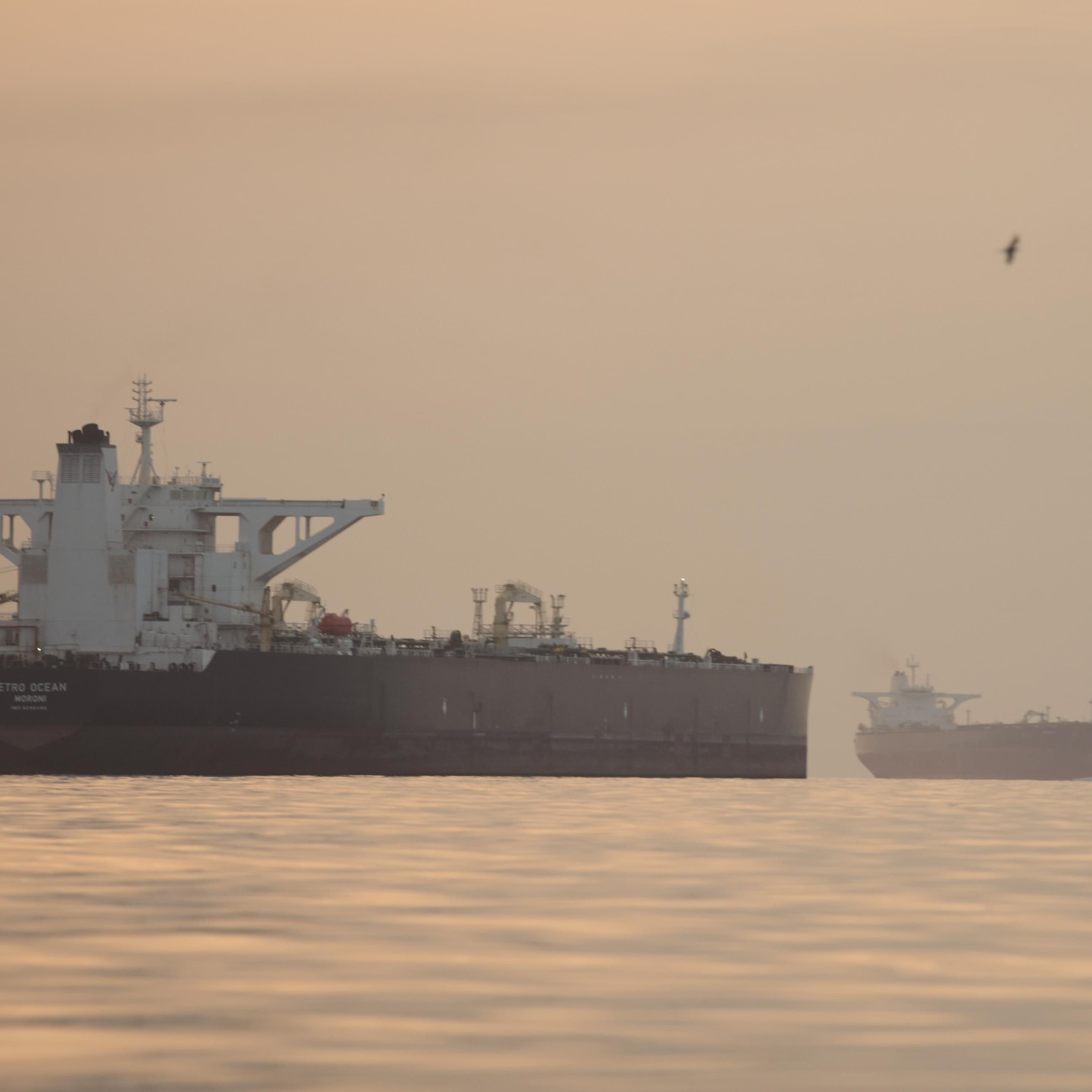
Today in Focus
Iran war energy crisis: how bad could it get? – The Latest
00:10:12
Oil and gas prices have jumped again as shipping through the strait of Hormuz came to a virtual standstill. Lucy Hough speaks to the Guardian’s energy correspondent Jillian Ambrose
Loading summary
Transcript34 lines
- [00:00]
Lucy Hoffman
This is the Guardian.
- [00:11]
Barclays Investment Bank Announcer
From globalization to innovation sustainability to market volatility, there's always more than one side to a story. Explore different perspectives on today's most important business and economic issues with the Flipside podcast from Barclays Investment Bank. Hear two research analysts in a lively debate and get insights from every angle. To further inform your view, listen to the flip side on your favorite platform.
- [00:42]
Lucy Hoffman
There will be different players with different sensitivities to this crisis. It makes it a lot more complicated to negotiate the US blockade on Iran's cargoes that will be a major blow to Tehran tonight. President Trump announcing the US seized and
- [00:57]
Barclays Brief Announcer
boarded an Iranian cargo ship today. Posting on social media, the 900 foot Tuska tried to evade the US blockade.
- [01:04]
Lucy Hoffman
The UK is more exposed than a lot of our neighbours and it's ideally a lesson that would have been learned after the Russia Ukraine crisis. But here we are in 2026 and we are debating the same things.
- [01:15]
Oil and gas prices have surged yet again after a re escalation of hostilities in the Strait of Hormuz and more uncertainty over the future of the US Iran ceasefire from the Guardians today In focus. This is the latest with me, Lucy Hoffman.
- [01:32]
Gillian Ambrose
With me is Gillian Ambrose, our energy correspondent. Thanks so much for coming up to the studio, Gillian. It's great to have you on the show.
- [01:37]
Lucy Hoffman
It's a pleasure.
- [01:39]
Gillian Ambrose
So we are talking a day after
- [01:41]
Lucy Hoffman
this pretty extraordinary US attack and seizure
- [01:45]
Gillian Ambrose
of an Iranian flagged ship in the Strait of Hormuz as a result of this blockade that the US has imposed. There's been this footage that's sort of reminiscent of the attacks on Venezuelan ships at the start of the year.
- [01:58]
Lucy Hoffman
Trump proudly saying that US Marines were
- [02:00]
Gillian Ambrose
able to board and that they were able to blow, blow open the side of the ship. But unfortunately it's meant that we've arrived at work on Monday to more market jitters and a further surge in oil prices. Tell us what's happened.
- [02:14]
Lucy Hoffman
Absolutely. It was a really dramatic end to what turned out to be a very brief reprieve in the markets. There was a sort of feeling of, dare I say, relief on Friday afternoon when Iran said that they were going to open the straits. We saw prices plummet to the lowest they've been since the crisis be and you know, closer to where prices were before the war began than the peak that we've seen at $119 a barrel. So there was a sense that, well, gosh, maybe this is the start of the end, maybe this is something to be optimistic about. But as you say, that came to Quite a spectacular end over the weekend. So first thing Monday morning, we've seen oil prices bounding back up 10%, we're back at $95 a barrel, and more importantly, I think we're plunged back into the UNCE that has become a hallmark of the oil markets in the last few weeks.
- [03:10]
Gillian Ambrose
And meanwhile, we're supposed to have the second round of the so called ceasefire talks happening in Pakistan. The US has indicated that it will be attending, but as Iran has been much less clear about whether it intends to go, and of course, critical if those talks do take place is the straight of Hormuz, which has become such a huge leverage in Iran's arsenal in terms of its power, in terms of its ability to disrupt the global economy. And weak in the U.S. exactly.
- [03:39]
Lucy Hoffman
This isn't how you'd want to start peace talks, but it's the situation that we find ourselves in. And one of the most troubling things to come out of this crisis is the extent to which Iran is now fully aware of how powerful it is. We've seen decades where they have threatened the Strait of Hormuz, where they've threatened the oil and gas which flows through it into the global economy. But this rarely has been the first time that they have fully tested their might as a nation over this really narrow waterway. And you can't put the genie back in the bottle after that. I think they know exactly how powerful they are and that's not a situation that will be easy for the US negotiators to go into. They are, you know, sitting opposite a very powerful adversary and, you know, they, they don't have a huge amount of leverage themselves.
- [04:30]
Gillian Ambrose
Yeah, I mean, arguably it has made Iran stronger or perhaps more of aware of its, of its economic capacity to ca much disruption. So in terms of the economic impact and in terms of the sort of impasse that feels like it will be very difficult to come out of and you know, yet more volatility in the markets and oil prices as you've outlined. How much longer could we hold out in this situation? And particularly looking at the US and Iran there, who both have, you know, fairly sizable reserves, but other economies don't.
- [05:02]
Lucy Hoffman
Well, exactly. This isn't a crisis of equals, I suppose. The US is a net exporter of energy. It is seeing price is going up domestically. So that will be a concern for Trump, but it's not going to run out of energy the way that we're seeing in some countries in Southeast Asia, for example. Europe is under a lot of pressure, particularly for fuels Things like jet fuels. So it's not equal. There will be different players with different sensitivities to this crisis and that it makes it a lot more complicated to negotiate.
- [05:33]
Gillian Ambrose
And what about Iran? Because the trade relationship with China is very important, isn't it? China imports 90% of its oil from Iran, so that's going to have a huge impact Iran's economy if this continues.
- [05:44]
Lucy Hoffman
Exactly. And I think, you know, Iran's oil exports are also the way that it's funding its aggression, its military aggression. So the U. S blockade on Iran's cargoes, which have been continuing throughout the crisis, that will be a major blow to Tehran. For China it's, it's less of an issue. They have a diverse range of supplies that they draw on and they're also sitting on some of the biggest stores of crude. They've spent most of the last 18 months quietly storing barrels of oil when it cheaper. So they do have a large contingency to draw from. But really everyone in the global economy is calling for one thing and that is for flows to resume through the Strait of Hormuz as normal. That's what's needed to get things back
- [06:30]
Gillian Ambrose
on track because there is just so much volatility, isn't there? And I wonder if you can tell me about some of the ways that
- [06:37]
Lucy Hoffman
this is already cropping up.
- [06:38]
Gillian Ambrose
I mean, you mentioned Southeast Asia, but it's also airlines who are being very badly hit, aren't there? There are real risks of mass flight cancell. Airlines have really suffered in terms of a fall in their share price today, haven't they?
- [06:51]
Lucy Hoffman
Exactly. I think airlines are in a particularly difficult situation because their business model is so forward looking and that's the one thing we don't have certainty on, is how long is this going to last? Are we talking about disruption or higher costs for the summer or are we talking much longer? For a business that's built on anticipating demand and anticipating services, you know, months, sometimes years in advance, this will be really difficult for airlines to navigate. I think that for them we're going to see this crisis drag on quite a lot longer.
- [07:23]
Gillian Ambrose
Here in the UK we are particularly vulnerable, aren't we? I mean, there's been warnings that we're sort of flirting with a recession, that a quarter of a million people could lose their jobs by the middle of next year. Why is the UK so particularly vulnerable compared to other similar economies in the G7 or G20?
- [07:41]
Lucy Hoffman
Yeah, the UK is more exposed than a lot of our neighbours and it all comes down to our reliance on Gas, obviously, back in the day, we had a lot North Sea gas we could rely on. But as now a net importer, you don't want to be as reliant on gas as the UK is. So, for example, we're seeing even our electricity prices are much higher than our neighbors in. In France and other countries. And that's because around 30% of our electricity is generated in gas power plants. Right. So that price feeds straight through. And the highest price in the market is what sets the price for the whole market. So we have gas setting the price for our electricity. We also have gas in 23 million homes in our bor boilers heating our water, warming our homes. We are very exposed to gas as a commodity. And this is something that the government has talked a lot about. We need to move to renewables. We need to weaken this link between gas costs and electricity costs. And it's ideally a lesson that would have been learned after the Russia Ukraine crisis. But here we are in 2026 and we are debating the same things. How do we delink gas from electricity? How do we make sure that cheap renew is setting the price, not expensive imported gas? We're expecting Ed Miliband to deliver on his promise to bring costs down.
- [09:04]
Gillian Ambrose
Yeah. Who is speaking tomorrow, we should say, in quite a major speech, to sort of outline how the government intends to respond to this moving forward.
- [09:12]
Lucy Hoffman
Absolutely. I think that is very keenly anticipated and there are levers that the government can pull. I don't want to preempt what he might say, but we will be sort of keenly watching because there are things that the government can do to speed up how quickly we can shrug off our reliance on gas. But there are often unintended consequences when you start intervening in the market. So that's something that the government will be keenly aware of.
- [09:37]
Gillian Ambrose
Very complex situation. Gillian, thank you so much for explaining it to us with such clarity and thank you for your time.
- [09:42]
Lucy Hoffman
Thank you.
- [09:45]
That's it for today. My huge thanks again to Gillian Ambrose, the Guardian's energy correspondent. You can keep up with her excellent reporting over@wtheguardian.com including a very useful explainer on the disruption to energy supply chains and why they've been particularly damaging to the uk. And don't miss a special episode of Politics Weekly, which will be in your feeds tonight with our political editor, Pippa Crera, and our policy editor, Kieran Stacey, who'll be looking at the fallout from the Guardian's extraordinary exclusive on Peter Mandelson's failed security vetting. That's it for today. Thanks for listening to this episode of the latest Today in Focus will be back in your feeds tomorrow morning. The latest will be back tomorrow night. This episode was presented by me, Lucy Hoff. It was produced by Bryony Moore. A senior producer was Ryan Ramgobin and the lead producer was Zoe Hitch.
- [10:36]
This is the Guardian.
- [10:46]
Barclays Brief Announcer
Today's markets move fast. Get the insights you need in 10 minutes with the Barclays Brief, a new podcast from Barclays Invested Bank. Through sharp dialogue and scenario based analysis, our leading experts analyze key market themes each week. So whether you're managing a portfolio or leading a business, the Barclays Brief podcast can help you make smarter decisions today. Stay sharp, Stay brief. Find Barclays Brief wherever you get your podcasts.
- [11:16]
Sofi Personal Loan Advertiser
High interest debt is one of the toughest opponents you'll face unless you power up with a SOFI personal loan. A Sofi personal loan could repackage your bad debt into 1:1 low fixed rate monthly payment. It's even got super speed since you could get the funds as soon as the same day you sign. Visit sofi.compower to learn more. That's S-O-F I.com P-O-W-E r loans originated by Sofi Bank NA member FDIC terms and conditions apply. NMLS 696891.