← Today in Focus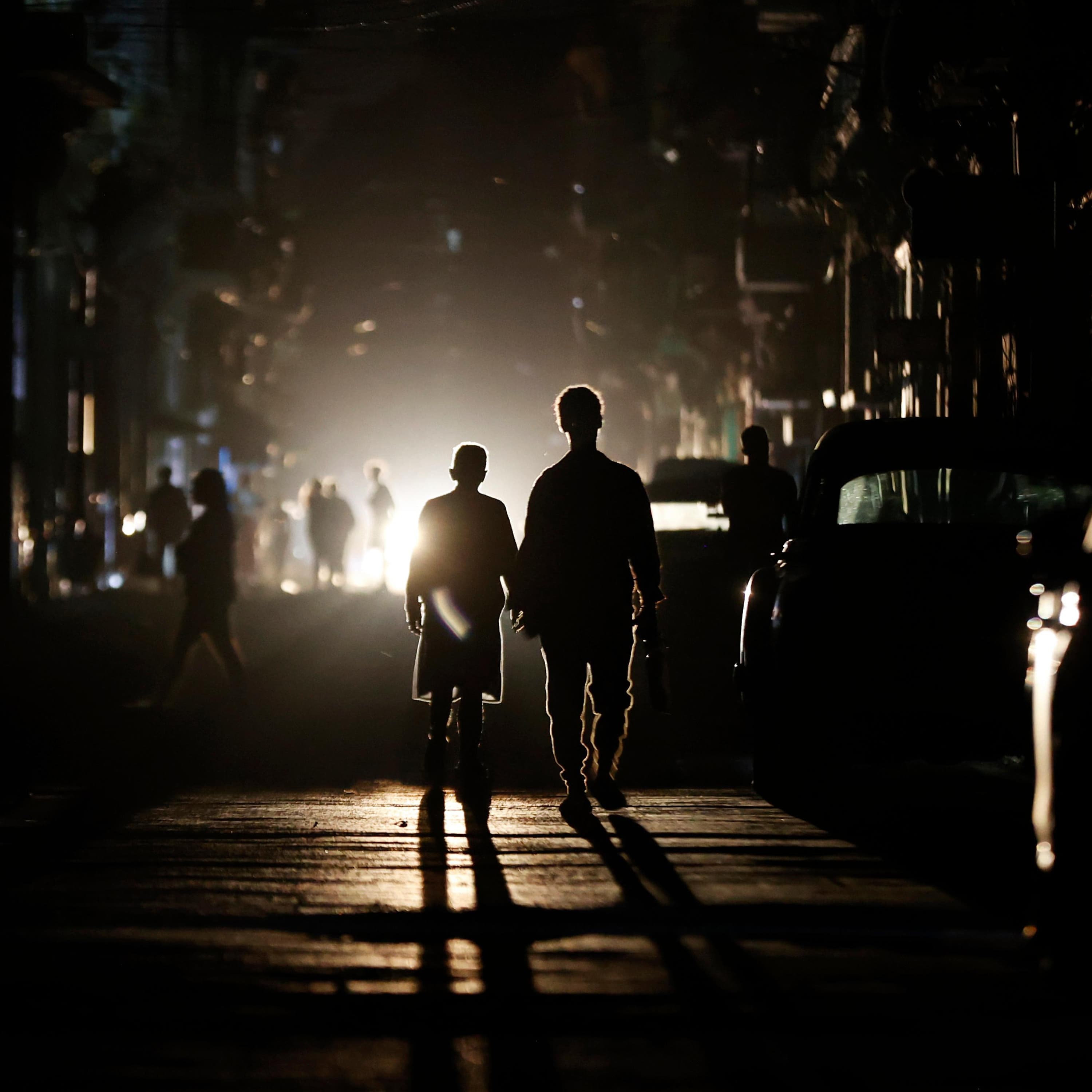
Today in Focus
Is Cuba Trump’s next target?
00:22:43
The journalists Ruaridh Nicoll and Daniel Montero report from Havana as Cuba suffers from a devastating oil blockade imposed by the US
Loading summary
Transcript76 lines
- [00:00]
Guardian Announcer
This is the Guardian.
- [00:08]
Noshea Nikbal
Today, will Trump go after Cuba next?
- [00:19]
Farnoosh Torabi
Hi, this is Farnoosh Tarabi from so Money with Farnoosh Tarabi. And today I want to talk to you about Boost Bobble Quick money tip. Stop paying a carrier tax. It's if your phone bill feels trapped in a pricey plan, this is your sign to unlock savings. Boost Mobile helps you reset your spending. With the $25 Unlimited Forever plan, you can bring your own phone, pay $25, and get unlimited wireless forever. And that simple switch can unlock up to $600 in savings a year. That's money you could put towards paying down debt, investing or something that actually brings you joy. Those savings are based on average annual single line payment of AT&T, Verizon and T Mobile. Custom to 12 months on the Boost Mobile Unlimited plan as of January 2026. For full offer details, visit boostmobile.com.
- [01:15]
Noshea Nikbal
For weeks now, ever since the US launched its attack on Iran, an island 7,000 miles away has been stalked by one. Are we next? Because as far back as January, Cuba has been under siege. The US has forced its allies like Venezuela and Mexico to cut the country off, to starve it of oil. Schools and offices have been shut down. Fuel is severely rationed. And there have been several terrifying national blackouts with very little to sustain a country of 11 million people trying to survive the harshest sanctions in its history.
- [01:54]
Daniel Montero
Mothers and their babies are dying there. This is war. There are no bombs falling in Havana, but the United States is waging war against Cuba as well, and there are victims to it.
- [02:04]
Noshea Nikbal
And there are hints from Washington that much worse is to come.
- [02:08]
Trump (voice clip)
And it may be a friendly takeover, it may not be a friendly takeover. It wouldn't matter because they're really, they're down to, as they say, fumes.
- [02:22]
Noshea Nikbal
What does Trump want and how far is he willing to go to get it? From the Guardian, I'm Noshea Nikbal. Today in focus, the view from Havana with Cuba on the brink. Daniel Montero, you're a journalist with Belly of the Beast, which is a US based independent media outlet that is focused on Cuba and its relationship with the US and you're currently speaking to us from Havana. Fuel is in short supply. Electricity comes and goes. How are you managing?
- [03:01]
Daniel Montero
We've had time to adapt. Obviously, right now we're dealing with Trump's oil blockade, so it's a lot worse. But we've been in a crisis for quite a number of years now in the city, here in Havana. We're already doing with 12 hours a day of Blackouts, at least. And if you step out of Havana and you go to the other provinces, like where my family lives back in my hometown, they're doing with three hours, four hours, five hours a day, right? And what that means for your daily life is you have to adapt to everything. Like this morning, you know, I woke up to electricity, so I started cooking, leaving everything ready so I can come to work. Because I don't know if when I make it back home, I'll be able to cook.
- [03:36]
Noshea Nikbal
I mean, nonetheless, you seem quite sanguine about it, but just looking at those images of the island entirely blacked out on two separate days last week. I mean, I know you say that Cubans are somewhat resilient and they're used to this and they've probably got their supply of candles and so on, but it must also be quite scary and just really, really difficult.
- [03:56]
Daniel Montero
Oh, it is. I mean, don't get me wrong. It's just a problem of if we were going to be angry and sad about it, we would be angry and sad about it all the time. Because it affects every aspect of life. Like there are scheduled blackouts that happen every day. You're going to get it no matter what, right? But when the whole thing falls, that's when the uncertainty hits. An island wide blackout hit Cuba yesterday. All 11 million residents of the island were without power after energy officials reported complete disconnection of the national electrical grid. Once it took four to five days to bring it back. At that point, that was really, really bad. So people start caring for the basics, okay, do I have water, Do I have food? And when you've been going through three days of blackouts and your food's going bad in the fridge and you have no idea what you're going to do tomorrow, I don't even know how to describe it. And I'm not even the worst out. Like, sure, I have those problems, but at least I know I'll be able to buy more food if my food spoils. You know, that's not the reality for a lot of people in the neighborhood where I live. It's actually one of the poorest neighborhoods in the city. It's mostly made up of inner migrants from the rural parts of Cuba. And what they try to do is come together to look after one another because there's no other way to survive the crisis than by doing that. So don't take from my tone that it is not serious, because it is actually, I would say the worst crisis we've had in decades given the state
- [05:20]
Noshea Nikbal
of affairs right now, how normal, if not is it on the streets of Havana?
- [05:27]
Daniel Montero
I think for those coming from the outside, they're expecting people to be running through the streets screaming because they think, if I was going through these conditions in my country, we would all lose it. No, I don't know what this reflects on our people. That that is not the reality. We are worse than ever. You can see that people are frustrated. They're angry, they're sad, they want their problem solved, but at the same time, they still find the time to laugh and to work and to do the things that they do. Bringing this back to the politics of it all. The goal of Trump's oil blockade is precisely to have a national uprising that results in regime change. There have been protests, but we've been having protests due to the Black House for five years now. But it's nothing like what the goal of this whole thing is supposed to be like. There's no national uprising happening right now. People get frustrated. They go out when the power's been gone for too long, then they put the power back on and they go back home.
- [06:27]
Rory Nicholl
Today, whether the US oil blockade on Cuba could come close to toppling the communist regime and whether Russia was would dare send in its oil tankers. They've cut off, they threaten anyone that delivers oil. So we haven't had oil for a long time, and that has brought the country to a standstill.
- [06:46]
Noshea Nikbal
Rory Nicholl is a journalist based in Havana, reporting for the Guardian, and he's been writing about the impact of Trump's maximum pressure strategy.
- [06:54]
Rory Nicholl
The transport is pretty much ended. Tourism has ended because any of the airlines that were solely there for tourism had pulled out. No flights from Canada, which provided the vast majority of tourists. People escaping the Canadian winter would come down 750,000 last year, but that was down on. I mean, that's nearly half what it was before that as well. And now there are none. No one from Russia that was the third most popular place to come from. Most state businesses are. Have shuttered, schools are on much reduced hours. Yeah. The country is grinding to a halt. However, there's a weird thing going on that I should mention, is that there's been licenses put out. The Americans are going to allow private individuals to import gasoline as long as the gas doesn't go to the government.
- [07:45]
Noshea Nikbal
The US has, of course, imposed an economic embargo on Cuba for decades. But many Cubans feared something new, more intense at the very start of the year when they saw the US launch its military operation to kidnap Nicolas Maduro. The president of Venezuela, and then start talking about taking the country's oil.
- [08:05]
Rory Nicholl
Cuba and Venezuela have been allies for a couple of decades now. I mean, since Chavez came to power. And it had a huge, profound effect here because 32 Cubans were killed. Maduro was protecting himself with Cubans. Venezuela, by that stage, was not the main supplier of oil. Mexico was. The big deal has been that Trump has browbeaten Claudia Scheinbaum, the president of Mexico, into not sending oil. But Mexico buckled in late January after
- [08:33]
Daniel Montero
the Trump administration threatened tariffs on any
- [08:36]
Rory Nicholl
country delivering Cuba fuel. They've essentially got an oil blockade and it's holding because everybody's so scared of what Donald Trump will do.
- [08:45]
Noshea Nikbal
But what the Trump administration wants in Cuba, surprise, surprise, it's not exactly clear.
- [08:51]
Rory Nicholl
I mean, the trouble is you can't talk it as one thing. Marco Rubio, who's a child of Cuban Americans, he feels passionate about this, sees it as a huge life achievement to bring democracy to Cuba.
- [09:04]
Daniel Montero
Yeah.
- [09:05]
Unnamed Political Analyst
I mean, Cuba has an economy that doesn't work and a political and governmental system. They can't fix it. So they have to change dramatically. What they announced yesterday is not dramatic enough. It's not going to fix it. So they've got some big decisions to make over there.
- [09:17]
Rory Nicholl
So he's very, very passionate about it. Donald Trump wants a win. He just wants something that looks good. But his attention wanders.
- [09:24]
Noshea Nikbal
President Trump says the US top diplomat Marco Rubio is talking to Cuba as the Caribbean island faces a shortage of fuel amid a US led oil embargo.
- [09:34]
Rory Nicholl
So it's quite odd because it seems that Marco Rubio might be prepared to do a deal that sees some sort. They're talking about economic freedom now rather than political freedom. And they might be prepared to do a deal that sees the country open American investment, that sort of thing that Donald Trump can sell as a big win. And it would be a huge win, but which may not actually produce the transition to democracy that Rubio would want.
- [10:03]
Noshea Nikbal
And while Daniel told me that life goes on as Rory describes, there is a tension in the air all the same.
- [10:09]
Rory Nicholl
You know, I'm not a totally grizzled old war correspondent, but I have seen countries collapse. And the problem is it's like a mugging. You sort of go forward in a state of anxiety. You sort of suddenly feel the atmosphere a bit weird around you. And that's the stage we're in at the moment. Suddenly there's a little bit of dangerous electricity in the air, but when it happens, it happens extremely fast. If food stops coming into the markets, or if disease arrives, you know, proper terrifying disease, you get cholera, then that will change everything. We are an island. This isn't like Zimbabwe. You can't bring in food over the border from South Africa. If it goes bad, it'll go bad very fast. And I know that the World Food Program is preparing for that now.
- [11:02]
Noshea Nikbal
But this pressure on the Cuban government and also on its people, could it actually be enough to topple this six decade regime? For now, at least, Cuba's communist leaders are giving little away.
- [11:18]
Rory Nicholl
There's two things I know. One is, of all the countries I've ever covered, the government is the most opaque. I have no idea what's going on in the government, but I don't feel bad about that because I have yet to meet a diplomat, a businessman, a journalist that actually knows what's happening. They are as tight as it gets and they've taken the Soviet model and perfected it. So I, I wish I could tell you what's happening in the government, but I don't know. The second thing is I wrote a piece not long ago in the Guardian. The headline in the magazine was End of the Revolution. And a friend of mine who's very wise and who I use a lot phoned me up and said on my coffee table I have a book that says Cuba on the verge. It's dated 2003. Next to it is a book said last hours or Last days of the Castros is dated 1993.
- [12:19]
Noshea Nikbal
Daniel, this blockade has come. As the Cuban president Diaz Canel recently acknowledged, Washington and Havana are in negotiations. Now, we can get to the substance of those talks in a minute, but can you first talk to me about what Donald Trump said in the Oval Office last week?
- [12:35]
Trump (voice clip)
I do believe I'll be the honor of having the honor of taking Cuba. That'd be good. That's a big honor.
- [12:43]
Noshea Nikbal
Taking Cuba.
- [12:44]
Trump (voice clip)
Taking Cuba in some form. Yeah, taking Cuba. I mean, whether I free it, take it. I think I could do anything I want with it. You want to know the truth?
- [12:55]
Noshea Nikbal
How did that make you feel? Feel? And how has it been talked about with people?
- [13:00]
Daniel Montero
You know, I mean, as used as we are at this point to Trump saying outrageous things, it never gets any easier to listen to, especially in the context of Venezuela, in the context of Iran. When Trump says he can do whatever he wants with Cuba, I believe him. And that's scary. If you had asked me last year if I thought the US would ever invade Cuba, I would have said no, of course not. That's ridiculous. Now, now I Don't think it's ridiculous at all. And it's the first time in my life that I've been actually afraid of that. You know, I live very, very close to a military base here in Havana. And I found myself in January with my wife at home just having this conversation of like, where should we be in the house to survive a bombing? And then we just looked at each other and it's like, can you believe we're having this conversation?
- [13:50]
Guardian Announcer
Cuba says its military is actively preparing for a possible US Attack. The Cuban Deputy Foreign Minister says it would be naive not to prepare for the possibility of conflict.
- [14:02]
Daniel Montero
It's infuriating, the entitlement of Trump thinking that he can do whatever he wants, the realization that he can actually do whatever he wants and just try and hope for the best, even though every possibility is out there.
- [14:15]
Noshea Nikbal
General Donovan, I'm going to ask you very directly, are we currently conducting any military rehearsals that involve seizing, occupying or otherwise asserting control over Cuba?
- [14:28]
Daniel Montero
Senator, U.S. southern Command is not.
- [14:30]
Noshea Nikbal
But Daniel, on the negotiations themselves, it's been reported that one of Washington's key demands is the removal of President Diaz Canel. Now, for listeners who aren't familiar, what can you tell me about him?
- [14:42]
Daniel Montero
He belongs to a generation that was born after the revolution. Now they're the ones that predominate within Cuba's leadership. In his case, he was since very young in charge of one of Cuba's provinces in the center of, and eventually became our Ministry of Higher Education, then vice president. Then in 2018, he was the chosen one by Raul Castro and the other people at the top. He is not necessarily the most charismatic person, which makes him, for us Cubans, a lot less popular in itself. Keep in mind, you know, Cuba's leader for a long time was Fidel Castro. And whatever you say about him, the man was charismatic. So people even from the beginning had mixed feelings about him. Right now, I mean, with everything that's happened, a lot of people do point a finger to him specifically. However, in terms of removing him, solving the problems. For decades, the US Criticism has been precisely that the Castro's control on the country is preventing us from moving forward. But if they're asking for Diaz Canel to step out, who stays in power? The Castro's again, do you think it
- [15:46]
Noshea Nikbal
is likely that he would actually stand
- [15:48]
Daniel Montero
down at this point? Honestly, anything seems possible. Likely. It's a different one because at the end of the day, what Washington is saying is they want compromise and they want Cuba to give them a number of things, even though they haven't really listed those things. I don't think Cuba's problems will be resolved with Miguel Diaz Canelo stepping from power tomorrow. I simply don't. I do think that our most pressing problems will disappear tomorrow if Trump lifted the oil blockade. At the end of the day, I put it like this. People do have grievances with the Cuban government. You know, we have grievances with our government. That is okay. That is normal. That is to be expected, and that is valid. But none of the grievances that we have are for the United States to resolve. You know, the United States, it's not the world's police. And at the end of the day, they're stepping in and they're not doing any of this for the benefit of the Cuban people. Even though they say it, they have created a set of conditions in the country that are killing people. The country is not running right now because it doesn't have fuel that kills people. And so at least I would like an admission of that. You know, they say, we're going to bring you democracy and freedom. All we need you to do is to suffer, suffer, suffer, suffer until you rise up and make a regime change. That's what the United States is doing.
- [17:09]
Noshea Nikbal
I mean, the Secretary of State, Marco Rubio, Cuban American himself, he is leading these negotiations. He has repeatedly said that Cuba needed new people in charge.
- [17:18]
Unnamed Political Analyst
People in charge, they don't know how to fix it, so they have to get new people in charge.
- [17:22]
Noshea Nikbal
Now, it's said that the US Would prefer replacing Diaz Canel with Raul Guillemo Rodriguez Castro or Raulito, who is the former president Raul Castro's grandson. And Rao, the grandfather, was, of course, Fidel Castro's brother. Daniel. What is this younger Raul Castro like?
- [17:40]
Daniel Montero
That's just it. These people are not usually in the public eye. It's not like with Jas Canelo, who we've known for years, even before he was president. Personally, I've never seen an interview of any of these people, you know, so, like, I can't even speak to their character. All of a sudden, they're the leading figures of Cuba's negotiations for the United States, or so they say. I know nothing of these people other than what anyone else that read a report knows. Honestly, I'm in the dark. It's frustrating, really.
- [18:06]
Noshea Nikbal
When you think about what the US Is reportedly aiming for in these negotiations. A lot of the comparisons that people are making is to Venezuela. You remove the leader, but the system stays in place. If the current president stepped down and the younger Raul Castro came to power, wouldn't the whole wider system more or less just stay the same?
- [18:27]
Daniel Montero
Well, there's no doubt about that. I don't think there's a scenario in which there is a shift in power within the the existing government that has a significant changes to the system. It would probably mean concessions to the United States, which again, we don't know exactly what those are, but it does seem like that's what Trump did in Venezuela. I mean, if you're asking me, would that make a difference in terms of how the political system works and in terms of what the government means within the country, that would not make a difference. No, of course not.
- [19:00]
Noshea Nikbal
Coming up, what could stop the US Blockade on Cuba?
- [19:13]
Farnoosh Torabi
Hi, this is Farnoushtrabi from so Money with Farnoosh Tarabi. And today I want to talk to you about Boost Mobile Quick Money tip Stop paying a carrier tax if your phone bill feels trapped in a pricey plan, this is your sign to unlock savings. Boost Mobile helps you reset your spending. With the $25 Unlimited Forever plan, you can bring your own phone, pay $25 and get unlimited wireless forever. And that simple switch can unlock up to $600 in savings a year. That's money you could put towards paying down debt, investing or something that actually brings you joy. Those savings are based on average annual single line payment of AT&T, Verizon and T Mobile customers compared to 12 months on the Boost Mobile Unlimited January 2026. For full offer details, visit boostmobile.com Security
- [20:03]
Vanta Advertiser
and Compliance done wrong is a giant headache. Security and compliance done right, that's Vanta. Vanta helps you earn trust and speed up growth. No spreadsheets required. For startups low on time and resources, Vanta becomes your first security hire, using AI and automation to get you compliant fast and unblock big deals for enterprises. Vanta is your AI powered hub for compliance and risk, bringing together data from across your businesses and automating workflows so you can prove trust at any moment. Vanta scales with you at every stage. That's why top companies from startups like Cursor to enterprises like Snowflake choose Vanta do security and compliance Right. Get started today@vanta.com tedaudio.
- [20:53]
Guardian Announcer
Chicago 2011. A cop is murdered. Police and prosecutors swear they have the trigger man. He swears he didn't do it. How far will each side go to prove their right?
- [21:05]
Farnoosh Torabi
Like it's just one bombshell after another. You know you're like what? What?
- [21:10]
Guardian Announcer
The story of a PlayStation, a brain eating amoeba and the relentless pursuit of justice. Off duty. Out now. Listen wherever you get your podcasts.
- [21:24]
Noshea Nikbal
Cuba's deputy prime minister gave an interview to NBC, which, as I understand it, it's a pretty rare thing to do. Now, he said the government was willing to make some concessions. They would, for example, consider letting Cuban Americans invest in businesses in Cuba, opening up the free market, essentially, in a
- [21:39]
Rory Nicholl
communist country, Cuba is open to having
- [21:42]
Daniel Montero
a fluid commercial relationship with US Companies, also with Cubans residing in the United
- [21:47]
Rory Nicholl
States and their descendants.
- [21:49]
Noshea Nikbal
Daniel, do you think that could be enough to placate Washington?
- [21:53]
Daniel Montero
I think it depends on what we're thinking about the US Because Trump and Rubio are two different people in this. Trump simply wants something that he can call a win. Rubio does want regime change. Over the past 15 years, Cuba has progressively been opening up its private sector and to investment. The announcement of Cuban Americans investing in the island is actually something that is very well received by people here because, as a matter of fact, that is already happening, simply not by name. You know, it is happening through relatives and friends. There's a number of businesses in Cuba that, even if it's not written anywhere, it has investors from Cuban families in the United States. So I think that's actually a very well received measure.
- [22:35]
Noshea Nikbal
The leadership in Cuba is under intense pressure, to put it mildly. And there have been protests, as you've mentioned. I think read about ones in the small town of Meron last week, which also, as far as I know, is a little bit out of the ordinary for the country. Daniel, in your view, is the public largely blaming the situation on the US on their own government, or is it a balanced mix of both?
- [23:03]
Daniel Montero
No, look, the Cuban government's popularity has decreased significantly in recent years as the crisis gets worse. If you had asked me last month, I think the protest would have certainly been completely focused on the government. The thing with Trump's oil blockade is that no one can now say that this is not connected to the United States. You know, the government can just say, look, I'm trying, but they're simply not letting any oil come in. Even those that are going out to protest understand that the only solution the government might have to that is to step down and to let the Americans take over.
- [23:36]
Noshea Nikbal
Daniel, are you hopeful at all that the suffering of ordinary Cubans that you've described could caused immediately by this blockade, that it's going to end anytime soon?
- [23:47]
Daniel Montero
On a personal level, I try not to hope anymore. Oh, God, I want to. I want to, like, there's nothing in the world that I want more than for the conditions of my people to improve. You know, my wife and I, we run a soup kitchen in our neighborhood. It was a bigger project and we've had to focus everything we have in food because people there need it. I've been going to the hospital here, especially the maternity hospital and the stuff I've witnessed there, because there are no materials. The doctors that are out there are overworked. You know, people will die. Mothers and their babies are dying there. This is war. They don't articulate it like that. There are no bombs falling in Havana, but the United States is waging war against Cuba as well, and they're victims to it. So I hope that the people in the United States actually see that, because that is how it feels like to us.
- [24:34]
Noshea Nikbal
Daniel, thank you so much for your time.
- [24:36]
Daniel Montero
No, thank you for having me. I was happy for the questions.
- [24:42]
Noshea Nikbal
And that's all for today. My thanks to Rory Nicol and Daniel Monteiro. This episode was presented by me, Noshi Nikbal. It was produced by Alex Atak and Ned Carter Miles. Sound design was by Breen McNamara and the executive producer was Sammy Kent. We'll be back with the latest this evening.
- [24:59]
Trump (voice clip)
Foreign.
- [25:10]
Guardian Announcer
This is the Guardian.
- [25:19]
Farnoosh Torabi
Hi, this is Farnoosh Tarabi from Sew Money with Farnoosh Tarabi. And today I want to talk to you about Boost Bubble Quick Money Tips Stop paying a carrier Tax if your phone bill feels trapped in a pricey plan, this is your sign to unlock savings. Boost Mobile helps you reset your spending with the $25 Unlimited Forever plan. You can bring your own phone, pay $25 and get unlimited wireless forever. And that simple switch can unlock up to $600 in savings a year. That's money you could put towards paying down debt, investing or something that actually brings you joy. Those savings are based on average annual single line payment of Verizon and T Mobile customers compared to 12 months on the Boost Mobile Unlimited plan as of January 2026. For full offer details, visit boostmobile.com Par
- [26:09]
Daniel Montero
Le Tu francais hablas espanol?
- [26:12]
Babbel Advertiser
Par if you've used Babel, you would Babbel's conversation based technique teaches you useful words and phrases to get you speaking quickly about the things you actually talk about in the real world. With lessons handcrafted by 200 language experts and voiced by real native speakers. Babbel is like having a private tutor in your pocket. Start speaking with Babbel today. Get up to 55% off your Babbel subscription right now at babbel.com acast spelled B A B-B-E-L.com acast rules and restrictions may apply.
- [26:49]
Tommy John Advertiser
Guys, it's no use putting it off. The best time for an underwear refresh is now. Tommy John Underwear is designed for a perfect fit that stays put all day. There's zero chafe, thanks to four times more stretch than competing brands and their innovative horizontal quickdraw fly is a game changer. With over 30 million pairs sold, there are thousands of men out there more comfortable than you. Don't settle for less. Go to tommyjohn.com today for 25% off your first order with code comfort. That's tommyjohn.com comfort Tommy John comfort Perfected.