← Today in Focus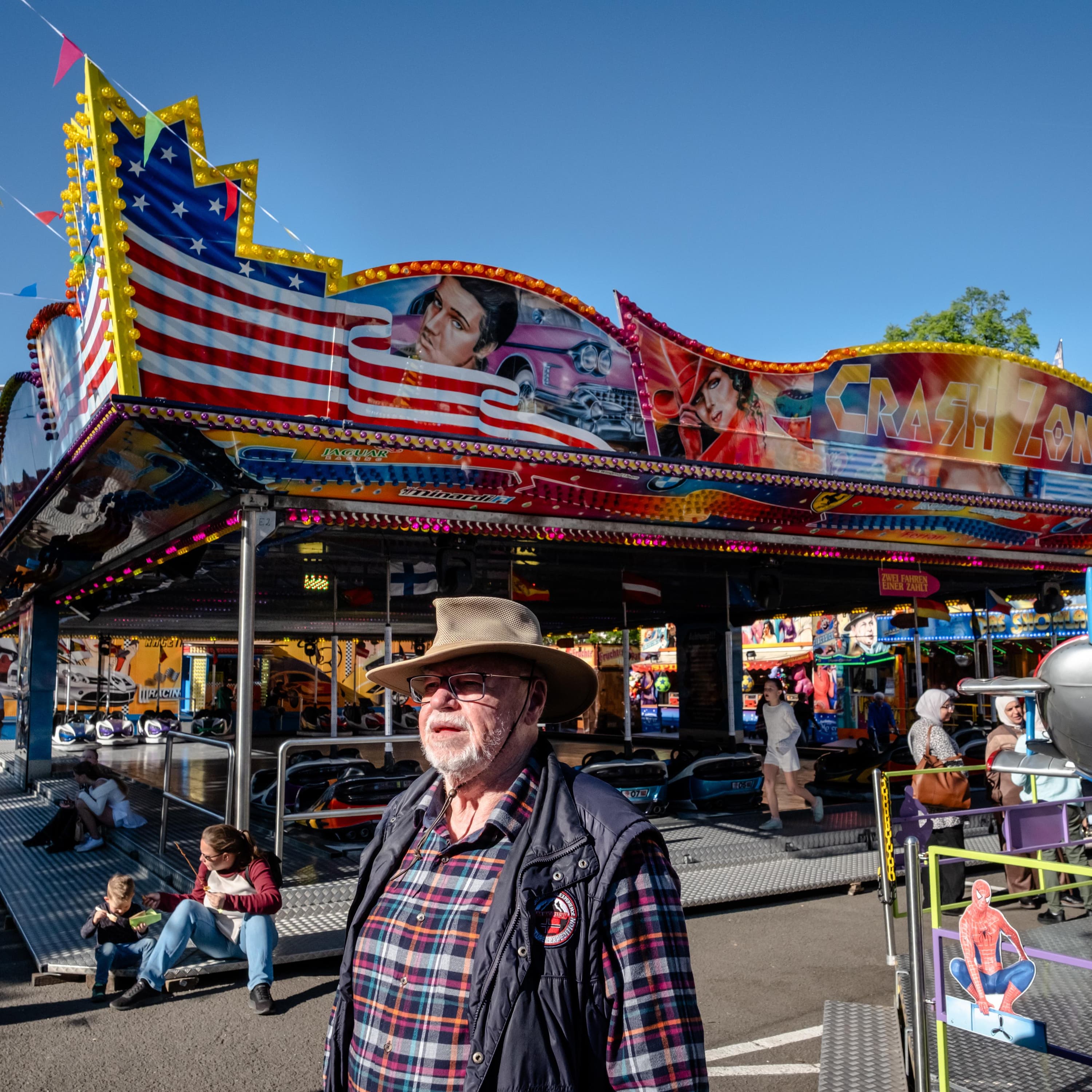
Today in Focus
Is Europe ready for a future without the US?
00:32:09
Trump has threatened to pull 5,000 troops from Germany – while European leaders worry this is just the start of a US withdrawal from the continent. Deborah Cole reports
Loading summary
Transcript98 lines
- [00:00]
Donald Trump
This is the Guardian.
- [00:10]
Helen Pitt
Today, as Trump withdraws troops from Germany. Is Europe ready for a future without America?
- [00:24]
Stamps.com Advertiser
Shipping, billing, admin, payroll, marketing. You're managing all the things, so why waste time sending important documents the old fashioned way? Mail and ship when you want, how you want, with stamps.com print postage on demand 24, 7 and schedule pickups from your office or home. Save up to 90% with automated rate shopping. That's why over 1 million small businesses trust stamps.com. go to stamps.com and use code podcast to try stamps.com risk free for 60 days.
- [01:02]
Deborah Cole
Landschwe is a very unique place. I mean, it's just a small town in Germany at first glance. You've got the sort of Rhineland architecture and the sloping red roofs and, you know, these sort of 19th century buildings around.
- [01:15]
Helen Pitt
Deborah Cole covers Germany for the Guardian, and she recently visited Landschule in the southwest of the country, which, while very German, is also very American.
- [01:25]
Deborah Cole
You have the American fast food joints and you've got a nail salon with an American flag in front of it. They had a fun fair going when we were there, decorated with Uncle Sam. It's essentially just, you know, kind of one big welcome mat for Americans to feel part of this community. And they have been for, you know, now, 81 years.
- [01:48]
Helen Pitt
Ever since the U.S. army marched into the nearby city of Kaiserslautern in the spring of 1945, Americans have been woven into the fabric of life here. Of the 68,000 U.S. military personnel stationed in Europe, around 9,000 live in Landstuhl along with their families. So when Donald Trump announced he would be withdrawing American troops from Germany, apparently to punish the German chancellor for suggesting his war in Iran was a mistake, dismay spread across Landstuhr.
- [02:23]
Deborah Cole
I spoke to a high school teacher in town who compared it to, like a bombshell.
- [02:34]
Helen Pitt
I'll translate that for you. Around here, we love our Americans, she says. Across Europe, leaders are starting to wonder what will happen if this is just the start of the American withdrawal from the continent, potentially from NATO too. They're increasing defence spending, reintroducing conscription and stockpiling weapons. But is it enough? From the Guardian, I'm Helen Pitt. Today in focus, can Europe defend itself alone? Deborah Cole, welcome to the show.
- [03:12]
Deborah Cole
Thank you for having me.
- [03:14]
Helen Pitt
It's lovely to see you. So you're not just our Germany correspondent, but you're also an American, aren't you? So you're very perfectly placed for this episode. So thanks for being here.
- [03:22]
Deborah Cole
My pleasure. Thank you.
- [03:23]
Helen Pitt
So you had a very interesting day in this town of Landstuhl. Last week, after Trump threatened to withdraw 5,000 troops from Germany. Can we just start with the basics? Why are there still any American soldiers stationed in Germany?
- [03:37]
Deborah Cole
Well, you have to kind of scroll back 81 years to the end of the Second World War. So at that time, Germany was completely physically and morally destroyed. And the American troops led by General Patton marched into this region in March 1945 and have never left. And it's been a place to project US Power throughout a very broad region, as well as protecting European allies who are part of NATO.
- [04:11]
Helen Pitt
And then so over the last 81 years, when was the sort of peak for the number of troops that were stationed in Germany?
- [04:18]
Deborah Cole
So the peak was during the Cold War. At the end of World War II, there were 1.6 million U.S. troops, but that was a short lived experience. And then after that, they drew down into the hundreds of thousands. In the 1950s, 60s, 70s, up and through the, you know, through the 80s, you still had more than 250,000 US troops in Germany.
- [04:42]
Helen Pitt
What is actually in Landstuhl when it comes to US Military facilities?
- [04:46]
Deborah Cole
Well, Landstuhl is known mainly for the medical center there, and that is the biggest US Hospital outside the United States. But it is part of a whole community that is part of the Kaiserslau military community and that includes the Ramstein Air Base, which is also enormously important for US Military operations in Europe and military action in the Middle east, in Afghanistan and in Africa. So the whole community taken together has about 50,000 U.S. troops, support staff, and then families who are based there. So these are people who are not just kind of passing through. They come and they stay for a few years with their families.
- [05:34]
Helen Pitt
And isn't Rammstein also important for NATO? I read that it was the sort of it acted as the command center for military airspace surveillance for all European partners.
- [05:44]
Deborah Cole
That's right. And it's also been in use as part of the US Israeli led war in Iran. And whereas some European partners have refused to allow the US to use their airspace as part of that campaign, German airspace, and have been very important as part of this latest war as well.
- [06:07]
Helen Pitt
Isn't that interesting considering the dive that the US German relations have taken in the past week as we will get onto. And so you went to Landstuhl just last week and I know that you spoke to quite a few residents and troops who are in the town and they seem quite sad at the prospect of the troops being sent back home. Why do American GIs, if you want to call them that, have such a special place in so many Germans hearts.
- [06:31]
Deborah Cole
Well, I mean, you know, from the US Perspective, there is a lot of history there. But also the Germans, you know, they. Some of the people I talked to talked about sort of our Americans. And almost everyone I spoke to among the Germans had either worked for the Americans or been married to an American or had children. I mean, their business ties that go back decades. I mean, these are communities that are completely interwoven. It is a community that is very much German American. And so for me, as an American going to visit, it's sort of like this. It's like a kind of Truman Show. It's a world within a world where I feel like for half a second, if I kind of squint, that I'm somewhere in a midwestern town.
- [07:17]
Helen Pitt
And in terms of what you can actually see, in terms of the American influence, what is there in Landstuhl that would give you a hint if you didn't know that there was this enormous American air base so nearby.
- [07:27]
Deborah Cole
So when we were there last Thursday, we got lucky that the carnival, the spring carnival was held. And you know, just as we pulled into town, we saw these rides for kids with Uncle Sam. You see the Stars and Stripes everywhere. Every shop sort of, you know, everything's advertised in English and in German. For those of you who remember Wayne's World, we went to Shel Wing's Chicken Potty Time.
- [07:56]
Helen Pitt
Excellent. Yeah.
- [07:57]
Deborah Cole
Yeah. I knew I had found the right place to find Americans and Germans. And so, you know, it's a community that has very much opened its arms to its Americans and tried to make them feel as home as possible.
- [08:13]
Helen Pitt
And I guess there's a lot of livelihoods in the area that are dependent on the Americans presence. Did you meet anybody whose businesses would be in dire straits if they were to be sent back home?
- [08:25]
Deborah Cole
So one of the people I spoke to who is particularly interesting, his name is Carl and he was born in Poland, but he's lived in Germany since he was 12. And so he, as the manager of this Schwing's location I visited, said that it would be absolutely devastating. And he described it, he said that a lot of people are drawn to this, you know, fairly small town, Landstuh, because they want the American feeling. And there are and have been a lot of business opportunities, a lot of jobs that are stabilized, that are supported by the American military presence. In fact, they are completely dependent on it.
- [09:12]
Helen Pitt
And so beyond financial dependence on the Americans and this desire to have an American feeling, do the Germans that you met in Landstuhl feel kind of emotionally sentimentally attached to the American presence. Because the Americans had such a big influence on post war Germany, didn't they? From the air bridge, which people might remember from 1948 in Berlin, when the Soviets had essentially cut off West Berlin from the rest of the country. And the Americans every day, didn't they, day and night, flew in food and coal, everything that the West Berliners needed.
- [09:47]
Donald Trump (voice clips)
Moving forward, from the difficult flying conditions of winter to the sunny skies of summer, the Berlin airlift underlines its resounding success with an amazing feat.
- [09:59]
Deborah Cole
Yeah, absolutely. I mean, you know, the Americans kept the Germans from being starved into submission by the Soviet Union. And so there's an enormous amount of gratitude linked to that. Then, of course, the Marshall Plan, which pumped billions over the years into rebuilding Germany, not only economically, but also welcoming it back into the community of nations. West Germany after the Nazi period, that was anything but a given. But I think then, you know, we get to the heart of the issue here, that the Germans saw it as the right thing to do, not only in terms of rebuilding Europe, but also in their own interest in the context of the Cold War. And that interest that the United States has by having this military presence here is still very much the case. That hasn't changed.
- [10:49]
Helen Pitt
Yeah. And beyond Landstuhl and Ramstein, how big is the US military presence in Germany?
- [10:55]
Deborah Cole
So there are about 36,000 soldiers here, and that is a little bit more than half of the US Troops in all of. But then along with that, you have, you know, civilian support staff and as I mentioned, the families. So the actual American presence is through that, you know, exponentially bigger.
- [11:15]
Helen Pitt
And from a defense or military point of view, how important are these bases for the Americans and for the Germans and the Europeans?
- [11:24]
Deborah Cole
The Americans just in Germany alone have 20 to 40 bases, depending on sort of how you define a military base. But it is a very large presence. We talked earlier about Ramstein and the essential import importance that that has as part of NATO. As you were saying earlier, Helen, that it's not only the Americans who use Ramstein, but many, many NATO members. And it is not only, I think Trump often in the way he speaks about it, puts it in terms that the American military presence in Germany is only to defend Germans and Europeans. And that is far from the case. I mean, as we're seeing right now in the Iran war, Rammstein and the other are extremely important as part of this military operation. And just in general, it is, you know, sort of a forward launching pad essentially for military operations in Africa. You know, in The Middle East. We mentioned Afghanistan. I mean, I've. I've been based in Germany for a long time and, you know, it used to be down in Stuttgart, which is where the European Command is based. It's also where the US Africa Command is based, and go to briefings with the Supreme Allied Commander there, you know, constantly, because everything was being planned, for example, after 911 in Afghanistan and then later in Iraq, you know, from Patch Barracks in Stuttgart, Germany. So there's a whole sort of infrastructure that has been built up over decades. And so the idea that you could sort of just toss this out the window and still have the same projection of American power throughout this enormous region is completely illusory.
- [13:07]
Helen Pitt
And in terms of the Germans, is there any truth in it when Trump says that the Germans have kind of outsourced their own security to the Americans? Because for a long time, the German army, the Bundeswehr, has been mocked by many other armies. I remember hearing a colonel from the British army dismiss it as an aggressive camping organisation. This idea that they couldn't really, you know, if somebody did attack Germany, that they would be pretty helpless.
- [13:38]
Deborah Cole
Well, again, we have to take historical perspective on all of this. I mean, the horror unleashed by Nazi Germany and its military is a memory that is very much still alive in Europe. And so the whole idea was to allow Germany to return to a certain economic strength, but also, at the same time, restrain any sort of military ambitions it could ever have again. And it also bred a pacifist streak in the public. You know, sort of never again among Germans was taken very seriously for a long time, and they saw it as part of their identity, this absolute rejection of the Nazi past. So then, as time went on, more and more American presidents, however, started seeing all of this German economic strength that wasn't being backed up with investment in its own military.
- [14:31]
Donald Trump
Guten Tag. It is wonderful to see all of you. And I want to begin by thanking Chancellor Merkel for being here.
- [14:40]
Deborah Cole
And even Barack Obama would tell Angela Merkel, look, you know, and they had a very good relationship, you know, would say, look, he didn't sort of use the word, you know, freeloading and things Trump has reached for, but he did. Obama tried to impress on the Europeans, particularly the Germans, that they needed to step up.
- [15:00]
Donald Trump
And that's why every NATO member should be contributing its full share, 2% of GDP, towards our common security. Something that doesn't always happen. And I'll be honest, sometimes Europe has been complacent about its own defense, and
- [15:18]
Deborah Cole
that message was quietly ignored for a
- [15:21]
Donald Trump (voice clips)
Very long time, very historic milestone. This week, the NATO allies committed to dramatically increase their defense spending to that 5% of GDP, something that no one really thought possible. And they said, you did it, sir. You did it. Well, I don't know if I did it, but I think I did. This will be known as the hate.
- [15:42]
Deborah Cole
And then Trump became kind of a wake up call for the Europeans.
- [15:47]
Donald Trump (voice clips)
But it's a monumental win for the United States because we were carrying much more than our fair share. Was quite unfair, actually.
- [15:59]
Deborah Cole
And when German Chancellor Friedrich Ma was elected on election night, in his first speech, after it became clear that he was going to be the next leader of Germany, he used the word independence from the United States, which was really shocking for a lot of people to hear. Like, that was sort of the headline. That this was a recognition that this historic relationship that was built on trust and a sense of German reliance on the Americans, but also an understanding that, you know, the Americans saw their future also as rooted in the stability and success of Europe, that that was breaking apart more quickly than anyone could imagine, and that the Germans were going to have to react to this new reality. Yeah.
- [17:00]
Helen Pitt
And that brings us nicely to the latest spat and potentially the most serious one. And it all began last week, didn't it, when Friedrich Merz was talking to some school children in Marsburg. I'm not sure where Marsburg is. What happened?
- [17:15]
Deborah Cole
So Marsburg is in Friedrich Merc's constituency. And Friedrich Merc, he has a way sometimes of forgetting that he's the German chancellor and that if he is speaking to a classroom full of pupils in his, you know, backyard, that that is going to reach the entire world instantly, including the Oval Office. So he chose this moment to announce at least a strong shift in tone in terms of his approach to Donald Trump and to this US Israeli military action in Iran. And his choice of words, he chose some provocative words. That the Americans were being outmaneuvered and that they were being humiliated by Iran. And Donald Trump likes to be flattered, and he certainly doesn't like to be told that he's being humiliated. Yeah.
- [18:33]
Helen Pitt
As you said, it seemed to be a bit of an about turn for Friedish Metz, because when he made his first visit to the White House, didn't he give Trump this, like, gold framed birth certificate of Trump's grandfather, Friedrich Trump, who emigrated from the German Germany in 1885?
- [18:48]
Donald Trump (voice clips)
First of all, I want to thank you for that. That's my pleasure. Thank you very much.
- [18:51]
Friedrich Merz
Thank you again.
- [18:51]
Donald Trump (voice clips)
Fantastic.
- [18:54]
Friedrich Merz
We are having so much in common. Our history we owe the Americans a lot. We will never forget about that. And so with your German provenance, I think this is a very good basis for close cooperation between America and Germany.
- [19:09]
Helen Pitt
Naturally, what Smerz said in front of those schoolchildren reached Trump's ear. And he was not happy about it, was he? How did he respond?
- [19:18]
Deborah Cole
So Trump was very quick to respond to these comments in Germany.
- [19:23]
Donald Trump (voice clips)
I mean, he's doing a terrible job. He's got immigration problems, he's got energy problems. And he criticized me for doing the whole thing with Iran. But I said, would you like to have a nuclear weapon in the hands of Iran? He said, no, I don't. I said, well, then I guess I'm right, right? He didn't have any answer to that.
- [19:46]
Helen Pitt
So Trump is cross. And then very quickly he acts, doesn't he?
- [19:49]
Deborah Cole
The United States says it will withdraw 5,000 of its troops from Germany as a rift widens between the two countries.
- [19:57]
Kai Wright
Why is the US Removing troops from Germany?
- [20:00]
Donald Trump (voice clips)
We're going to cut way down and we're cutting a lot further than 5,000, thank you very much.
- [20:06]
Helen Pitt
And not only is Trump withdrawing 5,000 troops from Germany and potentially more in future, it looks very much like the US Is also not going to be stationing some really crucial long range Tomahawk cruise missiles there either. And these are missiles that the Europeans were counting on really, to deter Russia. The Europeans are already building their own, but they are some way off being finished. So that's going to leave them pretty exposed. But when it comes to the troop withdrawal, do you think that it was purely to spite Friedrich Metz, or does it fit, do you think, a pattern of Trump wanting to reduce troop numbers in Europe to reduce the European reliance on America?
- [20:41]
Deborah Cole
Well, well, it fits not only a broader pattern of Trump threatening to reduce the US True presence in Europe. I think in general, it reflects an attitude towards Europe that this alliance that has existed since the Second World War is no longer in U.S. interest, according to him. And he has very much painted the defense of Ukraine as being a European problem. That was another thing he said when he lashed out under Joe Biden. It was seen that defense of Ukraine was absolutely in an American interest and that Russia was the adversary. And Trump has obviously taken a very different approach when it comes to Russia as well.
- [21:29]
Helen Pitt
And there's an irony there, isn't there? Trump telling the Europeans, when it comes to Ukraine, you're on your own, because he's the guy that returns to the White House for the second time and then invites Putin to Alaska for talks. Completely cuts out the Europeans. Not just the Europeans, but the Ukrainians themselves.
- [21:45]
Deborah Cole
Yeah, yeah. And that followed the dressing down he gave Zelenskyy in office, which, you know, you talk to German officials and the horror they experienced watching that. And I think it was also because it, it drove home the sense that the Europeans really are on their own. I mean, NATO alliance still exists, although Donald Trump said at the beginning of April that he could very much, you know, Im the United States leaving NATO and the consequences of that obviously would be catastrophic for the Europeans. But this idea, the whole sort of framing that the US Military presence in Europe is really only a favor to the Europeans is one that really doesn't bear out in reality when you see how important these bases are for the projection of American military power in, in several regions around the world.
- [22:42]
Helen Pitt
Coming up, how ready is Europe for an Americanless future?
- [23:05]
Stamps.com Advertiser
Still waiting in line. Again, that's time you'll never get back. Save time and money with stamps.com over 4 million businesses have skipped the line with stamps.com. join them to save up to 90% off carrier rates from your computer or phone right now. Print postage for certified mail, registered mail and packages in seconds. Then schedule a pickup right from your home or office for a limited time time. Go to stamps.com and use code podcast for a free welcome gift. Taxes and fees apply.
- [23:40]
Carter Sherman
I'm Kai Wright.
- [23:41]
Kai Wright
I'm Kari Sherman.
- [23:42]
Carter Sherman
And we are here to tell you about our new show, which is rooted in this feeling that at least I have, I know you have, where, you know, it's kind of like when you wake up in the morning and you pick up your phone and you're just hit in the face with a fire hose of news, right?
- [23:59]
Kai Wright
Like there's war, there's authoritarianism, our planet is burning. I could go on and on and
- [24:04]
Donald Trump (voice clips)
on and on and on and on.
- [24:06]
Carter Sherman
But like, we're trying to figure out how to manage it, right? Like, how do you manage it?
- [24:09]
Kai Wright
I manage it by leaning in and trying to learn more and trying to figure out, okay, how can I be smarter about this particular topic and who can I talk to that's going to make me feel better about it and
- [24:20]
Carter Sherman
who can tell me who's responsible for the mess that I'm reading about. So that's our, that's the show.
- [24:26]
Kai Wright
Welcome to Stateside with Kai and Carter. We're a new show from the Guardian.
- [24:30]
Carter Sherman
We're talking to big thinkers and the best journalists just trying to understand the world through smart conversation and honest reporting.
- [24:37]
Kai Wright
We don't have billionaires Telling us what
- [24:38]
Carter Sherman
to say Stateside with Kyan Carter will come out three times a week, Monday, Wednesday, and Friday, starting May 13th.
- [24:44]
Kai Wright
Follow on Apple Podcasts or catch us wherever you watch or listen.
- [24:50]
Helen Pitt
So, Deborah, as you say, Trump has threatened to withdraw from NATO altogether. He's also suggested that he's going to try and get Spain kicked out of NATO. He's got a particular beef with Pedro Sanchez, the Socialist prime minister of Spain. He's threatened to withdraw troops from Italy and Spain and beyond, just the question of troop withdrawal from Germany and beyond, because there are also troops in Italy, Spain, the UK Belgium and other countries. What is Europe worrying about so much? What has Trump said and done that is causing such consternation at this point point?
- [25:26]
Deborah Cole
Well, you don't even have to just listen to the Europeans. I mean, you know, there were Republicans after Trump made his comments at the end of last week saying, surely this is going to embolden the Russians. I mean, if you're Vladimir Putin and see that the Americans are going wobbly in terms of, you know, their military presence in Europe, then it's, you know, it's an embossed invitation to at least pursue more provocations. When we've seen these hybrid attacks, you know, for the last several years, and, you know, the of the biggest fears is that, you know, the, the Russians could go beyond Ukraine, you know, potentially into the Baltics, for example.
- [26:04]
Helen Pitt
Yeah, yeah. Or Poland.
- [26:06]
Deborah Cole
Yeah, or Poland. Yeah. And the Europeans have tried over the last several years since the first, the first term of Trump, to build up their military strength, but they're certainly not in a position yet to be able to defend themselves against a nuclear power like Russia with an enormous army. And so as time goes on, it's a race against the clock. And time is not on the European side.
- [26:36]
Helen Pitt
Indeed it's not. And that is why the Europeans held this slightly odd summit on Tuesday in Armenia, which is a country, let's be honest, they've never really cared about before. But it is on the border with Russia and Iran. And the summit was basically all about how to stop Russia's advances beyond Ukraine.
- [26:54]
Deborah Cole
We all live in a volatile geopolitical context, and in this challenging environment, the first ever EU Armenia summit could not be more timely.
- [27:06]
Helen Pitt
And it was really interesting to see that Mark Carney was there alongside the Europeans. Another sign, I thought, that the Canadians want to be moving closer to Europe now, that they, too, can't depend on the Americans. And I guess ringing in all of their ears will be the remarks made by Mark Rutter, the former Dutch prime minister who's now the head of NATO, who said in January, if anyone thinks
- [27:27]
Donald Trump
here again that the European Union or Europe as a whole can defend itself without the US keep on dreaming. You can't, we can't. We need each other.
- [27:36]
Helen Pitt
Is that skepticism shared by other European leaders or do they think, do you know what, guys, if we really put our backs into this, if we really increase defence spending, we can do it and we can do it soon.
- [27:49]
Deborah Cole
I don't think anyone thinks that it would be soon enough, let's put it that way. I mean, it's really even hard to imagine, imagine that the collective effort would be focused enough and enough resources poured into it. There just isn't, you know, enough time to develop that kind of strength while Trump is still in office. And so I think in the back of, of many Europeans minds, it's okay, yeah, we, we got the message, we're trying, we're focused. But of course there's a hope that after Donald Trump leaves office that it won't be a Maga Republican Hout takes his place. At the same time, I think that the penny really has dropped under Trump. Two compared to Trump. One, that this post war period, I think that there is an understanding that that is crumbled and the potential, even if whoever replaces Donald Trump is more of a transatlanticist again, there's no guarantee that whoever follows that person won't be, you know, another Trump. Trump. Eight, let's put it that way. Yeah.
- [28:58]
Helen Pitt
And beyond Germany, how united are EU leaders on the way forward? None of them, with the exception of Poland, are anywhere close to reaching the commitment that they've made to spend 5% of GDP on defence by 2035. You've got the Germans reintroducing conscriptions and then you've got nations like Spain suggesting that the only way forward is a European army, which is a very controversial thing, isn't it? Do you think that that's something that's realistically on the table in near or medium future?
- [29:29]
Deborah Cole
Well, it's a revival of an old debate whether it's better to have increased European military strength within NATO or the French had talked about building sort of, you know, a parallel structure, having, having increased military strength outside of NATO. I think you do have a lot of tension within the European Union as to, you know, which approach is the best. I think Germans, most establishment Germans from across the mainstream political parties are much more comfortable with the buildup within NATO. That also has historical reasons, but it's interesting that you mentioned the Spanish. So when Philippe Metz was in Washington in March, and this was right after the beginning of the Iran war. Donald Trump started attacking Keir Starmer. You know, he's no Winston Churchill. And he also really went after Pedro Sanchez. And the Spanish government at the time, they had refused to allow any of the. Of their airspace or bases to be used in the. In the Iran campaign. And that was a provocation to Donald Trump. And so he went after him and he said that they were going to sort of, you know, break off all trade and things and.
- [30:43]
Helen Pitt
Yeah, and forgetting that the EU trades as a bloc.
- [30:47]
Deborah Cole
Yes, exactly.
- [30:48]
Helen Pitt
Yeah.
- [30:48]
Deborah Cole
And so Fliedek Mats and a lot of people in Germany and certainly across Europe, were a bit horrified to see that Friedrich Matz did not immediately stand up for the Spanish, who are partners in the European Union, partners in NATO. They, you know, have a good bilateral or had a good bilateral relationship. And there were days and days that went by when Manz was trying to get, you know, Sanchez on the phone, and supposedly he, you know, had changed his number. I mean, it was a real diplomatic, you know, spurred that. It sparked. And I think that that was not only sort of a bit tragic, but it was also symptomatic. For if the United States, in whatever sense, pulls out as a true and committed partner to Europe, then it is going to revive tensions between European nations, rivalries that had been tamped down for years and years, for decades since the Second World War, essentially because of the building of these institutions that were backed up with American power. You take them out of the mix in whatever way, and I think you're going to start seeing these centrifugal forces in Europe that could be quite dangerous.
- [32:06]
Helen Pitt
Oh, gosh, Scary times. Deborah, thank you so much. That was fascinating.
- [32:10]
Deborah Cole
Thanks so much for having me.
- [32:13]
Helen Pitt
That was Deborah Cole, Germany correspondent for the Guardian. You can read her great dispatch from landstuhl@theguardian.com before we go, I just wanted to tell you about a new video podcast that our New York office is launching. It's called Stateside with Kyan Carter, and it's hosted by our colleagues Kai Wright and Carter Sherman. Each week, they're going to be trying to make sense of some of the biggest stories happening right now. The show will feature conversations with some of the smartest thinkers and reporters, not just from the Guardian, but from across the world. It's launching on the 13th of May, with episodes every Monday, Wednesday and Friday. You can find it in full video on YouTube and wherever you get your podcasts. And that is all for today. This episode was produced by Tom Glasser and Ned Carter Miles and presented by me, Helen Pitt. Sound design was by Brian McNamara and the executive producer was Humma Khalili. We'll be back in your feeds this afternoon with the latest.
- [33:13]
Stamps.com Advertiser
Foreign. Billing, admin, payroll, marketing. You're managing all the things, so why waste time sending important documents the old fashioned way? Mail and ship when you want, how you want with stamps.com print postage on demand 247 and schedule pickups from your office or home. Save up to nine 90% with automated rate shopping. That's why over 1 million small businesses trust stamps.com go to stamps.com and use code podcast to try stamps.com risk free for 60 days.