← Today in Focus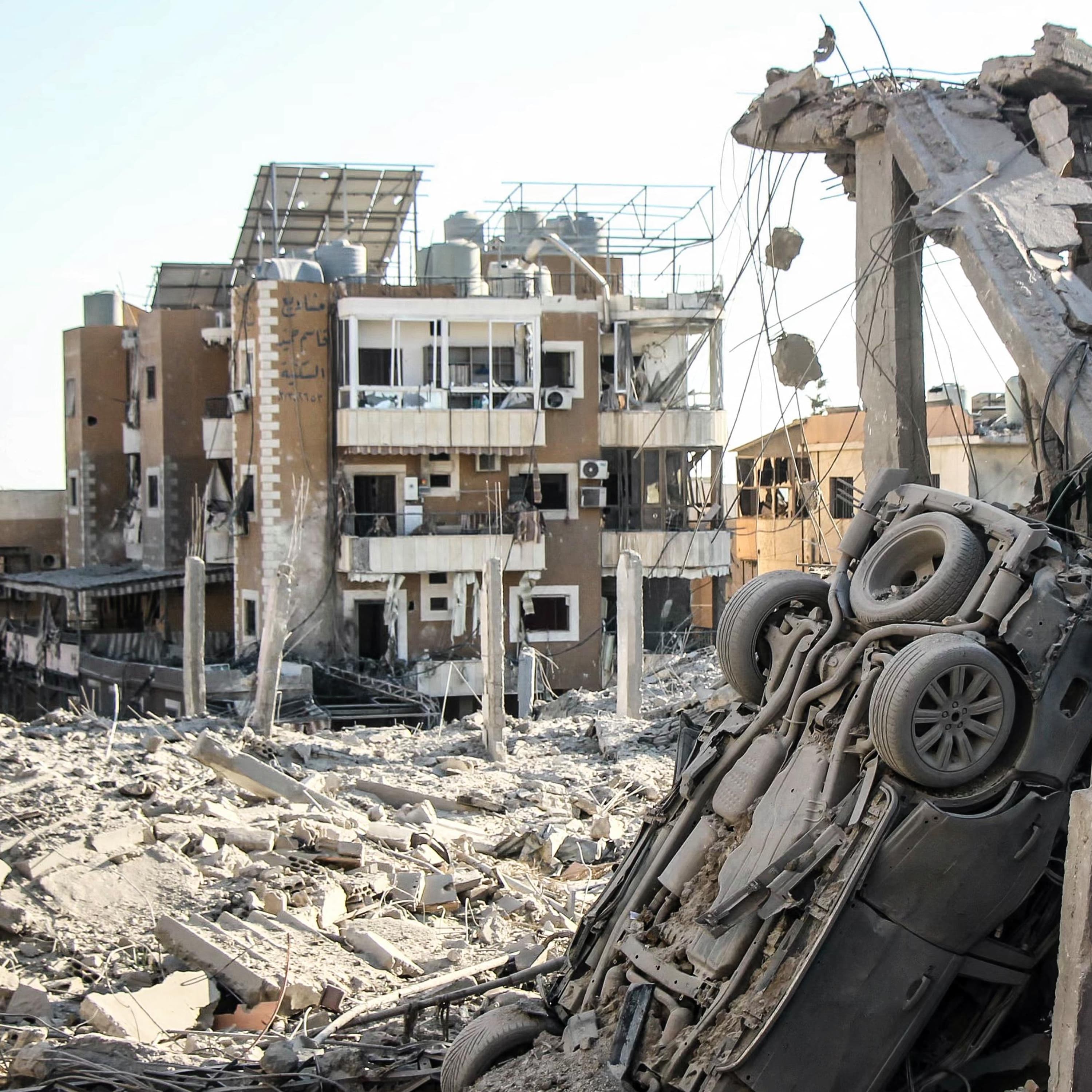
Today in Focus
Is the Israel-Lebanon ceasefire over before it began? - The Latest
00:08:48
Israel and Lebanon have agreed to implement a ceasefire to end hostilities, but it’s dependent on a complete halt of fire from Hezbollah and evacuation of all its fighters in southern Lebanon. Lucy Hough speaks to Beirut-based reporter William Christou
Loading summary
Transcript23 lines
- [00:00]
Lucy Half
This is the Guardian.
- [00:11]
Barclays Brief Announcer
Today's markets move fast. Get the insights you need in 10 minutes with the Barclays Brief, a new podcast from Barclays Investment Bank. Through sharp dialogue and scenario based analysis, our leading experts analyze key market themes each week. So whether you're managing a portfolio or leading a business, the Barclays Brief podcast can help you make smarter decisions today. Stay sharp, stay brief. Find Barclays Brief wherever you get your podcasts.
- [00:46]
Will Christou
It's really difficult. I mean, you still have a million people displaced, many living on the streets. People are just trying to figure out, you know, where safety is. The text of the ceasefire agreed last night said that Hezbollah must stop firing at Israel. Hezbollah has rejected that. Donald Trump is forced to pay attention to what's happening in Lebanon because it could upset the negotiations with Iran. And Lebanese people sort of have to contend with trying to figure out for themselves.
- [01:09]
Lucy Half
From the Guardians today. In Focus, this is the latest. With me, Lucy Half. There's been talk today about a ceasefire brokered by the US between Israel and Lebanon. Will Chris do? You are our Guardian reporter in Beirut. So you're right across this. I mean, I think the word ceasefire has become sort of divorced from any meaning given how many we've had and how little they seem to mean in practice. So is this a ceasefire at all? And if so, what are its terms?
- [01:44]
Will Christou
Not a ceasefire, unfortunately. Like you said, ceasefires are on sale. We had announcement of a ceasefire at around 2 in the morning, Beirut time and then we had a rejection of a ceasefire at around 3pm Beirut time. In the meantime we had airstrikes and firing from Hezbollah and Israel on both sides. So no ceasefire.
- [02:05]
Lucy Half
Yeah. So doesn't sound like any ceasefire at all. The crucial sort of player in this was Hezbollah, the Iran backed group, and they had made it clear that they wouldn't accept what they described as a partial ceasefire, which was what it seemed to be on the table. What were some of the things that they objected to because it sounds like it was very favourable to Israel's demands.
- [02:28]
Will Christou
Yeah. So the text of the ceasefire agreed last night said that Hezbollah must stop firing at Israel, Israeli troops, and in return, Israel wouldn't fire on Beirut and Hezbollah has rejected that. They said they want to see the full withdrawal of Israeli troops in southern Lebanon and they want a complete ceasefire. And they've actually said that any firing on Lebanese villages would be met with fire on northern Israel.
- [02:54]
Lucy Half
Yeah. And as you say, the strikes on southern Lebanon have continued in the last 24 hours. Huge numbers of people we know have been forced to leave their Homes, evacuations continue. So this huge humanitarian impact and Israel saying that they want to maintain quite a substantial presence of troops in southern Lebanon and create these sort of zones that I think are reminiscent of what's happened in Gaza. And that is something that not just Hezbollah, but. But Lebanon is opposed to, right?
- [03:26]
Will Christou
Yeah, exactly. Israel has set up what they call the yellow line, the same, same thing they set up in Gaza. And that's about 600 square kilometers that they occupy in southern Lebanon. And they're advancing further.
- [03:36]
Lucy Half
And the Israeli Defense Minister, Israel Katz, says that Israel wants to have the ability to continue to, quote, dismantle terrorist infrastructure and is not ruling out any further strikes, even on big cities like Beirut, if there was any military offensive action taken against them. So that basically feels like we're back to a pre war situation where attacks could happen at anytime.
- [04:04]
Will Christou
Exactly. And that's not a ceasefire. A ceasefire where one party is continuing to fire, it doesn't work. We had that for 15 months in Lebanon. And Hezbollah has categorically said that they're not going to return to that.
- [04:14]
Lucy Half
And will, you've been doing some really haring reporting this week because there have been in the space of a week, three attacks on Lebanese hospitals in the south of Lebanon by Israeli forces. 150 people have been wounded, that majority of them medics who have stayed in hospitals despite the very, very difficult conditions in terms of working. There are several people who've been killed in those strikes, those hospitals containing women and children. You've been talking to one of the directors of one of the hospitals that's been struck. What sense have you got from that conversation?
- [04:51]
Will Christou
Yeah, I mean, he said it was a regular day at the hospital. And to give some context, the hospital that was attacked, Jabal Amal in surgery, it's a hospital that's become a refuge for many people because there's so many displaced people in this city who don't have access to medical care. So they've been relying on that hospital. The building next to it was struck on Monday and the first floor of the hospital was destroyed. A lot of the emergency room was destroyed, and 127 people were wounded, four killed. And what the hospital director said to me was that he just never expected it could be a target.
- [05:22]
Lucy Half
And what is the Israeli justification for that? Because again, there are iterations of what happened in Gaza where Gaza hospitals were targeted because it was believed that there were Hamas kind of tunnels underneath or that Hamas fighters were being shielded there. But that has been disproven in many cases. Is that the sort of line that Israel is trying to push here as it targets civilians in hospitals.
- [05:46]
Will Christou
So we asked the Israeli military why they attacked these three hospitals for the case of Jabal Amal. They told us that Hezbollah was near the hospital and the hospital was affected. Incidentally, that's a strike that wounded 127 people in another hospital. They claimed that Hezbollah had taken over the hospital and that the hospital had transported Hezbollah fighters to the facility. Lebanese Ministry of Health rejected that and said that the International Red Cross is present in there, the Lebanese army is present in there, the Lebanese Red Cross is. Is present in there, and invited media to come take a look for themselves to see if Hezbollah had indeed taken over the hospital.
- [06:21]
Lucy Half
Yeah, yeah. And what is life like, would you say, more broadly, I suppose, particularly for people in southern Lebanon. But of course, there have been missile strikes on Beirut as well, where you are. We've seen, you know, streams of people leaving the city in recent days. How difficult is life for people across Lebanon at the moment?
- [06:43]
Will Christou
Yeah, it's really difficult. I mean, you still have a million people displaced, many living on the streets. The other day on Tuesday, when Israel said it was going to bomb the southern subjects of Beirut, people were once again displaced, many of them for the second to third time in a couple months. And also people are just trying to figure out where safety is. There is a case of a young Christian woman student who was trying to return home in southern Lebanon when her car was struck by a drone strike and she was killed. So it's really, it's unclear what the rules are. And Lebanese people sort of have to contend with, trying to figure out for themselves. With deadly consequences.
- [07:20]
Lucy Half
Yeah. And living with that level of uncertainty and the risk, sort of the constant risk of strikes at any time. That strike on Monday or the evacuation order for southern Beirut was contentious, wasn't it? Because it's reported that Donald Trump was on the phone to the Israeli Prime Minister, Benjamin Netanyahu, urging him not to go ahead with this and airing his frustrations, which I think speaks to this sense of a growing distance or a rift even between them, as Trump desperately tries to find a way to end this war and to get out of it. And Netanyahu wants to achieve his war aims, presumably with the Israeli elections coming up later in the year. But is that all having an impact, do you think?
- [08:06]
Will Christou
Absolutely. I think the Iranians have very successfully linked the Lebanese front and Iran. And they've said unequivocally that if you want a ceasefire in Iran, you have to have a ceasefire in Lebanon. And it was Iranian pressure that caused Trump to call Netanyahu and call off the strikes on Beirut. And you know, I think Donald Trump is forced to pay attention to what's happening in Lebanon because it could upset the peace negotiations with Iran.
- [08:32]
Lucy Half
Yeah. Well, Will, thank you so much and stay safe.
- [08:37]
Will Christou
Thanks for having me.
- [08:39]
Lucy Half
That's it for today. My huge thanks again to Will Christou, the Guardian's reporter based in Beirut. You can keep up with all his reporting over@theguardian.com and don't miss yesterday's episode of our new sister podcast, Stateside with Kyan Carter. They'll be talking to Robert Reich on why Trump's slush fund is a bridge too far. Thanks for listening to this episode of the latest Today in focus. We'll be back in your feeds as usual tomorrow morning. The latest will be back tomorrow night. This episode was produced by Bryony Moore and Annie Levesper and presented by me, Lucy Hoff. The senior producer is Ryan Govin. This is the Guardian.
- [09:26]
Aura Advertiser
Most people don't realize how much of their personal information is being bought and sold every day. Data brokers are making billions, pulling details about you from public records and the Internet, then packaging and selling it, usually without your consent. That's how your information lands in the hands of scammers, spammers, even stalkers. It's why you get endless robocalls and why ads seem to follow you everywhere. That's where Aura comes in. Aura actively removes your data from broker sites and keeps it off. They also instantly alert you if your information shows up in a breach or on the dark web. But Aura goes beyond data protection. With one app, you get a vpn, antivirus, password manager, spam, call protection, dark web monitoring, and even up to $5 million in identity theft insurance, all backed by 24. 7 US based fraud support. Other companies might sell just credit monitoring or just a vpn. Aura gives you all of it together at the same price competitors charge for just one service. Start your free trial today@aura.com safety. Protect yourself now@aura.com safety.