← Today in Focus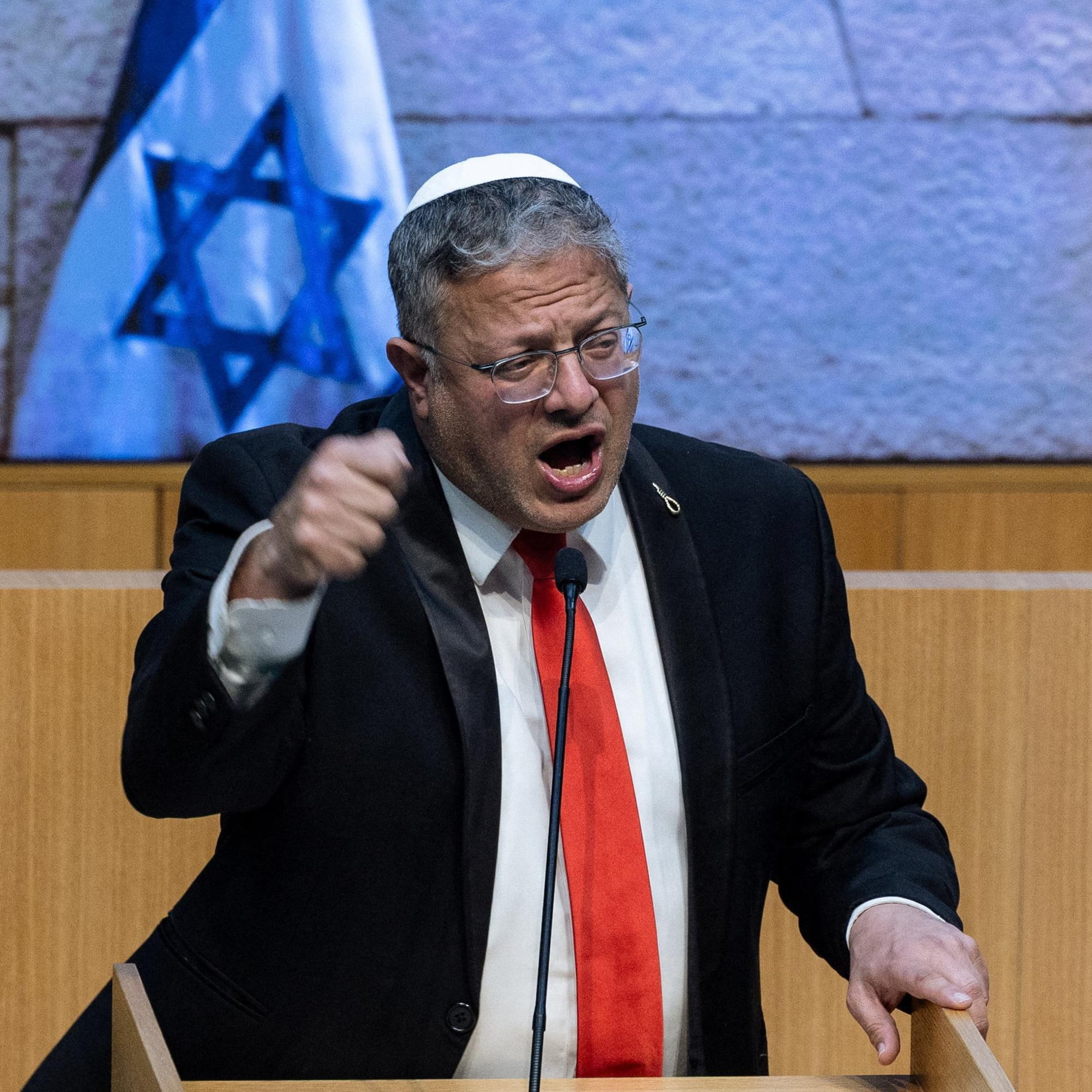
Today in Focus
Israel passes law to give death penalty to Palestinians – The Latest
00:12:01
Israel’s parliament has passed a law imposing the death penalty on Palestinians convicted of fatal attacks - a measure sharply criticised as discriminatory by European countries and human rights groups. Lucy Hough speaks to the Guardian’s deputy head of international news, Devika Bhat
Loading summary
Transcript21 lines
- [00:00]
A
This is the Guardian.
- [00:12]
B
The kind of key concern with this law really is that it is sort of discriminatory because it effectively applies only to Palestinians, even though in theory it doesn't, in practice, that's what will happen. We had these scenes that some were so incredibly unpleasant. Edifying of these celebrations, champagne being given out. How much this Israeli government pays heed to international opinion is a big question.
- [00:41]
A
Israel has passed a new law to give the death penalty to Palestinians convicted of lethal attacks in a measure that has been roundly condemned by European countries and human rights groups. From the Guardians today In Focus, this is the latest. With me, Lucy Huff, Foreign, The Guardian's deputy head of international news, Devika. It's lovely to have you back with us. Thanks for dialing in. So yesterday in the Israeli Parliament, a new law was passed that's been under consideration that's had several readings for some time that authorizes the death penalty executions against Palestinians who are accused of committing deadly attacks against Israelis. We'll come on to what this means for Palestinians. But first of all, just talk to me about the way this legislation was introduced and what it means in practice.
- [01:39]
B
Thanks, Lucy. Yeah. So this is legislation that passed the Knesset yesterday. So it was in its sort of final reading that passed 62 votes to, I think, 48 in favor. And one of those who voted in favor was the Prime Minister, Benjamin Netanyahu. And what it does is it, as you say, sort of effectively makes the death penalty the kind of default punishment for Palestinians in the occupied west bank who are convicted of terrorism of sort of deadly terror attacks. Yeah, I mean, it's a bit of a kind of seminal moment, really, for Israel.
- [02:18]
A
Yeah, it is a seminal moment and a deeply and profoundly worrying one, not least for Palestinians living in the occupied west bank who are often detained for very long, sometimes indefinite periods of time, denied access to a fair trial for them. Now, they could also face this new risk of being charged with the death penalty under this new legislation.
- [02:47]
B
Yeah. So all sorts of concerns have been raised by human rights groups inside and outside of Israel about the treatment of prisoners, as you say, in, in these prisons, because their access to due process is questionable at the least. Yeah. And there are allegations of torture. We've reported on such allegations in the past. And yeah, what this does. And, and the kind of key concern with this law really, is that it is sort of discriminatory because it effectively applies only to Palestinians in sort of. Even though in theory it doesn't, in practice, that's what will happen. It applies to, you know, the jurisdiction in the west bank where military courts sort of operate and apply, and therefore, by default, that would apply largely to Palestinians. There is a sort of provision in Israeli civil courts for the death penalty to be sort of given. And so in theory, that could apply to Israeli citizens, you know, regardless of their sort of ethnic background. But the threat of the death penalty is only applied if the crime is deemed to be a threat to the, quote, existence of the state of Israel. So, again, by default, that would largely apply to Palestinians is what a lot of rights groups are saying.
- [04:09]
A
I mean, Devika. I think one of the most shocking aspects of the way this played out yesterday was the images and the videos that we saw from inside the Knesset, the Israeli Parliament. We had an address from the National Security Minister, Itamar Ben gvir, who is this very extreme member of the far right side of Netanyahu's cabinet, who has used some of the most extreme language against Gaza, the Palestinian people living in Gaza, but has also been very instrumental in driving this legislation through. He was seen in the Knesset yesterday, sort of brandishing champagne. He posted on social media. We've made history. He has been for some time now wearing a lapel pin the shape of a noose. So, I mean, clearly he has been very influential in getting this passed.
- [05:03]
B
Yeah, absolutely. He sort of campaigned on this. It was one of the things he has long sort of sought and has made very clear publicly that it's something he's long sought. And as you say, he, you know, we had these scenes that some would say incredibly edifying of, you know, these celebrations, champagne being given out, badges with nooses on them. And, you know, that speaks to the method that could be used, used if this does go ahead, which could well be hanging because Israeli doctors have sort of said they won't prescribe the lethal injection, which would be one of the other methods. So, yeah, hanging could well end up being the method that's used.
- [05:43]
A
Appalling. And there has been widespread condemnation from other governments. There was a joint statement from the, from the uk, from France, from Germany, criticizing the legislation, saying that this will significantly expand the possibilities for imposing the death penalty. We talk all the time about the way that Israel is so often able to act with impunity. But is there anything that can be done sort of internationally, do you think, to stop this happening or within Israel?
- [06:14]
B
So within Israel itself, the next stage is that this will go to the Supreme Court, the Israeli Supreme Court, which, you know, in theory could strike it down. And, you know, the Israeli Supreme Court has been something that the Prime Minister, for example, Netanyahu, has in the past looked to, to try to kind of curtail, you know, in the last few years there have been moves to try to restrict their powers. Those triggered massive protests on the streets of Israel amongst Israelis who are kind of concerned this would really severely weaken or undermine the judicial system in Israel. We'll have to see what the Supreme Court does internationally. I mean, you're right, there have been quite sort of vocal statements of condemnation from various countries in Europe, including the uk. But you know, how much this Israeli government sort of pays heed to international opinion is a big question. And we've seen certainly in recent months and recent years, they don't, it doesn't appear to have paid too much heed to international opinion. The US has as of yet not said anything about this. And we know that the US is the one sort of ally that Netanyahu does pay attention to.
- [07:31]
A
Yeah. And the un, as this legislation has been under consideration, has repeatedly called on Israel to withdraw this. It's warning that it would violate the right to life. It would discriminate against Palestinians in occupied territories. It would also remove judicial discretion and prevent courts from weighing individual circumstances or imposing proportionate sentences. Is there any role, do you think that the International Criminal Court, the UN could play moving forward?
- [08:06]
B
I think the first instance will have to be to see what the Supreme Court sort of says and does about this. We know that the association for Civil Rights in Israel has put forward an appeal to the Supreme Court. So there will be legal cases being made within Israel itself, which will be closely watched by international observers. But this question about do you process is a really important one because, you know, coming back to that original point, the process to get to the stage of getting to the death penalty, you know, it's quite a. It's such a severe punishment. It's the kind of thing that any sort of legal opinion would want to be really thought through. And what we are seeing in this legislation is the possibility that it could be put through quite quickly and in quite a sort of rush through way. So one of the stipulations is that if the death penalty is decided to be the punishment, it should be applied within 90 days or a sort of maximum of up to 180 days, which
- [09:05]
A
leaves people such limited time to appeal, particularly when basic legal rights are so often deprived. I mean, obviously you mentioned that the one country that has not been critical or condemned, this is the us. The US obviously currently engaged in the Iran war alongside Israel. I mean, is the sort of timing of this passing through the Knesset, the Israeli parliament. Significant, do you think, in that respect, in the sense that the Israeli cabinet feel that the world's attention is elsewhere and they can sort of get away with this?
- [09:43]
B
I think it's probably more to do. I think that in terms of timing, it's more to do with the fact this is very much something that's come in the wake of the hamas attacks of October 2023, where there has been a sort of hardening, if you like, of opinion within Israel and within the Israeli government as to the treatment of Palestinians, and particularly Palestinians who are convicted of crimes. And I think in that context, that's what the far right in Israel have been pushing for, led by Ben gvir. And I think, you know, he's the far right are very much celebrating this today. They're not trying to sort of keep it quiet. And this is very much a move designed to appeal to Israelis within Israel
- [10:31]
A
ahead of an election that is coming up towards the end of this year. Devika, thank you so much for your time and we'll see you back on the show soon.
- [10:41]
B
Not at all. Thank you for having me.
- [10:44]
A
That's it for today. My huge thanks again to Deva Kabat, the Guardian's deputy head of international news. And for more on this story, head over to theguardian.com thanks for listening to this episode of the Latest, the new evening edition of Today in Focus. We'll be bringing you what you need to know about the story everyone's talking about in around 10 minutes each weekday evening Today in Focus. We're back in your feeds as usual tomorrow morning. The Latest will be back tomorrow night. This episode was presented by me, Lucy Hoff. It was produced by Bryony Moore. The senior producer was Ryan Ramgobin. The lead producer was Zoe Hitch.
- [11:24]
B
Chicago, 2011, a cop is murdered. Police and prosecutors swear they have the trigger man. He swears he didn't do it. How far will each side go to prove they're right? Like, it's just one bombshell after another.
- [11:39]
A
You know, you're like, what?
- [11:41]
B
What? The story of a PlayStation, a brain eating amoeba and the relentless pursuit of justice. Off duty. Out now. Listen wherever you get your podcasts.
- [11:54]
A
This is the Guardian.