← Today in Focus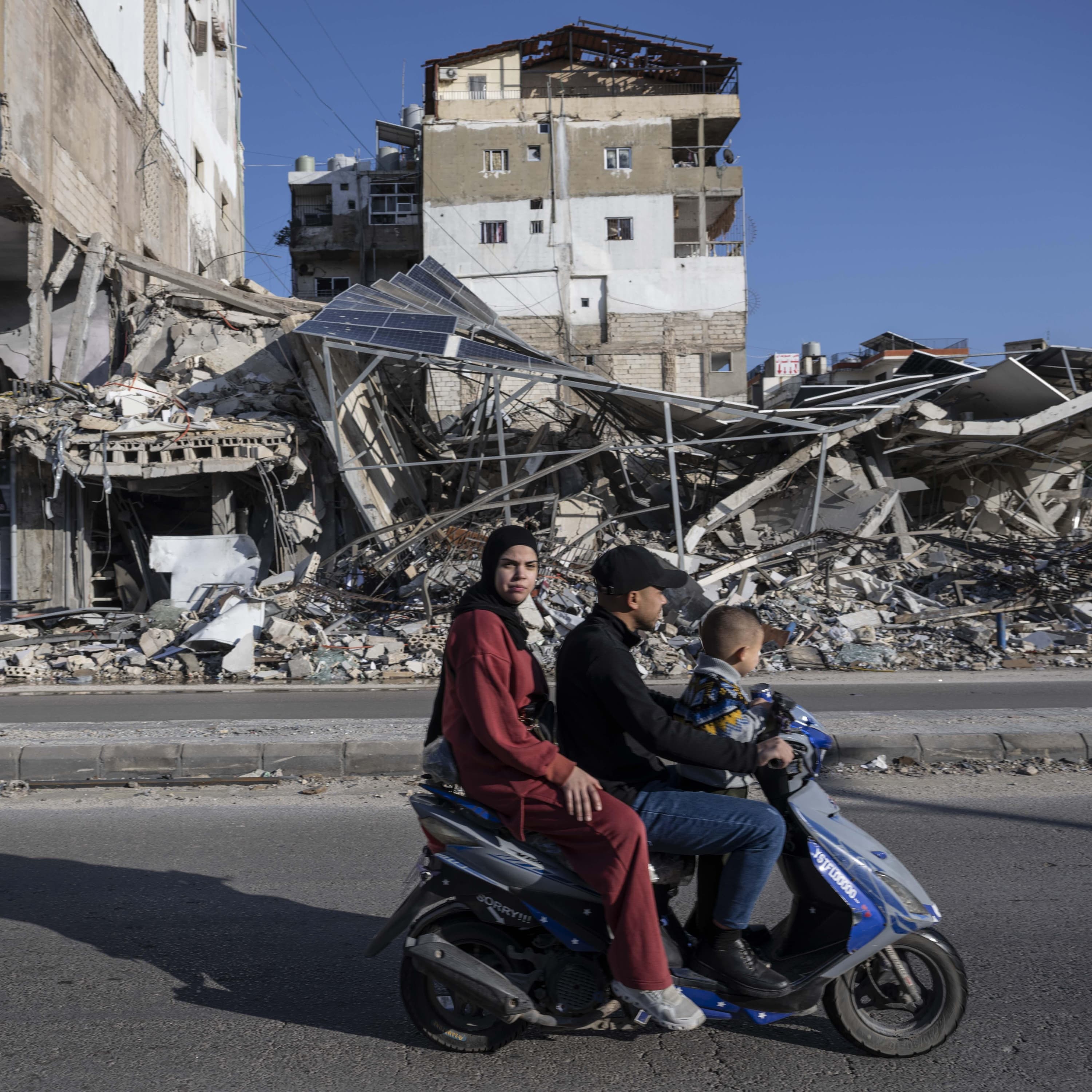
Today in Focus
Israel’s second front: on the ground in Lebanon
00:25:01
The conflict in the Middle East is being fought from the air – except in southern Lebanon where Israel and Hezbollah are fighting a bitter ground war. Will Christou reports
Loading summary
Transcript70 lines
- [00:00]
Will Christou
This is the Guardian.
- [00:08]
Michael Safi
Today. While the world is looking at Iran and the Strait of Hormuz and Donald Trump's Truth Social account, Israel is laying siege to southern Lebanon.
- [00:22]
1Password Advertiser
A password manager should be the first security purchase you make for your team. Why? Because compromised passwords are the number one way bad actors attack companies, and small businesses are their favorite targets. But unlike a lot of security challenges, passwords actually have a pretty simple solution. 1Password lets you manage all your business's credentials, so you can feel confident that your data stays secure as your company grows. Find out more@1Password.com special offer and start securing every login.
- [01:00]
Will Christou
I'm here in the city of Tyre in south Lebanon, right after Tyre is
- [01:04]
Michael Safi
a jewel of a city on the Mediterranean Sea. It has arguably Lebanon's best beach, ancient ruins welcoming people. But last week, Guardian journalist Will Christou was there to cover a war.
- [01:17]
Will Christou
So I got in Tuesday morning and I was surprised to see that despite the debris over the streets and despite the occasional airstrikes, that there was still a lot of people there.
- [01:26]
Michael Safi
Then Israel issued an evacuation order. Everyone in the city, including journalists like Will, were told to go.
- [01:33]
Will Christou
The corridors were just filled with people talking to each other. Are you going to leave? Are you going to stay? Grabbing bags, grabbing kids, screaming, trying to run out in time ahead of the bombing. We decided to stay and we were sitting on a little pier overlooking the rest of the city and waiting for the bombing to come. And it was me and a few other journalists and one of us got a phone call. It was from a Romanian number. It was an automated voice in Arabic saying, this is the idf. You're close to Hezbollah installations and you need to leave now for your safety. It really drove home the threat and it was scary. I went back to my room around 4am and that's when the bombing started. And immediately what you feel is you feel the pressure of the blasts. It rocks the hotel room windows and it sounds loud like thunder outside your room. And it keeps you up. I mean, you can't sleep because you wonder how close it's going to get. And we emerged the next morning and the city, which had been full of life and had lots of people there just the day before now was mostly empty. And you could see people also couldn't sleep all night. You know, they had dazed looks on their faces and the air was filled with that sort of post airstrike smell, which is a combination of burning rubber and what smells like gunpowder.
- [03:06]
Michael Safi
This latest Middle east conflict has been largely an air war. Missiles and drones and rockets across the region. But in southern Lebanon, it's soldiers and fighters from both sides facing off on the ground as well.
- [03:24]
Will Christou
That part of the country has essentially been carved off. It's a no man's land. And the only people that are there are Israeli soldiers and Hezbollah fighters trying to fight them and some people who couldn't leave when they wanted to.
- [03:35]
Michael Safi
Now a fifth of Lebanon's population is displaced and Israeli ministers are saying, if you want to understand what might happen next, look to Gaza from the Guardian. I'm Michael Safi. Today in Focus, the second front on the ground in southern Lebanon. Will Christou. Welcome back to TODAY IN focus. Welcome back to me. Also, for a couple of days, you're in the Lebanese capital, Beirut, from where you cover the Middle east for the Guardian. It's a city that at the moment is under daily bombardment. What is it like to be there?
- [04:11]
Will Christou
You know, it's unnerving. The way we found out that there was a war in Lebanon was at 3am we heard big explosions waking us up two weeks ago. And since then it's been every night. There's bombing, there's people on the streets sleeping in tents. And also there's sort of an erosion of the sense of safety. You know, it used to be in the last rounds of conflict, there were areas where the war was there and this place is safe. But now there's been strikes in central Beirut, hitting hotels, hitting major buildings. So the sense that nowhere as safe is really sort of pervading.
- [04:43]
Michael Safi
Well, I mean, you say that nowhere feels safe. Is that true? Or are there parts of the country, parts of Beirut at least, where life is carrying on as normal?
- [04:54]
Will Christou
Yeah, I think, you know, if you had wanted to go skiing this weekend, you could have. The slopes were still operating. People were up there. Beirut is famous for, you know, partying through the war. It's sort of the resilience aesthetic of the capital. But I think this time there is a sense of weariness even in those areas where you can sort of escape and forget about it. Up in the mountains, there's a sense that the entire country is suffering from this. Not just that, but the strikes are following displaced people wherever they go. So there is sort of an idea that the front line is not really present. There's no front line. It's the entire country.
- [05:36]
Michael Safi
Will, you and I chatted a lot during the last big Israeli war in Lebanon at the end of 2024. People may remember Israel blowing up pages and walkie talkies of Hezbollah members across Lebanon. A campaign of bombings and assassinations, including of Hezbollah's leader, Hassan Nasrallah. And then at the end of that war, suddenly this militant group, Hezbollah, that had dominated Lebanese politics for decades looked like a spe.
- [06:04]
Will Christou
What happened after that, that moment right after the war, it was if a page had been turned in the country, all of a sudden you can talk about certain things. You weren't able to. You know, the issue of whether or not Hezbollah had the right to retain arms in the country, certainly, you know, all of a sudden it was up for debate. Before it was a red line. And then you had the government saying explicitly that the government will disarm Hezbollah, that it's a non state armed militia, will take back the weapons. And for months they said that they were doing that. And as they were disarming Hezbollah, Israel was hitting them almost daily. So to me and to many other people, it seemed like Hezbollah was really a force that was on its back foot. It wasn't the militia that people had talked about for years that was bigger than most European armies. It was battered, it was bruised, and it wasn't ready for another war.
- [06:50]
Michael Safi
And for the Lebanese government, how challenging was it to fulfil this task of disarming Hezbollah, this, this non state militia that for many years was thought to be more powerful than the Lebanese ar.
- [07:03]
Will Christou
It was. You know, it's very tricky. It's tricky for a number of reasons. You know, the first, like you brought up, is that Hezbollah is better armed, better equipped, better trained than the Lebanese army itself. So they're very careful to try to disarm it without confronting the group directly. And that was a very tricky game. And they had to navigate that while being under Israeli and US pressure to disarm Hezbollah faster. Then. The second point is that Hezbollah is not a foreign imposed force in Lebanon. It's something that was born in the 80s to get rid of the Israeli occupation of southern Lebanon. It has a wide base of support across the country. You know, it's not just a group, it's an ideology. So the government was very careful to try to approach disarming the group in a way that didn't alienate large portions of the population. And in my conversation, senior Lebanese officials, they said that they wanted to do it slow, that they wanted to do it in a way that was safe. But what's now become very clear is that they thought they were operating with ample time, but they didn't realize that they didn't have much time to carry out this project. And so we now know what happened in the aftermath of that is that they started to reconstitute themselves. And they did that with the help of Iran. The IRGC sent advisors, and they started to reorganize the group, change the hierarchy, change the way they fought, and reposition certain leaders. And so when Hezbollah entered the war, even some members of the political wing of the group didn't know that was happening.
- [08:33]
Michael Safi
So when the US Israeli war on Iran started in late February, it sounds like it wasn't obvious that Hezbollah would weigh in. People just didn't know what was even left of the group on the ground. And so how did they enter the war? A few days in, they entered the
- [08:50]
Will Christou
war with a barrage of rockets. You know, in the middle of the night, at midnight, they sent out a stream of rockets in northern Israel with an announcement that they're avenging the death of the Supreme Leader of Iran, Ayatollah Khomeini.
- [09:05]
Michael Safi
So how was that decision perceived among Lebanese people? Because you said Hezbollah has some support in Lebanese society, but it's a very diverse place. It has a significant Christian population, a Sunni Muslim population. How did Lebanese people feel about entering this war that even a few days in was obviously going to be incredibly destructive?
- [09:26]
Will Christou
You know, like you said, Lebanon's a very diverse place. But the first reaction, you know, there's this video I remember from the beginning of the war where somebody filmed the Hezbollah rockets going towards Israel. And as he was filming, he just said, no, no, no, no, because he knew what would happen next. And, you know, within two hours, Israel just started bombing and pounding the country and announced the beginning of a military operation that had obviously been, you know, they'd been prepared for for a while. So even among Hezbollah supporters in the first few days, there was anger. You know, these are people whose homes have been destroyed that they haven't had yet time to rebuild from the last war. And all of a sudden, they're thrust into another war, and they know that they are going to be the ones that can bear the brunt of. So they were pissed, to be honest. I mean, they were very angry, and everyone was angry.
- [10:18]
Michael Safi
Okay, so people are angry because they know Israel is going to retaliate hard. When that retaliation came, what did it look like? What have the past few weeks looked like?
- [10:29]
Will Christou
You know, there has been. There's been an expectation that Israel was going to launch a military operation in Lebanon for the past six months or so. They said they wanted to finish off Hezbollah, that the Lebanese government wasn't doing a good job of disarming them. So everyone's expecting at Some point, a military operation to happen, but they didn't know what the trigger was. When Hezbollah launched those rockets into Israel two weeks ago, that was the trigger. And what happened next was a wide bombing campaign. And quickly, you know, military brigades within Israel were moved to the northern border with Lebanon. It was clear that they had prepared for this exact possibility. And then a few days later, you know, wide swaths of the of south Lebanon were declared no man zones and people were displaced. South, the southern suburbs of Beirut Dahi, which houses nearly half a million people, also declared a nomad zone. People were displaced.
- [11:16]
Michael Safi
And this is the Israelis basically saying, everybody in these suburbs, everybody in whole towns across the south have to go now for their safety.
- [11:26]
Will Christou
Yeah, they say, you know, they put up announcements over Twitter either in the middle of the night or during the day saying, you are close to Hezbollah facilities. You have to leave and don't come back. And over time, these evacuation announcements or displacement orders, they become more and more sweeping. You know, for example, in the south, there's an area about 25 miles away from the border that apparently no one's supposed to be living there. And they said, if you move south, you're putting your life in danger.
- [11:53]
Michael Safi
And so how much of Lebanon, what percentage of the country of the population is now subject to these evacuation orders?
- [12:02]
Will Christou
So about 15% of the territory of Lebanon is under evacuation order right now. Wow. Which again, is unprecedented. One in five people are displaced. That's over a million people. And most of those people are out of shelters. They're living on the streets.
- [12:18]
Michael Safi
What does that look like in such a small country? To have one in five people without somewhere to live?
- [12:25]
Will Christou
It's bizarre. It's horrific. I mean, Lebanon right now, it's been raining for the past few days. And when you're in your apartment and you're safe and sound, you think it's nice, it's cozy, whatever. But then you think about those people who are living in tents or they have no shelter that are living on the streets. I mean, everywhere you go in Lebanon right now, in Beirut and other cities, you see people just lying in the streets. There's not enough shelters to accommodate them. Again, there's more than a million people that are displaced. Only about 150,000 of them are in shelters. And remember that Lebanon, it's a bankrupt country. It doesn't have a banking system. Its government is dysfunctional at the best of times. So this is not a country that can handle a displacement crisis like this that for most countries, you know, would devastate them so it's, it's, it's been very challenging. And, you know, we've seen also that, you know, I went to visit some displaced people living in central Beirut in a place called Ramnat al Bayda, so on the sea. And the night before there was an Israeli strike targeting displaced people. I talked to a man who had five kids living in two tents on the street. And he was from Dahya, the southern suburbs. He had been displaced. And he said, I thought I'd be safe here, but I'm not. So I don't even know where to go now. So it's not just displacement, but it's psychological terror.
- [13:41]
Michael Safi
So even the people who are displaced who are living in tents, they don't feel safe from the bombing. I mean, they're not safe from the bombing.
- [13:48]
Will Christou
No. And what this has done is created social tension in the country because Israel has been targeting displaced people. People are now afraid to let them into their homes, let them into their neighborhoods, fearful that one of them might be associated with Hezbollah and might bring an Israeli missile with them. So you've got a lot of people who are slamming the doors shut in front of displaced people, and it's creating social tensions.
- [14:19]
Michael Safi
As of today. Where do we stand with this war? What does it actually look like in Lebanon?
- [14:24]
Will Christou
So now you have part of the country that is relatively safe from bombing. I mean, you get the occasional bombing in central Beirut, for example, but it's not like south of Lebanon. Israel has been steadily carving off the south of Lebanon from the rest of the country, isolating it. Over the past week, they've been bombing bridges over the Litany river, essentially cutting off anyone who's still remaining in the south of Lebanon there and cutting off access to the rest of the country. We were in Tyre when they bombed the first bridge entering into the city, which just left one more bridge coming out of the city. And as we left, I remember thinking, you know, if they bomb this bridge, that's it, people are stuck. And there's, to give some context, there are about 30,000 people in that city alone on Sunday, they bomb that bridge twice, leaving a huge crater.
- [15:13]
Michael Safi
Wow.
- [15:18]
Will Christou
And also just cutting off the south from the rest of the country. And if on the more immediate needs, if you're a civilian or if you're somebody stuck in that city, you can't move now. And getting supplies to that city will be very, very tough. Just on the more long term level, this is going to take decades to repair and to reconnect the country. And it's creating real fears that this is paving the way for a long term annexation of southern Lebanon by Israel.
- [15:43]
Michael Safi
Mm. We'll talk about those long term plans. But I'm really struck by this idea that if you're in this southern part of Lebanon, you're basically stuck. There's no way, no safe way back to Beirut. We know that some of the people now stranded in the south may be Hezbollah fighters, but I'm guessing a lot of them, maybe most of them, are not. They're just civilians or health workers. So what do we know about life and conditions for them?
- [16:09]
Will Christou
I mean, it's something that's scary, it's something that's new. They're essentially cut off from the rest of the country. How are they going to get food? How are they going to get medical supplies? It's a siege scenario. And not just that, but in the Israeli evacuation orders or the displacement orders, what they constantly say is that if you move south, you're placing your life in danger. And the implication being is that if you remain there, you slowly become identified as a target as may be associated with Hezbollah. And so what we're steadily seeing is the emptying out of the south and sort of a legitimization of targeting of anyone that remains. And what we've seen is sort of a strategy from Israel. It's to slowly degrade the conditions for life. And part of the way they do that is by targeting medical facilities, targeting medical workers. You know, we recorded over 128 attacks on medical facilities by Israel over the past two weeks. 40 medical workers killed. And we've seen this before. We've seen this in Gaza, where if they degrade the conditions for life, enough people will be forced to leave.
- [17:11]
Michael Safi
The echoes with Gaza are really distressing. What is it like to be, say, a medical worker trying to save lives, to do your job in those conditions?
- [17:22]
Will Christou
I was standing on the ruins of a destroyed medical center outside of the city of Nabatiya this week, and I was talking to a first responder, and he said that his friends were in the building when they were killed, and he went there to try to pull them out. And I asked him, I said, you know, how do you stomach that? How are you sitting here and still doing your job when you know you might be next? He said, you just can't think about it. If you think about it too much, you'll start to panic. You know, just know that you're trying to help people, and that's good enough. I asked them, you know, can you do anything to protect yourself from being targeted. And they said, yeah, we're taking precautions. You know, we're now we're not sleeping in medical centers, we're sleeping in ambulances. Each one of us parked far away from each other. So if a single strike falls, it doesn't kill all of us at the same time.
- [18:05]
Michael Safi
God.
- [18:06]
Will Christou
So better two are killed instead of three. So it's grim. It's really grim.
- [18:11]
Michael Safi
That's so grim. And do the Israelis, do they admit that they're targeting health workers? How do they frame this?
- [18:19]
Will Christou
No, I mean, they didn't respond to our request for a comment. We gave them coordinates of medical sites that we visited that were struck. They didn't answer. We asked them about double tap strikes in five specific instances. They didn't answer. But you know, this isn't new. I mean, you said it before. We saw this in Gaza. We saw systematic attempts to degrade the health sector, to degrade the conditions of life, targeting medical workers, targeting civilian infrastructure. This is the Gaza playbook being rolled out in Lebanon.
- [18:50]
Michael Safi
Coming up, why the war in Lebanon may continue even after the war against Iran ends.
- [19:09]
Stamps.com Advertiser
Shipping, billing, admin, payroll, marketing. You're managing all the things, so why waste time sending important documents the old fashioned way? Mail and ship when you want, how you want with stamps.com print postage on demand 247 and schedule pickups from your office or home. Save up to 90% with automated rate shopping. That's why over 1 million small businesses trust stamps.com go to stamps.com and use code podcast to try stamps.com risk free for 60 days.
- [19:43]
Babbel Advertiser
If you've used Babbel, you would. Babbel's conversation based technique teaches you useful words and phrases to get you speaking quickly about the things you actually talk about in the real world. With lessons handcrafted by over 200 language experts and voiced by real native speakers. Babbel is like having a private tutor in your pocket. Start speaking with Babbel today. Get up to 55% off your Babbel subscription right now at babbel.com sl acast spelled B-A B B E L.com acast rules and restrictions may apply.
- [20:21]
Michael Safi
So Will, you said that there was there was confusion in Lebanon when Hezbollah decided to drag the country into this war over what exactly they were trying to achieve. A few weeks in. Do we have any sense of why they did this, what their goal from this is?
- [20:38]
Will Christou
I think what's increasingly become clear is that Hezbollah views this as an existential fight for its survival. Their calculus was that a war was coming in Lebanon against them at some point. So they decided to take it on the front foot, not be surprised by it. And so they know that the Lebanese government has been trying to disarm them for a while. They know that Israel will no longer tolerate Hezbollah existing on its northern borders. So they're very much viewing this as a war for survival. You know, many analysts and other people describe Hezbollah joining the war as suicidal. And in a sense, they might be right. You know, this is a non state militia which has been severely degraded over the past two years, fighting probably the most powerful military in the region, if not one of the most powerful ones in the world. You know, it's not a fair fight, but they are calculating that if they can bring enough cost to Israel that they might able to. They might be able to survive the war and fight another day.
- [21:35]
Michael Safi
Yeah. Albeit at enormous cost to the country and at enormous cost to the Shia population, who they represent in Lebanon. I mean, they're one of its major representatives.
- [21:45]
Will Christou
Yeah. And there's a ton of anger, not only from the Shia community, many of which comprise the, you know, the base of power for Hezbollah, but also across the country, people resent Hezbollah for dragging the country into another war. They say, this is not our war. We don't want to fight Israel. And they also blame Hezbollah for potentially losing half of south Lebanon to Israel.
- [22:15]
Michael Safi
So that is Hezbollah's motive for entering this fight. What about the Israelis? Are we getting any sense of what their goal might be from all this?
- [22:24]
Will Christou
I think what has become clear since October 7, 2023, is, is that Israel is trying to reshape the region. You know, it has a new security doctrine. It wants to push threats from its border as far as possible. And so what Israel has said when it comes to Hezbollah, which for years has been the primary threat to the state of Israel, is that they want to create a new security zone, a buffer zone from away from its northern border. And that increasingly looks like it's going to exist in southern Lebanon on Lebanese territory. And what we're hearing from Israeli officials, including the Israeli Defense Minister, is that this buffer zone in southern Lebanon is not going to be a temporary one. This could last for years. They've said that the hundreds of thousands of Shia residents, and they specified Shia residents of southern Lebanon will not be able to come home until the northern communities in Israel feel safe. That's a very ambiguous phrase. Human rights workers told us that this could be laying the groundwork for forced displacement, which is a war crime. And it could be years before we see people come Back to south Lebanon, if at all.
- [23:26]
Michael Safi
I mean, buffer zone is such like an antiseptic phrase in practice on the ground. What does it look like and what does it take to enforce something like that?
- [23:36]
Will Christou
What it looks like in practice is taking people's homes, destroying them and occupying that area. Similar to what we saw in Gaza. And you know, Israel is not being shy about the comparisons to Gaza we saw this weekend. The Israeli Defense Minister is saying that they want to implement in south Lebanon what they implement in Beit Hanun and Rafah, to destroy the houses there, the first layer along the border. So it's become increasingly clear that, you know, Israel took a war that I think shocked most of us for its high human toll and, you know, just, just indiscriminate nature and is taking that as a military doctrine, as a playbook and implementing it in Lebanon.
- [24:24]
Michael Safi
It is so shocking that this war that human rights groups like Amnesty International, many genocide scholars and the Guardian consider a genocide for the Israelis, that is a model. That's the playbook.
- [24:37]
Will Christou
Yeah. I mean, this is a war that sparked horror and revulsion across the world. And I think many of us wanted to think that it was an aberration in the shock of October 7th and the brutal Hamas led attack there, that this war of self defense got out of control. Right. But now we're seeing, and the Israelis are saying openly that actually, no, this is the new way they want to fight wars, that it's a model.
- [24:59]
Michael Safi
We're all watching very closely events in Iran. We're watching for any signs of an off ramp between Donald Trump and the Iranian government. Some sense that that part of the war might end soon. Is there anything happening in Lebanon that tells you that the war you've been covering might end if the war in Iran ends?
- [25:21]
Will Christou
No, I don't think so. There are European powers like France are trying to mediate between Israel and Lebanon. Israel said they're not interested in talking. Lebanese officials apparently have been trying to talk to the Americans to try to get them to put pressure on the Israelis to stop their attacks. The Americans haven't even been answering.
- [25:39]
Michael Safi
Wow.
- [25:39]
Will Christou
I think what's going to happen with the war in Lebanon is it's going to be decided on the battlefield and then people will come to the table to talk about a ceasefire after the fighting is done. But I think this could stretch on for a very long time, potentially longer than the war in Iran.
- [25:54]
Michael Safi
Yeah. I mean, because it sounds like the two major parties fighting, Israel and Hezbollah, both believe for now that war is preferable to peace.
- [26:03]
Will Christou
Yeah.
- [26:04]
Michael Safi
Yeah, Will, stay safe. And thank you for talking to us.
- [26:09]
Will Christou
Thanks.
- [26:15]
Michael Safi
And that was Will Christou, who covers the Middle east for the Guardian. He's based in Beirut and his work is at our website. This episode was produced by Tom Glasser, George McDonough, Guy Zafman and Natalie Khtina. Sound design was by Rudy Zagadlo. The executive producer was Huma Khalili. And we'll be back this afternoon with the latest and again as usual tomorrow morning.
- [26:43]
Will Christou
This is the Guardian.
- [26:53]
1Password Advertiser
A password manager should be the first security purchase you make for your team. Why? Because compromised passwords are the number one way bad actors attack companies and small businesses are their favorite targets. But unlike a lot of security challenges, passwords actually have a pretty simple solution. 1Password lets you manage all your business's credentials so you can feel confident that your data stays secure as your company grows. Find out more@1Password.com special offer and start securing every login par le tu francais
- [27:25]
Babbel Advertiser
hablas espanol parl italiano. If you've used Babbel, you would. Babbel's conversation based technique teaches you useful words and phrases to get you speaking quickly about the things you actually talk about in the real world. With lessons handcrafted by over 200 language experts and voiced by real native speakers, Babbel is like having a private tutor in your pocket. Start speaking with Babbel today. Get up to 55% off your Babbel subscription right now at babbel.com acast spelled B A B-B-E-L.com acast rules and restrictions may apply.
- [28:03]
Tommy John Advertiser
Guys, it's no use putting it off. The best time for an underwear refresh is now. Tommy John underwear is designed for a perfect fit that stays put all day. There's zero chafe, thanks to four times more stretch than competing brands and their innovative horizontal quick draw fly is a game changer. With over 30 million pairs sold, there are thousands of men out there more comfortable than you. Don't settle for less. Go to tommyjohn.com today for 25% off your first order with code comfort. That's tommyjohn.comfort. tommy John comfort Perfected.