← Today in Focus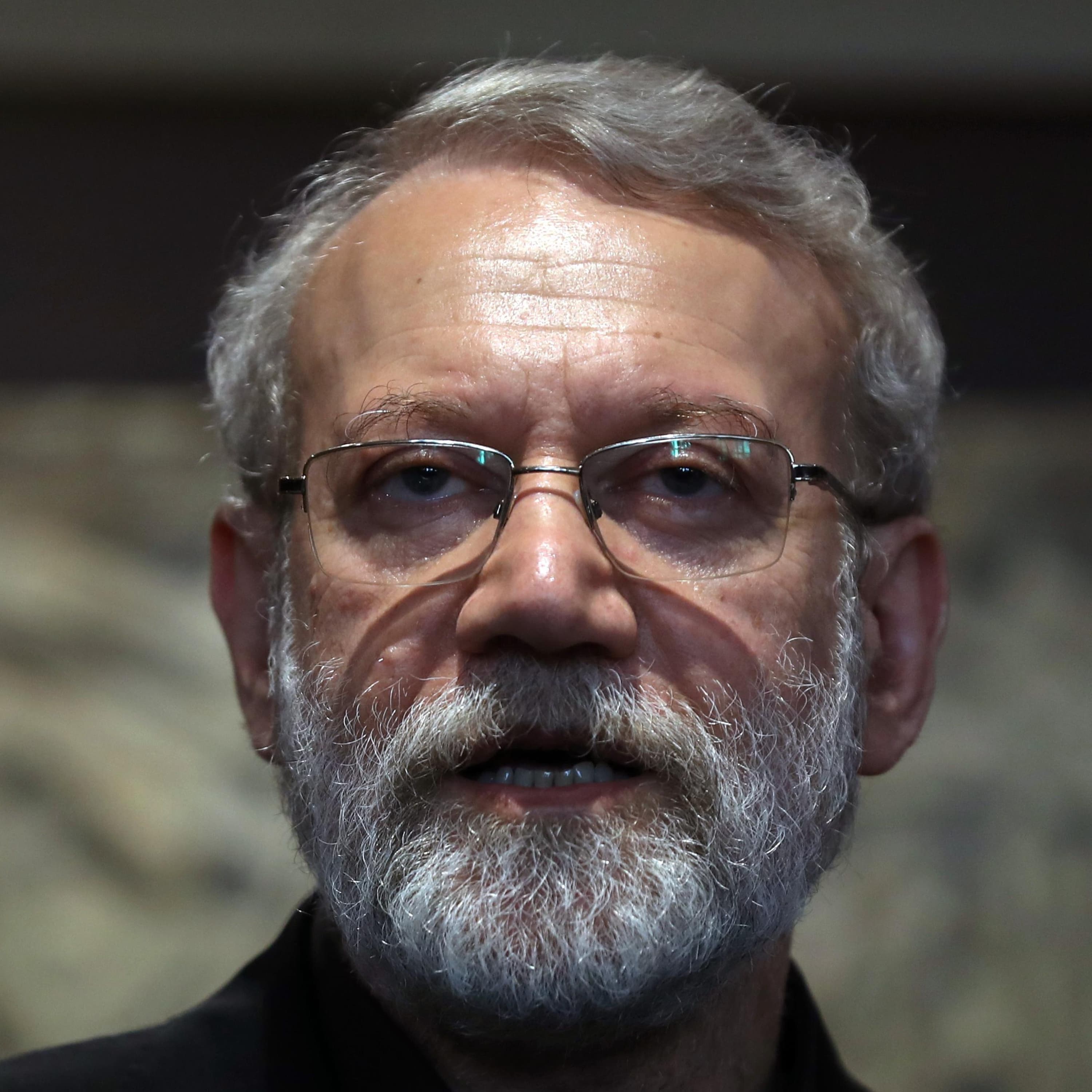
Today in Focus
Key Iran leader killed: what does it mean for the war? - The Latest
00:10:08
Israel claims it has killed the influential Iranian national security chief Ali Larijani in overnight strikes. If confirmed, Larijani’s death would represent a devastating blow to the regime, and the most senior official to die since Ali Khamenei’s death.
Loading summary
Transcript36 lines
- [00:00]
Devika Bhatt
This is the Guardian. There's actually an argument to say that his death is even more significant than that of Khamenei because he really was this kind of central figure who was doing a lot of the work behind the scenes.
- [00:21]
Lucy Hoff
The Israeli Defense Minister now confirms that
- [00:23]
Devika Bhatt
Iran's top security official, Ali Larijani, has been killed in an overnight strike in Tehran. It does sort of suggest this idea that regime change and the kind of total destruction of the old guard of the Iranian leadership is something that is on Israel's mind.
- [00:40]
Lucy Hoff
Israel claims it's killed Iran's national security chief in overnight strikes in what could be a devastating blow for the Iranian regime. From the Guardians today. In Focus, this is the latest. With me, Lucy Hoff. I'm joined by Devika Bhatt, the Guardian's deputy head of international news. Thanks for joining us again, Devika. It's lovely to see you. So Israel is claiming that Iran's security chief, Ali Larijani has been killed overnight in strikes. I mean, this is the most senior Iranian official to be killed since Ayatollah Ali Khamenei two weeks ago, isn't it? And he was a very significant figure in the Iranian regime.
- [01:23]
Devika Bhatt
Yeah, that's right. Thank you for having me, Lucy. Yes, he was an incredibly senior figure, a sort of pivotal figure within the sort of Iranian political and security apparatus. And there's actually an argument to say that, you know, his death is even more significant than that of Khamenei because he really was this kind of central figure who was doing a lot of the work behind the scenes, is what we sort of believe.
- [01:46]
Lucy Hoff
Yeah. And playing a key role in the war operations, but also with close links to the IRGC. And as you say, Khamenei, at the age of 86, you know, clearly had these deputies who were perhaps more powerful, Larajani being one of them. Israel, we should say, is claiming that he has died. What do we know about the operation to target him? Because then some reporting in the Guardian that the operation was. Was due to happen the night before last, but instead happened overnight last night. And Israel is saying it, it is without a doubt that he was killed in that strike.
- [02:20]
Devika Bhatt
Yeah. So we, we, we know very little because it's still sort of quite a breaking story. But what we do know is that, as you say, Israel is saying it has done this. The Iranian regime has put out a handwritten letter that it says was written by Larijani. And this letter kind of commemorates the sailors who died a couple of weeks ago. The Iranian whose funeral is meant to be today. But, you know, it has to be said, that doesn't necessarily constitute proof of life. And it's unlikely the Americans or Israelis would take it as proof of life because it could have been written at any point. Really.
- [02:51]
Lucy Hoff
Yeah. And notably it doesn't have a time or a date stamped, so it's handwritten, allegedly. But I don't think does much to defy Israel's claim. You mentioned that we should perhaps consider his death as perhaps more materially damaging or more significant than that of Ali Khamenei. His son, Mujtaba Khamenei was appointed as his successor last week. But there are also reports that Mujtaba Khamenei is seriously injured. Some reports that his leg has been very badly injured, that he might have lost a leg, some reporting that he's in a coma. So again, this is another very significant person at a time when the Iranian regime has been very damaged by these strikes.
- [03:35]
Devika Bhatt
Yeah. And there's been a lot of reporting in recent days that, you know, the appointment of Mojtaba Khamenei's son to that post was definitely not straightforward. There was a bit of a power struggle behind the scenes in which Laranjani himself is thought to have played a role. But it's true that Mojtaba hasn't been seen in public since this appointment was made last week. And there have been various reports, including from senior Iranians themselves. So one of our correspondents spoke to the ambassador, the Iranian ambassador in Cyprus, who said that he had been in injured. You know, we know that the strike that took out his father, several members of his family were injured in that. And it seems completely plausible that he was amongst those. What we do know is that Larajani was, you know, for years beforehand, but prior to this, a really kind of senior figure and has been very close to harmony over the years. One of his few kind of trusted people. And, you know, over the course of a kind of decades long career, he was in multiple kind of posts across the political and security apparatus. So security chief now, but he was Culture Minister before he was speaker of Parliament. And all of this has sort of meant that he's been able to kind of work out the way the various institutions within the Iranian regime work, how they can work together. And crucially, we understand, we sort of think that he played a key role in recent weeks in the sort of behind the scenes work that was being done to ensure the longevity of the regime, even if its current leadership was sort of taken out as indeed it has. There's a sort of strong suggestion that he was instrumental in that process and indeed would have had the career history to be able to do that. And now there's a kind of gap there because there were very few people, we think, who were as close to Hermonei and were as trusted by him to have sort of had this insight. So, yeah, it leaves a bit of a vacuum.
- [05:31]
Lucy Hoff
We've talked a few times on the podcast since war in Iran broke out about the level of Israeli intelligence penetration right to the heart of the Iranian regime. The fact that they were able to take out Ali Larajani, again is proof of that. And that must be concerning for the Iranian regime as it tries to fill the vacuum that has been left by so many senior people being taken out in the last couple of weeks.
- [05:58]
Devika Bhatt
We knew at the start of the Israeli US Operation that there was very good intelligence there. You know, they were able to take out Khomeini based on that. And we know that Israel has long had very good intelligence on Iran and what is happening in inside Iran. And this certainly suggests that that is continuing even after several of the top leadership have gone and Iran must have strengthened its sort of security practices. It sort of does suggest there is still kind of quite deep intelligence there from, in all likelihood, we don't know for certain, but in all likelihood, from the Israeli perspective that is being drawn on for this.
- [06:38]
Lucy Hoff
And so what is Israel trying to achieve with this type of strategy? I mean, they've taken out Iran's supreme leader, Ali Khamenei, a couple of weeks ago. A war that has proved much more complex than was perhaps anticipated has continued to take out another senior leader. I mean, what do we think we can understand about its ambitions?
- [07:00]
Devika Bhatt
Well, so there is this question which remains unresolved as to whether the US And Israel's motivations and goals are the same and at what point their divergence will become really kind of clear. And what taking out Lorenzani has done is that it has removed someone who, you know, yes, in many ways was a kind of hardliner, very close to Khomeini, is thought to have been responsible in part for the really brutal crackdown on protesters as security chief, but nonetheless was known as a sort of pragmatist. You know, he was involved in nuclear negotiations. We know in recent weeks he was quite heavily involved in talks with Russia, was went to met Putin. Reportedly he had this sort of experience in negotiation which others within the Iranian establishment might not have had. And removing him means that there's one fewer person for the US and Israel to negotiate with. So it does sort of suggest this idea that regime change and the kind of total destruction of the old guard of the Iranian leadership is something that is on Israel's mind. So we know from our own reporting and other reporting out there that one of the key goals for Israel is to deal with this enriched uranium that we understand is sort of buried beneath a mountainside. Now, after the strikes that Israel and the US conducted last year against Iran's nuclear facilities. And the removal of that or putting it in a position where Iran can't use it to make a nuclear bomb is a key concern for Israel. And so how they do that, it looks like, you know, force is the mechanism through which they want to do that. Now be on the sort of war footing, use of force rather than any kind of negotiation, at least with the kind of current leadership.
- [08:49]
Lucy Hoff
But as you say, those interests might diverge, we might see further divergence from the position of the White House in the coming days, as we already are.
- [08:58]
Devika Bhatt
Yeah, absolutely. And you know, Trump, we know that Trump wants this war not to be a long one. We know that it's having a massive effect on the economy in ways he probably didn't anticipate and perhaps wasn't sort of briefed on even because it seems to have come as a bit of a surprise to him. And so the longer this war goes on, the more likely that is to continue, and that cannot be in the US's interests.
- [09:23]
Lucy Hoff
Well, Devika, thank you so much for your time.
- [09:25]
Devika Bhatt
No worries. Thanks for having me.
- [09:29]
Lucy Hoff
That's it for today. My huge thanks again to Devika Batt, the deputy head of international news at the Guardian. Keep up with all our breaking coverage of this story over@wtheguardian.com thanks for listening to this episode of the latest, the new evening edition of Today in Focus. Today in FOCUS will be back in your feeds as usual tomorrow morning. The latest will be back tomorrow night. This episode was presented by me, Lucy Hoff. It was produced by Annie Levespa. The senior producer was Ryan Ramgobin. The lead producer was Zoe Hitch.
- [10:02]
Devika Bhatt
This is the Guardian.
- [10:11]
Boost Mobile Expert
Knock knock.
- [10:12]
Boost Mobile Customer
Ooh, who's there?
- [10:12]
Boost Mobile Expert
A Boost mobile expert here to deliver and set up Your all new iPhone 17 Pro, designed to be the most powerful iPhone ever.
- [10:19]
Boost Mobile Customer
You called that a knock knock joke.
- [10:20]
Boost Mobile Expert
This isn't a joke. Boost Mobile really sends experts to deliver and set up your phone at home or work.
- [10:25]
Boost Mobile Customer
Okay. It's just that when people say knock knock, there's usually a joke to go with it.
- [10:28]
Boost Mobile Expert
Like I said, this isn't a joke.
- [10:30]
Boost Mobile Customer
So the knock knock was just you knocking?
- [10:32]
Boost Mobile Expert
Yeah, that's how doors work.
- [10:34]
Boost Mobile Customer
Get the new iPhone 17 Pro delivered and set up by an expert wherever you are. Delivery available for select devices purchased at boostmobile. Com. Terms apply.
- [10:41]
Boost Mobile Expert
Boost mobile is now sending experts nationwide to deliver and set up customers new phones.
- [10:45]
Boost Mobile Customer
Wait, we're going on tour?
- [10:46]
Boost Mobile Expert
We're delivering and setting up customers phones. It's not a tour.
- [10:49]
Boost Mobile Customer
Not with that attitude.
- [10:50]
Boost Mobile Expert
Introducing store to door. Switch and get a new device with expert setup and delivery.
- [10:54]
Boost Mobile Customer
Delivery available for select devices purchased at boostmobile.
- [10:56]
Devika Bhatt
Com.