← Today in Focus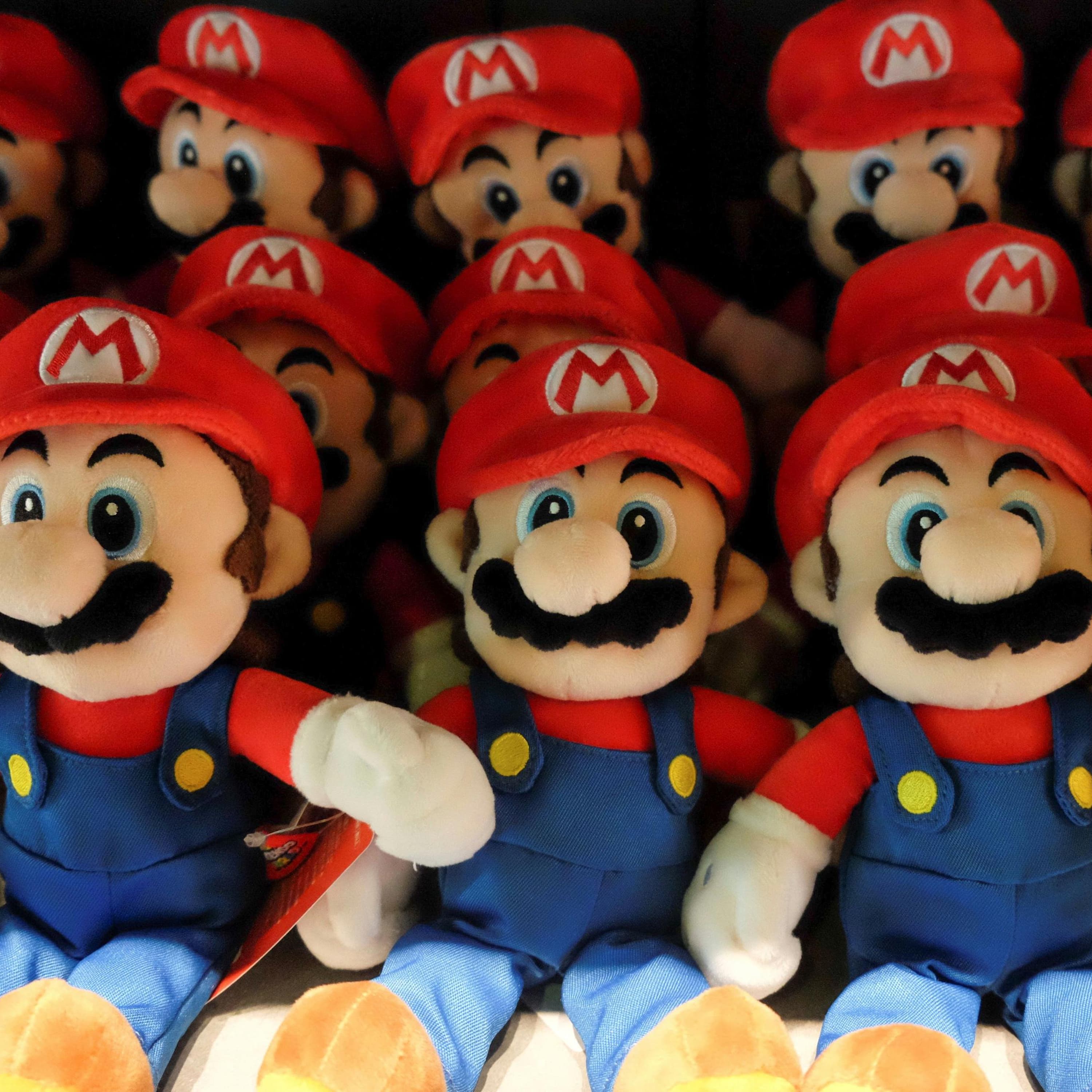
Today in Focus
‘Let’s-a go!’ The story of Nintendo
00:25:52
Video games editor Keza MacDonald traces the rise of Nintendo, and explains why its sense of fun matters in a world of big tech
Loading summary
Transcript63 lines
- [00:00]
A
This is the Guardian. Today, the story of Nintendo.
- [00:20]
B
Shipping, billing, admin, payroll, marketing. You're managing all the things, so why waste time sending important documents the old fashioned way? Mail and ship when you want, how you want with stamps.com. print postage on demand 24, 7 and schedule pickups from your office or home. Save up to 90% with automated rate shopping. That's why over 1 million small businesses trust stamps.com. go to stamps.com and use code podcast to try stamps.com risk free for 60 days.
- [00:55]
C
My earliest memories of video games, it's not even playing them. It's sitting and reading magazines about Nintendo while my mum was doing the big shop in Sainsbury's and just imagining what video games must be like and how in my imagination they were the greatest things that had ever been invented by humans.
- [01:12]
A
Keza McDonald is the Guardian's video games editor.
- [01:16]
C
I finally got a Super Nintendo when I was about six for Christmas after just a lot of begging, probably two years of begging at that point. And the first game I played was Super Mario World.
- [01:29]
A
I think I remember that Christmas. I think we came up as it kind of was being unboxed, actually. I remember the sheer and utter joy in that household that Christmas. Oh, and as it happens, she's also my cousin.
- [01:46]
C
So When I was 11, my biggest dream in all the world was to go to the Pokemon World Championships, which were going to be held in Sydney and battle out to be the very best. And we now have the world champion of Pokemon 2000. He is from the United Kingdom. He is Darren Van Fuuren. I didn't get there tragically and then put incinerate. But then I did finally get to go to the Pokemon World Championships when I was about 25. It was in Washington D.C. and I went as a journalist, not a player. But I think it still counts.
- [02:25]
B
One Pokemon away from becoming the world champion.
- [02:31]
C
That was a real moment for me where I was like, oh, I kind of remember why I started doing this. I've made it. I've made it under the giant inflatable Pikachu.
- [02:42]
A
Mario Pikachu, Zelda, Donkey Kong. Yes, these are all beloved video game characters that have been a huge part of Keza's life since childhood. But for her, they mean something else as well. For the past few years, she's been looking into the secretive and iconic company that has brought them into our lives. And for her, its story and its success, especially at this moment where big tech and AI are taking over the world, has a much bigger message for us all. From the Guardian, I'm Annie Kelly. Today in Focus, the history of Nintendo and why it matters. So, Kez McDonald, you are the Guardian's video games editor. Welcome to Today in Focus. Can you tell me when you realize that your kind of love affair with Nintendo began in earnest?
- [03:49]
C
This would have been 1994, so I enjoyed those Mario games a lot and I enjoyed Mario Kart a lot. But the game that really captured my imagination was one that I got a few months later, which was the Legend of Zelda. And the thing that made that game different is that it felt really like a world inside the screen. It felt like a place I could go. Mario felt like a thing I could play, and I enjoyed it. Zelda felt like a place I could
- [04:14]
A
go,
- [04:17]
C
both inside my head and inside the game. It had the same kind of rich fantasy world as the novels that I was reading at that time as a little kid. And as I grew up, I happened to grow up in a really fascinating time for video games, which I think really helped. Something really new was happening every six months in video games at that time.
- [04:36]
A
This was huge for you, wasn't it? I remember you deciding very early on that this was something that was gonna be in your life and that this was something that you wanted to make a career of as well.
- [04:45]
C
So I'm technically a high school dropout in that I finished off all my exams and then just left to go and work on a video games magazine when I was 16. I often joke that I think my parents would have preferred I joined the circus because they would have understood what the circus was. I remember my school careers counselor literally laughing in my face when I said that was what I wanted to do. And it helps that When I was 16, the games industry was really taking off in a massive way. And the games industry was extremely male dominated. Like 90% plus of people who worked in the games industry were men in 2005 at the time that I joined. And games themselves also extremely male dominated. It was this era of bald shaven headed men with guns were the stars of almost all video games, which was, I found very tedious even at the time.
- [05:35]
A
So that was back in 2005. Can you just give us a sense of how big the industry is now?
- [05:41]
C
I mean, the games industry is worth, depending on who you ask, somewhere in the region of $200 billion, which is just an enormous amount of money. It brings in more money than most of the other creative industries combined. So if you put our film industry, our literary industry, our music industry, put all that together, it still doesn't make as much money as games in the uk, particularly in terms of how many people play games. The total population, about 65% play video games at the moment in some form, whether that's Candy Crusher on your phone or Call of Duty on your Xbox or Mario on your Nintendo Switch. About 65% of people play video games. And if you look at people under 30, it's 95% of people play video games.
- [06:21]
A
And it's not just about who's playing it, it's about how it's being used. It's always been a cultural reference point. Now it's becoming a bit of a political reference point as well. Could you talk us through what we've seen happening and that in that arena over the last year?
- [06:37]
C
So the video game audience tends to be early adopters, they tend to be very online and as a result, when you look at what happens in video game world, you tend to get a little premonition of what's going to happen in the wider world a few years later. For Anita Sarkeesian, this is the new normal. Armed escorts at public events, tracking her every move. I'm constantly aware of the fact that there's an enormous amount of hate directed
- [07:02]
B
towards me, hate in the form of
- [07:04]
C
bomb threats, rape threats. So the classic example of this, of course, is Gamergate, which was essentially an online harassment campaign that was aimed at sort of activating young men and mobilizing them against what we now call dei. So diversity, equity and inclusion. So this mobilized online mob was set loose on essentially everyone, every woman and everyone else in video games who is perceived to not belong. And this was encouraged and stoked by Steve Bannon's Breitbart website.
- [07:35]
A
Urgent move in video games from a couple of wacky left wing feminists. And these are sort of far left, Israel hating socialist weirdos, far left feminists who say that every video game is problematic, that there is something wrong with
- [07:49]
C
all these video games. And in kind of observing Gamergate, Bannon I think, clocked onto something really important, which is that there were a lot of disaffected young men who, who could be quite easily manipulated into pursuing whatever agenda that somebody could give them. And honestly, the right, especially the alt right, has done a much better job of connecting with the vast, vast, vast numbers of young men online, including in video games. We see Trump's communication strategy this time around. They tweeted out an AI image of Trump as the Halo hero master chief. They releasing ICE recruitment ads with like, gotta catch em all, which is The Pokemon slogan, which is really disgusting. They've got a much better understanding unfortunately of the kind of cultural shorthand and cultural importance of games.
- [08:44]
A
But there has been one company that has always held a special place in your heart, which is of course Nintendo. And you've just written a book called the Game Changing Company that unlocks the power of play. I'm sure lots of people have played their games, but can you just remind us how big a part of the landscape they are?
- [09:04]
C
Nintendo is a family friendly, it's known as a family friendly game company. Nothing bad is going to happen. If you let your kids sit for a few hours with the Nintendo Switch, they're not going to talk to some stranger online. And every generation of Nintendo games has brought like a new wave of people in. A lot of people will remember the Nintendo Wii, of course, which came out in the mid-2000s and you know, had your granny playing Wii bowling. The Nintendo DS was a little kind of palm pilot thing that sort of presaged the smartphone in my opinion. And then of course the Nintendo Switch is the most recent Nintendo console which ended up selling I think 150 million. And animal Crossing on the Nintendo Switch saved us all from going completely insane during lockdown. And it's a very interesting company. It's a uni because it does put fun first, but they're also very secretive. So as a journalist I was like, I gotta, I really gotta get in here and I gotta find out what it is, like, how does it work? Who are the people who do these things, how do they do it?
- [09:59]
A
Did you manage to get under the skin of the company when you were doing your research?
- [10:04]
C
I did my best to get under the skin of Nintendo. That's been my 20 year project. So the book has interviews from, you know, 20 years worth of me covering games. So I've interviewed various of the creatives at Nintendo at different points over, over that time and from that I was able to start really building a picture of how Nintendo works and more than just a business case, but a creative case for like why it is that these games keep coming out so, so beautifully. So I was able to visit Nintendo's headquarters in Kyoto, which very few people have done. So it was quite nerve wracking and
- [10:39]
A
I guess that's part of the appeal, isn't it, that kind of mystique?
- [10:41]
C
It is because you think of it when you're a kid. You think of Nintendo like Willy Wonka's chocolate factory. You know, you think it must be just incredible in there. You imagine that it must, you know, it must be this like absolute fun fair of a place. And then you go there and it's just a big white office building in Kyoto. No one's allowed past the first floor. But I imagine, yeah, up there, up there on the third, fourth, fifth floor, where no one's ever allowed to go. That's where the magic happens. I imagine it's.
- [11:05]
A
I was about to say. So there's not the kind of full scale Mario Kart arena on the fourth floor because I think that's what my son is thinking. And they're such an interesting company, aren't they, in terms of their origin story? They've been around for, I think it's something 135 or 130 years.
- [11:20]
C
So a lot of people don't know. Nintendo was founded in 1889, long before the video games were a thing. But they were founded as a playing card company. And then over time they were the first company in Japan to distribute western style playing cards. And they put Disney characters on them and stuff. And then they started making board games, toys, lots of weird and wonderful stuff, a baby stroller. There's all sorts of strange Nintendo products before they landed in the, in the late 70s and early 80s on video games. It's not really surprising that they did because this was a company made up of a bunch of tinkerers, toy makers, electronics engineers, just doing weird stuff. And then when Space Invaders hit in Japan, they all became obsessed. And then the big boss, Hiroshi Yamauchi was like, right, we're getting into that. They made a very similar game to Space Invaders. It didn't sell, nobody wanted it. And so they had to come up with something new quickly to put inside those arcade cabinets that could then sell. And that game was Donkey Kong by Shigeru Miyamoto, who then went on to make Mario and Zelda. And then 40 years later, Mario and Zelda are two of the longest lived and most beloved franchises in all of games and I would say all of culture. Like, if you understand the history of Nintendo, you understand how games have become what they are today.
- [12:50]
A
And I love the idea. The origin story of Pokemon. Could you tell us about that? Because I know Pokemon has a really special place in your heart.
- [12:57]
C
So there was this guy, Satoshi Tajiri, who when he was a little kid growing up in what would have been in the 60s, quite rural environment outside of Tokyo, he used to collect bugs. He was so good at collecting bugs. He was so good at knowing where the bugs lived that his classmates used to call him Dr. Bug. And when he grew up, he developed a fascination with games, and he started making games. And the image that motivated him was this idea of, like, two game boys connected by a link cable. And he had this wonderful image of little creatures sort of crawling across that cable from one Game Boy to another. And so Pokemon arose from this, from this idea of there being creatures everywhere in the world hiding in the long grass, there being a little bit of magic underneath every rock. Like when he would be searching for beetles in his childhood. It took a long time to make. Many other game developers would have canned it because it was taking so long, and it was being made for aging technology. The old Game Boy. Shocking, bubbling and beaming. But when it did come out, it quickly became like a huge success. It was a slow burn in Japan, and then it turned into a massive, massive global phenomenon.
- [14:14]
D
Pokemon, the first movie, plus the all new short, Pikachu's Vacation.
- [14:18]
C
And Tajiri himself is extremely reclusive. He's one of the few people that I haven't managed to speak to. No one's spoken to him since 1999. I've played Pokemon a lot over the years, but then it was when my own kids got old enough to develop independently their own love for Pokemon. That's when mine came back, too. So now it's become like a family thing for us. And that's the case for a lot of millennials who've had children. You know, they had the choice between, you know, Charmander and Bulbasaur and Squirtle when they were 11, playing on their Game Boy. And now they're watching their kids pick their first Pokemon. And it feels like a really beautiful moment. It feels like this lovely shared experience. And I think that's what Tajiri was envisioning.
- [14:59]
A
And this taps into this idea that I know you feel really strongly about, that Nintendo games are designed particularly with this sense of play and of fun and to bring people together, as opposed to maybe games where you're just shooting people the whole time and just to overshare a little bit. It was actually you who helped bring Nintendo into our house and introduced our son to Zelda. And you've since spent many hours playing it with him on the couch. And it is a game that has brought him so much joy and has helped him through some really hard times. And I have to say, after disagreeing with you about this in the past, I can now see that it can be something really positive. You know, as a family, we now have these big Mario Kart tournaments at the weekend. And it's wonderful. But you know, let's be honest, not just with Nintendo, but with other games too. It isn't all rosy, is it? This idea of the teenager sitting in their bedroom for hours and hours and hours playing Fortnite. They might also be connected with people around the world, but it is a solitary and sometimes quite perilous experience, isn't it?
- [16:17]
C
I think I do see the more problematic side of gaming probably better than most people, given that I spent so long reporting on this world. So video games in general have always been social. Video games began in the arcade, where people would gather, fundamentally, people would gather, they would play, they would compete, they would help each other out. And then when games came into the home, companies like Nintendo, not just Nintendo, but like Nintendo, really focused on the idea of playing together as a family, like in front of the family tv. The other side of this vector for connection is that games can also be extremely exploitative. They can capture your attention in the same way as social media algorithms and other things that are designed to ensnare our attention kind of against our will. Some games are designed to do this. And when it comes to online gaming, we're all aware of the bad messaging, you know, online misogyny. Wherever you are online, whether that's in a game or elsewhere, that's going to come through. But there is also, there are some people who have a problematic relationship with video games who use them as an escape from the real world. The thing that I think about there is that if it wasn't games, it might be something else. You know, like games are a very easy way to not deal with your problems. And on the one hand, that can be very powerful. If I know many people who struggle with anxiety, depression, who find video games to be a really good escape from that for a while. And then there are some people who end up using games as a crutch. But I feel like if people weren't playing games in order to do that, something else might be drinking, might be gambling, might be spending an awful lot of time on your model train set. It could be reading, or it could just be binge watching Netflix.
- [17:53]
A
Yeah. And over the years, especially when we were a bit younger and my kids were younger and you were starting to think about starting a family, we had quite a few spiky conversations about screen time, about particularly the age that you should be allowing kids to play video games. Has that kind of entered your life now that you are parenting to young kids?
- [18:14]
C
I do think we have this concept of screen time as a Sort of. It's all one thing, right? And for me, screen time is not. It's not. And everything's not equal. An hour that a child spends watching YouTube unsupervised to me, very different from an hour that they might spend watching something on iplayer. What's most important is what are they doing on the screen? So I'm, it's a very strange combination for my own children because I'm extremely strict. We have no YouTube in our house. We have no, like the, there's no social media. My kid's gonna be begging for social media until they're 18. It's not happening. And I think with games as well, it's so much easier now to actually have insight into what your kids are doing on screens. Like parental controls on everything are really great. You can make the iPad or the Nintendo switch or the PlayStation just turn itself off after an hour. That is so much better than what my mom used to do, which was come up and physically pull the plug out of the wall when she felt we'd been playing too much. Nintendo 64. Yeah.
- [19:08]
A
Didn't go down well, if I remember correctly.
- [19:10]
C
No, that did not go down well. I believe I threw an absolute fit. The reason I hadn't stopped playing is because I was on the last fight with Bowser.
- [19:20]
A
Coming up, if AI starts making our games, can they still be a place of fun?
- [19:32]
C
Foreign.
- [19:37]
E
Hi, this is Farnoosh Tarabi from Sew Money with Farnoosh Tarabi. And today I want to talk to you about Boost Mobile. Quick Money tip Stop paying a carrier tax. If your phone bill feels trapped in a pricey plan, this is your sign to unlock savings. Boost Mobile helps you reset your spending. With the $25 Unlimited Forever plan, you can bring your own phone, pay $25 and get unlimited wireless forever. And that simple Switch can unlo unlock up to $600 in savings a year. That's money you could put towards paying down debt, investing, or something that actually brings you joy. Those savings are based on average annual single line payment of AT&T Verizon and T Mobile customers compared to 12 months on the Boost Mobile Unlimited plan as of January 2026. For full offer details, visit boostmobile.com Guys,
- [20:27]
D
it's no use putting it off. The best time for an underwear refresh is now. Tommy John underwear is designed for a perfect fit that stays put day there's zero chafe thanks to four times more stretch than competing brands and their innovative horizontal Quick Draw Fly is a game changer. With over 30 million pairs sold. There are thousands of men out there more comfortable than you. Don't settle for less. Go to tommyjohn.com today for 25 off your first order with code COMFORT. That's tommyjohn.comfort. tommy John Comfort. Perfected.
- [21:03]
A
So Kesh, you've talked us through the history of Nintendo, this 130 year old history, but as it stands right now, 2026, where does the industry find itself? What moment is the gaming industry in right now?
- [21:19]
C
So the games industry at the moment is at a really crucial kind of inflection point where it grew super, super fast over Covid because none of us had anything else to do. Right. And unfortunately that resulted in a massive amount of over investment. And what's happened since is that a lot of game developers have lost their jobs. Something like 20% of the entire gaming workforce has lost a job in the last few years. It's insane. It's really, really high.
- [21:42]
A
That's huge.
- [21:43]
C
So there's a lot of insecurity, there's a lot of instability. And the other huge threat of course to video games is AI. AI is really spooking people. The idea of to what extent video game development can be affected by or even offloaded to AI is a huge at the moment that everyone is struggling with and are very worried about. So it's all a bit shaky at the moment in the wider gaming world.
- [22:06]
A
And there have been moves, haven't there, by some of the big companies that really signal the fact that they are intending to look at AI as their kind of future.
- [22:15]
C
Yeah. So very recently Microsoft's head of gaming, Phil Spencer, who's been leading Xbox for over 10 years now, and he's a big gamer, like he understands games. But over that time Microsoft went around buying every game developer going, they bought the makers of Minecraft, they bought the makers of Skyrim, they bought the makers of Call of Duty, they bought the makers of World of Warcraft, they just went around this massive acquisition spree. So the fact that Phil Spencer has left as head of Xbox and then also his deputy also gone, they've put in a new executive who, who recently just ran the AI division. So everyone's very worried about what Microsoft's intention is with, with these, you know, all of this like massive amount of the game development ecosystem that they now own, what are they going to do with it? Are they going to force all these developers to essentially try and make AI video games that nobody actually wants? Also another very big investor in the games industry is the, is the Saudi public investment fund, EA the maker of video games like Madden and the Sims has been acquired in a $55 billion deal. It is the largest private equity buyout in history. Now at the helm of the buyout is Saudi Arabia's public investment fund, also private equity firm Silver. So MBS and the, and the Saudi royal family owns like a lot of the games industry at the moment. It's been investing in all sorts of different companies. So the question comes down to like when people own gaming, what will they do with it and why? What the future of the games industry looks like if it's all owned by big tech. That's something that worries me a lot.
- [23:50]
A
Are you worried that that is also going to erode the quality of the games and that you're just going to be kind of lowest common denominator access to gaming for kids, where the games themselves aren't very good and they're just shilling them for money?
- [24:02]
C
Basically, yeah. I do worry about the idea of games becoming just lowest common denominator slop. There's quite a lot of it about, to be honest. If you're a person, it's the same with anything, you know, it's the same. If you look at Netflix, the stuff that's on the kind of kids Netflix, like an awful lot of that stuff is just rubbish. And so the problem becomes if in any creative industry you're really relying on connecting with people, right, you need to make a film or a book or a album or whatever, but it's got to come from a person and it's got to say something that other people want to listen to and that are interested in. And if you start designing games based purely on what is the most compulsive algorithm that we can find, how do we make people spend most time in this? How do we make people spend most money in this? You're not going to create anything interesting art wise at all.
- [24:50]
A
And where does this point leave Nintendo? Because they've really largely resisted, haven't they, the lure of online gaming and putting everything online. Where does that leave them as a company?
- [25:00]
C
In the mid-2000s, Nintendo just basically refused to join in online gaming, which every single other platform is doing. PlayStation was doing it. Xbox was really good at it. Games on PC had been online for ages already by that point. And Nintendo was just like, no, we're still gonna get people to play in their living rooms. And at the point that seemed crazy, but now it's actually a huge plus for Nintendo systems because, you know, parents, particularly families, are looking for a safer gaming option. Safe, high quality. Nintendo's now got that sort of sewn up because gam gaming on any other platform comes with all these online chat and other things that you don't necessarily want. So it's become, from being an obstinacy and a refusal to move with the times, it's actually become an advantage for Nintendo now that they don't very quickly adopt any of the new technology that the rest of the gaming industry is interested in. But Nintendo has this luxury of being able to just behave experimentally and keep a commitment to horror values of fun, because it's been so successful over the years. And it has this massive war chest of just money. It's just got tons of money. So it can have the odd flop, it can have the odd game or console that just doesn't hit. It can weather that. So I think Nintendo's really well placed to weather these storms that are hitting the rest of the games industry right now.
- [26:19]
A
And do you think that its story and the games it's still making can teach us at this kind of quite crucial moment when it comes to creativity and art, about how to keep spirit alive?
- [26:32]
C
If there's one thing that video games have given me, and Nintendo particularly, it's that it's really important to keep that space for fun and joy in your heart. Whatever your route to that is like we are playful animals, humans, we need play, and we retain that need for play way past childhood and adolescence and into our adulthood. And for some people, that playfulness comes out through playing an instrument, or it comes out through board games or party games or whatever it is that brings you joy. Whatever it is for you, for me, it's video games, and for millions of other people, it's video games. But whatever it is that lets you just keep that space of being a playful animal, I think it's so important to hold on to, especially at the moment.
- [27:11]
A
Thanks so much, Kez. This has been brilliant talking to you and definitely one for the family WhatsApp group afterwards.
- [27:19]
C
Thank you so much for having me.
- [27:21]
A
And that's it for today. This episode was produced by Tom Glasser and Eli Block and presented by me, Annie Kelly. Sound design was by Brian McNamara and the executive producer was Sammy Kent. We'll be back this afternoon with the latest. This is the Guardian.
- [27:57]
D
Decisions made in Washington can affect your portfolio every day. But what policy changes should investors be watching? Washington Wise is an original podcast from Charles Schwab that unpacks the stories making news in Washington right now and how they may affect your finances and portfolio. Listen@schwab.com Washingtonwise shipping, billing, admin, Payroll, marketing.
- [28:21]
B
You're managing all the things, so why waste time sending important documents the old fashioned way? Mail and ship when you want, how you want with stamps.com print postage on demand 247 and schedule pickups from your office or home. Save up to 90% with automated rate shopping. That's why over 1 million small businesses trust stamps.com go to stamps.com and use code podcast to try stamps.com risk free for 60 days.
- [28:47]
D
Guys, it's no use putting it off. The best time for an underwear refresh is now. Tommy John Underwear is designed for a perfect fit that's stays put all day. There's zero chafe thanks to four times more stretch than competing brands and their innovative horizontal Quick Draw Fly is a game changer. With over 30 million pairs sold, there are thousands of men out there more comfortable than you. Don't settle for less. Go to tommyjohn.com today for 25% off your first order with code comfort. That's tommyjohn.comfort Tommy John comfort Perfected.