← Today in Focus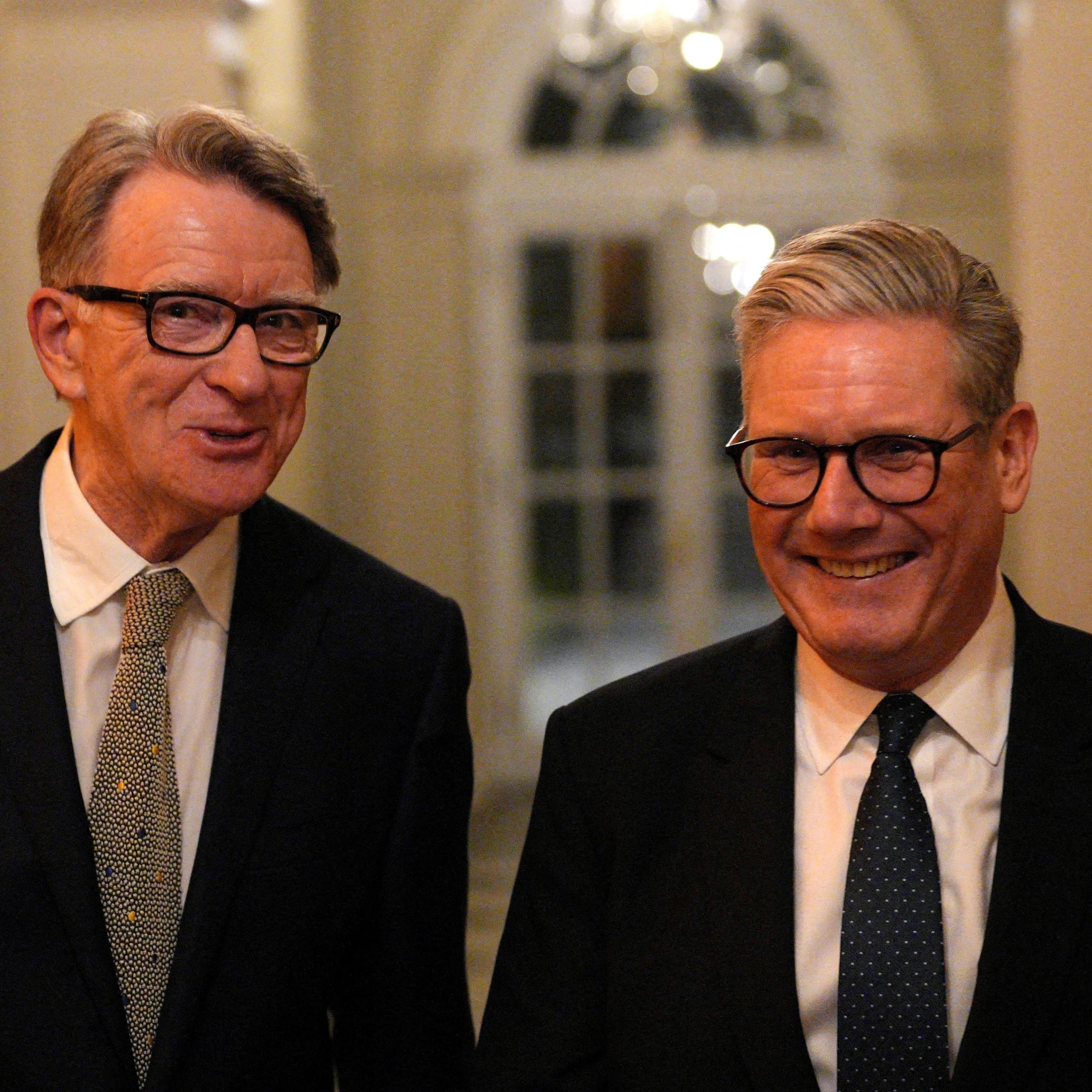
Today in Focus
Mandelson files: Starmer admits ‘I made a mistake’ – The Latest
00:11:23
Keir Starmer was warned of ‘reputational risk’ in making Peter Mandelson ambassador to the US due to his links with the sex offender Jeffrey Epstein, according to newly released files. Lucy Hough speaks to the Guardian’s head of national news, Archie Bland
Loading summary
Transcript22 lines
- [00:00]
Lucy Hoff
This is the Guardian.
- [00:12]
Archie Bland
I made a mistake in appointing Peter Manderson, and let me follow that up with an apology to the victims of Epstein. What we've seen is a much more detailed picture of the process, the way that Keir Starmer and his most senior political aides overruled the warnings about reputational risk. And then we also see some of the fallout from what happened after. After Peter Mandelson was fired.
- [00:33]
Lucy Hoff
Keir Starmer has admitted it was a mistake to appoint Peter Mandelson as U.S. ambassador and has apologized again after new documents revealed he'd ignored warnings about Mandelson's links to Jeffrey Epstein from the Guardians today. In Focus, this is the latest. With me, Lucy Hoff. Joining me is Archie Bland, the Guardian's head of national news. Thanks so much for coming up to the studio, Archie. So yesterday we had the drop, if we can call it that, of the Mandelson files, government documents that. That give more information about the decision around his appointment as US ambassador at the end of 2024. And then in the second half of the documents, his sacking from that position over his ties with the convicted sex offender Jeffrey Epstein. So we know that Keir Starmer, the Prime Minister, has previously stood up in the Commons and said that he knew about Mandelson's links to Epstein. What more have we learned about that knowledge from the files we saw yesterday?
- [01:30]
Archie Bland
So one thing that we've got from this tranche of files, and we should say that it's not complete, that there are more in later batches and that some have been held back at the request of the police at this stage. But what we've seen is a much more detailed picture of the process leading up to Peter Mandelson's appointment, the way that Keir Starmer and his most senior political aides overruled the warnings about reputational risk that would be incurred by appointing Mandelson, and then we also see some of the fallout from what happened after Peter Mandelson was fired. Taken together, part of it is just that you see in black and white the kinds of warnings that were set out, and you have a clearer sense of the kind of information that Starmer and his team were working with. And there are other specific details that are interesting and telling, which I'm sure we can get into, but it just paints a much clearer picture than we had before yesterday of how this process works in detail.
- [02:21]
Lucy Hoff
Yeah. And that is crucial, isn't it? Because there was a specific section about Mandelson's relationship with Epstein that was handed to the Prime Minister around the time that he was being appointed as ambassador. Not least the fact that Mandelson, the documents read, stayed in Epstein's house while Epstein was in jail over that conviction of soliciting an underage girl. That Mandelson continued his relationship with Epstein after that in the period of 2009 to 2011, including when Lord Mandelson was Business Secretary.
- [02:52]
Archie Bland
Yeah. And what we can see then is, first of all, we knew that Mandelson's Epstein links were raised and that the Government decided to go ahead nonetheless with the appointment. We're told that some of the information that's being held back will perhaps present a more favourable picture for the government than it does at the moment, which
- [03:12]
Lucy Hoff
is basically that Starmer had questions based on the information that he was given and that he raised with Mandelson. But those documents, the evidence of those conversations, is currently being held back because it could have implications for the Metropolitan Police investigation that's still ongoing.
- [03:28]
Archie Bland
Right. And Peter Mandelson denies any kind of wrongdoing in relation to any of this. And so there is a question that remains, remains, about whether the evidence that eventually emerges there will indeed endorse what the Government says about the due diligence that Keir Starmer in particular did. But there are also interesting things that come up here that suggest maybe just a lack of really deep concern over the kinds of problems that potentially were going to arise with Mandelson. Like the fact that it appears that he was offered high level security clearance to look at documents before the vetting process was complete. That would seem, I think, to most people, like, it kind of flies in the face of the vetting process. We also see that Jonathan Powell, the National Security Advisor, said that he thought that this whole process had been carried out at weird speed, that it happened too quickly. So when you put those things together, even though we already knew that Epstein's links had been known by the Prime Minister, I think it also reflects in a more detailed way that this appears to have been a politically driven process without perhaps the kind of care and attention that the Civil Service might have naturally applied to it.
- [04:32]
Lucy Hoff
Yeah. Like you say, it becomes a question of political judgment. Jonathan Powell, it's interesting we should say perhaps, that he was Chief of Staff to Tony Blair. So therefore Lord Mandelson is someone that he would know well through work. But he said that he felt the process was weirdly rushed, which implies that the people making that political decision at that time really felt that Mandelson was the right choice for the, for the job to be the US Ambassador with the incoming Donald Trump administration. A decision that Keir Starmer has said again today that deeply now regrets with the benefit of hindsight.
- [05:07]
Archie Bland
Yeah. And you know, I think at the same time as that observation from Powell being in there and indicating perhaps that he saw more clearly than Morgan McSweeney, the Prime Minister's most senior aide at the time, or the Prime Minister himself did, the fact that Mandelson might present an issue. I think another theme that comes through when you look at these documents is the euphemistic way that the Civil Service sometimes provides its advice. And there's a really clear distinction to me in the materials before Mandelson was fired and the materials afterwards, and when these issues are being raised, they are typically being raised in terms that you have to squint at. Quite hard to understand that they are suggesting that there is a real problem here. Nobody appears to be saying in a front footed way you have a real problem. They simply say to the Prime Minister, here are your options. You can make a political appointment. This has some upsides and some downsides. There will be some reputational risk attached to Peter Mandelson, but those things do not amount to a very clear observation that this presents the kind of serious problem which actually it should have been possible to understand at the time that it did. On the other hand, when you go to the documents that cover the period after Mandelson was fired, it feels a lot more like everybody is saying then, well, we've got to get rid of him. And everybody knows that. Yeah. And you sort of wonder why that kind of clarity of thinking wasn't available in the first instance.
- [06:25]
Lucy Hoff
Well, it's a good question and one that you hope is being asked in the Cabinet Office and elsewhere this week. But the second part of the documents relate to the decision to sack Lord Mandelson at the end of last year after the extent of his relationship with Epstein became known. And the severance pay that was negotiated with him, it's reported, or the documents suggest that Mandelson was looking for a figure of upwards of 500k, so half a million, but that the figure that was eventually settled on was 75,000, which has proved bad optically, hasn't it, that that amount of money would be paid to someone sacked from a senior diplomatic position for links to known child sex offender.
- [07:07]
Archie Bland
Yeah. And we should say the allies of Mandelson dispute the idea that this 500,000 plus was something that he ever seriously thought that he would get. We don't know the answer to that. And, you know, you may say that he might have initially expected to be paid for the full term, that he would have been ambassador had this not happened. I think most people would reasonably say you can't expect that when you've been fired. And it would have been an extraordinary sum of money. I think it's only in the context of that kind of negotiation that 70 something thousand pounds looks like a reasonable sum to most people in this context. And that may be indeed one of the reasons that it finds its way into this document. The Civil Service talks in it about why it represents value for money. And one of the reasons that they give for it, representing value for money is that the initial counteroffer was so much higher. You slightly suspect, therefore, that if you're telling somebody that something's cheap, you always want to have what the other price would have been that they didn't have to pay. And I think there may be a little bit of optics going on there. There is now press or Mandelson to donate that payoff that he got to charity. We'll see whether anything like that happens. And indeed we already knew that he had had a payoff. But I think seeing all of these figures set out and an argument for why they're a good idea obviously brings it into quite sharp relief.
- [08:20]
Lucy Hoff
Yeah. And in the Commons yesterday was very interesting points being raised by opposition MPs, but also from Labour MPs about the optics of all this and what it tells us about these kind of networks of power. £75,000 is well in excess of the UK national salary will seem like a huge amount of money to most people, and yet. And it just doesn't cut through as a reality to most working people.
- [08:46]
Archie Bland
Yeah. And on the other side of that, you will have people in the kind of Peter Mandelson universe who will think that it's not that much money and that that just goes to indicate how, you know, that's. That's kind of part of why I think that's particularly ugly here is it's not just like we're talking about MP salaries when this kind of stuff comes up quite a lot. We're talking about somebody with links to specific network of people in a kind of a super rich, rarefied elite who are also doing unspeakable things. And I think all of that as a backdrop makes it seem especially heinous.
- [09:17]
Lucy Hoff
Yeah. And one that will continue to rumble on because as you said, we've only seen the first tranche of documents. There are more that are being held back as the Met Police investigation goes on, Mandelson, who we should say again, has denied any wrongdoing, including misconduct in public office, for which she was arrested last month, has been released from bail, but is still under investigation. But it's likely to be some time, we think, before we see the full documents.
- [09:45]
Archie Bland
Yeah, they will continue to come in tranches, and we don't know the exact timing of those yet. What I would say about it is that what we have seen so far are all quite formal communications. They're either quite a large portion of yesterday's release was just like terms and conditions of, you know, telling him where the collector's security passed when he became ambassador.
- [10:02]
Lucy Hoff
Did you read that in full, Archie?
- [10:04]
Archie Bland
I'm afraid I did, yeah. It's exciting. I was actually on a day off and still read it in full. And anyway, it just. I think that suggests that this is the more formal part where people will have been considering quite carefully what they have to say. We may see in further documents released down the line things that people say when they're being a little bit more informal, and that might suggest that there is a lot of trouble potentially ahead for everybody involved in this.
- [10:29]
Lucy Hoff
Yeah. And also what was kept in written form as documentation. There are all sorts of conversations that happen in private rooms in the corridors of power that we may never see the light of day of. But, Archie, thank you so much for your time on what we know at this stage.
- [10:43]
Archie Bland
Thank you.
- [10:45]
Lucy Hoff
That's it for today. My huge thanks again to Archie Bland, the Guardian's head of national news. And for more on how all this played out in Westminster, do listen to our sister podcast, Politics Weekly. Thanks for listening to this episode of the Latest, the new evening edition of Today in Focus. Today in Focus will be back with you as usual tomorrow morning. The latest we back tomorrow night. This episode was presented by me, Lucy Hoff. It was produced by Annie Lava Vesper. The senior producer was Ryan Ramgobin. The lead producer was Zoe Hitch. This is the Guardian.
- [11:26]
Farnoosh Tarabi
Hi, this is Farnoosh Tarabi from Sew Money with Farnoosh Tarabi. And today I want to talk to you about Boost Bubble Quick money tip. Stop paying a carrier tax. If your phone bill feels trapped in a pricey plan, this is your sign to unlock savings. Boost Mobile helps you reset your spending. With the $25 Unlimited Forever Plan. You can bring your own phone, pay $25 and get unlimited wireless forever. And that simple switch can unlock up to $600 in savings a year. That's money you could put towards paying down debt investing or something that actually brings you joy. Those savings are based on average annual single line payment of AT and T, Verizon and T Mobile customers, compared to 12 months on the Boost Mobile Unlimited plan as of 26. For full offer details, visit boostmobile. Com.