← Today in Focus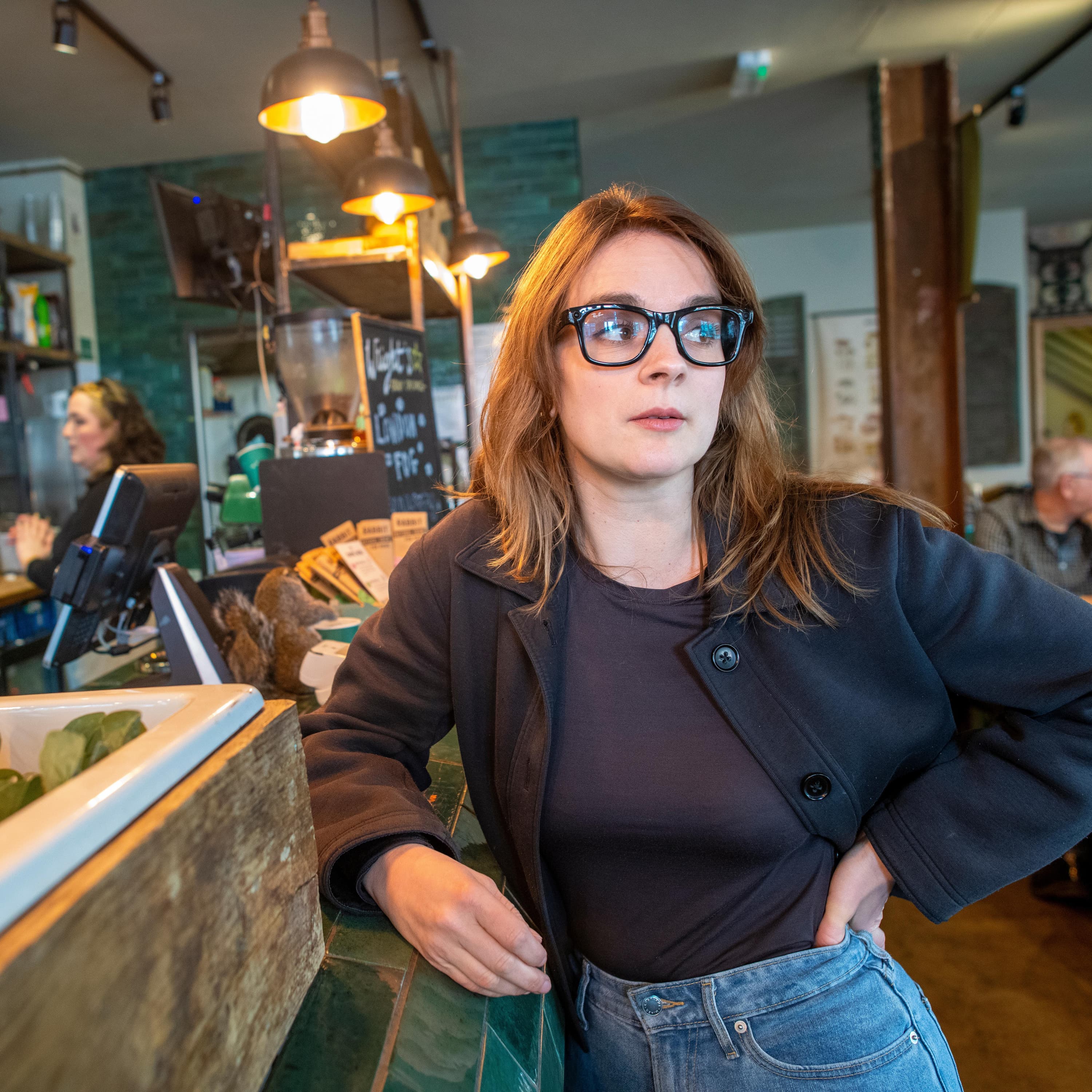
Today in Focus
Meta‘s AI glasses and the dawn of wearable tech
00:28:33
Elle Hunt on her month wearing Meta’s smart glasses and the privacy concerns around the technology
Loading summary
Transcript119 lines
- [00:00]
Elle Hunt
This is the Guardian.
- [00:09]
Nosheen Iqbal
Today. Do matter Smart glasses threaten our right to privacy.
- [00:21]
Creon Advertisement Voice
Today's markets move fast. Get the insights you need in 10 minutes with the Barclays Brief, a new podcast from Barclays Investment Bank. Through Sharp dialogue and scenario based analysis, our leading experts analyze key market themes each week. So whether you're managing a portfolio or leading a business, the Barclays Brief podcast can help you make smarter decisions today. Stay sharp, stay brief. Find Barclays Brief wherever you get your podcasts.
- [01:00]
Kate
We were at the Brighton Marathon, a hot day in April, watching a friend. My friend had made a sign and we were sort of walking between different places on the marathon course to catch our friend running past.
- [01:12]
Nosheen Iqbal
This is Kate, she lives in London and works in tv.
- [01:17]
Kate
Brighton split on two levels, the seafront. And we were climbing the stairs between the two levels and heard someone speaking to us who was very chatty, friendly and talking. And I instantly was like, oh, this is an interaction that hasn't been invited. I'm gonna keep walking up these stairs. And my friend turned back to chat to him and was more engaged in the conversation and they chatted about her sign and then we got to the top of the stairs and he said goodbye.
- [01:46]
Nosheen Iqbal
She didn't think much more of her interaction on the street that day until
- [01:50]
Kate
we got sent a video from TikTok where a friend said, oh look, you guys are on TikTok, which was a video filmed with his meta glasses, which we hadn't noticed, hadn't noticed that he was wearing glasses at all. I truly don't think I even knew or was conscious of what meta glasses were. I got sent it, I looked, I felt weird about it, but I didn't really know why I felt weird about it. At first I was like, oh, okay, I've been filmed without knowing on the surface, completely innocent, felt harmless. Yeah. But after looking at that video and sort of being sent it by a couple of people and sending it around to my friends and we all sort of pondered over it and went, oh, actually this is quite weird. It didn't even get many views, like it was at the sort of thousand view mark, but it had five comments. And most of the comments were, love what you're doing, mate, this is such a cool thing that you're doing, chatting to these people. And then one of them was, oh, they're out of breath climbing up those stairs. And I was like, oh, that's it, you've opened this up to someone to give an opinion where it's absolutely unwelcome, where you haven't told me that anyone's going to be allowed to express an opinion on this interaction with me,
- [03:11]
Nosheen Iqbal
That particular unease that Kate was left with. Well, it's one we all might experience soon because Meta smart glasses are designed to discreetly film record photograph and like Kate, you probably wouldn't even notice it was happening. It's all a bit too black mirror. You're just walking about doing life and you could be treated without consent as material for someone else's social media content. And it's even more sinister than that. What is Meta going to do with all that endless data from smart glasses and who else has access to it? From the Guardian, I'm Nosheen Iqbal. Today in Focus are Meta smart glasses the future we want to live in? Elhant Hi, welcome back to Today in Focus. Now, you've written extensively about metaglasses. Can you explain just first of all, what are they?
- [04:11]
Elle Hunt
They are AI powered glasses made by Meta, which we know best as the company behind Facebook, Mark Zuckerberg, in partnership with the eyewear brand Ray Ban Oakley. Some others are glasses. They can come with sunglasses or clear lens or prescription lens or transition lens, but effectively they are glasses that work a little bit like a phone. So they can take pictures, they can film video, they can stream video and really basically fulfill a lot of the functions that you would turn to your phone or laptop for, but through your eyes. Now, glasses are the ideal form factor for personal superintelligence because they let you
- [04:54]
Nosheen Iqbal
stay present in the moment while getting
- [04:58]
Elle Hunt
access to all of these AI capabilities
- [05:01]
Nosheen Iqbal
that make you smarter, help you communicate
- [05:03]
Elle Hunt
better, improve your memory, improve your senses and more.
- [05:07]
Nosheen Iqbal
And who is typically buying and wearing these right now?
- [05:12]
Elle Hunt
Well, at the moment, the real selling point for the technology is that they can record this video. So they can record video for up to three minutes and stream directly to Facebook or Instagram ongoing. So no time cap, but they are capturing your point of view. But mostly the people buying them, it seems to be content creators who obviously need to capture a lot of footage. This is really, if you are not blind or low vision, where there is an argument for them as assistive tech. You don't really necessarily need to keep your hands free, which is the big selling point of them, really.
- [05:54]
Nosheen Iqbal
We've just heard from Kate, who has filmed in a slightly surreal, seemed kind of normal ish interaction with a guy on the street. She wasn't aware at the time that she was being filmed. How widespread is that, that kind of interaction on social media?
- [06:09]
Elle Hunt
I think at the moment what we're finding is that These glasses are still quite niche technology. I suspect you don't know anyone.
- [06:15]
Nosheen Iqbal
Actually, before I read your piece, I didn't even know they existed.
- [06:18]
Elle Hunt
Yeah, I mean, they're growing. Meta sold 7 million pairs last year worldwide. Worldwide. And that is seeming to be increasing in popularity.
- [06:28]
Nosheen Iqbal
Okay, so I know it's legal to film people in public places on your phone, but this is so covert with these glasses just filming people without consent.
- [06:39]
Elle Hunt
There's no law or difference in permissions than there would be with taking a picture on your phone. This is the thing, it's that we haven't evolved the kind of social awareness and cultural awareness around that this could be happening. So, I mean, there's obviously when we have this new technology that's starting slowly to be integrated into society, there's always this question of we should ban it or we should introduce some regulations. But really this is not doing anything differently than what a phone can do. It's just that we now know when someone's trying to angle a phone, we know what that looks like. Like we have developed an awareness of someone's doing something with their phone. And I think many of us feel comfortable to go up to someone and say, delete that or why are you doing that? With the glasses, it is discreet and you have to be looking at what looks like just a kind of classic frame, like, you know, pair of specs to see if they have the visible camera and then be looking for the light. And so it is getting influencers who might be filming quite innocuous content, like a Q and A street style video. Right, right. On my Instagram, I see lots of videos that are clearly filmed with the glasses and they are never or very, very rarely explicit about that the person knows they're being filmed. You know, tell me how you met videos like, it is good footage from a content creator point of view. That's the most benign side. And then the other side that is less benign is where it seems, you know, it's pranksters, it's social media, pickup artists, even the things like kindness influences,
- [08:21]
Nosheen Iqbal
where kind God, kindness influences. Go back a step.
- [08:26]
Elle Hunt
Yeah, I'm sorry to tell you about this, but it's, you know, people who are trying to spread love and light and sort of, they'll buy some flowers and find someone who they think looks like they need a brightened day and give them flowers and fill in. There's a whole word.
- [08:41]
Nosheen Iqbal
I have seen this and I have seen those. How did you meet? I guess I am actually seeing this, but I didn't realize I was Seeing it?
- [08:46]
Elle Hunt
Yeah, because you're reacting with it passively as content and you're actually not thinking about. And no one is like, this is the thing,
- [09:00]
Nosheen Iqbal
Kate, what did you do after seeing the video?
- [09:03]
Kate
So instantly was like, oh, I should message and say, I don't want this video to be on online. But you, you feel weird because you're like, oh, we see these kinds of interactions on the Internet so often that maybe I am being too sensitive about this, that we watch people film these videos where they chat to people all the time. It feels so weird to go against that. But I wasn't told that was what was happening in any way. And so we messaged and asked for it to be removed and said, you didn't ask for consent, please remove it. Which they didn't do. And a year later, as the meta glass conversation was sort of rising, there was a BBC News video about women being filmed with meta glasses. And I had sort of left that on a back burner. But as soon as I saw that, I was like this. It's not just about that interaction, how I felt in that moment, how I felt afterwards. It's that if the process is not being followed with us in such innocuous thing where it didn't feel like it mattered. But he didn't know. He didn't know that we weren't people that were vulnerable. And then I got annoyed and I started commenting on other videos.
- [10:14]
Nosheen Iqbal
And by this point, this is a year later, he's actually grown quite a decent following.
- [10:18]
Kate
Yeah, about, I think in the hundreds of thousands of followers, doing sort of branded content with people and like getting positive reactions to his content constantly.
- [10:28]
Nosheen Iqbal
So you start leaving comments on his posts. How does he respond and what is it that you're after at this point?
- [10:33]
Kate
Once I'd had multiple comments and had other people commenting, I got a message semi apologizing, sort of saying, I'm sorry you feel that way. And then after that I asked for the video to be taken down, which he obliged to do. I'm also in those messages, was explaining the potential risk for other people and the reason that he should be cautious about what he's doing. And there was no acknowledgement of that.
- [10:58]
Nosheen Iqbal
And of course, the reason, I guess, why this matters in another sense is that he is using these interactions for financial gain, potentially without the knowledge or consent of the people involved in them. I mean, how does that make you feel?
- [11:11]
Kate
Weird and upset and sort of like you're selling yourself as a personality. But often these videos are about these other people's Personalities and how great they are and how fun these people are and how exciting they are, and they're potentially unknowing that they're involved in that in any way. And it's just this weird transactional nature of that conversation where I'm having this positive moment with you, but you're doing it for some sort of gain. It sort of completely negates the positivity in my eyes.
- [11:44]
Nosheen Iqbal
Has it changed how you view those videos now? You see them on your feeds when you know the random couple's being asked,
- [11:50]
Elle Hunt
hey, how did you meet?
- [11:50]
Nosheen Iqbal
Or hey, I love your jacket. You know, how do you feel about watching that content now?
- [11:54]
Kate
That's the big difference. It's watching that content. It's sort of when I see a microphone, I feel better because I go, okay, you, at least there's some. Or even just someone holding a phone. Like, if I believe that they have any indication that they're being recorded, it feels safer. When I see those POV videos, I feel really uneasy for them.
- [12:14]
Nosheen Iqbal
So, Kate, as I understand it, you do work in television and you spent the early years of your career as a runner, which meant that you got consent from people that you filmed. Can you explain how filming is different in broadcast?
- [12:27]
Kate
Yeah, completely. Having spent so many jobs running after people with a piece of paper to ask them to give informed consent to say that this is what we're doing. You are on camera. Whether they were a contributor that we had booked to be interviewed or was on the show, or whether it was someone in passing that we were filming in a shop and they were in the background for a long time in a shot, and we'd going tell them. It's such a key cornerstone of our jobs is to say, this is what's happening. And I think that was what was very unnerving about it, was the. The dismissal of those processes.
- [13:04]
Nosheen Iqbal
Well, it's just that those rules and regulations don't apply on TikTok and Instagram.
- [13:08]
Kate
Yep.
- [13:08]
Elle Hunt
Frightening.
- [13:17]
Nosheen Iqbal
Elle, you spent a month wearing these glasses. Real public service journalism right there.
- [13:23]
Elle Hunt
One of the commenters said, couldn't you have done a week? I was like, yeah, probably. No, no, a full month.
- [13:29]
Nosheen Iqbal
Are you a convert?
- [13:31]
Elle Hunt
No. It was super interesting, though, in terms of. It is such a different experience of tech than we've had with a smartphone. And I think a lot of us, probably you as well, a lot of the listeners, will be wanting to spend less time on screens. And so I sort of was open to it if it felt like this allows me to stay connected or on Top of my messages without just having to look at the.
- [13:56]
Nosheen Iqbal
But see, I still can't really wrap my head or my eyes around that because, I mean, maybe I need to try them.
- [14:02]
Elle Hunt
I've got them.
- [14:03]
Nosheen Iqbal
I mean, let's have a look.
- [14:04]
Elle Hunt
Yeah, they've just turned on. And so now if I was to take a picture that's notified that it's
- [14:11]
Nosheen Iqbal
barely saw that it barely blinked at
- [14:13]
Elle Hunt
me, and so if I was to do a wonderful video, it's now blinking. Right?
- [14:19]
Nosheen Iqbal
Yeah, there you go. Yeah.
- [14:21]
Elle Hunt
I mean, on the next. The updated version, they have made that bigger so that they responded to criticisms and it was too subtle. But at the same time, if you search Meta glasses, light cover ups, light hacks.
- [14:34]
Nosheen Iqbal
Oh, God, you could literally just stick some gaffer tape on there.
- [14:36]
Elle Hunt
Yeah, exactly. It's very easy to find kind of users and owners of these glasses figuring out ways of how to cover up the already small disclosure that filming is in process. And then if I say, hey, meta, they wake up and I say, what's the weather like today? It's thinking. And you can tell it's thinking.
- [14:58]
Nosheen Iqbal
I mean, I can also tell you the sky is blue. It looks pretty warm. I just looked out the window.
- [15:02]
Elle Hunt
Yeah, I mean, it's not working. I have to say.
- [15:04]
Nosheen Iqbal
It's not working.
- [15:04]
Elle Hunt
Yeah, it's not working. And they are extremely. And this happened to Mark Zuckerberg at his on stage when he was introducing them as well. He struggled, tried and struggled to make a video call.
- [15:14]
Nosheen Iqbal
Boz WhatsApp video call. There we go.
- [15:18]
Elle Hunt
Uh, oh, well, I. Let's see what happened there. That's too bad.
- [15:27]
Nosheen Iqbal
I don't know what happened. Delightful.
- [15:30]
Elle Hunt
So they are not that functional, but they will get better.
- [15:34]
Nosheen Iqbal
What's the quality of the photo and the video?
- [15:36]
Elle Hunt
Much worse than using your phone and taking the time to properly frame a picture and get your hair out of the way. All of my footage has a cause. I could never figure out which side the camera was on. So it's just like a fringe. And also my friends.
- [15:50]
Nosheen Iqbal
Memories.
- [15:51]
Elle Hunt
Yes, exactly. Happy memories. And also my friends were not thrilled about posing for a picture like this. So everyone's sort of looking like, you know, suspicious or hostile or alarmed or,
- [16:03]
Nosheen Iqbal
you know, what is the AI assistant like on these things?
- [16:06]
Elle Hunt
So this is the big selling point of the glasses, beyond being just a camera or video camera, is that they have Meta AI integrated, which is Meta's own chatbot, essentially. You may well have kind of come across this on Instagram or Facebook or WhatsApp yourself. And it's not thought to be one of the better chatbots, I have to say. You don't have to have used it very much to find it a little bit limited in what it can offer. But this is the thing that is piped into your ear by these glasses. And one of the first things you can do is choose who you want to voice it. So the options are there's, you know, maybe six anonymous just voice actors where you can choose high pitch woman, low pitch man. High pitch man. You know, there's a range for. Which feels different.
- [16:53]
Nosheen Iqbal
Accents.
- [16:53]
Elle Hunt
Yes, yes. Which feels most. I don't know what you're looking for in an AI assistant, but I guess, like, agreeable to you to be reading your texts. Or you can go for the jazzy celebrity option where it's the comedian Awkwafina, the actors John Cena or Kristen Bell. There might be a couple others, but I went for Dame Judi Dench, of course. Hello, I'm Judi Dench. I'm one of the new voices for Meta AI. From sound bites to sonnets, I can do it all. And when Mark Zuckerberg was announcing this kind of technology last year, it was seen as a way of making these glasses more fun. So you want to engage with it. And so it was this very bizarre experience where I, you know, you'd get Judi Dench reading your texts if I
- [17:40]
Nosheen Iqbal
just put aside my cynicism for a moment because it's just always there and deep seated if I go with what the company claims are really cool features and, you know, something that is transformative about these glasses, particularly for people with accessibility issues. Elle, could you explain what those are and whether it's convincing?
- [18:01]
Elle Hunt
That's where the tech is most exciting. And when you can see, oh, this would be genuinely life changing. It already has been for people who are blind or in the low vision community, where essentially, as you put them on, you can wake up the AI assistant and say, tell me what I'm looking at. And although it's not as reliable or as descriptive as you would maybe want to be able to rely on them all the time, it can read a menu aloud in your ear. It can tell you if you've received mail through the post, who it's from, what it says, and it can tell you the basics. Obviously, for someone who has not got any sight at all, that is incredible. The problem is it's not quite reliable that you would want to lean on it entirely. Obviously, the tech will get a lot better soon and they're continuing to invest in it. It's not even just for vision. It's also for things like, I was told by a researcher that they're looking at using these glasses to be able to tell you if you've taken your medicine today for people with sort of Alzheimer's or early onset Alzheimer's. And other ones would be sort of like, maybe as a learning aid for dyslexia, that sort of thing.
- [19:10]
Nosheen Iqbal
Okay.
- [19:10]
Elle Hunt
So as in terms of, like, assistive tech, I think there's a great deal of potential, and you would be churlish not to recognize that.
- [19:24]
Nosheen Iqbal
What about the experience of wearing them in public?
- [19:26]
Elle Hunt
I was surprised by how quickly in my head, I was like, oh, I wouldn't take this picture with my phone because they'd see I was doing it. But that would make a good picture. Like, there was a sort of. Well, like, I saw a woman walking her dog and she looked exactly like the dog. And I was like, wow, I'm gonna describe this to my friends later. Cause it tickled me. But you know what would be even better than a description?
- [19:48]
Nosheen Iqbal
Oh, my goodness.
- [19:49]
Elle Hunt
A picture. And obviously I wouldn't have done that, but the thought popped into my head. And the other weird thing is you can video call shooting your point of view. So I did that around Ikea and I called my boyfriend. And at first it was like, ha, ha, ha, look at the specials on lingonberry or whatever. And then I just became very conscious of everyone around me where it's like, well, they're just at ikea, you know, like, why do they know that? I just suddenly felt naturally very weird and compromised about broadcasting this footage to, you know, another place.
- [20:25]
Nosheen Iqbal
And what was Metta's response when you asked him about the issues surrounding consent or the lack thereof?
- [20:32]
Elle Hunt
Their response was that the user terms and conditions make it very clear that it is down to the individual user to abide by the law. You know, and that they said that they have tried to make the light visible. It clearly denotes that it is recording. But it was a sort of a sense of, we encourage people to behave respectfully. Whether they follow the law or not is down to them. But this sort of falls outside the law where, you know, we know that it is legal to film in public places. So it feels more like a kind of social shorthand or awareness that we're going to have to develop and decide whether we want these glasses becoming accepted.
- [21:19]
Nosheen Iqbal
Coming up. Social media content is one thing, but where does the rest of that footage go?
- [21:46]
Barclays Brief Narrator
From globalization to innovation sustainability to market volatility. There's always more than one side to a story. Explore different perspectives on today's most important business and economic issues with the Flipside podcast from Barclays Investment Bank. Hear two research analysts in a lively debate and get insights from every angle to further inform your view. Listen to the Flipside on your favorite platform.
- [22:11]
Kate
Lunch was great, but this traffic is awful.
- [22:14]
Elle Hunt
Um, can we stop at a bathroom?
- [22:16]
Kate
Are you alright?
- [22:17]
Nosheen Iqbal
I keep having stomach issues after eating like diarrhea, gas and bloating, abdominal pain and sometimes oily stools.
- [22:23]
Creon Advertisement Voice
Sound familiar? Those stomach issues may actually be a pancreas issue called Exocrine Pancreatic Insufficiency, or epi. Creon may help manage EPI Creon is a prescription medicine used to treat people who can't digest food normally because their pancreas doesn't make enough enzymes.
- [22:40]
Creon Advertisement Warning Voice
Creon may increase your chance of fibrosing colonopathy, a rare bowel disorder. Tell your doctor if you have a history of intestinal blockage or scarring or thickening of your bowel wall. If you are allergic to pork, or if you have gout, kidney problems or worsening of painful, swollen joints. Call your doctor if you have any unusual or severe gastrointestinal symptoms or allergic reactions. Take Creon's directed by your doctor and always with food. Do not chew capsules as this may cause mouth irritation. Other side effects may include blood sugar changes, gas, dizziness, sore throat and cough. These are not all the side effects of Creon. Call 800-633-9110 or visit creoninfo.com to learn more. That's C R-E O-N-Info.com I'm asking my
- [23:09]
Nosheen Iqbal
doctor about EPI and if Creon could help. And it's not as if the tech is remaining static either. I mean, I've read reports that Meta plans to add facial recognition to the glasses, allowing the wearer to identify in real time. Like I'm thinking of a scenario where you see someone in the street. You can put up their LinkedIn or their Instagram or whatever. What are the big risks when it comes to privacy?
- [23:37]
Elle Hunt
On the one hand, we've been talking a lot about people being caught in the background of people filming or film when they're not aware of. So that sort of interpersonal live privacy. But in the bigger scale, these glasses are sort of a content capture means for Meta, where everything that is taken, all the photos that are taken, all the footage, and even just things that are seen through the lenses does exist somewhere. It's, you know, stored and processed On a cloud meta can use that for training its own AI and its algorithms. It could use that for facial recognition. It could use the information it gathered through those cameras to build a more robust picture of you to use for marketing purposes. So if you think about it, the way that we currently interact with tech is mostly the Internet is still kind of a site we go to. Right. But it's also, if you think about it, if you wore them all the time, it's providing data on your experience of the world where you wouldn't maybe necessarily have been doing that beforehand. I was in Ikea, I was going around and my phone would know I was in IKEA from my location. But with this video, it could show what I'm looking at, for how long, that sort of thing. So it's just a lot more data for a company that makes its profits from that, from users.
- [25:00]
Nosheen Iqbal
Well, recently I read that in Sweden, journalists found that the footage isn't just reviewed by AI systems, but actually it's reviewed by moderators in Kenya who have admitted to seeing intimate footage, including of people using the toilet and having sex. That seems bonkers.
- [25:17]
Elle Hunt
I think this is exactly the thing where we want to make sure that these don't become normalized, because ultimately, you know, we've already handed over a lot of our privacy and information on ourselves, and many people are not concerned about that. But this does seem to be another kind of inflection point of, you know, we've got some people taking extra care to manage their digital footprint, obscure their children's faces online. These glasses represent another. What are we prepared to accept and make mainstream and normalize because they are out in the world, they are discreet. Will we accept them or will we kind of reject them as what happened with Google Glass 10 years ago?
- [25:57]
Nosheen Iqbal
I mean, I guess the thing with this is that as much as any one individual can try to keep their personal information at bay, the glasses means that anyone else can film you or your child, and it can be submitted up into this sort of data vacuum that is strapped to someone else's head. Where Mark Zuckerberg gets to know everything you see, think you do, where you go, who you know, El
- [26:21]
Elle Hunt
what are
- [26:21]
Nosheen Iqbal
the big challenges and risks that, you know, individuals should be aware of?
- [26:25]
Elle Hunt
I think we really need to develop a way of thinking and talking about this where if you saw someone, a, you need to know to look for the glasses. But B, I think you should feel comfortable going up to someone in public and being like, are you filming me on your meta glasses? And right now they are obviously not at the kind of scale where we expect to see that at the same time. While I was wearing wearing them in humble Norwich, I was queuing at a bar and I looked down the bar, busy crowded place, you know, and there was a guy and I was like, I know what you're wearing. He was wearing them. So they are around among us. I only knew to look because I've been wearing them myself. And I think you we need to think about even if we don't want to buy that tech and use that tech ourselves, are we prepared to have an uncomfortable conversation with the people who do.
- [27:17]
Nosheen Iqbal
Do you think governments should step in can step in to regulate this kind of technology?
- [27:22]
Elle Hunt
I mean it's probably still too fringe now. What could happen if they kind of reached a tipping point where this was causing widespread disruption, chaos, distress is that there could be the companies meta could be put under pressure to have some controls over what it does with that data in terms of should it only be allowed to recognize faces that you've got permission for in advance. But as we've seen with the recording light and the things that already exist, people are finding workarounds and I think in general people are more concerned about the risk of being filmed in public than they are about their privacy and their data privacy as we see all the time.
- [28:07]
Nosheen Iqbal
Yeah.
- [28:07]
Elle Hunt
So it's difficult. I don't know if regulation is as easy a way of dealing with this problem and the potential problems they sort of suggest. You gotta hope that they just don't catch on really because the consequences are so unclear to us now. But they don't. They would be very difficult to deal with later.
- [28:25]
Nosheen Iqbal
Is it safe to say that after your month long experiment, your research, your interviews, you're not quite missing Judi Dench in your ear.
- [28:35]
Elle Hunt
I have them in my bag to hand back to the Guardian today and I cannot wait to be rid of them. They're a real burden, but they feel not gonna say malevolent presence, but they made me think a lot about the future in a way that was quite dread ridden. You know, we should really question whether this is something we're willing to put up with or normalize. And I was glad to have worn them for a month so that I can feel confident in my own position, which is I do not want this to be normalized. I do not want to live in a world where we're all wearing these as a matter of course doing the
- [29:08]
Nosheen Iqbal
hard work so the rest of us don't have to.
- [29:09]
Elle Hunt
Yes, you're welcome.
- [29:11]
Nosheen Iqbal
Thank you so much.
- [29:11]
Elle Hunt
Thank you. Time to go get rid of them.
- [29:17]
Nosheen Iqbal
That was Elle Hunt. My thanks to her and to Kate. You can read Elle's pieces and follow her work@theguardian.com you can also read a collection of letters sent in from readers with visual impairments or hearing loss who found using smart glasses transformative. Just search for the life changing magic of wearing smart glasses. We did reach out to the influencer who filmed Kate and he said, I do not recall the specific individual or moment in detail, but I take any concerns about consent and privacy seriously. He also said, in this instance, once I became aware of the request, the video was removed. In response to reporting on moderators in Kenya, Meta said that it took the protection of people's data very seriously and it was constantly refining its efforts and tools in that area. It said that unless users choose to share media that they've captured with Met or others, that media stays on the user's device. And that's it for today. This episode was produced by Hannah Adan, George Francis Lee and Alex Atak. It was presented by me, Noshi Nikbal. Sound design is by Ross Burns. The executive producer was Elizabeth Kassin. We'll be back this afternoon with the.
- [30:32]
Elle Hunt
This is the Guardian.
- [30:43]
Barclays Brief Narrator
From globalization to innovation sustainability to market volatility, there's always more than one side to a story. Explore different perspectives on today's most important business and economic issues with the Flipside podcast from Barclays Investment Bank. Hear two research analysts in a lively debate and get insights from every angle to further inform your view. Listen to the flip side on your favorite platform.
- [31:08]
Kate
Lunch was great, but this traffic is awful.
- [31:11]
Elle Hunt
Um, can we stop at a bathroom?
- [31:12]
Kate
Are you alright?
- [31:13]
Nosheen Iqbal
And keep having stomach issues after eating like diarrhea, gas and bloating, abdominal pain and sometimes oily stools.
- [31:20]
Creon Advertisement Voice
Sound familiar? Those stomach issues may actually be a pancreas issue called exocrine pancreatic insufficiency or EPI cre. Creon pancrelipase may help manage epi. Creon is a prescription medicine used to treat people who can't digest food normally because their pancreas doesn't make enough enzymes.
- [31:36]
Creon Advertisement Warning Voice
Creon may increase your chance of fibrosing colonopathy, a rare bowel disorder. Tell your doctor if you have a history of intestinal blockage or scarring or thickening of your bowel wall, if you are allergic to pork, or if you have gout, kidney problems or worsening of painful swollen joints. Call your doctor if you have any unusual or severe gastrointestinal symptoms or allergic reactions. Take Creon as directed by your doctor and always with food. Do not chew capsules, as this may cause mouth irritation. Other side effects may include blood sugar changes, gas, dizziness, sore throat and cough. These are not all the side effects of CRE. Call 800-633-9110 or visit creoninfo.com to learn more. That's C R E O N info.com
- [32:04]
Nosheen Iqbal
I'm asking my doctor about epi and if Creon could help.