← Today in Focus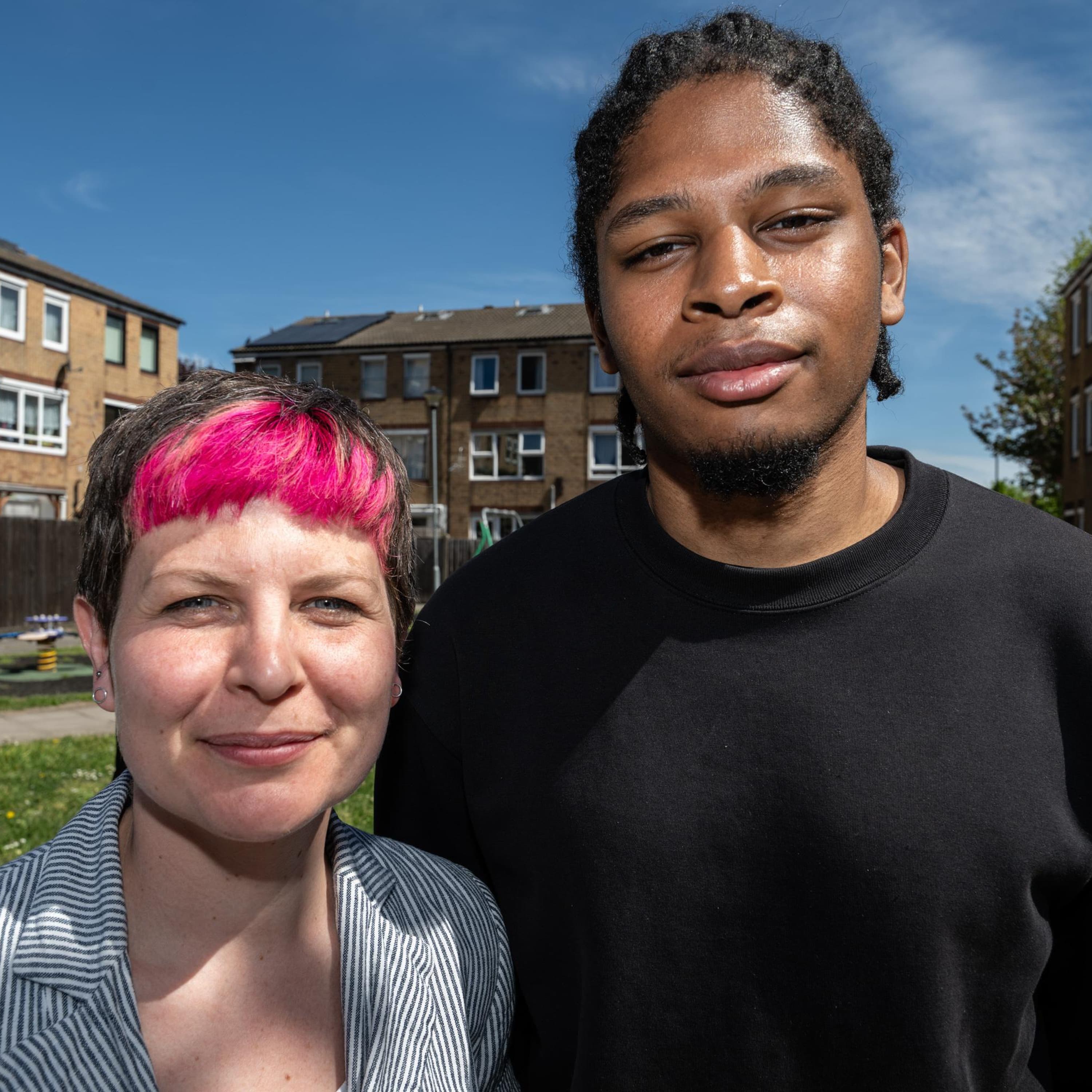
Today in Focus
On the ground in London as the Greens surge
00:34:19
Helen Pidd visits Hackney in east London, just one part of the capital where the Green party hopes to oust Labour. She also talks to Peter Walker about whether the Greens are ready for power.
Loading summary
Transcript184 lines
- [00:00]
A
This is the Guardian. Today. The green surge in London.
- [00:20]
B
From globalization to innovation, sustainability to market volatility, there's always more than one side to a story. Explore different perspectives on today's most important business and economic issues with the Flipside podcast from Barclays Investment Bank. Hear two research analysts in a lively debate and get insights from every angle. To further inform your view, listen to the Flipside on your favorite platform.
- [00:52]
A
It's a chilly morning in early April and inside a former spice warehouse in southeast London, excitement is building.
- [01:00]
C
We're in the friendly place for the
- [01:02]
A
launch of the Green Party's local election campaign. It is a very Green Party kind of venue. Not just the cutesy name, but the artful, no frills vibes. Bare brick walls, peeling plaster, exposed beams.
- [01:16]
D
Good morning. Thank you very much.
- [01:17]
E
It is amazing to be here in Deptford.
- [01:20]
A
Zach Polanski bounds onto the stage with a big toothy grin.
- [01:23]
E
It's been a remarkable moment for the Green Party.
- [01:26]
F
We have tripled our membership, we've, we tripled our poll ratings.
- [01:30]
A
He says he is confident that his party is heading for its best ever set of results.
- [01:34]
E
And we are heading for a new
- [01:37]
D
record breaking result for the Green Party.
- [01:40]
A
And it's in Labour London where the Greens particularly fancy their chances.
- [01:44]
G
And we're going to have a bright, green hopeful London.
- [01:48]
A
According to one poll, half of all Londoners attempted to vote for the Green Party next Thursday. With four Labour councils looking within Polanski's reach.
- [01:57]
C
I think Labour are going to be white, actually. That's the honest side. I think they're going to be virtually
- [02:02]
H
wiped out and I think there's going
- [02:05]
C
to be quite a few Green controlled councils.
- [02:08]
A
Buoyed by Hannah Spencer's win in the Gorton and Denton by election, London's army of Green activists are feeling optimistic.
- [02:14]
I
What's making the difference is that amazing by election win at national level. So people think this is not a wasted vote. People see voting for the Greens can make a difference.
- [02:29]
A
But can the Green Party really triumph in a city where they currently control no councils and have just 49 councillors? And can they actually deliver what they're promising? From the Guardian, I'm Helen Peard. Today in focus on the ground in the capital as the Greens go on the attack. Four weeks later, as spring has finally sprung, we've crossed the River Thames to Hackney, one of four boroughs in the capital where the pollsters think that the Green Party have a decent chance of ousting Labour. We've been told to meet a group of Green canvassers at the bus stop outside Liddell on well street in the
- [03:06]
C
south of the borough.
- [03:07]
A
They are in very high spirits.
- [03:09]
C
This is Hackney. This is Hackney. This is absolutely Hackney. Love it.
- [03:13]
A
Hackney is often described as a Labour stronghold. The party has been in control of Hackney Council for all but seven years, since it was founded in 1965. The Greens have a mountain to climb here. 44 of Hackney's 57 councillors are currently Labour and so is Hackney's directly elected mayor. But the Greens are determined to win here. Perhaps that's because it's where Zach Polanski calls home.
- [03:37]
C
We are in the south east of Hackney and we're on an estate called the Frampton Estate, which is one of the few estates in Hackney that's still
- [03:44]
A
run by the council.
- [03:45]
C
So we're looking up at a kind of Art Deco brick block. They've all got balconies running along the front of the buildings. Oh, you've got a special key. To get inside. We've roughly split two groups.
- [04:00]
A
One group can head into Bridgeman House
- [04:02]
C
and the other into Berkeley House.
- [04:04]
A
We tag along with Rolf, a cheerful local dad who's standing for the Greens for the second time in 2022. He was a paper candidate, a no hoper who agreed to have his name on the ballot just to make up the numbers. Things are very different this time. He's been pounding the streets so hard that he's had to buy new trainers, which are fresh out of the box today.
- [04:21]
C
So where are you from originally, Ralph?
- [04:24]
H
I'm originally from the Netherlands, but I've been living here for seven years now.
- [04:29]
C
What brought you here, at work or love?
- [04:31]
E
Love.
- [04:31]
H
My wife. She's British.
- [04:32]
C
Is she?
- [04:33]
H
So, yeah, I've been with the Greens for quite a long time. Since basically since I moved in because I was with a Dutch Green Party before, so made complete sense for me to join the Greens here, which was back then, like there wasn't even a councillor in Hackney. Now we patiently wait, see if there's something happening, do a polite second knock and just leave a small note that we are here. If I can still find my pen.
- [05:02]
A
While Rolf waits in vain for someone to answer the door, I chat to a young woman in a headscarf and a tracksuit who's just arrived home next door. She's Areej, she's 21 and she's studying chemical engineering.
- [05:12]
C
Here's a potential Green voter for you, Rolf.
- [05:15]
H
Hi, I'm Rolf. I'm with the Hackney Greens. I'm standing as your counsellor here. What can I do for you, I
- [05:19]
J
was just going to ask, what are your main points and what are you planning to do as a counselor?
- [05:25]
H
Housing is a very important one. Road safety and cleaner air. But the most important thing is, what do you want me to do?
- [05:32]
J
I mean, I like how Hackney Council has done, like, a lot for cycling, so it's made it much more affordable as well. But in terms of things to improve, honestly, I don't know. I feel like they're doing well, but there are definitely things that they can improve.
- [05:46]
C
And so you said that you do think Hackney Council has done quite a few good things. That's a Labour council. Why wouldn't you vote Labour this time? Or are you thinking that you might vote Labour?
- [05:54]
J
I'm not going to vote Labour because they're starting to, like, divert away from what they wanted to do originally. And when it comes to, like, Palestine as well, they've not done anything in terms of, like, standing up for Palestine at all. And Green is actually doing stuff for Palestine and they're saying that they're going to ask the council to stop funding them.
- [06:15]
C
The pension fund sort of investing in arms funds.
- [06:18]
H
Yeah. So currently the Hackney Council has like, the pension fund and they are heavily investing in arms and we want to divest from that and actually invest them in council housing and things that are actually useful.
- [06:32]
C
But is that the most your sort of primary motivating factor, the Gaza?
- [06:37]
J
That is one of the primary factors, but also that, I mean, we can't just keep on voting for the same people when we see nothing changing as a whole. So why not vote Green? Especially because everyone else that I know is going to vote Green as well. So I feel like we can all get together and make a change, you know?
- [06:54]
C
Do you feel optimistic?
- [06:56]
J
Yeah, definitely. Okay.
- [06:57]
F
Uno does this.
- [07:00]
C
He's going green. What a team.
- [07:05]
A
We leave the Greens for their door knocking and walk back along well Street. A young man standing outside the Number one cafe spots our microphone and asks if we're making content. I guess that's what a podcast counts for these days. So I say yes and we get chatting. He's called Ozzy and his family has run the Cafe since the 1990s.
- [07:22]
C
And we were walking past this cafe and I was like, I think I've seen this cafe on telly. It's famous, isn't it?
- [07:26]
K
It's indeed become famous now, mainly for our appearance in the Netflix series Topboy.
- [07:33]
C
Remind people who haven't seen it what happens in your cafe on Topboy.
- [07:37]
K
So Top Boy is basically a slightly. A little bit of an exaggeration of the real life Hackney, but it does explain some of the things that was going on in Hackney when I was growing up.
- [07:49]
C
And so Hackney has been Labour for
- [07:51]
A
many, many, many years.
- [07:53]
C
Is there anything that they've. And I used to live in Hackney, like 15 years ago. And it has changed. It's like. Seems to have got a lot nicer, to be honest.
- [07:59]
K
It's definitely changed for the good. You can walk down the road now, you know, not thinking twice. You don't have to look at your back.
- [08:07]
C
And so the Labour Party would hear you saying this and saying, well, you say, it's got better. We've been in charge for the past 15 years. Vote for us again. Why not?
- [08:13]
K
No comment.
- [08:15]
C
Why no comment? What are you thinking about? Are you thinking about nationally, like things that Keir Starmer's done?
- [08:20]
K
He's one of the reasons as well. But there's lots of other reasons as well. This Labor's definitely gotta go. A change is good, change for the better.
- [08:29]
A
The cafe is old school with wood paneled walls and Formica tables. It's a proper greasy spoon with prices to match.
- [08:35]
C
I'll say your prices are absolutely bargain. Egg chips and beans for £6 40.
- [08:42]
A
Who's drinking black coffee and reading a copy of the Sun?
- [08:45]
C
Sorry to interrupt. And we're journalists from the Guardian making a podcast in my paper.
- [08:49]
I
So you've got the right.
- [08:51]
C
You read in the sun, though?
- [08:53]
I
Because I have it here. I did not buy it.
- [08:56]
C
No judgment here. I support anybody who is reading a newspaper in these this day and age.
- [09:01]
A
This is Geraldine, who's 72.
- [09:02]
C
We're making a podcast about the local elections and looking at the Greens. They really fancy taking Hackney from Labour. What do you think?
- [09:11]
I
I'm not sure they'll take it, but I'm a kind of Green Labor. Green labor kind of person, so I vote for one or the other, depending on my mood, I think.
- [09:20]
C
What do you like about the Green Party?
- [09:22]
I
Well, obviously the environmental issues come first. It's Zach Polanski, isn't it? His name? Yeah. I'm getting a bit old, I can't remember all the names. I think he's quite credible. He strikes me as a credible leader of a party.
- [09:36]
C
What do you like and what don't you like about Labour?
- [09:38]
I
If Jeremy Corbyn was a bit more sensible, in my opinion, I mean, I'm more his side of politics than the soft left, but I found him just too. He lacked credibility for me. And I don't think there's been a replacement for that. I go up and down about Keir Starmer, whether he's credible or not really, and I know he's not popular and I can see why. And he puts his foot in his mouth a lot, I think.
- [10:01]
C
And are you from Hackney?
- [10:02]
I
Yeah, I was born in Hackney. I was born in Victoria Park Road.
- [10:05]
C
How do you feel about how Hackney's changed and has it changed for the better for you?
- [10:09]
I
Not particularly for me, I think. I haven't got kiss myself, but I always think of people my age that have got kids and their kids can't afford to live here. I don't like the fact that ordinary Hackney people can't afford to buy or live here. It feels like your age group or whatever. It feels like a real takeover bid. And it's not that I don't individually like the people that are coming in. I think they're fine because I've chat to them down the market or I've got them as neighbours, but the whole nature of Hackney is completely changed. Well, it's changed about two or three times in my lifetime.
- [10:41]
C
You said that there's been new waves of people coming in. You said that they're very nice, you like chatting to them. What kind of people are you talking about?
- [10:48]
I
Younger people of your age, I guess, coming in in quite large numbers who have no connection with the area in any of its previous incarnations. And Broadway markets are. Case in point. I used to go down then. I'm on my mobility scooter, I don't go anymore. But I was always by far the oldest person. By a couple of decades when I'd go down there and it's like the bougiest.
- [11:10]
C
It's like the bougie. The bougie street, isn't it? It's like.
- [11:13]
I
I don't know what that means and yes, it is. So, yes.
- [11:16]
C
Yeah. You buy a sausage roll for like £7 or something.
- [11:19]
I
Exactly. I worry that the whole area has become. It's priced at all the local people that you see walking along the street here, they won't be buying houses. They might be living in social housing still and I don't know how long that's going to go on for.
- [11:37]
C
So we've left the number one cafe and we have crossed Mare street into a very different Hackney. So we're just walking into London Fields, which I would say is the epicentre of gentrified Hackney. It's where the heated Lido is, it's where Broadway Market that the lady in the cafe referred to. It's a Place that you can come spend all your wages on gastronomic goodies and lie on patchy grass. We have to try not to get run over in the cycle lane.
- [12:07]
A
So I think there's loads of people.
- [12:09]
C
It's lunchtime, it's one o', clock, Lots of people sunbathing, a lot of working from home going on. Probably working from the park. Should we go and talk to some people?
- [12:20]
D
My name is CLAUDIO and I'm 25 years old. Sorry, I just took a bite. I'm voting green. Why Green out of the options given it's the best. I mean, labourers are basically Tories at this point. And then what's other option? Reform. So it's green.
- [12:32]
C
What has Labour done that's put you off them?
- [12:35]
D
I mean, they have no platform. They continue to actively pass legislation that's extremely anti protest and just like anti human. Their whole stance on immigration, I just feel like Keir Starmer is obviously a puppet, like he stands for nothing himself and the party as a whole just cannot get together and actually present something that people actually want. They're just trying to be a watered down version of the Tories and even they're losing to reform. So it's just kind of like they stand for nothing.
- [12:58]
A
Claudio is Italian, but moved to London from Canada. EU and Commonwealth citizens living in the UK are allowed to vote in the local elections. I ask what he likes about the Greens.
- [13:07]
D
I think they're running a great campaign. I think they actually are presenting a platform to the people. I think they show that they're listening to the people. I just think the left, like globally and also within the uk has been in a bit of a state right now. Like there was the whole your party with Jeremy Corbyn and Sultana that fell apart. So I think the Greens were able to kind of like welcome people that were looking towards Jeremy Corbyn and also, I mean, their stance on Palestine, their stance on immigration is definitely in line with my own morals and values. But I do think that, like, the political system is just clearly aging and it clearly is not really meant for nowadays. So that's why they're the best options presented and they do represent me in some capacity. But there's a lot of things that are inherently like, I don't agree with, but within the current confines of the system, they definitely represent me the best.
- [13:50]
C
And in terms of what you'd like to see change or be done differently in Hackney, is there anything that you particularly care about that you want to see change?
- [13:58]
D
It's a bit ironic for me of all people to say this, but I do think there needs to be more grace and consideration given to the local community. Like, I think it's great that there's so many transplants, but I do think that it is not necessarily always done with the community's best interest in mind. So I just think, like, pricing so many people out of this neighborhood is a bit horrific to see. Just like to know that I'm part of the problem and there's really no way for us to exist without harming the community. I think, like, the government needs to present better alternatives both for the people who have been here and the people who want to come.
- [14:27]
C
Okay, and what brought you? Why did you move to Hackney?
- [14:30]
D
I'm queer, so it's just kind of like. It's a bit of a stereotype. But I think Hackney is extremely open. I think there's so many amazing queer young people here. I think the local community is also extremely welcoming. So I moved here and I never looked back.
- [14:43]
C
And how expensive is it to live in Hackney now?
- [14:45]
D
Insanely expensive. Like half of my half of my paycheck goes to my rent. But I just love the neighborhood so much. All of my friends are here. Being able to be so openly queer. Dress however you want is something that I'm willing to pay the price for. But there's a rally that many people can't. But it is very, very expensive, just both in terms of rent and also just in terms of day to day. Like, why are we paying £4 for a latte in East London when it's the same price in Mayfair? Like, this is horrific.
- [15:08]
C
Yeah. How much is your rent, if you don't mind me asking?
- [15:11]
D
My rent is. I have one flat maintenance, 2,800. So it's 14. 1400 each.
- [15:16]
C
Wow. Okay. Have you got a living room?
- [15:18]
D
No.
- [15:19]
C
That's a lot, isn't it?
- [15:23]
A
We hop on some line bikes and
- [15:24]
C
pedal over to Dalston.
- [15:25]
A
The whole journey, I keep thinking £1,400 for a house share with no living room.
- [15:31]
C
We're meeting Zoe Garbett, one of the
- [15:33]
A
four current Green councillors in Hackney who wants to be Hackney's mayor.
- [15:36]
C
Hello.
- [15:37]
F
Hiya. What was her name from?
- [15:39]
C
Helen.
- [15:40]
A
She has short dark hair with a bright pink fringe and is fizzing with energy. She's waiting for us in Gilt Square where there are a bunch of guys sitting around smoking weed and listening to reggae. We walk together down Kingsland Road, Hackney's busiest street.
- [15:57]
F
I love it. This is like, Honestly, like this strip is like one of My favorite parts of Hackney, like, I lived in Clissold for a bit during the pandemic and would visit friends in Dalston and I'd come around the corner here and it'd be like vibing. You can see the city in the distance and there's loads of buses and there's the market and families and people out and about. It's just so full of life.
- [16:17]
C
And until recently, people would describe Hackney as a Labour fortress. It's had Labor, MPS, I think, so, since 1945. Labour's controlled the council for all but six or so years since its foundation in the 1960s. And yet you really think that you guys in the Greens have got a chance this time? Yeah.
- [16:36]
F
So I think it's part of just Hackney's story. I think when you speak to residents, they're really ready for a change. The Green Party have been really growing here in Hackney. In the 2022 election, we got 25% of the vote, so a quarter of the vote. But because of proportion, we don't have proportional representation. That's not shown in the number of councillors we've got. So we've actually got quite strong support here in Hackney. And we just know that from our door knocking, we're just at a scale this time that we've never been before. You know, I've been knocking on doors in Hackney for 12, 13 years, and at the beginning of that, people used to just be like, oh, you want to talk to me about the environment? And obviously that is something we deeply care about. But now we just get people at the door saying, oh, of course I'm voting Green. I think that has been a gradual shift in some ways, but it definitely has increased in the last year with people feeling like the Labour Party has left them. Them. Seeing what Zach Polanski has been saying on a national level, you know, our membership's hugely increased. We're getting hundreds of people out door knocking and people feel. They're saying they're feeling quite let down, either by labor nationally or locally. You know, I definitely feel like we're going to do well. I'm obviously quite optimistic, but, you know, we're not taking anything for granted.
- [17:44]
C
It seems that housing is the big issue that you're campaigning on, and affordability. And when we've been talking to people across Hackney today, the affordability thing has come up time and again. Some of the rents that people are paying, private rents. Unbelievable.
- [17:56]
F
And this is why I feel that when people say that rent controls don't work, I just think you need to look at what's happening now. And what's happening now really isn't working. Like, you know, increasing rough sleeping and homelessness, five million pounds days spent on temporary accommodation by London councils. People paying that much rent for such small amount of space and you know, families can't live here. Like our primary schools are closing because families cannot afford to live in Hackney and in London. And I just think we need, we just need rent controls and to get a handle on our rental market. It's, it's destroying people's lives and communities.
- [18:30]
C
Do you really have the power as mayor to introduce rent controls?
- [18:33]
F
No, not currently. I'd love to Labour government to devolve that power, which is something we've been pushing through for the devolution bill. I think what the Mayor of Hackney does have is the power to call for them and to back up those calls from unions, because that's what I've been doing as a London assembly member. As soon as I was elected, I organised a rent commission which brought together unions, academics, renters to talk about what a rent control could look like.
- [18:54]
C
I mean, some people are quite sceptical about rent controls. Like what evidence is there that they actually work?
- [18:58]
F
Often I think that why people think they don't work is because they often haven't been to designed properly. You know, like we had rent controls in the UK until the 80s and it was changed in the Housing act under Thatcher. So I think it's about creating the rent control that would work locally. Like yes, there might be some mitigations, like yes, if landlords left the market and the homes went up for sale. Like, let's make sure councils have got the money to buy those homes back to convert them into council homes. So I think it's about designing the rent control that would work for the city and for the country.
- [19:27]
A
With days to go until the elections, the Guardian learns that Rachel Reeves, the Chancellor, is looking at bringing in her own form of rent control. A one year rent freeze on private sector rents. It could be a coincidence or it could be Labour trying to give voters one less reason to vote Greens. I asked Zoe about one of the Greens more controversial policies.
- [19:46]
C
And let's talk a bit about the Green Party's drugs policy to legalise drugs. I think you're one of the co authors of that. Why do you laugh?
- [19:53]
F
I'm always happy to talk about drug policy. I love it. I'm like, yes, it's about drug policy
- [19:57]
C
and obviously you can't control drugs policy as the mayor of Hackney, but what do you want to see happen.
- [20:03]
F
Yeah. So the UK has the highest drug death in Europe. I think the current approach to drugs is utterly failing. We've got children and young people put at risk, we've got an illusion of safety. People like to make you think that our current approach is the safest approach and it absolutely isn't. We need to put the whole market and trade in the hands of health professionals who'd be able to properly support people locally. There have been. Has been progress in terms of drug testing services and the rollout of naloxone, which will reverse an opioid overdose. But there's much more I'd want to do in terms of protecting and expanding drug and alcohol services, but also being, again, a loud voice around what's failing. I'd completely commit to Hackney being a site of a drug consumption room, which we've seen in Glasgow.
- [20:46]
C
That's where you can inject safely.
- [20:48]
F
It's a space where people can use drugs in a supervised way because we know that the drug supply has become even more toxic.
- [20:53]
C
And is it something that comes up on the doorstep?
- [20:56]
F
I think it did a bit when it was in the news around Gordon and Denton by election.
- [21:00]
C
I just wanted to read out something to you. This become a bit notorious, this van that the Labour Party drove around Gorton and Denton. I'm just going to read it out. So this was, I think, the day before or the day of the by election. And it's this van that's got a picture of Zach Polanski and Hannah Spencer, who ultimately won that by election on the back. And it says to all voters, do not listen to these people. Do not vote for the Greens. They. They want to legalize all drugs and teach our children to use drugs, including crack and heroin and let our daughters be used for legal prostitution.
- [21:28]
F
It's just horrendous. I think there's so many stereotypes and just horrendous scapegoating in that. In that paragraph. I find it really upsetting. I also think, you know, our drug policy is about taking a public health approach to drugs. Like some children grow up in households where people use drugs and our policy is about talking to people about what drug use is about, what they do if they're concerned about a friend. Like, I speak to parents who've lost children because their children were too afraid to. They think phone and ambulance, like, taking a public health approach to drugs and talking to children about drugs is about safety. That's why that really. It really infuriated me.
- [22:10]
A
Zoe rushes off to her Next meeting, two young women smoking and day drinking at the neighbouring table. Ask what we're doing. They recognise Zoe, but not, shockingly, the Guardians today. In Focus Team Floss.
- [22:21]
C
Floss before.
- [22:23]
L
And what are you still doing writing at the rca?
- [22:27]
C
So tell me, what have you decided who you're going to vote for?
- [22:30]
L
Yeah, I think I'm going to vote for Zoe.
- [22:33]
C
Why?
- [22:33]
L
I've always voted Labour, but really quite disenfranchised. Now is the time to make it obvious about being disenfranchised with Labour. So that's kind of the main reason for voting for Green, rather than like optimism in the Green Party itself.
- [22:51]
C
So are you slightly suspicious of the Greens, then? It sounds like, yeah.
- [22:54]
L
I mean, Zach Polanski was in the Liberal Democrat Party and the Greens have massively shifted their politics recently. So I'm like a bit suspicious if it is like a economically left wing party or if it is the Mamdani wave a bit that Polanski's come post. I don't know long term, if their politics is going to stay like this in 10 years they're going to be a left wing party or if they're just what we need, which is like a populist alternative to like a protest vote that isn't right wing.
- [23:27]
A
We walk around the corner to the hidden paradise that is the Hackney Curve Garden. Leafy cafe and bar in the trees.
- [23:32]
C
Oh, wow. God, it's massive. So community garden filled with flowers, dappled sunlight. So this is where the incumbent mayor of Hackney, Caroline Woodley, has suggested meeting us. What a little paradise this is.
- [23:49]
A
Gorgeous. She arrives slightly flustered after cycling over from Hackney Town.
- [23:52]
C
Hi, I'm Helen. Hi. Thanks for taking the time. No worries. So we've been in Hackney all day talking to voters. We went out with the Greens this morning when they were canvassing off well street on one of the estates there. I have to say we are picking up quite a lot of disillusionment among people who voted Labour. People feeling quite disappointed and people who are thinking they're going to vote Green for the first time. How does it feel for you, this campaign so far?
- [24:16]
G
So I get a slightly different reception on the door. I think people are always quite pleased that the mayor's come out and I'm very straight talking with people. I understand how frustrated they are. I understand that everybody's really worried about the cost of living. They're worried about a place like Hackney, whether they can afford to live here. And I'm worried about families leaving Arborough. We're investing in the people of Hackney under very, very limited constraints over the last decade, and I now have an opportunity, and I say this on the door, to work with the Labour mayor at City hall, who's subsidised free school meals, and central government, who have brought in the Employment Rights act, the Renters Rights act, lifted national minimum wage, national living wage, and really significantly for hackney, lifted the 2 child benefit cap. And the difference between Labour and the Greens is that I was in the room with the Child Poverty task force, my MPs are in the room talking strategically about homelessness and tackling homelessness, and we can influence change. So really represent the people of Hackney, be at the table and get things.
- [25:13]
A
I asked Caroline about Labour's increasingly hardline approach to immigration, which is a hard sell in a borough where almost half of residents are not white and 40% of people were born abroad.
- [25:23]
C
But then the Labour government, and particularly in the Home Office, Shabana Mahmood, is spearheading a much stricter immigration system that will leave lots of people in Hackney who've made lives here. They've fallen in love, they've had babies, they're working that their futures will be more uncertain and it'll take them longer to get indefinite leave to remain. The sort of threat of being sent back home looms over them. And they thought Labour was on their side and they're really questioning that now.
- [25:46]
G
But again, I would say, isn't it important then to have a Labour mayor in myself in Hackney, who has already pushed back on some of the proposals that Shabana Mahmood brought forward and is taking the stories of the people that live in Obera, like Hackney, to her and trying to, you know, change that situation. I think what's the central government doing on the whole is looking to lift people out of poverty and they're getting that right. But they have to listen to the progressive and diverse people of London.
- [26:12]
C
And the other thing that came up quite a lot was people not liking Keir Starmer. Do you think he's doing a good job?
- [26:17]
G
I think everybody is really bored and tired of the Mandelson story. I think if he can listen to people like Sadiq Khan and, you know, labor leaders like me, we'll be in a better place.
- [26:29]
C
But do you think he's doing a good job?
- [26:30]
G
I think he's made some mistakes and he'll admit that.
- [26:32]
C
Yeah. What in particular?
- [26:34]
G
Appointing Mandelson.
- [26:37]
C
And what do you think, realistically? I'm sure you've seen the polls just like we have. What do you think that the Political map of London will look like on Friday 8 May, the polls think that the Greens could take four councils, one of which could be Hackney.
- [26:49]
G
So it's interesting that I think, because SAC lives on the edge of Hackney and the mayoral system is what it is. You know, it obviously brings a lot of powers that he's made this his number one target. So that has made it pretty spicy around here. Yeah, but you know, we're a good council. We've, we've done so much work, we've created great relationships, we've got hard working candidates. Who knows, who knows? We'll follow the polls and we'll see what happens.
- [27:16]
A
Coming up, if the Greens do do well, are they ready for power?
- [27:33]
B
From globalization to innovation sustainability to market volatility, there's always more than one side to a story. Explore different perspectives on today's most important business and economic issues with the Flip side podcast from Barclays Investment Bank. Hear two research analysts in a lively debate and get insights from every angle. To further inform your view, listen to the Flip side on your favorite platform.
- [28:04]
A
Peter Walker, you're a senior political correspondent for the Guardian and we are speaking to you ahead of the local elections which are taking place on the 7th of May across the country. And we've just been out in Hackney where it feels like the Greens are going to make big gains. And it's not the only place in London where they're feeling pretty optimistic. How big a deal would it be for the Greens to take even one London council like Hackney?
- [28:27]
E
It would be a massive thing. I mean, it's one of those things which is simultaneously almost expected now and priced in a lot of Labour people know that the situation in London for them is going to be quite bad. So they know to brace for the worst. To take a council would be very, very big. Hackney probably seems like the most likely one. There's a couple of other ones like Lambeth in South London is seen as a vague possibility. And for example, if the Greens took control of something like Lambeth Council or even became the biggest party group there, that'd be massive. I mean, these councils have been one party, Labour states, for about a decade. These are the heartlands. This is the place that Labour can just take for granted and kind of weigh the votes. And it would be the first real sign of this problem that they've got of votes falling off on the left. And it'd be a tangible sign, it'd be a wake up call. And for a lot of Labour MPs, they'd be thinking, oh my goodness, there's no such thing as a safe Labour seat anymore.
- [29:24]
A
And how important is London for Labour right now?
- [29:29]
E
In some ways they like to pretend it's not important because all the conversation is about kind of red wall post industrial seats and has been for quite some time. But in part that's because London has been so solidly Labour. But it's been this sort of thing where central London parliamentary seats, with a few exceptions, and the London councils have been so Labour that if they suddenly lose a lot of councillors, I mean, it's going to be devastating. On a personal level, this is something the Conservatives found when they kept on losing in council elections year after year. It's just bad for morale in the party.
- [30:02]
A
And if the polls are right and Labour does lose swathes of support all over the country. So Reform making gains, the Greens making gains. SNP probably doing well in Scotland, Plyde doing well in Wales. What does that tell us about where our politics are right now?
- [30:18]
E
I'm going to be slightly wary of reading too many lessons into it in that. There are some lessons you can take, but I think they're ones we already know, which is the fact that the old political consensus has gone. Labour are doing very badly. Reform are currently doing extremely well. The Conservatives are still in a big trouble. There's opportunities for insurgent or minor parties on the national level. I think what's going to be interesting to see is how much within this tactical voting plays a role. So you have a position that for English councils, people will often be voting not so much for the party they support, but to keep out the party they dislike the most. And it'll be interesting to see if reforms gains are slightly tempered by that. But I think the thing to bear in mind with this, which is why I'm wary of drawing too many lessons, is that people can probably live with a reform council. They might not notice a difference, but the idea of Nigel Farage becoming the prime minister, I mean, polling shows about 50% of people really, really do not want that. And you could foresee a situation when the next general election comes, when it's less a national election, but 650 individual polls, and one pollster put it very well, they said that we no longer have a two party state, but we're going to have 650 different two party battles.
- [31:36]
A
Yeah.
- [31:36]
E
And it's fascinating that when you talk to councillors and mps who go out on the doorsteps, they say, you know, I have people who go, well, I'm a Conservative vot, but I hate Reform so much. I would vote Green if I thought they were likely to keep them out and vice versa.
- [31:49]
A
And finally, if the Green surge proves to be real in London and potentially beyond, what does that mean for them as a party in their future?
- [31:58]
E
It means that Zach Plants tactics are paying off. There were some people in the Greens, some more established people, who worried about if his more explicitly kind of urban populists talk more about wealth taxes than fields, if that would actually potentially split up the coalition that they carefully built up. You know, where they had some urban MPs, but some rural ones too. But you don't currently hear anyone within the party who think he's not doing a good job. It'll show that they're there to stay. And I think the interesting thing is that nothing does better for a political party than showing you can win, particularly under first past the post. People don't want to waste their votes. Gordon and Denton was a fascinating one because they managed to convince the left or center leading electorate that they were the ones who could, you know, win. And that's an amazing trick if you can do it. I think another lesson will be that now they're playing in a big league. They're going to have to think about how their party runs. And I think this is debate, which will go on for quite some time, and it might be quite internal and process based. But there is this almost philosophical question, can you run a mainstream party potentially looking for a role in government in the way that the Greens run? Because Zach Polanski isn't a leader, he's still essentially a spokesperson. That's what the Greens used to have. They had spokesman and spokeswomen and currently his only power in the party. There's an executive committee of the party in England and Wales with about 15 members on it. He's got one vote and literally that's it. He can't set policy. You have to have this thing that if there's no control really over the candidates, no control over local parties, no control over policy. How do you run a national party like that? And also currently they don't have a formalized whipping system within the Commons. Sian Berry is their whip, but that's apparently just because every party has to basically tell the speaker who their whip is, but they don't order their MPs how to vote. And that's maybe fine if you have five at the moment. If you have 150, then that becomes more tricky. So this is a moment when the Greens, if they do as well as expected, might have to sit back and think, right, you know, we've got this far. Can we go on to the next stage as we are, or do we need to change?
- [34:04]
A
I think Zach Polanski would say it would be a nice problem to have. Peter, thank you very much.
- [34:09]
E
Thank you.
- [34:13]
A
That was Peter Walker. You can read all of his work along with extensive coverage of these elections@theguardian.com before we go, I just wanted to flag last night's edition of the Latest where I discussed the Golders Green anti Semitic terror attack with Guardian columnist Raphael Baer. In that episode, we talk about Zach Polanski's recent remarks on anti Semitism when he called before the latest incident for a conversation about what he called the perception of unsafety for Jewish communities versus actual unsafety. You can find the conversation on YouTube or in your feed. And finally, I also wanted to recommend one last thing and that is the latest episode of our long read podcast.
- [34:51]
C
It's about a nine year old girl
- [34:52]
A
who was kidnapped from Spain and taken to Bolivia and her efforts years later to understand what on earth happened to her. And that is all for today. This episode was produced by Natalie Katana and presented by me, Helen Pitt. Sound design was by Ross Burns and the executive producer was Elizabeth Cassin. We'll be back in your feeds this afternoon with the latest. This is the Guardian.
- [35:24]
B
From globalization to innovation sustainability to market volatility, there's always more than one side to a story. Explore different perspectives on today's most important business and economic issues with the Flipside podcast from Barclays Investment Bank. Hear two research analysts in a lively debate and get insights from every angle to further inform your view. Listen to the Flipside on your favorite platform.