← Today in Focus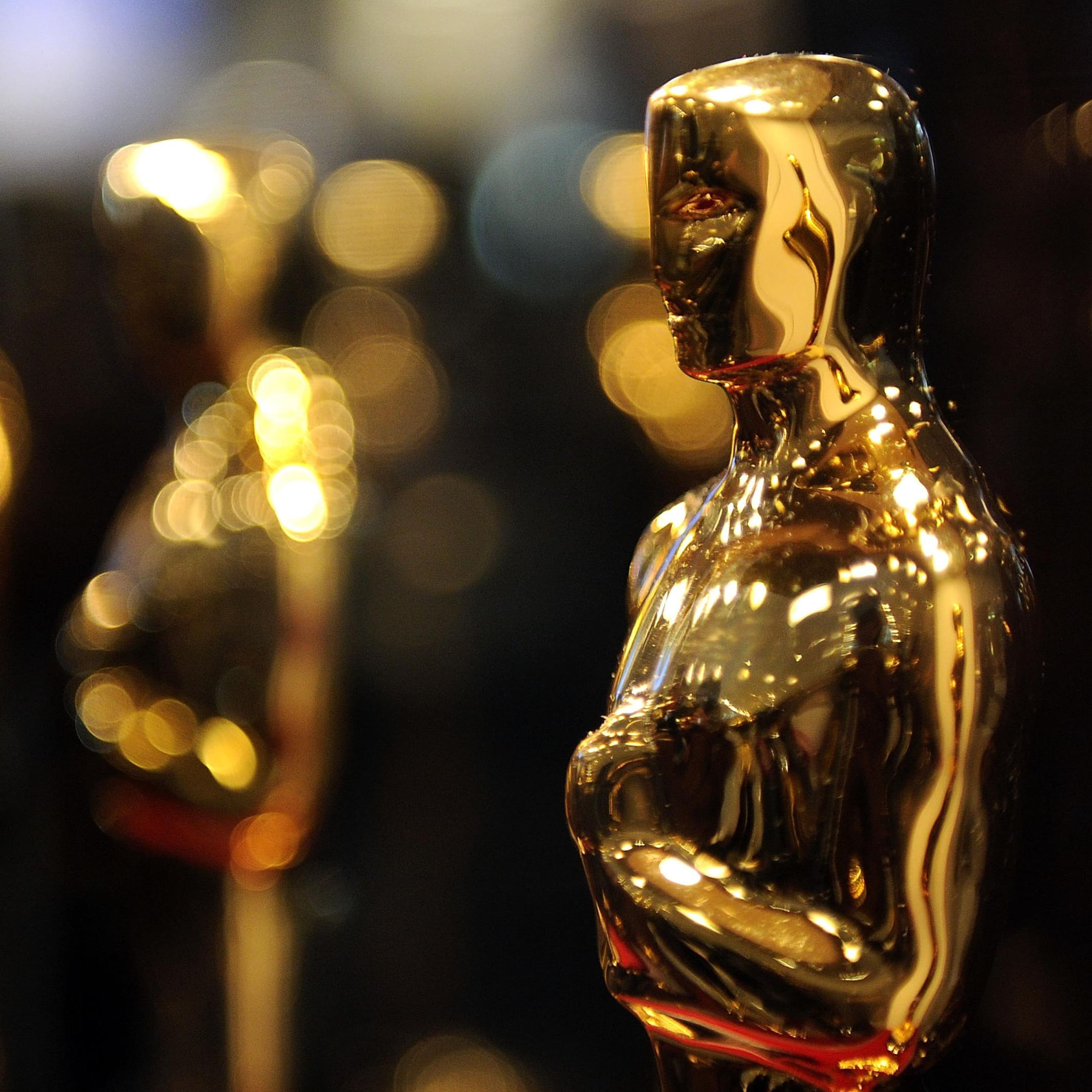
Today in Focus
Oscars 2026: who should win … and who actually will? – The Latest
00:12:02
After months of red carpets and awards season campaigns, it’s all eyes on Hollywood’s night of nights - the Academy Awards. Lucy Hough speaks to the Guardian’s film editor, Catherine Shoard
Loading summary
Transcript39 lines
- [00:00]
A
This is the Guardian.
- [00:11]
B
Everything leading up to the Oscars is an audition for the Oscars. It's now a sort of tipping point. It's very rare that the best film
- [00:18]
A
will win, but I think this campaign perhaps does show the sort of real, genuine risks of gaffes. And I don't want to be working in ballet or opera or, you know, things where it's like, hey, keep this thing alive.
- [00:30]
B
Even though no one cares about this. He's so marmite as a person. Had the opera thing come out a couple of days earlier, it absolutely would have totaled his chances with something like Sinners. I think to not give him best director would be terrible. Remember, no black person has ever won Best director.
- [00:48]
A
The Dolby Theatre in Los Angeles is rolling out the red carpet again for this year's Oscars ceremony on Sunday. So who should win and why? From the Guardians today. In Focus, this is the latest with. Meet Lucy Hart. I'm joined by Katherine Shaw, the Guardian's film editor. It's great to see you, Katherine. Thanks for coming up. So we are at the end of what has felt like quite a long Oscars campaign trail. It feels like it's a real face off between two films at this point, doesn't it? Sinners and one battle after another. How would you describe the dynamics of the race at this point?
- [01:22]
B
Yeah, it's got very exciting just in the final reel, just as the final crunch has happened. And there's a number of reasons for that. One of them is that there's a new rule that if you're an Oscar voter this year, you have to prove that you've actually seen the films that you're going to be voting. You wouldn't think that.
- [01:39]
A
Was that not normally the case?
- [01:41]
B
You know what, people are like, dreadful. So. But you can't literally can't physically sort of click it, click that one until you've sort of shown that you've watched the others. So that means a huge flurry of late votes, which makes the last three weeks very, very important. So Oscar voting closed, I think, a week yesterday.
- [01:59]
A
Right.
- [01:59]
B
And so the. The award ceremonies just preceding that take on a huge significance. And they both sort of were. One of them went to Sinners. That was the. The Actors Awards, which were formerly known as the SAG Awards. And that was a huge sweep for Sinners. It got ensemble and it got lots. And it got Michael B. Jordan for Best Actor, crucially. And then before that you had the BAFTAs. And although one battle did triumph at the baft.
- [02:23]
A
So this is one Battle after another, directed by Paul Thomas Anderson and Sinners is Ryan Coogler. Right. And it's this vampire horror film set in 1930s Mississippi. That was quite a. You know, I think when it came out last year, it was safe to say it wasn't like immediately obvious that it was going to be such an Oscar juggernaut, but it's been nominated for 16 nominations, which would be a record.
- [02:45]
B
It is. It's a record by two. It's not even. It's a sort of far away record. So, yeah, I mean, that's true. It wasn't immediately tipped when it came out in April, I think last year. But I think now, what with all the sort of consolidation of controversy and so on, I mean, so at the baftas, one thing that happened was the big end N word incident where a Tourette's campaigner shouted out the N word whilst the two stars of Sinners, Michael B. Jordan and Delroy Lindo, were presenting an award. And actually that may ironically turn out to be the way in which the baftas have the most leverage over this year's events, because Jordan and Lindo sort of handled that with such dignity and poise and presence and it sort of renewed the topicality of the film in an inadvertent way. And so I think, you know, Delroy Lindo wasn't in with a shout before. I think he's the front runner now.
- [03:35]
A
Really.
- [03:36]
B
Yeah, yeah. And so I think all that has sort of given it the edge. And because, as I say, it happened just as sort of voting was closing in. It's sort of newly relevant. I mean, one of the things, the interesting things this year you've also had is in these, the trade magazines like Variety, they run these brutally honest Oscar ballots where Oscar voters reveal what they've actually voted for anonymously. Right. And all of them, or practically all of them, have said, I think one Battle will win Best Picture and I think Paul Thomas Anderson will win Best Director. So I voted for Sinners and Ryan Cootie.
- [04:08]
A
So it sounds like it's going to be very close, but it could be a really good night for Sinners. I mean, there have been these obvious people who've been on these major PR campaigns, Timothee Chalamet, Jessie Buckley, who is widely tipped to win Best Actress for Hamnet, which is nominated for nine awards. But I think this campaign, perhaps more than others, or maybe not, maybe it's always like this, does show the sort of real genuine risks of gaffes. So Timothee Chalamet made These comments where he kind of dissed the ballet and opera opera industries, saying he was glad to work in film because it was still relevant. That has been met with justifiable anger for people working in those sectors, not least because it's an artist, you know, kind of seemingly punching down at other people in the arts industry. He did make those comments before voting has closed, but quite late in the day. Does stuff like that really have an impact on how awards are given out on Sunday?
- [05:00]
B
Oh yeah, 100%. I mean, if you think of something like the Amelia Perez controversy last year where the sort of dreadful social media of the star was sort of unearthed and. Oh yeah, I mean it can completely total your chances. And had the opera thing come out a couple of days earlier, it absolutely would have totaled his chances. Actually. I still think he's not going to get it because he's so marmite as a person. The, the voters are kind of looking for a way not to give it to him really. Anyway, I think so. And he's also very young.
- [05:28]
A
Not even because he's a big Gen Z star. It would bring in a younger audience for the contest.
- [05:32]
B
Well, that's absolutely right. He is. And he's sort of money, you know, his, his movies make money, Wonka June, things like that. And they want that because they want to be a bit relevant.
- [05:40]
A
Yeah.
- [05:41]
B
And, and as you say to appeal to a younger. But they do tend to err on the side of older people winning. So he's 30 now, so he'd be the second youngest ever if he won. Michael B. Jordan is 39. That feels a much more age appropriate thing. I think he's polarizing and he's sort of seen as a disruptor. You know, like he does his own sort of marketing stunts and all this, but it doesn't matter. And in the case of Jessie Buckley, it doesn't matter because there's no other contender this year.
- [06:06]
A
He has sort of hired the, the cat world or cat lovers by saying that when she met her boyfriend she didn't like his cats and that seemed have exploded and she was then forced to issue a public apology. Like why?
- [06:19]
B
Yeah, I mean, to be fair to Jessie Buckley, it was partly. I mean, the cats have to take some of the blame there, I think. I mean, yeah, she said that they pooed on her pillow, they were jealous. And I, I mean, I can imagine that that's true. That tracks. Yeah, it would be really annoying. Yeah. And I mean, I think. And actually in the same interview that that sort of originally emerged in Paul Mescal said cats. So, you know, and that hasn't done him.
- [06:42]
A
He's not nominated.
- [06:45]
B
He's Teflon. He can say outrageous thing. But I think also a lot of people don't like cats. A lot of people are dog lovers in Hollywood. People do like dogs.
- [06:53]
A
Yeah. It's LA is and it's much more dog friendly. But I suppose what I think the point of this is that actually they are. It's a PR campaign type situation, isn't it? Rather than about being the merits of the film, which is interesting. So, I mean, in your view, is the right film going to win this year and are there really good films that have been completely overlooked?
- [07:14]
B
I don't. I'm not a particular fan of either of those two films, actually.
- [07:17]
A
I think Sinners are one battle after another.
- [07:19]
B
Yeah. I think Sinners is a bit of a soup, a bit of a genre soup, and it would have been better sticking to one. Although it is definitely sort of ambitious in a way that other films are not One battle didn't work for me at all. I find it. I really love Paul Thomas Anderson. I just didn't like it at all.
- [07:35]
A
I loved it.
- [07:36]
B
I'm so sorry. You're right. But, yeah, I didn't. I found what it, you know, it said about black women problematic. I found Sean Penn splashy and obvious. So the interesting thing that has happened with this race, and particularly in the wake of the BAFTAs, actually, is that it's now a sort of tipping point. The Oscars are now a tipping point. And if they don't give it to Sinners now, and particularly if they don't give it to Ryan Coogler for Best Director, it's a problem. It's a real problem. And you know, the thing about Ryan Coogler is he's very eminently rewardable. Remember, no black person has ever won Best Director at the Oscars, which is quite something. Yeah. And I mean, it would be a terrible look for them to give Sinners Best Picture and him not win Best Director. That's happened before with moonlight and with 12 Years a Slave where Barry Jenkins and Steve McQueen didn't win best Director, but with something like Sinners, I think to not give him Best Director would be terrible.
- [08:37]
A
The best.
- [08:38]
B
The issue for some people is that Paul Thomas Anderson has never won an Oscar and that's obviously mad, but he will win an Oscar this year because he'll win Best Adapted Screenplay and he's still quite young, so it'll be all right. He'll win another one. But I think what has happened sort of in a slightly surprising, sudden way for something that now seems so obvious, is that it will. The backlash to them snubbing sinners will be a big problem.
- [09:03]
A
Yeah. So you did a Q and a, a live Q and a with on the Guardian site earlier this week and someone asked a really interesting question, which is that why do film stars never. Actors never thank their fans when they come up on stage. And I suppose my follow up question to that is, does that suggest that no one actually really cares about the Oscars, it's just people within the industry congratulating themselves. Or do you think that's not true?
- [09:28]
B
I think to some extent that's true. It's certainly much more true now than it was 20 years ago when, you know, 60 million people would watch the Oscars because lots of people cared about Titanic and lots of people went to see Titanic. You know, the amount of money that Titanic made compared to say, Nomadland in 2021, which won one Best Picture, is quite, quite stark. So there's that actors are very much more than, say, musicians or something like that. They're incredibly guarded. They're incredibly on message. They don't really ever say anything interesting in interviews. And when they do, it's in sort of soft environments where they've been kind of led to believe that they're fine. Like Timoth Chalamet was being interviewed by Matthew McConaughey. So not a. Not a tough.
- [10:17]
A
Yes.
- [10:18]
B
Inquisitor. All the ceremonies, all the red carpet appearances, everything leading up to the Oscars is an audition for the Oscars. And so what they have to do in their speeches and their interviews is simply tell voters why they should vote for this film and this performance and why it's important. And so. So that's quite dull, really. And you hear the same lines again and again and again and it is quite nerve wracking.
- [10:41]
A
So does that mean that's more about how a star or director performs on the campaign trail around awards season rather than the merits of the film? I. E. Like the right best film being chosen by the judges.
- [10:54]
B
It's a lot to do with that. The right film, you know, what's the right film? It's a subjective thing and, you know, so on and so forth. Sinners is clearly the right film this year and it probably will win. It doesn't mean it's the best film or anything like that. It's very rare that the best film will win the Oscars.
- [11:09]
A
Thank you, Catherine. We'll be following your live blog on Sunday very closely. Thank you for your time. That's it for today. Thanks again to Catherine Short, our film editor. And you can follow the Guardian's live coverage of Sunday's awards over at theguardian.com thanks for listening to this episode of the latest, the new evening edition of Today in Focus. And do give us a watch over on YouTube, where we've just reached a hundred thousand subscribers. Thanks to everyone who's been watching and do subscribe, if you haven't already. Today in focus. We'll be back with you on Monday morning. As usual, the latest we're back on Monday night. This episode was presented by me, Lucy Hoff. It was produced by Annie Levesper. The senior producer was Ryan Ramgobin, and the lead producer was Zoe Hitch. This is the Guardian.