← Today in Focus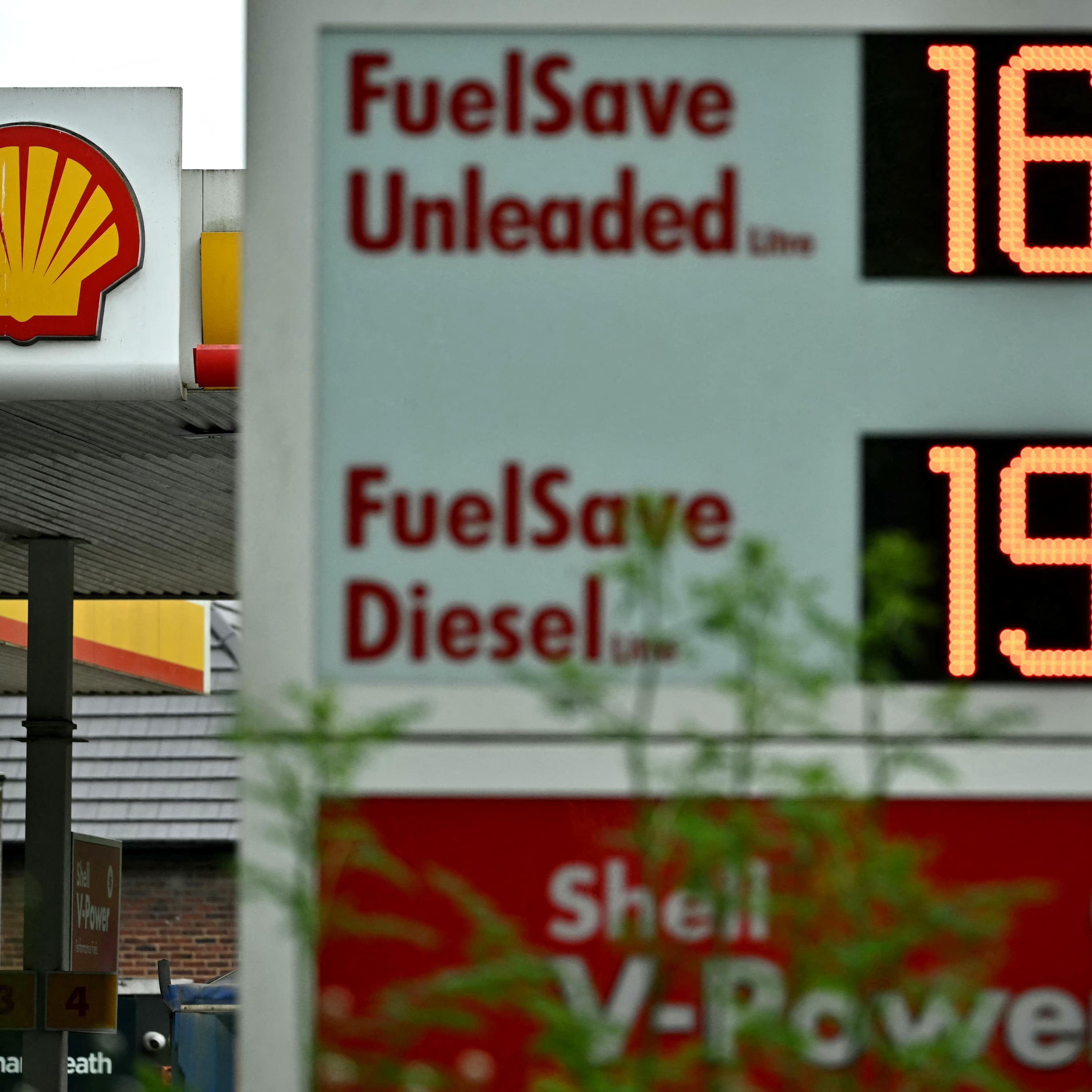
Today in Focus
Outrage as oil giants profit billions from Iran war – The Latest
00:12:04
Shell’s $6.9bn in profits since the start of the Iran war have reignited calls for a windfall tax. Lucy Hough speaks to the Guardian’s energy correspondent, Jillian Ambrose
Loading summary
Transcript28 lines
- [00:00]
A
This is the Guardian.
- [00:11]
B
From globalization to innovation, sustainability to market volatility, there's always more than one side to a story. Explore different perspectives on today's most important business and economic issues with the Flipside podcast from Barclays Investment Bank. Hear two research analysts in a lively debate and get insights from every angle. To further inform your view, listen to the flip side on your favorite platform.
- [00:42]
A
It does feel like these major profits are going to the big oil companies and people like you and I are having to foot the bill.
- [00:49]
C
And a lot of rich shareholders are getting substantially richer as consumers are paying more.
- [00:55]
A
There's no getting away from the fact that an oil company makes more money when oil prices are high. For a lot of people, it is entirely obvious the way forward should be more green energy.
- [01:06]
C
Europe's biggest oil and gas company, Shell, has raked in nearly $7 billion in profits since the Iran war started, reigniting calls for tougher windfall taxes and support for consumers from the Guardians today. In focus, this is the latest. With me, Lucy Hoff. I'm joined by Gillian Ambrose, our energy correspondent. Gillian, since the start of this conflict, we've been talking about the impact on oil prices which over the weekend soared to nearly $120 a barre astronomical. Meanwhile, we have had an exclusive report from our colleague Damon Carrington last month about the amount of money that oil giants are making from this conflict, $30 million an hour. Today we've had the profits from shell, an unbelievable $6.9 billion since the start of the war, which has exceeded expectations. I'm just a bit confused by all of this because, you know, we're hearing about the disruption in the Strait of Hormuz, these stuck oil ships, that product slightly down. So why these huge profits given the disruption?
- [02:12]
A
I think there has been some disruption to oil companies. It's easy to believe that they're having an easy ride and really enjoying this crisis. But I think we have seen Shell, for example, one of its major gas plants in Qatar has been damaged quite severely by a drone attack that's going to cost hundreds of millions to repair, possibly take over a year. So their production for the year is actually for the quarter rather is down by about 4%. But the scale of the increases oil price that we've seen in the last few months is more than enough to offset that kind of dip in production. So that's why we're seeing these better than expected profits from these companies. A lot of it also comes down to their oil traders. They they're able to make the best of a bad Situation, I suppose.
- [02:57]
C
Yes. Because it's not just Shell. BP also reported profits of $3.2 billion for the last quarter, which is double what it made for a similar period in the last year. I'm sorry to have a bit of a moan here, but I filled up my car on the weekend, first time since the start of the Iran war. Normally it's 50 quid to fill up my full tank and it was £75. I'm not alone in that and I'm talking about a very bashed up, very small polo here. But it just feels outrageous that these prices are being passed on to consumers.
- [03:28]
A
I, I think, I think you've really hit the nail on the head there. There's a lot of outrage because it does feel like these major profits are going to the big oil companies and people like you and I are having to foot the bill. Yeah. So there's people across the country having. Exactly. Experience at the petrol pumps. At the moment we have an electric vehicle, which is great. But you know, even if you do, it's not enough to protect you from these price rises because so much of what we buy depends on the transport fuels that get products from A to B. So those costs will be filtering through for everybody, whether you've got a basher Polo or, or an ev.
- [04:06]
C
Yes. And also if you're planning to take a, A flight because jet fuel has doubled in price. There's been a, you know, huge numbers of flights cancelled this week and feeling very uncertain about what that means for their summer holidays as we approach that, that time of year.
- [04:20]
A
Absolutely. I think the jet fuel prices are really where we see the crisis manifesting. For Europe particularly, those prices have climbed a lot more than the market price for oil. So we are seeing that in airlines, we're seeing that in cut flights. And I, I hate to say it, but I think that is something that we're going to see through the summer.
- [04:41]
C
Yeah. So a lot of uncertainty for people and it sounds like it's very valid anxiety. Well, for the oil companies like BP and Shell, do we know what they're doing with these enormous profits? Has this been given out in big bonuses to executives or handed out to shareholders?
- [04:57]
A
Well, we know at Shell at least they are increasing dividends for the quarter by 5%. So that's something. It's not just a windfall profits for the company, it'll be flowing through to their shareholders and investors too. But they will also have very large bills on repairing the infrastructure that's been damaged so far. So some of that will be used in that. I know, for example, the Shell have also increased the amount of debt that they have and that is to cope with the crisis, with the increased costs that we're seeing. And so some of that will be used in that way, I imagine, over the course of a year. But there's no getting away from the fact that an oil company makes more money when oil prices are high. That's the gravity of it.
- [05:41]
C
Yeah. And a lot of rich shareholders are getting substantially richer as consumers are paying more for this crisis. So we know that in 20, after Russia's full scale invasion of Ukraine, there was a windfall tax introduced by Rishi Sunak under the then Tory government. That windfall tax has continued. But is it strong enough? Are there calls for it to be reformed in any way, given the enormity of these profits?
- [06:07]
A
I think there are always calls for higher taxes on oil companies and the government is certainly hearing them these days. It is to my mind, a political problem for them because if they had removed the windfall tax after the last crisis, then they could be seen to be doing by putting another one in place. But they've got a windfall tax in place that does the job and it will be doing the job. There will be higher receipts for the treasury as a result of the crisis as well. There are a few things to keep in mind, though. The first is that the UK government's tax regime can only stretch so far. It can't tax profits that are made in other countries or other subsidiaries in other countries. So when you look at a company like Shell or bp, a really tiny percentage of the oil and gas that they produce comes from uk. It's mostly from the rest of the world. I think Shell, it's probably less than 10% at this stage, BP maybe even lower. So we are not able to claw back as much as people imagine when they see those giant profit figures. And for the treasury, they also need to weigh up the financial pain that they could impose on these companies for a relatively small gain when they are still major employers. I think BP employs something like 17,000 people in the UK. Shell is probably close to 10,000. And the industry as a whole employs, I mean, hundreds of thousands of people. So they will be weighing up the relationship they have with those companies. Do they want these companies to stay domiciled in the uk or do they want to extract what would be a relatively small amount from these windfall taxes?
- [07:48]
C
So is that the only kind of lever that the government could pull in its arsenal? What else is the government sort of political looking at. Because the real crisis is expected to bite later this year, particularly as we approach the winter months. Right.
- [08:02]
A
Yeah. I think the windfall tax will yield results. They will have significantly higher takings in any environment because they always take a percentage of those profits. Right. So if they're making higher profits, the treasury will be getting higher receipts. What they do with those receipts is where things get interesting.
- [08:21]
C
Right.
- [08:21]
A
I think, think what we'd all like to see is some of this money returning to the consumers who need it most. And there's a lot of talk about how to do that, help with energy bills, social tariff. I think my personal request, if I'm allowed to use this podcast for that
- [08:41]
C
purpose, you have the platform, Jillian.
- [08:43]
A
I think it would be fantastic to see debt written off. There's a record amount of debt being shouldered by households at the moment to their energy suppliers on energy bills. And if you, you, if you wrote off some of that by using these windfall tax receipts, then you would be helping those who need it most, those who are in debt. And that would also be something that would be probably welcomed by the energy companies, welcomed by the people who really need the help. And yeah, I hope that the government, I know that they're talking about the best way to target relief. I think this could be one of the ways that they do that. But there are many. We're just hoping that something comes through at some stage.
- [09:23]
C
Yeah. And let's also hope that someone in the current government is listening. Meanwhile, Edmund, the Energy Secretary, has been under a lot of pressure to tap into the reserves in the North Sea, you know, clearly fossil fuels, therefore oil and gas and drilling there. But he, as the great proponent of Great British Energy, you know, driving the clean transition, has been holding very firm on that. Is this a moment where, you know, we talk all the time about Labour's failure to tell a story about what it's doing, that it doesn't politically sell what it's doing to voters. Is this an example where they need to be making the case for the transition to renewable clean energy more forcefully?
- [10:03]
A
I think Admiral Band has been in a really difficult position in recent weeks, particularly with the rise of the Green Party. They are under. They've never been under more pressure to be presenting themselves as a very green party that is committed to net zero. The fact is, though, their manifesto ruled out new exploration licenses. Yeah. There are a couple of projects, Rose Bank, Jackdaw, that already have licenses from a previous government. They're waiting to get the go ahead and it's up to Miliband to decide whether or not they do. My feeling is that they might, they might well get that approval, but that's certainly not a statement he will want to make ahead of these elections where the Greens are expected to do very well in any event. But there is a lot of pressure on him from both sides. I think a crisis has an interesting way of polarizing debates. So for a lot of people who are looking at the sit, it is entirely obvious that the, the way forward should be more green energy. But to other people, the obvious solution is having our own fossil fuels and more of those. So there's no, there's no easy debates in the energy industry, and this is certainly one of them. We will just have to wait to see what, what Miliband comes up with.
- [11:22]
C
Yeah, it sounds like it will be a debate that will be thrashed out for much of this year. Gillian, thank you so much for your time.
- [11:27]
A
Thank you very much.
- [11:29]
C
That's it for today. My huge thanks again to Gillian Ambrose, the Guardian's energy correspondent. You can keep up with her reporting over@theguardian.com before we go, I just wanted to tell you about a new video podcast that our New York office is launching. It's called Stateside with Kai and Carter, and it's hosted by our colleagues Kai Wright and Carter Sherman. Each week they're going to be making sense of some of the biggest stories happening right now. The show will feature conversations with some of the smartest thinkers and reporters, not just from the Guardian, but across the world. It's launching on the 13th of May, with episodes every Monday, Wednesday and Friday. You can find it in full video on YouTube and wherever you get your podcasts. Thanks for listening to this episode of the latest Today in Focus. We'll be back in your feeds as usual tomorrow morning. The latest will be back tomorrow night. This episode was presented by me, Lucy Hoff. It was produced by Sam Grouet and Annie Levesper. The lead producer was Zoe Heads.
- [12:27]
A
This is the Guardian.
- [12:38]
B
From globalization to innovation sustainability to market volatility, there's always more than one side to a story. Explore different perspectives on today's most important business and economic issues with the Flipside podcast from BART Investment Bank. Hear two research analysts in a lively debate and get insights from every angle to further inform your view. Listen to the Flip side on your favorite platform.