← Today in Focus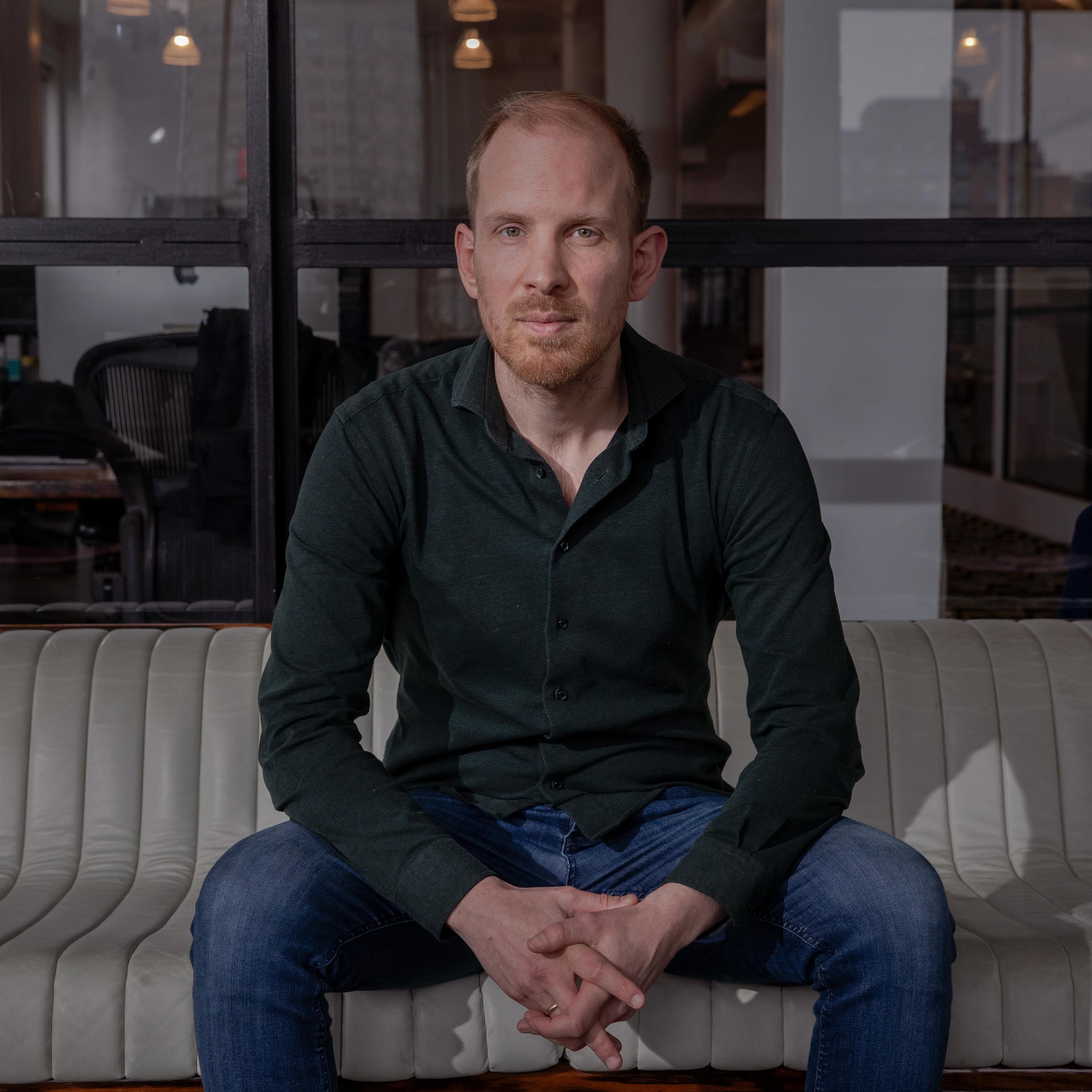
Today in Focus
Should we be boycotting ChatGPT?
00:25:44
Rutger Bregman on why he thinks consumers should cancel their ChatGPT accounts
Loading summary
Transcript104 lines
- [00:00]
Helen Pidd
This is the Guardian. Today. Why rutger bregman thinks you should quit chatgpt. A lot of people were skeptical about ChatGPT when it launched back in November 2022, but not Rutger Bragman.
- [00:29]
Rutger Bregman
I was in complete awe. I was working at a Dutch journalism platform called the Correspondent at the time, and my colleague showed it to me and I was like, this is the most incredible thing I've ever seen in my whole life.
- [00:43]
Helen Pidd
The Dutch historian and author was an immediate convert.
- [00:47]
Rutger Bregman
I mean, it very quickly replaced Google for simple requests. It started to become very useful as a brainstorm partner.
- [00:57]
Helen Pidd
Rutger thinks AI is going to change everything.
- [01:00]
Rutger Bregman
It does feel like AI is forcing us to raise and answer the most profound questions about what it means to be human. And it has only just begun. I think we are about to enter the five wildest years of human history.
- [01:18]
Helen Pidd
But he is deeply concerned about the direction the industry is going in, Because AI is now not just helping you do your admin. It's now doing some of the US Government's dirtiest jobs.
- [01:33]
Rutger Bregman
For the first time ever, the Pentagon is using artificial intelligence to scope targets. What used to take weeks of planning was compressed into just hours from helping
- [01:44]
Helen Pidd
the military identify enemies abroad.
- [01:46]
Rutger Bregman
This is the most lethal, accurate, and dangerous the American military has ever been. Welcome to combat in the 21st century.
- [01:55]
Helen Pidd
To recruiting ICE agents at home.
- [01:57]
Guardian Reporter
Apparently ICE uses this AI tool to categorize new recruits who have worked in law enforcement before. But there was some kind of a glitch that led to ICE temporarily putting recruits with little to no experience into a more experienced category, meaning they got
- [02:10]
Helen Pidd
less training and OpenAI's platform. ChatGPT says Rutger is the worst of the lot.
- [02:17]
Rutger Bregman
Welcome back.
- [02:18]
Guardian Reporter
OpenAI facing some criticism over domestic surveillance concerns as the company signs a new agreement. Agreement with the Pentagon to deploy its advanced AI systems in classified environments.
- [02:30]
Helen Pidd
And so he's had enough. And so he says, should you.
- [02:35]
Rutger Bregman
This is the first major international boycott of the AI era. And you know what? I think we can actually take this company down.
- [02:44]
Helen Pidd
From the Guardian, I'm Helen Pickt. Today in Focus, Rutger Bregman on why Sam Altman and OpenAI do not deserve your. Rutger Bregman. Welcome back to Today in Focus. It's nice to see you again.
- [03:02]
Rutger Bregman
Thanks for having me again.
- [03:03]
Helen Pidd
So you were definitely a fan of ChatGPT then, right from the start.
- [03:06]
Rutger Bregman
I mean, many of my friends are like these Guardian reader types. You know, they're very skeptical of Silicon Valley. They're like, you know, we saw crypto, that was mostly BS. We saw the NFTs, that was complete BS. What has Silicon Valley come up with now? Surely it's BS again, but this time it's really different. It really is. I think this is just an incredible technology that has already shown that is able to solve math problems, scientific problems. It's just incredible if you know how to use it. And it's only getting better. The models we use today are the worst we'll ever use.
- [03:43]
Helen Pidd
And yet, in spite of everything you've just said, you're going to try to persuade us on today's episode that we should stop using one particular LLM, stop using ChatGPT. So tell me, when was the moment when you decided, do you know what, I'm out. This is not a product I want to use anymore?
- [03:59]
Rutger Bregman
Well, let me first say not in spite of, but because of everything I just said. I think the moment was when I saw this website called quidgpt.org, and it was a very scrappy website started by a bunch of volunteers in the US. I think they're a small group of 20 somethings and they laid out the arguments and I was like, this is exactly it. This is exactly the boycott we should start right now.
- [04:27]
Guardian Reporter
An online organization called Quit GPT, which is a reference to OpenAI's Chat GPT, claims that as of today, two and a half million people have vowed to either cancel their paid subscription, stop using the free version of ChatGPT, or spread word about this boycott on social media.
- [04:48]
Rutger Bregman
Now, there's a whole list of reasons we can talk about for why, I think and why, you know, the millions of people who joined this boycott think that this is a fundamentally broken, untrustworthy company. It's being led by two guys, Sam Elman, Greg Brockman, who have made promise after promise and then broken promise after promise. It's the support for the authoritarian regime. It's the promises around AI safety that they break again and again.
- [05:20]
Helen Pidd
And when did you actually stumble across this website? Was it very recently?
- [05:24]
Rutger Bregman
Yeah, just a couple of weeks ago. It's kind of taken over my life because I was really enthusiastic and started pushing it. And apparently a lot of people agree with this, so I'm not sure if you've seen that, but the traction this is getting. It feels like we. What is the expression in English? Like a powdery, powdery keg.
- [05:47]
Helen Pidd
It's a powder keg. What, ready to explode?
- [05:51]
Rutger Bregman
That's it, yeah.
- [06:03]
Helen Pidd
And tell me, what in particular? OpenAI, the parent company, what in particular have they done that? You think? This is beyond the pale, guys.
- [06:13]
Rutger Bregman
So it started as an extremely idealistic venture. Actually it started as a research organization, as a nonprofit.
- [06:20]
Helen Pidd
It's an AI, right? Yes, sounds good.
- [06:22]
Rutger Bregman
And it was founded by people who said that they were deeply worried about artificial intelligence and about whether it would be safe.
- [06:32]
Dario Amodei
I think that AI has the potential to eliminate nearly all human suffering in the next couple of decades. I think we can have a world of abundance, we can eliminate poverty over time, we can probably cure a whole lot of diseases. There are all these wonderful things that the technology can do.
- [06:48]
Rutger Bregman
It's so, so interesting that back then first LLMs were so crap and it was very easy to laugh at them. And you could really wonder, okay, what are these people worried about? But they've been right about one thing at least, about the extraordinary power of this technology. And that if you would just give the machine more data and more comput, that it would just get better and better and better. And they thought, but wait a minute, that could actually threaten the very future of humanity itself, the very existence. They were more worried about the development of artificial intelligence than about climate change, than about pandemics, than about anything.
- [07:28]
Helen Pidd
Basically, they saw that it poses an existential threat to humanity.
- [07:31]
Rutger Bregman
Yes, yes. And then what we have seen happening is that this originally very idealistic organization, philanthropically funded by people like Elon Musk, by the way, that it's transformed. They've ditched the original mission, they've ditched their safety pledges. They had a whole safety team called the Super Alignment Team that was supposed to make sure that artificial is in line with human values and human interests. They've ditched that as well. OpenAI's long term AI risk team has
- [08:04]
Helen Pidd
seen some changes with members transitioning or leaving the organization.
- [08:08]
Rutger Bregman
Last year we had the OpenAI files where you could just see the whole boulevard of broken promises. And it is quite something, quite something to behold. I think they've basically decided, you know what, let's just win this race.
- [08:23]
Helen Pidd
So you say they've decided to win at all costs. And they've decided, haven't they, that the guy to help them do that is in the White House right now. Donald Trump.
- [08:31]
Rutger Bregman
Yep.
- [08:32]
Helen Pidd
OpenAI has actively supported him. Haven't they given him a lot of money?
- [08:36]
Rutger Bregman
Yeah. And obviously, I mean we've seen this from a lot of companies. Right? We've seen the law firms caving in, we've seen the universities caving in, we've seen media networks bending the knee, the tech oligarchs again, and again and again. And OpenAI has done the very same thing, but they've been very, very ambitious about it. So Greg Brockman and his wife. Greg Brockman is The president of OpenAI donated $25 million to Maga Inc. Which is Donald Trump's biggest super PAC. That made them the single largest individual donors of the last cycle.
- [09:13]
Helen Pidd
And what have the government already been using their software for?
- [09:17]
Rutger Bregman
A lot of people don't know that their friendly chatbot, ChatGPT, has embedded itself into the authoritarian infrastructure of the Trump administration. So, for example, the deportation rates organized by ice, well, the people who do that have been screened by ChatGPT. You know, OpenAI actually launched a program called OpenAI for government and gave ChatGPT for $1 to every federal agency. It is really powering the repressive infrastructure of this administration.
- [09:51]
Guardian Reporter
Breaking news on discussions between Anthropic, the AI company, and the Pentagon over military use of the company's AI. Now, Pentagon officials yesterday.
- [10:01]
Helen Pidd
And of course, ChatGPT isn't the only player in this AI race, and it's not alone in seeking lucrative contracts with the Pentagon. But one of their rivals did take a different approach, didn't they?
- [10:11]
Rutger Bregman
There was a big fight with Anthropic, one of their main competitors behind the model. Claude and Anthropic had just refused to give the Pentagon basically killer robots and mass surveillance.
- [10:26]
Helen Pidd
Well, so essentially, Anthropic CEO Dario Amadei wanted to prevent the Pentagon from using its technology with autonomous weapons or for the mass surveillance of Americans.
- [10:37]
Dario Amodei
Our leaning forward in deploying our models with the military was done because we believe in this country. We believe in defeating our autocratic adversaries. We believe in defending America. The red lines we have drawn, we drew because we believe that crossing those red lines is contrary to American values. And we wanted to stand up for American values.
- [11:02]
Rutger Bregman
They were like, yes, this is a very powerful technology, and, yes, they use it for all kinds of things, including, you know, bombing Iran right now. But Anthropic was drawing a line.
- [11:12]
Dario Amodei
We exercised our classic First Amendment rights to speak up and disagree with the government. Disagreeing with the government is the most American thing in the world.
- [11:23]
Rutger Bregman
They were saying, like, this is such an extremely powerful technology that the law is just not up to date. It is not up to speed, you know, and if we give it to you in its current form, with all its capabilities, then you will be able to do things that no king or queen or emperor or prime minister has ever been able to do, like it will grant you a level of control. And power that is just not fit for democracy, basically. So that was a good thing.
- [11:53]
Guardian Reporter
The president weighing in on social media, Trump said, quote, the United States of America will never allow a radical left woke company to dictate how our great military fights and wins wars. That decision belongs to your commander in chief.
- [12:10]
Rutger Bregman
I'm not in the business of selling Anthropic shares or whatever. They have many problems as well. They're certainly not saints. Yeah, but this is a good thing.
- [12:19]
Helen Pidd
Yeah, but I mean, they found their backbone, didn't they? On this particular issue, Peter Hegseth, the Secretary of War, didn't take it well. He threw his toys out of the pram. He labeled Anthropic a supply chain risk, which is a measure that is usually only applied to companies that are deemed like a major national security risk, often Chinese companies. It's never been used against an American company before. And as a result, Anthropic are Now suing the U.S. defense Department over that decision.
- [12:44]
Rutger Bregman
Yeah, but then what happened is that basically OpenAI swooped in, Sam Altman swooped in and, you know, announced that they made this secret deal.
- [12:54]
Guardian Reporter
Now, hours after the Trump administration ditched Anthropic over the dispute, OpenAI swooped in and struck its own deal with the Pentagon. Now, the details of that agreement appear to be changing after facing backlash.
- [13:07]
Rutger Bregman
It was such a classic Sam Altman move. I honestly think we should start calling him Scam Elfman because he announced it by saying, like, hey, we actually got the deal. No mass surveillance, no killer robots.
- [13:23]
Dario Amodei
The Wall Street Journal is reporting that CEO Sam Altman defended his decision on an all staff call to allow defense officials to use the company's AI tools for classified work. It comes after he announced a revision to the deal to make sure OpenAI's technology would not be used for mass surveillance. And last night, he posted on social media that announcing Friday's deal so quickly was, in his words, opportunistic and sloppy.
- [13:48]
Rutger Bregman
But then, you know, when the legal experts started looking at the language that was used, they were like, yeah, sorry, but the Pentagon will still be able to do whatever they want with this.
- [14:07]
Helen Pidd
You know, you. You make a very convincing argument for why we should boycott OpenAI and ChatGPT. But what is it that you exactly want us to do? Is it as simple as it sounds?
- [14:18]
Rutger Bregman
Yeah, yeah. Go to chatgpt.com unsubscribe, download your data, then delete everything. It's as simple as that. Oh, and tell everyone about it.
- [14:31]
Helen Pidd
Right, okay, okay. But, I mean, come on, do boycotts really work because in my lifetime I've been encouraged to boycott all sorts of things. Coca Cola, McDonald's, avocados from Israel. And it never seems to lead to any kind of change.
- [14:46]
Rutger Bregman
So here's where it gets really interesting. What history has taught me is that the most effective consumer boycotts have two things in common. One, they are really targeted. So it's not smart to say like, oh, let's, let's boycott all, you know, LLMs or something like that. Scott Galloway, an American author, launched something called Resist and Unsubscribe. And he said, like, unsubscribe from all big tech companies. And I think that's, you know, nice and commendable. But it's not going to be effective. It's got to be really targeted and it's got to be targeted at a vulnerable company organization. So take the Montgomery bus boycott, you know, of the civil rights era. Rosa Parks refused to give up her seat in the bus. Then Martin Luther King joined the boycott and it became extremely effective. You know, it broke the back of segregated transit across the American South. They chose one bus company and they said, you know, let's, let's break it down, basically. Yeah, let's bankrupt it. The other thing that is absolutely crucial is boycotts. Effective boycotts are easy. So if it's a really difficult boycott to join, like I ask you to, you know, unsubscribe from your favorite podcast, it's going to be hard for you. Right. Or maybe a good example is delete Facebook as well. I think that was 2018 when there was, you know, a lot of people said, let's delete Facebook.
- [16:14]
Helen Pidd
Yeah.
- [16:14]
Rutger Bregman
And that was pretty unsuccessful. Mark Zuckerberg later said that they barely saw it in the numbers, really. And I think again, the reason is because, yeah, Facebook was like pretty crucial infrastructure for a lot of people.
- [16:26]
Helen Pidd
Yeah.
- [16:26]
Rutger Bregman
Now the wonderful thing about deleting ChatGPT is that it is insanely easy. This is the easiest boycott ever. So the alternatives are great. They're excellent. Some would even say they're better. You've got great European alternatives like Lechette from Mistral. They're open source models like this. This race is really intense. And yeah, you can just pick any of the alternatives. I basically don't care what. Or maybe you don't want to use AI at all. That's fine. As long as you delete ChatGPT, then I'm happy.
- [16:58]
Helen Pidd
But what makes you think that enough people are going to do this to really hit OpenAI where it hurts?
- [17:04]
Rutger Bregman
It's already happening. It's already happening.
- [17:06]
Helen Pidd
But when I clicked on the Quit ChatGPT website just now, it said 4 million people have already signed up. But OpenAI say that 900 million people use ChatGPT every week.
- [17:18]
Rutger Bregman
I can assure you that this is already a bored conversation at OpenAI. Really?
- [17:24]
Helen Pidd
They're panicking?
- [17:25]
Rutger Bregman
Oh, yeah, absolutely, absolutely. But there are two main mechanisms here. One is the consumer base. So revenue, that is important. Right. They got to show that they make money because there's an enormous multiplier on the valuation of OpenAI.
- [17:40]
Helen Pidd
And they don't make any money yet right there.
- [17:42]
Rutger Bregman
Well, they make.
- [17:43]
Helen Pidd
Usually in the red.
- [17:43]
Rutger Bregman
They make. Well, they spent much more than they make. Yes. So they spend like $3 for every dollar that they make, which is, I mean, that's the standard playbook with startups.
- [17:55]
Helen Pidd
And Silicon Amazon didn't make money for decades, did it?
- [17:57]
Rutger Bregman
Yeah. And I think Uber is still not making money, which is kind of ironic. I think by the time it starts making money, we will have self driving cars everywhere. But that is really what makes this company so fragile that it has this enormous multiplier on its valuation. So if you take away 5% of its subscriber base, there's like a 50x60x multiplier in terms of how much damage it does to the valuation. Like, investors are watching this race like hawks and they're really wondering who's going to win? Is it Google? Is it going to be anthropic, Is it going to be Xai? Or is it going to be OpenAI,
- [18:35]
Helen Pidd
still valued at $840 billion though?
- [18:38]
Rutger Bregman
Oh, absolutely, absolutely. But I promise you we can take this whole company down and it will be, you know, one of the great events of 2026.
- [18:47]
Helen Pidd
And you say that they're likely discussing this at a board level.
- [18:51]
Rutger Bregman
Yeah, yeah. And that's also because of the second mechanism, the employees. So what's the most important thing in this race? Obviously, it's compute. It is energy that you feed to the machine, but it is also the talent, it's the employees. There are not many people, I'm certainly not one of them, you know, who are able to improve the algorithms. These people earn enormous amount of money.
- [19:16]
Helen Pidd
The salaries are insane, aren't they?
- [19:18]
Rutger Bregman
Absolutely insane.
- [19:19]
Helen Pidd
Tens of millions of dollars a year.
- [19:21]
Rutger Bregman
Yes, yes. And you know what? It turns out that after you earn a certain amount of money, money doesn't really matter anymore. And there's a lot of nerds here, you know, who.
- [19:30]
Helen Pidd
What, and you think they want to be a good guy as well as a Rich guy.
- [19:33]
Rutger Bregman
Some people are like genuinely bad guys. They don't give a damn. They're probably already working for Musk or Zuckerberg. But OpenAI is an interesting company because Mr. Scam Eltman has been really effective at continuously giving his employees the feeling that he really cares about humanity, that he really cares about AI safety. I mean, that was, as said, that was the pitch since 2015. Now, I mean, a lot of the skeptics have already left, you know, they've left to start other companies, but I think there are still quite a few, maybe a little gullible people there who have good hearts but are kind of like, you know, I don't want to get into politics and I'd rather just, you know, look Sam into his eyes and he seems like a nice guy and can I just. Can I just make, you know, awesome software, please? And I think what QuitGPT has been really good at in the last couple of weeks is getting at those people.
- [20:29]
Helen Pidd
And you think they're lobbying Sam Altman?
- [20:31]
Rutger Bregman
No, I think they're wondering about whether they should quit their job and join another AI lab. And, like, the talent is the gold in this race. It is absolutely essential. And if OpenAI starts losing talent, I mean, that will damage their valuation immensely as well. So what then, finally, is important to keep in mind, is that there's no big parent company behind OpenAI, so there's no meta, there's no Google behind it. It is just OpenAI and huge loans. I think this boycott could honestly take the whole company down.
- [21:03]
Helen Pidd
And we have actually already seen a Senior Executive at OpenAI quit over this. A woman called Caitlin Kalinowski, who was a hardware exec, wrote kind of in a resignation tweet, surveillance of Americans without judicial oversight and lethal autonomy without human authorisation are line more deliberation than they got. But do you actually. Do you want this company to be taken down or do you want them to listen and change course? Because Sam Altman, if he was sitting here, he would say, rutger, I am listening.
- [21:32]
Rutger Bregman
Yes.
- [21:33]
Helen Pidd
And I think he would like.
- [21:36]
Rutger Bregman
I would like. No, no, no, no, no, no, don't do that again. Like, I mean, he's done that for a decade, honestly.
- [21:40]
Helen Pidd
But let's put his point of view across. So he posted on X. You know, for the avoidance of doubt, the Department understands that OpenAI, ChatGPT should not be used for deliberate tracking, surveillance or monitoring of US persons or nationals. He said he's been reassured that ChatGPT will not be used by the Department of War Intelligence Agencies, so the nsa. And he says, if I received what I believed was an unconstitutional order, of course I would rather go to jail than follow that order.
- [22:09]
Rutger Bregman
Look, I'm a guy who believes in second chance. I believe in third chances. Heck, I believe in, like, a tenth chance or a fifteenth chance. And I'm not an idiot either. You know, at some point, you see the pattern. And the thing with OpenAI is we have a decade of evidence now of how this guy operates. Look at incredible investigative journalism projects like the OpenAI files, and it's just a long, long list of Life and the sea
- [22:45]
Helen Pidd
coming up. Why stop at chat GPT? Should we be boycotting other AI companies, too? All right, And I think a lot of people will be listening and they'll be very persuaded by the arguments that you.
- [23:02]
Rutger Bregman
Okay, great. So go and delete it. Do it now. Stop the podcast. Delete it.
- [23:06]
Helen Pidd
What I am saying, what I am kind of struggling to understand is why. I know that you've just outlined why Sam Altman is a terrible human being and we can't trust him. But, you know, there is. So all of these companies, aren't they all trashing the environment, wiping out whole industries, stealing people's work, spreading misinformation, making us all more stupid? Shouldn't we just get off all of them?
- [23:32]
Rutger Bregman
The last time I had the honour of being on Today in Focus, and we talked about my book, Moral Ambition, which is about how you can use your talent to make the world a much better place. And for me, yeah, pragmatism has always been an incredibly important ingredient in that. Like, we don't need more moral purity. We want to be actually effective in changing the world. So if people want to, I don't know, delete their Facebook, cancel their Amazon prime subscription, I think that's all great, but I think we should not be naive and expect that a lot of people will do the same thing. But with quick GPT, we have an extraordinary historic opportunity, an actually effective consumer boycott that may take a company down and that will send a signal to all of Silicon Valley, to boardrooms everywhere, you could be next. So let me give you one analogy of the history of warfare. I'm sure you're familiar with Genghis Khan and that he wasn't, you know, the nicest guy. So the way he approached warfare is that he would go to a city, lay siege to it, and then murder everyone, basically raze the city to the ground, and then he would go to the next city and he would say, hey, see what we did there? You don't want that happening. Right. I think that's basically how we should approach big tech. It's much more effective to be targeted, and OpenAI is the perfect target. We can do it. We can take it down. So let's do it.
- [25:06]
Helen Pidd
That was Rutger Bregman. My thanks as ever to him. You can read his comment piece on why you should quit chatgpt@theguardian.com and that is all for today. This episode was produced by Hannah Adan and Tom Glasser and presented by me, Helen Pittsburgh. Sound design was by Brian McNamara and the executive producer was Elizabeth Kassin. Lucy Hoff will be back in your feeds later today with the latest. This is the Guardian.