← Today in Focus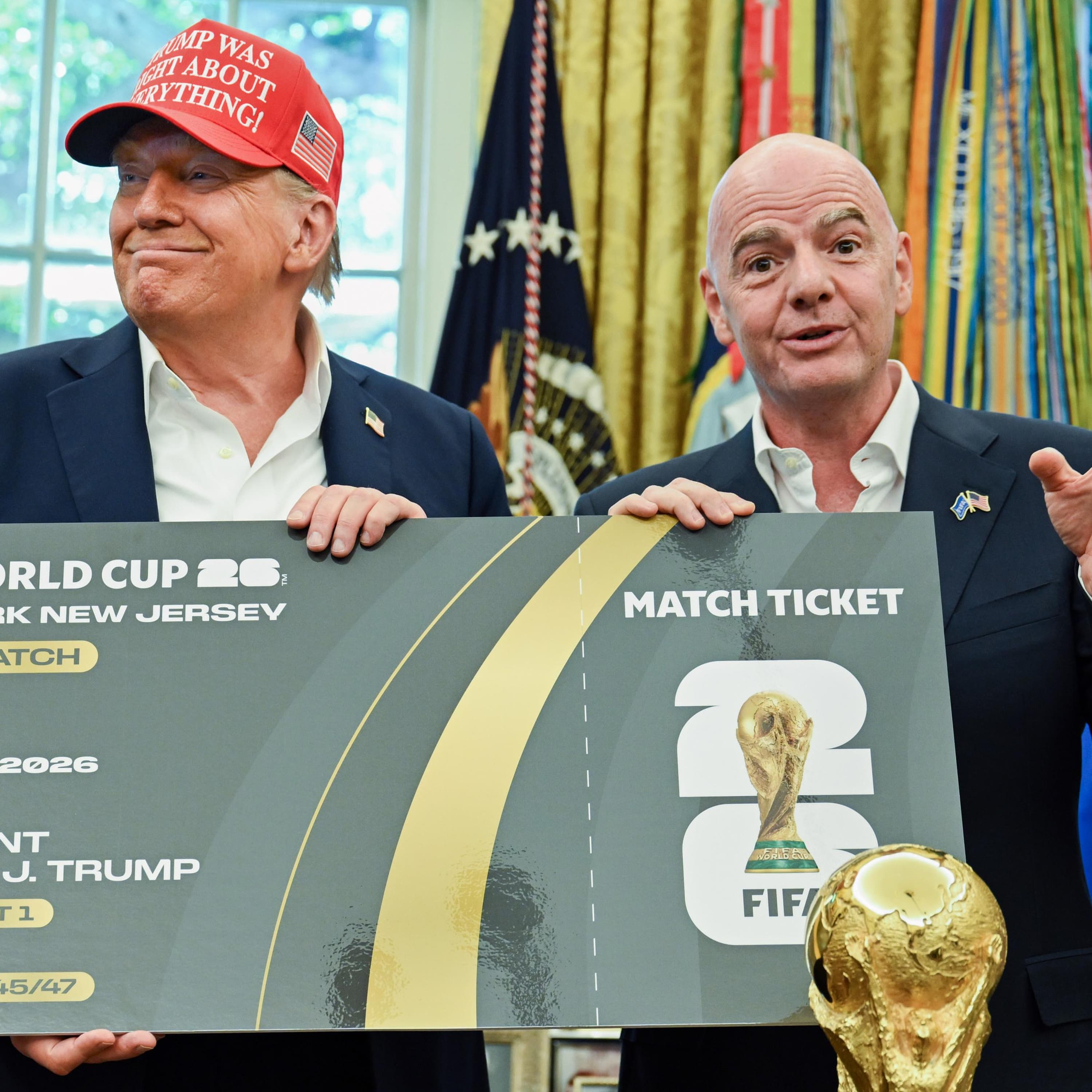
Today in Focus
Should you boycott the World Cup? – The Latest
00:12:53
The football’s only just kicked off, but this World Cup has already seen its fair share of controversy. Annie Kelly speaks to the sportswriter and columnist Jonathan Liew
Loading summary
Transcript26 lines
- [00:00]
A
This is the Guardian. Today in Focus is supported by Paramount, the Agency. All episodes streaming June 21st on Paramount. In the world of espionage, truth is a moving target and every decision carries a dangerous consequence. This new mission explores what it means to live as a double agent. Twice the lies, twice the risk. The lines between ally and enemy blur like never before. And survival depends on trusting no one. Starring Michael Fassbender, Jeffrey Wright, Jodie Turner Smith and Richard Gere. Don't miss the Agency. All episode streaming June 21st on Paramount. Plus,
- [01:10]
B
It is a massive cash grab for FIFA. Infantino has the keys to the world's most powerful cultural force and this is what he's done with it.
- [01:19]
C
We are not the kings of the world. We are a sports organization. We try to do our best. Maybe sometimes it's good as well to just, you know, chill.
- [01:30]
B
It's really important to be able to carry two ideas that, yes, this competition is built on greed and also that at its best, it is this wonderful unifying spectacle. The horror and the beauty come from the same place.
- [01:44]
D
From the Guardians today in Focus, this is the latest with me, Annie Kelly, Jonny Liu, you're a columnist and a sports writer for the Guardian. And after much anticipation, the 20 FIFA World cup is now underway. Billions of people are going to be tuning in over the next six weeks. This time around, it's being jointly hosted by the U.S. canada and Mexico. But I think for many of us, you know, about to start watching it, it is already coming with some quite, you know, conflicting feelings due to what's been happening in the run up to the tournament starting. So what have been some of the controversies that have dogged this tournament already?
- [02:28]
B
Gosh, how long have you got? I mean, obviously there's nothing, there's nothing new about going into a World cup with this slight sense of unease. You know, eight years ago we went to Putin's Russia, four years ago we went to Qatar. This time, you know, where do you start? I guess the crackdown, the US Immigration crackdown that has led to referee being turned away at the border. You know, players having to, you know, players being questioned at customs, Iranian staff and their team not being able to, to stay on America's tour, having to move their base to Mexico, the bans on fans from countries like Senegal and Haiti who won't be able to travel to the tournament. Then you have things like ticket prices, four figures, five figures. Even for some of the big games. You have little things like the prices of train tickets, shuttle buses, parking. This sense that a tournament that has Always thought of itself as being for everyone, global, universal, uniting. It's become a tournament essentially for the super rich, has shown its disdain to the ordinary fan. So, yeah, these are just a few of the issues before you even get into some of the sporting issues like the heat and the bloated 48 team tournament, which is going to lead to a lot of, I think, quite meaningless games, certainly in the final round of group games. So I think it all feeds into this sense that everyone has a favorite World cup memory. Everyone has this idea of the World cup idealized in their mind. Whatever it was supposed to be, it's not this.
- [04:00]
D
Yeah, I mean, I think a lot of the controversy has been the flashpoint of, you know, not allowing the Somali referee, Omar Artan, a FIFA referee who had all of his paperwork in place, him not being allowed to enter the country and comments being made associating him with terrorist groups. You know, that's been particularly shocking to a lot of people, hasn't it? And, you know, in response, we had FIFA's President Gianni Infantino saying, we are not kings of the world who can rule over governments and police forces. It's important sometimes to just chill. I mean, there have been examples of FIFA being able to exert pressure on host nations before in previous tournaments. But his response felt, you know, it kind of exposed what feels like a really stark power imbalance this time around between FIFA and the U.S. one of the host nations. We haven't really seen this before. It doesn't feel like, is it a bit more a case of, you know, FIFA needs America now much more than America needs FIFA?
- [04:59]
B
I think you're spot on. And that's something that is particularly new about this tournament. You know, eight years ago in Russia, FIFA was able to persuade Putin to relax his incredibly strict immigration laws and allow fans traveling to the tournament visa free, travel free public transport across Russia. In the past, when Brazil were hosting in 2014, they were able to threaten local venues with the stripping of hosting rights if they didn't get their construction projects on schedule. FIFA has always been able to exert this leverage on host countries because to a large extent, those countries needed the World Cup. They wanted to use it for the global projection, for the prestige, for the tourism revenue. And these factors aren't really applicable to the U.S. the U.S. doesn't really need this World Cup. The GDP boost it's going to get is minimal, about 0.1% according to some estimates. And it has no real desire seemingly to want to project itself in a more friendly or Softer or more appealing manner to the rest of the world? Quite the opposite, in fact. This may be the first World cup where it actually wants to show its disdain for foreigners and that wants to invite the world to America to tell them how much inferior they are to the master race.
- [06:21]
D
I mean, you said that America doesn't. It's not going to get a massive kind of cash boost from this tournament, but FIFA certainly will. And is that, at heart, what this is all about? Is it just a massive cash grab, then, for FIFA?
- [06:35]
B
Yes, it is a massive cash grab for FIFA. I mean, Gianni Infantino, when he. When he was elected as FIFA President in 2016, it was his brief. His power base was and is the ability to generate as much revenue growth for FIFA and by extension the World cup, which generates the huge proportion of their revenue as possible. The economic model of the World cup, all of the revenue that is generated through ticket sales, through hospitality packages, parking, merchandise, even food and drink in the stadium, as well as broadcast rights and licensing, all of that goes to FIFA. None of that goes to the host cities or the host country. So that's why FIFA has been so desperate to take this tournament to the US Market, because of the prices they were able to charge and the access to that market and those stadiums and having that canvas almost upon which to charge pretty much whatever it feels like.
- [07:33]
D
I mean, in one of your recent pieces, you called Infantino a coward. He's certainly doing a very kind of slippery pivot from wannabe statesman to lowly football administrat when he's come up against things like Trump's immigration crackdown. Can you just explain why it is that you did call him a coward?
- [07:54]
B
You know, people I've spoken to who know him or who have dealt with him describe him as quite a small, weak man, a man who basically goes weak at the knees in the face of power and money. And I think that makes him quite malleable, you know, to autocrats and dictators and people who want to pay top dollar for the World cup tournament. I think it's what explains a lot of his obsequiousness towards Putin, towards the Al Thanis in Qatar, and certainly towards the Trump administration, to the point where he's wearing Trump baseball caps and borrowing his campaign slogans, turning up at his inauguration, awarding that grotesque FIFA peace Prize. That's why I called him a coward, because I think true leadership is about having a moral compass, about having a purpose and a direction, and being able to stand up for what you. You think and what you Believe. And I don't think Infantino's done that at all. I think Infantino has essentially crumbled in the face of genuine conviction. He's. He has the keys to the world's most powerful cultural force, and this is what he's done with it.
- [09:07]
D
Yeah. And I guess, really, sadly, you know, the idea of a problematic fee for president, a morally bankrupt World cup, it's not a new idea, is it? I mean, the last World cup in Qatar, we know hundreds of migrant workers died for that tournament to happen. You know, and then as soon as the football started, it kind of seemed that everyone just moved on. I mean, migrant worker rights in Qatar barely been mentioned since. Do you think that the same will happen here? Do you think that once, you know, the matches start playing, once, you know, the superstars come out on the field, all of this controversy will just go away?
- [09:42]
B
Sadly, I think it will, to a large extent. That is ultimately what Infantino and FIFA and the Trump administration are banking on, that once the matches get underway, which they did last night, everyone will just forget about it. It will sort of evaporate away. That's what makes football so worth buying. If you're a dictator or you're running a liberal regime or you want to project yourself, because once the ball starts moving, people are utterly transfixed by that. And, you know, like you say in Qatar, that tournament is not remembered for migrant worker policies or LGBT rights or all of the kind of iniquities and backroom deals that led to that. That tournament being awarded. It's remembered for potentially the greatest final in the history of the tournament. You know, that Argentina, France final, which we all watched and we all enjoyed. And that, I think, is the rub, you know, this thing that we love so much, we can't tear our eyes away from it.
- [10:39]
D
No. And despite everything we have talked about. Yeah. Is, you know, it does bring such joy to people's lives at a time when we all really, really need some joy and some unity. And do you think that despite everything, this tournament can deliver on its promise to bring that into our living rooms?
- [11:00]
B
Yeah. I mean, these are the best players, the best coaches, increasingly, you know, a lot of great coaches at this tournament. And there will be unbelievable moments. You know, this. This is the power of the World Cup. It. It makes people on every continent in the world feel. Feel things. And, you know, I will say, you know, people boycotting it. I have a lot of regard for people who. Who take that stance. I think for a lot of fans who feel more conflicted about It, I think it's, it's really important to be able to carry these two ideas in your head at once that, that yes, this, this competition is built on, on greed and, you know, rupture of the planets and exploitation of the planet and the most unbelievable cruelty and horror. And also being able to hold the idea that at its best it is this wonderful unifying spectacle, the horror and the beauty come from the same place. And I think it's an act of good citizenship, I think, to be able to hold these ideas in place at once.
- [12:03]
D
Jonny, will you be watching and who are you supporting this year?
- [12:07]
B
Well, despite my Germany top, which was, which was actually a gift I got four years ago and it's come in very, very handy for the gym ever since. I've been supporting England and you know, to a lesser extent, Scotland. You know, I really, really do hope Scotland get out of the group for the first time in their history. I think they, they deserve it in a way. But yeah, I think England have a, have an incredible chance this time. I've backed them. I went on the Football Weekly podcast and, and back to them as my prediction to win the tournament. And we'll see what happens.
- [12:42]
D
And now our colleagues on Football Weekly have transformed into World Cup Daily and are going to be bringing all of the updates on the matches as they happen. Jonny, thanks so much for your time today.
- [12:52]
B
Thanks.
- [12:52]
D
And that's it for today. My huge thanks again to columnist Jonathan Liu. Thanks for listening to this episode of the latest Today in Focus. We'll be back with you as usual on Monday morning and the latest will be back on Monday. This episode was produced by Jacob Liebenberg. The senior producer is Ryan Ramgobin and the lead producer is Zoe Hitch and the presenter was me, Annie Kelly.
- [13:19]
E
Hello, I'm Max Rushton. The World cup is back and Football Weekly is going daily. If you want award winning soccer coverage from a podcast that's been overanalyzing the game for more than 20 years and still hasn't run out of opinions or just repeats the same ones over and over again, this is where you'll find it. We'll be producing 33 daily episodes across the the top of tournament, breaking down all the action, the results and of course the drama. Can the US make it out of the group stage and into the spotlight on the biggest stage? World Cup Daily? Listen wherever you get your podcasts or watch full episodes on YouTube.
- [13:45]
A
This is the Guardian.
- [13:55]
F
This message comes from Jackson. Taxes aren't something you can only think about once a year. With investments planning for tax days year round. Fortunately, Jackson offers tax efficient products. Visit Jackson.com for more information on how our products can make your tax bill a little bit less painful. Jackson is short for Jackson Financial Incorporated, Jackson National Life Insurance Company, Lansing, Michigan and Jackson National Life Insurance Company of New York, Purchase, New York.
- [14:21]
G
Today's Markets Move fast. Get the insights you need in 10 minutes with the Barclays Brief, a new podcast from Barclays Investment Bank. Through sharp dialogue and scenario based analysis, our leading experts analyze key market themes each week. So whether you're managing a portfolio or leading a business, the Barclays Brief podcast can help you make smarter decisions today. Stay Sharp, Stay Brief. Find Barclays Brief wherever you get your podcasts.
- [14:51]
H
Today we'll attempt a feat once thought impossible overcoming high interest credit card debt. It requires merely one thing, a SOFI personal loan. With it, you could save big on interest charges by consolidating into one low fixed rate monthly payment. Defy high interest debt with a SOFI personal loan. Visit sofi.com stunt to learn more. Loans originated by Sofi Bank NA member FDIC terms and conditions apply. NMLS 696891.