← Today in Focus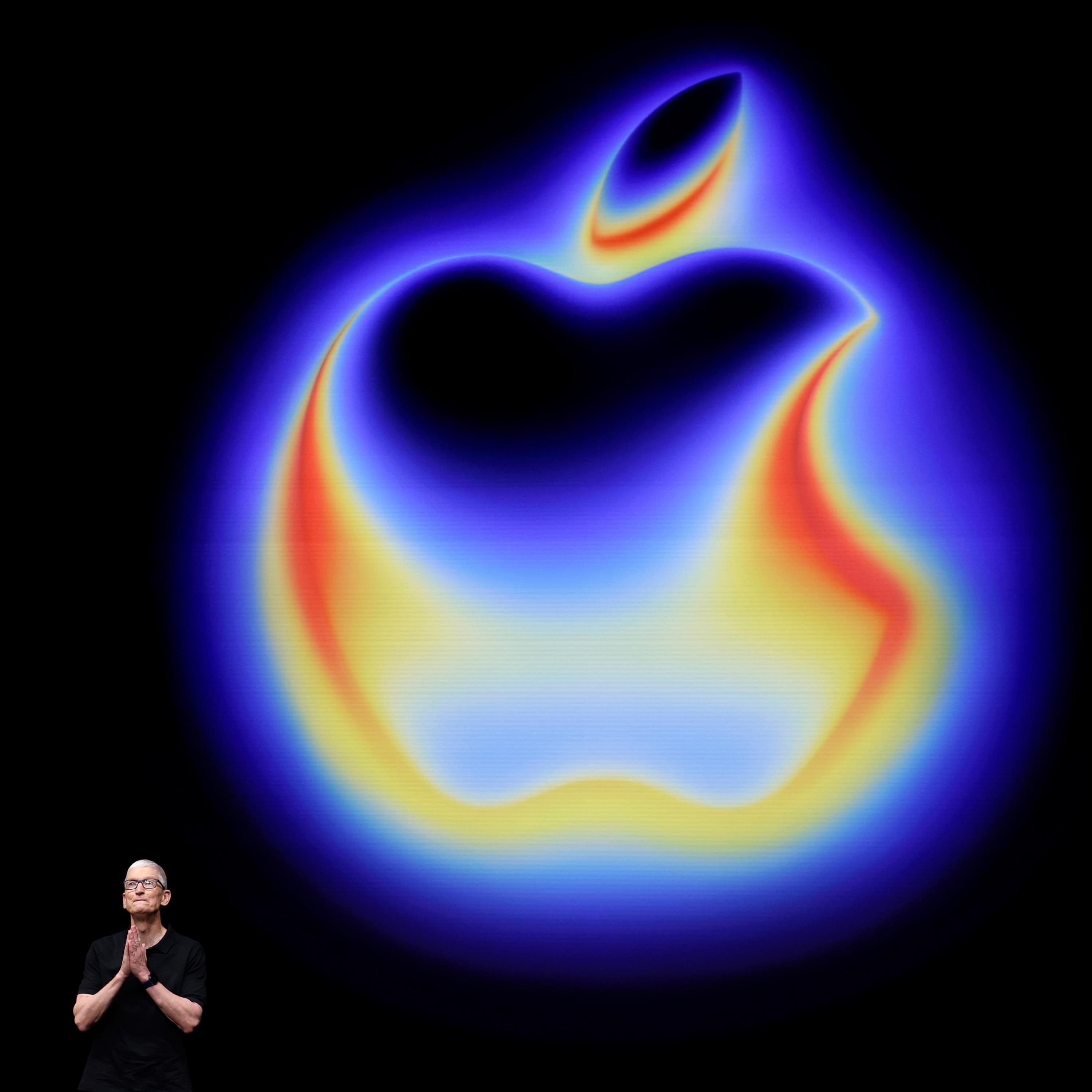
Today in Focus
Siri, where does Apple go next?
00:26:38
Guardian US tech editor Blake Montgomery talks about the future of Apple after the resignation of its longtime CEO Tim Cook
Loading summary
Transcript51 lines
- [00:00]
A
This is the Guardian.
- [00:09]
B
Today, Apple took over the world. Where can it go next? Here's a question for you. What are you listening to this on? Is it an iPhone? Do you have AirPods in? I'm guessing there's a good chance you do. Sorry. To Android users more than any other, there is one man responsible for just how widespread Apple products have become. Tim Cook, who announced his departure last week. In the last 15 years, the so called world's most boring CEO has turned the company from a multi billion dollar one to to a $4 trillion giant. Apple has transformed how we live, work, communicate and on an even bigger scale, it has reshaped the way tech companies do business, politics and hell, even global supply chains. But where it was once leading, Apple is now lagging on the AI race and on the very thing that it built its reputation on, product innovation. And now another Apple lifer, John Ternus, is taking over the top job. Does he have the vision or the bite to lead the company through what could be one of the most disruptive decades in Silicon Valley? From the Guardian, I'm Nashi Neqbal. Today in Focus, the future of Apple. Blake Montgomery, you're the tech editor at the Garden us. Welcome back to Today in Focus.
- [01:59]
A
Thanks for having me.
- [02:00]
B
Now, for the last week, there has been a lot of chatter about Tim Cook stepping down from Apple.
- [02:06]
A
Big breaking news. Tim Cook has stepped down as the CEO of Apple. I mean, this is arguably the biggest news that we're going to hear from Apple all year.
- [02:14]
B
Tim Cook transitioning to the Executive chairman. He's led the company since taking over for Steve Jobs in 2011. And it's not every day that you get a notification on your phone about the CEO of a company changing Jobs. And yet we did, and here we are. So just how big at this point is Apple?
- [02:35]
A
Well, it's worth $4 trillion, which is kind of an unfathomable amount of money. It's worth more than the economies of a lot of countries. And the change of one person helming such a huge planetary size enterprise is like a precedent changing. 166,000 people work for the company. Their devices are in billions of people's hands. It is going to have effects across the world, even if you may not notice it immediately.
- [03:09]
B
And so how big a moment or even risk is this for one of the world's biggest companies?
- [03:15]
A
As far as a risk, it is more like electing an establishment president to lead a country than electing a Donald Trump. For example, this guy, the one who's replacing Tim Cook is named John Ternus. He was the president of the hardware engineering division. So he's going to be focused on the innards of the phone and the computer and the watch and really focusing on the technical elements. So it is not the choice of this person to succeed. The Papal throne is not seen as a radical departure for the company. And I don't think your iPhone is going to be a square in the future.
- [04:05]
B
And so what kind of shape was the company in when Tim Cook took over?
- [04:09]
A
It was quite a different company 15 years ago when he took over. It's still in a strong position. It was worth like 300, $350 billion. By no means a small company. But Steve Jobs had just died when Tim Cook took over and there were quite a lot of questions of whether he could live up in any capacity to the things that Steve Jobs had done. But unlike most companies, Steve Jobs defines Apple his replacement. Apple's Chief Operating Officer, Tim Cook has filled in for Jobs before with great success. But brilliant as he is, just about every analyst on the planet will tell you he's no Steve Jobs. Cook takes over in 2011. So Apple is on the rise towards becoming one of the biggest companies in the world. But it was by no means guaranteed that it could do the revolutionary globe spanning things that it does now that we kind of take for granted. But a lot of that is due to Tim Cook. No one describes him as a genius in the same way that people revere Steve Jobs. I don't think there will be biblically long biographies of Tim Cook that people mine for their own inspiration. However, there is an obvious aptitude that he has for the kind of global supply chain management that Apple has to navigate, as well as this kind of diplomacy that you might do as the head of one of the biggest companies in the world that has led Apple to these heights.
- [05:41]
B
So in some ways, from what you're saying, he doesn't have the wizardry that Steve Jobs did and this essence that he was capturing, the cultural zeitgeist. Whereas Tim Cook has appeared incredibly competent in comparison. But I wonder how was it received when he first took over the role?
- [05:57]
A
A lot of questions, a lot of kind of skepticism because I mean, Tim Cook had run the operational side of Apple's business for several years alongside Steve Jobs. But that's the pretty boring side of the business, the kind that people want to take for granted and don't want to think about its problems. There's no sex appeal to it in the way that there is to a shareholder designed product Exactly. So Tim Cook is the shareholder CEO. And I mean if you're an Apple shareholder from 2015 to 2026, you are thrilled. You are so elated with the performance of this company. And that's like his, his great success historical.
- [06:39]
B
First yesterday, as Apple became the first public US company to be valued at
- [06:43]
A
$1 trillion, and that is a $2 trillion milestone. Apple has become the first company in the world to reach a market value of $3 trillion, a new record high. It is nearing $4 trillion in market cap. It was aided of course, by the pandemic sell off that help, but it also was aided by Tim Cook's management savvy and just a shift. And the way investors were thinking about the company and the tech sector overall. Now Apple's. The questions that arose like back then is like, can he debut anything that will recapture the Steve Jobs deal? And he said, I want to debut new stuff, but I'm not that interested in the zeitgeist. I am interested in global supply chain management. Like how glamorous. Like, you see Tim Cook on a red carpet and you're not excited. There's no, there's no like thrill. But that's not really necessary for a company that has the thing that has already changed the world, the iPhone. And like, whether Tim Cook could recapture that innovation and that spirit of the Jobs era became less of a material question to Apple's success.
- [07:49]
B
What kind of products has Cook overseen and how exciting has Apple's innovation been under his tenure?
- [07:56]
A
I think the innovation has been less exciting. I think that repeated critique of him is true. The debut of a new iPhone every year feels more like listening to Toyota talk about his new lineup of cars. The things that he has shepherded through would be like The Apple Watch AirPod headphones, which to any other company I think on earth, these would be massive products. And they could function as sizable businesses unto themselves if they were broken out of Apple. To Apple, they are like miniature kingdoms in comparison to the vast dominion of the iPhone. Other innovations that are important to the company, that are extremely boring to the consumer are like the development of Apple's own chips that go inside its MacBook. That's something that the new CEO spearheaded, shepherded through, accomplished, and it was a great business boon to Apple and part of this huge financial success. Do we care? I don't really think so unless you're like a big Apple head. Another thing that Tim Cook did was build up Apple's kind of software ecosystem. One of the things that Apple customers really prize about These phones is like their. Their close integration with the software that comes with them, the iOS operating system. And Tim Cook introduced services that make that kind of even more so. He also introduced, like Apple Pay, Apple tv, Apple Music came out under him and now is a legitimate competitor to Spotify, the biggest one in the world.
- [09:35]
B
Well, one of the big developments during Tim Cook's tenure, and that's really relevant to Apple, is this growing tension between the US Where Apple is based, and China, where the overwhelming majority of its products are made. Like, how has Cook navigated that and what sort of template has he set for the next CEO?
- [09:58]
A
I think one of his greatest successes has been his political diplomacy. And so one of the few kind of doctrines that he put forward in the way that a prime minister would do and talked about as a business strategy is being the man in the ring. So, like calling Xi Jinping and Donald Trump directly and talking to them and working out the problems with the supply chain management there, being closely involved and speaking directly to the leaders of the country where Apple has its major manufacturing hubs, which is this completely global operation that is quite difficult to manage. In the past six years, we've seen the great difficulties that global events can disrupt. Those like complex networks, the COVID pandemic, the war in Iran. Like managing this long, winding path that an iPhone takes from California to China to Vietnam to India and back to California and then to the rest of the world is not an easy task, even if it is an unglamorous one. And Tim Cook is staying on as executive chairman of the board. And in Apple's press release, it explicitly said his role will involve engaging with global policymakers. So that's Apple acknowledging that this is his greatest strength and his greatest asset to the company.
- [11:15]
B
And what is that engagement, the tech diplomacy, what has that looked like with Cook?
- [11:20]
A
Cook would appear at, like, state events with Xi Jinping. The darker side of that is that he made a lot of concessions on privacy to Chinese regulators. The company's icloud data was moved into local Chinese servers, where the government has easier access to a person's data. And the Chinese state is quite censorious. There are a lot of privacy apps that are not available in the Apple App Store in China that are available elsewhere. And Tim Cook has been called out on that.
- [11:53]
B
I was going to say, isn't that a massive part of what Apple trades on with its reputation is its absolute protection of privacy and safety and, you know, not giving up information about users to the FBI when it's demanded? I mean, Isn't that quite the gamble to take a completely different approach in China?
- [12:10]
A
It is and it's quite two faced. Like there's a different Tim Cook on the other side of the Pacific. Apple ran a very famous ad campaign in 2019. Was very short, just said privacy, that's iPhone. It went up against the FBI in what could have been a deeply unsympathetic way of blocking law enforcement from getting information about a mass shooter who had died. And I think it comes down to the fact that to have access to the Chinese market at all, you have to make concessions on privacy. Google and Facebook are not available in China. And as much as we don't think of Facebook as a paragon of privacy, part of the reason that the company does not operate there is like kind of draconian privacy concessions that they would have to make. Also the great firewall and China like not allowing them to.
- [13:00]
B
So you've explained how under Cook, Apple has made concessions to China. But I wonder how Cook has managed to keep Donald Trump sweet.
- [13:09]
A
It's kind of incredible. I mean, on the day Cook resigned, Trump posted on Truth Social, I've always liked Tim Apple. I mean, famously Trump rechristened Tim Cook as Tim Apple in a public appearance, which Tim Cook leaned into and thought was funny. He's made concessions to Trump as well and worked with him on his domestic agenda, his Make America great agenda. Trump is really obsessed with this idea of American manufacturing. What is the American company that does the most manufacturing perhaps of any others is Apple. And Tim Cook has said, we are bringing more manufacturing to America. We are building like multibillion dollar plants. We're going to do more of our manufacturing in the United States. And Trump said, awesome.
- [13:55]
C
We're pleased to welcome to the White House one of the great and most esteemed business leaders and geniuses and innovators anywhere in the world. Apple CEO Tim Cook. Amazing job. Apple is announcing that it will invest $600 billion. That's with a B in the United States over the next four years.
- [14:16]
A
I mean, there must be something about him when you speak to him face to face or like in a room, because Trump's signature economic thing that he did in his second term, enacting these world upending tariffs. The iPhone has an exception to them. And that's kind of an incredible thing. That's the US Government leaving so much money on the table from one of the richest companies in the world that has hundreds of billions of dollars in cash reserves like it could pay. And yet Tim Cook has gotten an Exception. And so there is this relationship between Donald Trump and Tim Cook that is sort of incredible. Also, Donald Trump famously does not have an iPhone, which I find it quite bizarre that he's an Android guy. He's so simpatico with Tim Cook, and yet doesn't even have an iPhone. You see this kind of behavior of this, like, kind of bowing to Apple or this obsession with Apple on, like, behalf of iPhone users, not some guy with an Android.
- [15:12]
B
I'm sorry, we've said all this stuff about Steve Jobs being absolutely dazzling, but clearly Tim Cook has some charisma in the room.
- [15:18]
A
He's got something there. There's clearly something there. I don't think Donald Trump and Xi Jinping would both be friends with just anybody. And Tim Cook has met Trump on his own kind of bizarre, falsely glamorous terms. Famously gave Donald Trump a, like, gold and glass trophy in the Oval Office and went to the premiere of the Melan documentary, went to Trump's inauguration, but was not featured in kind of the infamous photo of all of the tech giants like Mark Zuckerberg and Jeff Bezos sitting on the dais alongside Trump, which was quite embarrassing and elicited the ire of liberal America in a really extreme way. And Tim Cook was not seen there. And somehow, despite Tim Cook's political aptitude, it is seen as one of the more apolitical tech companies.
- [16:11]
B
Got to say, he sounds like a much canny operator than he's given credit for.
- [16:15]
A
I think so. I think it's just that he's kind of boring to listen to in public. There are politicians who are genius dealmakers who you would never listen to one of their speeches. And he's kind of that way.
- [16:27]
B
Right, Blake, at the other end of Apple supply chain, you know, it can't be forgotten that lawyers for the Democratic Republic of Congo have said that the company supply chain is contaminated with, quote, blood minerals.
- [16:40]
C
It's just that we base our analysis on numerous reports from NGOs, of course, but also official reports from the United Nations. The fact that this region of the world, Kivu, is now in a war led by blood minerals is a fact. Now, the next step after having said that is to show that Apple knows it and that Apple directly uses blood minerals in its supply chain. And that's what we demonstrate in the complaint.
- [17:10]
B
How has the company dealt with that or is dealing with questions about it and around how its products are made?
- [17:17]
A
Apple has denied these accusations, and it's honestly not a scandal that has dogged Tim Cook for very long. It does Play into something he kind of did with Donald Trump. The company has invested in rare earths mining in the US and tried to move its mining out of China. Tough. China has almost a monopoly on rare earths, minerals that are vital for making phones and advanced electronics and stuff. That's also part of. Tim Cook has moved a lot of Apple's manufacturing out of China, partly for fear of copying and intellectual property theft, partly also out of regulatory uncertainty. We've seen China make big crackdowns on tech companies. Apple doesn't want that. It has been surprising to me how easily he's been able to do that without invoking the ire of Beijing and moved it like to India, to Vietnam. Those countries are thrilled. They are very excited. They're like meeting with him, making this more possible, giving the company tax breaks. But Beijing has not cracked down on Apple and there's big demand for iPhones, which is surprising to me and speak to his kind of political aptitude. But mining allegedly done in war torn zones with like fighting over the minerals and bloodshed, that is not a scandal that has dragged Tim Cook down on a global scale for all that long.
- [18:47]
B
So Blake, at this point, 15 years of leadership under his helm. Where does Apple fit in the wider tech conversation when all the headlines are about AI, about Elon Musk, about Sam
- [19:00]
A
Altman, It's a great question and it's the biggest challenge for the new guy. Where is Apple going to strike on AI? It is seen as pretty far behind its Silicon Valley competitors. Siri is a Neanderthal, is just like a useless voice assistant in comparison to the Google Assistant and in comparison to ChatGPT. Like despite being one of the first voice assistants to market, it just has not kept up. And Apple has failed to make it a useful thing that would want you to stay with your iPhone. It can barely change the song on Spotify. That's like a failure of Tim Cook's. And so Apple is seen as quite far behind in AI by comparison. It doesn't have a generative AI product. It's also not making the enormous investments in AI that the other Silicon Valley companies are. It's not buying data centers for many, many tens of billions of dol. And that seems to be a deliberate strategy. They're kind of holding back on spending so much that they have to lay off a bunch of workers like Amazon.
- [20:03]
B
It's interesting that you've described it as a failure essentially on Apple's part and in the way that they're lagging behind in the AI race. And I Wonder if there is another argument put forward that potentially, yes, Apple's made a huge misstep here, but also maybe it's been quite patient and clever and they're not chasing the race right now in the short term because they may have plans to win it in the long term. Blake, what's your view on that strategy or that take?
- [20:31]
A
I think that's very possible. Apple has done that before. They were not the first company to make a smartphone. There are others that preceded the iPhone. Do we all remember the iPhone as the invention of the smartphone? For the most part, I think yes. So will Apple come to some sort of place with AI where they do the same thing, sort of take something that their competitors have pioneered and make it into a beautiful, intuitive thing that we all kind of recognize as the arrival of AI in a certain form? Very possible. I don't think that's going to happen. I have to be honest. Like, the scale of what they would have to invest to make that happen is so vast that it seems much larger to me than the gap between the early smartphones like the BlackBerry end.
- [21:27]
B
I don't know, Blake. I'm betting on my Apple AI Butler any day now, maybe.
- [21:33]
A
I mean, Apple is slated to debut some new devices that will be like they have patents related to smart glasses, kind of like Meta's, and you will probably be talking to some sort of AI through those glasses. My bet is that it's going to be someone else's AI that you're talking to. The problem with generative AI that Apple has not really seemed to solve is that it is quite messy and can say anything and Apple's products are predicated. The value proposition of Apple is that it's like it does the same thing every time. It's very intuitive and it works. It just works. And like generative AI, like, you do have to kind of fact check and check its output, even though it is quite impressive.
- [22:21]
B
Coming up, what does the appointment of John Turner tell us about where Apple is going next? And so of course, now, in the meantime, Apple has appointed this new guy and of course it does always have to be a guy. John Ternus. What do we know about him and what qualifies him arguably for the biggest job in tech?
- [22:57]
A
He has been at Apple for 25 years. He is very much an insider, described as adept at navigating the internal politics. When I first got to Apple, it was my second job out of college. And the first time I walked through those doors, it was exhilarating and intimidating all at once to Be honest, I wasn't sure. I believe the people I met were so smart and so confident and they knew so much more than me. But I'll always be grateful that I wasn't afraid to ask for help when I needed it. He's an engineer. He is really focused on the hardware, the kind of brass tax underpinnings, like, less so even the titanium shell and what the array of the cameras will look like on your iPhone, your next iPhone. It's like, what kind of chips are in there? That's his bread and butter, and that's his main accomplishment, according to the Wall Street Journal, the development of Apple silicon chips, which led to this huge increase in MacBook sales and big profits for the company. And he was part of the hardware team that also launched the Apple Watch AirPods, new lines of MacBooks that had proven very successful, very adored. One question for him, as well as where is Apple going to fit in on AI? Is whether he can recapture this thing that continually plagues Apple of like, can you inspire new consumer demand and can you inspire new consumers with products that make them go wow in the way that Steve Jobs did?
- [24:25]
B
But what do you think his appointment therefore says about where Apple is going and what the company's priorities are?
- [24:33]
A
I think the priorities are going to be largely the same from Cook to Turnus. I think that's what this appointment kind of signals. We picked the hardware guy, signals that they're not pivoting to go all in on AI.
- [24:48]
B
So finally, Blake, not to cast you as Today in Focus's soothsayer, but I think as being tech editor, that is part of your job, would you say that in, say, 15 years time, when Turner steps down, that he'll have successfully kept Apple at the top of the tech world and that we'll still be talking about them as we are today?
- [25:07]
A
Right now, the answer looks like yes. Even though I've talked about Apple as being behind on AI, the idea that the company needs to execute some sort of radical pivot or turnaround is also not correct. The Runway that the iPhone has given to the company, it is like one of the world's most popular consumer products and is likely to stay that way. And this guy, if he's going to do one thing, it's maintained the continual pace of iPhone updates and sales and upgrades. So the Runway that that has is enormous. That's the kind of thing that won't run out for many, many, many years, if not decades. So I think we will, in 15 years still be talking about Apple as one of the most successful companies and one of the most valuable companies in the world.
- [26:02]
B
Nice job if you can get it. I mean, Blake, thank you so much for your time.
- [26:07]
A
Thanks for having me.
- [26:11]
B
And that's it for today. This episode was presented by me, Noshi Nikbal. It was produced by Hannah Adan, Guy Safman and Tom Glasser. Sound design is by Ross Burns and the executive producer was Sammy Kent. We'll see you again this afternoon with the.
- [26:31]
A
This is the Guardian.