← Today in Focus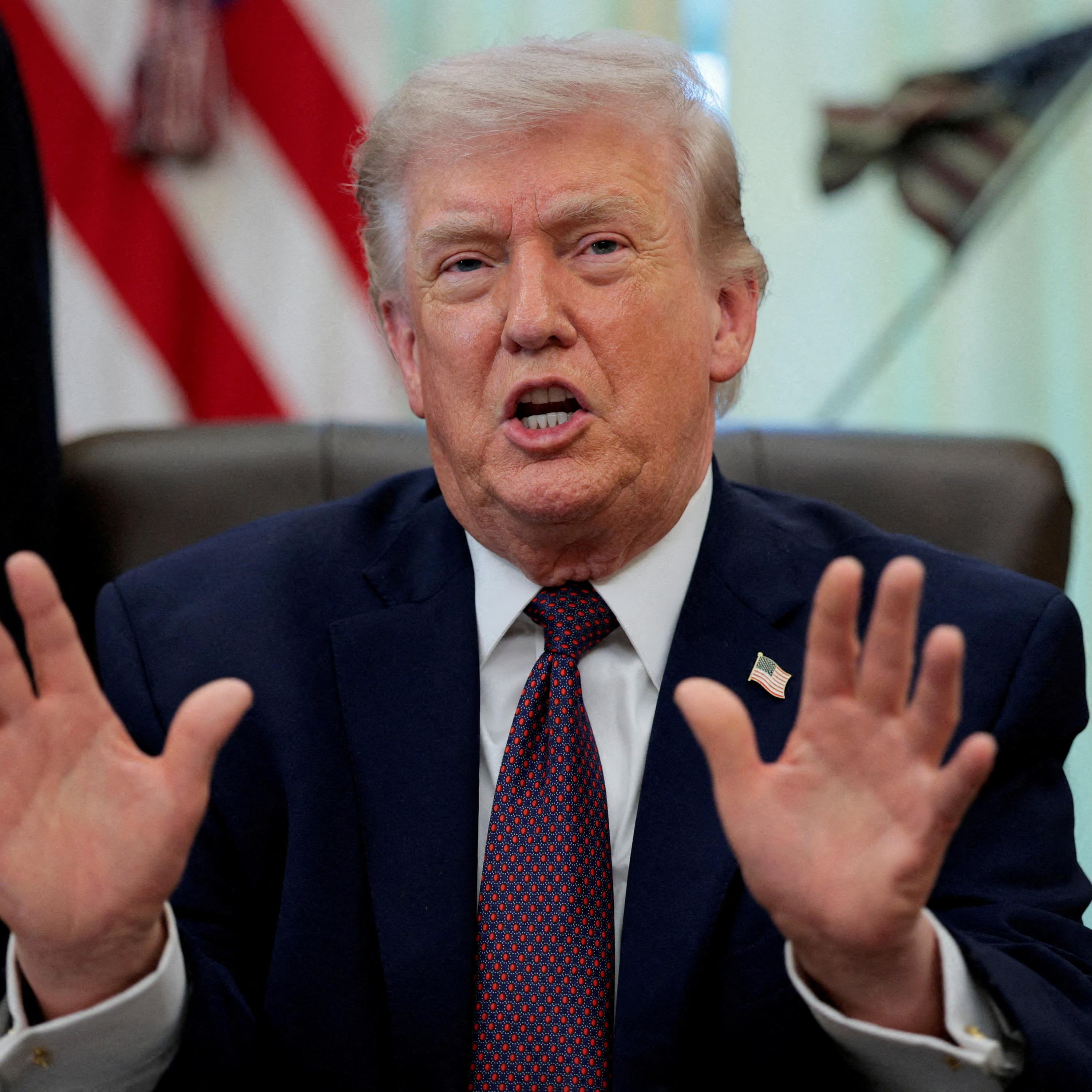
Today in Focus
Trump insists Iran deal close despite strikes – The Latest
00:10:40
As Israel threatens to bomb Beirut and the US and Iran trade missile strikes, Donald Trump insists it will ‘all work out well in the end’. Lucy Hough speaks to diplomatic editor Patrick Wintour
Loading summary
Transcript26 lines
- [00:00]
Guardian Announcer
This is the Guardian.
- [00:11]
Washington Wise Host
Decisions made in Washington can affect your portfolio every day, but what policy changes should investors be watching? Washington Wise is an original podcast from Charles Schwab that unpacks the stories making news in Washington right now and how they may affect your finances and portfolio. Listen@schwab.com WashingtonWise.
- [00:36]
Patrick Wintour
I do think there's a clock ticking. And the more he says, here we sit back and relax, something's going to go hysterically wrong. The tensions inside Iran are palpable. It's always been the Iranian position that if there's to be a ceasefire, it's a ceasefire on all fronts. I still think both sides don't want to go back to fully pledged war.
- [00:56]
Lucy Hoff
From the Guardians today. In focus, this is the latest. With me, Lucy Half. So, Patrick, it's been a week of strikes and counter strikes in the Middle east over the weekend. You, as our diplomatic editor, have been right across this. We've had strikes from the US On Iran, but also counter strikes on Kuwait. But more recently, we have strikes on southern Beirut that's led to mass evacuation orders. What's been going on? Because it's been met by a very strong response from Iran.
- [01:28]
Patrick Wintour
Yes, I think the Israelis are stepping up all their activity in the Lebanon. They've gone north, the Latani river, which is seen to be the kind of bridge point. And as you say, they're probably now heading into the southern suburbs of Beirut, and there is mass sort of cars rushing to get out. And no one quite knows exactly whether Netanyahu got permission from the Americans to really be active in Beirut. It's certainly influencing and affecting a great deal of what the negotiations about Iran, because the Iranians have always said they will protect Hezbollah. And the level of attrition of their senior military commanders is now kind of quite remarkable. And the death tolls over 3,000 and evacuations, I think of about 20% of the whole population. And I think there's so much pressure now on Iranians to say that they won't permit this to go on and
- [02:30]
Lucy Hoff
that it would be a violation of what is already a very fragile ceasefire. So there has been this very strong response from Iran. But what is the justification from Israel? What's it sort of up to?
- [02:42]
Patrick Wintour
Well, the justification from Israel is that they believe Hezbollah have made the life in northern Israel impossible because of the drone attacks and because of the missile launches. I mean, Hezbollah is a reduced organization in comparison with what it was. People have compared it more to a kind of guerrilla army than a sort of terrorist army. But they're still causing a lot of damage and including to death toll of Israeli soldiers. But it's always been the Iranian position that if there's to be a ceasefire, it's a ceasefire on all fronts. And so that means there's a ceasefire in Iran, but there's also a ceasefire in Lebanon. And it's very difficult from the Iranian perspective just to sit back and watch this happen. For instance, the speaker who's the chief negotiator, Gall, has said there will be a price and the foreign minister Arachi has also said ceasefire is required on all fronts and the tone is becoming more threatening.
- [03:37]
Lucy Hoff
Right. Well that doesn't sound hugely encouraging because we've also had these US Strikes on southern Iran over the weekend. Again, something that puts the ceasefire in real jeopardy. Iran have countered that with strikes on Kuwait, which is a US Ally. It's also home to a number of US Military bases. We've had a very strong response from the Kuwaiti government as well. What are the potential consequences of all of this?
- [04:04]
Patrick Wintour
Well, I think this is the second or third time there's been this kind of minor breach of the ceasefire, which I call it minor because it hasn't stopped the negotiations continuing about what the final outcome would be. But if they continue, I think it will be the moment they're contained and I think they're understood on both sides, as it were. It's one attack by the Americans, then a reprisal by the Iranians into Kuwait where they say the missiles have come into Iran. If it continues, the argument that the Americans which are making these Iraqs of self defense becomes difficult to sustain. I still think both sides don't want to go back to fully pledged war. But now you've got these problems both in Lebanon and in Kuwait. It's getting more and more fragile.
- [04:57]
Lucy Hoff
And meanwhile, Trump, as we spoke about last week, is under a lot of domestic pressure. He was criticized by a number of people, ordinary, traditionally very loyal to him, senior Republicans. He's posted on Truth Social this morning in a very Trumpian manner. Don't the Democrats with a U not an E and various other seemingly unpatriotic Republicans understand it's much tougher for me to do my job properly and negotiate, urging us all to sit back and relax, which is perhaps easier for him to say than others involved in this conflict. What it suggests is a president who's under domestic pressure but also is slightly between a rock and a hard place in terms of this.
- [05:36]
Patrick Wintour
Yeah, I think anyone saying sit back and relax, I think he then goes on to say it will work out. It always does in the end. I mean, I find that kind of debatable. Debata. Nothing's worked out so far in the end. So I find, I think the more he talks in those terms, the more you realize he really needs to get a solution to this. And I think he actually spoke to the French President Emmanuel Macron yesterday, which very much on that theme. And Macron's just saying we can't leave this as it is. It's going, the cefar is going to break down. And I mean, I should admit error in the sense last time I saw you, I said I thought there would be a solution within 24, 48 hours. And in fact, in my defense, there was a solution. There was a deal. He actually announced it and he said he was then going to go into the Situation Room and he basically spelled out what it was going to be. And then there was after two hour meeting in the Situation Room. Yeah, there was silence and obviously the internal discussion was such that they realized that the deal that agreed to is, was completely not going to work internally politically. So now they've gone back and reopened issues.
- [06:45]
Lucy Hoff
Right.
- [06:46]
Patrick Wintour
But there was a very interesting statement by I think the deputy chairman of Exxon who just said, we, we, we do not realize that we are two to three weeks away when our inventories are going to run down seriously and then we're going looking at oil prices of like $150 a barrel. So I do think there's a clock ticking and the more he says here we sit back and relax and that clock's ticking, something's going to go hysterically wrong.
- [07:14]
Lucy Hoff
That's usually reassuring. You did caveat that by saying this is a very unpredictable president so you are forgiven for your not coming to pass. But I'm just wondering where the Iranians are on, on all of this because we had the Internet turned on after many weeks of that shutdown. So we're getting a sort of clearer sense Iranian citizens are doing. But clearly from the Iranian side, from the Iranian regime. There must be a lot of distrust of President Trump given that the, the various violations that we've seen.
- [07:44]
Patrick Wintour
Yeah, I mean distrust and trust are the two words they probably use most about the negotiations and the decision to put, to allow the Internet to be connected to the sort of global Internet as it were, was driven by two things. One was there was so much political pressure to do so. Second was that there is this economic pressure really pressing down so hard now on the Iranians and parts of the Iranian economy are dependent upon the Internet. There was a report last week which talked in in terms of there being a 10% drop in GDP. It was a massive recession going to happen this year inside Iran and thousands more thrown onto the out of work and also living standards collapsing, hyperinflation, food inflation at over 100%. So the tensions inside Iran are palpable. And the president in a speech yesterday, we have to be prepared for some very, very tough decisions ahead. So I think he's aware of what they're going to have, the sacrifices they're asking the Iranian people. And that was one of the conflicts about if you let the Internet back on, will the debate start inside Iran about the political direction of Iran, of the country?
- [09:04]
Lucy Hoff
Yeah. And just lastly, I mean, it sounds like difficult decisions on both sides. Both sides are in a very tough position from the US and from the Iranian side. So given that the clock is ticking, given that there is pressure from oil giants like ex con warning of how much bigger this crisis could get, do you think that increases the risk of a deal that is unpalatable and particularly for Trump to sell domestically and to the international community?
- [09:30]
Patrick Wintour
Well, I think it makes it more likely whatever deal there is is quite vague and it leaves defers all some of the more complex issues for later. Because I think if the pressure is such that they've got to reach a deal, then the way to deal with the conflicts they've got over various things, such as the Strait of Hormuz, is to fudge it really, in essence, and
- [09:50]
Lucy Hoff
then deal with them more and then
- [09:51]
Patrick Wintour
deal with them later over 60. There's various timetables booked into this negotiation, including 60 days to deal with the nuclear issue. And that's sort of. But I think what you try to do is really leave it as vague as possible and even you don't publish the memorandum.
- [10:08]
Lucy Hoff
Well, 60 days doesn't sound like very much time either. Patrick, thank you so much for your time.
- [10:12]
Patrick Wintour
It's a pleasure.
- [10:18]
Lucy Hoff
That's it for today. My huge thanks again to Patrick Wintour, the Guardian's diplomatic editor. You can keep up with his reporting and analysis over@theguardian.com as well as our Middle East Live blog. And don't miss today's episode of our sister podcast, Politics Weekly. Pippa Carrera and Kieran Stacey will be looking at the release of the second batch of Mandelson files and what they mean for Starmer's government. Thanks for listening to this episode of the latest Today in Focus will be back in your feeds tomorrow. As usual, the latest will be back tomorrow night. This episode was presented by me, Lucy Hoff. It was produced by Annie Levespa. The senior producer was Ryan Ramgobin and the lead producer was Zoe Hitchcock.
- [10:59]
Guardian Announcer
This is the Guardian.
- [11:08]
Jackson Taxes Announcer
This message comes from Jackson Taxes aren't something you can only think about once a year, with investments planning for tax days year round. Fortunately, Jackson offers tax efficient products. Visit Jackson.com for more information on how our products can make your tax bill a little bit less painful. Jackson is short for Jackson Financial, Inc. Jackson National Life Insurance Co. Lansing, Michigan and Jackson National Life Insurance Co. Of New York Purchase, New York.
- [11:34]
Washington Wise Host
Decisions made in Washington can affect your portfolio every day, but what policy changes should investors be watching? Washington Wise is an original podcast from Charles Schwab that unpacks the stories making news in Washington right now and how they may affect your finances and portfolio. Listen@schwab.com Washingtonwise Summer smells like summer road
- [11:56]
Guardian Announcer
trips, ocean breezes and long evenings under the stars, it's a feeling you want to hold onto. Restore your sense of place with Pura's new summer fragrance collection. We've captured the magic of the season in clean premium scents that transform your home into your favorite destination. Discover the art of sunscaping and bring the summer in. Visit pura.com to explore the collection.