← Today in Focus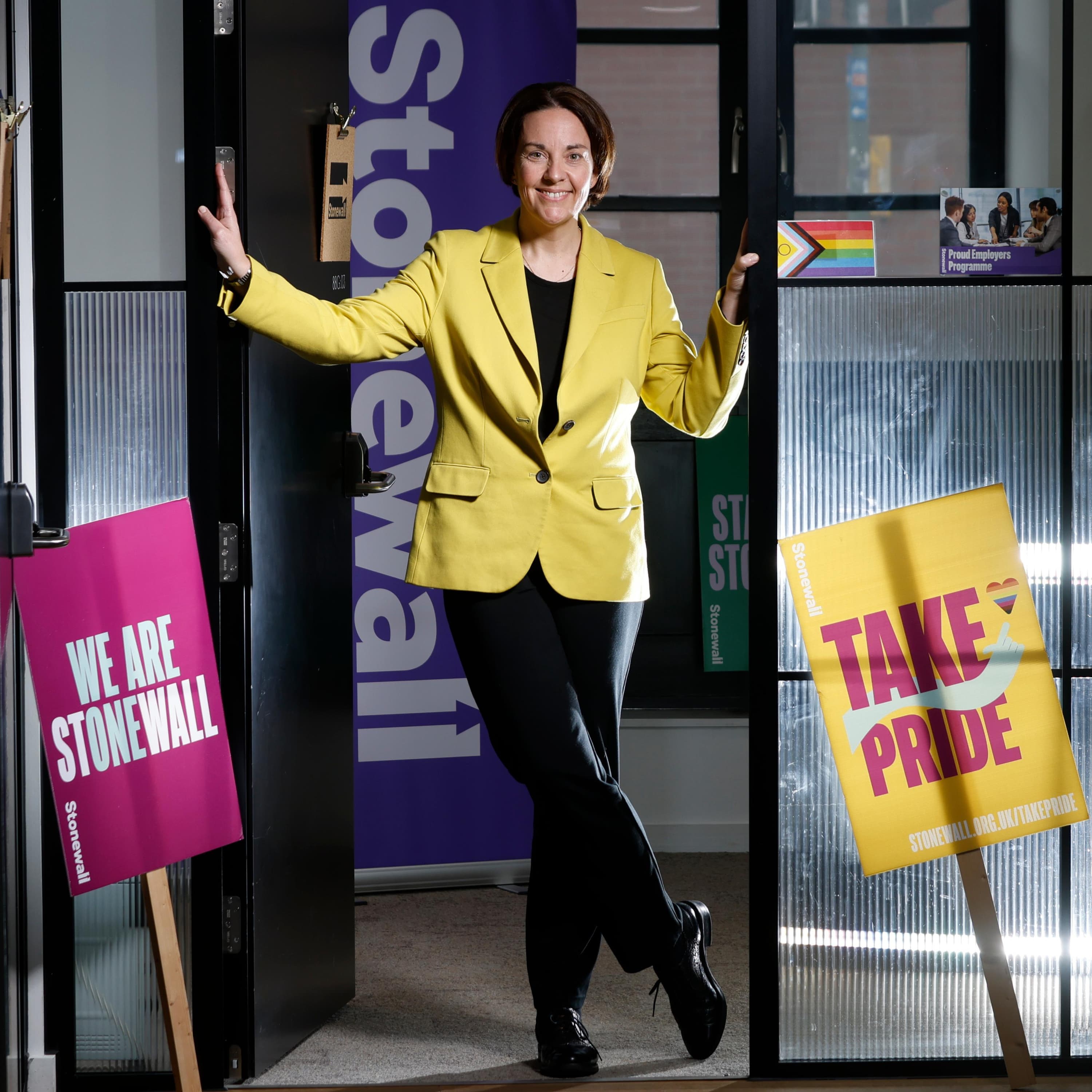
Today in Focus
Stonewall’s new chair on trans rights, JK Rowling and the future of the LGBTQ+ movement
00:30:14
An exclusive interview with Kezia Dugdale on the charity’s mistakes and the future of the LGBTQ+ movement. With reporting by Libby Brooks
Loading summary
Transcript84 lines
- [00:00]
A
This is the Guardian.
- [00:09]
B
Today, a year after the Supreme Court judgment on trans rights, does Stonewall have a future? If you know anything about the fight for gay rights in the uk, you will have heard of Stonewall. From its founding in 1988, it had one clear purpose to overturn Margaret Thatcher's ban on teaching children about homosexuality.
- [00:35]
C
Children who need to be taught to respect traditional moral values are being taught that they have an inalienable right to be gay. All of those children are being cheated of a sound start in life. Yes, cheated.
- [00:51]
B
Section 28 banned teachers from promoting the idea that it was okay to be gay, or what the law called pretend family relationships. After 12 years of relentless campaigning by Stonewall, the legislation was repealed in Scotland in the year 2000, followed by England and Wales two years later. And that's not all Stonewall has achieved.
- [01:11]
C
MPs will vote at around 10 o' clock tonight on whether to lower the gay age of consent.
- [01:16]
B
It pushed to equalise the age of consent, to lift the ban on gay people in the military and to give gay and lesbian people the right to get married. Britain's lower house of Parliament has voted to back a law legalising same sex without equal marriage.
- [01:29]
C
We're still looked at in some way
- [01:30]
B
as different, as less valid or less
- [01:32]
C
important, and that simply doesn't reflect life in this country anymore.
- [01:36]
B
But 38 years after it was formed, Stonewall's future is uncertain. Its income is halved, dozens of staff have been made redundant and hundreds of organisations have severed ties with the charity. Now, its critics would say that these are the consequences of Stonewall's uncompromising position on trans rights. But this is also a story about the challenges of operating in a world where diversity and inclusion have become increasingly
- [02:01]
A
dirty words and our country will be woke no longer.
- [02:12]
B
Now, Stonewall has a new chair, Kezia Dugdale, former leader of Labour in Scotland. But can she steady the ship and stop the charity heading into terminal decline? From the Guardian, I'm Helen Pitt. Today in Focus, what is STONEWALL for in 2026? Kezia Dugdale, welcome to Today in Focus.
- [02:36]
C
Thank you. Delighted to be here.
- [02:37]
B
So it's nice to see you. We are sitting in Stonewall's humble Scottish headquarters in Leith in Edinburgh. So you are about to take up this new role as chair of Stonewall, and it's a job that some people would see as a bit of a poison chalice for reasons that we're going to go on to discuss. But set out, why did you want to take this quite public role?
- [02:57]
C
So I thought about it long and hard as you would expect me to do. The first thing to say is, I'm quite scared just now. As an openly gay person in this country, looking at what's happening elsewhere in the world, in other countries, I feel myself just getting slightly more nervous about holding my wife's hand or being affectionate in public, or wondering what other people's reaction to us is going to be. And I don't like that feeling. And I think we have to be really careful to think that all progress that we've made in recent times is cemented and absolute and that all we'll ever get is progress. It's completely possible in this country that things could go backwards. And there are now a lot of political actors that want to take us backwards. So a bit of my motivation comes from a place of fear and a bit of it comes from a place of hope, knowing these battles can be won. And when you look at organisations that have won those battles and made the case and been in those positions of power and influence, Stonewall's right at the front of that. I mean, the fact that I have the right to marry is down to many people in Stonewall and many other LGBT organizations. So much good work over the past two or three decades has been driven by people who've played an active role in LGBT charities and campaigning organisations. And I feel like I owe them a bit of my time and energy to make sure the next generation of young LGBT people have every possible opportunity and every chance of an equal and fair.
- [04:21]
B
And you were first elected to the Scottish Parliament in 2011, when you must have only been not even 39, 29 of AB. And then you served as the leader of the Scottish Labour Party from 2015 to 2017. And it was during that time as leader that you were outed as a lesbian by a magazine. Can you tell me a bit about that?
- [04:41]
C
So it's always written up as being outed. That's maybe like an extreme one word summation of what happened. It kind of stumbled out in an interview that I did with the Fabians, and it was a funny time in my life because I was living with a female partner. Everybody that I knew and worked with knew that I was gay, but I wasn't, like, openly gay. And this was the moment. This was the big dramatic moment, and it was done in the heat and the spotlight of an election campaign and I didn't feel in control of it. So I think when you're not in control of your own story, that leads you to the language of saying that you've been outed against your will and
- [05:12]
A
all the rest of it.
- [05:13]
C
So there was some sudden need to confront that and be very public about that. And in the end, I delighted that I did it. I should say, though, it never stopped me being an advocate for LGBT people or campaigning on those issues that mattered. Ruth Davidson was openly gay, leader of the Scottish Conservatives at the time. And it used to frustrate me that pretty much every sentence in the media there would start with lesbian kickboxer Ruth Davidson. And I just thought it was really unfair that she was being constantly defined by her sexuality. And I wanted to live in a world where that didn't matter because everybody was free and equal and able to live their life.
- [05:49]
B
So it wasn't that you were ashamed of your sexuality? Oh, God, no.
- [05:52]
C
I still had to have conversations with family members that were hard and I think, find me a gay person in the country that hasn't had that experience. But there was no shame in it for me.
- [06:07]
B
Libby Brooks, you're a reporter at the Guardian who has followed Stonewall's fortunes very closely over the past few years, and you've also been the Guardian Scotland correspondent for more than a decade, which meant that you had a front row seat for Kezia's earlier career in frontline politics at Holyrood. Can you just start by telling us a bit about her and why you think Stonewall has picked her for what is potentially quite a tricky role?
- [06:30]
A
She is a former Holyrood politician who rose to be leader of the Scottish Labour Party between 2015 and 2017, whilst the electorate had, I think it's fair to say, completely fallen out of love with Scottish Labour. It was a really, really tough time to be in charge of the Labour Party in Scotland. If you can imagine how difficult it is to navigate the constitution debate in Scotland, you know, particularly at that time. And, yes, I'll be interested to see how she builds on those skills of care and negotiation and balancing competing viewpoints in this next role, because it's in some ways very similar.
- [07:16]
B
Kezia's taking the reins after what has been a really difficult period for the organisation. And that difficult period, you could argue, began in 2015 when Stonewall decided to broaden its scope and start campaigning for transgender people as well as LGB people. Can you remind us why they did that and what was going on in sort of wider culture, wider society at the moment that prompted them to broaden their approach?
- [07:42]
A
This pivot to the position on transgender rights happened under their former chief executive, Ruth Hunt.
- [07:50]
B
Every other LGBT movement internationally is an LGBT movement.
- [07:54]
A
Stonewall was late to the game. You know, we were very late to
- [07:57]
B
the party on this and the opposition we received for not doing trans was as loud, as vicious, as upset, as angry.
- [08:05]
A
My understanding is it happened after a significant consultation which was to move Stonewall to become trans inclusive for the first time. And at the time she actually said in an interview with the Guardian that that Stonewall had a moral responsibility to become trans inclusive. And it's worth pointing out that that was not a wildly out there position to take at the time. Only two years later, in 2017, you had Theresa May, the then Conservative Prime Minister, pledging to reform the Gender Recognition act to allow individuals to change their gender through self declaration.
- [08:43]
B
We've set out plans to reform the
- [08:46]
A
Gender Recognition act, streamlining and de medicalizing the process for changing gender, because being
- [08:54]
B
trans is not an illness and it shouldn't be treated as such.
- [08:59]
A
So, as I say, it wasn't a sort of unusual position to take at that time, but I think it's also fair to say that it was already at a point where this territory was becoming highly contested. And already, you know, around 2015, a few years later, you had critics accusing Hunt of promoting a militant trans ideology. I think it probably wasn't assisted by the fact that at the time, Stonewall had some fairly, shall we say, no nonsense campaigning lines around this in terms of trans rights, human rights, no debate.
- [09:39]
B
Yeah.
- [09:40]
A
And trans women or women get over it. And I think at a point when there was a lot of concern from those people who were worried that in some way increasing transgender rights would operate to diminish women's rights, there was concern about freedom of speech, about there not being the opportunity to have open conversations about this. And whilst I can completely see why it in the sort of marketing execs room, no debate is a brilliant slogan. I think in that context, it landed much less well.
- [10:17]
B
Yeah. And this idea of there being no debate, as you said, came in for a lot of criticism. The criticism was that Stonewall was not willing to talk about some of the really knotty issues that involve transgender people. Whether that's transgender women being put into female prisons, whether that's trans women in professional sports, single sex wards, children transitioning. There was a feeling in some quarters, wasn't there, that Stonewall was just shutting down the debate and just saying a trans woman is a woman, end of story. And therefore they should always, in all circumstances, be treated exactly the same.
- [10:55]
A
Yeah, exactly. And the criticism wasn't just coming from outside. It wasn't just coming from people you might think of as sort of traditionally conservative or opposed to LGBT rights, but it was coming from some of our most established lesbian gay voices. You had people like Simon Fanshawe, one of the co founders of Stonewall, accusing them of, as you say, neglecting women's protections.
- [11:24]
B
If Stonewall wants to campaign on trans rights, it seems to me what Stonewall wants to campaign on is what Stonewall wants to campaign on. I have an issue with the way in which it chose to campaign.
- [11:33]
A
You had Matthew Paddas, again, somebody who had been involved in, you know, the very early days of the organization, saying that it was taking an extremist stance. And I think it's clear that that sense of betrayal runs very deep and it's very personal. And I think that that informs a lot of the ongoing criticism of Stonewall to this day.
- [11:55]
B
And I think that a lot of people felt at the time that if they dared to raise some of these thorny questions, they were dismissed as transphobes, as terfs. So trans exclusionary, radical feminists, which sort of became a slur, didn't it? And the suggestion that if you had a question about a trans woman being put in a female prison, for example, that you were transphobic, that you didn't care about trans people.
- [12:18]
A
Yeah, absolutely. And perhaps one of the best examples of that was the controversy that surrounded their Diversity Champions program, which was founded just at the turn of the millennium and under which, you know, hundreds of organisations became paying members, and Stonewall would give them advice and assessments on how to create the most inclusive workplaces. And by the end of 2020, you had some of the sort of biggest organizations we have in the country, BBC, ehrc, all government departments pulling out of that because of that concern. Well, for the BBC was a concern around impartiality, but as you say, a concern that there was a particular, I suppose, groupthink that was being pushed and that women who did have questions about the interaction of their rights with transgender people's rights were not being allowed to speak up.
- [13:17]
B
And how did Stonewall justify its position at the time? I mean, presumably they were making the argument that trans people face an incredible amount of discrimination in society, a very vulnerable group, and that all that they were doing was trying to advocate to keep them safe and allow them to lead happy, healthy lives.
- [13:36]
A
Yes, absolutely. And Stonewall would consistently point out the daily discriminations, unfairnesses, even violence faced by transgender people as they go about their business in Britain. And we're simply as far as they were concerned advocating for another community within the LGBT umbrella.
- [14:08]
B
You know, you mentioned already that under Theresa May in 2017, you know, she was advocating for making it much easier for trans people to transition this sort of idea of self id. But the tide did start to turn, didn't it? When she lost power, Boris Johnson came in and things started to change.
- [14:30]
A
That's right. And you saw Liz Truss, who was Boris Johnson's equalities minister, completely scrapping Theresa May's plans for reform of gender recognition. But perhaps one of the biggest hits that Stonewall has taken over the years is the fact that, particularly with so many organizations pulling out of that diversity champions program, it has taken a huge financial hit to the point that earlier this year, the accounts that they submitted showed that its corporate donations had halved in the last financial year. And as a result of that drop off in funding, we've also seen about a third of staff losing their jobs. I think it is really important, though, at this point to point out that, you know, it's not just all about some concerted response to Stonewall's bad behaviour. This is also about a global issue. With Trump's executive orders, we've ended the tyranny of so called diversity, equity and inclusion policies all across the entire federal government, and indeed the private sector and our military. You know, scrapping not just diversity, equality and inclusion programs at US government level, but also his freeze on foreign aid for LGBT programs, which is really affected fundraising efforts across the LGBT charitable sector. You know, Stonewall is not remotely an outlier in this, but I think perhaps where you could say Stonewall has contributed is that a lot of corporate firms have become increasingly nervous about their funding choices in this political environment where showing support for trans causes is now viewed by some people as controversial.
- [16:32]
B
I think you would agree that Stonewall has been through some pretty tough years, and quite a lot of that can be traced back to its pretty uncompromising position on trans rights. And I just wondered, do you think it was a mistake of Stonewall to not make any exceptions when it came to trans inclusion?
- [16:50]
C
Look, I think anyone that's ever been associated with any organisation will put their hands up and say, we've made mistakes. At certain times, given the chance to do things again, we might do things differently. But I also think it's right to say if we're going to have difficult conversations about difficult issues where a lot of people are feeling their way through messy issues, people need to feel safe. They need to believe that those conversations are in a safe environment where everybody's accepted for who they are to work their way through these difficult and challenging conversations. And if you don't feel safe, then those conversations, you have the right to walk away or ask for them to be done differently. But I don't think, you know, there's ever been a no debate rule and we want to be in the position of persuading people we're not dogmatic and sitting in silos. We want to be in the messy grey bit in the area, because that's where progress and consensus is found.
- [17:37]
B
But do you think that previously Stonewall was really engaging publicly in that messy grey area? I'm really talking about 2015 onwards, after Stonewall decided to add the T to the lgb, there was a feeling that Stonewall wasn't engaging in these really knotty, difficult questions. Would you agree?
- [17:55]
C
I certainly understand that and I think that's a fair position and I think the organisation understands that too now, which is why, when you look at our renewed strategy, it is about navigating this turbulence. It's about listening, it's about engaging.
- [18:07]
B
And do you think that in the past, too much of Stonewall's time was taken up with trans issues and forgetting the L, the G and the.
- [18:16]
C
I don't think anyone was forgotten in that process. I think the whole country's spent an awful lot of time on these issues in quite a divisive and damaging way. I personally very sorry that, you know, a lot of the women that I've campaigned alongside for decades in the labor movement and I sit on different side of the conversation about gender. That's hard. And some of the fractures in those relationship I've contributed to with the language that I might have used in the past. So what I'm talking about is I think there's a process of healing for all of us who've gone through this really difficult debate in recent times, where we have to recognise now that the nature of the conversation that we've had might actually be damaging to LGBT rights in the round, and that we might not always agree with each other, but we do need to live side by side with each other in this movement. And actually linking arms and stepping forward together and focusing on things like the ban on conversion therapy, financial equality, getting justice for military veterans, all these live issues which deserve some airspace now, is a really good way for us to come back together as a movement and focus on the future.
- [19:23]
B
Let's talk just about the kind of tone of the debate. And we're sitting now in Edinburgh, the city where arguably the world's most famous and vociferous gender critical feminist lives. J.K. rowling, what do you make of the way that she's shared her concerns about transgender people?
- [19:39]
C
So I have a huge respect for J.K. rowling. I've had the pleasure of meeting her before. I think her story and how she came to be this like, prolific, incredible children's writer in this city as a single mum writing in a cafe is phenomenal and an inspiration to so many women across the country. I think she's been a really powerful political advocate about improving the lot of single mums, making a case for tackling poverty and inequality in all its forms. And there's absolutely a place for her in public to share her experiences and tell her story and make a difference.
- [20:17]
B
But trans people I know say that the way that she has voiced her opinions on this issue has become cruel and dehumanising. The way she behaves on social media, sort of deliberately misgendering people has really, they feel, contributed to them feeling unwelcome and unaccepted in society.
- [20:38]
C
I understand that. And I have also heard J.K. rowling and other people who hold a different position on these issues, to me describe. Describe with a similar rawness how they've experienced being opposed for. For their views. And I just think, you know, the days of these culture wars about sitting in polar extremes from each other should be behind us now. You know, a bit of kindness, a bit generosity of spirit, a willingness to get into the gray area, to talk about these things, calmly try and find common ground is. Is the only path through this and it's one that I'm committed to.
- [21:12]
B
And it was a Scottish gender critical group for Women Scotland that brought the case that led to the landmark Supreme Court judgment last year on trans rights and the Equality act, which Stonewall at the time greeted with dismay. And the Supreme Court ruled that sex refers to biological sex and not gender identity, and made clear that organisations wishing to provide single sex services can exclude trans people. What do you think of the judgment
- [21:37]
C
one year on so it's the law and it should be respected. And I think a big thing that we need to understand is that for it to be respected, it needs to be understood and that's why the guidance is really critical.
- [21:51]
A
It's crazy.
- [21:51]
B
We're still waiting for that guidance one
- [21:53]
C
year on well, we've had Bridget Phillips in the past couple of days explain why it's taken time and it won't be published this side of the local elections, but I think she hints that it'll be very soon. After that. And Stonewall really looks forward to seeing that and engaging with it.
- [22:09]
B
And you talked about being willing to have difficult conversations, sort of this grey area on trans issues. How is Stonewall going to go about that while still trying to reassure trans people that you're not abandoning them, that you're still fighting for them?
- [22:23]
C
So we would never want to take trans people's support for granted. So, of course there's reassurance work to be done there, as you would expect us to do. We still have trans members of our board who are very active. The chair, who I'm taking over from, has been a tremendous support to me. Nothing in that sense is.
- [22:42]
B
And they're trans, right? Is that right?
- [22:43]
C
Yes, Aila. So nothing in that sense is changing. So, of course, we're in the business of reassurance, but our process for producing this new strategy has been really open and transparent and has been with the community about what matters to them. And it's really clear. It's forward facing and everybody's behind it.
- [23:05]
B
Coming up, Kezia, on the risk that gay rights go backwards in Britain and beyond.
- [23:09]
C
Beyond.
- [23:26]
B
And let's turn our attention to other issues. You've already touched on this at the start. You know how personally you're feeling unsafe, which makes me really sad to hear that, actually. But what do you think are the most important issues facing LGBTQ people in the UK right now in 2026?
- [23:43]
C
So I think they are the issues which Stonewall is resolutely focused on, which is how do you create safe and inclusive environments for people to be themselves and to exercise their rights freely and equally? That's about being supported in the workplace. That's about being able to hold your partner's hand in the street. It's about believing that the justice system is going to treat you equally and fairly and with respect, human rights for everyone. And then there's the really deep, detailed issues about addressing some of the inherent inequalities that still exist. Our priorities now are very much focused on things like securing justice for military veterans and compensation for recognising what they've endured. Currently working very hard to ensure that there's a ban on conversion therapy in this country, which is incredibly important. A bit of unfinished business.
- [24:34]
B
And that's for trans conversion therapy as well as gay men.
- [24:38]
C
Yes. And, you know, looking at things like very live issue in the House of Commons just now, although it's something that's been in place in Scotland for a long time, is aggravated hate crime. So those are our immediate priorities. And you know, we've got an awful lot more to say in the future about what it means to be gay in Britain today and some of the inequalities that still exist around day to day life that need to be addressed, whether that be in things like financial inclusion and access to mortgages and pensions and all sorts of things, what it's like to be old and gay in Britain today, how you're treated when you have to use the social care system, all sorts of really important practical issues that I think have been ignored for far too long.
- [25:19]
B
And you've kind of hinted at it, but I wonder how you view the political and sort of cultural climate right now. And we're talking ahead of the Scottish elections, the local elections, the Welsh elections, where Reform are expected to do very well and they have campaigned very hard on what they see as the nonsense of gender ideology. And you know, Farage slightly flip flops on this, but he's made it quite clear that he thinks that heterosexual families are the best, that a dual family would have. A mum, a dad and kids. Do you think that Reform pose a threat to LGBT people?
- [25:52]
C
So we are a political, non partisan organization that is willing to work across the political spectrum to engage in these issues in Parliament. We want to be in the room influencing policy and influencing change. So I'm not about to make crass statements about political parties or political positions. That said, you only need to look at the early stages of this Scottish Parliament election campaign, which have been dominated by past statements of Reform's leader in Scotland, Malcolm, offered and, you know, a really crass homophobic joke that he told that he's now being held to account for. I think what we would want is exactly that, is for him to be, and people like him to be held account for what they've said and what they'll do and to be in that business of scrutiny and accountability.
- [26:40]
B
And would you be happy to have a meeting with Nigel Farage?
- [26:42]
C
Of course. I don't think he's the first person that we'll be knocking on the door of. But we're not in the business of cancelling anyone. We're not in the business of running away from hard conversations. Quite the opposite.
- [26:53]
B
And I mean, I guess the fact that Reforms leader in Scotland is being held to account for his homophobic remarks, homophobic jokes, you know, suggests that there is an acknowledgement that that's not acceptable anymore. But I wonder if you are noticing a sort of shift in the discourse. I have a nearly 17 year old stepdaughter and I was Asking her about this and the sort of return of gay as a slur, kind of playground slur. Also, you know, the sort of toxic masculinity influences are very homophobic in their tone. And do you think that we're going backwards on homophobia?
- [27:25]
C
I think a lot about this and a lot of it is related to trust in politics and the political process being in serious, terminal decline. So women and young people and those on low incomes are particularly distrustful of politicians and political processes, and that creates a vacuum. And into that vacuum has walked a global movement of populism which feeds off of people's fears rather than facts. And into that space comes emotional, reactive, polarizing language that's really damaging. And the more you hear it, the more tolerant you become of it and the more extreme it becomes. Hence why we might be in a position now where some of these terms we thought that were in the past are venturing back. So I don't think this is an issue that's solely for the LGBT community. It's something that we all have to face up to, that women are now experiencing in the form of the rise of the manosphere and misogyny, rising intolerance towards people of different religions and ethnicities. This is damaging for all of us, and we're barely at the races and understanding how to counter it.
- [28:33]
B
And as we've already mentioned, Stonewall was instrumental in pushing for equal marriage. The way things are going in the rise of populism, could you see a time in the not too distant future where that might be reversed?
- [28:46]
C
I desperately hope not, and I certainly don't think it's an immediate or pressing threat. But I don't think it's an implausible argument now in the way that it maybe was five years ago. And my rationale for that is, look at Italy, for example, where you see a rollback of rights for LGBT people. That's happened pretty quickly. It's centered around concepts of family life and the country's going backwards. It is not beyond the realm that that could happen here. That doesn't mean I'm sitting here telling you it's likely and it's gonna happen tomorrow.
- [29:16]
B
But you're not ruling it out.
- [29:17]
C
Well, could you?
- [29:18]
B
No. No.
- [29:19]
C
Right. And from that becomes that sense of fear, and people carry themselves just a little more gingerly than they did before.
- [29:29]
B
That was Kezia Dugdale. She takes up her role as Stonewall's chair in six months. My thanks to her and also to Libby Brooks, who is also off to past his new. After a sterling stint as Scotland correspondent. She will be the new lead writer of First Edition, our morning newsletter, which you should all subscribe to if you don't already. And that is all for today. This episode was produced by Natalie Kattena and George Francis Lee and was presented by me, Helen Pitt. Sound design was by Ross Burns, and the executive producer was Sammy Kent. We will be back in your feeds this afternoon with the latest.
- [30:07]
A
This is the Guardian.