← Today in Focus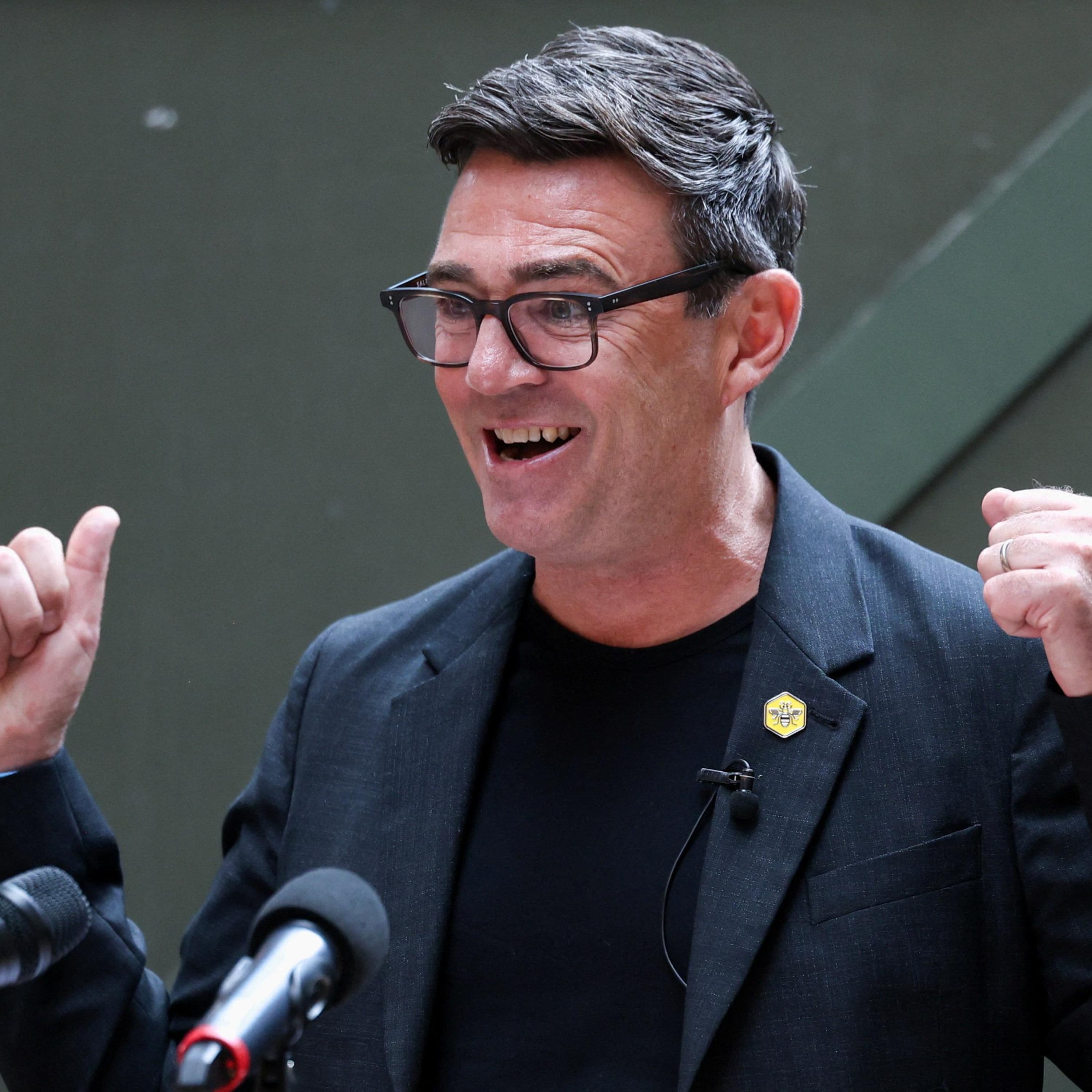
Today in Focus
The Burnham blueprint, as told by one of its architects
00:26:51
Andy Burnham has set out his economic plans for Britain. Neal Lawson, from the Burnham-aligned group Mainstream, explains the thinking behind it
Loading summary
Transcript110 lines
- [00:00]
Helen Peard
This is the Guardian. Today. Devolution. Devolution. Devolution. Andy Burnham's radical plan to rewire Britain.
- [00:22]
Financial Advisor
Because you didn't just say, how can I provide these investments? You'd be, how do I holistically provide everything? How do I bring in the legal, the accounting, all this, and do it at a price point no one else is doing it.
- [00:31]
Creative Planning Advertiser
Learn more about how we approach wealth management@creativeplanning.com integrated.
- [00:42]
Helen Peard
As a proud resident of Stockport, I've been one of Andy Burnham's constituents for almost a decade now. Each month I dutifully pay a bit of my council tax towards his mayoral mission. And you know what? I've seen Greater Manchester thrive on his watch. And so I know what it's like when he's in charge. And now he wants to do for the rest of the country what he's done for my region.
- [01:04]
Host or Presenter
Good morning, everybody. Are you ready for this?
- [01:12]
Helen Peard
On Monday, he stood up in the People's History Museum in Manchester and delivered his economic manifesto for an Andy Burnham premiership.
- [01:20]
Host or Presenter
So let me state my clear intention as I put myself forward. True to the motto of this city, I am going to do things differently.
- [01:34]
Helen Peard
Barring an 11th hour challenge or some unforeseen calamity, Burnham will have moved into number 10 by the end of July. But he says he wants to build another number 10, a Manchester one.
- [01:46]
Host or Presenter
Number 10 north will be the nerve centre of a rewired Britain.
- [01:54]
Helen Peard
What he's promising is radical.
- [01:56]
Host or Presenter
We will bring about the biggest rebalancing of power our country has seen.
- [02:06]
Helen Peard
But just how credible is his plan and how will he pay for it?
- [02:10]
Neil Lawson
I hope this is a moment for people to return to the Labour Party, see some hope and some space, you know, for, you know, for conversation and debate about whether the party should go.
- [02:20]
Helen Peard
That's today's guest, one of the architects of Andy Burnham's third final and almost certainly successful bid to run the country. From the Guardian, I'm Helen Peard. Today in Focus, the Burnham blueprint for Britain. Neil Lawson, welcome to Today in Focus. Nice to see you.
- [02:44]
Neil Lawson
Nice to be here.
- [02:45]
Helen Peard
So you are the director of the progressive think tank Compass, but more recently I've seen you described as an Andy Burnham whisperer. How far back do you guys go?
- [02:53]
Neil Lawson
I go back a long way with Andy, particularly if you think of the New labor era. There was football played a big part in everything. He was an advisor to Tessa Jowl and I was an advisor to Gordon Brown and we played football together. There was a team called Demon Eyes. I was the goalkeeper and he was the star attacker and famous goal hanger, wasn't he?
- [03:16]
Helen Peard
Always just hanging around, wasting the opportunities.
- [03:18]
Neil Lawson
He didn't put any work in. He just, he just loved the glory of getting the goals and whether that's a metaphor for his premiership or not, you know, that we see. And then our paths didn't cross for quite a long time. I became much more critical of the Blair government. He was obviously in the cabinet for it and for, and for Gordon. And I didn't get behind him in either 2010 or 2015. Didn't think he was different enough. But then he went to, you know, he went to Manchester and we reconnected a few years ago around I think it was his last Merrill campaign. I helped him with a bit of policy stuff in 2024 and then it was just apparent to me that he was going to potentially could be the next leader of the Labour Party. So we reconnected a lot more and worked a lot together to try and get in there.
- [04:02]
Helen Peard
Oh, and you're nearly, nearly there.
- [04:03]
Neil Lawson
I think we are there. I think we are there. I'm joking. I'm joking.
- [04:07]
Helen Peard
And so as well as running Compass, you were also one of the founders of another group called Mainstream. Mainstream has been described in the Guardian on the weekend by one Labour MP as being a front operation for an Andy Burnham premiership. Is that true? And what has Mainstream been doing to clear his path to power? Which was far from easy or certain just a couple of months ago.
- [04:29]
Neil Lawson
So I, I'm involved in these two organizations, compass, which I'm the director of, which is an all party left wing kind of pressure group doing cross party Progressive alliance work. Burnham had spoken at the 2025 May National Conference for Compass and that was his big I think national re entry
- [04:48]
Helen Peard
into the Ministry of Sound.
- [04:49]
Neil Lawson
It was.
- [04:50]
Financial Advisor
Yeah.
- [04:50]
Neil Lawson
We booked that for, for a Saturday afternoon. And so there were, there were plenty of no trainer jokes going going on.
- [04:57]
Host or Presenter
It's the latest any labor people have been in the Ministry of Sound. I'm just glad to get past the door police. Thank you Neil and Francis and Compass.
- [05:06]
Neil Lawson
So we showedcase Andy then. But Compass saw its job as, as pulling the labor party into the 21st century. A plural, more radical kind of politics. But pulling wasn't enough and we decided you have to get back in and push it as well.
- [05:19]
Helen Peard
Yeah.
- [05:20]
Neil Lawson
So we set up a solely Labor Party organization called Mainstream. And the idea of Mainstream was that most mainstream Labour Party members do want public ownership of the utilities. They do want a wealth tax etc so we wanted Grab that territory. But it. It definitely wasn't set up just as a Burnham vehicle, but a combination of compass and mainstream people have, you know, helped support Andy over the last two years. Ideas, organization, a range of different things to try and, you know, get him there.
- [05:50]
Helen Peard
As you said, you didn't support Burnham on his first two attempts to become leader of the Labour Party. What do you see in him now? Do you think he's changed or are you just recognizing something new in him?
- [06:01]
Neil Lawson
No, I think it probably a combination of both. The thing about Andy is that he's not abstract or theoretical in his politics. You couldn't say who he's kind of leading intellectual light was. He doesn't cite people, he doesn't refer to people particularly. He doesn't quote them. He kind of makes up his mind about things through his lived experience of working on the job. So his experience of Hillsborough shaped his views about the state. Same with the blood crisis. Same with COVID and his attitude to, you know, to London and then generally being the mayor of Greater Manchester and seeing the poss. Abilities of devolution and how we need to rewire the state. He kind of seems to learn things from practice and experience. And that's quite interesting because then it becomes quite deep and quite organic as opposed to just, you know, theoretical or, you know, a passing ship in the night changes his mind on stuff. But as we see from things like his appointment of James Brownell, his chief of staff, you know, there's. There's continuities from the past. You know, everyone is complex and Andy's a complex character. And I think it's up to the left, you know, to mount pressure now to bring out, you know, the more radical of Andy Burnham, because there will be certainly forces in. Around the Labour Party that will be trying to push him in a more orthodox direction.
- [07:11]
Helen Peard
And you just mentioned James Purnell there. So he was. They. They were friends, weren't they? They shared an office.
- [07:16]
Neil Lawson
He was in the football team, too.
- [07:18]
Helen Peard
Was. Was he? And on the left, there's been quite a lot of disappointment about James Purnell's appointment.
- [07:23]
Neil Lawson
I'm not saying necessarily get rid of child benefit. I'm saying let's order all the things that we care about and let's see the ones that are most. What's at the bottom?
- [07:31]
Helen Peard
What do we care least about that
- [07:32]
Neil Lawson
we're currently paying for, I think winter fuel allowances, I think free bus passes.
- [07:36]
Helen Peard
He was very high up in the BBC, wasn't he? But then he's been a Lobbyist for the past few years. You know, is he really going to stand up to these vested interests if he's got somebody like James Purnell whispering into his ear?
- [07:46]
Neil Lawson
Yeah, I mean, as I understand it, I mean, you know, if you're Prime Minister, you're going to want someone around you who, you know, probably love and trust and you can understand that. James is a good manager. He's, he's managed some big institutions and organizations. Now he obviously knows how the British State and number 10 and different departments, you know, oper.
- [08:03]
Host or Presenter
Right.
- [08:03]
Neil Lawson
And is he going to, you know, help Andy get what Andy wants? I would think that that was the nature of, of the deal. Is he a kind of radical agent of change type person? Probably not, but you know, maybe that's Andy Burnham and that's the most important person to be those things.
- [08:32]
Helen Peard
Now let's talk a bit about this big speech that he gave at the People's History Museum in Manchester on Monday. As a long term Greater Manchester resident, I was pleased that he made the lobby hacks traipse up to Manchester to give that speech and, and then not
- [08:45]
Neil Lawson
allow them to ask any questions.
- [08:47]
Helen Peard
Well, yeah, I'm less in favour of that. Three word slogans have had a lot of success, haven't they, in politics in recent years. Take back control, stop the boat. If you're going to sum up this speech, it's probably devolution, Devolution, devolution. To borrow a Blairism. And his promises massive shift of power from Westminster to the rest of the country. And this is all going to be orchestrated, he Sundays, from number 10 in the north, which he says is going to be the nerve center for a rewired Britain. And it's been suggested that number 10 north will have three clear tasks when it comes to devolution and that will be to increase the public ownership of essential utilities such as water, energy and housing, renationalization and regenerating towns as well as control over housing policy. And it's been reported that he's going to spend weekends at home in Greater Manchester. It's not quite Mar a Lago, it's a semi detached house in Wigan. But what else do you know about how this new office will actually work in practice?
- [09:41]
Neil Lawson
Well, I don't think we know yet how it's going to work in practice, but he's given what leaders are supposed to do a very clear direction of travel. You know, people can be in no doubt that he wants to devolve massive amounts of power, not just the Manchester, but as he said yesterday from Manchester out to all the corners of the country. You know, it's not unsimilar to what Johnson promised after 2019, the kind of double deal after, you know, we get power back from Brussels, you know, back to the country. And then it was supposed to be spread out to the rest of the
- [10:11]
Financial Advisor
country to encourage local leadership. And I want to return to that point. It's not just this country is the most economically imbalanced, it's the most centralized. And that's because for many decades, central governments in London relentlessly crushed local leadership. And we must be honest about why that was necessary. It was because we were then in the grip.
- [10:31]
Neil Lawson
He wasn't serious about that. Burnham is serious about that. And there'll be a lot of competing centralizing forces in the British state, the treasury, not least, you know, which has got to be, you know, met and encountered. You know, the devil will be in the detail, but, you know, at least we've got a proper mission now, if you want to use that terminology. And he's starting to put in place the architecture through this number 10 in the north. So I think we should be really encouraged by this. You know, clearly there's a lot more work to be done, but no one can be in any doubt about the direction of travel of a Burnham administration.
- [11:03]
Helen Peard
And let's talk about the nuts and bolts of how he will actually devolve power, because, you know, it sort of seems to me it's all good and well in Greater Manchester, a place that since Burnham has been mayor, has been dominated by Labour. There's been the odd Tory leader. There's Lib Dems in Stockport, where I live. But great Manchester also got a really long history of working together and it's worked well. But then if you're trying to replicate that model in other places, they might be rural places, they might be counties, they might be seaside towns, or they might just be places that basically basket cases. Councils like Kirklees in West Yorkshire.
- [11:36]
Neil Lawson
Who runs Kirkle's?
- [11:37]
Helen Peard
Well, nobody, because they can't even agree on a leader. Reform got the most votes in May and they're scrapping with the Greens. You've got mayors like Andrea Jenkins in Lincolnshire. She is the ex Tory. She defected to Reform. You might know her as the one who likes to sing at party conferences. An MP told me once that she makes decisions using tarot cards. And I'm sure that they were joking, but you get the gist. You've got to trust these people, haven't you, these local leaders? And you're trusting them with huge budgets and a lot more power.
- [12:04]
Neil Lawson
So the point about devolution and democracy is you can't just kind of fix it and do it when it suits you and suits your party. But the progressive view on this thing is that, you know, overall, given time, given space, given support, people make better decisions, not, not worse decisions and they will make judgments on those poor mayors and poor councils, you know, etc. But ultimately you've got to, you know, you've got to trust the people and you've got to think that if you give the resources, the powers and the money to local authorities, then you're going to start attracting people who are a better caliber. Why would you go into local government now when you can't even have the money to do the statutory services, let alone, you know, other things that you would like to do, you know, politically.
- [12:46]
Helen Peard
Yeah.
- [12:47]
Neil Lawson
So you've got to break that log jam. Clearly there are some risks involved and some councils won't use the money wisely and sensibly. They'll be found out by their electorate and they'll vote for other people that will use the extra resources and the power more effectively. We can't be, you know, hidebound by the worst councils. We've got to be led by the best.
- [13:04]
Helen Peard
And as well as talking about devolving power, he's also talked about renationalizing various industries. Sometimes he talks about renationalizing, sometimes he talks about taking greater public control of essential services, which is what he's done in Greater Manchester. The buses are now £2 for any journey. When I moved there 13 years ago, it was £3 50, so it's got cheaper in that time. How do you understand what he is actually proposing when it comes to services and utilities?
- [13:30]
Neil Lawson
I don't think every eyes been dotted and every T's been crossed on all of this. He knows that at the very least we need to take control of more infrastructure, you know, utility style services and operations like, you know, like buses. And I think broadly, you know, it's worked in Manchester. He doesn't own the buses. The bus companies still own the buses. But they, you know, they've been brought under, you know, one, one system. He's painted them yell yeah, he's painted them yellow. It's become a much more uniform, you know, holistic service. But I think we could live with control of buses potentially. But on things like water and energy, these are, you know, natural monopolies. They're not providing a very good service. The shareholders are benefiting, the executives are benefiting. And we're getting sewage pumped into the rivers, into the seas. Leaks everywhere and prices going up. Now we've got to find an answer to that. It looks like the first test of that could be Thames water. And, you know, he can help precipitate the end of Thames water being in private ownership.
- [14:28]
Helen Peard
But doesn't that mean that the public purse will have to buy them out?
- [14:31]
Neil Lawson
Well, I think billions. I'm not a utilities lawyer, but I think there are clever ways around it. In essence, it makes no sense for this to be in the private sector anymore. And he's going to have to bite the bullet on water and energy in particular. We can look at others. I mean, it's interesting that he's looking at public house building, you know, mass public house building for the first time.
- [14:52]
Helen Peard
Good luck with that. Everybody says they're going to do that.
- [14:54]
Neil Lawson
Yeah, they are, they are. But again, it's this sort of area where, I mean, he's absolutely certain about it, you know, and he'll have thought about it. I think there are questions about whether it's going to be, you know, just councils who do it or whether it's going to be a national house building kind of new entity that's going to be responsible for it. But undoubtedly it's going to happen because I know that that's in his blood. You know, it is.
- [15:12]
Helen Peard
But also in his blood is saying to people in Makerfield who didn't want a new housing development, I'm on your side. I will also. I'll oppose it. It's also in his blood to allow Stockport, one of the ten great Manchester councils, to sort of flounce out of the joint planning process because they didn't want to have to build houses where they didn't want to.
- [15:29]
Neil Lawson
I'm not. I'm not saying there won't be local incidents. We know where, you know, a kind of nimbyism, you know, whatever else is gonna. Is gonna play. And he's still, you know, I mean, he was in the middle of a by election where every vote counted and no one knew how big his majority was going to be, you know, and he's a real life, you know, politician.
- [15:46]
Helen Peard
He just struggled to say no, though.
- [15:47]
Neil Lawson
Yeah, maybe, maybe, you know, he does struggle to say no and he does like to be. Be liked.
- [15:54]
Helen Peard
Yeah.
- [15:54]
Neil Lawson
And he is going to upset some people. He's going to have to, you know, maybe that's what James Pinell is going to help him do.
- [15:59]
Helen Peard
Yeah, he's going to be the bad.
- [16:00]
Neil Lawson
Well, maybe, maybe. But There are going to be warm friends and they're going to have to be some enemies and there are going to have to be some winners and some losers. That's, you know, that's inevitable. I mean, both, because that's right. But also that's how you define yourself as a leader and a prime minister about who you're for and who you're against.
- [16:16]
Helen Peard
How is he going to pay for all of this stuff? He's going to either have to increase taxes or make cuts or both. And the Andy Burnham that I viewed up close has not really had to do those things in greater.
- [16:25]
Neil Lawson
Yeah, you don't. You, you get your allocation of money from the treasury and you decide how, you know, how you spend it. And so these are more testing, you know, moments. But he knows he's going to need more money. He's going to have to look creatively at kind of, you know, wealth taxes.
- [16:37]
Helen Peard
You think he will? Does he?
- [16:38]
Neil Lawson
Is he has to. I think he has to because we can't earn.
- [16:41]
Helen Peard
Is it about unearned wealth, you think, or.
- [16:42]
Neil Lawson
Yeah, I know. I think it will be rebalancing between, you know, unearned wealth and income, you know, and trying to rebalance that in, you know, I mean, it could be just, you know, equalization or greater equalization of, of, you know, capital gains tax and income tax. But he could look at different forms of wealth taxes, land taxes, you know, all of that is now has to be in play because it's the right thing to do, you know, and I think in the medium to long term, he will rebalance things like the welfare bill. But I think he'll have to, you know, he'll do it with a sense of, you know, people's lives at the forefront and the quality of their lives and the, and the support they're getting and the training and, you know, care that they need. Not thinking we're doing this just to front load a bunch of cars.
- [17:25]
Helen Peard
Coming up, what will Andy Burnham do about immigration and the climate crisis?
- [17:46]
Creative Planning Advertiser
If you're looking for something predictable and low friction over the long term, public markets may be a suitable option. But the moment you want different investment characteristics, it may be time to consider the private markets, see how your wealth can work smarter. @creativeplanning.com Access.
- [18:05]
Helen Peard
We touched at the top that journalists were rightly cross. I think on Monday that Burnham didn't take any questions, but he's not going to be able to remain been unaccountable for too long. And, and one of the big issues that he completely swerved on Monday was immigration. What do you think his position is on immigration? Can we expect him to be wrapping himself in the Union Jack? Do you think he's going to. He sort of indicated that he's on board with Shabana Mahmood's reforms, you know, which, which propose doubling the amount length of time that immigrants to stay in the UK before they can get indefinite leave to remain, making a more hostile environment really.
- [18:41]
Neil Lawson
So I think he'll strike a position which recognizes that immigration has become a litmus test of government's ability to run the country. And if you can't get that right, what can you get right? And whether we like it or not, you know, that position is there. So I think he will want an effective border control and I personally don't see anything wrong with that. As long as it's done in the most humane and careful, kind and fair way. I don't think we'll get any of the performative cruelty that Shibana Mood has been practicing in terms of kicking down on asylum seekers and immigrants. That, that just in his way.
- [19:21]
Helen Peard
No island of Strangers vibes.
- [19:23]
Neil Lawson
No, I mean none of, none of that negative stuff at all. And absolutely no wrapping himself in the Union Jack. I mean, I think he's just too confident in himself. You know, he's got, got, you know, his civic kind of nationalism. You know, he's got Everton as his identity, he's got his ideas and that's a much richer form of meaning, identity, place etc than, than the flag. And I think this is a, you know, this is a welcome thing.
- [19:46]
Helen Peard
Let's talk about who will be his Chancellor. He's not giving anything away but Ed Miliband is the name that is most widely circulated that he is the likely new occupant of 11 Downing Street. But I thought it was interesting how net zero did not get a mention, it didn't get a look in, in this speech on Monday. And that is an about turn from the Andy Burnham that I've watched up close in Greater Manchester. He was re elected in 2024 on a manifesto that said, you know, net zero is a. It's a real engine for growth in the economy. And yet he shied away from that yesterday. Do you think we can. The fact that that was absent in the speech maybe suggests that Ed Miliband is not a shoe in.
- [20:23]
Neil Lawson
There are other things that were mentioned yesterday and I don't think we should read anything in into it. He will know in his mind, you know, who he wants. He obviously can't appoint Anyone, until he's Prime Minister. It would be absurd, you know, if, if, if he did. But no one can spend this summer and pretend that, you know, environment isn't a big impact on people's lives, on the future of the economy, you know.
- [20:45]
Helen Peard
Do you think it should be admirable, Band?
- [20:47]
Neil Lawson
Do I, personally, yeah. But you need some, I mean, for two reasons. You need someone who can run the treasury and, and not have the treasury, and you need someone who's broadly in tune with your soft left political economy that, you know, that Burnham's been setting out and that is, you know, Ed Miliband.
- [21:02]
Helen Peard
And in his speech, he really didn't touch on any foreign policy issues. What do you think his approach is going to be to foreign policy and particularly his approach to Trump?
- [21:11]
Neil Lawson
I think, you know, if we learn the lessons of how he, you know, does domestic politics, he does it in a kind of consensual way. You know, he doesn't stack up enemies, he doesn't go for people. He thinks quite long term about what the position is.
- [21:24]
Helen Peard
He flatters people as well. That will go down with Trump.
- [21:26]
Neil Lawson
He does, he does flatter people and he's good with people, he's at ease with people. So I think all of that will be worked into how he approaches foreign affairs. I mean, he has made it very clear that he is here as a domestic Prime Minister. I think his, you know, appointment as Foreign Secretary will be a big appointment because that will be a genuine Foreign Secretary who will be tasked with, you know, doing all the foreign affairs and the Prime Minister will be brought in as. And when the Prime Minister needs to be brought in, as opposed to what we've had for the last two years is the Prime Minister is, in effect, Foreign Secretary. So I think that is going to change and that's ripe for that to change and he will do what he has to in this area and no more.
- [22:15]
Helen Peard
And let's talk a bit about how the Labour Party might change with Andy Burnham at the top. He talks about how he's returned to a Westminster that feels unhappier than it used to be.
- [22:24]
SoFi Advertiser
Yeah.
- [22:25]
Helen Peard
And he talked about a sort of change in the way the whipping system has been used, particularly under storm, as a kind of punishment. You were nearly kicked out of the library. I was nearly kicked after 40 odd years. What was your crime? Remind me.
- [22:37]
Neil Lawson
Oh, I liked a tweet by a Liberal Democrat mp.
- [22:41]
Helen Peard
Right, okay.
- [22:42]
Host or Presenter
I know.
- [22:42]
Helen Peard
Right, okay. But you were ultimately found not guilty.
- [22:46]
Neil Lawson
Yeah, they put me on the naughty step for about 18 months before they decided that I was. No, they couldn't, you know, enforce the charge and let me, let me remain.
- [22:54]
Helen Peard
So do you think we're going to see a more broad church Labour Party?
- [22:57]
Neil Lawson
Without doubt. I, I think, you know, Andy Burnham doesn't see people as adversaries. He didn't. He doesn't see people as enemies. You'll notice during the make a field by election, he didn't attack the Reform candidate at all, really heard him about anybody. He doesn't, he doesn't do it in public and he doesn't do it in private, you know, so. So he doesn't see the world in that for and against kind of way. I think he's fairly secure in himself. And so therefore, if other people have used, you know, they are things to be learned from, not things to be squashed, washed. He's not a massively factional person. So I think it generally will be, you know, a much more open collegiate, consensual operation. But I think, you know, everyone will feel that they can breathe a lot more easily, say what they want to say. Don't think they're going to be, you know, hounded out by the whips or the, you know, or the governance unit in, in the Labor Party as people like me and many, you know, thousands of people were, you know, have been thrown out. So, yeah, I think it will be a lot different and really welcome. Really welcome, welcome.
- [23:52]
Helen Peard
If you were Nigel Farage watching that speech, wouldn't give you that much to go up, would it?
- [23:57]
Neil Lawson
I don't think it does really. And I think, you know, Burnham does sort of a Heineken, you know, advert of the past. It reaches the parts that other politicians can't reach in the sense that he does win over Tories and, and reform voters. And we saw that in Makerfield, 5% of Reform voters and 8% of Tory voters. But he really reaches into, you know, the lost voters to the Greens, you know, and the Liberal Democrats.
- [24:19]
Helen Peard
Yeah, the Greens were nowhere in Makerfield.
- [24:21]
Neil Lawson
No. And, and like. And, and that is a slight on the Greens, who did fantastically well in Gordon and Denton, you know, and that. And they hoovered up the labor vote there, which is interesting about where the, the progressive electorate is. They'll get behind who they think is the best place Progressive party, you know, to win. And that makes the next election incredibly dynamic, incredibly unknowable in terms of where things go. And I, you know, with my compass hat on, you know, where for pluralism, where for learning, there's a, there's, you know, there's got to be a place for green politics, there's got to be a place for liberal Democrat politics as well as labor. And hopefully we're not going to return to the singular big tent where everyone's forced into one place. We want a campsite of progressive tents, you know, where people can work together but maintain their identity. And I think that reflects the nature of the country. Now, you know, you don't have to win by just attracting center right voters. If you can maximize the progressive vote, then you can win on a progressive mandate and promise more progressive things. To give him the 10 years he's asked for to change our country, right?
- [25:20]
Helen Peard
He's asked for 10 years, he's got at best three. If he holds his nerve and doesn't call an early general election. We know voters are very impatient and also voters are really feeling the pinch, the cost of living. People are really struggling at the moment. Do you think that they're going to give him the time that he needs? Because not much of this can be done quickly. He might be able to replicate two pound bus fares across the country or
- [25:40]
Neil Lawson
something like that, but beyond that, look, I think it's really precarious. I think what Burnham has done is kind of, by a sort of minor miracle, Bill is reached base camp, you know, and now there's the mountain to climb, you know, and now he's got to show a difference quickly. He's got to set in place, you know, a whole load of plans that you can go to the electorate whenever he calls an election. So a big offer on pr, a big offer on social care, maybe a big offer on a wealth tax or, you know, whatever else it could be with the promise of, you know, systemic change and nothing less will do. Because. Because going back to knocking on doors in Makerfield, this was, we're not voting Labour, we'll vote Andy this time because it was, you know, very local. They knew him from his mayorship, but it is the last chance saloon. And if he doesn't offer change and doesn't deliver on that, then the Labour Party is not going to get another chance.
- [26:33]
Helen Peard
High stakes. Neil, thank you very much.
- [26:35]
Neil Lawson
My pleasure.
- [26:38]
Helen Peard
That was Neil Lawson from Compass and Mainstream. You can read all of our coverage of the Prime Minister in waiting@the guardian.com and we on the show, show, of course, will be covering his premiership very closely. If you have a burning question about Andy Burnham and his pledge to rewire Britain from Manchester, email us@todayinfocustheguardian.com we will try to answer as many questions as possible in future episodes. And that is all for today. This episode was produced by Iver Manley, Sundas Abdi and Hannah Williams and presented by me, Helen Pitt. Sound design was by Brian McNamara and the executive producer was Hummer Khalifa. We'll be back in your feeds this afternoon with the latest. This is the Guardian.
- [27:32]
Creative Planning Advertiser
If you're looking for something predictable and low, friction over the long term, public markets may be a suitable option. But the moment you want different investment characteristics, it may be time to consider the private market. See how your wealth can work smarter@creativeplanning.com
- [27:47]
SoFi Advertiser
Access Today we'll attempt a feat once thought impossible, overcoming high interest credit card debt. It requires merely one thing, a SoFi Personal Loan. With it you could save big on interest charges by consolidating into one low fixed rate monthly payment. Defy high interest debt with a SOFI Personal loan loan. Visit sofi.com stunt to learn more. Loans originated by SoFA Bank NA member FDIC terms and conditions apply. NMLS 696891.