← Today in Focus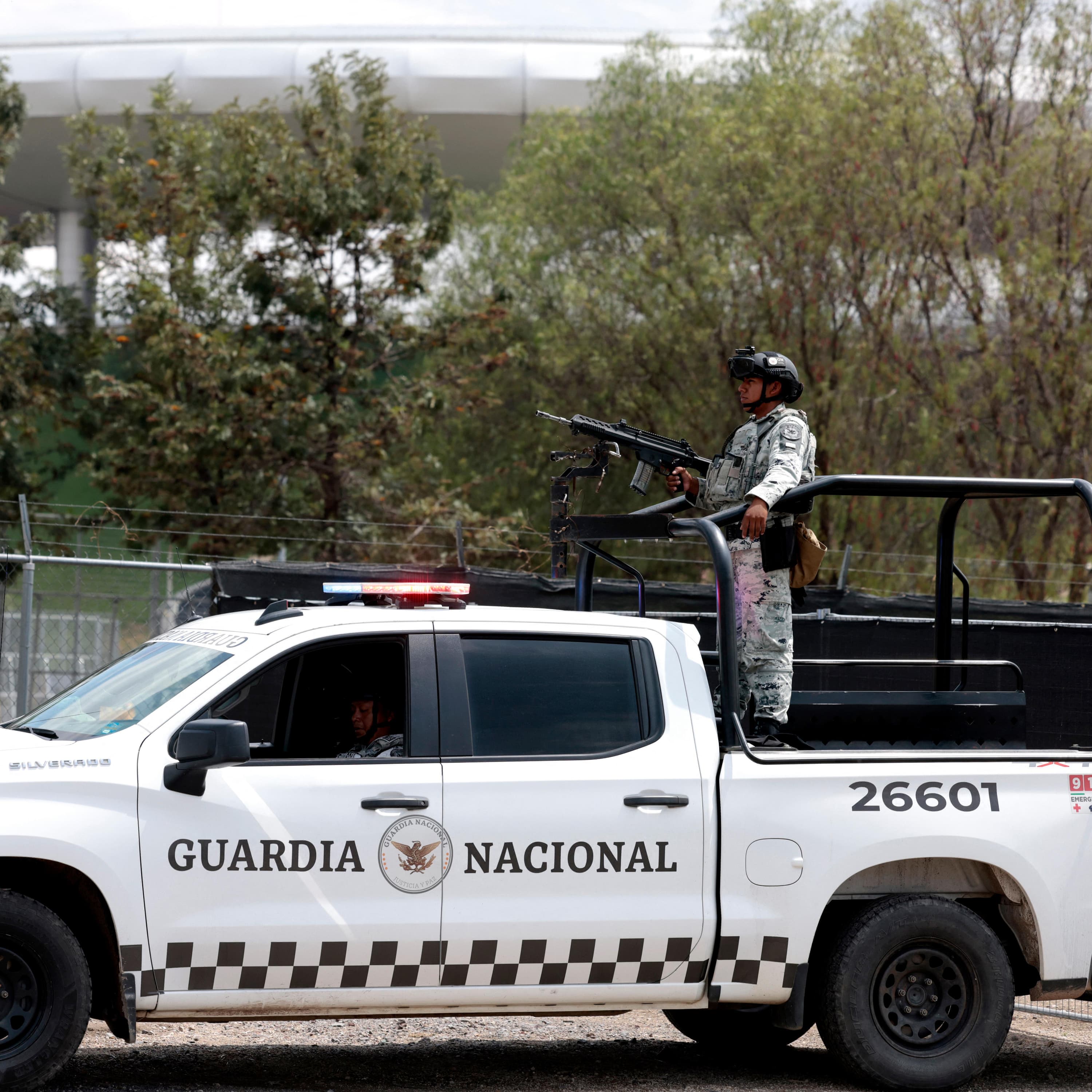
Today in Focus
The criminal cartels cashing in on the World Cup
00:24:01
Football fans are celebrating the tournament coming to Guadalajara. But with a brutal crime syndicate holding sway there, what are the risks for fans – and the government?
Loading summary
Transcript66 lines
- [00:00]
Annie Kelly
This is the Guardian. Today. The cartel's cashing in on the World cup.
- [00:17]
Paramount Promo Announcer
Today. Infocus is supported by Paramount, the Agency. All episode streaming June 21st on Paramount. In the world of espionage, truth is a moving target, and every decision carries a dangerous consequence. This new mission explores what it means to live as a double agent. Twice the lies, twice the risk. The lines between ally and enemy blur like never before. And survival depends on trusting no one. Starring Michael Fassbender, Jeffrey Wright, Jodie Turner Smith and Richard Gere. Don't miss the Agency. All episode streaming June 21st on Paramount. Plus,
- [01:20]
Annie Kelly
In just a few days time, football fans from across the world will celebrate the kickoff of the World Cup 2020, jointly hosted this time around by the U.S. canada and Mexico. The tournament will open in Mexico City, and then the world's biggest sporting event will go on to the city of Guadalajara.
- [01:42]
Leon Kraatz
Guadalajara is not a new World cup city. It has a legendary World cup past. You know, in 1970 and again in 1986, the World cup played in Guadalajara became almost mythical. Pelez Brazil played there in 1970.
- [01:58]
Commentator
What a fantastic play by Qu.
- [02:00]
Leon Kraatz
Then Sequan Socrates played there in 1986
- [02:04]
Commentator
from 30 yards with a sort of
- [02:07]
Leon Kraatz
shot you could only hit in the
- [02:09]
Commentator
high altitude of Mexico.
- [02:10]
Leon Kraatz
There is a real football memory there, a love affair between Guadalajara and football in general, and I expect it to be a wonderful party. It's going to be festive in so many ways. But of course, 2026 is different.
- [02:31]
Annie Kelly
Different because Guadalajara also happens to be the capital of a state, Jalisco, which has now become the epicenter of one of the most notorious criminal outfits in Mexican history.
- [02:45]
Leon Kraatz
Cartel Jalisco Nueva Generacion has become the most aggressive and successful criminal organization in modern Mexican history. It has militarized more aggressively and more openly than almost any cartel before it, and it has expanded operations all across the globe.
- [03:08]
Annie Kelly
Mexico's president has announced there will be a huge security presence during the tournament because she knows just one bad incident could have major consequences.
- [03:20]
Leon Kraatz
You have a government in Washington that is really just waiting for the right moment and the right excuse to go into Mexico and take unilateral military action. The tournament arrives in the most difficult time in modern Mexican history. Will tourists face spectacular violence? I don't think so. But the potential for with so many people coming, something going wrong is there. For the sake of my country and its people, I just hope nothing like that happens.
- [03:55]
Annie Kelly
From the Guardian, I'm Annie Kelly. Today in focus, why the World cup could bring danger as well as delight to Mexico. Leon Crasset, you're a journalist native to Mexico and your work often focuses on international politics, particularly in the US And Latin America. But you have many strings to your bow. You are a contributor to the New Yorker, the Washington Post's global opinion section. You write a weekly column for Mexico's El Universal. But you also started out your career as a sports reporter. So I just wanted to ask, how do you feel that your country is going to be hosting the World cup this year? Is this a big moment for you personally?
- [04:43]
Leon Kraatz
Incredibly big moment. I met my wife 20 years ago after the first match Mexico played in 2006 World Cup. I was working for the Mexican Soccer Federation and she was there as a fan. And they've got two. They're looking for more to really underline their supremacy.
- [05:02]
Commentator
The crossing is good. Three.
- [05:04]
News Reporter
It is.
- [05:05]
Commentator
It's Mexico's day. And Seno, Mexico. Three. Iran one.
- [05:16]
Leon Kraatz
And now we're going to AAA Stadium. We were lucky enough to get tickets for just that match, just that match. June 11, 2026. 20 years later, we're going to go to st. With our three boys.
- [05:30]
Annie Kelly
Oh, that's beautiful.
- [05:31]
Leon Kraatz
I'm very, very excited. I hope the team does well. And if we get the chance to play England in Azteca Stadium on July 5, Round of 16 under the Mexico City sun, that would be full circle for.
- [05:56]
Annie Kelly
It's definitely really exciting. But Leon, there are some trepidations as well, aren't there? Because among the inaugural matches there will be one in Guadalajara. It's the capital of Jalisco, which is also home to the Jalisco New Generation cartel, which is this infamous criminal group that has been in the news a lot recently. So can you tell me a bit about the cartel and how it compares to other criminal syndicates in Mexico?
- [06:23]
Leon Kraatz
Yes, and this is the Mexican government's main concern. It sits there in the back of our minds as the tournament begins. The Cartel Jalis Congajene or CJNG as it's known it, has become probably Mexico's most successful violent, sinister criminal organization. It has militarized more aggressively and more openly than almost any cartel before it. This was a cartel that shot down an army helicopter with a rocket propelled grenade launcher and using high caliber Barrett 50 rifles. It deploys makeshift landmines. They have cruelty and brutal human trafficking network and they are very powerful in the illicit trade of fentanyl. As you know, the White House has now focused very intensely on security in Mexico and Cartel Jalisco Noj Renacion is probably the main reason for that.
- [07:36]
Annie Kelly
So Jalisco is due to host, I think, four games in the next couple of weeks. But how dangerous are the cartels for everyday people there?
- [07:46]
Leon Kraatz
They are very dangerous. They have an army at their disposal. They have armored vehicles. They were using drones before they became part of modern warfare. In Ukraine and elsewhere, they have a constant stream of high caliber weapons coming from the United States. Is it an everyday concern for everyday Mexicans? I think I would be more cautious there because we are not talking about a terrorist organization with political aims. We're talking about an illicit corporate conglomerate that is focused on doing business.
- [08:30]
Annie Kelly
Yeah. And I understand that there is this probably really unfair stereotype about life in Mexico being completely dominated by the cartels. But Jalisco does also have the highest number of disappeared people in Mexico. 16,000 people that have simply disappeared.
- [08:48]
News Reporter
After an hour of searching, the women
- [08:51]
Annie Kelly
think they might have a breakthrough. They uncover an entire skeleton wrapped in plastic. It's buried alongside registration plates, a car key and an empty wallet. These cartels can really inflict cruelty on the people there, can't they, Annie?
- [09:15]
Leon Kraatz
The recruitment tactics of groups like the cartel Jalisco Nova Generacion are one of the most brutal expressions of the collapse of the Mexican state. They do not only recruit through money or intimidation, they recruit through deception, kidnapping, forced labor, terror, luring young men with false job offers and promises, and then turning them into disposable foot soldiers. I have to say that cruelty connects directly with the crisis of disappearances in Mexico, because many people who banish are not simply missing, quote, unquote, in the abstract. They have been absorbed, exploited, killed, erased by criminal economies that need, that need bodies. One of the main stories in Mexico now is the never ending quest of parents who have lost their kids, who go around Mexico quite literally digging with the hope of finding their missing children, or just a fragment of their missing children, a bone, any hint of the fate of their missing child.
- [10:30]
Annie Kelly
And the one story that got people talking about Mexico hosting the World cup and these cartels was what happened in February when the leader and the founder of the cartel El Mencho was killed by the Mexican authorities. Can you just tell me a bit about him and how he met his fate?
- [10:50]
Leon Kraatz
He was, you know, by most measures, the most powerful drug lord in Mexico's recent history. And he led this cartel, Jalisco, new generation cartel. The United States, as you know, had put a $15 million bounty on his head, which tells you how central he was to the drug war. As Washington understands it. He's a person that we would consider as public enemy Number one, he's a very powerful trafficker in Mexico and he has cells all over the world just
- [11:19]
Commentator
like Chapo had when he was operating with impunity.
- [11:24]
Leon Kraatz
He was born in Michoacan, then spent time in the United States, was imprisoned for, I think, heroin dist there, returned to Mexico, married into a powerful criminal family, served as a police officer before becoming part of the Jalisco underworld. One singular aspect of organized crime in Mexico has been how mysterious and secretive these drug lords have been. These people in Mexico don't want to be seen. They live very isolated lives. So there were a million stories surrounding him to do with his cruelty, his efficiency, and his intelligence as a criminal mastermind. It is not a coincidence that he led this cartel and took it to unprecedented heights.
- [12:15]
Annie Kelly
His death was extraordinary, wasn't it? I think Trump even took credit for his eventual capture.
- [12:22]
Commentator
For years, large swaths of territory in our region, including large parts of Mexico, really large parts of Mexico, have been controlled by murderous drug cartels. We've also taken down one of the most sinister cartel kingpins of all. You saw that yesterday.
- [12:42]
Annie Kelly
Just tell us a bit about how that played out.
- [12:45]
Leon Kraatz
This happened in Tapalpa, Jalisco. It was a scene from a movie. Helicopters overhead, gunfire in the mountains. The Mexican state finally closing in on a man who had seemed untouchable for so many years. And it was not a quiet arrest. Both his security forces, heavily armed, and the Mexican military clashed. And in the end, he got severely injured. And this is the official version of events. Annie, mind you, died en route to the hospital. Almost 30 members of the Mexican armed forces died that day. The day after that, the Secretary of Defense in Mexico joined President Sheinbaum in her daily morning press conference and began crying. It was the most violent day for Mexican security forces since the Mexican Revolution 100 years ago.
- [13:56]
Annie Kelly
The scenes that happened in the wake of his death was also an expression of the violence they could unleash when necessary. Could you tell us a bit about what happened after he died?
- [14:07]
Leon Kraatz
We saw burning vehicles, airports in panic, foreign embassies telling their citizens to shelter in place.
- [14:17]
News Reporter
Right now, we are unaware of any reports of any Americans being hurt, kidnapped or killed. And the Mexican drug cartels know not to lay a finger on a single American or they will pay severe consequences under this president.
- [14:29]
Leon Kraatz
And all of that was not random chaos. You know, it was a demonstration of reach. It was the cartel saying, you may have killed the boss, but the structure remains and it can paralyzed part of the country when he chooses.
- [14:45]
News Reporter
4 High level football matches have Been postponed after the Mexican army killed the leader of a powerful drug cartel in a town close to the FIFA World Cup 2026 host City of Guadalupe.
- [14:58]
Leon Kraatz
The cartels go about their business, but if the state disrupts that business, they can certainly strike back.
- [15:08]
Commentator
You.
- [15:15]
Annie Kelly
And let's put this into the context of the World Cup. This is violence that we saw televised across the world very recently. We've now got the World cup kicking off in Mexico in two days time. It could be seen as kind of crazy that on, you know, the opening days of the World cup, there's going to be a match in Guadalajara, the scene of some of this violence only a few months ago.
- [15:40]
Leon Kraatz
Andy My instinct is that the major cartels are unlikely to disrupt the World cup, not because they are decent, obviously, but because they are criminal businesses. I mean, they do not benefit in any way from bringing global attention, international outrage, and more US pressure onto themselves during the most watched sporting event on earth. There certainly is a scenario in which things get out of hand. The cartels who have been under siege lately from the Mexican government and the American government decide that the world's biggest stage is the right time to lash out, to set things straight. These organizations are capable of unleashing really terrifying scenes, executions, people hanging from bridges, really, really sinister stuff. So there is a scenario in which cartels choose to turn the World cup into a stage for violence. If that happens, the scenario for the country worsens and it worsens for the cartels themselves. That's why I think it would be suicidal. But we should be careful in characterizing these criminal organizations as purely rational actors, because they are not. They're criminals. My hope is that they act in a rational way, but certainly there is a possibility that they don't.
- [17:21]
Annie Kelly
And what about money to be made? Is there a lot of cash to be made from the World cup for these cartels?
- [17:28]
Leon Kraatz
That's a very good question, because of course there is, right? Even if they do not attack the World cup, criminal groups can still exploit it. A tournament brings tourists, construction, nightlife, transportation, lots of money. At least part of that money, indeed may end up passing through businesses or vendors who are paying what we call, which means extortion, protection money. You have to pay up or they won't let you operate. It's an informal taxing system that is present in many parts of Mexico. So the visitor may never see the cartel, but the cartel may still, let's say, tax quote unquote. The environment around the visitor, it has long tentacles. Organized and disorganized crime in Mexico.
- [18:24]
Annie Kelly
Coming up, can Mexico's president do enough to ward off the cartels and Donald Trump?
- [18:41]
Quo Advertisement Announcer
Running a business means juggling a lot of moving parts. And when your communication tools can't keep up, things start to slip. Missed calls, slow replies, scattered conversations. They're not just frustrating, they're lost opportunities and revenue left on the table. That's where quo comes in. Spelled Q U O. Quo is the number one rated business phone system on G2, trusted by over 90,000 businesses. One shared business number for calls and texts so every conversation stays visible, organized and accountable. It works from an app or computer. You can keep your existing number, add teammates and sync your CRM, letting you scale without adding complexity. And with built in AI Quo logs, calls, summarizes conversations and flags next steps even after hours Stop missing customers. Stop leaving revenue on the table. Try quo free and get 20% off your first six months at quo.comtech that's quo.comtech quo no missed calls, no missed customers.
- [19:50]
Podcast Promo Announcer
A History of the United States in 100 Objects is a brand new podcast from 99% Invisible and BBC Studios. Each week we're looking at a different object from across American history with a unique story to tell about who we've been, what we've built, and what we've allowed ourselves to forget. Some of these objects are well known, many are not. But all of them carry the story of how we got to this moment. Find a history of the United States and 100 objects on the 99% invisible feed. Wherever you get your podcasts.
- [20:24]
Annie Kelly
Leon There is going to be a huge security presence during the World cup in Mexico. The president, Claudia Scheinbaum, announced there was going to be 100,000 security personnel, more than 2,000 military vehicles, plus aircrafts, drones. Talk me through how the state is trying to mitigate any potential disruption.
- [20:46]
Leon Kraatz
There's no doubt that Mexico is preparing, you know, a massive security deployment for the World cup. And it has to, you know, Guadalajara is not just another whole city. It is the symbolic and operational orbit of the cjng, the cartel, Jalisco, you know, and the World cup in this sense will test not only stadium security, but the Mexican state's ability to project control, confidence and credibility. There's a lot riding on it. And I know that they know that just one bad incident, maybe one badly handled kidnapping or an extortion case involving a foreign visitor, one serious incident would be enough to damage the image of the country.
- [21:28]
Annie Kelly
And Leon, if the, if something does happen, let's say, as you talked about before, the kidnapping of a Tourist. What's at risk for Mexico when it
- [21:36]
Leon Kraatz
comes to the bilateral relationship with the United States? It is an incredibly concerning time, not only because we are in the middle of discussions to renegotiate the future of the North American Free Trade Agreement that for Mexico and for the whole region of North America is crucial, but also because we have very belligerent government sitting in the White House. One of the main concerns for Mexico's government is to maintain the country's sovereignty. The perception that the Mexican state can handle the current crisis on its own. I believe President Schoenbaum, that she believes and she knows that we are one international incident away from giving the Trump administration an excuse to take a different road. I'm referring, of course, to unilateral military action within Mexico, which is something that Trump and people within his government have been considering for a long time.
- [22:46]
Commentator
The cartels are running Mexico. She's not running Mexico. The cartels are running Mexico. And we could be politically correct and be nice and say, oh, yes, she is. No, no, she's very, you know, she's very frightened of the cartels. They're running Mexico. And I've asked her numerous times, would you like us to take out the cartels? No, no, no, Mr. President. No, no, no, please. So we have to do something.
- [23:12]
Leon Kraatz
She is not only concerned primarily with basic security during the World cup, but she is very mindful, I'm sure, of what would happen, what kind of door would be opened if that security strategy were to fail.
- [23:27]
Annie Kelly
And also, it sounds like Claudia Schoenbaugh might have seen what Trump did in Venezuela, which was going in and kidnapping the president, Nicolas Maduro, because of his alleged links to the drug trade, and maybe is worried it might happen to her or might happen to Mexico. How much is that motivating her actions?
- [23:50]
Leon Kraatz
Well, she's been tougher on crime compared to the previous president, who was a joke, right, and had this very strange working theory called abrazos nova lasos hogs, not bullets. So in contrast with Lopez Obrador, she's certainly doing more. The clearest example, of course, is the operation against El Mencho, the leader of Cartes Jalisco, Nova Generacion. That would have been unthinkable under Lopez Obrador. Is this a product of American pressure, Annie? Yes, I think American pressure has played a role. But honestly, I think that she would have changed course regardless of who was in the White House. But there is one step that she hasn't taken. She hasn't dared touch one very crucial aspect of Mexican criminal life, which is politicians who are under the control, under the corrupt control of cartels. Recently, the United States indicted 10 Mexican elected officials and public figures, including a sitting governor of the state of Sinaloa, a sitting senator from the state of Sinaloa, both from Shanebaum's party, and she has mostly declined to cooperate with American demands.
- [25:11]
News Reporter
We will not cover for anyone who has committed a crime. Yet if there isn't clear evidence, it's obvious from the aim of these indictments from the Justice Department, it is political. It must be clear that under no circumstance will we allow the inclusion or interference of a foreign government in decisions
- [25:28]
Leon Kraatz
that points to a real problem. Because cartels cannot be explained without the complicity of politicians. And if they don't take the steps necessary to go after corrupt politicians, then the fight will never end.
- [25:45]
Annie Kelly
Leon, thank you so much for talking to me today.
- [25:48]
Leon Kraatz
Such a pleasure, Annie.
- [25:55]
Annie Kelly
And that's it for today. My thanks to Leon Krazet and you can read all of our reporting on Mexico and the World Cup@theguardian.com this episode was produced by Saskia Colette and Guy Zafman and presented by me, Annie Kelly. The sound designer was Rudy Zagadlo and the executive producers were Homa Khalili and Sammy Kent. You can catch up on all of our World cup coverage on the Guardian's World Cup Daily podcast hosted by Max Rushton, which will go out until the tournament's end in six weeks time. And we'll be back later on this afternoon with the latest. This is the Guardian.
- [26:48]
Podcast Promo Announcer
A History of the United States in 100 Objects is a brand new podcast from 99% Invisible and BBC Studios. Each week we're looking at a different object from across American history with a unique story to tell about who we've been, what we've built, and what we've allowed ourselves to forget. Some of these objects are well known, many are not. But all of them carry the story of how we got to this moment. Find a history of the United States and 100 objects on the 99% invisible feed. Wherever you get your podcasts.