← Today in Focus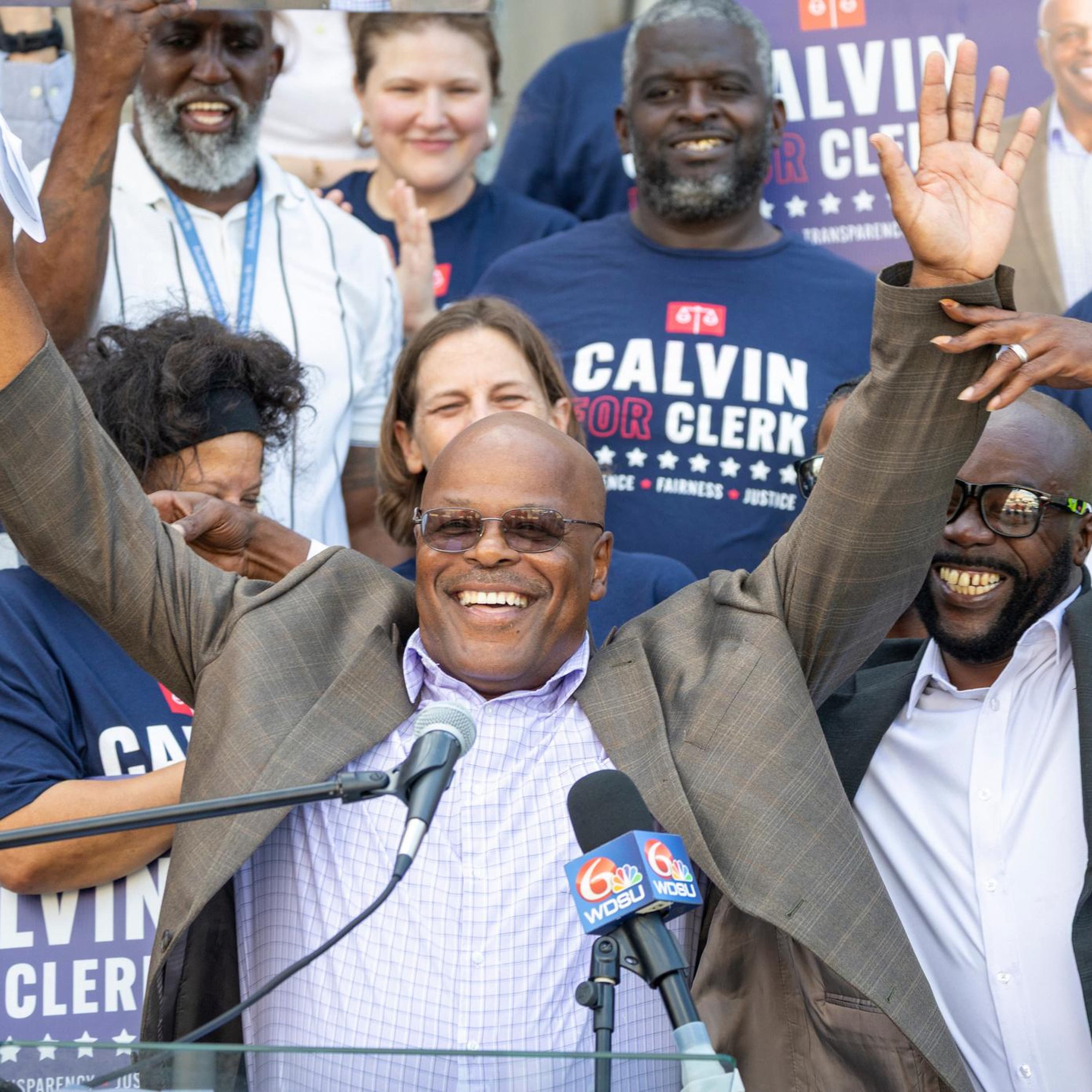
Today in Focus
The exonerated prisoner kicked out of office by Republicans
00:29:22
Guardian US southern bureau chief Olly Laughland tells the story of Calvin Duncan and a Republican party emboldened in Trump’s America
Loading summary
Transcript95 lines
- [00:00]
Annie Kelly
This is the Guardian. Today, the man who fought his whole life for justice and the Republicans who took him down. Today. In Focus is supported by Paramount. Plus, this isn't the end of a fight. It's the start of one. Lioness, the critically acclaimed original series from Taylor Sheridan, is now streaming only on Paramount. In the new season, hidden networks, foreign operatives and personal betrayals collide. Meanwhile, Jo walks the line between duty and family as unseen forces circle her world, leaving her to reckon with a war that now reaches into every part of her life. Life. Don't miss the new season of Lioness, starring Zoe Saldana and Michael Kelly, with Morgan Freeman and Nicole Kidman, now streaming only on Paramount. Plus.
- [01:17]
Oliver Laughlin
I, Calvin Duncan.
- [01:19]
Calvin Duncan
I, Calvin Duncan.
- [01:23]
Annie Kelly
One April morning earlier this year, Calvin Duncan stood on the steps outside the Grand Old Courthouse in New Orleans, placed his right hand on a Bible and swore an oath that would elevate him to an elected office serving in the state of Louisiana.
- [01:39]
Calvin Duncan
That I would support the Constitution and the laws of the United States. And the laws of the United States.
- [01:45]
Annie Kelly
The office he'd been elected to was pretty obscure. He'd just become the court's criminal clerk, its chief administrative officer. Yet his race to win that office had electrified the state because Calvin was no ordinary state bureaucrat. His journey from growing up as a black child in one of New Orleans poorest and most violent neighborhoods to one of Louisiana's most brutal prisons, where he served 28 years for a murder he didn't commit, to this moment, at 64 years old, pledging to serve the people and ensure others didn't suffer the same injustices with was extraordinary.
- [02:23]
Calvin Duncan
I used to leave this building. It would take me three days to recover. One of the things I had. I envisioned was that when people come to this office, that we will smile at.
- [02:35]
Annie Kelly
It was a remarkable story of resilience and for many who'd voted for him, also of hope. Our friend, our champion, our leader, our clerk, Calvin Duncan. But it didn't last.
- [03:00]
Calvin Duncan
They fight so hard to take the most important thing away from us because they see the people you vote for can't help you. And the people that can help you, they are not allowed to run for office. And if one of y' all slip and get through the cracks to get in a position to that run for office, we gonna abolish the damn seat.
- [03:24]
Annie Kelly
Just three hours after taking office, Calvin Duncan was stripped of the role he'd fought so hard to win after Louisiana Republicans, emboldened by the politics of Donald Trump's second presidency, moved against him. From the Guardian, I'm Annie Kelly. Today in focus, Calvin Duncan and the brutal battle for voting rights, political power and justice in Trump's Americ America. Oliver Laughlint, you're the Guardian's US Southern Bureau Chief. Thanks for joining us today. Hope you're doing all right.
- [04:05]
Oliver Laughlin
Thanks so much for having me.
- [04:06]
Annie Kelly
So you're here to tell us the this extraordinary story of Calvin Duncan. I know you've recently spent quite a bit of time with him at his home in Louisiana. So first of all, could you tell us who is is he perhaps you could take us back to his early life before he was incarcerated.
- [04:24]
Oliver Laughlin
Yeah. So he grew up in a housing project called the Desire Housing Projects. They no longer exist, but they are, you know, by all accounts, and I've interviewed a lot of people who have kind of grown up in that neighborhood, one of the poorest parts of New Orleans and a high crime area as well. Lost his mother from a very early age and was really kind of a father figure to his younger sister. From the age of 10, he was driven to petty crime basically to, you know, keep him and his sister fed and clothed.
- [04:52]
Annie Kelly
I mean, it sounds like he had an incredibly tough upbringing then, incredibly tough childhood. Could you give us a bit of the context of how it was that he was, you know, arrested and charged with this murder at such a young
- [05:03]
Oliver Laughlin
age at 19, in August of 1981, a 23 year old white guy named David Yeager was shot during a robbery in the Treme neighborhood of New Orleans. In there was a single eyewitness who was his teenage girlfriend at the time, who basically gave the police a description that didn't really match Calvin's description at all. But when presented with his photograph in a photographic lineup, she identified him. And this basically started the spiral of his life.
- [05:38]
Annie Kelly
He basically languished in this county jail in New Orleans for three years before his trial. Oliver, tell me, what were conditions like there for him?
- [05:47]
Oliver Laughlin
So the Orleans Parish Jail is a notorious facility not just in the state of Louisiana, but across the world. It continually ranks as one of the worst jails in the country. It's extremely violent inmate on inmate violence. The resources there are scant. The food is awful. During Hurricane Katrina, it flooded and many people were left in there for days without any assistance. So it has this reputation not just in New Orleans but around the country as one of the worst jails in the United States, which is really saying something.
- [06:25]
Annie Kelly
And even with all of that, like with all of those awful conditions that you've just described, you know, it's fair to say that Calvin didn't sit around waiting for his trial, did he? What did he tell you about his time in that jail?
- [06:37]
Calvin Duncan
When I was on the unit and you know, they was telling me I was gonna get the death penalty.
- [06:41]
Oliver Laughlin
Yeah.
- [06:42]
Calvin Duncan
Everybody was telling me that because my lawyers weren't gonna come see me. They had the same lawyers that I had, the same judge, same prosecutor, they had the death penalty. And so when I asked them, how can I help myself, they said I had to become a lawyer, but it was no legal material.
- [07:00]
Oliver Laughlin
He has this kind of amazing archive of all of his belongings. And so he showed me some of these motions that he filed while he was in jail. He show the handmade law book that was stuck together with old bits of spent chewing gum that had all these old newspaper clippings in them.
- [07:17]
Calvin Duncan
I, I used to get the newspaper and I used to be so excited when wealthy people got arrested for crimes because every time they wrote something about this high profile case, they would put some law in it. And so I would make my own law book. And this is one of my law books.
- [07:35]
Oliver Laughlin
And then he also filed his first ever law motion when he was in his early 20s where he asked the court for a law book to try and understand the rules of criminal procedure in Louisiana.
- [07:45]
Annie Kelly
It's just extraordinary thinking that while he was there sitting in a jail awaiting his trial, he was already almost presuming that he was. That the law was not going to go in his favour or that he wasn't going to get any kind of fair trial. What actually happened when his case did come to court?
- [08:02]
Oliver Laughlin
Well, I think it's important to kind of understand the way in which the criminal justice system in the US and in particular New Orleans worked at that time. You know, this was a hugely overburdened system that basically prioritized speed over people's due process rights, where it was very common to have an attorney who had done little to no research on your case before you went to trial, where you would have trials, you know, for cases like Calvin's murder trial, lasting a single day. And that's what happened to him.
- [08:33]
Annie Kelly
That's just, I mean, it's mad to think that you have a murder trial that lasts one day.
- [08:37]
Oliver Laughlin
He went to court. He met his lawyer for the first time the day before court. And he told me about how, you know, the meeting was essentially about making sure he had the right clothes to wear in court. And he was found guilty of murder even though he mounted a defense. You know, he had alibi witnesses who Testified on his behalf. But again, you know, this is New Orleans in the 1980s. The victim of this case was a white man. The only eyewitness was a young white woman, and the jury sided with them.
- [09:03]
Annie Kelly
So he was convicted. Tell us about what happened then. What was his sentence, and where did he get sent?
- [09:09]
Oliver Laughlin
So Calvin was sentenced to life without the possibility of parole, which is a very common sentence for murder convictions in Louisiana. And he was sent about a year later. So he spent a bit more time in the parish jail. About a year later, he was sent to Angola Prison, which is a prison that I've written a lot about. It is a notorious prison in the Deep south, set on the grounds of a former slave plantation, where inmates still labor those same fields, you know, working for, in certain instances, 2 cents an hour to harvest crops and that sort of thing. Calvin's take on being sent there, though, was pretty extraordinary to me. He describes Angola as a paradise in comparison to what he endured at the parish jail, which, as I said, was just notoriously violent, notoriously harsh. And the reason he described it that way is because he would have access to a law library. The prison has one of the largest law libraries in the whole of the United States. And to him, this would be the tool to unpick the locks, basically to ensure his freedom.
- [10:16]
Annie Kelly
Eventually, he was also helping other fellow inmates. Tell me about what he managed to achieve while he was inside.
- [10:24]
Oliver Laughlin
I would not be able to list all of the extraordinary things that Calvin did over his two decades in prison in a single podcast. So he earned his ged, which is basically a qualification for people who didn't graduate high school, to then show that they're now at that level. He almost immediately then moved into the program to become an inmate council substitute, which to outsiders is essentially a jailhouse lawyer, which is a program that exists in many prisons across the country that allows people who are incarcerated to be represented by those who they are incarcerated with. So he spent his first few years working on the mental health unit, and then he moved over to the prison's death row, where he spent almost two decades working with people who were facing execution.
- [11:12]
Calvin Duncan
What struck me about those guys is, was that they had no clue what's being happening to them. You know, they was. It was hard for them to understand what was actually happening because a lot of them had really serious mental things going. I accepted the job personally, as the job is to make sure that they don't harm themselves, that they keep hope alive.
- [11:50]
Annie Kelly
And it was while he was inside that jail that he became Interested in this, like, pretty obscure public institution, the county clerk's office, which is basically the place where officials hold, among other administrative things, criminal records. Why did Calvin focus on the role of the county clerk?
- [12:09]
Oliver Laughlin
So one of the things that Calvin kind of quickly came to understand while he was working as a jailhouse lawyer was that access to your own records is such an incredibly important and powerful tool to re litigate your case and in many instances, to secure your own freedom. And, you know, in numerous instances, you will speak to people who have spent years, sometimes decades, trying to get hold of their old records in order to, you know, reexamine them to potentially relitigate the case. In 2005, after Hurricane Katrina, thousands and thousands of records were destroyed and lost at the criminal courthouse. There's been a recent scandal where, you know, dozens of boxes were sent to landfill accidentally. And so this is an office, in Calvin's opinion, that has been in need of dire reform for many, many decades.
- [12:57]
Annie Kelly
He was successful, wasn't he, in helping other inmates do this? What about his own case files? Was he able to get hold of his own records?
- [13:06]
Oliver Laughlin
So it took Calvin a very long time to try and get hold of his own records. You know, the rights that incarcerated people have to file public records requests in Louisiana at the time was extremely restrictive. It also costs a lot of money. One of the highest sort of paying programs in prison was a blood plasma program where inmates would essentially donate their own blood plasma for a fee. And so he signed up for this program and used the money that he raised for that to get hold of his old transcripts from court.
- [13:35]
Annie Kelly
God. So he literally sold his own blood to be able to raise the money to get his own court transcripts.
- [13:41]
Oliver Laughlin
That's exactly right.
- [13:42]
Jackson Financial Announcer
Yeah.
- [13:43]
Annie Kelly
Calvin tried for years to fight his own case from inside prison. What was the turning point that eventually saw him released?
- [13:54]
Oliver Laughlin
So Calvin, eventually, having fought for himself for many years, eventually gets representation through the New Orleans Innocence Project, which he actually helped co found himself, given all the incredible work he was doing for other inmates at the time.
- [14:08]
Annie Kelly
Right. For people who don't know the Innocence Project, is this not for profit, that works to help free prisoners who they believe have been wrongly convicted?
- [14:16]
Oliver Laughlin
Yeah. And once the Innocence Project kind of take on his case, they go back and try and find as many of the old records associated with his prosecution and the original police investigation as they possibly can. And they unearthed some pretty extraordinary bombshell documents that show inconsistencies in the way in which he was identified by the sole eyewitness who testified justified at trial, and also allegations of police corruption to do with the arresting officer that were not presented to the jury at the time. And this, lawyers say, should be grounds for a new trial. It should be grounds to bring his. His case back into court. And it takes many, many years for that to happen. But eventually it does. And he takes a plea deal in 2011 to manslaughter an armed robbery. It's a deal he didn't particularly want to take, but he did it anyway to essentially ensure his freedom. And he walked free at the beginning of 2011.
- [15:18]
Annie Kelly
And how many years had he served inside prison at that point?
- [15:22]
Oliver Laughlin
He'd been inside for 28 and a half years. A decade later, through various reforms in the post conviction process, he was able to be fully exonerated. So his case was able to be refiled in court. The district attorney's office decided not to prosecute him, and the case was dropped. He was exonerated.
- [15:46]
Annie Kelly
So, Ollie, I think a lot of people would understand that if, you know, after nearly three decades in prison, Calvin got out and, you know, went back to, like, a quiet civilian life. But he didn't do that, did he? He went and he got an official law degree at the age of 60. He's also been teaching law in a university in the state. And then a couple of years later, he decided to run for the job that he'd learned so much about in jail. This criminal county clerk role, which is an elected position. Why does he decide to go down
- [16:20]
Oliver Laughlin
that route to Calvin? If the office is not functioning correctly, if it's harder to get hold of your records, it can make your life hell. And, you know, Calvin is really a living example of that, as are many of the people that he. He's represented. And so he told me that it's something that he had been considering for a while, but the decision to run was actually pretty spontaneous. He found out just a few days before the closing window to register for it, and he just went and did it. You know, he told a couple of his friends that's what he was planning to do, and he went and did it.
- [16:50]
Annie Kelly
So he announces that he's going to run for this position and what happens next?
- [16:55]
Oliver Laughlin
It really took the city by storm. You know, this is an incumbent. He was running against an incumbent, an incumbent Democrat who had been in that position for many years. His candidacy elevated this race from what has previously been a pretty obscure, you know, often uncompetitive race into one of the most talked about elections of that particular cycle. It also instigated a Pretty quick and harsh backlash, not just from the state Republican Party, but it also, it created a rupture in the local Democratic Party as well. People who didn't think that it was Calvin's time to run that were happy with the incumbent. And so he faced a kind of backlash on two fronts really.
- [17:38]
Annie Kelly
And what were some of the attack lines that they were using against him?
- [17:41]
Oliver Laughlin
So the main one and the one that I think caused the most outrage here was to essentially try and relitigate Calvin's past. During the campaign, he was referred to as a convicted killer by his opponent during a live television debate.
- [17:57]
Calvin Duncan
I want to address Mr. Duncan's comment about being exonerated. First of all, the fact of the matter is court kept records show that Mr. Duncan was convicted of murder and armed robbery. He later pled guilty to manslaughter and
- [18:15]
Oliver Laughlin
armed robbery and also was contacted by state's Republican attorney general's office who threatened to sue him if he continued to refer to himself as an exoneree.
- [18:26]
Annie Kelly
I also don't understand how they could do that because, I mean, surely the law said that he had been exonerated, that he wasn't guilty of those crimes.
- [18:35]
Oliver Laughlin
I, you know, have studied American politics for a long time. I've been here for a long time. I've never really seen anything like that before, particularly in a race that is such a down ballot race that, you know, obviously, as we've discussed, holds power in a particular iteration. But it's not the same as, you know, sending somebody to Congress or whatever it is, to see that level of vitriol. And what I describe in my piece as kind of gutter politics, you know, pushed onto this role to such an extraordinary man was extremely confronting and outraged a lot of people here.
- [19:09]
Calvin Duncan
That put me back on trial. So now I'm on. This guy's challenging me. He's on the same thing that, that I fought for what, 28 years to prove my innocence. Then, you know, I got out. Now it's more. It's close to what, 40 years and I'm still fighting to prove my innocence
- [19:31]
Oliver Laughlin
in the public arena.
- [19:32]
Calvin Duncan
In the public. Yeah, that shit, it was crazy. That was like, what the hell?
- [19:38]
Annie Kelly
So it was a smear campaign. It was nothing more than that. But did it work?
- [19:42]
Oliver Laughlin
It absolutely didn't work.
- [19:43]
Calvin Duncan
We won by big numbers, 68.2%. And it was so. This city was so excited that they was now given opportunity to participate in this democratic process.
- [19:57]
Oliver Laughlin
To me, it's just this kind of extraordinary, almost cinematic story of defiance in the face of incredible odds. But unfortunately, it didn't end there.
- [20:09]
Annie Kelly
Coming up, Calvin thought he could finally make meaningful changes to the justice system in Louisiana. But republicans had other ideas.
- [20:31]
Jackson Financial Announcer
This message comes from Jackson. Taxes aren't something you can only think about once a year. With investments, planning for tax day is year round. Fortunately, Jackson offers tax efficient products. Visit Jackson.com for more information on how our products can make your tax bill a little bit less painful. Jackson is short for Jackson financial incorporated, Jackson national life insurance company, Lansing, Michigan, and Jackson national life insurance company of New York, Purchase, New York.
- [21:01]
Annie Kelly
So Oliver Calvin had worked for so long to get into this position where he thought he could help revolutionize prisoner rights. He won the election at the end of 2025. What happened next?
- [21:14]
Oliver Laughlin
So almost immediately after Calvin winning election, the state republican party put together some hastily proposed legislation to effectively abolish his position. Orleans parish is the only parish in Louisiana that has two elected offices for the clerk of court. One is for the civil clerk, One is for the criminal clerk. And the reason for that, and it's been in place for many, many decades, is just because it's the most active court system in the state. You know, the criminal court system here sends more people to prison than anywhere else in the state. And so the argument is they need two different clerks to, you know, administer the. The sheer volume of cases. The republican state legislature and a particular senator who is not from New Orleans who pushed this legislation, argued that this was essentially a way of just streamlining the office, making some savings, which would have been, you know, a few tens of thousands of dollars to many people and myself. And I think we should be honest as journalists, you know, and, and call it out when we see it. This was a vitriolic campaign to basically end his run for office, to subdue black political power in the city of New Orleans. And just again, another kind of hurdle that Calvin would have to try and overcome again in his life.
- [22:34]
Calvin Duncan
And then the powers that be say, okay, you won, but to Calvin, you're not going to take office. We couldn't, you know, we couldn't derail you, but guess what? I'm abolished the whole seat.
- [22:48]
Oliver Laughlin
Some people, you know, it was the first time they had voted in that election when they found out that their vote basically no longer counted. They were absolutely outraged, but also kind of felt like it fed into this long historical trajectory of attempting to neuter the power of black voters and black representatives in the south and in New Orleans in Louisiana.
- [23:12]
Annie Kelly
But he did have his moment of going and taking up the mantle of that role that he'd been elected. Can you tell us about that day where he went and he was sworn in?
- [23:22]
Oliver Laughlin
As this law was being passed through the republican state legislature, Calvin basically, you know, attempted to fight back again, as he always does. He countersued, trying to prove that, you know, this new law was unconstitutional. There were mechanisms that the city set up to try and, you know, redo the election under the consolidated position. And all the while this was happening. Calvin just sort of saw straight through it and went and took what was essentially a symbolic swearing in ceremony in front of the court steps where he had once been tried and sent away to prison for the rest of his
- [23:57]
Calvin Duncan
life while I was being knighted. It really felt. It felt good because I've always considered myself as a protector of the constitution.
- [24:08]
Oliver Laughlin
And then a few weeks later, when there was a lull in this, this litigation fight that was going on, he took office. He went into the clerk of court, he sat behind the executive desk, and he was the clerk of court. And unfortunately, that window lasted only three hours because an appeals court decision basically, you know, ended that window and he was forced to leave. But he told me about what he did in that office in those three hours he was in power and what it meant to him.
- [24:37]
Calvin Duncan
Oh, we toured a place. I wanted to go see where the records were. Yeah, what's going on with these damn records? Yeah, the records are just scattered. They in them jails, in old parish jail. And you could tell people hadn't been in those areas because they got big spider webs. And only if it was for three hours. It was three hours that I enjoyed. And after it was over, it was over. I just walked out. I was the clerk. That's what I wanted to be. I wanted to be the clerk of the criminal district court. And I was that. Nobody could take that away from me. The seat does not. It does not. The position does no longer exist. But I was that
- [25:19]
Oliver Laughlin
the time that I sat down with him and interviewed him was essentially a month after his pretty much removal from office. And it was just a kind of different feeling. I think he was still kind of coming to terms with what had happened.
- [25:33]
Calvin Duncan
People participated in this election. People donated, committed their time and a resource. And on a campaign train, people telling me that, man, your vote don't count. And I'm like, man, your vote do count. So I'm convincing people that I don't care what you heard in the past. Things has gotten better. This is it. I did, I did feel depressed because everything I was believing in had Crushed. You know, I believed in this crazy, this democratic process. They're messing over me. You know, it was heartbreaking. But me feeling that I let people down, the shame that I felt, that's what really, really, when people ask me how I feel, that that's the way I felt. I just felt that. Damn, man, I got hit all this shit wrong.
- [26:37]
Annie Kelly
What I really took away from his story and from your piece is about how this really is a very vivid example of what has become a storied history in America, this disenfranchisement of black civilians from positions of power and democracy. You write in the piece about the vindictiveness of this particular era of American democracy that we're living through. In fact, I think you actually called it competitive authoritarianism. And I just want to ask what you meant by that.
- [27:08]
Oliver Laughlin
I guess competitive authoritarianism is the idea, you know, when you transpose it to American politics right now, where we are still kind of living in an American democracy where races are held and people can, you know, conventionally campaign for the job that they are running for. But in this new era of Trump, which has lurched further and further to the right, that has employed the tactics of authoritarian governments around the world, there is this other power that exists now. And I think that is really, you know, in many respects, something that we should be thinking about as the United States moves to midterm season. You know, I was thinking back to Trump's first term. Trump actually passed bipartisan criminal justice reform in 2018, the first step Act. And the idea that that would happen now, as Trump moves further to the right, has this, you know, streaks of authoritarianism we are seeing on the local level in places like Louisiana, and on the national level as the Voting Rights act is gutted.
- [28:11]
Calvin Duncan
At the same time, today's decision strikes a blow against the Voting Rights act and is designed to undermine the ability of communities of color all across this country to elect their candidate of choice.
- [28:24]
Oliver Laughlin
It could well be a kind of, you know, prescient moment and a turning point, and I guess we'll just have to kind of wait and see, you know, whether this is something that gets replicated in other. In other races as the midterms go on.
- [28:36]
Annie Kelly
For everything that I've just heard about Calvin, I imagine this isn't the end of his story either. Does he have any plans to run for that newly merged civil clerk position?
- [28:47]
Oliver Laughlin
So he still teaches law at university here. He has his own program attempting to help people who are still inside. He also committed to me that he would run again so when this position is next vacant in four years time, he says that he will go for it.
- [29:03]
Calvin Duncan
I ran because I don't want what happened to me happened to nobody else. Yeah. So if that position become open tomorrow, I'm running. To me, that is the American dream, to fight against a system that is intended to oppress you.
- [29:16]
Oliver Laughlin
We'll wait and see. He won in a landslide last time. I don't see any reason why that victory wouldn't necessarily be replicated again. But obviously that's years away now for me. I think he was kind of in a pretty reflective mode.
- [29:29]
Calvin Duncan
That campaign was a mental drainer.
- [29:33]
Oliver Laughlin
Yeah.
- [29:34]
Calvin Duncan
And so, yeah, I'm just trying to get back to normal.
- [29:37]
Oliver Laughlin
What does normal look like? What does that mean?
- [29:39]
Calvin Duncan
Me going cut grass.
- [29:41]
Oliver Laughlin
Yeah.
- [29:42]
Calvin Duncan
Go and work on, do outside work. Catch up on all my work and trying to help people that's in prison get access to the courts.
- [29:52]
Annie Kelly
It's just such an extraordinary story and you know, I can't wait to see what he does next. Oliver Laughlin, thank you so much for joining us today.
- [29:59]
Oliver Laughlin
Thanks, honey.
- [30:01]
Annie Kelly
And that's it for today. My thanks to Oliver Laughlin and you can read all of his reporting on Calvin's story@theguardian.com and Calvin has also written a book about his experiences with Sophie Cull. It's called the Jailhouse Lawyer and is now available in paperback. This episode was produced by Rebecca Moore and was presented by me, Annie Kelly. Sound design was by Brian McNamara and the executive producer was Danielle Stevens. And we'll be back later on today with the latest. This is the Guardian.
- [30:48]
Jackson Financial Announcer
This message comes from Jackson. Taxes aren't something you can only think about once a year with investments planning for tax days year round. Fortunately, Jackson offers tax efficient products. Visit Jackson.com for more information on how our products can make your tax bill a little bit less painful. Jackson is short for Jackson Financial, Inc. Jackson National Life Insurance Co. Lansing, Michigan and Jackson National Life Insurance Co. Of New York, Purchase, New York.