← Today in Focus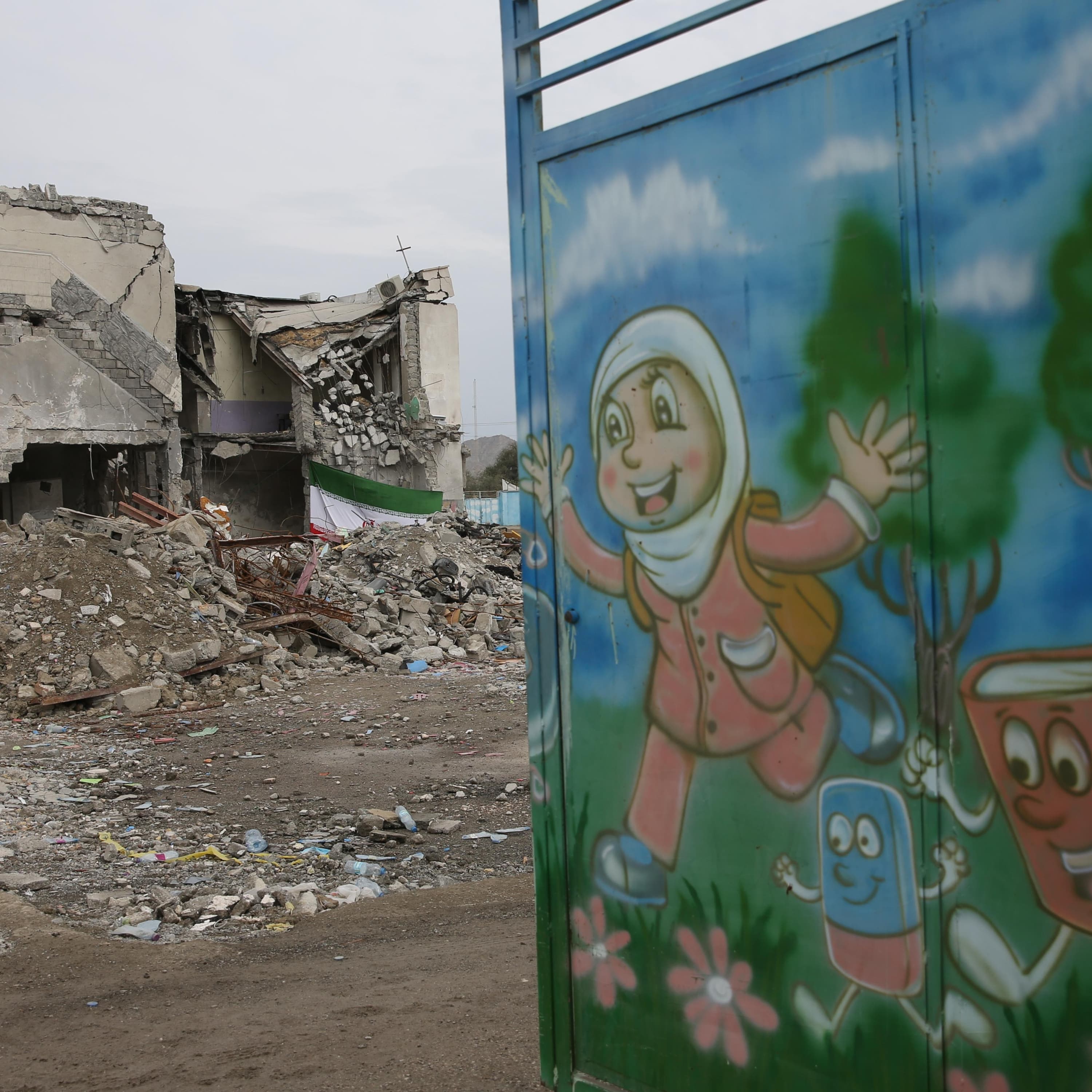
Today in Focus
The families torn apart by the Minab school bombing
00:30:35
Tess McClure reports on the US bombing of the Shajareh Tayyebeh school in Iran, and the families who lost loved ones in the attack
Loading summary
Transcript77 lines
- [00:00]
Noshir Neqbal
This is the Guardian. Today, what really happened in the bombing of a primary school in Iran?
- [00:21]
Progressive Insurance Announcer
This episode is brought to you by Progressive Insurance. Do you ever think about switching insurance companies to see if you could save some cash? Progressive makes it easy to see if you could save when you bundle your home and auto policies. Try it@progressive.com Progressive Casualty Insurance Company and affiliates. Potential savings will vary. Not available in all states.
- [00:45]
Noshir Neqbal
A warning before we start this episode does have discussion on losing children killed in war. It's February 27th, a Friday afternoon in Ramadan. Families are getting ready for iftar like they do all month, to break the fast together. Fridays are extra special. In the small city of Manab in the south of Iran, more than 1,000 miles away from the capital, two households settle into the rhythm and chaos of life with small children.
- [01:17]
Tess McClure
Zara's 8 years old. She loves art, she loves to paint, she loves cutting and pasting. And her parents say that when they can smell glue in the house, that's when they know that Zara's been up to something.
- [01:37]
Noshir Neqbal
Zara's mum and dad, Hussein and Martze, they dote on their little girl. She's got a toothy grin, pinch me cheeks and big dreams.
- [01:46]
Tess McClure
She did want to be a doctor when she was little, when she was a preschooler. And now since she's settled in at primary school, she loves her teachers. She's decided she wants to be a teacher.
- [01:59]
Noshir Neqbal
Over in the other household, Zara's schoolmates are keeping their parents busy.
- [02:04]
Tess McClure
So Barn is 10 years old and Hania is 7, his little sister. They both love to play. They love ball games, soccer, rough and tumble, jumping on their dad's shoulders.
- [02:20]
Noshir Neqbal
These two are really cute. Sobaan has huge eyes and Haniya has a hint of mischief in hers.
- [02:27]
Tess McClure
Sobhan was their first son and when he was born, they were told by doctors that he'd had delays in his growth and would likely have learning disabilities. So Matsia, his mother and father, just poured energy into helping him to thrive. She used to take him every day to go to speech therapy. He ultimately learned to speak when he was almost five. And to have him at primary school with his wee sister and doing well was a huge achievement for their family.
- [03:11]
Noshir Neqbal
In the morning, Zara, Sobhan and Hanye will wake up and get ready for school, like they do every Saturday. Their parents will juggle the usual chores, breakfast, the school run, work. It's a morning like hundreds of others. It's the last one they'll share. From the Guardian. I'm Noshir Neqbal Today in focus, the Minab school strike and the lives of Iranian families blown apart by the war.
- [03:43]
Tess McClure
So we were able to conduct these interviews through an intermediary in Farsi, where each of the families told us in a lot of detail what happened to them.
- [03:55]
Noshir Neqbal
Tess McClure is the guardians Rights and Freedom editor, and she's gotten interviews with several families in Manab, including Zara, Sobhan and Hanyas.
- [04:04]
Tess McClure
Using those interviews, we were able to reconstruct how the day unfolded. So the night before, Zara's parents went to visit their in laws and Zara stayed home with her older brother babysitting her. They prepared their own iftar together to break the fast and sent their parents a photo of the food that they'd made. Zara and her brother Ali had become really close over this Ramadan in particular and liked to bunk down together in the same bed. So when the parents get home at 11pm, classically, they're still up and chatting and they sent them to bed late at that point. So the next morning Zara wakes up and she's looking around for her textbooks. She's got a science project that day that she needs a torch and a string of lights for which are closely guarded by her older brother Ali. He's reluctant to let his little sister take them into school, so she promises him that she won't break them. And they finally head off to school with her, armed with her things.
- [05:23]
Noshir Neqbal
The school week starts on Saturday in Iran, and Hanye and her big brother Soban, who go to the same school as Zara, are up early too.
- [05:34]
Tess McClure
Sobaan and Haniya's mother, Matsia Ashani, also wakes up early. She gets her kids ready for school. Hania that morning, surprisingly for her, she sometimes oversleeps. But that morning she's awake, she's ready to go, she's dressed, she's even cleaned her backpack the night before to get to school on time. So Marcia gets the kids ready and sends them off with their dad to do the school run. She hasn't been sleeping well, so she stays home and has a nap. Mohammad Ritza, their dad, drops them at the school gate. He sees Sobaan, tumbles out of the car and grabs his sister Hania in a giant bear hug. And he thinks, you know, I'm really grateful that I have a son that loves his wee sister in this way. And then he waits at the curb there and watches them go inside. Then a couple of hours after they've been dropped off, Zara's mother gets a call from her teacher at about quarter past 11, saying that the kids need to be picked up. She doesn't say why. She's in a rush. She's got a lot of parents to call. It turns out that morning she just hangs up and moves on.
- [07:09]
Noshir Neqbal
Zara's mother calls her husband. They discuss the logistics. Zara's uncle is asked to head to the school. They hang up the call. Moments later, she hears a bang.
- [07:26]
Tess McClure
Her first thought is that it's her preschooler son. Mohammed has got out onto the balcony and learned to slam it shut as part of a new game. She calls out to him, tells him to stop it, but he says it's not him. And then she hears the next bang, which is a huge explosion. It makes the whole house rattle.
- [07:49]
Noshir Neqbal
Subhan and Haniya's parents have got the same hurried phone call. Mohammad Razai is already on the way to pick them up when he hears the same band.
- [08:03]
Tess McClure
He doesn't know what it is, but he hits traffic as he gets closer to the school. It's almost gridlocked. None of the cars are moving. There's loads of parents trying to get there. So he parks up and he starts making his way to the school on foot.
- [08:24]
Noshir Neqbal
At home, Zara's mother is beginning to panic.
- [08:31]
Tess McClure
She calls back her teacher that called, but she's not picking up the phone. And she starts calling everyone she can think of at this school. The Quran teacher, the head principal. She even calls the janitor. No one's picking up the phone.
- [08:50]
Noshir Neqbal
While Maartia is on the phone frantically trying to get through to anyone, her husband, Hussain arrives at the school to the most devastating scene. The school has been bombed. The building is in ruins. School bags and desks, toys and books are scattered among the debris.
- [09:15]
Tess McClure
He walks in and just sees this huge pile of rubble. And he immediately goes to start digging through, looking for his daughter. He goes to the place where the staircase would have been because he has this idea in his head that maybe she would have tried to get out down the stairs and he'll find her there. And he's just digging with his hands, pulling at the rubble, trying to find a person underneath.
- [09:55]
Noshir Neqbal
In shock, Hussein calls his wife.
- [10:00]
Tess McClure
He doesn't want her to lose hope. He tells her to pray. And she also gets a ride with relatives to the school. While she's there, she's watching as occasionally a child will be dug out of the rubble and very occasionally one of the children will be brought out alive. So she stands there and she prays that Zara will be found
- [10:32]
Noshir Neqbal
still on foot, having Made his way through the traffic. Muhammad Retsa, Subhan and Hanyi's father, finally arrives at the site.
- [10:45]
Tess McClure
He arrives at the school gate and kind of can't believe what he's seeing in front of him. He's bewildered by the sight. Initially, the buildings that he's expecting to see there are just gone. He keeps looking around for the classrooms and they're flattened.
- [11:07]
Noshir Neqbal
He calls his wife.
- [11:09]
Tess McClure
She's woken by a call from her husband. He's crying. He's saying something about the school being hit, but the phone line isn't working properly at that point, and she can't get a full explanation. She steps out onto the street outside and sees her brother passing on a motorbike. He's able to pick her up and he takes her to the school. While he's at the school, Muhammad Retzer hears from one of the other mothers there that Sorban actually had survived the initial blast. When the girl's side of the school was hit, he and some of the other boys had run out into the playground, and some of those boys had survived the explosion. But Sobha, knowing that his little sister was in that destroyed building, went back in to find her and was killed by shrapnel in a subsequent blast. After Hussain has been digging for a while, some of the other parents in the crowd around him, he hears from them that Zara was actually one of the first kids to be found. She's already been found and she's already died. So he goes to the morgue to find her, and he finds Zara there and is able to identify her. Mohammad Retza, after searching for his children at the site and sending out relatives to try and find them, also goes to the morgue to look for them, and he finds Hania and Soban there. Go on. He knows Soban immediately, even though he's been very severely injured. His legs are broken, half of his face is gone, he's missing an eye, but it's still him, it's still Soban. And he finds Hania there as well. Her head has been fractured, but she's still mostly intact.
- [13:47]
Noshir Neqbal
Hussain, Zahra's father, heads back to the scene.
- [13:54]
Tess McClure
He doesn't go back home. He makes his way back to the school and back to the pile of rubble that he had been digging at, trying to pull these lumps of concrete and debris off and look for the children underneath. He says that at that point he had this thought of all the other girls, that it wasn't just his daughter, that if he could find any child under the debris and occasionally one of the other parents or the people at the scene will recognize him. And they know that Zara's dead. They tell him to go home, but he keeps digging until late in that evening, as the light fades.
- [14:48]
Progressive Insurance Announcer
A short time ago, the United States military began major combat operations in Iran. Our objective is to defend the American people by eliminating imminent threats from the Iranian regime.
- [15:06]
Barclays Brief Announcer
Airstrikes hit an elementary school Saturday, killing
- [15:09]
Tess McClure
more than 160 people, mostly children.
- [15:12]
Progressive Insurance Announcer
It is a world that's all schools
- [15:15]
Tess McClure
are, protected spaces under international humanitarian law.
- [15:18]
Barclays Brief Announcer
And at this stage, no one has
- [15:19]
Tess McClure
taken responsibility for the strike.
- [15:21]
Progressive Insurance Announcer
There's only one entity in this conflict between us and Iran that never targets civilians. Literally never targets civilians.
- [15:32]
Noshir Neqbal
Tess, reading your reporting, interviewing those parents about their horrific loss and what happened that day in Mana, it really just made me cry. And now hearing their voices is so heartbreaking. You've been investigating the story from the beginning. Can you tell me about the impact of the bombing on that school?
- [15:53]
Tess McClure
I mean, the impact of dropping a 2,000 plus pound bomb on a primary school full of children, mostly 7 to 12 years old and their teachers is just kind of unimaginable. Manab is not a huge city for that community. The loss of 130 plus girls and around 30 teachers is just an incredible loss for those families. And I think what comes through as well when you listen to their voices, listen to them describing their children, is just this incredible ordinariness of family life up until that moment that just has transformed all of their lives forever.
- [16:44]
Noshir Neqbal
How did you go about verifying photographs and video from this site and what did you see and learn?
- [16:51]
Tess McClure
So in the hours after the bombing, when the news first started to emerge, there were a few videos that started to come out on Iranian social media. And those were initially verified by looking at the videos and comparing them to satellite imagery of the site. And you can see certain markers in the videos, like walls, trees, telephone towers that allow you to know that those were shot at that site. And in the case of Manab, quite quickly, a large number of videos were clearly coming from this place that you could see in satellite imagery was the school.
- [17:34]
Noshir Neqbal
And obviously a lot of the content wasn't published on the Guardian site, presumably because it was so graphic and sensitive. But sifting through that material, what kind of damage could you see had been done?
- [17:48]
Tess McClure
There are a lot of photographs and videos from the site that we don't publish because they're too graphic. But you can see that the building itself has mostly been completely leveled. It's really reduced to dust and rubble
- [18:06]
Noshir Neqbal
and just like a two story school.
- [18:08]
Tess McClure
Yeah, multi storey school that split into two halves, one half where the girls were taught and the other half the boys, the girl side was completely destroyed and the boys side is very severely damaged as well. But there are the horrendous damage, not just to the building obviously, but to the children inside of it. There are photographs and videos of very small children's limbs being dug out of the rubble, of their bodies covered in dust being carried out, those kinds of things.
- [18:41]
Noshir Neqbal
Tess, almost immediately after the strike, there were these claims made by the Israelis that the school was part of a military facility and therefore somehow a legitimate target. How did that idea take hold?
- [18:54]
Tess McClure
So the school over a decade ago was part of a wider complex of buildings that were associated with Iran's Revolutionary Guard Corps, which is a kind of domestic military and with the naval barracks. So there's a wider, a complex of buildings that includes some multi use buildings, there's a cultural center, a medical clinic and some barracks buildings as well. And around nine years ago, we can tell from satellite imagery maybe even longer, the school was walled off from the rest of that wider complex.
- [19:34]
Noshir Neqbal
Right.
- [19:34]
Tess McClure
So it's separated completely, it has a separate entrance, it's no longer part of that complex of buildings. And at that point the school also develops some visual indicators where you can see that that has been transitioned into an educational facility. So things like you can see the murals on the walls, these kind of colourful educational murals. You can see evidence of a playground, you can see a football field painted on the grounds. And you can also online, there was a functioning website for the school, it had an Internet, so it had very much been operating as a school, as an educational facility separate from the IRGC buildings for a long time.
- [20:25]
Noshir Neqbal
Tess, there's also been this battle playing out online over what information is true, what is real and what isn't. I think one of the striking things I remember is this argument over this really devastating image of the graves of these children lined up and this aerial photo of it being shared on social media and then immediately people claiming that it was AI, it was from somewhere else, it wasn't real. I mean, did you. How have you processed things like that and how you've gone about your reporting?
- [20:56]
Tess McClure
So in the case of that photograph, it shows the graveyard at Manab as they prepare to bury those children. There's a huge amount of evidence that that photograph is real. It also doesn't show any evidence of tampering or AI. So in that case we have a very confronting piece of evidence of this war crime that people are being told or are choosing to believe is fake. This is definitely a growing issue, this kind of twofold thing happening, which is firstly that there's a huge number of AI photographs and videos that circulating which have to be closely inspected to see if they are AI, which often requires looking at them frame by frame. And then there's also this flip side to that, which is we're seeing real photographs and real evidence dismissed as AI by people who are increasingly used to seeing images that can be faked or are being outright told that those images are faked. So the misinformation that spreading is only growing and I think it's becoming extremely difficult for people to know how to discern.
- [22:17]
Noshir Neqbal
Coming up, piecing together the evidence that the United States bombed the school in Manab.
- [22:36]
Progressive Insurance Announcer
This episode is brought to you by Progressive Insurance. Do you ever think about switching insurance companies to see if you could save some cash? Progressive makes it easy to see if you could save when you bundle your home and auto policies. Try it@progressive.com Progressive Casualty Insurance Company and affiliates. Potential savings will vary. Not available in all states.
- [22:55]
Barclays Brief Announcer
Today's markets move fast. Get the insights you need in 10 minutes with the Barclays Brief, a new podcast from Barclays Barclays Investment Bank. Through sharp dialogue and scenario based analysis, our leading experts analyze key market themes each week. So whether you're managing a portfolio or leading a business, the Barclays Brief podcast can help you make smarter decisions today. Stay sharp, stay brief, Find Barclays Brief wherever you get your podcasts.
- [23:30]
Noshir Neqbal
How did investigators come to work out who was most likely behind the attack?
- [23:37]
Tess McClure
In the early days after the bombing, there was some circumstantial evidence that was already pointing to the US Being a potentially likely culprit. The attack had been adjacent to this IRGC barracks. So it made some sense that potentially the school could have been hit as part of a bombing campaign that was aiming at that. And then in the subsequent days, much firmer evidence started to emerge. That was the satellite imagery of the wider complex that again showed there had been multiple hits on the IRGC buildings which were next door and the school had all been hit at the same time. And subsequently a video emerged. The video doesn't show signs of tampering or of AI, and it shows the missile landing on that complex and munitions experts have identified that missile as a tomahawk, which in this conflict is only used by the U.S. also, shortly afterwards, photographs came from inside Iran of fragments of what looked to be a tomahawk missile that they say were recovered from the scene. And again, munitions experts have inspected those fragments. They are consistent with a Tomahawk missile, with the weapons companies that the US military works with, and with the labeling and barcoding that the US military used. There's also been reporting since then from the New York Times and others of internal briefing within the US military where it does appear that they have concluded that the most likely scenario is that this was a US bomb.
- [25:27]
Noshir Neqbal
Okay, so given all of that, we can fairly conclude that the US was behind the strike. But Tess, can you tell me a bit more about how these Tomahawk missiles work and whether it's possible that the military could claim that they missed their intended target?
- [25:44]
Tess McClure
Yeah, a Tomahawk missile, it's a substantial bomb, it's 2,000 to 3,000 pounds or more of explosives. And they are as many U.S. munitions systems are known for their accuracy. Most are accurate to between 5 and 10 meters. So very high accuracy rate when you think about a building. And so the idea that one would have just gone astray, particularly to take a direct hit in the way that this one did, you can see in the satellite image, it has squarely hit building and the other bombings in the nearby IRGC facilities have also squarely hit buildings. They're not scattered over nearby roads or fields. They're extremely accurate bombings.
- [26:36]
Noshir Neqbal
Tess, if these missiles are so accurate and this primary school still got bombed, how can that be explained?
- [26:44]
Tess McClure
So if we assume that this bombing was not the deliberate targeting of a primary school full of children, then what that points to is an intelligence failure. This was a building that had visual markers as a school, had indicators from satellite imagery that it was a school, and has had those for almost a decade. So if for whatever reason those indicators that this was a school building were not picked up by the US military or were not properly communicated, then that points to an egregious intelligence failure as
- [27:25]
Noshir Neqbal
it seemed increasingly likely that the US was responsible. What have politicians in the US been saying about it?
- [27:33]
Tess McClure
So Trump came out very quickly and said that this wasn't the us, that it was Iran, that they weren't very accurate, that it looked like they had bombed their own school.
- [27:44]
Progressive Insurance Announcer
Did the United States bomb a girl's elementary school in southern Iran on the first day of the the war and kill 175 people? Based on what I've seen, that was done by Iran. Is that true, Mr. Hexa? It was Iran who did that. We're certainly investigating, still investigating.
- [28:01]
Tess McClure
His statement has not been repeated by the US Military which has said only that they are investigating the incident.
- [28:09]
Progressive Insurance Announcer
The only person in your government saying this, even your defense secretary wouldn't say that when he was asked standing over your shoulder on your plane on Saturday. Why are you the only person saying this? Because I just don't know enough about it. I think it's something.
- [28:21]
Noshir Neqbal
So, Tess, you know, given that over 150 people dead, most of them children, does this constitute a war crime?
- [28:30]
Tess McClure
Well, it's certainly a war crime to deliberately target a school or an educational facility like this. Absolutely. And even if it's not deliberate, under international law, countries also have a duty to take due care to avoid bombing civilian facilities like this, like a school or a home or a hospital. So it's not just that you can't do it deliberately. It's also that if you are careless and you don't take the steps that you should to verify that a target is military, that is also a very serious breach of international law.
- [29:14]
Noshir Neqbal
Tess, as this war has unfolded, there's been a lot of talk and a lot of stories about oil markets. And obviously a lot of that is a difficulty of actually getting these human stories out of Iran. And I wonder, given the fact that you have reported on perhaps the most emotional example of the impacts of this war, what you've taken from it and what you've learned from those parents and what's happening there.
- [29:40]
Tess McClure
Yeah, I think it's very easy when we talk about a war for that to become a conversation about mechanics, about missile capacity or about political negotiations or troop movements, and to lose sight of what physically happens to people when you drop a bomb like this on them. Maybe especially somewhere like Iran where there are additional difficulties getting in contact with people and having those conversations. But I think that's what these parents stories bring home and what they can give us is actually presenting the reality of what it is like when an enormous explosive is dropped on your child. It's just an absolute nightmare.
- [30:35]
Noshir Neqbal
Tess, thank you so much for your time.
- [30:37]
Tess McClure
Thanks for having me.
- [30:44]
Noshir Neqbal
That was Tess McClure, editor of the Rights and Freedom Project at the Guardian. Do follow Tess's reporting and more from that series@wuardian.com Tess really has uncovered crucial evidence investigating the Minab School bombing. And it's the kind of work the Guardian can do, supported by listeners like you. Whether you want to follow, subscribe, leave us a review or donate@support.theguardian.com it all helps and it takes just a moment. And that's everything from US today. This episode was presented by me, Noshi Nikbal. It was produced by Ned Carter Miles. Sound design is also by Ned Cartamiles and Ross Burns. The executive producer was Elizabeth Kassim. The latest is on a mini Easter break, but today in Focus, we'll be back with you again on Monday morning. See you then. This is the guardian
- [31:50]
Progressive Insurance Announcer
foreign. This message comes from Jackson Taxes aren't something you can only think about once a year with investments, planning for tax day is year round. Fortunately, Jackson offers tax efficient products. Visit Jackson.com for more information on how our products can make your tax bill a little bit less painful. Jackson is short for Jackson Financial Incorporated, Jackson National Life Insurance Co. Lansing, Michigan and Jackson National Life Insurance Co. Of New York, Purchase, New York.
- [32:22]
Barclays Brief Announcer
Today's markets move fast. Get the insights you need in 10 minutes with the Barclays Brief, a new podcast from Barclays Investment Bank. Through sharp dialogue and scenario based analysis, our leading experts analyze key market themes each week. So whether you're managing a portfolio or leading a business, the Barclays Brief podcast can help you make smarter decisions today. Stay sharp, Stay brief. Find Barclays Brief Wherever you get your podcasts.