← Today in Focus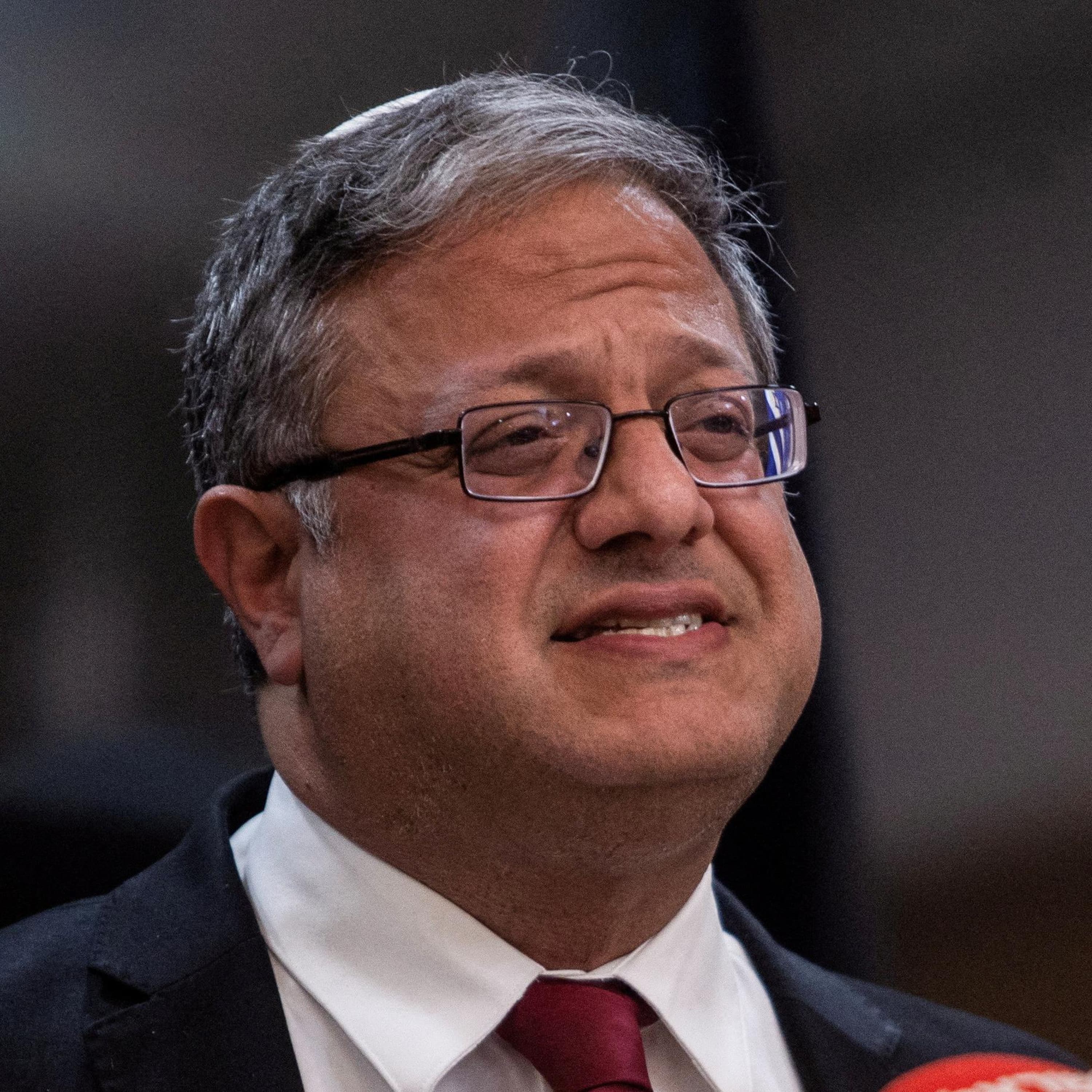
Today in Focus
The far-right Israeli minister taunting detained Gaza activists – The Latest
00:12:50
Israel’s far-right national security minister, Itamar Ben-Gvir, has triggered global outrage after sharing footage of himself taunting bound activists who had been detained as they tried to sail to Gaza with aid. Lucy Hough speaks to chief Middle East correspondent Emma Graham-Harrison
Loading summary
Transcript33 lines
- [00:00]
Lucy Ho
This is the Guardian.
- [00:11]
Stamps.com Advertiser
Shipping, billing, admin, payroll, marketing. You're managing all the things, so why waste time sending important documents the old fashioned way? Mail and ship when you want, how you want with stamps.com print postage on demand 247 and schedule pickups from your office or home. Save up to 90% with automated rate shopping. That's why over 1 million small businesses trust stamps.com. go to stamps.com and use code podcast to try stamps.com risk free for 60 days.
- [00:46]
Emma Graham-Harrison
Rubber bullets were used against them during the interception. Tasers were used. They were held in stress positions. Video shocking in and of itself, but it's also what it says about the Israeli political spectrum at the moment. Why is Israel so afraid of these small boats? What's interesting is that Ben GVIR is not concerned about what the rest of the world would think about this.
- [01:13]
Lucy Ho
The far right Israeli Minister Itamar Ben GVIR has sparked diplomatic outrage after sharing footage of security forces abusing detained flotilla activists who were trying to deliver aid into Gaza from the Guardians today. In focus, this is the latest. With me, Lucy Ho. Well, joining me from Jerusalem is our chief Middle east correspondent, Emma Graham Harrison. Emma, thank you so much for joining us. We're speaking in the wake of the release of this video by National Security Minister of Israel Itamar Bengavir of the detention of a number of international activists who were traveling or attempting to travel to Gaza on a massive flotilla that were taken onto Israeli shores and are very publicly submitted to this territory. Terrible treatment. It is a horrifying watch. What can we see in the video about the treatment of these detainees?
- [02:06]
Emma Graham-Harrison
So it opens with an activist who's shouting free, Free Palestine being sort of forced down by Israeli security forces. Then it's a sort of series of clips. We see dozens of activists who are kneeling with their hands bound behind their back with zip ties and their foreheads to the floor in rows. There's so many of them that they're laid out in rows. Ben GVIR is walking past them. He' smiling. At one point, he waves the Israeli flag and says something like, we are the owners, sort of referring to the land. And he sort of mocks them. He says, you came here as heroes. Look at you now as they're there being humiliated on camera. So it continues in that vein. And then at the end, there's footage of Ben GVIR shouting very sort of into the face of another man who has his hands bound. He's not bent over, he's sitting up, but he shouts at him, am Israel Chai, which means the people of Israel live.
- [03:02]
Lucy Ho
I mean, it is an unbelievably incendiary thing to release, presumably by design, to appeal domestically to Ben Gvir's far right audience, which we'll come to. But there has been huge international condemnation of this, given that the flotilla was carrying people of 40 different nationalities. So there's been condemnation from almost all of the governments with nationals on board, including the uk, Italy, New Zealand. Do you think Ben GVIR was expecting this level of international condemnation?
- [03:33]
Emma Graham-Harrison
So, you know, you rightly said he's sort of doing it to appeal to his own base. And I think that's one of the things that's shocking. The video is shocking in and of itself, but it's also what it says about the Israeli political spectrum at the moment that, you know, a prominent politician is releasing something that's provoked pretty universal outrage among countries who number some of Israel's very staunch allies. In Europe, we had Germany, and in America, we had the American Ambassador Huckabee, who's been really close to Israel. And yet in the domestic Israeli political context, Ben GVIR sees this video, this mistreatment, as an advantage. And, you know, after he was criticized publicly by the Prime Minister and the foreign minister of Israel, he doubled down on his video. And in response to a post on X by the foreign minister, he sort of, quote, tweeted him and said something like, the foreign minister should realize that Israel's not going to be pushed around anymore. That's a paraphrase, but something completely defiant. Absolutely. He didn't even just leave it there. He sort of came back at his domestic critics.
- [04:40]
Lucy Ho
And what was the criticism of Netanyahu? Is it unusual for Netanyahu to put out a statement, the Israeli Prime Minister, criticizing a member of his own cabinet? Because there is obviously this far right section of his cabinet that includes Ben gvir.
- [04:53]
Emma Graham-Harrison
It's a coalition government. So by its very nature, all Israel's governments since it was founded have been coalition governments. You're going to be making a political pact with parties who see things differently from you. So there's a, an aspect of navigating that Netanyahu's said nothing about previous behavior by Ben gvir, which has drawn international condemnation. Not on this scale, but, you know, he's got a record of making videos like this, humiliating, mocking Palestinian detainees while they're being abused. But, you know, for him to come out with this very public statement and so rapidly. Yes, that, that is unusual and I think reflects the, the scale of international disgust and opprobrium at this, this video.
- [05:36]
Lucy Ho
One of the things that Netanyahu, the Israeli Prime Minister was calling for was that the detainees be sent back to their home countries. It sounds like that is now happening and that people have been released and are being sent home. But what do we know about the circumstances of the way, the conditions in which they've been held in the last few days?
- [05:56]
Emma Graham-Harrison
There's over 400 of them. They left Turkey a week ago in these boats. They sailed towards Israel. They were intercepted in international waters, which had already drawn condemnation. South Korea had already questioned the legality of this decision to intercept them in international waters. They were then brought to Israel. They were always going to be deported. But Netanyahu's call for them to be deported wasn't in itself a new thing. He was basically saying they need to be taken out of Israeli custody as a way to end this mistreatment. And you know, that video, outrageous as it was, was followed up by perhaps even more disturbing reports from lawyers who'd been to visit the detainees. They said they had not been able to speak to all of them because of severe restrictions on access. But they did speak to hundreds of them. They said that three had been hospitalized because of extreme violence. They were subsequently released from hospital and they said dozens of people were reporting injuries that they believed to broken ribs which were causing breathing difficulties. They had, did not have doctors with them, these were just the lawyers. But they also reported a range of violence. Rubber bullets were used against them. What? During the interception, Tasers were used. They were held in stress positions and they also reported sexual humiliation. And some of the women said that they'd had their hijabs ripped off by Israeli security forces. And the legal center, the NGO whose lawyers are representing them at Dala, said that this represented a new patent of abuse against international activists. Not new in terms of what Palestinians have been subjected to in Israeli prisons and detention centers, but new in that level of violence and mistreatment of foreigners arrested on these flotillas. Because there have been several of them.
- [07:42]
Lucy Ho
Yeah, because I was going to say, Emma, this isn't the first flotilla, is it, that we've known about. Perhaps the most high profile one was the one on which Greta Thunberg, the activist was traveling amongst a number of other international activists. They are always intercepted by Israelis forces. But the reason those flotillas are traveling is to attempt to deliver aid to Gaza where the situation remains extremely dire. In the seven months since the so
- [08:07]
Emma Graham-Harrison
called ceasefire, there's an ongoing humanitarian catastrophe. There's nominally a ceasefire in place that came into force in October. Hundreds of people have been killed by Israeli attacks since then. Hunger is still widespread. There are high levels of malnutrition, there's shortages of medical supplies. There's a lack of real, really serious lack of access to clean water and sanitation, which exacerbates all the other problems. Doctors describe a revolving door of people coming to hospitals with intestinal problems. They're cured, discharged, go back to places where they can't find clean water and are back again. Everything that you could possibly need, food, water, medicines is in short supply. So really the situation is horrific. And I think it's worth, you know, when you consider these fertilers, of course the amount of aid that they're going to take in or attempting to take in would be symbolic when you look at the scale of the needs in Gaza where there's over 2 million people. But as a form of activism and protest to remind the world that Gaza is cut off, that its people are still suffering an extreme level of deprivation, it's actually very effective. And you know, there was a really interesting article in the Israeli newspaper Haaretz this morning saying why is Israel so afraid of these small boats? And this article made the point that the Israeli government isn't afraid of large amounts of aid reaching Gaza. There's not even large amounts of aid on the ship. What they're concerned about really is that these activists draw the attention of the world back to a humanitarian catastrophe that they would be happy to see slide, slide out of the headlines and you know, perhaps many of their allies as well.
- [09:49]
Lucy Ho
I mean, that is horrifying, Emma. And it sounds like from what you're saying, it is something that the Israeli government want to keep out of the headlines at a time when the world is looking elsewhere. But who is Ben GVIR speaking to here? Is this a domestic audience? Because there are elections coming up in Israel, aren't there, later this year? Sounds like, as per your reporting, there are elections that are being brought forward. But is this about provoking a reaction amongst his far right base and is this something that they would support and agree with?
- [10:20]
Emma Graham-Harrison
That is one of the very disturbing things about this video that, you know, what has horrified people around the world will be received with enthusiasm by some of the voters who Ben GVIR is trying to appeal to, or at least that's his view of it. You know, he's made celebrating the abuse and mistreatment of Palestinian prisoners, often on camera, a sort of trademark. He goes to prisons and then, you know, these videos have come out, not always released by him. He's reopened, for instance, an underground prison where prisoners never see daylight. Starvation is widespread. And, you know, this is happening in a, in a culture of sort of widespread dehumanization of Palestinians. And what's shocked some people is not the abuse or the mistreatment because much more serious abuse is now systemic in Israeli prisons, which the rights group B'Tselem says should now be considered torture camps, Israeli prisons and detention centers. What's interesting is that Ben Gavir is not concerned about what the rest of the world would think about this and not concerned about targeting foreign citizens who have in many cases, quite powerful governments who are now trying to stand up for their rights behind them, that it's almost like they've been dehumanised by association with this border dehumanisation of Palestinians.
- [11:38]
Lucy Ho
Extremely disturbing. Emma, thank you so much.
- [11:41]
Emma Graham-Harrison
Thank you, Lucy.
- [11:43]
Lucy Ho
That's it for today. My huge thanks again to Emma Graham Harrison, our chief Middle east correspondent. You can keep up with all of her reporting over@theguardian.com thanks for listening to this episode of the Latest Today. I'm Focus will be back in your feeds as usual tomorrow morning. The Latest will be back tomorrow night. This episode was presented by me, Lucy Hoff. It was produced by Bryony Moore and the senior producer was Ryan Ramgobin.
- [12:09]
Kai Wright
I'm Kai Wright.
- [12:10]
Kari Sherman
I'm Kari Sherman.
- [12:11]
Kai Wright
And we are here to tell you about our new show, which is rooted in this feeling that at least I have, I know you have, where, you know, it's kind of like when you wake up in the morning and you pick up your phone and you're just hit in the face with a fire hose of news, right?
- [12:27]
Kari Sherman
Like there's war, there's authoritarianism, our planet is burning. I could go on and on and
- [12:33]
Kai Wright
on and on and on and on. But like, we're trying to figure out how to manage it, right? Like, how do you manage it?
- [12:38]
Kari Sherman
I manage it by leaning in and trying to learn more and trying to figure out, okay, how can I be smarter about this particular topic and who can I talk to that's going to make me feel better about it?
- [12:48]
Kai Wright
And who can tell me who's responsible for the mess that I'm reading about? So that's our mission. That's the show.
- [12:55]
Kari Sherman
Welcome to Statesite with Kai and Carter. We're a new show from the Guardian.
- [12:58]
Kai Wright
We're talking to big thinkers and the best journalists just trying to understand the world through smart conversation and honest reporting.
- [13:05]
Kari Sherman
We don't have billionaires telling us what
- [13:07]
Kai Wright
to say Stateside with Kyan Carter is out now every Monday, Wednesday and Friday.
- [13:12]
Kari Sherman
Follow on Apple Podcasts or catch us wherever you watch or listen.
- [13:16]
Lucy Ho
This is the Guardian.
- [13:28]
Stamps.com Advertiser
Shipping, Billing, Admin, Payroll, Marketing. You're managing all the things, so why waste time sending important documents the old fashioned way? Mail and ship when you want, how you want with stamps.com print postage on demand 247 and schedule pickups from your office or home. Save up to 90% with automated rate shopping. That's why over 1 million small businesses trust stamps.com go to stamps.com and use code podcast to try stamps.com risk free for 60 days. Today's markets move fast. Get the insights you need in 10 minutes with the Barclays Brief, a new podcast from Barclays Investment Bank. Through sharp dialogue and scenario based analysis, our leading experts analyze key market themes each week. So whether you're managing a portfolio or leading a business, the Barclays Brief podcast can help you make smarter decisions today. Stay sharp, Stay brief. Find Barclays Brief wherever you get your podcasts.
- [14:27]
SoFi Advertiser
High interest debt is one of the toughest opponents you'll face unless you power up with a SOFI personal loan. A SOFI personal loan could repackage your bad debt into one low fixed rate monthly payment. It it's even got super speed since you could get the funds as soon as the same day you sign. Visit sofi. Com Power to learn more. That's sofi. Com P O W E R Loans originated By Sofa Bank NA Member FDIC Terms and conditions apply. NMLS 696891.