← Today in Focus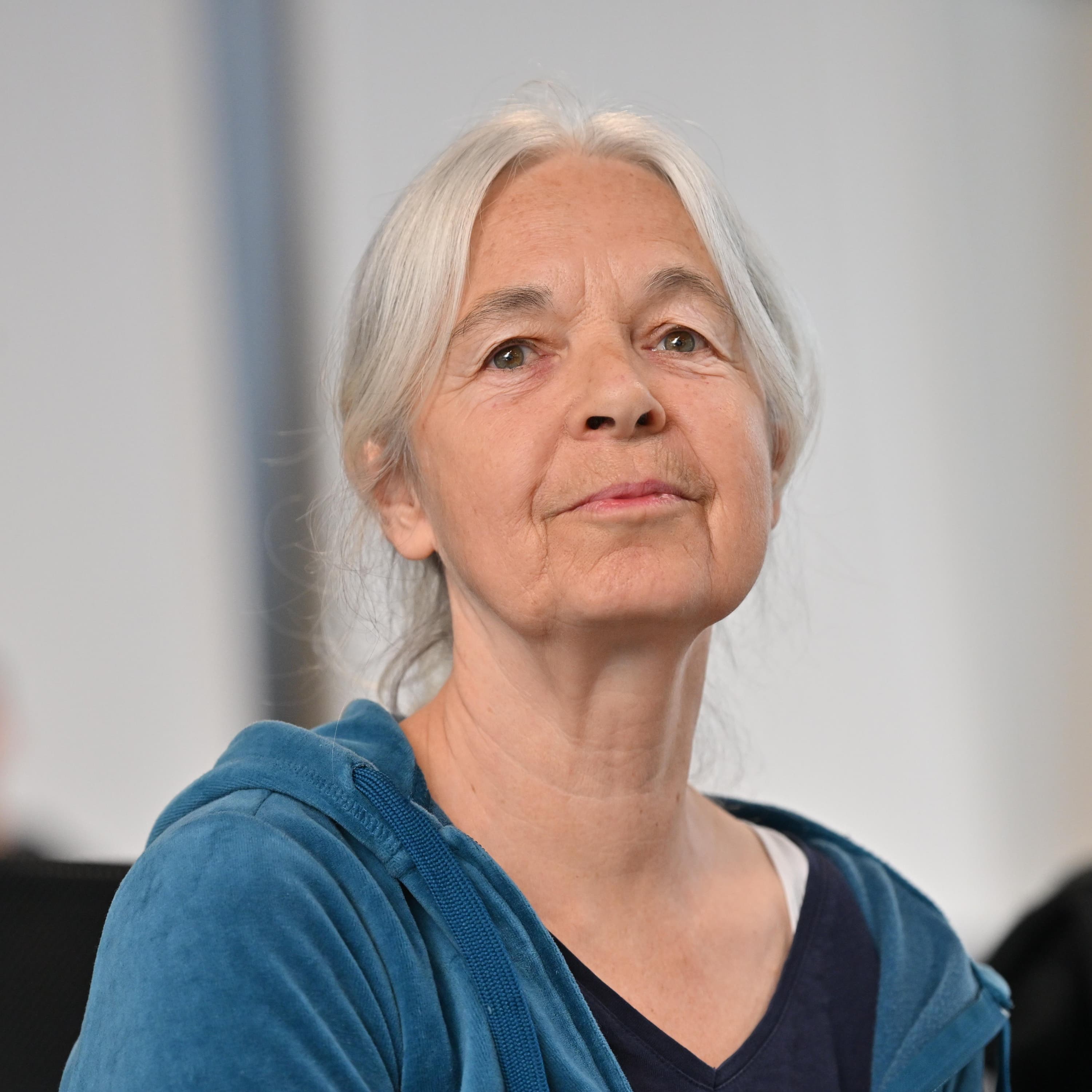
Today in Focus
The jailing of Germany’s most wanted woman
00:33:03
Dancer, dog owner, bank robber. Germany’s most-wanted woman, Daniela Klette, has been sentenced to 13 years in prison after decades on the run. Deborah Cole and Jason Burke report
Loading summary
Transcript64 lines
- [00:00]
Jason Burke
This is the Guardian.
- [00:08]
Annie Kelly
Today, on the run for 30 years, the long tale of Germany's most extreme militant group.
- [00:20]
Andrew
Hey Yetis, this is Nick and Jack from the Best One yet podcast. Now, the last company we worked at, they used Paylocity and everything just worked. It wasn't until launching our own media business, this show that we realized how rare that is. Because Paylocity is one delicious burrito of operational needs. They roll up HR finance and it seamlessly into one delicious bite. When everything wraps together like that all at once, your workforce, your tech stack, your business, you don't need more tools, you don't even need cilantro. You need one solution. And that is why Paylocity built a single platform to connect HR finance and IT with AI driven insights and automated workflows that simplify the complex and power. What's next? Or as we call it, a delicious operational burrito. Yes, we do experience a one place for all your HCM needs besties. So start now at paylocity.com1paylocity.com O.
- [01:19]
Annie Kelly
To her friends and neighbors, there was nothing extraordinary about Claudia Yvonne and many
- [01:25]
Deborah Cole
of them spoke about her quite fondly. I mean, they said that she was, you know, a bit reserved and taciturn.
- [01:29]
Annie Kelly
The silver haired 67 year old had for years lived in the same apartment in a bohemian neighborhood of West Berlin and had a normal, ordinary life. She had a dog, she went shopping, she even had an interesting hobby as an active member of a local capoeira dance group.
- [01:48]
Deborah Cole
You know, there were these kind of touching stories of her tutoring kids in the neighborhood whose German might not have been so strong. So, you know, by many she was a quite good neighbor.
- [01:59]
Annie Kelly
But Claudia was not who she seemed. In fact, that wasn't even her real name, which was Daniela Cleta.
- [02:10]
Deborah Cole
I mean, I think they were able to evade police as long as they did was that they kept their circle of people who were informed of who they were very, very small. They didn't trust a lot of people. So even, you know, her direct neighbors didn't have any indication that she was Germany' most wanted woman.
- [02:35]
Annie Kelly
For 30 years, Daniela had been on the run from the authorities, escaping justice for violent crimes committed as a core member of West Germany's most infamous left wing militant group, the Red Army Faction or the raf. They were anti imperialist, anti catholics, capitalist and violent.
- [03:07]
Archive or Narrator
You have to try and understand the roots of German terrorism and to understand that, you have to listen for the echoes of Germany's past.
- [03:19]
Annie Kelly
She was one of the last to be found and has forced Germany to confront once again, a painful era in its post war history. And at a time when political extremism appears to be on the rise, what resonance does her story still have today? From the Guardian, I'm Annie Kelly. Today in Focus, Wigs, guns and gold. How Germany's most wanted woman was finally brought to justice. Deborah Cole, you are the Guardian's Berlin correspondent. Welcome to Today in Focus. So Daniela Kleta was finally sentenced just over a week ago. But first, I would like you to take us to Germany, to Berlin, back to that moment in 2024 when the news broke that she had been arrested. How big was that news for people in Berlin?
- [04:20]
Deborah Cole
It was huge news for people in Berlin and in Germany. I mean, keep in mind, you know, she was Germany's most wanted woman for the better part of three decade. And she was probably the most recognizable face of this, you know, third generation of the Red army faction, also known as the Bada Meinhof gang. And so when she was captured after three decades on the run, it raised a lot of questions about, you know, the competence of the authorities, the fact that she was living in central Berlin and they didn't manage to find her. And it also revived a lot of painful and quite divisive feelings in German society about the legacy of the raf.
- [04:59]
Annie Kelly
And when she was arrested in her apartment, there were the kind of remnants of her time in that organisation found as well. Can you tell us some of the details of where she was arrested and what they found?
- [05:10]
Deborah Cole
So, I mean, Danilo Kleta managed to hide in plain sight for decades. And she lived in an apartment in Kreuzberg in that sort of bohemian part of the capital, right near where the death strip of the Berlin Wall had been. And in this apartment, you know, a lot of times when people talk about the raf, they talk about this sort of cinematic quality, and it really was like out of a Cold War thriller. The police burst into our apartment and they find everything that you would need for, you know, decades living underground in the heart of the German capital. So they found more than €240,000 in cash. They found a stash of gold. They found wigs and other disguises that presumably had been used during the armed robberies. But possibly in other circumstances, when she was out in public, they found a sort of fake bazooka like gun that was also used in one of at least one of the armed robberies that she took part in.
- [06:21]
Annie Kelly
Could you just tell us what she was charged with after she was arrested?
- [06:26]
Deborah Cole
Yeah, well, you know, the armed robberies that she was involved in over these last years were intended to fund her life underground, as well as the lives of two accomplices who are still on the run, who have still managed to evade capture by the. By the police. I mean, I think it's important to say that for all the kind of cinematic qualities and there was over the decades, the RAF also had this kind of glamorous quality that attracted a lot of people. But these were not, you know, victimless crimes. I mean, There were about 30 people who were killed by the RAF, and more than 200 people were injured. And even in these actions that this group, this final core of the three people, Daniela Cleta and her two accomplices, the crimes that they committed were not victimless either. I mean, they were armed robberies of, you know, armored trucks carrying cash and of supermarkets. And one of the security guards who was held at gunpoint apparently has not been able to work since that day and was so traumatized by what happened. So the group has blood on its hands.
- [07:49]
Annie Kelly
Jason Burke, not only are you the international security correspondent of the Guardian, but you're also the author of the Revolutionists, the story of the Extremists who hijacked the 1970s, which delves into the fascinating but very shocking history of the Red Army Faction. So I wanted to ask you first, could you take me back to the era of the late 60s, early 1970s Germany and West Berlin in particular, what was the country going through at this time, and how did that help shape this group's driving ideology?
- [08:24]
Jason Burke
I think you have to go quite broad to start with, and look at that moment in the late 1960s across the whole of the developed world and in fact, across much of the global south as well. And this is a moment of real mobilization, militancy, activism, radicalism, and a revolutionary project that was really reaching many, many millions of people, tens of millions, possibly hundreds of millions of people. Now in West Germany, you have a particular situation that leads to a particular form of violence, if you like, and to an extent, its position on the front line of the Cold War. But very much it's more. It's about the historical experience of Germany and about young West Germans now in their late teens or in their 20s, beginning to ask very serious, very difficult questions about the Nazi crimes that in fact, many of their teachers, judges, senior politicians, sometimes even parents may have been involved in.
- [09:33]
Annie Kelly
And tell me specifically about the Red Army Faction. How did they form? Who were they? What did they want?
- [09:43]
Jason Burke
So you have this wave of agitation in West Germany in the mid to late 60s. You have big process on the streets. What they would see is liberation struggles across the world. So that would include the Vietnamese against the Americans, the Palestinians, often causes in Africa. And out of all these protests came a radical fringe that decide that the rest haven't gone far enough and that the only answer is violence. Now in this case you had two young people, 30 year olds, English literature graduate called Gudrun Enslin, quite impressive organizer and a really steely, determined will. You had her boyfriend who was none of the above, a 24 year old called Andreas Bada, who was a kind of art school dropout and never really done much in his life, but was something of a, a bragger and a charmer and good looking. The two fell in love and they decided they were going to commit a major arson attack on a department store really to sort of protest the American war in Vietnam. They get caught almost immediately because they're not very good and they make a number of really basic errors. They are sentenced to a three year jail sentence. On appeal, they're released and they decide they're just going to go on the lam basically. And they go on this big tour of France and Italy, get back to West Germany, Barda gets caught again and this time they decide they're going to bust him out of prison or at least Enslin decides she's going to bust him out of prison. And to do that she calls on a number of other activists and this is really the moment where what is to become the Red Army Faction gels.
- [12:11]
Annie Kelly
So they, they sound kind of quite amateurish really, don't they? But even though they're doing these, you know, extraordinary things and they do manage to actually bust Bader out of prison with the help, I understand, of a journalist who joins them, Ulrike Meinhof. But when does that tip over? When do they kind of become more extreme?
- [12:31]
Jason Burke
Well, the first thing that happens is they go off to Jordan to get, supposedly to get trained and to get a bit of a break to get away after this moment of breaking Bada out of prison. And about a dozen very radical activists go out to Amman to find a Palestinian group called Fatah, which is Yasser Arafat's major organization. And that kind of was this extraordinary episode where they, they thought they were going to get trained in urban guerrilla warfare. And it was a fiasco in the end because the cultural differences were just way too wide between their hosts and the visitors that the raf, they want to sleep literally and figuratively together, women and men in the same tents and their Hosts are having none of this. You know, there are arguments over how much ammunition they can use. Bada refuses to take his velvet trousers. The assault course. I mean you could not make it up. And in the end they all end up back in, in West Germany. And what they can do is bank robberies. So they think they're going to get some funds through the bank robbers to launch their revolutionary war. They do the bank robberies and some of them go wrong and policemen start dying and in some of their own people start dying. And that moves everything into a new place. They bomb a right wing media organization, caused significant casualties. They're bombing US installations, military installations, similarly attacks on police. And, and the reaction is, is huge within West Germany, possibly too huge. I mean it may have been a semi hysterical reaction, but given the actual threat they pose. But you know, you've got roadblocks going up everywhere, you've got police everywhere, you've got wanted posters. I mean it is a, the biggest crisis in, in West German democracy since, since the war really.
- [14:25]
Archive or Narrator
The German police have launched a massive search for the terrorists. Each day all over the country there are hundreds of random checks and sudden raids. The police say that their operation will continue unabated until the suspects are caught. Today in Germany, if you don't call the Bader Meinhof group a gang, you're easily marked down as a terrorist sympathizer. And some politicians even demand that those who fail to speak out against terror should not escape the state's censure.
- [14:51]
Jason Burke
There's a lot of sympathy for these kind of activists at the beginning. It's when the RAF start using violence to kill people and people start dying that a lot of formerly sympathetic people on the left decide they've gone way too far. And that happens quite fast.
- [15:11]
Annie Kelly
And how did this all end for them?
- [15:13]
Jason Burke
It goes wrong after about a couple of years and they get caught successively, the main three leaders. So Ulrike Minoff, very interestingly is betrayed by a left wing teacher who is asked to shelter a couple of unidentified individuals. He has a pretty good idea of who they will be and he makes that phone call. That means that eventually the police turn up and they pick up Ulricky Meinhof. Gudrun Enslin is caught when she's trying to buy some new clothes for a disguise and leaves her handgun in her jacket polish pocket when she goes into a changing room. And the shop assistant picks up the jacket and thinks that is heavy. And Bada is caught when he is driving the wrong way down a Street at 4am in a stolen Porsche, Targa gets noticed. And that leads to shootout that he gets with wounded and he gets picked up then. And, and that's the end of the active on the street, outside prison. Role of the leadership, the, the main three leaders. Ulriki Meinhof commits suicide in prison in 76. But what then happens is you have a four to five year period where you have a new generation, the second generation of the Red Army Faction, who are basically dedicated to effectively the use of violence, terrorism to get their leaders out of prison. In 77, after, after a spectacular few months in one instance, particularly just ordinary West Germans when a plane was hijacked. Which really shocked people. That all fails. The government don't make any concessions. And in 77 Gudrun Enslin and Andres Bada kill themselves. And the second generation then kind of fragments and splinters.
- [17:46]
Archive or Narrator
It is the day of the burial of three of the founders of German terrorism. In the coffins lie the bodies of Andreas Bader, Gudrun Insulin and Jan Karl Rasper, the first leaders of the Red Army Faction, which seven years ago declared war on the state. But their deaths, pronounced as suicide by the government, declared a murder by their friends, do not bring terrorism to an end and Germany knows it.
- [18:18]
Annie Kelly
So it's a tragic end for all of them then. I mean, fast forward to Danielle Collette is the Red Army Faction member. She was considered part of the third generation of members. What was her generation up to?
- [18:34]
Jason Burke
Well, the third generation is really the kind of long, long, long tale of what the earlier generations were doing. I mean it was much, much less effective for fewer people involved. By that stage the struggle was over in inverted commas and most importantly, people had moved on. You know, nobody's calling for revolution any longer. It sounded like an anachronism. Even by the early 80s people have moved on to other causes. Whether it was specific identity groups asking for specific things, whether it was environmentalism, the campaign against nuclear weapons was very big except for people like Daniel Kleta who carried on and there were a few of them again, the kind of extremist fringe of an extremist fringe of a broader movement. Movement.
- [19:34]
Podcast Host (Max Rushton)
Now to an arrest here in Berlin that has sent shockwaves across Germany. Police have arrested a 65 year old woman who's been on the run for more than 30 years as a suspected member of a far left militant group.
- [19:48]
Annie Kelly
Deborah, can you tell us how she was eventually discovered after all of this time?
- [19:53]
Deborah Cole
So Germany, with its legacy of the Nazi period and then also East Germany's communist period, has Very strict regulations when it comes to data protection and any sort of overreach by the state. Even when trying to tackle things like violent extremism and terrorism, the authorities are hemmed in by these restrictions. And so doing things like using facial recognition software to just sort of, you know, run wanted people through the system and try to match them up against any, for example, press photos is not on in Germany. You would need a warrant, and you would need cause to assume that the person you're looking for, you know, had been, for example, at this event, she was hiding in plain sight. She was out. At. Every year in Kreuzberg, there's something called the Carnival of Cultures, and this was founded about 30 years ago to celebrate Berlin's diversity. So she joined that carnival almost every year. Now, this year, the carnival attracted 1.1 million people. So she was out dancing in the streets. And it also attracts a lot of press. And so those press photographs might have been the thing that actually sealed her fate. An investigative journalist from Bellingcat used this, you know, facial recognition software and used AI to do just a search like that and managed to find a press photo of her at this Carnival of Cultures. Now, German authorities have been a little bit cagey about acknowledging whether they would have, you know, use that research at all and getting on her trail. But the fact was that soon after this podcast came out, months later, she
- [21:55]
Annie Kelly
was arrested and Daniela was Germany's most wanted woman. But what about the other members of the raf? What happened to them?
- [22:03]
Deborah Cole
One of her alleged accomplices, Burkhard Gawig, has apparently also been cited in Berlin. There have been all of these more or less dubious sightings of both him and this other accomplice of hers, Ernst Volker Staub. And when the police went into her apartment, they found DNA evidence of both of them, including on an electric toothbrush. So the three of them have apparently been in quite close contact over all these years, too, which, of course, would also be fraught with risk. When there are three of you, you're gonna be that much more visible than if there's only one. And there's another sort of cinematic wrinkle to all is apparently the police burst into her apartment and, you know, immediately begin finding some of the evidence that she is who they think she is. And then she asks them if, before she's carted away, she could just, you know, go to the bathroom briefly. So she goes into her bathroom, and what does she do? There's a cell phone in there. And she manages to send a message to Burkhad Gavig and warn him that she has been captured and that they need to know this. So this, you know, kind of solidarity, you know, held to the very end.
- [23:31]
Annie Kelly
And lots has been written about, as you said, that more politically motivated activities that Kleta and her accomplices carried out. But she wasn't actually charged with any crimes related to that, was she? It was more about recent activities after the dissolution of the RAF to do with aggravated robbery, kidnapping and possession of military weapons.
- [23:54]
Deborah Cole
So membership of a terrorist organization in Germany has a statute of limitations of 20 years. And because that time had ran out by the time she was captured, she was not charged with that. That has been slightly controversial among particularly sort of, you know, conservative and more right leaning media outlets. And then she's also facing charges. She could probably go on trial as early as later this year for a series of attacks in the 1990s. This was while the RAF was still active and there were attacks against a prison, against a bank. And also they apparently strafed the then US embassy in Bonn with automatic gunfire. And so she could still have to answer to charges as well, probably before a court in Frankfurt.
- [24:51]
Annie Kelly
Can you take us to the trial which began in March 2025 and tell us what were the arguments that were presented by the defence and prosecution in that case?
- [25:01]
Deborah Cole
Well, it was interesting. You know, she's, Daniela Cleta is a quite, you know, she's a slight figure, she's now got silver hair of, you know, a woman of 67 and yet she cuts such a defiant figure in the DOC in this high security courtroom. And so, you know, she was railing even, you know, at the end against capitalism and the patriarchy and that she was going to stay true to the cause of fighting both and both outside the court and then inside the courtroom. Supporters stayed by her side, as you know, a few dozen people. But they were quite militant and vocal and then when it came to her conviction, they were shouting and booing at the judges, you know, and pronouncing their solidarity with her. So she does still inspire within maybe small but very vocal scene a lot of allegiance and perhaps romanticization of the life that she has led. Now the prosecution of course said these were not victimless crimes. She broke the law repeatedly and brazenly in an effort, effort not to advance a political cause but to avoid capture by the police for her and her accomplices. And so they push for the maximum 15 years in prison. The court ended up stopping short of that. They did not convict her of attempted murder. But you know, she got a 13 year sentence, which, you know, as German sentences go, is quite high.
- [26:51]
Annie Kelly
Coming up, could we see groups like the RAF springing up again?
- [26:59]
Podcast Host (Max Rushton)
33 days, 33 episodes, no off. Switch from the goals and the glories, the politics and the problems of the World Cup. If you want football analysis from a podcast that's been overanalysing the game for more than 20 years, this is it. Join me, Max Rushton, and our expert team team of football journalists every day of the tournament. Can England end 60 years of hurt?
- [27:17]
Jason Burke
Probably not.
- [27:18]
Podcast Host (Max Rushton)
Or will this be another year of falling just short?
- [27:20]
Jason Burke
Probably.
- [27:21]
Podcast Host (Max Rushton)
World cup daily. Listen wherever you get your podcasts or watch the full episodes on YouTube.
- [27:28]
Andrew
Many business leaders see AI's tremendous potential for their companies, but they're still struggling to turn that potential into measurable results and competitive advantage. I'm Andrew.
- [27:38]
Sarah Elliot
And I'm Sarah Elliot. And on our new podcast, Winning with AI, we're talking to CEOs who are using AI to drive business transformation, delivering real wins and changing how their companies run.
- [27:49]
Andrew
We'll hear how leaders empower and mobilize their people and make the use of AI part of how the whole organization thinks. Winning with AI.
- [27:58]
Sarah Elliot
Today's markets move fast. Get the insights you need in 10 minutes with the Barclays Brief, a new podcast from Barclays Investment bank. Through sharp dialogue and scenario based analogies, our leading experts analyze key market themes each week. So whether you're managing a portfolio or leading a business, the Barclays Brief podcast can help you make smarter decisions today. Stay sharp, stay brief. Find Barclays Brief wherever you get your podcasts.
- [28:31]
Annie Kelly
For those who live through those times, I guess this case and Daniela Cleta's arrest and now conviction holds real resonance. But as we've talked about, you know, this really does feel like a kind of cold war era drama unfolding, you know, decades later. And I just wondered, you know, how do Germans, younger Germans maybe look back on that era now? Like, does it feel like this case has come from this different time that really has no relevance to their lives now? Berlin's such a changed city from, from what it was when it was divided.
- [29:09]
Deborah Cole
It does feel like a relic from a kind of bygone era. And yet, you know, even this year in January, Berlin was hit by a sort of days long blackout. And it turned out that it was, you know, at least the group that claimed responsibility for this. It's still quite, you know, shadowy group that, you know, we're trying to sort of, you know, get to the bottom of. But they have managed to Escape capture as well. But they put out this sort of manifesto that, you know, could have been written by members of, of the raf. You know, it was very, it was anti capitalist and it was essentially saying that even these quite drastic means, you know, were justified given the crimes that were being committed in the name of German capitalist society. So this kind of radicalism has not been entirely banished, but it is certainly not as front and center and German like, you know, as it had been for, for many decades at the height of the Cold War.
- [30:19]
Annie Kelly
Jason, almost 60 years on from the founding years of the RAF, would you say that they were successful at all in advancing any of their, you know, as you said, sometimes ill defined causes through violence?
- [30:34]
Jason Burke
I don't think so. I mean, I think they did enormous harm to the progressive cause and that what did win major reforms on things like divorce and abortion rights and much tougher look at the role in the Second World War of many senior officials. And that sort of thing was with the bigger protests and the fact that, you know, tens of millions of West Germans wanted those reformers reforms and, and, and democracy functioned. So Heinrich, the brilliant German novelist, spoke about it. It was a conflict of six against 60 million, the six being the kind of RAF. And I think he's saying something quite profound there in that he was attacked for it, for being too sympathetic. But what I think he was saying is that it was in a sense they, the violence was a spectacular gesture, but it never had any serious chance of succeeding and achieving any of its aims.
- [31:36]
Annie Kelly
And it seems like this story in a way, you know, has, as we've talked about, all the trappings of a kind of Cold war drama with the jailbreaks and, you know, the, the planes being taken hostage and. But in, we have seen in the US in particular, this kind of wave of political violence start up again. You know, we saw, you know, the murder of Charlie Kirk last year. There's been multiple assassination attempts against Donald Trump. We've even got the case of Luigi Mangione, who's facing charges of assassinating US Healthcare CEO, who's become a kind of hero to many online. I just wondered whether you think this story of 1970s political violence is chiming once again with this era that we're currently living through. Or is it really just a relic of the past?
- [32:28]
Jason Burke
No, I think, I think it's really relevant. I mean, one of the things that struck me when I kind of dived into the 70s was how many parallels there are. You know, you've got a period of intense economic distress for Many people. You've got massive geopolitical instability, but also kind of geopolitical competition. You've got war in the Middle east, you've got disruptive media technologies. You've got kind of a paranoid sense that lots of people feel that they don't really know what's going on. And lots of conspiracy theories, populism, distrust of politicians. I mean, it's really similar in many ways. And you have protest movements building at the moment, some of which lead to violence. And you have a significant amount of extremism, particularly, must be said, right wing extremism. But that is, that is very threatening. I don't think we're, we're in that moment where we're likely to have immediately groups like the RAF campaigns, particularly if we're looking at the left wing. I mean, left wing violence is still relatively low level, particularly in Europe. But you could see that happening. The RAF were the extremist fringe of an extreme fringe of a much broader movement. And, and that movement wanted radical change, radical transformation, often for some very good reasons. And there are a lot of people around at the moment who want change for some very good reasons. And it would be odd if some of them, if they felt frustrated, didn't turn to violence in some kind of way in coming years.
- [34:05]
Annie Kelly
Jason, thank you so much for joining us today.
- [34:07]
Jason Burke
Thank you. It's been a pleasure.
- [34:17]
Annie Kelly
And that's it for today. My thanks to Deborah Cole and to Jason Burke and you can read all of their reporting@theguardian.com this episode was produced by Tom Glasser, Saskia Collette and Iva Manley and presented by me, Annie Kelly. Sound design was by Rudy Zagadlo and the executive producer was Sammy Kent. And we'll be back later on this afternoon with the latest.
- [34:55]
Jason Burke
This is the Guardian.
- [35:06]
Andrew
Many business leaders see AI's tremendous potential for their companies, but they're still struggling to turn that potential into measurable results and competitive advantage. I'm Andrew.
- [35:16]
Sarah Elliot
And I'm Sarah Elk. And on our new podcast, Winning with AI, we're talking to CEOs who are using AI to drive business transformation, delivering real wins and changing how their companies run.
- [35:27]
Andrew
We'll hear how leaders empower and mobilize their people and make the use of AI part of how the whole organization thinks. Winning with AI par le tu francais hablaz espanol Parliament.
- [35:40]
Podcast Host (Max Rushton)
If you've used Babbel, you would. Babbel's conversation based technique teaches you useful words and phrases to get you speaking quickly about the things you actually talk about. In the real world with less lessons. Handcrafted by over 200 language experts and voiced by real native speakers, Babbel is like having a private tutor in your pocket. Start speaking with Babbel today. Get up to 55% off your Babbel subscription right now at babbel.com acast spelled B A B-B-E-L.com acast rules and restrictions may apply.
- [36:15]
Andrew
Decisions made in Washington can affect your portfolio every day. But what policy changes should investors be watching? Washington Wise is an original podcast from Charles Schwab that unpacks the stories making news in Washington right now and how they may affect your finances and portfolio. Listen@schwab.com WashingtonWise.