← Today in Focus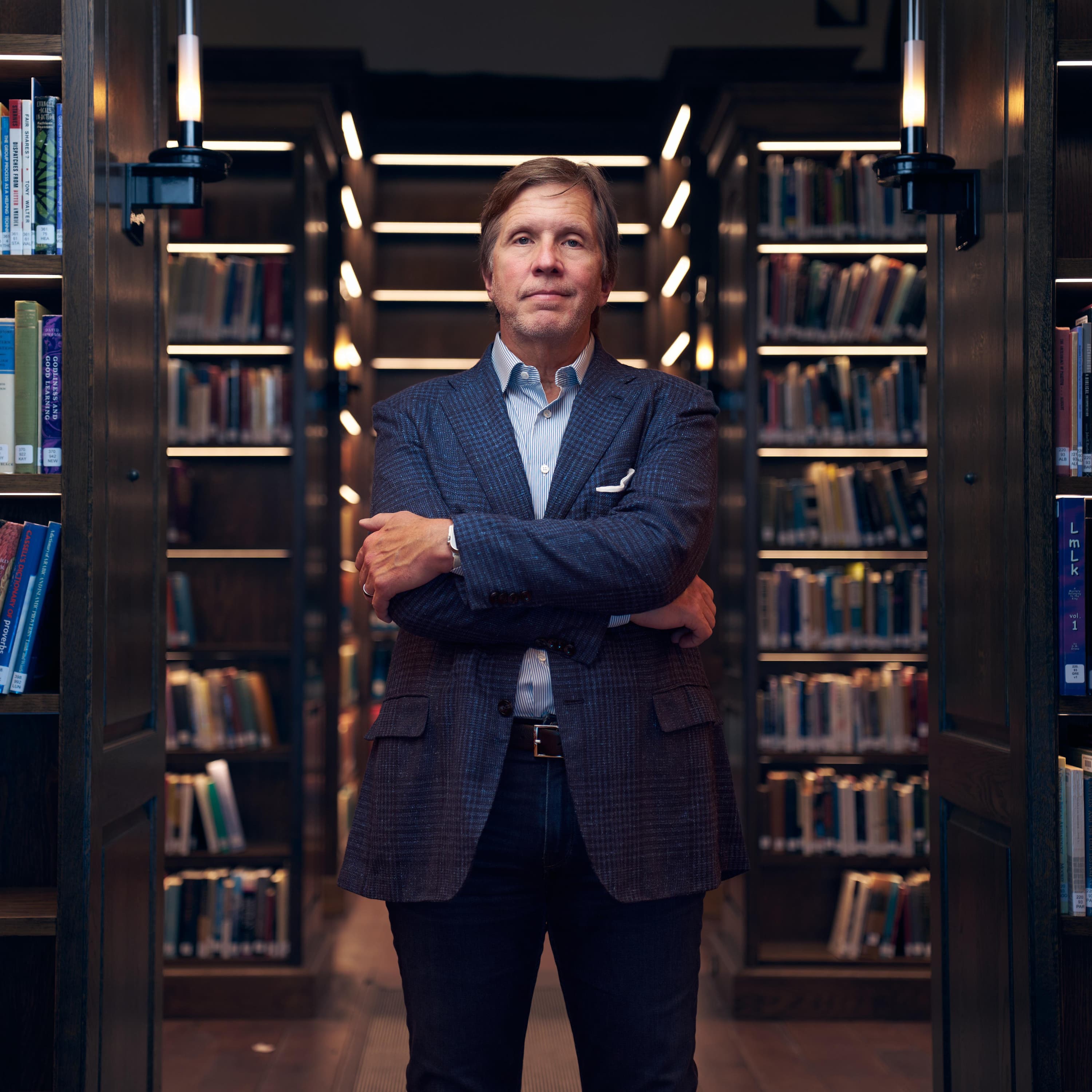
Today in Focus
The lawyer who took on Meta – and won
00:27:55
When Mark Lanier and his young client Kaley faced Meta and Google in an LA courtroom earlier this year, it seemed a bigger battle than David v Goliath. Lanier, however, was determined to prove the companies had not just stumbled into a youth mental health crisis, but had helped to engineer it
Loading summary
Transcript132 lines
- [00:00]
Jenny Kleeman
This is the Guardian.
- [00:08]
Noshi Nikvile
Today, the lawyer putting YouTube and Instagram on trial.
- [00:18]
Podcast Narrator/Advertiser
From globalization to innovation sustainability to market volatility, there's always more than one side to a story. Explore different perspectives on today's most important business and economic issues with the Flipside podcast from Barclays Investment Bank. Hear two research analysts in a lively debate and get insights from every angle. To further inform your view, listen to the flip side on your favorite platform.
- [00:51]
Noshi Nikvile
It's a bright February morning earlier this year in Los Angeles when Mark Zuckerberg finds himself walking through a pack of reporters.
- [00:58]
Advertiser Voice
Mr. Zuckerberg did meta purposely designed the
- [01:01]
Noshi Nikvile
platform to harm children. There are camera bulbs flashing, journalists jostling with mics, trying to capture a truly historic moment. Zuckerberg's in a navy suit, grey tie against a white shirt, and he looks professionally blank in a poker game kind of way. He's about to do something he's never done before.
- [01:26]
Jenny Kleeman
It's the first time Mark Zuckerberg has ever spoken in front of a jury.
- [01:31]
Noshi Nikvile
He's testifying in a case that's been brought against Meta, his company, the parent company of Instagram, Facebook and WhatsApp. And he's on the stand being cross examined by the personal injury lawyer, Mark Lanier.
- [01:45]
Jenny Kleeman
And Mark Lanier says to him, Mr. Zuckerberg, do you accept the fact that there are vulnerable children in the world?
- [01:53]
Mark Lanier
I mean, children who come from difficult homes, who maybe have learning disabilities, maybe they're socially inept, low socioeconomic upbringing?
- [02:05]
Jenny Kleeman
And Mark Zuckerberg says, yes, I do. And he says, do you accept that there are different ways that you can deal with these children? You could help them.
- [02:13]
Mark Lanier
We could say, we're going to find those children and try to help them.
- [02:19]
Jenny Kleeman
You could ignore them, go about your
- [02:21]
Mark Lanier
business, not my problem. Out of sight, out of mind, walk on by.
- [02:28]
Jenny Kleeman
Or there is a third thing you could do.
- [02:36]
Mark Lanier
We could look at those vulnerable, hurting children and our eyes could glaze over
- [02:41]
Jenny Kleeman
and you could see dollar signs on their backs.
- [02:46]
Mark Lanier
And we could realize how much money we could make if we walked all over him and abused him, took advantage of him.
- [02:55]
Jenny Kleeman
And Mark Lanier says to Zuckerberg, Mr. Zuckerberg, why did you go for option three?
- [03:01]
Mark Lanier
He said, well, I don't think we did. I said, I know you did. Let's get into it, because here are the documents that show it.
- [03:18]
Noshi Nikvile
This was a landmark civil case taking on the world's biggest and most influential tech companies.
- [03:24]
Jenny Kleeman
The case hinged on the fact that these companies had deliberately created products that would make children addicted to them with catastrophic consequences for the mental health of young people.
- [03:38]
Noshi Nikvile
From the Guardian, I'm Noshi Nikvile. TODAY in focus, the people versus social media, the landmark trial taking on addictive tech. Jenny Kleeman, welcome back to TODAY in Focus.
- [03:56]
Jenny Kleeman
Thank you for having me.
- [03:57]
Noshi Nikvile
You're a journalist and author and you interviewed American lawyer Mark Lanier for the Guardian Saturday magazine and wrote this really fascinating profile. Who is he and why did he pique your interest?
- [04:10]
Jenny Kleeman
He is a personal injury lawyer from the US From Houston, Texas. He is an extremely religious man. He preaches in a Baptist church on Sundays. He believes that he is on a righteous mission to do God's work on earth by taking on companies who he says their conduct has been less than virtuous and protecting vulnerable people. He says companies are exploiting.
- [04:39]
Mark Lanier
Faith and religion can do some wonderful things in this world and it can also be abused to do some of the most horrendous things. The Bible teaches you to take care of those who are hurting, and it teaches you to take care of children especially. And to me, the holy war is to stop the abuse. And it's a godly mission in my mind.
- [05:05]
Jenny Kleeman
He takes on cases, they're known as bellwether cases. So he will represent a small group of plaintiffs and take on a big company and show that a path to justice is possible, after which thousands of other people will bring similar cases.
- [05:21]
Noshi Nikvile
Right.
- [05:21]
Jenny Kleeman
So he's taken on some of the biggest cases that you can imagine. He was involved in civil litigation against opioid distributors.
- [05:35]
Noshi Nikvile
This week's court decision in Ohio ordered CVS, Walmart and Walgreens to pay more than $650 million to two counties. According to the lawsuit, stores were supplied with far more pills than medically necessary, fueling the epidemic.
- [05:52]
Jenny Kleeman
And he also represented the case against Johnson and Johnson. Johnson and Johnson were accused of producing talc in a way that there was asbestos in the talc, which led to women getting ovarian canc, a record $4.7
- [06:09]
Noshi Nikvile
billion jury award to 22 women and their families.
- [06:13]
Podcast Narrator/Advertiser
This was the first trial to argue
- [06:15]
Noshi Nikvile
that talcin baby powder contains cancer causing asbestos.
- [06:19]
Jenny Kleeman
Of course, Johnson and Johnson say that the link between their product and cancer hasn't been proved. But Mark Lanier managed to secure a victory. And that's opened the door to many thousands of other people bringing claims.
- [06:31]
Mark Lanier
We had 22 plaintiffs, but six women have passed away. Some are truly on their deathbed and fighting for every day of their lives. And several of them came back for the jury verdict and were hugging the necks of those jurors they were crying. They were emotional. They were showing pictures of their family. They were asking about the jurors family.
- [06:51]
Noshi Nikvile
These are enormous wins. Although I should add that the $650 million opioid victory was appealed and eventually overturned. Jenny, it seems to me that Mark Lanier is a very. But you did get an audience with him. What was your first impression of him? What was he like?
- [07:10]
Jenny Kleeman
Oh, my goodness. He's not an ordinary man. He only sleeps for four hours a night. He had flown in from Houston the night before, and it was one of those heat wave days where it was unbelievably hot, but he was just fresh as a daisy, totally animated. It's the first time I've ever interviewed someone and turned up and he knew everything about me.
- [07:28]
Mark Lanier
You are Jewish by heritage?
- [07:30]
Jenny Kleeman
Yes. You've done your research on me?
- [07:32]
Mark Lanier
Well, and also, Kleeman is.
- [07:34]
Jenny Kleeman
He had read loads of my pieces. He knew everything about my biography. It was quite weird. He's always using examples that are really immediately very vivid in your mind. And at one point, he was talking to me about how algorithms work. And, you know, this guy is from Houston, Texas, and he was saying, you
- [07:52]
Mark Lanier
go into a bookstore, you own Blackwell's at Oxford.
- [07:55]
Jenny Kleeman
Imagine you go into a bookshop, a Waterstones or a Blackwell's.
- [07:59]
Noshi Nikvile
He really had done his research.
- [08:01]
Mark Lanier
There's a biography of John Lennox that just came out.
- [08:04]
Jenny Kleeman
You know, you look at the books on the T, and you pick up a book and touch that book, and immediately all the books on all the tables change to something that statistically, someone who picks up that book might be interested in. That's how the algorithm works. So he immediately knows how to use not just colorful metaphors that you can immediately get, but references that are relevant to you personally. So I can imagine that being in a jury with him speaking in front of you, that he would be a really compelling figure.
- [08:29]
Noshi Nikvile
Just looking at that track record, taking on these huge corporations with, you know, billions of dollars just spent on litigation. He's made a career out of it. What makes his method so successful?
- [08:42]
Jenny Kleeman
He has studied different forms of oracy. He has studied different forms of psychology. He talks about litigation being like religion, being like AI. It's a tool, and you can use it for good or you can use it for evil. And he says he has basically learned the art of psychological manipulation.
- [09:04]
Noshi Nikvile
For good.
- [09:05]
Jenny Kleeman
For good. And he wants to use it.
- [09:07]
Mark Lanier
That's what the con man uses to swindle the old lady out of her money. You can do horrible things with this power or you can do good things, and I just want to do the good stuff.
- [09:17]
Jenny Kleeman
He's extremely clear. He makes things very simple. And when you're talking to him, it's easy to see how he could convince a jury that this is a very straightforward, simple case of good versus evil.
- [09:28]
Noshi Nikvile
So let's get to this huge, very high profile trial. The case against Meta, TikTok, Snap, and the owner of YouTube, Google. The plaintiff, which is the person suing these companies, was a young woman called Cayleigh. Can you tell me a bit about her?
- [09:45]
Jenny Kleeman
Cayley's 20 years old.
- [09:46]
Noshi Nikvile
Now.
- [09:47]
Jenny Kleeman
She comes from a family where she has two older siblings. Single mother brought them up. They don't have a lot of disposable income. She has some learning disabilities. And from a very early age, she was using YouTube. It began with YouTube, YouTube from the age of about 7 and then from about 9 she was on Instagram. Almost as soon as she started using Instagram, she was playing with filters, changing the shape of her nose and her eyes. She became a very heavy user of Instagram. There was one 24 hour period where she was on Instagram for 16 hours. And she said the use of Instagram meant that when she looked in the mirror and saw her face without filters, she just thought she was disgusting. She started to self harm. She was later diagnosed with body dysmorphic disorder and depression. And she wasn't sleeping because she was using these platforms so much.
- [10:47]
Noshi Nikvile
So the profile of an addict, totally
- [10:49]
Jenny Kleeman
of an addict, she said. She told me that if she was walking past a lake, a body of water, she would just be terrified that she might drop her phone and lose her phone and wouldn't be able to go online. And as much as her mother tried to stop her from using it, locking her phone away, putting time limits on her phone, would find the phone or plead, beg and plead with her mother, or she would find a way of getting hold of other phones. She got hold of a phone that used to belong to her older sister and reinstalled Instagram on that.
- [11:18]
Noshi Nikvile
So how did Mark Lanier come to represent Cayleigh? And why her? Because I imagine there are so many families so desperate to get their children help from, you know, as they see it, the harms that social media is
- [11:29]
Jenny Kleeman
causing them in these trailblazing cases, they're looking for somebody who has a good chance of winning. And I think Cayleigh was identifying because she had this documented history of diagnosis for her mental health conditions and that being directly related to her social media use.
- [11:46]
Noshi Nikvile
So there'd be Medical notes that would have said that she is addicted to this.
- [11:50]
Jenny Kleeman
There would have been medical notes documenting her compulsive behavior with social media. Her mother wanted her to bring the case. It wasn't her idea. She was frightened of bringing the case, not because of the scrutiny and the exposure, but because she thought that she would be thrown off social media by these companies. And she was terrified of that. And that has happened, she said. Snapchat have closed her account. To Los Angeles now, where a landmark trial kicks off today. Executives, including Meta CEO Mark Zuckerberg, are expected to take the steps.
- [12:28]
Noshi Nikvile
Mark Lanier gets involved in this case against Meta and Google, TikTok and Snap, and the latter two actually end up settling outside of court. This case wasn't about the content these companies are publishing because they're not publishers, as they say. It's about accusing them of intentionally designing their social media to be addictive. The trial begins. It's a huge moment. Lanier is facing dozens of lawyers on the opposing bench. How did you prepare for this moment?
- [12:55]
Jenny Kleeman
Mark Lanier told me that these cases are lost or won on several fronts. The defendants and the plaintiffs. Who does the jury like better? Is it Cayleigh on one side or Meta and Google on the other? The evidence matters. Which documents does the jury find more compelling? The lawyers? Which side does the jury warm to most? But he said in this case, there was also the battleground of AI, and he knew that Meta and Google, who have their own AIs, Gemini and Meta AI, that they were going to be using the full force of AI to win this case. So he said to me, I knew that we had to have our own AI, and it had to be a better one.
- [13:32]
Noshi Nikvile
Better than Google and Meta?
- [13:33]
Jenny Kleeman
Yes. So they commissioned a company to create a bespoke AI for Mark Lanier and his team, which incorporated bits of Gemini and Claude and ChatGPT and Meta. And when he told me that, I said, okay, well, you know, how did you use it? He said, we used it in 30 different ways. I'll give you just one. And he said to me that when they do jury selection, the jury is anonymous. But when they're selecting the jury, they ask the jurors all sorts of questions.
- [14:01]
Mark Lanier
We have questionnaires they filled out that tell us their age, their gender, their occupational history, their family.
- [14:10]
Jenny Kleeman
They know the juror's opinions. What do they think of this or that? On a scale of 1 to 10,
- [14:15]
Mark Lanier
how do you feel about this? How do you feel about that?
- [14:18]
Noshi Nikvile
Because they fill out a questionnaire.
- [14:19]
Jenny Kleeman
They fill out Several questionnaires. And he said using this data, they created a psychological and emotional exemplar of each of the 12 jurors.
- [14:30]
Noshi Nikvile
So 12 AI profiles.
- [14:32]
Jenny Kleeman
12 AI profiles. A kind of virtual shadow jury so you could try out your arguments on the kind of virtual jurors that you. Yes. Oh, my God, that's amazing.
- [14:44]
Mark Lanier
At the end of each day and
- [14:46]
Jenny Kleeman
every day, he would feed the court transcripts into his AI and be able to ask questions. What did juror number three think about this? Where did juror number five get confused? What does juror number 12 need? Need better explained? And he would be practicing on this AI jury, which is just extraordinary. And also for me, it's clever because whilst it might seem kind of sci fi, it is ultimately a human jury that's making the decision. There is still human agency there. It was just allowing him to kind of sharpen up. And in fact, when he said that to me, I thought, I wonder if he's put me through his AI, because he seemed to know me so well before I turned up. I thought, I wonder if he's already.
- [15:26]
Noshi Nikvile
Well, if he's gaming out a jury. Jenny, I'm not going him to a.
- [15:28]
Jenny Kleeman
Yeah, he's probably gaming out the journalist too. Yes.
- [15:31]
Noshi Nikvile
Incredible. And when it comes to, I don't want to call them courtroom tricks, but the magic that Lanier spun in court, I mean, can you tell me a bit more about the methods?
- [15:41]
Jenny Kleeman
Mark Lanier likes a theatrical stunt. In his opening statement, he turned up with wooden blocks, wooden kids, ABC blocks. And he said, this is as simple as addicting the brains of children. And he said, abc, abc. And he said he wants the jury to remember that, top line, addicting the brains of children.
- [16:00]
Mark Lanier
You always want to make something memorable and you always want to make something simple. There's a principle in psychology and learning called cognitive ease. We automatically assign credibility to the things we better and more easily understand. So what could be easier than the ABCs?
- [16:19]
Noshi Nikvile
So one of the ways Mark Lanier set out to prove that Meta and Google had designed their platform to addict the brains of children was through their own documents that he had access to. Through the discovery period, there were mountains of these internal documents. What did Mark Lanier learn from them?
- [16:38]
Jenny Kleeman
Google and Meta had internal documents showing that they had deliberately sought out casino science. So things that keep people constantly pulling the handle on slot machines in the quest of a jackpot that may never arrive, that they use intermittent variable rewards, giving you little nuggets of things that make your neurons fire to keep you on there.
- [17:01]
Mark Lanier
The casinos realize that they'll give you periodically surprise rewards. You'll stick around and wait for them. The same principle is used in the algorithms for Instagram and YouTube and Snapchat and TikTok. You can scroll and then about every 10 or 11 or 12, you'll get something that really just oh, wow.
- [17:22]
Jenny Kleeman
And then they found an internal YouTube document that said, you know, our goal is not viewership, it is addiction. You know, it was explicit.
- [17:30]
Noshi Nikvile
Wow. Explicit. CasinoScience also, you know, suggests the house always wins.
- [17:35]
Jenny Kleeman
And that's what it said in that document, the house always wins. There were also internal documents from Meta which showed that Meta had been, certainly during the point in time when Cayleigh was a teenager, had been deliberately seeking out very young people to be part of the platform. There were documents that said, if we want to get teens, we need to start with tweens, even though officially you weren't supposed to be using Instagram or Facebook until you were 13 years old.
- [18:01]
Noshi Nikvile
Old.
- [18:01]
Mark Lanier
They hijack the children's brains before they become adults. There's a reason that we don't let children smoke tobacco. Yeah, there's a reason we don't let children go into a pub and order a punch. Yeah, there's reason we don't let children in the casinos gambling. You've got to be old enough to have some measure of self control over this.
- [18:24]
Jenny Kleeman
Meta had a document where they openly discuss how vulnerable children, who perhaps come from backgrounds without much disposable income, or who are susceptible to mental health problems like Kayleigh's, like Cayley, that their problems are exacerbated by use of the platform. So Mark Lanier was able to show that Meta knew that vulnerable children were being harmed by their products and yet didn't make any change to their products.
- [18:53]
Noshi Nikvile
By their own admission, at least by the admission of the documents that they lay out in court, it was clear what Google and Meta were doing. How on earth did their lawyers then counter that? What was the defence they mounted?
- [19:06]
Jenny Kleeman
Their argument was Cayley might have problems, she might have body dysmorphia, depression and anxiety, but that these were things that would have happened to her anyway, regardless of her use of social media.
- [19:17]
Podcast Narrator/Advertiser
We do not believe that our platform is responsible for the teen mental health
- [19:21]
Jenny Kleeman
crisis in this country.
- [19:24]
Noshi Nikvile
We have.
- [19:25]
Jenny Kleeman
On the contrary, we think we've done a lot to try to protect kids
- [19:27]
Podcast Narrator/Advertiser
and ensure that they have.
- [19:28]
Noshi Nikvile
I guess one thing that Google and Meta had on their side in this case was that they were able to push the narrative that's already quite predominant that this is the parents fault. Kaylee's mother was to blame and also Cayleigh should have taken some responsibility and et cetera, et cetera. What did Mark Lanier have to say about that?
- [19:46]
Jenny Kleeman
They blamed bad parenting, chaotic home environment and her learning difficulties for the mental health problems that she went on to have afterwards. What Mark Lanier had to prove was causation, the link between her use of social media and the mental health problems that she went on to have. Later, he said, of course parenting comes into it, but it is completely naive to think that parents can stand up against the most aggressive, predatory form of capitalism the world has ever known.
- [20:15]
Mark Lanier
To think that we have such awesome parents in this world that they can stand up against the trillion dollar companies with their algorithms and their deceitful tools and you're a parent and you're going to take them on all by yourself. Does parenting make a difference? Of course it does. Can parents beat the machine? No way.
- [20:41]
Jenny Kleeman
Your child will go to school. They will be on their lunch break with other kids whose parents haven't put controls on their phone. Kids hang out with other kids on the bus. No matter how many times you talk to your child or try and protect your child, you cannot give your child the necessary resilience to stand up against these companies.
- [21:06]
Noshi Nikvile
Meta CEO Mark Zuckerberg expected in a Los Angeles courtroom today as the tech giant seeks to fend off a massive lawsuit suit filed by families who say Zuckerberg. Jenny, a week after opening statements, the other Mark, Mark Zuckerberg, CEO of Meta, walks into the court flanked by bodyguards and causes a real ruckus. What happened?
- [21:30]
Jenny Kleeman
He had an entourage that were bedecked in these Meta Ray Ban glasses. And you've got to imagine this. He's walking into court and he's walking past people whose children have killed themselves, and they say it's because of their use of his platforms. And his entourage is wearing these glasses. And at the time, people thought, this is so tasteless, he's using this as an opportunity for product placement. But the prosecution immediately took a different view. They had fought hard for the jury to be anonymous. And if you go in with some Meta glasses, potentially you're able to take photos of the jury and identify the jury. So they immediately had to stand up and appeal to the judge and say, these people have to take their glasses off.
- [22:15]
Noshi Nikvile
So after being chastised by the judge for the metaglasses, Zuckerberg takes to the stand. What did Mark Lanier have up his sleeve for him?
- [22:23]
Jenny Kleeman
The prosecution team I think there were six of them unrolled. A giant 50 foot collage of all of the selfies that not all of them, but some of the selfies that Cayley had posted to Instagram. These very heavily filtered selfies that Cayleigh had posted just to show how extreme her use of the platform had been. He said to Mark Zuckerberg on the stand, did you investigate Cayleigh's account for problematic use? And Mark Zuckerberg wasn't able to answer.
- [22:52]
Mark Lanier
While on the stand, Zuckerberg consistently defended Meta. He said repeatedly that his company always had a goal for their product to be. Be useful. And if it's useful, people will use it more. The plaintiff's attorney, Mark Lanier, replied, suggesting if it's addicting, people will also use it more if the jury decides in this unprecedented case.
- [23:12]
Noshi Nikvile
Well, Jenny, the trial was conducted over 43 hours, which, as I understand it, was a limit set by the judge and it concluded in March, earlier this year. And it wasn't just about Cayleigh. There was so much riding on whether Mark Lanier could prove that these companies were deliberately getting kids addicted to their platforms. What did the jury decide?
- [23:33]
Jenny Kleeman
The jury found in Cayley's favour and awarded her a total of $6 million.
- [23:40]
Mark Lanier
The verdict was a finding of liability on all counts against Both Meta and YouTube.
- [23:47]
Jenny Kleeman
Meta is going to pay 70% of the bill. Google's gonna foot the rest of it. So it's a victory for Cayley.
- [23:55]
Mark Lanier
And we've sent a message with this that you will be held accountable for the features. Just because of the features alone that drive addiction, these companies can be held accountable.
- [24:08]
Jenny Kleeman
Google and Meta are appealing. Lanier told me he thinks this is going to take seven years. The appeals. Cayley's not going to get any money until all of that is done. But Meanwhile, there are 2,000 other cases that are now being brought in the wake of Cayleigh's victory against Google and Meta.
- [24:28]
Noshi Nikvile
Coming up, if governments won't, can juries take on the tectitans?
- [24:43]
Advertiser Voice
Summer smells like salt in the air and warm sand. Restore your sense of place with Pura's new summer fragrance collection. Discover transportive clean scents@pura.com Most people don't realize how much of their personal information is being bought and sold every day. Data brokers are making billions, pulling details about you from public records and the Internet, then packaging and selling it, usually without your consent. That's how your information lands in the hands of scammers, spammers, even stalkers. It's why you get endless robocalls and why ads seem to follow you everywhere. That's where Aura comes in. Aura actively removes your data from broker sites and keeps it off. They also instantly alert you if your information shows up in a breach or on the dark web. But Aura goes beyond data protection. With one app, you get a vpn, antivirus, password manager, spam call protection, dark web monitoring, and even up to $5 million in identity theft insurance. All backed by 24, 7 US based fraud support. Other companies might sell just credit monitoring or even just a vpn. Aura gives you of it together at the same price competitors charge for just one service. Start your free trial today@aura.com safety. Protect yourself now@aura.com safety.
- [26:13]
Noshi Nikvile
Jenny, you also interviewed Kayleigh for this piece. How's she doing now?
- [26:18]
Jenny Kleeman
She's doing all right.
- [26:19]
Noshi Nikvile
Does she still use social media?
- [26:20]
Jenny Kleeman
She still uses social media. She says she thinks she always will. My sense I got from speaking to her is that she's got an enormous sense of validation. She was known as KGM in court. There are people outside the court holding out placards saying, we are kgm. And knowing that she's made a really big difference by being brave enough to go to court, have her mental health history and her personal life picked over by these incredibly powerful lawyers and win, that has made her feel a degree of self worth, which she needed. But you know, I asked her, what does the future hold for you? And she said, I don't know. I have no idea.
- [27:01]
Noshi Nikvile
Jenny, we know governments and regulators haven't done enough or aren't able to do much when it comes to tackling big tech and the harms that they've obviously caused. Do you think it is the likes of Mark Lanier and people bringing individual cases, that is where the hope lies.
- [27:19]
Jenny Kleeman
I'm British and British people don't necessarily like the idea of, of suing litigation for money. There's something a bit grubby about asking for money.
- [27:29]
Mark Lanier
I do have people who say to me all the time, we hate litigation, we hate the American court system. If there's a problem, let the government take care of it. And I want to say, really, do you really trust the government?
- [27:41]
Jenny Kleeman
And I don't know if it's because Mark Lanier was a very, very oppressive man, but after two and a half hours in his company, I did feel like actually this is the way to redress the balance is by suing these people, these companies, because once they start realizing there are proper financial consequences with lots of people suing them, they will have to change their business practices.
- [28:05]
Mark Lanier
If you've got a company where the decision makers are deliberately hurting people, somebody's got to hold them accountable. Politicians will never hold these people accountable. The only thing they fear is a jury.
- [28:19]
Jenny Kleeman
Unless our governments really grow teeth and are prepared to really tackle the harms caused by the use of these platforms, I think perhaps the only way to get any justice or to fight back is through the courts.
- [28:34]
Noshi Nikvile
And what about for Mark Lanier? What's next for him?
- [28:37]
Jenny Kleeman
Oh, he's got many. He's got many more cases. His next big target is roadblocks. He's looking at how children fall victim to sexual predators and extortionists on roadblocks. And his firm is bringing a case against OpenAI, who are the owners of ChatGPT, on behalf of some bereaved parents who say that their son was urged to take his own Life by ChatGPT. So he's massive, massive cases continuing to take on the tech titans.
- [29:11]
Noshi Nikvile
Well, Jenny, thank you so much for your time.
- [29:13]
Jenny Kleeman
Thank you for having me.
- [29:18]
Noshi Nikvile
That was Jenny Kleeman. You can read her profile of mark lanier@theguardian.com and that's it for today. This episode was presented by me, Noshi Nikbal. It was produced by Saskia Colette. Sound design is by Rudy Zagadlo, and the executive producer was Eli Block. And we'll be back this afternoon with the latest.
- [29:46]
Jenny Kleeman
This is the Guardian.
- [29:58]
Podcast Narrator/Advertiser
Most people don't realize how much of their personal information is being bought and sold every day. Data brokers are making billions, pulling details about you from public records and the Internet, then packaging and selling it, usually without your consent. That's how your information lands in the hands of scammers, spammers, even stalkers. It's why you get endless robocalls and why ads seem to follow you everywhere. That's where Aura comes in. Aura actively removes your data from broker sites and keeps it off. They also instantly alert you if your information shows up in a breach or on the dark web. But Aura goes beyond data protection. With one app, you get a vpn, antivirus, password manager, spam call protection, dark web monitoring, and even up to $5 million in identity theft insurance, all backed by 24, 7 US based fraud support. Other companies might sell just credit monitoring or just a vpn. Aura gives you all of it together at the same price. Competitors charge for just one service. Start your free trial today@aura.com safety. Protect yourself now@aura.com safety.