← Today in Focus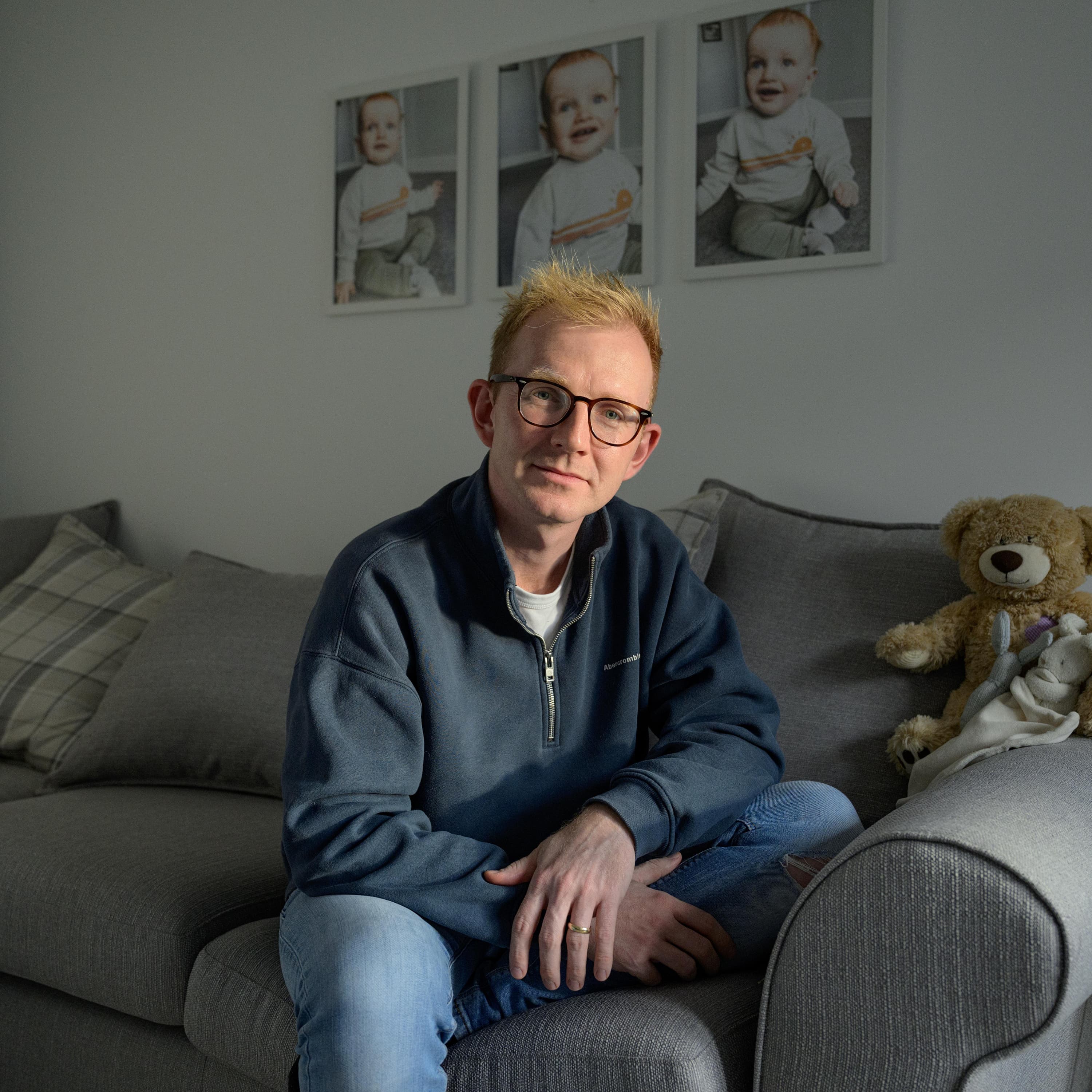
Today in Focus
What’s happened to sperm?
00:28:22
Sperm counts are in decline worldwide, but male infertility still carries a stigma. Prof Michael Carroll on what every man should know
Loading summary
Transcript88 lines
- [00:00]
A
This is the Guardian.
- [00:09]
B
Today. The lonely reality of male infertility.
- [00:20]
C
From globalization to innovation sustainability to market volatility, there's always more than one side to a story. Explore different perspectives on today's most important business and economic issues with the Flipside podcast from Barclays Investment Bank. Hear two research analysts in a lively debate and get insights from every angle. To further inform your view, listen to the Flipside on your favorite platform.
- [00:51]
D
I thought trying for a baby would be quite romantic and as a memory and whatnot. And here I am, you know, in effectively a toilet cupboard room, masturbating into a pot to create a sample and it's honestly horrible.
- [01:04]
B
Toby Trice and his wife Katie had been referred to an NHS fertility clinic after trying and failing to have a baby. They were in their 20s, in good health, ready to become parents. But it just wasn't happening. Which is how he found himself in a toilet, surveying a collection of well thumbed porn mags and thinking, you know,
- [01:23]
D
what am I doing here? This is just, just awful. I remember being at a waiting room actually of a particular clinic where men were arriving to obviously create samples for obviously checked in the laboratory and honestly the awkwardness around the room of each guy that kind of stepped away into the facilities and then come back flushed, red faced and full of embarrassment.
- [01:44]
B
When it was Toby's turn, he told himself that his wife had been through far more invasive tests on their fertility journey.
- [01:50]
D
So I just kind of dug deep and thought, right, I just gotta get on with this. You know, it's the easy bit. We joke about that, but there is obviously the emotion value that is difficult
- [01:59]
B
when we talk about infertility. The focus tends to be on the woman. We've left it too late, we've prioritised our careers. We were too picky when it came to finding a partner. That's certainly how I felt when I was going through ivf. It felt like it was all my fault. But half of the time, infertility is actually caused by issues with the man's sperm and sperm counts are on the decline worldwide. Plunging testosterone is also making headlamps. But how much should men worry? And what can they do to have the best chance of becoming a dad? From the Guardian, I'm Helen Pitt. Today in Focus, the stigma of male infertility. Toby Trice, welcome to Today in Focus. Thanks very much for being here.
- [02:46]
D
Hello.
- [02:47]
E
Hello.
- [02:47]
D
How are you?
- [02:48]
B
Yeah, good, thank you very much. Albeit melting. Can you just start by telling me, did you always want to be a dad?
- [02:54]
D
Absolutely, yeah, absolutely. I think from A young age. I, My partner and we were just 15 years old at school and from a very young age we always spoke about being parents and stuff. My oldest sister had children when I was kind of just a teenager and I loved being the fun, silly mad uncle and realized that at a very young age. That's, that's, you know, ideally I'd love to have a child or two or more in the future. So, yeah, becoming a dad was always a dream for me.
- [03:23]
B
And how old were you when you decided that you were ready to be parents?
- [03:27]
D
We're into our late 20s, actually, before we got to that phase. So 25, 26 is when we kind of started thinking about it and that's when we started actually trying. We both wanted to land good jobs, get a house, set the foundations up for a good start of a family. So we were quite some time into our relationship and, yeah, we just thought that from that point we would quickly have a baby.
- [03:50]
B
And did it ever occur to you before you started actively trying to have children, that it might be tricky?
- [03:56]
D
Never at all. Fertility issues was never a thing spoken about, certainly through my childhood, teenage years into early adulthood. So, you know, when the time comes that me and my wife decided to start a family, we just assumed that we'd fall pregnant really quickly and we'll have a baby in nine months time kind of thing. But of course that wasn't the case.
- [04:15]
B
Yeah. And how long were you actively trying before you sought some help?
- [04:21]
D
So we were actually trying for the best part of 12 months. So under the NHS sort of GP guidelines at the time, it was, it was very much that 12 months of trying for a family would be needed prior to any kind of consultation as to what might or might not be going on. So those 12 months are really weird. It was a really strange time for us because the first month we just expected it to happen. It obviously didn't. Okay, maybe, maybe two or three months time and, you know, we'll be okay. But each of those months that kind of ticked by, we were slowly starting to look at each other and go, what the hell is going on? Why. Why have we not fallen pregnant? At the time of that journey, there was friends and family of ours that also were falling pregnant really quickly, it seemed, and having pregnancy announcements and babies and whatnot because of our closest friends and people around us were having children. We just started isolating ourselves from friendship circles and stuff because we just couldn't handle being around kids yet we love them, we absolutely love children. And we were so happy for our Friends. But we just had this huge level of jealousy that, that we just couldn't explain. I was very much in denial, you know, didn't want to admit that there might be a problem. My wife, bless her, she was the one that was the kind of researcher and trying to learn what could be going on and here's some vitamins and here's some things to do and whatnot. And, and yeah, we were kind of soon sat in front of a GP and trying to ask further questions as to why.
- [05:49]
B
Yeah. And when the investigation started into why you might be struggling to conceive, what sort of test did your wife undergo versus versus you?
- [06:00]
D
So we went straight to a gynecology led fertility clinic after seeing our GP and the team there were great in terms of looking at her and all the investigative tests that are required, you know, blood samples, hormones, egg reserve. Is the tubes blocked? Is Katie ovulating? There was a whole host of things going on there. My tests were very much just a, a one stop semen analysis, but that was it for me. I didn't have any hormones checked, I didn't have any physical examinations. And you could say that the differences between our kind of care at that point were vastly different.
- [06:40]
B
And so you went through these, you and your wife went through these various tests, you had to provide your sample and then I think you were referred for ivf. Is that right? Or did you have to go private?
- [06:50]
D
Yeah, pretty much, yeah. So in our area we had two rounds of NHS funding here. Sadly, that's changed. Changed? It's gone down to one now in the Kent region.
- [07:00]
B
Okay. And were you told what the problem might be at that stage?
- [07:05]
D
Well, we kind of had some ideas. So the gynecologist that we were under the NHS mentioned to us that Katie may have or has polycystic ovary syndrome, apparently quite common. It was something that wouldn't be so much of a problem for ivf, but because we by this point were about four years deep into sort of trying for a family and no luck, we were just told that IVF is what we need. We've got sperm, Katie has a good reserve of eggs. We just need to get those together in a clinic, in a laboratory, and that's what we need.
- [07:44]
B
And at that point, where was your head at? How were you feeling?
- [07:48]
D
Really mixed. I'd say my head at that point was probably in quite an optimistic, positive way. I'm typically quite an optimistic. Anyway, I was thinking, well, maybe this is the solution we need, maybe this is the f. Of course there was the Sadness that kind of was with us at that point that, you know, we probably can't have a child naturally and that dream of having that memory and that conception was probably not gonna be the case. But we just wanted just to crack on. We were so far into this at this point. We just wanted just to have our family.
- [08:22]
B
And were you talking to your male friends about what was going on?
- [08:26]
D
No, no, no. I spoke to nobody really. There was probably one or two really, really close friends that had an idea we were going through this, but I just wouldn't open up to talk to anyone about it. I felt quite. I don't know if ashamed is the right word, but I felt really embarrassed to think that we were going through facility treatment. And we didn't, because we didn't really know the cause at the time. I was told that I was okay, that I wasn't the problem. Because you were producing sperm, but exactly that. Yeah. And I had no further tests at that point. But it was just. It was just that kind of almost shame really, that here we were going to a clinic to have a baby, and so it was better for us just to stay away from everyone and just kind of be locked in a house almost. That's kind of how it felt for ages.
- [09:12]
B
Yeah. Hard. Relate to everything that you're saying here and tell me about the. So you went, you had two initial rounds of ivf. Tell me about that.
- [09:19]
D
Yes, we had two initial rounds of IVF at our local clinic. Those rounds of ivf, well, certainly the first one, we was kind of told that we were both young, fit, healthy, and we tick all the right boxes, that this should just work. And the first round of IVF was that we managed to get, I think it was about 12 eggs collected, all of those fertilized, and then they started incubating them to grow, obviously for eventually a transfer five days later. And throughout each of those days, we were slowly losing one by one.
- [09:54]
F
Yeah.
- [09:54]
D
So to the point where we got to day five, we only had two embryos still, you know, kind of there. But yes, we had that transfer done. The horrible two week wait was. Was then after that, and we got to the end of the two week wait with no real symptoms of loss or anything. And there were some symptoms of pregnancy, but maybe that was because of the medication that my wife was on. And sadly that ended up as a negative. And it was. It devastating. Absolutely devastating. We then took a few months off and prepared for the second round. And the second round, Helen, was exactly the same. And I never forget when we came out of the clinic after the second transfer, we both come out and looked at each other and just went. There was no words, but there was just like a don't think it's going to work. You know, there was that kind of eye contact that just said it just felt the same. And, yeah, two weeks after that one, sadly, we. We didn't meet that one either. So from. From there on out, we went back to the clinic to consultant to look at what was next. Obviously, from this point onwards, it was going to be fully funded privately by you guys, right?
- [11:13]
B
Yeah, we run out six, seven grand, whatever it was.
- [11:16]
D
Yeah. So we were kind of offered a scheme to basically pay an amount of money to have almost like an unlimited rounds of IVF for a couple of, um. And it was a huge cost, but it was sold as, like.
- [11:30]
B
How much was it?
- [11:31]
D
I think. I think at the time it was about 12, 14K, I think it was. And this was the first time that I kind of really spoke up in the consultation because I felt like the donor through most of it, that just. I was just some weird person in the room, yet we were starting our family together and I just said to this, this consultant, I said, look, we're going to take some time out. This. This is not the right time for me or my wife. She was really struggling. Katie was really struggling with kind of her mental health. All of the hormones and stuff that had gone on over the last few months took her toll a little bit. And quite frankly, I just run out of energy. I was just like, I just need some time away from this. This needs to stop. So we spent 2019 away from fertility and it was at that point that I started then reaching out to counsellors, the fertility clinics, and I created an online male fertility to try and just speak to other guys because I just was imploding. I was in a really depressed state, didn't know where I was going to be, didn't really want to be around anymore and needed help. But throughout that support group, we decided to bring on expert panelists to do talks on fertility and in particular male fertility, because us guys were in there kind of asking for answers. And there was this guy that joined, who I'm very fond of today, a gentleman called Mr. Jonathan Ramsey, who's one of the world's best consultants, in my opinion, for men. And he came on and did a talk about male factor infertility issues. And one of the things he was talking about this particular day was varicoceles and some of the symptoms that Men can have such as dull aches in their testicles, a lump that's visible almost like a kind of bag of worms, as it's described. And I was sat there nodding away, thinking, this is me. This feels like our scenario. Our embryos were dying off very quickly, like he explained could happen. And we didn't have any answers as to what our fertility treatment was at the time. So I thought, you know what? I need to go and see this guy and have a physical examination and some further investigative tests. So I popped along to Jonathan Ramsey just a few weeks later, actually, and within about five minutes of talking to him and him observing me, he said, look, you've got clearly a varicocele present, but let's do the other test just to kind of quantify everything and make sure that we know what we're working with. And I got those results back very quick and very quickly. The compass from my wife turns straight to me as the issue the whole time.
- [14:10]
B
And how did it feel when you learned that, as you said, the compass had shifted towards you and that it was your issue?
- [14:18]
D
The feeling of emotions was, quite frankly, brutal. Up to that point, Katie would always say to me, why don't you leave me for another woman that can give you a child? And bless her heart, I always used to reassure her that she was my love. We'd been together from childhood, and there's no way if we could never have children. There was no way I was going anywhere. And I could never relate to why she said those things. And she had this guilt on her shoulders for, you know, for nearly five years. And suddenly that changed to me. And all of the things that she felt, I immediately felt. I immediately felt so much guilt, shame, anger that she had gone through all of that, all of that invasive treatment. And yet I was the problem that whole time. And. But equally, I thought, well, at least now we have a reason and we have a treatment pathway that probably will benefit us and may not guarantee us having a child at the time, but it was definitely going to be an improvement.
- [15:28]
B
Doctor Michael Carroll, you're an associate professor in reproductive science at Manchester Metropolitan University, and you are the author of your nuts, the science of how they work for your fertility. How did you get so interested in testicles and sperm?
- [15:42]
A
Well, I've been interested in reproductive science for. For many years. As a biologist, there's kind of a deficiency of information out there for men. But one of the reasons why I'm vocal about this is to give men that. That safe space to be okay to talk about it. I remember one time I was in a pub and I was talking to two guys. They asked what you do? And I told them. And then his pal went to the bar and he just kind of looked around sheepishly and then started to talk about his infertility. And he's going through IVF and he's not producing quality sperm and how it's affecting him. And I listened and let him talk, but then he said, don't tell anyone, just don't tell anyone.
- [16:18]
B
And I think, you know, infertility is very lonely, you know, for men and women, but I think particularly lonely for men.
- [16:24]
A
It's very low. Yeah. Often men suffer in silence with this. It's something they. They keep to themselves.
- [16:31]
B
I think when couples are trying to conceive, it's often quite far down the road of investigations when they find out that actually it's male factor infertility. So we've spoken earlier in this episode to a guy called Toby Trice who said that he had a very late diagnosis of varicocele, but he'd been told at the start of all of their investigations, oh, you've got a normal sperm count, no problem. Do you think that's quite common? And is there a different approach that could have prevented all that anguish?
- [16:58]
A
Yeah, that is a problem. Waiting until you're trying for a child before you have a reproductive health assessment or a fertility assessment is often the first time that a man becomes notified that his sperm quality is poor or there are some issues there. One thing is with the varicocele, it's a very common condition in infertile couples. So I think it's over 40% of infertile men will have some grade of varicocele. And varicocele is like varicose veins in the scrotum. There's a network of blood vessels in this scrotum that feed into the testes and it's like a heat exchange pump. It keeps the testicles warm or cool because the testicles need to be between 2 and 4 degrees lower than body temperature for sperm production. Now, sometimes they become laxed, so you get a pooling of blood within the scrotum and that increases testicular temperature and damages the sperm. Most men don't realize they have that. And one thing I would say, if your scrotum looks like a bag of worms, then that's a good indication that you may have varicose here and go get it checked. And it's often something that can be rectified fairly straightforward with surgery.
- [18:03]
B
How Much of a growing problem is male infertility around the world.
- [18:07]
A
It is a growing problem. One in six couples are considered experiencing infertility throughout their reproductive life. And that's a WHO World Health Organization statistic. And 50% of that infertility is attributed to the male.
- [18:22]
B
Why do you think that? The focus appears to be primarily on women's issues rather than the male factors.
- [18:29]
A
It's probably historical. Women are more aware of the reproduction. They're the ones who give birth. They're also aware of the reproduction because they go through cycles. Men don't. They don't have those cycles of reproduction. They get an erection and ejaculate. And if they can do those two things, it's assumed that they're okay. But we know it's not true anymore. It's 50, 50 for men and women.
- [18:53]
B
Yeah. But I'm sure many listeners will have read the headlines in recent years about the decline in sperm count in your average man. Is that true? And what might be the cause of this drop in sperm quality and count?
- [19:07]
A
Yeah. Two major international studies were published. In the first study, they showed overall sperm count was 60% decline. And in the follow up study, they showed that it was a decline of about 2.6% per year in sperm count. And that's a drastic drop. Subsequent studies have shown that there was an increase in sperm count. So what it demonstrates is that regionally there is a decline in sperm count, but universally it may not be as drastic as you think.
- [19:37]
B
Yeah. And what are some of the causes of decline in sperm?
- [19:41]
A
The studies attributed that to the western diet and also an increase in environmental toxicants. Chemicals in particular endocrine disrupting chemicals which can mimic hormones and as a result disrupt the normal hormonal signaling that makes sperm.
- [19:57]
B
And where would you find those chemicals?
- [19:58]
A
They're everywhere. They're usually used in plastics, in fire detergent or retardants.
- [20:05]
B
These are the pfas. The forever chemicals.
- [20:07]
A
Yeah. Forever chemicals. Yeah. We live in a soup. We're surrounded by these chemicals now. There's a close association, but a causative link is something that has to be determined yet. There are causes that we know do result in post sperm quality. Smoking is one of them. And that can damage damaged sperm.
- [20:24]
B
What about vaping?
- [20:25]
A
Vaping is not the healthy alternative. There's evidence to suggest that it can impact testicular health as well. But the data is still emerging. The things that definitely cause postpartum quality is anabolic steroid use and people who take testosterone replacement therapy or trt. We see an Increased growth in that men are influenced by social media pundits who are saying, take these TRTs and it'll help invigorate you. If you have low testosterone, taking those and anabolic steroids definitely can damage sperm quality or testicular health. Obesity is another one.
- [21:00]
B
Yeah. And it's interesting that you mentioned taking testosterone as being something that has been proven to reduce sperm quality because there was a study last week which said that average testosterone levels have halved over the past 50 years. How worrying is that in terms of the decline in male fertility?
- [21:20]
A
The decline in testosterone is not a new notion. It's been recognized for a few years now. It's most likely linked to lifestyle factors. So sedentary lifestyle, lack of exercise, poor diet, in particular processed foods. Chronic stress is another one again, lack of sleep. So. So it's multifactorial. Taking testosterone, exogenous testosterone is not healthy without proper clinical investigation. If you take exogenous testosterone like anabolic steroids, for instance, that tells the brain that there's enough testosterone swimming around or floating about in the body. You don't need to tell the testes to produce anymore. So it shuts that system down and then that's where you have poor sperm output.
- [22:03]
B
Coming up, how the manosphere is politicizing male infertility and what happened after Toby got his diagnosis.
- [22:25]
F
He's dribbling the ball with everything on the line. He's driving down the pitch. He's facing price hikes and cuts past him. Carrier contracts, tries to block him. Oh, he leaves him in the dust. He's at the edge of the box. He cuts past the non stop group chat, trash talk. He clears on goal. He shoots. No unlimited data for $25 a month. Forever.
- [22:44]
E
Visit your local Boost Mobile store today to get unlimited data with a price that never changes. Boost mobile after 30gb, customers may experience lower speeds. Customers will pay $25 a month as long as they remain active on the Boost $25 Unlimited plan.
- [23:01]
B
And this drop in testosterone is becoming kind of a big culture war topic. It's a big talking point among the MAGA movement in the U.S. yeah, we
- [23:09]
A
are below replacement right now. That is a national security threat to our country.
- [23:13]
B
RFK Jr. Trump's health secretary has talked about it for men.
- [23:19]
A
In 1970, men had twice the sperm count as our teenager students had. This is an existential crisis for our
- [23:28]
B
country and it seems to be certainly in the mouths of those kind of people bound up in this idea of there being a crisis in masculinity as well as Those who are worried about forever chemicals, microplastics and so forth. Do you worry that this issue becomes politicized rather than being based in the
- [23:45]
A
science it can be? And I think what's happened in the U.S. the science is becoming politicized. There's a massive step back in science in the U.S. which is unfortunate.
- [23:56]
B
Do you monitor stuff on social media?
- [23:59]
A
I do, I'll watch a few things. Testosterone replacement therapy, hormone replacement therapy. I started doing all that when I was 40. All that matters is that you have it in your system. If you don't have it in your system, there are a few certain podcasts that kind of measure masculinity in terms of numbers. There's a lot of masculine mythology out there. In my experience, if you eat shitloads
- [24:23]
B
of raw onion, it's going to increase your testosterone level.
- [24:25]
A
Massive raw onion. Do women want to be around you though? The low team it is. If men are lethargic, they're not measuring up to whatever standards the gym bros might portray, then one of the suggestions is take testosterone and take MTRT and build up your, your testosterone levels and then that would reinvigorate you as far
- [24:47]
D
as the, you know, main thing obviously is start off with the testosterone. So this is good old testosterone in anthate. This is 200 milligrams per milliliter and I am right now using 120 milligrams per week.
- [25:03]
A
That's not, that's not a new idea. I mean it's going back to the 1800s when George Sequoia Brown would used to mash up dog testicles and guinea pig testicles and inject himself with those extracts. Yeah, it was called the Brown Squared elixir and there's a whole quackery industry built around that.
- [25:19]
B
Maybe there are men who are listening who really want to be your father one day and maybe they're worried. And what can they do to make sure that they're in tip top shape when it comes to their sperm and testosterone and anything else you need to have the best chance of becoming a father.
- [25:37]
A
I think. Don't look at reproductive health or testicular health as separate to your overall health. They're all connected. And any advice for good health will help your sperm production unless you have a condition or very obvious reason for that. So get enough sleep, eat well, exercise, don't smoke, moderate alcohol, things like that. And if they are concerned or if they want to know, get a semen analysis test and that will tell you if you are producing sperm and the quality of the Sperm at that time. It's about information, it's about health literacy, it's about being informed and making informed choices as you go along. If they pull the bicep in the gym, they would talk about that. If they're not producing sperm, they can talk about that. The fact that your testicles aren't producing sperm doesn't make you less of a man. There's more to it than that.
- [26:33]
B
Toby, did you ever link your fertility issues to your own masculinity?
- [26:37]
D
I certainly questioned that once I got that, that information to say that I was the problem. I actually felt less of a man because I couldn't give our relationship what we intended to. But it should never be the case. It's so, so important that men understand that fertility and masculinity are completely, completely separate camps. You can be the best husband in the world and struggle for conception because you have infertility. You could be very fertile and be the worst husband in the world. Yeah, that's right, yeah. So for me, you know, I think I questioned it for sure, but, you know, I really strongly believe that men should never, ever question that.
- [27:20]
B
And it seems amazing that after all those years and having gone through all of the tests on the NHS for your first two rounds that nobody looked at your testicles, if it was that obvious in a five minute examination. Because as you said, this sort of bag of worms effect is visible in some men anyway, isn't it?
- [27:37]
D
Yeah, that's right, yeah. And if, you know, a GP could have picked this up very quickly, the guidelines have changed, thankfully that varicocele is now recognized as a male factor infertility issue. At the time it wasn't. So in fairness to the GPs at the time that that perhaps wouldn't be looked at, but you're quite right. Just by doing a physical examination and checking that things are working, my wife had physical examinations to make sure things work in her. So why is that equality not spread across men? And I think the most frustrating but equally thing that I'm most grateful for today is that that diagnosis that I had in the treatment that I then subsequently on to have finally allowed me and my wife to have a natural conception. And a little boy was born nine months later and he's now pushed on for nearly five years old, which is crazy when I say that out loud, but. But it completely changed my life.
- [28:33]
B
That was Toby Trice. Thanks so much to him and to Dr. Michael Carroll, if you are struggling with infertility, I would really recommend the charity Fertility Action. And if you appreciated this episode, perhaps you'd consider giving us a review. We always enjoy hearing what you think of the show and it also helps other people to find us. And if you want to hear more about the drop in testosterone worldwide, our sister podcast, Science Weekly did a great episode on just this topic last week. And that is all for today. This episode was produced by Ruth Abrahams and Alex Atak and presented by me, Helen Pitt. Sound design was by Ross Burns and the executive producers were Sammy Kent, Hammer Khalili and Danielle Stevens. We'll be back in your feeds this afternoon with the latest.
- [29:21]
A
This is the guardian
- [29:25]
E
foreign.
- [29:31]
F
He's dribbling the ball with everything on the line. He's driving down the pitch. He's facing price hikes and cuts past him. Carrier contracts, tries to block him. Oh, he leaves him in the dust. He's at the edge of the box. He cuts past the non stop group chat trash talk. He clears on goal. He shoots unlimited data for 25amonth forever.
- [29:49]
E
Visit your local Boost Mobile store today to get unlimited data with a price that never changes. Boost mobile after 30gb, customers may experience lower speeds. Customers will pay $25 a month as long as they remain active on the Boost $25 Unlimited plan.