← Today in Focus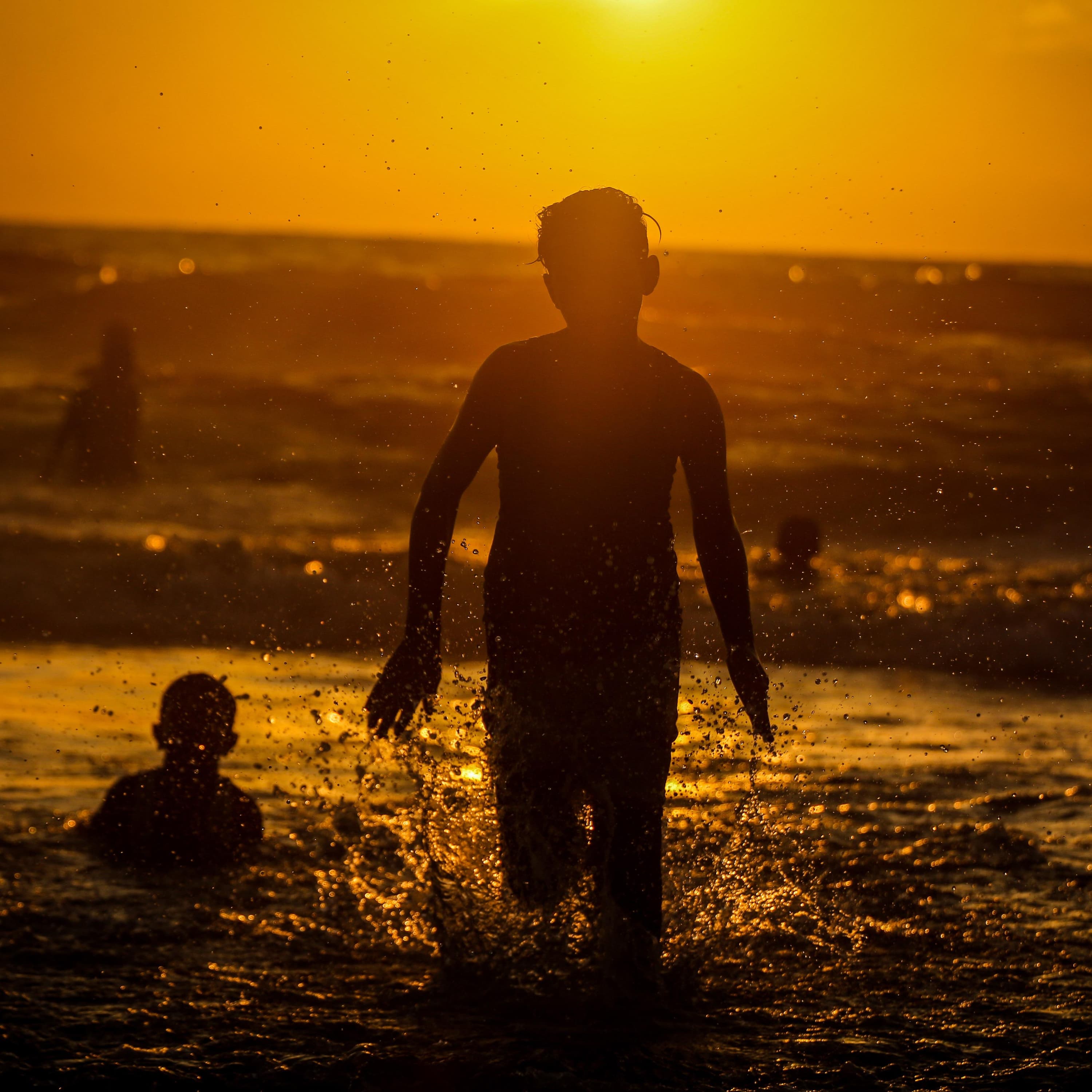
Today in Focus
The man building swimming pools in Gaza
00:33:41
Journalist Amjed Tantesh talks about his project to teach Gaza’s children how to swim. With reporting from our chief Middle East correspondent, Emma Graham-Harrison
Loading summary
Transcript57 lines
- [00:00]
Annie Kelly
This is the Guardian. Today, the man teaching Gaza's children to swim again.
- [00:17]
Aura Advertiser
Most people don't realize how much of their personal information is being bought and sold every day. Data brokers are making billions, pulling details about you from public records and the Internet, then packaging and selling it, usually without your consent. That's how your information lands in the hands of scammers, spammers, even stalkers. It's why you get endless robocalls and why ads seem to follow you everywhere. That's where Aura comes in. Aura actively removes your data from broker sites and keeps it off. They also instantly alert you if your information shows up in a breach or on the dark web. But Aura goes beyond data protection. With one app you get a vpn, antivirus, password manager, spam call protection, dark web monitoring, and even up to $5 million in identity theft insurance. All backed by 24. 7 US based fraud support. Other companies might sell just credit monitoring or just a vpn. Aura gives you all of it together at the same price Competitors charge for just one service. Start your free trial today@aura.com safety. Protect yourself now@aura.com safety.
- [01:41]
Seham Tantesh
I'm standing now in the beach in Deir Al Balakh, in front of a swimming school that has been built by hand. On the beach, it's separated from the open sea, using large turbulence sandbags to protect it from the waves. It gives children a safer place to learn how to swim in the sea.
- [02:02]
Annie Kelly
It's a sunny morning on the beach in Deir Albar, a city in the Gaza Strip, and Seham Tantesh, a young journalist, is surrounded by children playing in the water as they wait for their swimming lessons to start. The daily lessons that are taught here on the beach attract hundreds of children every week. Mustafa is one of them. Just nine years old, he wants to be a doctor when he grows up. He's been taking lessons now for just over a month and although he started from scratch, he's telling Ceyhan what a great swimmer he's already become. 10 year old Mariam is also taking lessons on the beach. She too has got big plans for when she grows up. She wants to be a dentist. She tells Seyham how happy she feels when she's swimming. She loves her swimming coaches and her favorite strokes are backstroke and doggy paddle. Everywhere she looks, Seham can see children playing, learning how to dive, screaming with laughter in the water with their friends. The pool is a place of joy, but the war is never far away. Alma is 13. She was walking with her mother when an Israeli Shell exploded nearby. Alma survived, but her mum was hit and killed by shrapnel. For Alma, like many of these children, the hours she spends on the beach are the only time that she's able to forget the scars that the war has left on her life.
- [04:19]
Seham Tantesh
The beach where I am standing now and where the children is, are enjoying today are surrounded by thousands of tents belonging to displaced families who were forced to flee their homes and their area when the war is began.
- [04:39]
Annie Kelly
From the Guardian, I'm Annie Kelly. Today in focus, the swimming school bringing joy to the children of Gaza again.
- [04:57]
Amjed Tantesh
Hello.
- [04:59]
Annie Kelly
Hi, I'm Jed. I'm going to turn my camera on to wave at you. Hang on. Hello.
- [05:04]
Amjed Tantesh
Hello. Nice to see you. Nice to see you.
- [05:08]
Annie Kelly
Nice to see you too. Amjad Tantesh is a bit of a legend here at the Guardian. Two of his daughters, Malak and Anas, reported for the Guardian throughout the most recent conflict and are now here in the uk. And Seham, the journalist who was standing on the beach, is also his niece. As a journalist, Amjed's worked with our reporters for decades, as well as lots of other journalists from other publications across the world. But he's also been many other things. Photographer, strawberry farmer, father of seven.
- [05:40]
Amjed Tantesh
But this is like a handmade makeshift tent. This is my first tent, actually.
- [05:46]
Annie Kelly
We're speaking to Amjed through a really shaky Internet connection from the tent. He built his family in an informal settlement on a beach. But decades ago, he still lived in his home village in the north of Gaza on a farm in Beit Lahir, which is where he was first introduced
- [06:04]
Amjed Tantesh
to swimming at a very early age of 5, 6 years old. We grew up in the farm, so we have a farm pool. And this farm pool represented the major joy to all of us and all escape during summer hot days. Basically, I learned swimming at the hand of my elder brothers, especially my elder
- [06:33]
Annie Kelly
brother, Bahajat, with Bajat, who's also Ceham's dad, he'd spent hours at a time swimming laps in a homemade 2 by 2 metre swimming pool on his family farm. And he got really good by his early 20s. He even attempted to qualify to represent Palestine at the 2000 Olympics.
- [06:53]
Amjed Tantesh
But unfortunately, it was too late for me to achieve qualification records. I started as a professional swimmer at very late age. So I decided to achieve my dream, my Olympic dream, by establishing this swimming initiative and achieving it via children, and allow them to qualify, starting with the children as young as six.
- [07:23]
Annie Kelly
In 1999, Amjed started his swimming school to train the next generation of future Olympic swimmers, but also to try and provide Gaza's kids with life saving skills.
- [07:35]
Amjed Tantesh
Yeah, unfortunately at that time every year we witnessed multiple drowning incidents. There were no lifeguards at all on the beach either. You know, we were under occupation and nobody cared about people dying on the beach. So this was another major objective for me to continue the swimming initiative.
- [08:03]
Annie Kelly
The problem was it was hard to find anywhere to run his lessons. So Amjad started building swimming pools one after the other. They were destroyed in Israeli attacks, but he never gave up. Each time one pool was destroyed, he would build another in fishing ports on the beach, even on his family farm.
- [08:23]
Amjed Tantesh
Actually, I've repeatedly built pools, uncountable amount of time. Now I cannot remember the number of pools I have to build and rebuild.
- [08:36]
Annie Kelly
At first, parents were scared of letting their kids join his lessons. Almost nobody in Gaza knew how to swim. But before long, word got out and the school took off.
- [08:46]
Amjed Tantesh
So as the swimming lessons grow in popularity, swimming started to become like the dream of every child in the town. But children could not pay or join the lessons. So I started to offer free swimming lessons for limited numbers of children who couldn't afford the lessons.
- [09:09]
Annie Kelly
And over the next 15 years, through repeated Israeli bombardments and terrible personal tragedies, his two young nephews were killed by the Israeli military on the roof of their family home in 2008. Amjed kept going.
- [09:25]
Amjed Tantesh
And then I have the idea of establishing safe natural bowl inside the sea itself using the rubble of destroyed houses. And it was like one of the most successful and heavily beautiful pools that I have ever built. I used the foundation of destroyed houses to build this pool, like more than 1,000 square meter boule, which could host hundreds of children at a time.
- [10:11]
Annie Kelly
And then the recent and the ongoing conflict in Gaza broke out in October 2023. I know your family was displaced several time. Can you just describe what living through this last three years has been like?
- [10:30]
Amjed Tantesh
You know, we had to stop the initiative during the past two years as a result to the war, the war that destroyed everything, literally everything, including my entire beloved town of Beit Lahiya in northern Gaza. My house, my family house, my new house. I was about to move to my paradise family farm, my swimming pools, all of them. And raised the lives of many of my most beloved ones, including my mother and my most beloved brother, Bahja. This was like the most catastrophic moment in my life. Dahajat was the one that taught me swimming in the first place and then inspired me to start this exceptional swimming initiative. We were walking, fleeing our house In North Rimbeit Lahia when we were both cowardly targeted by an artillery shells on our back on 22nd March 2025. To die in my arms while fleeing our house in northern Gaza was like the worst, the worst imaginable, the worst moment in life actually. While I survived the attack in body, I'm still struggling in spirit. I'm no longer the same person. Bajat was not the only lose. I also lost more beloved ones. Especially six of my young innocent swimming team members and assistant swimming teachers were killed. But tens of swimming students were killed. Of those thousands, tens if not hundreds of them were killed. And the war was too painful to me. Feeling massive sorrow with every news of the loss of every one of those dear to my heart people.
- [13:23]
Annie Kelly
I mean words cannot begin to express the horrors of what you've gone through. I'm so sorry, I. I don't know how, I don't know how you keep going.
- [13:36]
Amjed Tantesh
The loose of Bahjat is the biggest motivator for me to do something to honor his life and his death. Bahjat was not like anybody else to me.
- [13:55]
Annie Kelly
So after all all of these unthinkably awful things that have happened, Amjed, how did you find the strength to start thinking about starting up these swimming lessons
- [14:09]
Amjed Tantesh
again after all that we witnessed? Stay silent and act passively is more damaging to me and to my spirit than do resuming and helping children and recover from war and from traumas and offer them a really chance to enjoy and reclaim part of their stolen childhood. So I had no choice, regardless of all the challenges. But the challenges, you know, were very immense. I am displaced in a tent encampment on the beach away from town, barely able to meet the basic needs of my family. All our bulls were destroyed. Most of my assistant swimming teacher were either killed or fled the country. Before or during the war, I only had the sea. But still the sea is dangerous during summer. You have jellyfish, you have high waves, strong currents, rocks. So after thinking for many months after the then the ceasefire, I had the idea of building a secured children national swimming pool. Yeah, but the dilemma was that there almost left no machinery to bring in foundation to build the walls of the secure the swimming pools and take away sand and deepen the pools. Nor I had also the financial resources to rent. There are very few machinery left. But I had my determination and I had my hands. And also I had the faithful people that believed in me. So tens of volunteers volunteered with me along the basic three months trying to build these safe, secured Natural pools using like very basic material, tarpolines, sandbags, and excavating the beach by hand. And finally we succeeded to build five pools that is being attended now by hundreds of children daily. I am happy regardless of all of the loses, witnessing the children from all ages, attracted to the bulls like magnets, swimming. And you look away, there is no children. You look into the pool and there are like hundreds of children. This scene is like the most dear to my heart. Actually, most of them were orphans of war, Many of them are injured. So there are stories behind every child of these 700 children. But once the children attended these heavily beautiful places, daily, they forget everything behind you can only see joy in their eyes. They play, they sing, they keep crying. My name, Abu ahmad santi, Which is like Abu Ahmed, which is my nickname. Let us float Abu Ahmed. Let us resort just to relax. Yeah, yeah, yeah. This is like the most amusing moment for me when seeing them, like, happy, enjoying, forgetting their worst nightmares. Foreign
- [19:44]
Annie Kelly
it's such a beautiful thing that you've done for these children. Have, do you. Has this also helped you as well cope with everything you and your family have gone through?
- [19:56]
Amjed Tantesh
Actually, I helped myself in the first place by doing this. If I haven't done, I am, I am surely dead now. Without doing this, I would have died standing idle without doing anything while I had the ability to help. Many of these children would have made me die. I am alive again and to help this amount of children is giving me a great feeling of happiness and enjoyment and recovering.
- [20:53]
Annie Kelly
Emma Graham Harrison, you are the Guardian's chief Middle east reporter based in Jerusalem. Amjed's just told us about these swimming lessons and the swimming pool he's just built for kids in Gaza. And you know how they've become a magnet for children all across the neighborhood. But the truth is that life for children in Gaza, aside from those small moments of joy, is really bleak. Could you just outline the situation for us on the ground there?
- [21:25]
Emma Graham-Harrison
So life in Gaza is really grim, really difficult in practical terms. Vast majority of the population have been displaced, are living in tents. The medical system has been destroyed, so there's very little access to health care if people need it. Almost all schools have been damaged or destroyed. Those that are still standing are mostly being used as refugee shelters. So kids not only aren't going to school, they haven't been at school for three years now. This is a highly educated population. The literacy was really similar to UK levels, about 98% before the genocide. So there's a real commitment to that. People are Going to informal classes. They're trying to learn online, but if you think about, they're trying to learn online in a place where there's no reliable electricity, where there's very limited access to data, all the things that kids need to study, peace, quiet, consistency. You know, they're in crowded tents and attacks are ongoing. Israel is still attacking.
- [22:24]
Annie Kelly
Yeah. And we should say that since the beginning of the so called ceasefire, over a thousand Palestinians have been killed in Gaza.
- [22:30]
Emma Graham-Harrison
Yeah, I mean, I actually feel that it is probably impossible for any of us outside Gaza to fully comprehend the huge price that people are paying their, particularly children. These are their formative years and I think we have to remember as well as this emotional and mental cost, that it's the physical price they've paid. Those who survived injuries are likely to have been affected by the famine last year, which stunts growth both physically and mentally. You know, it damages children at the most vulnerable stage of their lives. And you know, when you think particularly of children, that this is 650,000 children, really, it does seem shocking that there isn't a greater sense of urgency.
- [23:23]
Annie Kelly
You mentioned before the kind of conditions that families and children were living in. Of course, Israel is also currently continuing its blockade. It controls every type of food, medicine, equipment, anything that might help with the rebuilding of Gaza. It is in control of what comes in or comes out. Since the ceasefire, has there been any improvement in what families are able to get hold of just to try and, you know, get the basics that they need to, to survive?
- [23:56]
Emma Graham-Harrison
So there has been some improvement. Malnutrition levels have fallen, there is greater access to food, but it's from an incredibly low baseline of which, you know, a large proportion of the population are regularly going hungry. And now much of the population are sort of getting the bare minimum of calories needed to survive. They're not getting balanced diets, fresh fruit, vegetables, you know, protein, meat, things like that. What we're seeing is that the food that Israel is allowing into Gaza includes a lot of unhealthy but high calorie food like chocolate snacks, crisps, things like that. What you have perhaps stretching above all these immediate deprivations of food, of medical care, is this terrible sense of limbo. And I think one of the things that's particularly challenging for and frightening and difficult for parents in Gaza at the moment is that part of this limbo involves sacrificing the destruction of their children's future because their children can't study. And I think that's what's particularly devastating about the lack of reconstruction Particularly the lack of reconstruction of schools, of the education sector. It's the fact that current conditions in Gaza amount to the daily destruction of the future of all the children in Gaza.
- [25:28]
Seham Tantesh
Yeah.
- [25:29]
Annie Kelly
And I think that there's that UN stat that something like 97% of schools were targeted or destroyed, which is staggering. I mean, that's just the decimation of Gaza's education system, isn't it?
- [25:43]
Emma Graham-Harrison
And again, it's not just the physical buildings. We come back to this issue of killings. You know, teachers, children have lost their teachers, teachers have been killed, some of those who have been able to leave have left. So it's, it's the loss of the buildings, but it's the loss of the systems, the loss of the knowledge, the loss of the books, the desks, the chairs. You know, you think about everything that it takes to build up a school, if a school is bombed. It's, it's not just the building, it's everything that contributes to the learning environment. I mean, there's an incredible persistence and resilience which is what you see in Amjad schools. There's, I think over 38,000, certainly, you know, nearly 40,000 high schoolers this year were taking the university entrance exam in these terrible conditions online, in the heat, with the bombings, with everything, because they're so hungry for a future.
- [26:43]
Annie Kelly
Yeah. And there was a recent UN inquiry by the Human Rights Commission into the deliberate targeting of Palestinian children by the Israeli military. They published a report a few weeks ago. So the Israeli government has called this inquiry, you know, a libelous sham. But what were their main findings?
- [27:04]
Emma Graham-Harrison
The main findings were that Israel's attacks on Gaza have been a comprehensive attack on Palestinian childhood. We've had over 21,000 children killed, in many cases targeted attacks where Israel knew that there were children present, for instance, in homes. The very high numbers of injured. Over 44,000 children injured, many of them amputees, life changing injuries, loss of vision and more broadly, just that the fabric of their lives, the fabric of their childhood has been targeted by this war, has been effectively destroyed, that they haven't had a childhood. And I think that's one of the things that makes the pictures, the videos we see of Amjad schools so both beautiful and heartbreaking because there's a momentary escape and joy there, a return to childhood.
- [28:12]
Annie Kelly
Coming up, Amjad's fight to keep his swimming pool open.
- [28:30]
Boost Mobile Advertiser
He's dribbling the ball with everything on the line. He's driving down the pitch, he's facing price hikes and cuts past him, carrier contracts, tries to block him. Oh, he leaves him in the dust. He's at the edge of the box. He cuts past the non stop group chat trash talk. He clears on goal. He shoots no unlimited data for $25 a month forever. Visit your local Boost Mobile store today to get unlimited data with a price that never changes. Boost mobile after 30gb, customers may experience lower speeds. Customers will pay $25 a month as long as they remain active on the Boost $25 Unlimited plan.
- [29:13]
Seham Tantesh
The atmosphere is fun and really, really lovely. For that, children get to experience something that feels like a normal summer vibes again. But for me it's more personal. My father was loved, loved the sea and loved swimming. He was the one who took taught me how to swim when I was so young. This is probably the first summer that I truly feel his options. For me being here brings me back to that memories with him. And I wish he could see this place.
- [30:05]
Annie Kelly
At the end of the swimming lessons, Saham went with one of the children, Mustafa, to his tent in a nearby settlement. He lives there with his mum, his dad and his three sisters. His mum tells Seyham that before the war they lived in an apartment with a washing machine and a tv. But now we have nothing. She says their tent is small and sometimes the floor fills with water because the drainage is so bad. Life there is really difficult, but for the kids it's also boring. They don't have toys or games, even a football to play with. The basics of life, food, healthcare, clothes are hard to come by. Mustafa, with his dreams of becoming a doctor, wants to get his education, but there are no schools to go to. He tells Seyham that he feels safer in the tent because they have a dog and he's with his parents. But his mum, Anas, says that all of her children, including Mustafa, show signs of trauma. At night they wet the beds and when they hear the sound of missiles, they scream and hide under their blankets. But she says that the swimming lessons have already begun to make a difference. She says her children are learning to be more independent and that when they go to the beach they don't want to come home. They feel happy there with Amjad and his team. Could you tell me what. What are your plans now for the swimming pool? Are you confident that you can keep going and. And keep increasing the number of children you're helping?
- [32:13]
Amjed Tantesh
Actually, today was the last day at the experimental phase. Today witnessed the last lesson. We are supposed to start the official stage, the official phase, next week. The sad news that we, until now we approached tens of NGOs, but unfortunately nobody accepted yet to join the efforts the plan Now I cannot ask the swimming teachers that volunteered for the past 60 of them. Actually they were only were offered like little payment during the last month during the experimental phase, but I can not ask them to volunteer for further time. I will start the swimming lessons next week on my own for free for the children. I told the swimming teachers they are not obligated anymore, but what's good that most of them is happy to join me. So we will keep going anyway even if they are happy to keep going, even unbed until someone join us.
- [33:53]
Annie Kelly
Well Amjada, I wish you all the luck in the world. You really are doing the most extraordinary thing for the kids in Gaza. And you know, I really hope that all your dreams for your swimming school come true.
- [34:10]
Amjed Tantesh
I will succeed. I will succeed. We will succeed.
- [34:13]
Emma Graham-Harrison
No doubt.
- [34:16]
Amjed Tantesh
I I found out I am a talkative person eventually. I haven't been a talkative person ever.
- [34:24]
Emma Graham-Harrison
This is fine.
- [34:25]
Annie Kelly
This is perfect for the podcast.
- [34:26]
Emma Graham-Harrison
So yeah,
- [34:36]
Annie Kelly
That was Amjed Tantesh. My huge thanks to him and to Emma Graham Harrison who's reporting on Gaza. You can follow@wguardian.com for more information about Amjed's incredible swimming project, you can check the episode page on our website. This episode was produced by Alex Atak, Natalie Katana and Belinda Gurung with additional reporting in Gaza by Seham Tantesh. Sound design was by Rudy Zagadlo and the executive producers were Homa Khalili and Sammy Kent. And we'll be back later on this afternoon with the latest. This is the Guardian.
- [35:31]
Boost Mobile Advertiser
He's dribbling the ball with everything on the line. He's driving down the pitch. He's facing price hikes and cuts past him Carrier contracts tries to block him. Oh he leaves him in the dust. He's at the edge of the box. He cuts past the non stop group chat trash talk. He clears on goal. He shoots no unlimited data for $25 a month. Forever. Visit your local Boost Mobile store today to get unlimited data with a pretty price that never changes. Boost mobile after 30gb, customers may experience lower speeds. Customers will pay $25 a month as long as they remain active on the Boost $25 Unlimited plan.
- [36:03]
Annie Kelly
Close your eyes. Summer smells like sunshine, fresh citrus and salty air. What if your living room could feel just like that? With Pura's new summer collection, it can restore your sense of well being with fragrances designed to move with your day from bright, energizing mornings to soft, relaxing evenings make the Invisible Unforgettable. Visit pura.com to find your new favorite summer scent.