Loading summary
Transcript102 lines
- [00:00]
Michael Safi
This is the Guardian.
- [00:10]
Helen Pitt
Today. Five Guardian reporters on the moments this year that will stay with them forever.
- [00:24]
Tommy John Advertiser
Guys, it's no use putting it off. The best time for an underwear refresh is now. Tommy John Underwear is designed for a perfect fit that stays put all day. There's zero chafe, thanks to four times more stretch than competing brands. And their innovative horizontal Quick Draw fly is a game changer. With over 30 million pairs sold, there are thousands of men out there more comfortable than you. Don't settle for less. Go to tommyjohn.com today for 25% off your first order with code COMFORT. That's tommyjohn.comfort. tommy John Comfort.
- [00:55]
Michael Safi
Perfected.
- [01:02]
Helen Pitt
You listen to a daily news podcast, so we don't need to tell you just how quickly the news can move
- [01:08]
Narrator/Reporter
that Charlie Kirk has been shot.
- [01:12]
Helen Pitt
An agreed ceasefire in Gaza has come into effect, and our reporters are often very, very busy.
- [01:19]
Narrator/Reporter
Pictures not seen before that were taken on Jeffrey Epstein's private island in the Caribbean.
- [01:24]
Helen Pitt
Speaking to sources, recording interviews, getting reports of a plane crash in India. Witness history unfold in real time just weeks after President Trump signed it. But there are always moments that stick with you. Things that you can't forget. Weeks, months, sometimes even years later. Stuff that maybe doesn't even make your article. It's not a headline, it's a little moment, a sound. Maybe the sort of thing you lie awake at night thinking about. So as the year draws to a close.
- [01:57]
Narrator/Reporter
Now recording on my phone, we've got
- [01:58]
Helen Pitt
a different kind of episode for you today.
- [02:00]
Michael Safi
Okay, let me grab my laptop.
- [02:02]
Helen Pitt
We thought we'd go to Guardian reporters around the world.
- [02:05]
Oliver Laughland
The sort of main thing in my memory from that was the family that we met to ask them about the
- [02:10]
Helen Pitt
one moment this year.
- [02:11]
Angelique Christophus
It said a lot about society in
- [02:13]
Helen Pitt
general that they just couldn't shake.
- [02:34]
Michael Safi
Earlier this year, I traveled to Syria to get a sense of what freedom looked like in a country that had been living under one of the most oppressive regimes in the world for decades. And I wanted to capture what that freedom sounded like.
- [02:49]
Helen Pitt
You all know that voice. It's Michael Safi, the former Today In Focus presenter and now host of the Guardian Investigates podcast.
- [02:57]
Michael Safi
And so one night, I went to a cafe in central Damascus, not far from Parliament, not far from the Four Seasons Hotel where lots of foreigners stay, called Cafe Al Rauda. It's this huge hall full of people, men and women, sitting around, drinking coffee, smoking shisha, talking about politics, talking openly without fear of the consequences. Many, for the first time in their entire lives, Cafe Al Rauda opened in 1938, it's a Damascus institution. It's always been this meeting place for intellectuals and journalists and people trying to chart the future of this country. I sat down with the owner of the cafe, a guy called Ahmed Kozerosh. He told me that in the 1970s, that kind of freewheeling intellectual atmosphere changed really dramatically because somebody new had taken over the country, Hafez Al Assad. He said that in the early years of Assad's rule, he learned that some of his staff were secret agents working for the regiment. And it became dangerous, impossible to openly talk about politics and not risk being thrown in prison. But Rauda had a kind of second life because in the year 2000, Hafez Al Assad's son, Bashar Al Assad, took over. Damascus, experienced a moment that's now known as the Damascus Spring, where people were encouraged to form civil society groups to talk up to a point about politics. But as Ahmad Kozarosz told me that night in Damascus, that was a trap. As soon as people did start talking, the bars came down again. The atmosphere in the cafe and across all of Syria was that the walls have ears. Don't talk about politics, not to friends, not to family members, certainly not to other members of the public that you don't know. He said that the worst years for this Cafe was after 2011, when the Syrian revolution started. People would protest, and when they were being chased by security forces, some of them would run into the cafe and pretend they'd been sitting there all along having a coffee or that they worked there. Eventually, people started getting arrested in the cafe and dragged out. I could still see the expression on his face as he talks about that it hurt him that this place that he hoped to make a kind of center for Syrian life and civil society had become a place where people were dragged away and thrown in prison instead.
- [06:19]
Security Expert/Advertiser
Stunning turn of events in Syria. Rebels sweeping that country, seizing power, forcing
- [06:23]
Oliver Laughland
President Bashar Al Assad to flee. Toppling statues of Assad.
- [06:27]
Security Expert/Advertiser
Cheering the end of the family's brutal half century.
- [06:35]
Michael Safi
Hamed Al Sharar led the lightning offensive that toppled President Bashar Al Assad. In recent days, he's been trying to allay fears a new government might restrict the rights of women. At one stage when I was there, the new Syrian president, Ahmad Al Shara, was on TV giving a speech. You could see people looking at the tv, pointing, shouting at each other, and they were having these, like, loud and rancorous political conversations that even two months before I was there would have been just Impossible. It was this very special moment. It was a really incredible time to be in Syria because we felt like the country was as free as it would ever be. The people who took over, we don't really know their true nature. And so much about their past gives us reason to think that they will eventually crack down on the limited civil freedoms people enjoy. And so it was this moment, the month after Bashar Al Assad had fallen, before this new government had really established itself, that we may look back on as being peak freedom. This incredible moment of hope and possibility in Syria. And I just felt so lucky to be there and thought, I'm going to remember this forever. This is the kind of thing when I retire, I'll talk about that. I was there.
- [07:58]
Helen Pitt
It's.
- [08:39]
John Reed
The Javari Valley. It sort of tests the human ability to understand scale.
- [08:48]
Helen Pitt
This is John Reed, He's a writer and journalist who covers indigenous communities in the Amazon.
- [08:55]
John Reed
When I flew over it in a helicopter, we were just flying and flying and flying, and the thing was going fast and I couldn't believe it how much rainforest was passing underneath. The territory is so vast that there are areas of it that are incredibly isolated. So much so that the territory still has somewhere between 10 and 15 groups of people who live in isolation from the modern world. So called uncontacted people,
- [09:37]
Tommy John Advertiser
uncontacted peoples, or peoples in voluntary isolation deliberately avoid contact with modern society to safeguard their way of life.
- [09:50]
Helen Pitt
This is the Brazilian journalist Andre Neto. He reported this story with John.
- [09:56]
Tommy John Advertiser
Contact and colonization of indigenous people has pretty much always meant either their extinction or complete assimilation.
- [10:09]
John Reed
So the separation is fairly dramatic. And that's actually key to their survival because they have not developed the immunities to diseases that are common out here in the wider world. So a simple flu can kill a whole community within the space of a week. So I was in the Jabari Valley in June of this year and we stopped at a control post where you have to show your papers and show your authorization to be in the territory. And a policeman who works at that base was chatting with us and showed us a picture on his phone. And the picture was of an audio device.
- [11:21]
Tommy John Advertiser
God is a God of love. Therefore, if he's a God of love, he'll take me to heaven when I die. And it continues along this path, discussing death, meeting God and related topics.
- [11:39]
John Reed
The device is the size of a cell phone and it is designed by a religious organization in the United States. And the goal is to convert people to Christianity. This is part of a 500 year story of harvesting souls. Missionaries have been at it since the Portuguese first landed on the shore of Brazil in the year 1500. In the 20th century, the missionaries working in the Amazon tended to be American organizations. The American New Tribes Mission have been
- [12:38]
Narrator/Reporter
operating here for some years. Up the river, the only real highway, they bring the non conformist Christian gospel salvation.
- [12:47]
John Reed
The leading organization over recent Decades is called Ethnos360. Its former name was the New Tribes Mission.
- [12:59]
Helen Pitt
It's a challenge and there's a lot of work to be done and the people are very interesting. We're looking forward to getting to know them better and to be able to talk to them better too, so we can tell them more about the Lord.
- [13:11]
John Reed
And the New Tribe's mission referred to indigenous peoples as brown gold. So these human souls were actually something that they saw themselves as mining. It's been 2000 years since Jesus gave his life for every tribe, tongue and nation. It's still happening. And yet today there's still thousands of people groups who remain unreached.
- [13:44]
Tommy John Advertiser
The Brazilian government does not allow proselytizing in this kind of protected territories. Its policy, dating from 1987, stipulates that isolated groups must initiate any contact.
- [14:02]
John Reed
However, the missionaries come and they look at what the indigenous people want and need. Is it health care? Is it education? Is it solar? Solar panels? Nowadays they're bringing starlink equipment. I've seen in other parts of the Amazon where Christianity is very powerful and pervasive, but the tactics to accomplish it are quite aggressive.
- [14:29]
Oliver Laughland
How do you tell people that God sent his only son to die for their sins? When they think God is the guy
- [14:35]
Narrator/Reporter
that lives up the river, or if
- [14:36]
Oliver Laughland
they think someone else created God,
- [14:40]
Helen Pitt
they
- [14:41]
John Reed
play a long game. The first move may be to leave audio devices in the forest that nobody understands. But they'll be back. Sam at the start of this year,
- [15:28]
Narrator/Reporter
I went to the world's largest religious gathering in India, the Kumbh Mela.
- [15:35]
Helen Pitt
This is the Guardian South Asia correspondent Hannah Ellis Peterson.
- [15:39]
Narrator/Reporter
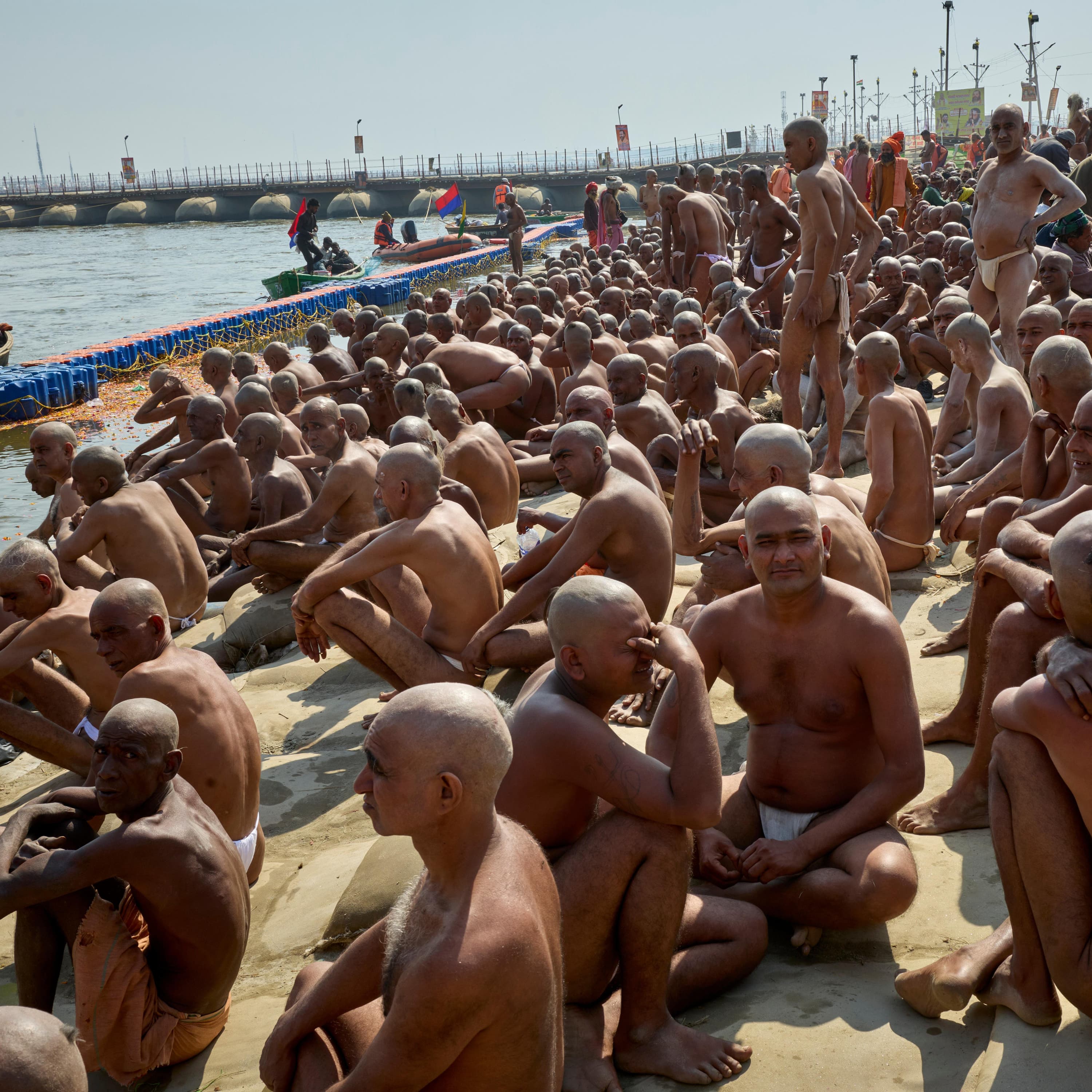
It's the holiest festival for Hindus and it rotates between four sacred locations. These are places where it's believed in Hindu mythology that Lord Vishnu, a Hindu God, spilled drops of the elixir of immortality during a fight between the gods and the demons. And the most sacred of these four places is Prayagraj, which is in the state of Uttar Pradesh on the banks of a sacred confluence of rivers, the Ganga and the Yamuna and also the mythical Saraswati River. And that was where the Kumela took place this year. It's a Place where people go to bathe in the river to relinquish their soul from the cycle of reincarnation. It's kind of impossible to really capture in words what it feels like to be there in amongst so many people. This was probably one of the largest gatherings of humanity that's maybe ever taken place. The government initially said they estimated around 400 million devotees would come. But by the end of the festival, in a number that was impossible to verify, they said more than 600 million people attended the festival over 45 days. You know, there are people singing, there are chants from the crowds. You can got these makeshift temples which are built which are 24, 7, blasting out these kind of religious songs. So there's no point. There's nowhere in this expanse where you can find any quiet. And then when you go down to the banks of the river, which is the most sacred place, you know, as far as the eye can, can see, people are just squeezed together tightly. It looked like this kind of quilt of human beings, you know, bright colors. And then you had people going into the water, taking this holy dip, having this very kind of sacred moment and then coming out. Some people were just kind of ecstatic. Some people were crying because they believe it will cleanse their soul and bring them eternal joy and life. The festival had also taken on quite a major political significance, which is one of the reasons it felt kind of important to be there and see it for myself. So the ruling BJP government, which is led by Prime Minister Narendra Modi, has been in power for 10 years, and over that 10 years has been pushing a very strong Hindu nationalist agenda. And for them, the Kumbh Mela was a powerful symbol of Hindu strength and dominance. The government pumped billions of rupees into the festival. There was a huge PR campaign around it, you know, encouraging people to go. One of the days that I chose to go was one of the holy days. And this is when the sadhus, who are the Hindu holy men who all gather at the Kumbh Mela, take part in a bathing ritual. They run roaring into these holy waters. Historically, these bathing days are meant to be spectacular. But earlier that day, you started to feel. It had been crowded before, no doubt, but it started to feel impossibly crowded. You could barely move the riverbank. You couldn't get access to it. What felt kind of sadly inevitable was there was this stampede and there was this horrific site where so many pilgrims, many of whom been sleeping on the floor, were crushed. And around 30 people died. There are some figures which say that it was almost double that, but there was an effort to cover up the true number of the people who died. Definitely kind of cast quite a dark cloud over the festival and the fact that there was this government campaign which had actively promoted so many people to come and possibly not the conditions created for it to be safe for them to be there.
- [20:32]
Helen Pitt
Coming up, we head to Alligator Alcatraz and a court in France where one extremely brave woman finally gets justice. The Free Birth Society made millions selling a simple message to pregnant women. You don't need ultrasounds, doctors or midwives.
- [21:01]
Narrator/Reporter
You can free birth.
- [21:03]
Helen Pitt
But behind the scenes, terrible things were happening.
- [21:07]
Narrator/Reporter
I feel ashamed about this, but I didn't think that the deaths were bad until a year after I left. Subscribe to the Guardian Investigates feed to
- [21:16]
Helen Pitt
get all the episodes of the Birth Keepers.
- [21:18]
Narrator/Reporter
Listen wherever you get your podcasts out now.
- [21:26]
Security Expert/Advertiser
A password manager should be the first security purchase you make for your team.
- [21:30]
Helen Pitt
Why?
- [21:30]
Security Expert/Advertiser
Because compromised passwords are the number one way bad actors attack companies, and small businesses are their favorite targets. But unlike a unlike a lot of security challenges, passwords actually have a pretty simple solution. 1Password lets you manage all your business's credentials so you can feel confident that your data stays secure as your company grows. Find out more at 1Password.com special offer and start securing every login.
- [21:57]
Tommy John Advertiser
Guys, it's no use putting it off. The best time for an underwear refresh is now. Tommy John Underwear is designed for a perfect fit that stays put all day. There's zero chafe, thanks to four times more stretch than competing brands and their innovative horizontal Quickdraw Fly is a game changer with over 30 million pairs sold. There are thousands of men out there more comfortable than you. Don't settle for less. Go to tommyjohn.com today for 25% off your first order with code comfort. That's tommyjohn.com comfort tommyjohn comfort perfected.
- [22:42]
Helen Pitt
Think it's
- [22:44]
Oliver Laughland
so in the middle of July, I drove from Tampa, Florida, into the Everglades national park area along a rural highway that was lined with cypress trees and these kind of beautiful, expansive wetlands to a newly constructed detention center in the center of this national park.
- [23:06]
Helen Pitt
This is the Guardian's US Southern Bureau Chief, Oliver Lachlan.
- [23:09]
Oliver Laughland
And it just kind of appears out of nowhere. In fact, one of the things that I remember most we're just seeing these newly erected, extremely large blue signs, official roadway signs that were emblazoned with the words Alligator Alcatraz. So obviously, Trump campaigned during the 2024 election on an agenda of mass deportations.
- [23:35]
John Reed
On day one of my new administration, we will begin the largest deportation, deportation operation in American history. We have no choice.
- [23:45]
Oliver Laughland
When he came into office, he kind of issued this call to construct bigger detention centers to quickly deport as many people as possible. And Alligator Alcatraz has really become kind of a symbol of Trump's mass deportation agenda.
- [24:00]
Narrator/Reporter
Construction on the immigration detention center is almost finished, but facing backlash from critics.
- [24:05]
Oliver Laughland
And it was very hastily constructed in the summer of this year.
- [24:08]
Michael Safi
Attorney General Off Meyer says the goal is to have that facility, facility ready to go by the first week of July.
- [24:14]
Oliver Laughland
It took, I think, just over a week to build it. It's a sprawling tent detention center. The facilities are obviously extremely rudimentary. There are reports from inside of extremely unsanitary conditions, of terrible food, of brutality by guards. And obviously, you know, the key is kind of in the name Alligator Alcatraz. It's supposed to be brutal. It is, by political design, a harsh place to be.
- [24:40]
Michael Safi
One of the reasons why this was
- [24:41]
Oliver Laughland
a sensible spot is because you have this Runway that's right here. You don't have to drive them an hour to an airport. You go a couple thousand feet, and they can be on a plane and out of here. And the people being brought there are effectively people who are being arrested by immigration authorities. And as we know, the majority of people now in immigration detention don't actually have criminal records. They're being apprehended simply for immigration violations. When we pulled up, some of the first people we met were a group of protesters.
- [25:25]
Helen Pitt
Hi.
- [25:25]
Oliver Laughland
Who are you shooting for with the Guardian?
- [25:27]
Helen Pitt
Oh, you are? Yeah.
- [25:29]
Narrator/Reporter
Oh, it's so nice to talk to you.
- [25:31]
Oliver Laughland
And people had driven all the way from Miami to come out and just stand and essentially do what we would do, which is to bear witness, to watch the construction trucks go in and out, to watch buses of detainees being brought in and out as well.
- [25:43]
Narrator/Reporter
But they do bring in busloads of
- [25:46]
John Reed
about 50 at a time and van
- [25:48]
Narrator/Reporter
loads of about 15 at a time, and they keep coming.
- [25:51]
Oliver Laughland
There was a sort of realization, really, that in this new era of Trump, where there's real sort of lack of oversight and accountability, this was, to some people, kind of a last resort to feel like they could do something to oppose what was. Was going on there.
- [26:04]
Narrator/Reporter
This is my third trip out here.
- [26:06]
Helen Pitt
Third trip.
- [26:06]
Oliver Laughland
It's only been open a few weeks.
- [26:08]
Narrator/Reporter
Yeah, I was here yesterday, and I
- [26:09]
John Reed
was here last Saturday.
- [26:10]
Oliver Laughland
What brings you out?
- [26:12]
Angelique Christophus
The fact that I am ashamed of
- [26:14]
John Reed
my country for treating good people this way.
- [26:24]
Oliver Laughland
These places have an aura about them. The larger ones are in more rural areas. They are often and harder to reach, harder for journalists to reach, obviously, but also for lawyers to reach, for families to reach as well. And so I think their remoteness is really by design. It serves a purpose. I think that next year we're kind of expecting to see more of the same, which is this continuing ramping up of the mass deportation efforts. We have seen the administration target particular cities in democratic states, but they are now branching out into other parts of the country.
- [27:06]
Michael Safi
You guys want to share your names
- [27:08]
John Reed
too or just going to cover your face?
- [27:10]
Oliver Laughland
So in many respects it will be more of the same. There will be a larger detention infrastructure which they can use. There has also been billions and billions of dollars been poured into immigration enforcement efforts too. So I think we're expecting anyway, this to only get bigger.
- [27:30]
John Reed
We always take people from Somalia, places that are a disaster, right? Filthy, dirty, disgusting, ridden with crime.
- [28:03]
Angelique Christophus
So this was a bright autumn day in the southern French city of Nimes.
- [28:08]
Helen Pitt
This is Angelique Christophus, the Guardian's Paris correspondent.
- [28:12]
Angelique Christophus
And there was a beautiful courthouse, the Court of Appeal. And just on the steps of this courthouse, there were dozens of women from choirs across the south of France standing, singing together. And the soft, musical, beautiful sound of these women singing in unison together really contrasted with the horror and brutality of what had been heard in that court during the day. It was an appeals trial in one of the biggest rape cases in French history. And the person at the heart of it, Giselle Pelico, had become one of the most famous famous rape survivors ever in France. Giselle Perlico is a grandmother of seven and she had retired with her husband to a beautiful village in Provence in the south of France with lovely stone buildings and pastel blue shutters. And it transpired that over a period of almost a decade of their marriage, her then husband, Dominique Pellico, had been crushing sleeping tablets and anti anxiety medication into her food and drink into her mashed potato, her ice cream after dinner. And he had been inviting dozens of men to rape her while she was unconscious in her bed. She would wake up in the morning, she felt ill. She thought she had dementia, she thought she had Alzheimer's or a brain tumor. But she didn't know that she was being drugged at night. A total of 51 men were found guilty in a trial last year. Seventeen of those men decided to appeal. But over the course of the next few months, they all dropped out, except one man, Husametin Dogan. He appealed, which meant there was Another trial that took place over four days in October 2025. This was going to be the last time that Giselle Pellico was going to appear in court. And every day of that appeals trial, women came to sing outside. There was a song called Good Fathers, which was written last year at the time of the first trial. And what it talks about is this idea that there were 51 men on trial. There were ordinary men, the lyrics say, someone's son, someone's father, someone's husband. There were fire officers, lorry drivers, soldiers, there was a journalist. And the song really talks about this idea of they were good dads, they were ordinary men. Rather than an idea of a monster running after you in the street, they could be an ordinary person within your own home. It says in its refrain, thank you to Giselle, because shame must change sides. And this is this idea that, that if shame is to be felt at all, it has to be felt by a perpetrator, not by a victim. The fact that this man actually appealed against his conviction and refused to take responsibility and continue to say that what he'd done was nothing wrong shows that Shane has not yet changed sides. Singing was a way for people to make their voices be heard, for other women to talk in unison. And many of the women who were singing were singing on behalf of so many other women who are forgotten or whose stories aren't being told. Housametin Dogon was found guilty on appeal and it was very moving to follow Giselle Pellico as she left the court and this bursting out of applause of women who lined her path. And then as she comes down the steps, the sound changes to the singing. And at one point she put her hands together towards the singers in a gesture of thanks.
- [33:23]
Helen Pitt
Thanks so much to everybody who spoke to us for this episode. That's Michael Safi. We miss you, Mike, Andrea Neto, John Reed, Hannah Ellis Peterson, Oliver Laughlund and Angelique Christophus. This special episode was produced and sound designed by Alex Atak and Eli Block and presented by me, Helen Pitt. The executive producers were Humma Khalili and Sammy Kent. Quickly, before we go, I just wanted to remind you about the Guardian's Christmas appeal. The theme this year is Hope in Action. We're supporting five charities that help the people who are bringing community communities together. We're partnering with Citizens UK Locality who is your neighbor, Hope Unlimited and the Linking Network to help support community cohesion and the individuals worst affected by the rise of division and hate. If you can't, please donate now@theguardian.com donate 25 we'll be back tomorrow.
- [34:21]
Michael Safi
This is the Guardian.
- [34:31]
Security Expert/Advertiser
A password manager should be the first security purchase you make for your team.
- [34:36]
Helen Pitt
Why?
- [34:36]
Security Expert/Advertiser
Because compromised passwords are the number one way bad actors attack companies, and small businesses are their favorite targets. But unlike a lot of security challenges, passwords actually have a pretty simple solution. 1Password lets you manage all your business's credentials so you can feel confident that your data stays secure as your company grows. Find out more@1Password.com specialoffer and start securing every login.
- [35:07]
Oliver Laughland
If you've used Babbel, you would Babbel's conversation based technique teaches you useful words and phrases to get you speaking quickly about the things you actually talk about in the real world. With lessons handcrafted by over 200 language experts and voiced by real native speakers, Babbel is like having a private tutor in your pocket. Start speaking with Babbel today. Get up to 55% off your Babbel subscription right now at babbel.com acast spelled b a B-B-E-L.com acast rule rules and restrictions may apply.
- [35:42]
Helen Pitt
Shipping, billing, admin, payroll, marketing. You're managing all the things, so why waste time sending important documents the old fashioned way? Mail and ship when you want, how you want with stamps.com print postage on demand 247 and schedule pickups from your office or home. Save up to 90% with automated rate shopping. That's why over 1 million small businesses trust stamps.com go to stamps.com and use code podcast to try stamps.com risk free for 60 days.