← Today in Focus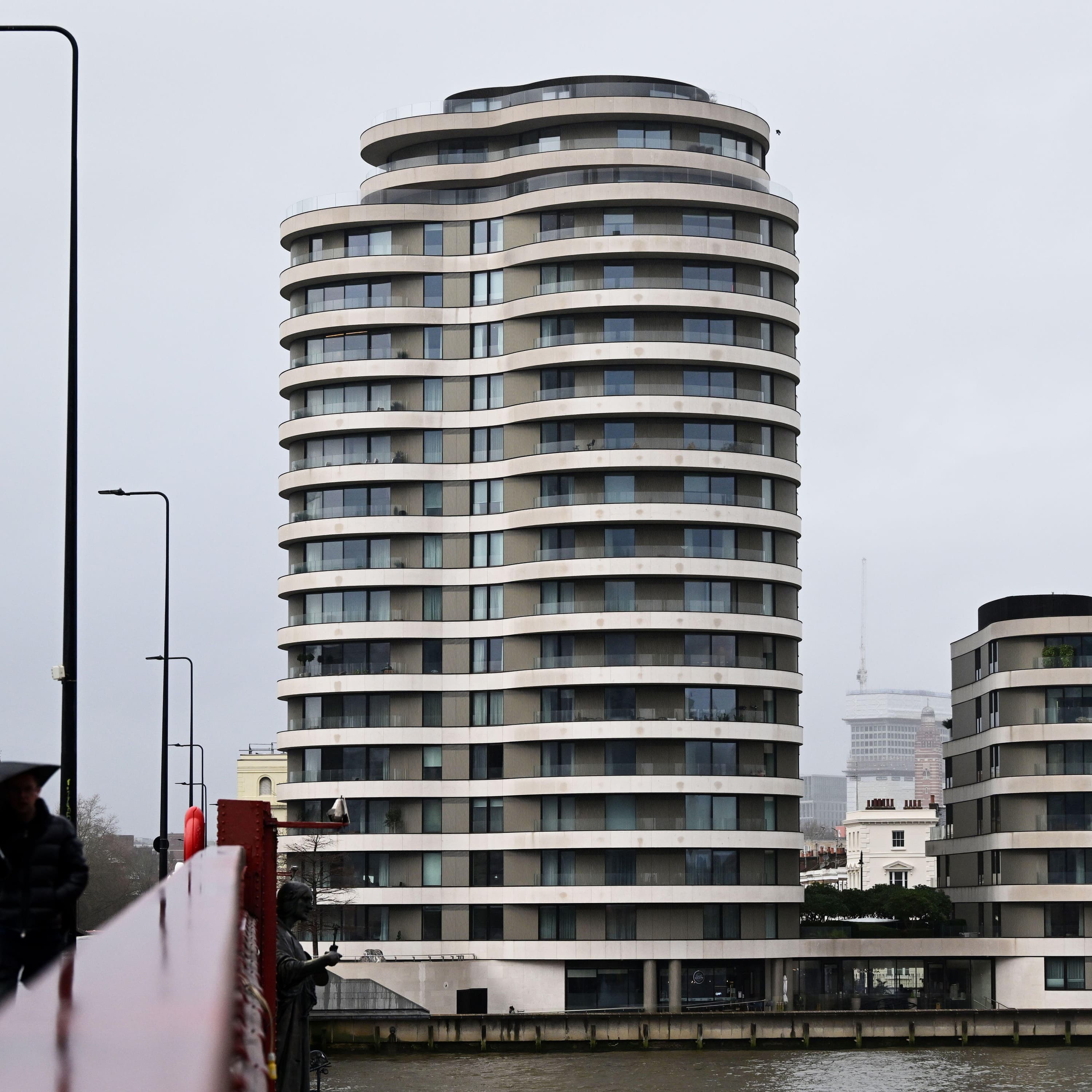
Today in Focus
The mysterious death of the teenager who posed as a Russian billionaire
00:32:22
The journalist Patrick Radden Keefe on trying to unravel the double life and tragic death of 19-year-old Zac Brettler – and what it tells us about London’s dark underbelly
Loading summary
Transcript69 lines
- [00:00]
Patrick Radden Keefe
This is the Guardian.
- [00:09]
Nashi Nikbal
Today, the teenager who pretended to be a Russian billionaire and was found dead in the River Thames.
- [00:22]
Sofi Personal Loan Advertiser
High interest debt is one of the toughest opponents you'll face unless you power up with a Sofi personal loan. A Sofi personal loan could repackage your bad debt into one low fixed rate monthly payment. It's even got super speed since you could get the funds as soon as the same day you sign. Visit sofi.compower to learn more. That's S-O-F I.com P-O-W-E-R loans originated by SoFi Bank NA member FDIC. Terms and conditions apply. MLS 696891.
- [01:01]
Nashi Nikbal
For decades, London has been a magnet for global wealth. A flashy playground for the super rich. To one teenage boy, it contained an elite scene. He desperately wanted to be part the oligarch class. Not just rich, but powerfully connected billionaires who amassed such huge fortunes with so few questions asked, they helped turn London into what was called the dirty money capital of the world. Zach Brettler began posing as the son of one. Within months, he was found dead on the riverbank in central London. He was 19 years old. In his explosive new book, author and New Yorker journalist Brian Patrick Radden Keefe has tried to uncover what the Metropolitan Police fail to what really happened to Zach? How did he become ensnared in one of London's most dangerous circles? And who is responsible for his death? From the Guardian, I'm Nashi Nikbal. Today in Focus Patrick Radden Keefe on a fatal fall into London's dark underworld. Patrick Raden Keefe, welcome to Today in Focus.
- [02:27]
Patrick Radden Keefe
It's lovely to be with you.
- [02:29]
Nashi Nikbal
Now you're a New Yorker writer, staff writer and author of some of the best non fiction narrative books of the last decade. And your new one, London Falling is about the life and mysterious death of Zach Brettler. It's about a lot more, but it's mostly about Zach. How did you come upon this story?
- [02:48]
Patrick Radden Keefe
It came to me in the strangest way. I was living in London in the summer of 2023. I was producing a television drama based on my book say Nothing and I was just sort of sitting on a chair between shots and a guy plopped down next to me, a stranger who was visiting the set that day. So I just started chatting with the guy and he said, I might have a story for you. And he said I, I know this family. I'm very close with them. They lost a son in mysterious circumstances in 2019 and after he died they learned that he'd been pretending to be the son of a Russian oligarch. When I heard that, what I said to this guy was, listen, if this family will talk to me, then I'm in. But I. It went back to. I remember going back to my apartment that night and Googling Zach Brettler death tems and not finding anything. They had kept his death very quiet. There was no mention whatsoever in the press, on the Internet, that he was even dead. And so the family wasn't sure that they wanted to talk. And I think that they had been feeling very isolated for years in trying to figure out what had happened to their son. And we then had this kind of delicate process where I really wanted them to. To go on the record with me, but I also didn't want them to feel as though I was kind of twisting their arms or I didn't want them to kind of say yes on the day and then later come to regret it.
- [04:18]
Nashi Nikbal
So who was Zach Brettler? Can you tell me what you learned about him?
- [04:23]
Patrick Radden Keefe
He was the second child of this couple, Matthew and Rochelle. There was an older brother named Joe. And Zach, who was born in the year 2000, was a kind of fun, zingy, unpredictable little boy. You know, a boy who did voices and told jokes and could do impersonations and accents. You know, not everything he said was completely reliable. Even from a very early age, he sometimes was putting a little spin on the truth to entertain people. As he got older, he ended up going to a school called Mill Hill on the outskirts of London. He came from a. A very particular kind of family. He had two grandfathers who were Holocaust survivors. One of them had become a very famous rabbi in London. And he grew up, I would say, upper middle class. His father worked in finance. His mother was a freelance journalist. A very comfortable family, but also a family that was quite modest in terms of their approach to money and wealth and conspicuous consumption. And he got to this school, mill Hill, at 13, and found himself surrounded by the children of oligarchs, the children of very wealthy foreigners, in many cases, who had come to London and wanted to send their kids to good English schools. And these kids were everything his parents weren't. They were kind of blingy and a little bit ostentatious with their wealth, and also just supremely wealthy in a way that even to somebody as well off as Zach, seemed just kind of unimaginably rich. And he was, in a, I think, a way that, you know, maybe isn't totally unusual for an adolescent boy. He Was kind of taken in by that. He was very seduced by the swagger of these kids.
- [06:14]
Nashi Nikbal
And it wasn't just that he was impressed by it. I mean, he got seduced to the point where he began living a second life. I mean, you've told us about this upper middle class Jewish kid, lived in northwest London, has this urge though, partly fueled by the environment that he's in, I guess partly fueled by social media. Can you tell me about who he became?
- [06:34]
Patrick Radden Keefe
Yeah, I mean, I should say first of all that his parents were not aware of any of this. His parents knew that he was having a difficult adolescence, but it was really only much later that they became aware that he had been lying. He'd been at first telling lies in school to kids saying that the family was much wealthier than they were. He claimed that his father was an arms dealer, which Matthew very much is not. He said they lived in a, in a mansion in St John's Wood and that the parents drove two Range Rovers and those kinds of lies. And then eventually he graduated to the bigger lie, which was he invented a whole alter ego and started telling people that he is, his name was Zach Ismailoff and that he was the son of a Russian oligarch living in London and that his father was a billionaire and that he was his father's right hand man and that, that he had hundreds of millions of pounds to invest.
- [07:38]
Nashi Nikbal
Patrick, in the book, obviously you're telling us about the life of Zach Brettler, but also you're documenting the change that's happening in London during his lifetime. And you look back to London's history as a former port city, a former manufacturing base that then underwent this remarkable shift in identity as Thatcher introduced the deregulation of the financial markets in 1986, the big bang. And you know, all those industrial warehouses along the river just all shutting down. What happened next?
- [08:10]
Patrick Radden Keefe
Well, I think there was this kind of strange moment and you've identified it. It's this, it's really this kind of 25 year period between the mid-1950s and then about 1980 when London just dramatically transforms and the city that had existed for hundreds of years kind of ceases to exist because all of the docks shut down. And the manufacturing sector during that period in London, the jobs, 80% of the jobs disappear in about a two decade period.
- [08:40]
Unidentified Dock Worker or Local Resident
Talking about the closure of the upper docks, when we went to see them, I think they realized the gravity of what they were proposing, not only in terms of the closure of their dock and they were clearly worried about their own Balance sheets and so on, but its overall effect on the borough.
- [08:54]
Patrick Radden Keefe
And so the city has to kind of decide, well, who are we going to be now? You know, what is London if it's not a port city? And the answer, which really comes with deregulation and the big bang is we'll be a money town, a destination for money and people who have it, and a sort of preferred second home for plutocrats from around the world.
- [09:16]
News Reporter
The long awaited big bang finally went off in the city today. City stockbrokers were up early to get to grips with a revolution in the way they work out go many of the old methods, the slow old ways of concluding each share deal. And above all, out goes the complete reliance on face to face dealing. And in come many new players with heavy foreign competition for a market that's not big enough for everyone.
- [09:39]
Patrick Radden Keefe
And I should say, I mean, the story that I tell in the book is very much a story about the Russians who arrive in the aftermath of the collapse of the Soviet Union. But in fairness, as an American, I feel as though I should acknowledge, you know, the first wave is actually the Americans who come in in the late 80s and they come in with a much different kind of lifestyle. All these bankers who come in to work in the now deregulated city of London and they come in and they want nice apartments and they want, they drive up the real estate prices and they, they want BMWs and they want fancy wine bars and a lot of the kind of what we would sort of think of as the kind of markers of consumption that characterize London today.
- [10:22]
Expert or Analyst on British Financial Policy
Absolutely fundamental, key reason why they came to London was because the British state wanted wealth to come to London. You know, there was this big attempt to get money into London. So the British government, they bent all the rules, they bent the tax rules, they turned a blind eye to the providence of the wealth of the Russians. You know, they were desperate.
- [10:44]
Patrick Radden Keefe
And then you have this generation of Russian oligarchs who are these kind of free market bandits who in the collapse of the ussr, see opportunities to essentially take into their own possession these huge assets that had previously in theory belonged to the whole Soviet public. The president of the new Russian Federation, Boris Yeltsin, started privatizing companies that had been under communist state control. It was as if the whole. And you know, there's a quote I have in the book from Boris Berezovsky saying that there was, you know, at one point in the 1990s, he and six other men controlled half of the wealth in all of the former Soviet Union. And those guys, it's astonishing. And those guys arrive.
- [11:34]
Nashi Nikbal
The Americans coming in and sort of softening up. London, as you say, is one thing, but the influx of oligarch money, I mean, if you're going to make that much money, you need to move it to keep it. Right. So central London, properties being bought up, left empty by foreign investors, affluent neighborhoods where all the lights are off. What other influence would you chart of the Russian oligarchy on the sort of culture and where that London life was in the last two decades?
- [12:02]
Patrick Radden Keefe
I think some of it is again, that there's a sort of mode of new money ostentation that would be a bit foreign, I think, to England historically. And I wouldn't weigh it all entirely on the Russians. I mean, I think there's a whole bunch of different things that go on. I think you have the rise of luxury, consumer goods, social media, all the rest of it. But for somebody like Zach, you know, Zach grew up in this world of kind of supercars, for instance, the prevalence of these sports cars that cost hundreds of thousands of pounds and very loud engines and a kind of general blinginess. And when Zach gets to school, he meets these kids who dressed in designer clothes. And I tell a story in the book about how there are dormitories on campus and it's a seven or eight minute walk to class. And these sons of oligarchs, rather than do the walk to class on cold mornings, they'll get Ubers, you know, that kind of, that type of behavior. Yeah, so there's that, but then there's also a more sinister side to this, which I think does lead to a kind of subtle change in the way in which people relate to law enforcement and accountability in the state, which is that not long after these oligarchs start arriving, people start dying in England in mysterious circumstances. You have people falling off of buildings and people falling out of windows and people falling in front of tube trains and dying of kind of suspicious looking heart attacks and so forth. Often people who are connected to the Russians in one way or another. And there is a tendency, a really pronounced tendency by the police and the authorities in England to kind of look the other way, to sort of say, oh, looks like a suicide, looks like an accident. A sort of a sense of, you know, we don't want to antagonize powerful Russian forces that may actually be sending hitmen to England to murder people.
- [14:10]
Nashi Nikbal
One of the reasons to ask you the question about how London has visibly changed is because you did live here at the turn of the millennium, and you seem to visit most years. So you've. You've can track the changes. Right. And in Zach Brettler's lifetime, you've written about how his parents, who've lived here most of their lives. You know, one works in finance, the other freelancers for the Financial Times, his magazine, how to spend it, which in some ways is addressing the oligarchy.
- [14:37]
Patrick Radden Keefe
It's ironic by itself. Yeah.
- [14:39]
Nashi Nikbal
But they had no idea, really, that this other world existed in London, this underbelly. And I wonder if you can tell me more about that.
- [14:51]
Patrick Radden Keefe
Yeah, I think that really the main characters in this book are Richelle and Matthew Brettler, Zach's parents, who, after his death in 2019, are trying to figure out what happened to him. And, you know, in the first instance, I think they place their faith in the Metropolitan Police, who kind of botched the investigation. Then the Brettlers have to sort of, in a way, follow their son's footsteps, retrace his footsteps in life, figure out who was he really, who was he hanging out with, what was he up to? And that's a journey that takes them into a side of London that they had not known existed. And so suddenly they find themselves really kind of going out and, you know, seeking out gangsters and dodgy businessmen and getting a real sense of this kind of slightly sleazy but omnipresent milieu in which their son had been moving.
- [15:49]
Nashi Nikbal
So without fully going into the ins and outs of your investigation, what does become clear is that Zack got caught up with some very powerful people and that by pretending to be the son of a Russian oligarch, he made himself vulnerable to gangsters. He was wheeling and dealing. At one point in the book, you say he was trying to import rare minerals from Kazakhstan. It just must have been so disorientating for the Brettlers to make sense of all that.
- [16:17]
Patrick Radden Keefe
Yeah. And I think that part of what was so strange for them is that they had been living with a sort of, you know, maybe a kind of bourgeo, slightly naive sense that everything's okay here on this side of the tracks, that we live in this kind of nice, functional, kind of sparkling London. I think that they were astonished to realize how intermingled these two worlds are in ways that they had just had no inkling of. It was really only after Zack's death, as they tried to kind of see what he'd been getting up to, that it was like they developed a kind of X ray vision, and they could see a dimension of London that had eluded them before.
- [17:04]
Nashi Nikbal
So the Brettlers learn about this alter ego Zack conjured, after he's gone. Patrick, what are the basic facts of what happened to Zack in the early morning hours of November 29, 2019?
- [17:18]
Patrick Radden Keefe
So, on that particular evening, Zach was in a building called Riverwalk, the sort of development that would be familiar to people who've spent time in London in recent years. A super luxury apartment building overlooking the Thames, right on the river. So if you know where MI6 headquarters is, just opposite MI6 headquarters. Zach was in an apartment with two men. One a guy named Akbar Shamji, and then another named Virinder Sharma. And these were two older men who he had become quite close friends with in the preceding months. And at a certain point, Akbar Shamji had left the apartment. So it was just for Indra Sharma and Zach. And Zak goes out onto the balcony and goes off the balcony.
- [18:07]
Nashi Nikbal
I mean, you write this moment in the book with two quite stark, devastating sentences. Right early on in the opening, where you say he made his way to the corner of the balcony and seemed to peer over the ledge before crossing to the other corner and briefly pausing there, then returning to the center of the balcony, he jumped.
- [18:30]
Patrick Radden Keefe
There was actually video captured from MI6 headquarters. There's a CCTV camera that Zach was alone on the balcony. So he jumped. He wasn't pushed, but that Sharma was in the apartment. And in fact, even more intriguingly, that video captures after Zach goes off the balcony, the lights go out in the apartment. So what exactly transpired is a big and mysterious question, and one that I kind of get into at great length in the book. So the next morning, there is. Somebody discovers a body on the. On the foreshore of the Thames. They're right in front of that building, right where he fell. But the authorities aren't able to identify this body. And so days pass before the Brettlers, who are frantically searching for their missing son, realize that, in fact, he had died several days earlier.
- [19:27]
Nashi Nikbal
Well, Patrick, the police ruled Zach's death as a suicide. The inquest into it was inconclusive. The coroner ruled it as an open verdict. What do you and Zach's parents think happened that night, leading to him jumping off that balcony?
- [19:42]
Patrick Radden Keefe
Yeah, I mean, the police never actually ruled that Zach's death was a suicide. They kind of intimated that. They sort of hinted at it, but they never actually concluded it. That's the reason that you. That you got to. The reason that you had the inquest was because there was uncertainty about the nature of the death. So I think part of the frustration for The Brettlers was that over the course of several years of dealing with the Metropolitan Police on the front end, what the police said was, listen, we have all the resources in the world. We are going to leave no stone unturned. We will get to the bottom of this. The Brettlers would have these long conversations with the lead detective and they would, with his permission, they would record those conversations. And they found that the police, once they knew that Zach was alone on the balcony, it became clear that the police were sort of feeling as though it would be tough for them to bring a murder prosecution because anybody who was charged with his murder would say, well, listen, we have the video. He's on his own on the balcony. But of course, the Brettlers then discovered that this guy, Varinder Sharma, who he was with, was not, as he had appeared, a kind of benign retired businessman, but a semi retired gangster, better known in the London underworld as Indian Dave. A guy who was a real leg breaker and extortionist. Somebody who'd been linked to a very high profile murder. So Zach was in the apartment with a very dangerous man at the point where he went out and jumped into the river. And that that man who had been in the apartment with him and then presumably knows that he goes off the balcony, turns off the lights and goes to sleep. And when he speaks to Zach's parents several days later, doesn't say, oh, by the way, you know your son is dead. In fact, he said, oh, he's missing. He must have just walked out of the apartment.
- [21:29]
Nashi Nikbal
I want to help you find him.
- [21:31]
Patrick Radden Keefe
Yeah, yeah, indeed. And I want to help you find him. And I have a recording of that meeting, too. And what's so heartbreaking is the Brettlers in that moment are so grateful to him. They say, oh, thank. They're so desperate to find their son. And they say, oh, thank you, you're so kind. It's so generous of you to try and help us find him. Little knowing that Zach is dead and that he knows it.
- [21:53]
Nashi Nikbal
Coming up, where the Met Police investigation stalled and how Patrick tried to piece together what happened to Zach Bradler.
- [22:15]
Sofi Personal Loan Advertiser
High interest debt is one of the toughest opponents you'll face unless you power up with a Sofi personal loan. A Sofi personal loan could repackage your bad debt into one low fixed rate monthly payment. It's even got super speed since you could get the funds as soon as the same day you sign. Visit sofi.compower to learn more. That's sofi.com p o w E R Loans are reduced originated by Sofi Bankna member FDIC terms and conditions apply. NMLS 696891.
- [22:50]
Kai Wright
I'm Kai Wright.
- [22:51]
Kari Sherman
I'm Kari Sherman and we are here
- [22:53]
Kai Wright
to tell you about our new show which is rooted in this feeling that at least I have. I know you have. Where, you know, it's kind of like when you wake up in the morning and you pick up your phone and you're just hit in the face with a fire hose of news, right?
- [23:09]
Kari Sherman
Like there's war, there's authoritarianism, our planet is burning. I could go on and on and
- [23:15]
Patrick Radden Keefe
on and on and on and on.
- [23:16]
Kai Wright
But like, we're trying to figure out how to manage it, right? Like how do you manage it?
- [23:19]
Kari Sherman
I manage it by leaning in and trying to learn more and trying to figure out, okay, how can I be smarter about this particular topic and who can I talk to that's going to make me feel better about it and
- [23:30]
Kai Wright
who can tell me who's responsible for the mass that I'm reading about? So that's our mission. That's the show.
- [23:36]
Kari Sherman
Welcome to Stateside with Kai and Carter. We're a new show from the Guardian.
- [23:40]
Kai Wright
We're talking to big thinkers and the best journalists just trying to understand the world through smart conversation and honest reporting.
- [23:47]
Kari Sherman
We don't have billionaires telling us what to say.
- [23:49]
Kai Wright
Stateside with Kyan Carter will come out three times a week, Monday, Wednesday and Friday starting May 13th.
- [23:55]
Kari Sherman
Follow on Apple podcasts or catch us wherever you watch or listen.
- [24:01]
Nashi Nikbal
In your book you reference this explosive investigation by Heidi Blake, who was at Buzzfeed at the time and is now your colleague at the New Yorker. It's titled From Russia with blood. 14 suspected hits on British soil that the government ignored, in which she and her team track all the suspicious looking deaths, falls from balconies, jumps in front of the tube trains, sudden deaths attributed to near traceless poison that US intelligence directly linked to the Kremlin and Russian mafia. But the police here just ruled out foul play in every case and just shut them down. In the context of that, how do you think the authorities dealt with the investigation into Zach Brettler's death?
- [24:42]
Patrick Radden Keefe
So I think there are a few things going on. I mean, I don't think I should say that this was a case of conspiracy on high. I don't think it was that. I think that there is a reality here which is that the Metropolitan Police has had decades of cutb. I think there's another aspect of this which is that Zach died just in advance of COVID and The COVID pandemic hit, which I don't think you can blame everything on, but I do think it was a factor. I think that there is a kind of pattern recognition that people in a big, busy police force do where they have certain boxes that they can put things in. And at the point where they realize that they weren't dealing with a kind of cut and dried murder, that it might be something a little bit more exotic, I think that they sort of lost interest because it would require just too much work for too uncertain a prosecutorial outcome. And then the last bit of this, over the decades, there was a kind of learned behavior on the part of the metropolitan police, a kind of passivity, a sort of a sense that when you see something that has the whiff of international intrigue, you kind of studiously look in the other direction. And the thing about Zach's death is it really did seem that way. You know, it turns out he's this boy who was pretending that he was the son of a Russian oligarch. He had actually pulled this thing off. And then Zack goes off the balcony. Gravity is often a factor in these mysterious deaths. You often have people falling in one way or another. And so I think that there was a kind of just a sort of institutional reluctance to say, all right, let's really get to the bottom of this thing. And, you know, the reason I know that is I should say the Met police didn't cooperate with my investigation. They wouldn't really talk to me for the article. They didn't talk to me for the book. They didn't respond to fact checking queries. They were really stunning.
- [26:34]
Nashi Nikbal
I mean, you guys have very extensive fact checkers. And they didn't respond at all.
- [26:37]
Patrick Radden Keefe
At all. And we essentially said to them, why didn't you call this person? Why didn't you call that person? I was able to track this person down. Why didn't you? Fairly obvious, I would think, kind of elementary investigative steps that they didn't take.
- [26:51]
Nashi Nikbal
How much pressure do you think, given that the investigation is technically still open, how much pressure do you think your book now will apply on the police? And do the Brettlers expect that it might be reopened or really re examined?
- [27:05]
Patrick Radden Keefe
You know, when I first met Matthew and Rochelle and they were deciding whether or not they wanted to talk to me, I said to them, I really want you to tell me your story, but I also don't want you to do it out of some implicit expectation that I will. I will bring you the justice that the authorities didn't. You can't go into this hoping for a new investigation. I hope that this puts a lot of scrutiny on the police. I hope that for most people, and I should say, I mean, as Matthew and Rochelle would tell you, this is a well connected, highly educated, white, prosperous family in a fairly nice neighborhood in central London. If this is what happens to them when their kid dies. I mean, imagine if this was an immigrant family or a homeless family. Like it does beg real questions when the authorities are unable to help. Even the people that historically, in a kind of unfair way, you know, did tend to get the benefit of these kinds of services, the sort of all the attention of the police and what have you,
- [28:27]
Nashi Nikbal
Patrick, in your extensive research, the hours of tape that you got from the parents, your sort of anthropological study, I guess, of London over the last couple of decades. How has it changed your understanding of the place where you once lived?
- [28:43]
Patrick Radden Keefe
I mean, London's a city that's very. It's a city I feel very close to. I lived there as a young graduate student in 2000, 2001, and I've come back, you know, virtually every year since. So I've seen those changes unfold. But I think that the level of kind of shiny dodginess was sort of startling to me once I dug into it, the extent to which sort of everywhere you turn there are these really, you know, these kind of slightly crooked businessmen. I remember years and years ago, I wrote a big piece about the Sinaloa drug cartel and we were fact checking the story. And my sources in Mexico would sort of. They would kind of laugh at the whole concept of fact checking because you'd have a death that happened or you'd have some allegation of corruption on the part of some public official. And we would want to get to the bottom of it. And my sources would sort of chuckle in a world weary way and say, naive of you, gringo, is to think that you can sort of get to the bottom of something if you just apply enough, enough effort. And I remember at the time sort of thinking, God, it would be a weird thing just on a kind of existential level to live in a state where you were surrounded by these mysteries, that there were people who die and maybe it was an accident or maybe it was a murder and we'll never know. Far be it from us as citizens to demand any kind of accountability or any sort of an empirical record. I think what was strange was to realize that you can have that same sort of fog of ambiguity in a
- [30:26]
Nashi Nikbal
city like London if one is to follow the Money. What do you make of London's approach to ultra wealthy Russians now? In the light of the Ukraine war, in light of UK Russian tensions, in light of sanctions placed on some, not all businessmen, do you think the city will have to change its approach, its identity? What will the next big bang adjacent moment look like?
- [30:55]
Patrick Radden Keefe
Yeah, I wonder. I mean, I think that, you know, part of this whole thing for me was prompted by the invasion of Ukraine and the way in which suddenly London found itself in kind of rather an awkward situation with a bunch of these Putin cronies who had found such a commodious home in the uk. And so there, there were the new sanctions. I think that to me that marked progress. I actually think that the rolling back of non dom status is a big and really positive change. I think that you've seen gestures in the direction of even just these silly little things, but just transparency in terms of who owns a given property and beneficial ownership of offshore trusts and so forth. There's a little bit more transparency there though. Powerful people can get their names kind of removed from the public registers. It's, it's really devilish thing to get to the bottom of who owns a property in London. Even now. I think all of those are sort of half steps in the right direction. The question that's really interesting is, you know, there's a moment shortly after the invasion of Ukraine where a bunch of these, these sanctioned or soon to be sanctioned Russians start putting their elegant properties, you know, their mansions up for sale. And you know who swoops in is the, is the Chinese.
- [32:15]
Sofi Personal Loan Advertiser
Right?
- [32:15]
Patrick Radden Keefe
That the kind of the next, the next gen, the next generation of oligarchs kind of comes right in and I've
- [32:23]
Nashi Nikbal
seen put their money somewhere.
- [32:25]
Patrick Radden Keefe
Absolutely. And so it's on some level you feel as though there will be, there may be some sense in which a crackdown specifically on the post Soviet plutocrats is really just going to be an opportunity for the next generation of plutocrats who sweep into town.
- [32:40]
Nashi Nikbal
Gosh, we'll see. Patrick, thank you so much for your time.
- [32:44]
Patrick Radden Keefe
That was a pleasure. Thank you.
- [32:49]
Nashi Nikbal
That was the author and journalist Patrick Radden Keefe. His sensational book London Falling is out now and available from guardianbookshop.com that's it for today. This episode was presented by me, Noshi Nikbal. It was produced by Guy Safman and Alex Atak. Sound design was by Breen McNamara. The executive producer was Huma Khalili. We'll be back this afternoon with the latest.
- [33:25]
Patrick Radden Keefe
This is the Guardian.
- [33:35]
Sofi Personal Loan Advertiser
High interest debt is one of the toughest opponents you'll face unless you power up with a SOFI personal loan. A SOFI personal loan could repackage your bad debt into one low fixed rate monthly payment. It's even got super speed since you could get the funds as soon as the same day you sign. Visit sofi.compower to learn more. That's ezofi.com p o w E R Loans Originated By Sofa Bank NA Member FDIC Terms and conditions apply. NMLS 696891.