← Today in Focus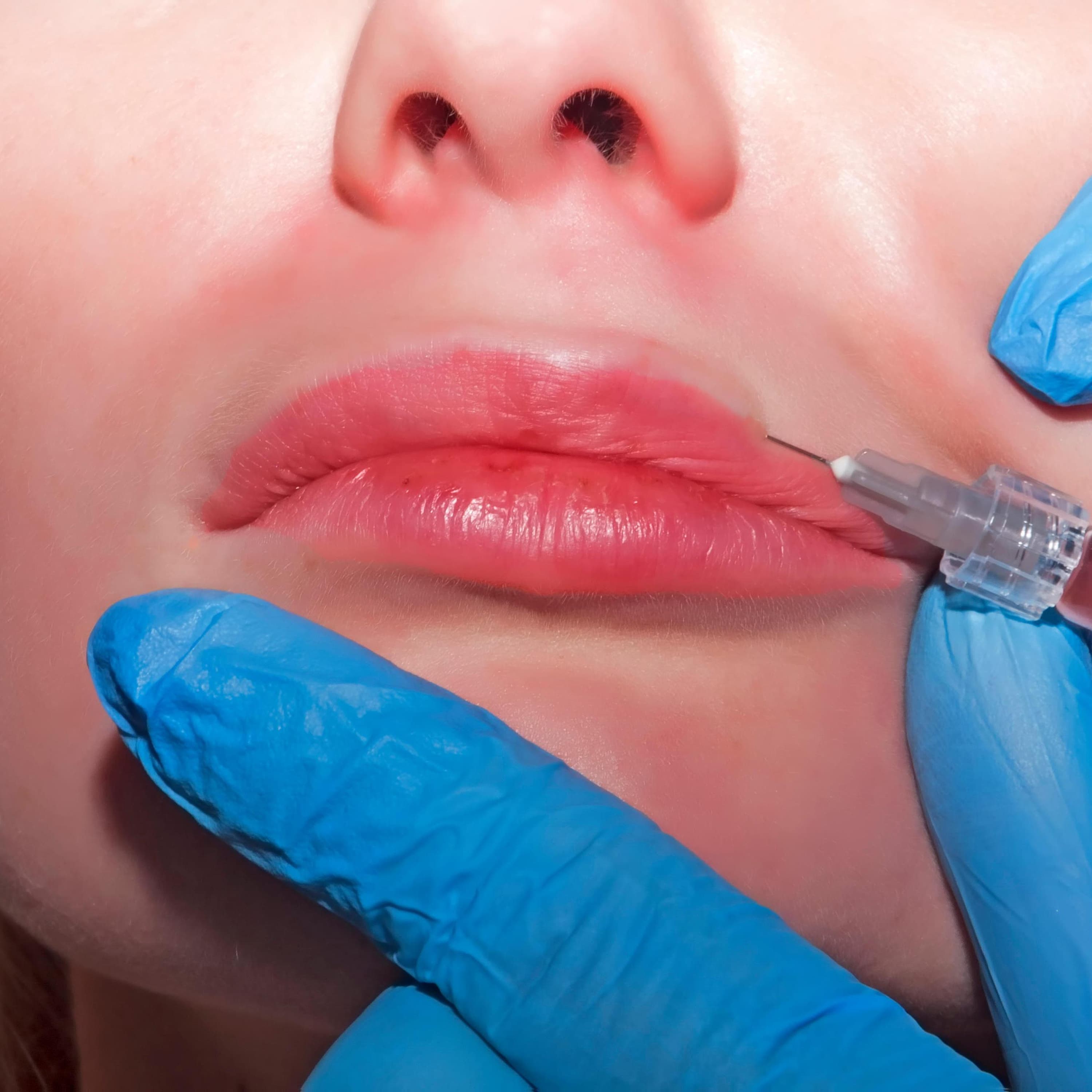
Today in Focus
The pressure to change your face
00:29:54
Guardian US beauty columnist Jessica DeFino explores the rise of ‘tweakments’ and cosmetic procedures – and the pressure it puts on everyone to get something done
Loading summary
Transcript94 lines
- [00:00]
Guardian Announcer
This is the Guardian.
- [00:07]
Helen Pitt
Today. The increasing pressure to mess with your face.
- [00:15]
Paramount Promo Voice
Today In Focus is supported by Paramount. Plus. This isn't the end of a fight, it's the start of one. Lioness, the critically acclaimed original series from Taylor Sheridan, returns August 2nd only on Paramount. In the new season, hidden networks, foreign operatives and personal betrayals collide. Meanwhile, Jo walks the line between duty and family as unseen forces circle her world, leaving her to reckon with a war that now reaches into every part of her life. Don't miss the new season of Lioness, starring Zoe Saldana and Michael Kelly, with Morgan Freeman and Nicole Kidman. Streaming August 2nd only on Paramount. Plus.
- [01:14]
Helen Pitt
I've always thought of myself as someone with fairly high self esteem, someone who's more or less at peace with their face, their body, their imperfections. And yes, there have been times when I've wanted a smaller bum, straighter teeth, longer legs, a less round face. But by and large, I've accepted how I look and how I've changed as time has gone by. Recently, though, I've started to wonder if I shouldn't, I don't know, tighten things up a bit, smooth a few things out. And I don't think it's a coincidence that these feelings have started to simmer at the same time as podcasts have gone visual. We film Today in Focus now. We put clips on social media. And I must admit, I was really quite appalled when I saw the first clips of me. It was so different from these carefully curated selfies that I post on my private account. It was the way I look when I'm talking or listening, my brows furrowed, my teeth are askew and I know I'm not alone. It doesn't help when aesthetics clinics or plastic surgeons are sliding into your DMs offering discounts, and when plenty of people I know as well as an ever growing list of celebrities and are open about exactly what they've had done. It's what today's guest calls aesthetic inflation, and I feel conflicted about it. I judge people who succumb and then I judge myself for being so judgy. But I want to resist the pressure to mess with my face. From the Guardian, I'm Helen Pitt. Today in Focus. The insidious creep of aesthetic Inflation. Jessica Defino, welcome to Today in Focus.
- [02:56]
Jessica Defino
Thank you for having me.
- [02:57]
Helen Pitt
I'm really delighted that you're here because you're one of my favourite beauty writers and you're a critic and you are the agony aunt of the brilliant Guardian US column Ask Ugly. And it was actually A letter that you received last year that really crystallized so much of my quite conflicted feelings about everything that we're going to discuss today. I wanted to start by asking you to actually read that letter, if that's okay.
- [03:17]
Jessica Defino
Sure.
- [03:18]
Helen Pitt
Okay.
- [03:19]
Jessica Defino
Dear ugly, I'm 36 and I don't need or want a facelift. But lately I feel like I'm being made to want a facelift. Is it weird that facelifts are becoming normalized for women my age? Or am I being too judgmental? Why do I want this even though I don't want this? Are there any risks or side effects that might sober me up enough to commit to not getting a facelift in the future? I feel like I'm going crazy. And it's signed, maybe I need a lobotomy instead.
- [03:45]
Helen Pitt
It's such a good letter, and I think it will probably resonate with a lot of listeners, as it did with me, this sort of tortured and contradictory set of feelings. And I loved your reply to it. And you said that you see this as a reaction to what you called aesthetic inflation. Can you explain what you mean by that?
- [04:00]
Jessica Defino
Yes. So aesthetic inflation, I see it as the normalization of more and more extreme cosmetic procedures over time that not only affects the people who feel pressured to opt in, but also affects the people who can't opt in or choose not to opt in. It makes it harder to opt out without facing social, financial, political consequences.
- [04:22]
Helen Pitt
Oh, God, tell me about it. And that letter was just about facelifts. But I think it could just as easily apply to this whole growing family of treatments and tweakments, because as technology advances, what they can do to you with quite drastic results without you having to go under the knife is really quite remarkable. Or what they can do with just these discreet little incisions that mean that you don't have to have a general anesthetic. Like, at the moment, my Instagram feed is chock full of women having these.
- [04:55]
How do I say it?
- [04:56]
Jessica Defino
Blepharoplasty.
- [04:58]
Helen Pitt
There you go. Eye lifts, basically. And then you've got Botox fillers. Tell me about how these. This sort of family of procedures are growing in popularity.
- [05:06]
Jessica Defino
Yeah, I mean, they're all growing in popularity, and I definitely see it on a spectrum. So we could call these behaviors broadly anti aging behaviors. And they've increased from the product sector, where that's just the proliferation of new types of anti aging skin care, often called pro aging skin care, to put a nice sounding spin on it. But when you look at the product, it's how can I look younger, tighter, less wrinkly, less saggy. It's all anti aging, more snatched, of course. And then you have the procedures, things like lasers, fillers, Botox. They're also offering something called a tip stitch now, which is like a single stitch, a non invasive stitch that lifts the tip of your nose up. So there are ways to alter the shape of the nose without going in for a full rhinoplasty. And then you have these anti aging surgeries, which would be the blepharoplasty, upper or lower, the facelift. And I would say we're seeing an increase across the board in all of them. And so, according to statistics from the American Society of Plastic Surgeons, so this is America specific, In the past 10 years, Botox use has increased 40%. Filler use has increased 131%. And the total of minimally invasive procedures, which include injectables, lasers, things like that, have increased 423% in the past 10 years. So that's a difference of 5.4 million procedures to 28.2 million procedures per year.
- [06:44]
Helen Pitt
Wow. And I think it's a similar picture. We're always slightly behind you guys, but I think we're catching up. And there was also a survey from the American Academy of Facial Plastic and Reconstructive Surgery that found that 32% of facelifts are now performed on patients aged 35 to 55. So not only are more women having it, but I think the age, age is coming down quite a lot.
- [07:02]
Jessica Defino
Yeah, people are starting to do these sort of extreme interventions a lot younger.
- [07:16]
Helen Pitt
And how much of this do you think is coming first from celebrities? I mean, if you think there's so many different examples of this. But I went to see the Devil Wears Prada too, and I enjoyed it. Of course I did. It's about journalism and, you know, there's a lot of nostalgia there.
- [07:30]
But you look at the cast, 20
- [07:32]
years have passed, and not only has time stood still, they kind of look better in many ways than they did
- [07:39]
Jessica Defino
back then, which I think says so much about our conception of what quote, unquote, better is.
- [07:45]
Helen Pitt
Shame on me, actually. Gosh, no, no.
- [07:47]
Jessica Defino
I mean, this is the language that we use, right? Better is necessarily younger when it comes to beauty. Oftentimes I think not even younger, but looking as if you've put in the work, like just that show of effort. So, yeah, I think celebrities play a really interesting role here. I think they are course subjects to beauty standards. They've been made to believe that parts of their jobs depend on how beautiful and young looking they are. So they feel that pressure very acutely and then they sort of pass those standards along to the general public. It's sort of like a contagion. And I think the public feels a lot of pressure to conform to these standards that celebrities are setting for a variety of reasons. And I think one of them is sort of like the collapsing of media into real life almost.
- [08:37]
Helen Pitt
What do you mean by that?
- [08:38]
Jessica Defino
I think like social media and Instagram is a really great example of how this works where a lot of us are presenting ourselves on social media through videos, through images, and sort of celebrifying ourselves in that way. Like someone can become a celebrity overnight if the video takes off, right?
- [08:56]
Helen Pitt
Yeah.
- [08:57]
Jessica Defino
And it's making it easier for the average person to feel that pressure of celebrity and presentation. So it's sort of like the standards for the average celebrity and the average person have collapsed.
- [09:10]
Helen Pitt
And you've been a beauty writer for a long time. When did you start to notice this normalization of what was previously pretty extreme and the preserve of people who were on camera for a living?
- [09:21]
Jessica Defino
I think it was really my own vanity that opened me up to this. So in 2015 and 2016, I was an assistant editor on the Kardashian Jenner official apps. So I was creating content for Kim and Khloe and Kourtney and Kendall and Kylie and. And a lot of that focused on beauty. Hey, guys. So this is the look we're gonna show you today. It's my birthday party tonight and I just want something a little sexy.
- [09:47]
Helen Pitt
And.
- [09:47]
Jessica Defino
Yeah, so I was sort of privy to the products they were using, the images they were putting out there. I was responsible for putting that image out there, you know, So I started noticing the disconnect between what was happening in real life and the image that was portrayed. For example, we would post stories like how to look photoshopped with makeup alone. Meanwhile, we had a full time Photoshop artist on staff to Photoshop those photos. Or there was a story on Chloe's app that was how to fake a nose job with contour. Meanwhile, Chloe has since admitted that she's had an actual nose job. I've had one nose job, Dr. Raj Kanodia. And everyone gets so upset. Why don't I talk about it? No one's ever asked me. So there were just like these disconnects that started to feel a little icky to me. And then at the same time, for the first time in my life, I was on the receiving end of a Lot of beauty pr. So I started using a ton of products that I got for free, and it actually destroyed my skin. And just the vanity of that experience of not feeling beautiful, of not being able to use products or makeup, started to make me question, like, okay, wait, where is all of my self worth beyond what I look like? And so I started sort of digging into the gap there.
- [11:04]
Helen Pitt
You mentioned the Kardashians, and I think that they're a really good example of kind of zeitgeist culture shift. If you think 10, I don't know, 15 years ago, those guys were presenting this fantasy that you could look just like they did without makeup, without airbrushing. And now they've done a total 180. And you have Kylie Jenner not only admitting to having had a bow job, but also giving her followers all of the details, how much silicone she'd had put in, who the surgeon was.
- [11:32]
Do you see that as quite a
- [11:34]
big shift in society from pretending to being incredibly open about this stuff?
- [11:41]
Jessica Defino
Yeah, this is the cosmetic transparency movement. And it sort of has, like, almost this moral gloss to it. And often, like a feminist overtone, it's made to seem as if it's, like, good and honest and empowering because people are being transparent about what they're doing to their faces. They're saying, I don't look like this. Naturally, it takes a lot of money. It takes a lot of work. And on the surface, that feels really good to know. But we have studies that show that knowledge of what it takes doesn't lessen the pressure people feel. So it's not really helping people, like, oh, no, that's not real. That's not attainable. And I still feel like I have to look that way.
- [12:24]
Helen Pitt
Yeah, it's like they move the goalposts for everybody else, like, exactly.
- [12:28]
Jessica Defino
And if you talk to any sort of cosmetic injector or cosmetic surgeon, they will tell you cosmetic transparency has been the best thing for their businesses.
- [12:37]
Helen Pitt
Really?
- [12:37]
Jessica Defino
Oh, my goodness. I've interviewed so many surgeons over the past couple of years who credit this cosmetic transparency movement with, like, bringing them a lot more patients, because they know the exact procedures the people they want to look like are getting, and they can ask for that.
- [12:53]
Helen Pitt
And when do you think this movement started?
- [12:55]
Jessica Defino
I would say it's fairly new. I think a lot of what happened had to do with the pandemics impact on beauty in the beauty industry. At the beginning of the pandemic, as our lives became more virtual, we were seeing ourselves reflected in zoom screens. Whether that was through school or work, or, you know, facetiming with friends that you couldn't see. And people really started to hyper fixate on their perceived imperfections. Researchers have called this the zoom boom, where being on zoom, being confronted with their image really increased the amount of, like, Botox injections. We were seeing filler injections, things like that. And also because of pandemic times, this was a real moment for surgeries that needed a lot of recovery time. So people who are interested in this and who could afford it were like, oh, great, I'm not going to be seeing anyone for months. I can do this now. That started trickling into this movement of like, okay, people are going to tell that I've had something done. I'm just going to admit it. I'm getting accusations in my Instagram comments. I'm just going to admit it and own it. And, I mean, it's gone so far that when Kylie Jenner, you know, told us the details of her boob job, she was hailed as, like, a girl's girl and a feminist for being transparent and showing women what it takes to look like her.
- [14:11]
Helen Pitt
Oh, and I feel like a bad feminist because my reaction is to roll my eyes and think, oh, there's another one. Yet another beauty, you know, and in the uk, there's this comedian called Catherine Ryan. She's Canadian, actually, but she's really big here. And she was recently very open about a facelift that she had done after her fourth child, aged 42.
- [14:32]
Jessica Defino
So the surgery that I have hinted about but not yet totally revealed was a facelift? Yes, a full facelift, a little bit of fat transfer to my, like, you know, cheekbone area and a small bleph.
- [14:50]
Helen Pitt
And she told all of her followers it cost 16,000 pounds. She told everybody who the surgeon was. And I found myself feeling so conflicted because I was, like, cocking my head to one side and thinking, cool, she looks great. And then the other part of me
- [15:03]
sort of felt betrayed.
- [15:05]
And then I'm like, ah, why am I being so chudgy? Help me out. How can I deal with these feelings?
- [15:11]
Jessica Defino
Okay, I think the first thing is to make peace with judgment. Humans judge. This is what we do. Almost every moment in our lives is infused with judgment. It's how we decide what actions we want to take, the opinions we're forming. I always go back to, like, Immanuel Kant, the philosopher in the 1800s who wrote this book on beauty and aesthetics, and it's called the Critique of Judgment. So, starting point. Beauty itself is a judgment. When we decide to Tweak our appearance. That's coming from a judgment. I think this would look better, or I think this looks worse. And I think there's a big difference from judging people's looks inherently what they look like, and then judging their actions. And often in aesthetics, we see evidence of action through the physical changes. Right. So I think there's a lot of conflicting language here where we're like, don't judge a woman for what she looks like after a facelift. And it's like, well, it's okay to judge the action.
- [16:09]
Helen Pitt
Yeah.
- [16:10]
Jessica Defino
Because that action is imbued with a lot of political significance. I would say this focus we have on anti aging right now is sort of a rational response to a deeply ageist and sexist society. This is the world we live in. And when we look at what cosmetic procedures are popular right now, it gives us a lot of information about where we are culturally and the pain points for women in particular, the lengths that women will go to in order to try and overcome these limitations that society has put on us. So I often think, like, it's more sexist to refuse to discuss the beauty standards that are, like, foisted upon us under the banner of, like, gender discrimination. Like, it's not gender discrimination to talk about the beauty standards women feel compelled to meet.
- [17:00]
Helen Pitt
Yeah, but I don't know if the phrase you do you is popular in America, but it kind of is here. And I feel like I'm sort of breaking some kind of sisterhood code when I'm, like, tutting, and I see another celebrity who suddenly looks very suspiciously smooth and snatched and different from before. And Katherine Ryan, the comedian, she did come in for a very mixed reaction, actually. Half of people were saying, go, girl. And half of them were saying, this is terrible. And she said, listen, you know, I watched all these other famous women suddenly looking amazing and claiming it was all down to just icing.
- [17:32]
Jessica Defino
And I held the ice pack to my jaw, and I thought, yeah, bitch, I've been icing my face, too. As part of my recovery from a facelift. These women are having facelifts.
- [17:43]
Helen Pitt
And part of me is like, yeah, fine, you do you. And then the other part of me is like, no, don't. And then I look at my own face. I'm 45, and I think, how crikey. You know, it's downhill from here.
- [17:52]
Jessica Defino
I struggle with that all the time, because for work, I'm critiquing beauty culture, and that often puts me at the center of beauty culture, where I'm even more vulnerable to the mess. So it's like I'm researching facelifts and my stance is, hmm, maybe this isn't the best innovation for women. But at the same time, I'm like, wow, maybe I could use one. I don't know which. I mean, goes back to the question writer. Like, they don't want a facelift, but they do because it's everywhere and you're seeing it. And I think this really gets to the heart of the lie of, I do it for me or you do you. There is no such thing, I think, as a desire that just springs authentically from your soul. Like, we desire things because other people have them or because other people desire them. And beauty standards are culturally reinforced, and our choices, even if they feel authentic to us, are culturally coerced. I do it for me as a really big battle cry. And a part of that battle cry is like, I'm not doing this for men. I want to look good for me, or I want to look good for my girlfriends. Like, I think it would be really healthy if we could think a little bit deeper, deeper about our desires and say, this isn't my own authentic, uninfluenced desire. But I do desire this because of the culture that I'm living in. I do desire this because other people have normalized it and I've seen other people look really good, and I want that.
- [19:35]
Helen Pitt
I guess I'm conscious how women listening to this who have had these treatments would be feeling. But how do you navigate? Because I got friends who've had them, and if they listen, they'll be like, oh, you've been judging me the whole time. And sometimes I haven't hidden my judgment, and sometimes I have. How can we navigate these conversations and stay friends without sounding judgy, moralistic, superior?
- [19:53]
Jessica Defino
I try to not focus on personal choice and focus on, like, the general public. So when so many people are deciding to make very similar, you know, quote unquote, personal choices, we have to ask why? And our personal preferences are shaped by the politics of the culture that we live in. So it makes sense that a lot of women are preferring to look younger. It makes sense that a lot of women are going to get these treatments. I'm not trying to judge their one off personal choices, but rather judge the culture that coerces these behaviors.
- [20:28]
Helen Pitt
Yeah, maybe I'm more sympathetic, actually, to famous women in Hollywood, the pressure that they're under not to age visibly because, you know, you can have George Clooney being a silver fox. Classic example. And then there was this one Stat that I read that said that box office hit films are four times more likely to star a man called Chris or an animated talking animal than a woman over 60.
- [20:50]
And I just wonder, what do you think is the cost of aging naturally, for your average Joan?
- [20:55]
Jessica Defino
The benefits of being beautiful, like, economically, financially, politically, are a bit exaggerated. So we're getting this messaging that your life will be so much better if only you were a little bit more beautiful. And we do have statistics to back that up. Like I want to say, pretty privilege is a real thing in our culture. Attractive people have been shown to get better jobs, make more money, have better social outcomes, often have better legal outcomes. So there are benefits, benefits to being perceived as beautiful. But what doesn't enter the conversation is what we have to sacrifice in order to reach that standard of beauty. And I'm talking about things like time, money, energy, attention, headspace. These are all forms of power and freedom and political power. And when we are choosing to funnel all of that into our appearance, hoping that it will benefit us, we often don't look at the other side of that cost. What is it costing you? And actually, for my Ask Ugly column, I answered a question very similar to this from someone saying, I don't want to participate in beauty culture, but I can't get over the feeling that I'm going to live a worse life because of it. And what I did was I surveyed 3200 people and asked how beauty has benefited them and do they feel it was worth the cost, the time? They lost the money, they lost the attention that they give to their face. And the majority of participants said it wasn't worth it. There are people who responded saying, like, I will never get back the time that I've spent worrying about my wrinkles. I will never get back the money I spent on Botox. I wish I had saved that so that I could be more independent financially. Because now I'm divorced and circumstances have changed, and I'm wondering about all the resources I funneled into my own face and body. Where could I have used that in ways that are actually beneficial to my quality of life?
- [22:56]
Helen Pitt
Classically, nobody on their deathbed says, oh, I wish I'd spent more time, you know, waxing my bikini line.
- [23:01]
Jessica Defino
Exactly, exactly.
- [23:14]
Helen Pitt
And let's talk about how this normalization of these treatments is actually changing the aesthetic and in some ways making a lot of people look the same.
- [23:26]
Jessica Defino
Yes.
- [23:27]
Helen Pitt
What would you say the prevailing aesthetic is at the moment? And how does that reinforce kind of old, oppressive beauty norms?
- [23:33]
Jessica Defino
I would say the aesthetic is actually very like, AI inspired. I would say it's textureless, ageless, smooth, snatched. I would say it has the look of labor, but if done like the right way, or what people say is the right way, it's like you can't pinpoint exactly what has changed or exactly what work has been done. It appears to be quote, unquote, natural, even as it's sending the signals that this was the result of a cosmetic intervention. I think we're getting into a beauty standard that is really focused on traditional femininity and traditional masculinity. I think this has so much to do with the explosion of far right politics and the return to traditional gender roles that a lot of our politicians are trying to push through policy and through rhetoric. People are leaning into more traditionally feminine and traditionally masculine aesthetics.
- [24:34]
Helen Pitt
And does that mean, like, for women, a small, neat little nose?
- [24:38]
Jessica Defino
Yes, I would say for women, youth is the big driver. Dainty features. A lot of these beauty standards that have held over decades and sometimes over centuries are very informed by white supremacy, by racism. It's the small upturned nose, it's the blonde hair.
- [24:59]
Helen Pitt
Although the big lips maybe is. Is borrowing from black physiology.
- [25:02]
Jessica Defino
Yes. I call it cosmetic colonization, where it's taking a feature that is associated with one particular race or ethnicity and grafting it onto a white body or a different type of body and taking that feature and it benefiting you because you are, like, cloaked in this protection of whiteness. Whereas when that same feature is associated with, say, a black woman, she holds all of the sort of stigmas and biases that are associated with blackness. And the feature is not as much of a cultural or social benefit to her.
- [25:40]
Helen Pitt
And I feel like the rise of GLP1 Zempic Manjaro. Do you think that thinness is part of this aesthetic as well?
- [25:46]
Jessica Defino
Of course, thinness is. Is definitely a part of it. Like diet culture and beauty culture go hand in hand. They feed each other. And with the rise of GLP1s for weight loss specifically, we've seen a huge new sector open up in the beauty industry which is addressing the side effect effects of ozempic. You've heard about ozempic face, where when you lose too much fat, you look older or saggy or hollow. And so there are facelifts now to address ozempic face.
- [26:13]
Helen Pitt
Yeah, Putting the fat back in. Which a few years ago, with that buccal. What's it called?
- [26:17]
Jessica Defino
The buccal fat removal.
- [26:19]
Helen Pitt
Yeah. Which was supposed to make your cheekbones look more snatched, but now they're having it put back in.
- [26:24]
Jessica Defino
I mean, I even reported on something a while ago that some doctors were calling ozempic vagina, where people started getting labial filler old claiming that their, you know, vulva area looked saggier post weight loss. So it's really infiltrated all of our intimate spaces in the beauty industry. And this quest for thinness is constantly reinforcing the beauty industry and strengthening it.
- [26:56]
Helen Pitt
Coming up, could imperfection make a comeback?
- [27:11]
Stamps.com Advertiser
Still waiting in line Again, that's time you'll never get back. Save time and money with stamps.com over 4 million businesses have skipped the line with stamps.com join them to save up to 90% off carry rates from your computer or phone right now. Print postage for certified mail, registered mail and packages in seconds. Then schedule a pickup right from your home or office for a limited time. Go to stamps.com and use code podcast for a free welcome gift. Taxes and fees apply.
- [27:41]
Boost Mobile Advertiser
He's dribbling the ball with everything on the line. He's driving down the pitch. He's facing price hikes and cuts past him Carrier contracts tries to block him. Oh, he leaves him in the dust. He's at the edge of the box. He cuts past the non stop group group chat trash talk. He clears on goal. He shoots unlimited data for $25 a month forever. Visit your local Boost Mobile store today to get unlimited data with a price that never changes. Boost mobile after 30gb, customers may experience lower speeds. Customers will pay $25 a month as long as they remain active on the Boost $25 Unlimited plan.
- [28:19]
Helen Pitt
Our conversation so far is mostly focused on women, but you've got this agony ant column from letters and emails. Do you think that men are also feeling the pressure?
- [28:27]
Jessica Defino
Yes, I think men are also feeling the pressure. There are all of these economic factors, cultural factors that are putting this pressure on men to feel as youthful and virile and masculine as possible.
- [28:43]
Helen Pitt
Yeah. And sort of, I find it quite contradictory the prevailing aesthetic that they're supposed to be jacked and very manly but probably also hairless. And then they're supposed to have a good head of hair.
- [28:53]
Jessica Defino
Right. I mean I always have to laugh when I mean a common defense of I would say like MAGA aesthetics, which include a lot of hair plugs for older men. That is always like it's gender affirming care. And I'm like the most masculine thing is male pattern baldness.
- [29:11]
Helen Pitt
Like lose your hair, that's your destiny. Yeah, most men.
- [29:16]
Jessica Defino
But no, I think just the fact that these hyper feminine and hyper Masculine aesthetics require so much time, money, and effort is proof that these are constructs, these are not inherently feminine or inherently masculine aesthetic. This is like a cartoonish approximation of what we've been told feminine and masculine look like. And the proof is in the effort it takes to look like that.
- [29:41]
Helen Pitt
That.
- [29:41]
Yeah. And let's end on a slightly more positive note. Is there any world in which you could see us reach a point where ugliness, or at least imperfection, becomes highly prized? Because I'm thinking of how most people now will say they don't want to read a novel that AI has written at the moment. Thank God, they still want to listen to real human beings who stutter and stumble over their words, rather than two robots, you know, in ChatGPT, and that it's this sort of messy realness that people value.
- [30:11]
Jessica Defino
I do think there's a world in which that becomes more popular. My worry, not to make it negative, is that as AI becomes more normalized, it will continue to affect our beauty ideals because that will be a source of power. And beauty ideals come from power sources. Right. One thing that I've seen is, like, the way that people are trying to look a little bit more human, a little bit more real, is also constructed. So I did a story on a while ago on what people were calling perfectly imperfect veneers, where people wanted, like, perfect teeth, but they didn't want them to look like veneers. So it's like a little chip is built into the veneer, a slightly off white shade is built into the veneer. I. I'm more inclined to say we'll see people constructing imperfections with the tools of beauty rather than embracing their own. But I, you know, I hope I'm wrong about that.
- [31:09]
Helen Pitt
Let's end it there. It's been so joyful to talk to you. So interesting. Thank you so much.
- [31:13]
Jessica Defino
Yeah, thank you, Hel.
- [31:19]
Helen Pitt
That was Jessica Defino. My huge thanks to her. You can read her monthly beauty column, askuglyardian.com and I highly recommend you do, because her answers are always on point. And that is all for today. This episode was produced by Eleanor Biggs, presented by me, Helen Pitt. Sound design was by Brian McNamara, and the executive producer was Sammy Kent. We'll be back in your feedback this afternoon with the latest.
- [31:48]
Guardian Announcer
This is the Guardian.
- [31:57]
Boost Mobile Advertiser
He's dribbling the ball with everything on the line. He's driving down the pitch. He's facing price hikes. It cuts past him. Carrier contracts, tries to block him. Oh, he leaves him in the dust. He's at the edge of the box. He cuts past the non stop group chat trash talk. He clears on goal. He shoots no unlimited data for $25 a month forever. Visit your local Boost Mobile store today to get unlimited data with a price that never changes. Boost mobile after 30gb, customers may experience lower speeds. Customers will pay $25 a month as long as they remain active on the Boost $25 Unlimited plan.
- [32:28]
Guardian Announcer
This message comes from Jackson Taxes aren't something you can only think about once a year, with investments planning for tax days year round. Fortunately, Jackson offers tax efficient products. Visit Jackson.com for more information on how our products can make your tax bill a little bit less painful. Jackson is short for Jackson Financial, Inc. Jackson National Life Insurance Co. Lansing, Michigan and Jackson National Life Insurance Co. Of
- [32:52]
Stamps.com Advertiser
New York Purchase, New York still waiting in line again? That's time you'll never get back. Save time and money with stamps.com over 4 million businesses have have skipped the line with stamps.com join them to save up to 90% off carrier rates from your computer or phone right now. Print postage for certified mail, registered mail and packages in seconds. Then schedule a pickup right from your home or office for a limited time. Go to stamps.com and use code podcast for a free welcome gift. Taxes and fees apply.