← Today in Focus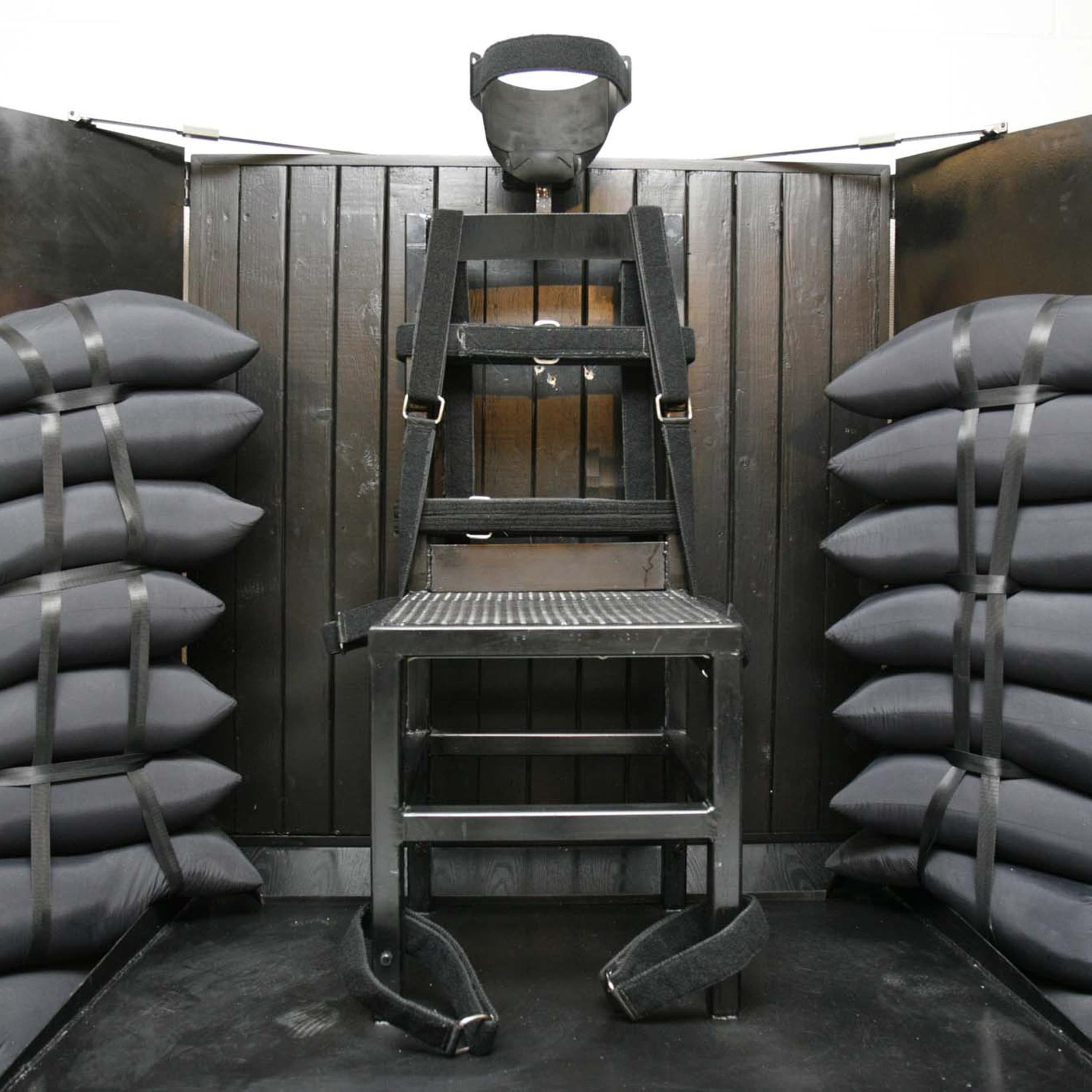
Today in Focus
The return of the firing squad in Trump’s America
00:27:21
Why are more states than ever in the US using the firing squad as a method of execution? With chief reporter for Guardian US Ed Pilkington
Loading summary
Transcript73 lines
- [00:00]
A
This is the Guardian.
- [00:08]
B
Today, the return of the firing squad.
- [00:18]
C
Today's markets move fast. Get the insights you need in 10 minutes with the Barclays Brief, a new podcast from Barclays Investment Bank. Through sharp dialogue and scenario based analysis, our leading experts analyze key market themes each week. So whether you're managing a portfolio or leading a business, the Barclays Brief podcast can help you make smarter decisions today. Stay sharp, stay brief. Find Barclays Brief wherever you get your podcasts.
- [00:53]
A
Apologies. In all of this, I have this all the time. The need to describe events that are very brutal and extremely distressing.
- [01:03]
B
This is Ed Pilkington, the chief reporter
- [01:05]
A
of Guardian US but this is how it works. A prisoner who has been sitting for several days in a cell next to the execution chamber awaiting his fate. This usually is a male, though in Idaho there is one of the eight prisoners on death row is a woman. The prisoner is brought into the execution chamber, usually by two or three guards. They're sat down on a chair surrounded by sandbags in case the bullets fly around. They're strapped down so they're absolutely immobile, including a strap over their chin so that their head can't move. And then they have a black hood placed over their head so they cannot see what's happening.
- [01:47]
B
The marksmen take their positions.
- [01:51]
A
They stand behind a wall so you can't see them. There is a slot in the wall. They direct their guns. They target their guns on a target that is put directly over the heart of the prisoner. And then on the signal given by an executive, they fire in unison.
- [02:12]
B
What Ed has just described sounds archaic, it sounds barbaric. But this way of killing prisoners is becoming popular again in Trump's America. And this week the state of Idaho became the first to choose the firing squad as its primary preferred method.
- [02:29]
A
You know, it's a scene of indescribable horror in my view, but that's how it works in America in 2026.
- [02:45]
B
From the Guardian, I'm Helen Peddle. Today in focus, America's latest death protocol. Ed Pilkington, in your 20 years reporting on America, reporting on executions has become something of a specialism for you. What is it about that particular topic that draws you as a journalist?
- [03:11]
A
I think the death penalty illuminates so much that is critical about the fault lines in America today. At the heart of it is race. The death penalty was adopted by former Confederate States as they came out of the Civil War. It became an official alternative to lynching, which was a sort of unofficial way of doing things. And you can draw a line from that all the way to today. And meanwhile, it also illuminates the extreme inequity in criminal justice in America. The shocking sort of glibness, almost, with which many states prosecute and then convict people and put them on death row and then carry out executions has constantly stunned and amazed me. I mean, people are put on death row on the flimsiest of evidence when you would assume that being the ultimate punishment, it will be ultimately correctly carried out. The truth is quite the opposite.
- [04:11]
B
And can you tell us how many people are executed in the US Each year?
- [04:15]
A
Yeah, well, those of us who follow this stuff closely are seeing a disturbing revival. It's coming back. It's rising up again. Last year, there were 47 people executed in the US and that's quite a jump from the sort of less than 30, the fewer than 30 that we've been seeing per year before that, 19 of those executions were down to Florida, which sort of leapt into it with a vengeance. But we've been seeing Donald Trump enthusiastically encouraging states to ramp it up.
- [04:44]
D
Now they give the death penalty, where they give a slight injection so that they don't have pain when the needle goes in to slowly put them to sleep. I mean, these people have to be treated very, very severely.
- [04:57]
A
And of those states are engaged in this, about seven active states who are doing most of it, they've done just that. They've been ramping up their executions.
- [05:15]
B
An increasing number of the people who are being put to death are being killed by firing squad, which to my ears just sounds completely barbaric and archaic. Why is this method back in vogue?
- [05:27]
A
I think it's because a couple of things, first off, and the main thing is that lethal injections, which since the 70s have been the most common way of carrying out an execution in the US which was seen as the perfect, humane, medicalized way of doing things, it's run into a lot of trouble. There's a huge international boycott. It began in the UK and then spread through Europe and then around the world.
- [05:50]
D
The manufacturer of ketamine jicama doesn't want to see these drugs used and has already sent a cease and desist letter to the Attorney General's office. And yet here we are, still trying to move forward this execution. And now we see these drugs have expired and we're seeing the same thing happen.
- [06:05]
A
It means they can't get hold of the drugs they need to do these lethal injection. And they've also been having a string of gruesome botches where they can't find the veins of the prisoners they're trying to kill.
- [06:16]
C
The state of Idaho will be delaying the execution of one of America's longest serving death row inmates. This after a failed lethal injection attempt when the medical team couldn't set up an IV line to administer the drugs.
- [06:31]
A
When we've been seeing prisoners survive an execution, which for me is about the most unimaginable experience possible, a convicted killer
- [06:39]
D
who survived a botched execution is trying to avoid setting a date for a second attempt at lethal injection. Romel Broom.
- [06:45]
A
So people are turning to the foreign squad. They say, okay, maybe a bit bloody and brutal, but it's foolproof and therefore it's humane.
- [06:52]
B
Well, we'll talk in a bit about whether this method is indeed foolproof and always succeeds quickly. But can you just tell us, where else in the world is firing squad a favoured method of execution?
- [07:04]
A
Well, interesting company for the leader of the free world, the us, to be keeping on the list. North Korea, China, Iran, Saudi Arabia, Indonesia and Belarus all have firing squads as their main method of official method, really, of capital punishment in those countries. So we're keeping interesting company. And in the us, we've got a growing number of states who are entering the game. We've got Mississippi, Oklahoma, South Carolina, Utah has for about 100 years been almost the only state practicing the foreign squad, but now it's being joined by many others. And this week, Idaho has become the first state in the nation to make the foreign squad the primary method of its judicial killings. So that's a significant stamp of approval, I think, to a method that has historically been seen as brutal and bloody. In most states, even if they practiced a death penalty, they didn't want to go near it.
- [08:05]
B
And when you say that in Idaho it will now be the primary method, does that mean it's going to be the default, or will prisoners on death row have a choice between different methods?
- [08:15]
A
I think it's going to be the default unless prisoners insist on a different method. And under Supreme Court law introduced recently, prisoners do have to be able to offer an alternative if they argue that they shouldn't be killed by any particular method. So there will be other choices, including lethal injections, but they have now set up their execution chamber to allow for the firing squad, and that will be the prime method. Mm.
- [08:42]
B
And have they used the same arguments to justify this move that is that it's more reliable than lethal injections?
- [08:49]
A
Yes. I mean, the shift towards firing squad in Idaho is a primary method came through the legislature. It was done by sort of lawmakers in the State the particular Representative Bruce Gorg, who co sponsored the bill that introduced it. He has said in an interview that he's pointed out that the lethal injection could have problems.
- [09:11]
D
6 to 7% of intravenous injections of penobarbital or other medications, so to speak, fail on executions. And I thought, well, that is cruel and unusual punishment in a way.
- [09:24]
A
And he said, quote, we needed something that was sure and humane. That's an interesting word to use for the firing squad.
- [09:30]
D
Firing squad is quick. It's certain there's no failure. The person that is condemned is unconscious immediately. So I think it's the more humane way to go.
- [09:49]
B
You've said before that proponents of the firing squad claim that it's quick. It's certain, it's foolproof. Is it?
- [09:58]
A
That's the claim. You know, it's the left ventricle that's hit. That's the critical ventricle of the part that pumps blood to the brain. As soon as blood stops reaching the brain, it cuts off, and therefore death is instantaneous. That's the claim. The record of history of the firing squad is not quite as simple. It goes all the way back to 1608, where the very first judicial execution was carried out in the Jamestown settlement. And all these centuries, they're thought to have been 147 executions of civilian prisoners by firing squad since James Stout. And there are two very important examples where things definitely went wrong. In 1879, a prisoner called Wallace Wilkerson, he took 27 minutes to die. The marksman shot way above his heart and into his left arm, and he screamed out, oh, my God, My God, they have missed. Which is a refrain that, you know, sticks in the mind. More recently, in 1951, there was a prisoner called Alicio Mares. A law professor who studied his case said that all the bullets missed his heart. In that case, it was reported that he died a very slow and very gruesome death. And the law professor went on to speculate that actually it may even have been an intentional missing of his heart, for reasons that the scholar couldn't actually ascertain. And he posited two possible reasons. One, that the marksmen were kind of freaked out. They didn't want to hit him in the heart, which are for reasons that we don't know. But he did also speculate there was another possible explanation, and that was that the riflemen wanted to torture this guy, Elisio Mahrez, to the max. That's the possible explanation, speculative though it is, that I found very, very distressing definitely.
- [11:53]
B
And I think over the past 16 years, there have been four firing squad executions, and I think at least two of those have generated similar concerns. Can you tell us about those executions?
- [12:04]
A
Yeah. The first was in 2010, again in Utah, that state that has historically been the epicenter of all this. I was actually there. I was at the prison, though they wouldn't let me into the death chamber, so I wasn't an eyewitness. But I was outside the prison when this happened because it was even then, pretty rare event. The prisoner, Ronnie Lee Gardner, had been on 25 years on death row for murdering an attorney during an attempt by him to escape a courthouse. And eyewitnesses who did get into execution chamber, unlike me, they said that they saw his fists clench several times in the seconds after he was struck in the chest, and they thought that he was fighting against the pain when he was shot.
- [12:53]
B
Some of us, I think, weren't sure if he had passed away because we could see movement. He had his fist clenched, and we can see his elbow move up and down and his thumb and forefingers moving, rubbing against each other.
- [13:07]
A
It even inflicted in several of the eyewitnesses the suspicion that they would have to shoot again a second volley of bullets before he died.
- [13:16]
D
I think for a brief second, we were starting to wonder if that was going to happen because he kept moving, and those were the.
- [13:22]
A
That didn't happen, but it was an excruciating wait for him to die. And that's a quote from one of the eyewitnesses. So that case was very, very problematic. And there have been studies into the autopsy pictures organized by the family of the prisoner who died, and they have shown evidence that the bullets missed his heart. So that was a very, very, very disturbing case. And, yeah, I put all the allegations about the Ronnie Lee Gardner execution, that it was botched, and even the speculation that it might have been intentional. I put it all to the Utah Department of Corrections, but they came back to me and said they had to say about it.
- [14:04]
B
And in the article you wrote about this, you discussed in detail the execution of a man called Mikhail Maddy. What was significant about this case in particular?
- [14:13]
A
Yes, last year, South Carolina jumped into this business with a. With a vengeance. They carried out three firing squad executions. And bearing in mind that Utah had been pretty much the only state ever to do this in US History, this was a big deal. And of those three, maybe two of the three had problems associated with them, but one in particular, the middle one, Mikhail Mardi, aged 42, his death was Very, very disturbing. Eyewitnesses said that he groaned, he gasped for breath as long as after 80 seconds. Now, bear in mind the protocol, even the protocol in South Carolina says that prisoners should die within 10 to 15 seconds, should be instantaneous. That's the claim of this foolproof method. But it took four minutes before he was proclaimed dead. And disturbing scenes in the process.
- [15:09]
D
Mikhail Motti was sitting in the firing squad chair. They came out, and right at 6:01, they put the hood over his head. Mottie had a grown. I wouldn't call it a scream, but it was like a groan or a. Some indication of pain immediately after he was shot. And then there was also one, like, final gasp or one kind of final deep breath.
- [15:32]
A
And then lawyers for Mardi, as well as for other death row inmates who had execution dates coming up, examined the admittedly very paltry evidence that the state allowed to be seen by the public, including some photographs, and that showed that the three bullets that had been fired there had been only two entry wounds into the body, which puzzled many people. The state said that maybe two bullets had entered the same hole, but pathologists say that's very unlikely. And the bullets that did enter the body, they missed the critical left ventricle. And that's accepted fact. The bullets missed the left ventricle. They may have glancingly hit the right ventricle. Now, this is a problem because the ven left ventricle, as we discussed, is what pumps blood to the brain. It's what kills you instantaneously. If you don't hit the left ventricle, much more likely to bleed out, which is a process that takes much longer and would be excruciatingly painful. The state and the top court in South Carolina disagree with many, many people who say, including experts who say this was a botched execution. They say it was textbook. It was not botched, but the evidence, I think, is disturbing enough to demand more examination and give people pause that they're taking on board a method that certainly seems to be difficult and if not absolutely terrifying if it goes wrong.
- [17:07]
B
And in that case, the Mahdi case in South Carolina, is there a suggestion or a suspicion perhaps on behalf of his attorney or his family, that, again, they might have deliberately missed in order to prolong his agony?
- [17:23]
A
Yeah, I mean, there's allegation that firing squads might intentionally be missing the heart of a prisoner in order to inflict extreme maximum suffering on that prisoner. I want to give a kind of warning to this at the beginning. That's a very, very heavy allegation to make. And it is speculative. Speculative because we cannot know the motive of the people who are behind those rifles. They're shrouded in secrecy. We don't know their names, we don't know their gender. All we know is that they're trained marksmen who have been trained heavily to be able to do this, to be able to kill someone at the end of a gun. So we don't know their motive. But expert witnesses, including pathologists, including ballistic experts who were brought on board by legal teams working for other death row inmates in South Carolina who have upcoming executions, have brought in experts to look at the autopsy photographs for Mardi. And they have both confirmed that the bullets missed the left ventricle. And some of them, not all, but some, had gone on to speculate that this could have been an intentional event. Why do they say that? Well, they say, look at the facts here. We have three expert trained snipers, you could call them marksman. They're carrying AR15 style guns, precision made, absolutely brand new, completely accurate with scopes, and they're standing maybe 21ft away from emotionless. Prisoner who's been strapped to the chair, cannot move. These experts say it's virtually impossible under these circumstances for the three marksman to miss the heart. And therefore that leads them on to speculating about was this intentional? Some have also added the fact that the victims in both the Mardi case and in the earlier Ronnie Lee Gardner case in 2010 that I attended in Utah, the victims of the murderers were law enforcers. In the case of Mardi, it was an off duty police officer that he killed. Marty is black, the police officer was white. And so that has also encouraged speculation that there could have been some intentionality here.
- [19:42]
B
And as you say, this is a very, very contentious allegation to make this idea that they might have deliberately missed the crucial part of his heart. What has South Carolina, as the state, said about these allegations?
- [19:57]
A
Yes, I put this to South Carolina, obviously to the Department of Corrections, and they dismissed the allegations out of hand. They said it was purely speculative and entirely wrong. And they also pointed me to a ruling from the top court in South Carolina, the state Supreme Court, which looked at the evidence that the state had presented to the court and ruled that the execution was not botched. Now, technically, in legal terms, the ruling of the top court in the state of South Carolina is the record of fact. It's the court's job to find fact. And you can say, therefore argument over the fact is the execution was not botched, but evidence that has been compiled by defence teams stands. It's disturbing and I think it can't be argued away as easily as all that.
- [20:54]
B
Coming up, Trump's growing enthusiasm for the death penalty.
- [21:08]
D
He's dribbling the ball with everything on the line. He's driving down the pitch. He's facing price hikes and cuts past him. Carrier contracts, tries to block him. Oh, he leaves him in the dust. He's at the edge of the box. He cuts past the nonstop group chat, trash talk. He clears on goal. He shoots. No unlimited data for $25 a month forever. Visit your local Boost Mobile store today to get unlimited data with a price that never changes. Boost mobile after 30gb, customers may experience lower speeds. Customers will pay $25 a month as long as they remain active on the Boost $25 Unlimited plan. High interest debt is one of the toughest opponents you'll face unless you power up with a Sofi personal loan. A Sofi personal loan package your bad debt into one low fixed rate monthly payment. It's even got super speed since you could get the funds as soon as the same day you sign. Visit sofi.compower to learn more. That's s-o f I.com p o w e r loans originated by Sofi Bank NA member FDIC. Terms and conditions apply. MLS 696891.
- [22:15]
B
Listening to you talk from my position here in London, in Britain, a country that hasn't executed Anybody since the 1960s, this all sounds so cruel and retrograde. And I just wonder, are those feelings shared by many people in the US or is there actually a lot of support for the firing squad in particular as a method of execution?
- [22:40]
A
Yeah, like anything in America today, there's no simple answer that it's a country riven down the middle. It's hugely divided. And so too is the answer to your question, really. I mean, Trump has been talking it up. He's recently issued an order to apply the firing squad to federal executions.
- [22:59]
D
The U.S. justice Department plans to bring back firing squads as a permitted method of execution. The move is part of a broader push by the White House to speed up federal death penalty sentence.
- [23:10]
A
Purely symbolic because there are only three death row inmates left in federal death row. Joe Biden, before he stepped down, he commuted all the others, and those three won't be executed anytime soon. So it was a purely symbolic move on Trump's part, but I think it does signify what's happening. There's wind in the sails of the death penalty states. They're going for it in New numbers. And, you know, one has to assume that within those states there is some degree of support for what they're doing, otherwise they wouldn't do it. Nationally, though, the figures continue to show that the death penalty is declining in support. Gallup, which has been carrying the poll on this for many years, shows that it's fallen to like 52% of people asked in the poll favor the death penalty for murder. And that's declined substantially over the last 10, 20 years.
- [24:04]
B
Right.
- [24:04]
A
Having said that, still 52% is. Still more than half of Americans are backing it. So it's not going away anytime soon within the death penalty states. And, you know, and that's something I've noted personally, I've reported on this stuff for many years. It's just, it's an impression that I've had. You know, when I write a piece, readers in the UK go ballistic on it. They get very, very angry about it. I don't quite feel the same anger in the US And I've pondered that a lot over the years. And I think it's just, in a way, for moderate and progressive Americans, it's just like one step too far. It's just that's how they do it in the South. Death penalty states are largely in the South. And we got enough on our plate. We can't get to that.
- [24:53]
B
Are there any forces or any organizations, people really fighting this development?
- [24:59]
A
Absolutely. There are very brave, very determined abolitionist groups going at it, particularly in the South. Some of them are Catholic. The Catholic Church is pretty involved in all this. One thinks of Sister Helen Pregen, who was the subject behind the famous book and then movie Dead Man Walking.
- [25:18]
D
Can you help the church uphold the dignity of all life that to take a human being and render them defenseless and kill them can never be justified? And so Pope John Paul was the first one, and then Pope Francis finally moved it to completion and said, under no circumstances can we ever allow the state.
- [25:39]
A
There are lots of groups in places like Idaho and Utah who are struggling against the firing squad and trying to stop executions more generally. So yes, absolutely. And including actually increasingly conservative and even Republican groups who are trying to kind of stop this from within.
- [25:58]
D
The Republican Party, freshman Republican is signed on as co sponsor of a House bill that would repeal the killing of U.S. citizens by the federal government as
- [26:06]
A
a means of which I find particularly interesting. They're using arguments such as it costs too much, it costs the taxpayer too much, which is they're using conservative arguments to try and stop the death penalty.
- [26:17]
D
The death penalty has never been shown as an effective deterrent. It's expensive and he doesn't trust the government's decision, decision making.
- [26:24]
A
But still, I think it's fair to say there on the margins, the big guns have not really got engaged in the subject that much. Although it has to be said, across Democratic controlled states, increasingly there are either moratoriums in place or actual abolition of the death penalty in those states. So across Democratic controlled states, the argument's really over. The death penalty has gone away.
- [26:52]
B
And finally, what do you think it tells us about the USA in 2026, that this particular method of execution is being favored again?
- [27:00]
A
Yeah. Well, I think it falls into the bigger picture of the death penalty being revived here just in the last two or three years. It's partly connected to Trump and the encouragement he's given, but I think is also something bigger than that. I've always seen the death penalty in America as a fundamental vein that runs through the country's polit and its way of seeing things. It is confined largely to the former Confederate states. So it is a sort of ramp of states. You cannot say this is America writ large, but it signifies for me a brutal streak in the country's politics very much attached to the history, to the history of slavery and the Civil War and lynching and mass incarceration and everything that has flowed from that. And to me it says this brutal streak is here. It's not withering as people had hoped on the left. If anything, it's gaining ground. And if you want to turn away from it and turn the blind eye to it and hope it will just go away, I think you're wrong and I think you ignore it at your peril.
- [28:15]
B
Chilling stuff, Ed. Thank you so much.
- [28:17]
A
Thank you.
- [28:25]
B
That was Ed Pilkington. You can read all of his work around the death penalty@theguardian.com and that is all for today. This episode was produced by Iva Manley and Sundar Sabdi and presented by me, Helen Pitt. Sound design was by Rudy Zagadlo and the executive producer was Sammy Kent. Will be back in your feeds this afternoon with the latest.
- [28:53]
A
This is the Guardian.
- [29:04]
D
He's dribbling the ball with everything on the line. He's driving down the pitch. He's facing price hikes and cuts past him, carrier contracts, tries to block him. Oh, he leaves him in the dice. He's at the edge of the box. He cuts past the nonstop group chat, trash talk. He clears on goal. He shoots no unlimited data for $25 a month, forever. Visit your local Boost Mobile Store today to get unlimited data with a price that never changes. Boost mobile after 30gb, customers may experience lower speeds. Customers will pay $25 a month as long as they remain active on the Boost $25 Unlimited plan. Today we'll attempt a feat once thought impossible, overcoming high interest Credit card debt. It requires merely one thing a SOFI personal loan. With it, you could save big on interest charges by consolidating into one low fixed rate monthly payment. Defy high interest debt with a SOFI personal loan? Visit sofi.com stunt to learn more. Loans originated by Sofi Bank NA member FDIC terms and conditions apply. NMLS 696891 Close your eyes.
- [30:08]
C
Summer smells like sunshine, fresh citrus and salty air. What if your living room could feel just like that? With Pura's new Summer collection, it can restore your sense of well being with fragrances designed to move with your day. From bright, energizing mornings to soft, relaxing evenings. Make the invisible unforgettable this season. Visit pur.com to find your new favorite summer scent.