← Today in Focus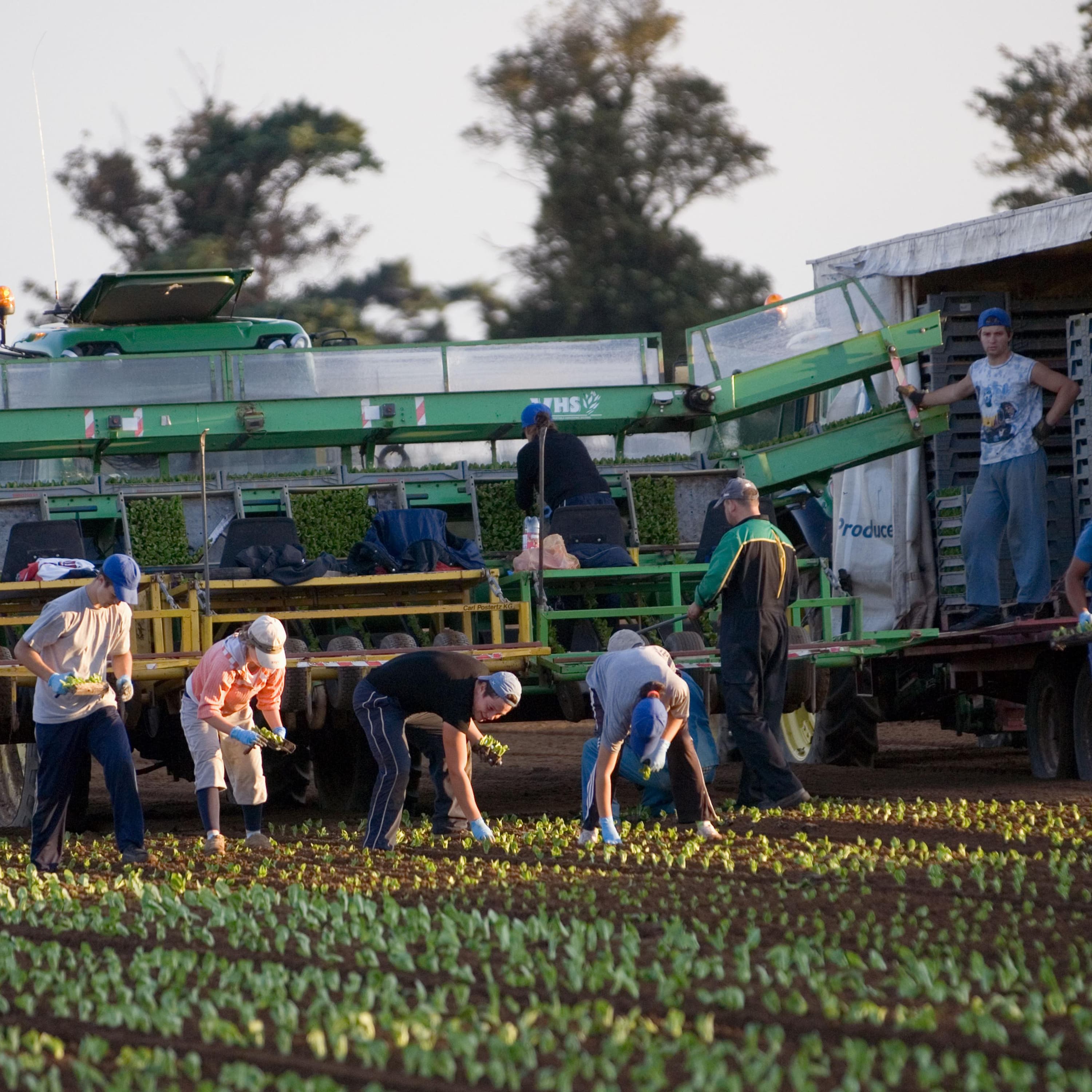
Today in Focus
The security report the UK government doesn’t want you to see
00:28:28
Fiona Harvey tells Nosheen Iqbal why the climate crisis is a threat to national security
Loading summary
Transcript83 lines
- [00:00]
A
This is the Guardian.
- [00:09]
B
Today, the landmark report the UK government didn't want you to see.
- [00:21]
C
This episode is brought to you by Progressive Insurance. Do you ever think about switching insurance companies to see if you could save some cash? Progressive makes it easy to see if you could save when you bundle your home and auto policies. Try it@progressive.com Progressive Casualty Insurance Company and affiliates. Potential savings will vary. Not available in all states.
- [00:45]
A
Last October, I and other journalists got quite excited because we thought that we were going to be attending a great event at the Natural History Museum.
- [00:55]
B
This is Fiona Harvey, she's Environment Editor at the Guardian.
- [00:59]
A
And we'd be talking about biodiversity because the Natural History Museum and looking at the risks and the crises that we're facing, the joint crises of climate and biodiversity, and looking ahead to what was going to happen at the cop, the UN Climate Summit, just a few weeks later.
- [01:21]
B
On the guest list were government ministers, ambassadors, eminent scientists, even the King.
- [01:28]
A
We had been told that there was a major report being launched at this event. And this report was going to come not just from where you'd expect from the Government's Environment Department, but also from the Joint Intelligence Committee. And they are the UK's son, spy chiefs, MI5, MI6, the intelligence agencies, and they were taking an interest in the climate and biodiversity and the threats that they posed to the UK's national security.
- [02:04]
B
The day before the event, Fiona was told that she was no longer welcome. And it wasn't just her, but all the other journalists on the list.
- [02:12]
A
At first we thought perhaps it was the palace who can be a bit sensitive about such things. But when it transpired that this report, this key report, was not coming out after all, we realized there was something bigger afoot.
- [02:25]
B
Fiona, well, she did what she does best. She began to dig around.
- [02:30]
A
I went and tried to talk to as many contacts as I could to find out about the report, what was in it, who'd written it, what the advice was to ministers and how it was going to be acted upon. And I found out some very interesting things. I got parts of the report read out to me and saw various bits of it. It was really peculiar that it was not being put out at this time. And we were told by various sources that the people who had suppressed this report were actually. Number 10 Downing Street,
- [03:06]
B
From the Guardian, I'm Nosheen Iqbal. Today in Focus. Why did Labour try to bury a report about the collapse of our ecosystems? Fiona Harvey, you're the Guardian's Environment Editor and we're here to talk to you about the report. Titled Global Biodiversity Loss, Ecosystem Collapse and National Security doesn't roll off the tongue, but you're about to explain to me why it's so important. Can you start by telling us its origin? What do we know about when this report was commissioned and who put it together?
- [03:43]
A
Well, this report was commissioned from the Joint Intelligence Committee. They direct the work of MI5, MI6, the National Security agencies that look after us. They tell the Cabinet what they need to know about national security threats that are coming down the line and they need to be involved in thinking about biodiversity and the climate, because these are things that pose an enormous risk to the uk, but they don't normally get through to that kind of, you know, military planning level. And it's been in planning for a long time. You know, by the time it was first supposed to come out last October, it had already been around for nearly a year. There had been, you know, a lot of people had seen it in the intervening months. It wasn't viewed as a terribly secret thing, it was intended for public.
- [04:38]
B
I think a lot of people might just be trying to get their heads around the fact that. Hang on, so the spy chiefs are interested in the climate crisis and how that poses a massive risk to our national security. Fiona, what exactly were they tasked with looking at?
- [04:51]
A
So we know that we have a lot of ecosystems around the world that are on the brink of collapse. And that's from a combination of threats. It's from the climate crisis, it's from people turning forest and other landscapes to food production, it' pollution. It's from the encroachment of people onto areas that were previously wild. So these threats are multiplying. We know that these systems are in danger and the problem is when they collapse, it's not just the wildlife or the trees and the forests and the natural systems that suffer, it's people too, because this has a knock on effect on food production. It can have a knock on effect on weather, it can have a knock on effect on soil fertility. There's all kinds of ways in which the collapse of these ecosystems has an impact on human society that we cannot ignore. And even systems on the far side of the world have an impact on the uk. We live in such a globalized society. The UK is not by any means self sufficient in food. We import a large slice of all of the food that we eat and if we can't rely on food supplies from abroad, then we're going to be in trouble. And they look at these things from a national security lens. They looked at, for instance, the potential not just for things to happen to the food chain, food supplies in the uk, obviously that's crucial, but also things that could happen overseas that will have an impact on us because, you know, there could be migration from areas that are affected. Because, look, if you're living in an area where the ecosystem is collapsing around you, you don't just stay there and wait to die. You move. You try to find ways to feed your family to save their lives. And that can involve moving, it can involve competition over resources. So if a country neighboring you is having a food crisis and you are worried about your own food supplies, then you could quite easily have a conflict there. There could be conflict over res, such as water. If you're in an area where there's drought and that drought is increasing, you might look at your neighbor's water supplies or your neighbour might try to hoard the water supplies before they reach you. There's all kinds of potential for conflict here. And what this report is saying is that these risks are real. And the potential for civil war and for war between states and potentially war among nuclear armed states is something that we need to take very seriously.
- [07:50]
B
So, Fiona, this report, which was supposed to be published in October last year, had this launch which you'd had in the diary for weeks, but then suddenly the launch of the actual report was cancelled, which seems quite unusual for an event at which, you know, you've got the King on standby to presumably have some sort of ceremonial presentation of his findings. Do we have an idea why that happened?
- [08:13]
A
We are pretty sure that the report was suppressed by number 10 Downing street suppressed? Yeah. This report was scheduled to come out and it wasn't a secret that it was coming out, but they decided not to publish it. There could be several reasons for that. They haven't gone public with those reasons. Okay, but it seems like they thought that the report was. Was dynamite. And of course it is. You know, if you've got the people who are supposed to be warning you about national security threats, threats that could involve military mobilization if necessary, then you need to take that seriously. And I think perhaps the government felt they didn't really have answers for, you know, if journalists came along and said, well, the report says we're in danger here, what are you going to do about it? And they perhaps didn't feel they had answers to that.
- [09:09]
B
Fiona. By January this year, pressure began mounting on the government to publish the full report. Who was leading the charge here and what was their response?
- [09:18]
A
So the government received requests to publish the report under the Freedom of Information act from several sources. They were rejected, but it was an expert called Ruth Chambers from the Green alliance think tank and she just wouldn't take no for an answer. She got these rejections and just plowed through them and found ways around them and went to the information commissioner, explained, you know, why it was necessary to publish this report. And eventually they agreed and they did publish a truncated version of the report. They didn't tell us that these were excerpts from the report, but it was clear because this was a 14 page report and what we were expecting was a, you know, a huge monster of a report. So there were very clear gaps in what was eventually published. Published in January.
- [10:08]
B
So despite the fact that the government did only put out this 14 pager, you were able to obtain a fuller version or at least see or be read some of that report out. Fiona, what did that version say and how different was it from what the government had published instead?
- [10:24]
A
Well, it gave us a lot more detail on some of the threats that were involved. It was a lot more, I suppose you could say it's a bit more apocalyptic, really. It was more, more of a sense of the dangers and the military dangers and a sense of the fragility of the uk. It's interesting that all of this was happening before we had the war in Iran. And what's happened with the war in Iran is that some of the points that were made in this report about the UK's fragility have been shown really in sharp relief now because of the reliance on fossil fuels and the threat to food supplies from fertilizers and so on. All of this was kind of sketched out in the report about the UK's kind of interconnectedness and vulnerability in an international sense. And now we're seeing it play out.
- [11:22]
B
And what kind of timeline was the report presenting in terms of how far away was it suggesting or warning that the UK is from being exposed to the vulnerabilities of the collapse of ecosystems, of the climate crisis affecting other countries worldwide? I mean, 5, 10, 15, 20 years. Fiona, what was the sort of timeline being suggested?
- [11:42]
A
Four years.
- [11:43]
B
My God.
- [11:45]
A
So you wouldn't get all of the apocalyptic impacts within four years. But the report is very clear. This is not a far away problem. This is not a long term issue. We will start to see these impacts from 2030 and that there will be cascading risks from there. You know, the big risk here is of tipping points and you drive an ecosystem from all of the terrible things that we do to them. We put so much stress on these ecosystems that they reach a tipping point beyond which they cannot survive. You know, for instance, if you're talking about the Amazon, it could reach a tipping point where. Where it turns from a rainforest into a savanna, which would have just global consequences. Coral reefs beginning to die off at a really dreadful level. And that has an impact on fisheries and so on and marine ecosystems. And the thing about these tipping points is that when you know you've reached them, it's too late. You know, the groundwork for that is laid decades in advance and it's only when the tipping point has actually been reached and it's irrecoverable that you know about it. So we could be unknowingly going through kind of triggering all these trip wars, essentially, the consequences for which will hit us further down the line.
- [13:18]
B
Foreignant General Richard Nugent, welcome to Today in Focus.
- [13:27]
D
Thank you.
- [13:28]
B
Now, your very distinguished military career spans four decades. You've served in Iraq and Afghanistan. You've been awarded a cbe, an MBE, a US Legion of Merit. I think some of us might have an idea of what a retired general might do out of the field. And I have to say top of the list isn't advocate for the environment and rallying to fight climate change. Could you tell me about what it is that you do now?
- [13:58]
D
So a lot of the time I'm trying to persuade people that the security of this country is affected by climate change and biodiversity loss. It's a very difficult journey, if you like, because it doesn't feel like it much here compared to the Middle east or to other parts of the world, where it is very obvious that the world is getting hotter. And there's a lot of people in this country who turn around and say, do you know what? It's better to get hotter in this country. We live in a cold bit of the world and more people die of cold than heat and so on and so forth. And so trying to get the message across that actually our security. Because you're right, I spent nearly 40 years in the armed forces protecting and defending this country, doing what, what the government asked me to do. And I feel very strongly that I'm, you know, I'm passionate about this country. I want to secure it. I want it to be secure. And climate change and biodiversity loss is a threat that people don't see in the way that they do see Russian frigates or whatever. And somebody's got to stand up and say, hang on a minute, we are at risk if we pay no attention to it.
- [15:10]
B
When did you have that light bulb moment. And you know what sparked your interest in pursuing this as your next career?
- [15:17]
D
So it came out of two things. One, out of my degree, I read anthropology. And anthropology is the study of how humans are affected, were created by the environment. Well, it's just the other side of the coin. How humans are affecting the environment, that's one side of it. But then there's the other side of it, which was in Iraq. When I was commanding a battle group in 2003, more of my soldiers were made ill by the weather than by the enemy. I had to say.
- [15:44]
B
Could you explain that a bit?
- [15:45]
D
Yeah, we, we were in. So we arrived immediately after the war had finished. We were sort of the second wave in. And the army wasn't really prepared for desert ops. It got extremely good at it, but it wasn't really prepared. We weren't prepared, we weren't acclimatized. We had no air conditioning at all. And so we just had to live in the weather. And we were in 50 to 55 degrees of heat with extraordinary levels of humidity. My chefs were cooking in and the temperature, we checked it, the temperature that they were cooking in was 70 degrees. You learn very, very quickly that the environment and in this case heat, can do enormous damage. We used 250 saline drips to keep our soldiers alive.
- [16:30]
A
Oh, my goodness.
- [16:31]
D
None of my soldiers were killed by an enemy action, but one very sadly, and it was heat related, had a heart and died. And I had to send five home with heat stroke because they couldn't cope with the heat. So it became an immediate question of how are we able to cope as an army, as a bunch of soldiers, in this case a battle group of a thousand? How could I sustain my effectiveness, if you like, if it is so hot? So that sparked an idea. Well, hang on a minute. If climate change is making this worse, what are we doing about it? And so that became a piece. But then the third piece was, why will we go to war in the future? We in the military need to understand why wars are created, why wars are started. And if you understand that and you realize that climate could be and biodiversity loss could be a cause of war, then you start to understand what you can do about it.
- [17:30]
B
Can you explain that then? Why is the climate and the loss of biodiversity an obvious cause for war for you?
- [17:37]
D
So it is a cause of potential conflict. It's also an exacerbator, it's a threat multiplier. If you think that resources are scarce, you're going to protect your resources. And so there's an example water loss in the Pakistan India environment, where because there is a lack of water, because it's not raining enough, because the Himalayas are melting in a way that it's not traditional. Not only have you got problems of agriculture and then flooding, this massive flood that happened in Pakistan a few years back, where half the agricultural land in the country was underwater, a third of the population was affected by it, half the army was deployed just to keep people alive. And India is suffering as well. And if they start to blame each other, then you've got real problems. You've got big powers. India nuclear power, Pakistan nuclear power, with tensions being caused by the climate, which, if everything exploded and went wrong, puts you at risk of nuclear war.
- [18:44]
B
Richard, how did you feel when you found out that this report, which DEFRA had spent a year working on, looked like it was quietly being dropped?
- [18:55]
D
I did, actually. I mean, I gave a talk to the authors, so I had a sort of bit of a vested interest in seeing the report. And when it didn't come out, I did ask the question and I was told by various people, just don't ask. And I'm enough of a. Of a soldier that if I'm given an order, I tend to obey it. Not quite enough of a soldier to leave it at that. But I was disappointed because I wanted to see what they'd written. This is a seminal report. This is. I. I can't tell you how important this report is. This is the Joint Intelligence Committee.
- [19:27]
B
Yeah.
- [19:28]
D
Writing a report which turns around and says this country is at risk through climate change and biodiversity loss. Prioritized biodiversity loss. But they also talked about climate change within the report. That is really important. So I wanted to see the report. I still haven't read the full copy, but.
- [19:44]
B
But I think a few people have outside of.
- [19:47]
D
But, but, you know, it. It is so important because it's a starting gun to, you know, it's this classic of if you know what the problem is, what are you going to do about it?
- [20:00]
B
What would be the concrete examples of climate threats that you think could impact us here in the near future?
- [20:07]
D
So I think we're seeing one play out now, which is food problems. This country arguably, by some statistics, has two weeks worth of food, that's it. On the country's soil. Churchill used to get worried if we got down to six weeks worth of food in the Second World War, we import, I think the average is somewhere like 48 of our food. But some of our products, 100 of our food, and there's a food supply Problem in that some of the breadbaskets of the world are being affected by climate change. Say you had a huge heat dome over Canada which affected their grain. You've had a heat dame over parts of South America where we got a lot of our grain from. You've got a war going on in Ukraine which is stopping that breadbasket. You know, that is going to cause scarcity of certain food products. So there is an issue, and not that we will starve, but that which we wish to buy may not be available to us. Now, is that a defense problem? It's a defense problem if that causes the country to be unable to support its armed forces. The other thing is I really think we should be pushing more and more towards renewable energy. There's a very good defense reason or a security reason for that.
- [21:25]
B
Right.
- [21:26]
D
There's an example from Ukraine which is a 250 megawatt power station taken out by one missile by the Russians. Ukraine's lost about 50 of its energy.
- [21:40]
B
Yeah.
- [21:40]
D
Most of it through taking out power stations like the one I've just mentioned. The Ukrainians worked out how many missiles it would take to take out 250megawatts of renewable energy. It would take 40 missiles, four. Zero missiles.
- [21:53]
B
Right.
- [21:53]
D
So it is 40 times less vulnerable than it is if you are working on fossil fuels on a power station by having renewables. And that's a very obvious reason for that, which is it's dispersed.
- [22:05]
B
Yeah.
- [22:05]
D
It's just over a larger geography.
- [22:07]
B
Yeah.
- [22:08]
D
And so. So actually if we have renewable energy of wind and solar and nuclear and geothermal and hydro, you know, I'm. I'm not particularly worried about which. But if we, if we have lots and lots of renewable energy, we're dispersing our energy energy grid. Attacking that and from a defense perspective, attacking that and incapacitating our energy is much more difficult. It's a really good reason for having renewable energy. The point is there are things you can do that will have a lasting effect that will be better for us as a country.
- [22:43]
B
Coming up, will the full report ever see the light of day?
- [22:48]
A
Foreign.
- [22:59]
C
This episode is brought to you by Progressive Insurance. Do you ever think about switching insurance companies to see if you could save some cash? Progressive makes it easy to see if you could save when you bundle your home and auto policies. Try it@progressive.com Progressive Casualty Insurance Company and affiliates. Potential savings will vary. Not available in all states.
- [23:19]
E
From globalization to innovation sustainability to market volatility. There's always more than one side to a story. Explore different perspectives on Today's most important business and economic issues with the Flipside podcast from Barclays Investment Bank. Hear two research analysts in a lively debate and get insights from every angle. To further inform your view, listen to the Flipside on your favorite platform.
- [23:50]
B
Fiona, why do you think it is that Labour didn't want to publish a full report? Because it does sound like, as you say, apocalyptic bad news. But at the same time, you know, it doesn't feel very keeping with Ed Miliband's efforts as energy and Net Zero secretary.
- [24:04]
A
So we know that one of the Prime Minister's advisors who recently left for other reasons, Morgan McSweeney, we know that he was never very keen on anything that involved the environment or the climate or Net Zero, anything like that. I think he felt that it wasn't something that the government was going to win votes on. I think he felt that these are subjects that come under attack from sections of the media and from the Reform Party and the Tory Party. I think, you know, he just takes a look at things, says, oh, it's got climate on it. Well, you know, and let's not have that. I have to say that this government has tended to be very secretive about a lot of things, and a lot of things environmental. I mean, you know, they rarely hold press conferences. It's rarely possible to actually question ministers on these issues. You know, and that astonishes me. You know, I've done this job for a long time and I've never seen a government with such good story to tell be so reluctant to tell it Right. Because they actually do. They are taking action on the climate and they are taking action on biodiversity. They're not going far enough, but there's a lot of good things that they could say, and yet they seem to be scared about saying it.
- [25:21]
B
Can you just give us a couple of examples? What kind of things?
- [25:24]
A
Well, for instance, if you talk about renewable energy, the UK is doing great things in renewable energy. You know, we are regularly getting to a point where, you know, renewables are way more than half of the electricity that we generate. And this is really successful. It's bringing down energy bills. It doesn't feel like that because obviously the fossil fuel part of the bill is going up, and so people are kind of feeling the pinch. But those bills would be much higher if we didn't have renewable energy. That is a real success story, and yet we rarely hear about it.
- [26:02]
B
Fiona, do you think the full report will ever be released?
- [26:07]
A
I think it will. I think it must be, because it's actually. It's not that bad really, in a sense, because it's just saying what we already know. So, you know, just get out there, say it and then we can all deal with it. You know, then we can have a national conversation about it, about what we need to do. The government is preparing to spend more on defense than has been spent for many, many years in this country. But it's actually getting that money partly by cutting the overseas aid budget. And this report shows how flawed that thinking is really, because you are facing these threats overseas. It would actually be a good use of the defence budget to help to restore and protect ecosystems overseas, to make
- [27:03]
B
other countries more resilient, as opposed to thinking of it as some sort of charity.
- [27:07]
A
It's not charity, it's investment in our own security. So this connection is not being made between our national safety and where we're spending our money.
- [27:18]
B
Well, is there a world in which that committee, the Joint Intelligence Committee, might argue that some of the defence spending should be spent well with defra?
- [27:27]
A
Yeah, very much so. That is a very, very valid argument. And in fact that argument is being made across the world. We're seeing in Spain, for inst. They are looking at spending some of their kind of, you know, the NATO spending on infrastructure, on resilience. Similarly in Germany, there are other countries looking at this too and the UK should certainly look at that because, you know, even under the sort of NATO terms, the narrow terms of NATO and you know how much you've got to spend of your national GDP, there's a certain amount, I think it's about 1.5% that you can spend on sort of non military stuff that is for resilience. Well, you can spend that on making yourself more resilient to the climate, climate crisis. It would be a really sensible common sense thing to do. And I think most people in this country would see that. When you talk to people in this country, they understand that the climate crisis is a threat, they understand that biodiversity is declining and they want to protect nature. It's very popular. So if you went to people and you said, look, we've had this report that says that this will help us to not have such dangerous conflicts in the future as well as everything else, then I can't see that people are going to turn around and no, we don't want to be safer
- [28:44]
B
or healthier or live better and longer lives.
- [28:47]
A
Exactly.
- [28:48]
B
Fiona, thank you so much for your time.
- [28:51]
A
Thank you.
- [28:54]
B
That was Environment Editor Fiona Harvey and Lieutenant General Richard Nugey. My thanks to both of them. The climate and biodiversity crisis can feel overwhelming, but one of the best ways to navigate it is to stay informed that you can understand not just the scary stuff, but also the good things that are happening out there. Keep up with all the latest at theguardian.com forward/environment and that's it for today. This episode was presented by me, Noshi Nikbal. It was produced by Eli Block, sound design is by Ross Burns and the executive producer was Elizabeth Kassin. We'll be back this afternoon with the latest.
- [29:36]
A
This is the Guardian.
- [29:46]
C
This episode is brought to you by Progressive Insurance. Do you ever think about switching insurance companies to see if you could save some cash? Progressive makes it easy to see if you could save when you bundle your home and auto policies. Try it@progressive.com Progressive Casualty Insurance Company and affiliates. Potential savings will vary not available in all states.
- [30:06]
E
From globalization to innovation sustainability to market volatility, there's always more than one side to a story. Explore different perspectives on today's most important business and economic issues with the Flipside Podcast from Barclays Investment Bank. Hear two research analysts in a lively debate and get insights from every experiment angle to further inform your view. Listen to the flip side on your favorite platform.
- [30:31]
D
Today we'll attempt a feat once thought impossible. Overcoming high interest credit card debt. It requires merely one thing, a SoFi personal loan.
- [30:42]
A
With it, you could save big on
- [30:44]
D
interest charges by consolidating into one low fixed rate monthly payment. Defy high interest debt with a SOFA personal loan. Visit sofi.com stunt to learn more.
- [30:55]
E
Loans originated by Sofi Bank NA member
- [30:57]
D
FDIC terms and conditions apply NMLS 696891.