Loading summary
Transcript94 lines
- [00:00]
Annie Kelly
This is the Guardian. Today, Australia's teens get chucked off social media.
- [00:17]
Advertisement Voice
Guys, it's no use putting it off. The best time for an underwear refresh is now. Tommy John underwear is designed for a perfect fit that stays put all day. There's zero chafe thanks to four times more stretch than competing brands and and their innovative horizontal quick draw fly is a game changer. With over 30 million pairs sold there are thousands of men out there more comfortable than you. Don't settle for less. Go to tommyjohn.com today for 25% off your first order with code comfort. That's tommyjohn.comfort. tommy John comfort perfected.
- [00:54]
Josh Taylor
This morning. We are just days away from the start of Australia's world first social media ban for teens.
- [01:00]
Annie Kelly
Look, it feels like every day we're getting bit more information about how this will be rolled out. This is the greatest social experiment involving our digital native kids that there has ever been. The day that teenagers across Australia have been dreading, it's finally here. From today, snap streaks across the country will be broken. Memes will go unmade, hauls will remain unboxed. And millions of under 16s will be cut off from the world's largest social media platforms. Australia is attempting a world first, banning children from platforms like Instagram and Snapchat and forcing the tech pros who run them to comply. And young people are, well, absolutely furious. I feel as if it's just, it's a very short sighted idea because a
- [01:47]
Josh Taylor
16 year old having no experience with the Internet is suddenly thrown headfirst into
- [01:52]
Annie Kelly
something that's meant to be curated for adults.
- [01:55]
Josh Taylor
Right.
- [01:55]
Ezra Sholl
I just don't think banning it outright will fix the solution. And not only that, but I don't think that it takes into consideration people with disabilities and neurodivergent people and just people who feel isolated in general.
- [02:12]
Sarai
And the fact that it's simply being taken away because of harmful content creators, the harmful content won't stop and bullying and online harassment doesn't stop at 16.
- [02:29]
Annie Kelly
The government says it's doing it for their own good. And no, they don't care if all the other countries let their kids go on TikTok. But as the ban comes into force, will or can it work? From the Guardian, I'm Annie Kelly. Today in focus, Australia leaps into the unknown. Can you tell me about how you might interact on Instagram or TikTok or Snapchat with your friends?
- [02:57]
Sarai
Yeah. So it's really just a fun way for all of us to connect and for us to find you. Find something hilarious that you would never be able to think of in real life and it would like crack you up for a good 10 minutes and you'd be like, I'm gonna send this to my friend. And then you come to school the next day and you can laugh about it again. And it can. Many online memes have become inside jokes for a lot of my friends and
- [03:23]
Annie Kelly
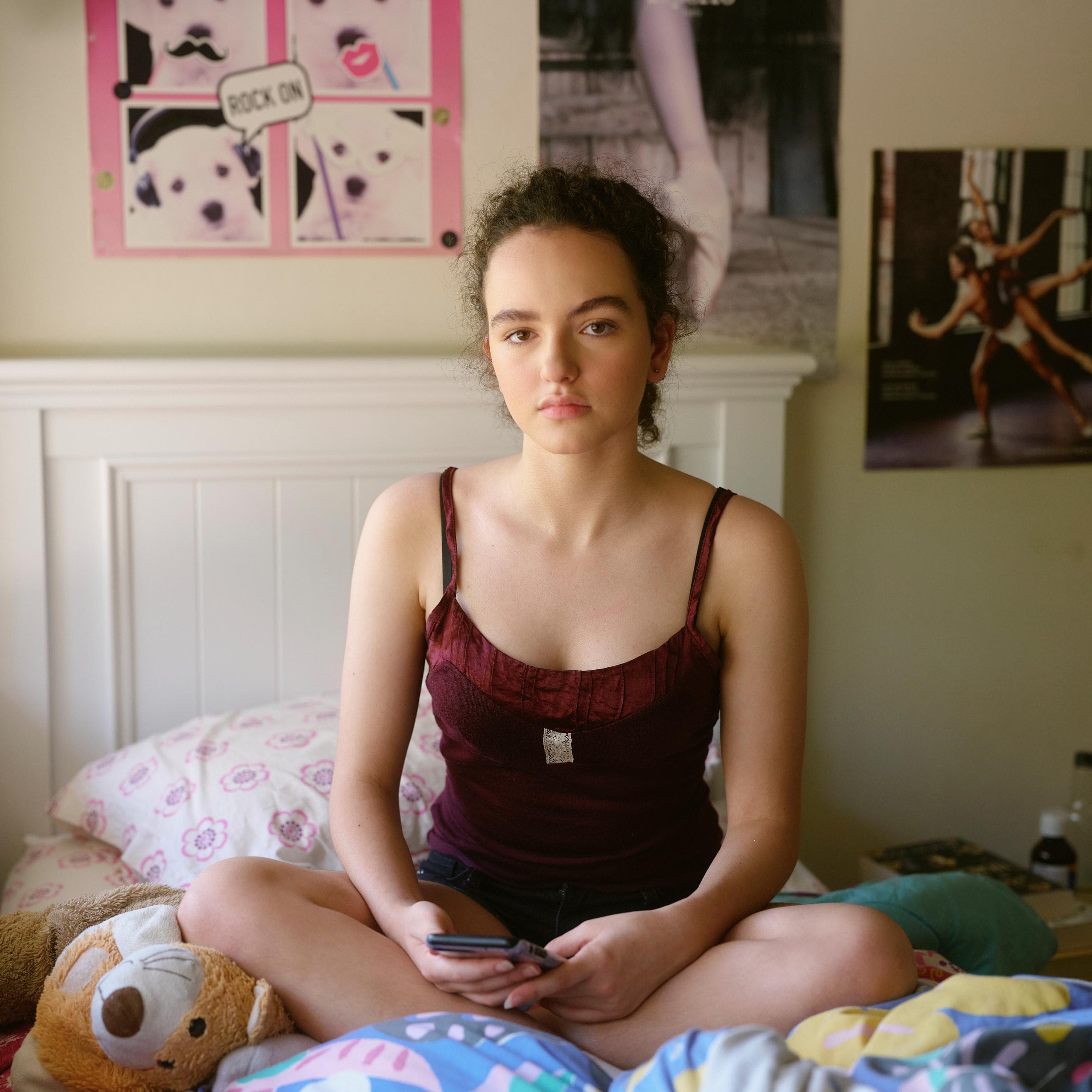
I. Sarai loves to dance. She's 14 and she and all of her friends have grown up online. And how long have you been on these platforms?
- [03:34]
Sarai
Since we entered year seven. I was 12. We were born in the generation that develops as technology develops. And actually during COVID and during the pandemic and quarantine, we were all encouraged to engage online and to be able to communicate, communicate and connect online. And so it's become such a major part of our lives.
- [03:57]
Annie Kelly
So is it that you can't imagine life without them?
- [04:01]
Sarai
See, it's a bit frustrating because when, if I were to say yes, it would seem like an addiction, but it's not. We've simply been raised with electronics. But on a regular school day I would wake up at around 6 or 6:30 and I wouldn't go on my phone until. Until after the school day is finished. I know a lot of my friends wouldn't be mindlessly scrolling for hours. The issue is harmful content and if our algorithms are specified to what we like. If I interact with one slime asmr, that's going to be on my.
- [04:43]
Annie Kelly
So I'm so sorry, you've got to tell me what a slime asmr
- [04:51]
Sarai
when someone plays with slime and it makes all of these like crackles pops and they have like a microphone really close.
- [04:57]
Annie Kelly
Okay.
- [04:58]
Sarai
It's like satisfying sounds and you, this
- [05:01]
Annie Kelly
is something that you're. That you find relaxing.
- [05:03]
Sarai
Yeah. So sometimes I will be having dance tutorials on my for you page the entire time and other times it'll be slime.
- [05:18]
Annie Kelly
For Ewan, age 15 in Sydney, the freedom to try new things has been a big part of his social media too.
- [05:26]
Josh Taylor
I've grown up with stuff like YouTube and that's influenced a lot of my interests and passions in stuff like filmmaking, in theater. Like I love making films, I love doing theatre. I love, you know, going really intricately into different parts of pop culture that I'm interested in. And I just don't think I would have had that as smooth a transition into those communities as I would have without social media.
- [05:53]
Ezra Sholl
My name is Ezra Sholl. I am a 15 year old teenager from Melbourne, Australia. And I have a disability.
- [06:03]
Annie Kelly
Social media has been a lifeline since he lost the use of his arms and legs following a chronic illness.
- [06:09]
Ezra Sholl
I use Instagram, Snapchat, Tick Tock, I follow basketball and Australian football and so I follow all sorts of channels and pages about that. I'm very into music, so I follow a lot of music accounts. Radiohead, they're great. I'm also really into movies and I started a movie account where I review and write movies. So that's fun. That's on Instagram. I probably spend more time than is healthy and I use it to talk to friends and just scroll, doom scroll Instagram Reels and TikTok.
- [07:01]
Annie Kelly
Today's ban is a real loss.
- [07:04]
Ezra Sholl
My Snapchat account will be taken down and that's my key way of communicating with my friends. My Instagram account will be taken down and that's how I see what people are up to and connect with people, as well as my movie account on my Instagram as well as my TikTok account. And that disconnects me.
- [07:36]
Annie Kelly
So, Josh Taylor, you're the technology reporter for Guardian Australia, and I imagine it's been quite a busy week for you. Could you start by telling us what exactly is this new law that's being brought into Australia today?
- [07:50]
Josh Taylor
There are 10 social media platforms that the government has deemed harmful to children. And basically the social media apps will have to have all the under 16s off their platform. They won't be allowed to register new accounts and they must make sure that they're not able to sort of dodge the ban and get in through other ways.
- [08:09]
Annie Kelly
It's such an ambitious thing to try to do. Could you explain how's that actually going to work in practice?
- [08:17]
Josh Taylor
So the legislation sets out that the platforms must take reasonable steps to keep the teens off their platforms. And that is essentially it. They basically left most of the how, how they're going to do it to the platforms to determine themselves. And what we've seen through what Matter have said, what Snap have said and a few others sort of come out on it is essentially they're going to use what they call sort of a waterfall approach for age assurance. A lot of the companies are using behavioral signals, knowing the age of your account, then figuring out which ones are likely to be under 16, and then they are sending them messages. This is at least what Meta is doing. And Snapchat, they're sending the messages saying, hey, we think you're under 16. If we've got this wrong, here's an appeals process. You can go through and through that you can either on the meta one you can choose to do facial age assurance. You hold your camera up to your face and it'll take a scan of your face and then come back in a couple of minutes and say yes or no. And if it gets that wrong or if you just don't want to go through the facial age assurance, you can provide a government ID and then that will be your way in or out.
- [09:22]
Annie Kelly
And it's not all social media apps that are banned from today, is it? Can you tell me kind of who's on the list and who isn't?
- [09:28]
Josh Taylor
Yeah. So it's, it's Meta's platforms, it's TikTok, it's X, it's YouTube, it's Kik, Reddit. There's about 10 altogether and but that those are the just ones that the government has identified as it needing to go through this self assessment process the ESAFETY commissioner set out and determine if they think that the ban would apply to them. There are sort of set out exclusions, so platforms that are sort of educational or particularly designed for kids or there are a few other ones like gaming and things like that that are excluded. We're sort of at the stage now where the government said we've got this 10, we're happy with this for the moment.
- [10:09]
Annie Kelly
And what are the repercussions for them if they, if they don't comply with this new law?
- [10:13]
Josh Taylor
Yeah, so there's a $49.5 million fine that can be potentially applied to them if they don't take reasonable steps and that will be something that the court will determine. So Esafety Commission will have to basically launch court action in the federal court. I think that's going to be a fair while away. So if we have some ones that are not complying with it, that's going to be fascinating to watch over the next couple of months.
- [10:42]
Annie Kelly
Can you take us back a little bit? How did this law come about? Who's behind it?
- [10:48]
Josh Taylor
Well, the really real origin of the ban was essentially the South Australian premier's wife bought Jonathan Haidt's book the Anxious Generation and read his book, which is all about the mental health impacts of social media on young people, and turned to her husband and said we need to do something about this. And I think the other thing that's important to point out here as well is that News Corp has such a major presence in Australia and they got very much behind this. They launched this campaign called Let Them Be Kids and we're fully behind the ban and when you've got cheerleaders in the media, that makes it much easier to get a policy through, particularly when it's News Corp and they have such a big influence in Australia. So I think that that's essentially what led to it. The polling has always been very, very, very much in favour of the social media event. In the abstract, it sounds like a really, really good idea and a lot of people are going to be in favour of it. They think that social media is not doing great things for not just kids, for adults as well.
- [11:49]
Annie Kelly
When you think about what's been happening, I think our mental health has been slowly being undermined. And first of all, you can think about social media as being a little bit of a cognitive cocaine. Like the kids are at a party all the time, they're interested in doing things just for the sake of doing it. I'm going to learn a skateboard trick because I enjoy it, not because of how much attention it's going to get. Get me.
- [12:11]
Josh Taylor
Even as we've gone through the implementation of it, there's been very little pushback from the public.
- [12:16]
Annie Kelly
Have you heard of any cases where parents are against this or are happy to try and help their kids stay on social media?
- [12:24]
Josh Taylor
I think with parents, there has been a bit of pushback, particularly from parents of kids who live in regional Australia, parents of LGBTQ kids, parents of kids living with disabilities, because for a lot of them, the social media is their sort of community. It's where they find people who are like them. They may not have connections in their local area. The Prime Minister likes to talk about, you know, this is going to get kids off social media and going out and playing football and things like that. But a lot of, like some kids, that's not interesting, they want to spend time finding their communities online. I think the other thing to point out is, as well is that there has been a lot of pushback from kids themselves. The Prime Minister did a press conference with a bunch of school kids a couple of weeks ago.
- [13:04]
Sarai
What measures are in place to prevent people from bypassing the security systems and creating fake accounts?
- [13:10]
Josh Taylor
The responsibility is on the social media companies and all the questions from the kids were basically like, why are you doing this? Like, you know, you've done this for us. But without including us, they feel entirely left out of the process.
- [13:25]
Annie Kelly
So kids weren't involved at all in the consultation process or their voices weren't considered at all when they were writing this legislation.
- [13:32]
Josh Taylor
I mean, they said they did. There was some sort of, you know, a little bit of Consultation here and there, but I don't think it was particularly in depth.
- [13:46]
Sarai
Stopping us from simply having accounts online is really frustrating and feels like we're being infantilized and simply generalized as these Internet addicted, mine addled users who. Who aren't doing anything productive on there, but again, aren't doing anything productive in real life either. We're just these mindless lobs.
- [14:15]
Annie Kelly
Sarai is against the ban, but she does admit that social media can be harmful to young teens.
- [14:21]
Sarai
So very occasionally nowadays I come across harmful political content that I don't agree with and I come across content that is very racially motivated. A lot of it isn't directed towards me, but it's directed towards races of my friends. It's people being harmful to the LGBTQ community. And there's also a lot of concern around like, body autonomy. It's really scary seeing that on social media and thinking, wow, like, what an intense thing. What just it's pretty horrible when that comes up.
- [15:03]
Annie Kelly
That's kind of content that might make you feel bad about your own body. Is that right?
- [15:08]
Sarai
Yeah. So we've recently seen an uprising in pro Anna, pro anorexic culture when everyone is coming back, it's really, really skinny and they're glorifying eating one meal per day. And while social media is definitely a way that you can share your recovery journey, it's also a way for a lot of people to be able to share and promote harm content like that. And that for teenagers, I will admit it's very susceptible to us. And then bullying is such a big thing. You could repost one thing about something that you like and you'll have five people come up to you at school and be like, oh, you like this?
- [15:53]
Josh Taylor
Ew.
- [15:54]
Sarai
But I'm again, very lucky because I've been bullied before online and face to face, so I've become very sure of myself in that way. But it's really horrible. And so obviously when people are exposed to it for the first time, they're not necessarily going to be able to know how to navigate those situations.
- [16:20]
Annie Kelly
I mean, it sounds like you are a really kind of strong person who's gone through some negative stuff online also offline. I'm really sorry about that. Bullying is just horrible. But you are kind of saying that you feel it's made you a stronger person now, but obviously there's a chance that other people your age are not as resilient. And do you. Can you kind of see that there might be people out there that are exposed to the kind of content that you've just been telling us about that perhaps wouldn't have the support networks that you do and that actually might find themselves at the age of 12 or 13 or 14 being exposed to stuff online that they can't handle.
- [17:03]
Sarai
Absolutely. And it's truly horrible. Like there's been so many cases of image based abuse where it has led to severe depression and anxiety and sometimes suicide. And social media has real downsides and it is an issue and I'm not trying to pretend at all that it's harmless. But these problems don't come from teenagers simply being allowed on social media. And again, a lot of people use online as a way to escape.
- [17:40]
Annie Kelly
Josh, Australia is leaping into the unknown here, isn't it? I mean this is the first time a government has tried to do something like this. Do you think that it's actually enforceable though?
- [17:53]
Josh Taylor
I will be interested to see what happens. I think that they've structured it in a way that will allow them to try and use a sort of characteristic approach though they've been quite successful so far in convincing platforms to bring this in without having to sort of take them into court or anything like that. It'll be interesting to see where it goes. If the ultimate endpoint is that some companies might decide to pull out of Australia, might not make it their point. Products available to Australia because they think it's too hard, or if we're still such an attractive market that they will just come in and then abide by our laws.
- [18:27]
Annie Kelly
There is a kind of dynamic list, isn't there, of apps where some are on, some are off. Can you explain how that's going to work?
- [18:36]
Josh Taylor
So we've got these 10 to start that they've named and sort of applies to them. But if kids start to migrate to another platform. We've been talking about Yolp and Lemonade. Lemonade, Lemonade. And if kids start to go there, then they can potentially be told you need to assess yourself. And then if we decide that you need to apply it, then you must apply. Could be a game of whack a mole after a while, I feel. I think the big platforms that have been named, they are huge. They have all these systems in place that they've been dealing with these sorts of things for the past couple of decades. Some of these apps will probably be like to employee companies and not used to having to deal with regulatory issues and having to deal with governments and things like that. And I think we just have to see what kids are going to do if they're going to try to get around it, or if they're just going to find new places to go. The other thing I should say is, well, messaging apps are not included in the ban. So if there's bullying that's happening over messaging, app, group chats, things like that, that's still going to happen. So all of the ills of the Internet are not going to be solved by this one piece of legislation. One of the things I'm going to be interested to see is how the government is going to measure success for the social media ban, because I think that it is hard to gauge how things are going to improve. Are you going to be looking at what the suicide rates are? Are you going to be looking at better mental health outcomes for teens?
- [20:04]
Sarai
I escaped many situations by going online, and I know many of my friends have. It feels like adults punishing us because they don't know how to fix the real problems. So I'll lose daily contact with friends around the world. So people I've built strong, healthy friendships with for years and I. Everyone's going to get around it in some way. So I'm not completely dejected in the fact that it's happening. I just wish that they would go about it differently.
- [20:38]
Annie Kelly
So that's really funny. So you're not dejected that much because you kind of figure that you'll find a way around it?
- [20:43]
Sarai
Yes, if I could find a way around it at 12, I can find a way around it at 14. I think we should have more restrictions on content creation so the adults are the ones who are making harmful content. And I think also our parents assume that when we're online, all we're looking at is slime, ASMR or Labubus or makeup. But really, Gen Z is one of the most politically active generations and we do a lot of that via social media. That's how we raise awareness for so many things. That's how we make sure that we stay up to date with information. Because you don't see many people opening a newspaper and reading it on the bus on the way to school. Now it's all on social media, and that's how we access it.
- [21:33]
Annie Kelly
And you saying that you were pretty, like you were a bit like, well, they're gonna put this band in, but we're gonna find ways around it. Have you been talking about that with your friends, kind of workarounds and ways that you're gonna be able to. To get around the band that's coming in today?
- [21:50]
Sarai
Yeah, so a lot of my friends have been making, like, accounts fake accounts that, that obviously they've lied about their age on, they've all talked about the makeup they would wear or that would trick these systems and it's really, it's just going to drive the underground and I feel like also going to make people who end up do getting affected by this less likely to reach out because they weren't supposed to be on it in the first place. I know my, I know my, I know my people and I know that we're even if our accounts are banned, we will not be banned. We will still be going on social media.
- [22:36]
Annie Kelly
So it seems to me that what you're saying really is that what they should be doing is making the platform safer and trying to get rid of the harmful content, not kicking you all off social media until you're 16.
- [22:50]
Sarai
Yeah, I've said this before and I'll say this again. Bullying, online harassment, image based abuse, harmful content exposure, none of that stops at 16. It won't stop. You'll be 24, you'll be 65 and you'll be seeing harmful things. You'll have people saying horrible things to you. You unfortunately have to learn how to live with it and how to deal with it.
- [23:17]
Annie Kelly
Coming up, will the rest of the world follow? Australia.
- [23:30]
Josh Taylor
Big news.
- [23:30]
Annie Kelly
Boost Mobile is now sending experts nationwide to deliver and set up customers new
- [23:34]
Josh Taylor
phones at home or work. Wait, we're going on tour? Not a tour. We're delivering and setting up customers phones so it's easier to upgrade.
- [23:40]
Annie Kelly
Let's get in the tour bus and hit the road.
- [23:42]
Josh Taylor
No, not a tour bus. It's a regular car we use to deliver and set up customers phones at home or work.
- [23:47]
Advertisement Voice
Are you a groupie on this tour?
- [23:48]
Annie Kelly
We deliver and set up phones. It's not a tour.
- [23:51]
Josh Taylor
Oh you're definitely a groupie. Introducing store to door switch and get a new device with expert setup and delivery wherever you're at. Delivery available for select devices purchased@boostmobile.com a
- [24:00]
Advertisement Voice
password manager should be the first security purchase you make for your team. Why? Because compromised passwords are the number one way bad actors attack companies and small businesses are their favorite targets. But unlike a lot of security challenges, passwords actually have a pretty simple solution. 1Password lets you manage all your business's credentials so you can feel confident that your data stays secure as your company grows. Find out more@1Password.com specialoffer and start securing every login.
- [24:36]
Annie Kelly
I guess in a way they've taken the easy road by just saying okay, just issuing this blanket ban. But in some ways I guess you could argue it's also maybe a bit of a wasted opportunity because if you're going to pass a piece of groundbreaking legislation that's looking to try and limit the damage ledger of these social media platforms and young people, is this the right piece of legislation to pass?
- [24:58]
Josh Taylor
I think when the government's been defending this, saying that they should have just taken action to make it safer for everyone, they're basically been saying, we've been giving the platforms so much time to get this right, to make it safer for everyone. We've been trying, this is something we can do to stop it now for a section of the public for young people, when their brains are developing and they're not quite as equipped to potentially handle social media as adults are. Although I disagree that adults can handle social media any better than kids. And so that they're basically just pushing ahead with this ban to basically cut off a section of the population and then maybe look at fixing things up later on. And I think the success of the ban may ultimately have an impact on whether the other stuff happens. Maybe some new apps will be designed that are safe and good for kids to use, because that is one of the things that they can get an exemption if they show to the government that they have all these safety features in place that are not toxic for children. If they bring some of those in and kids actually do want to use them, that could be a good outcome. I think what we've seen is, you know, the probably like last 10, 15 years of kids growing up is that they've had this constant thing in their pocket that's just constantly available to them and immediately accessible. They will probably not cope as well without it. But I think what we will be looking for, I guess, when the next sort of generation comes up is if there is a sort of different impact because they haven't had that in their pocket all the time.
- [26:20]
Annie Kelly
I mean, it's going to be so fascinating to see how this plays out, isn't it? And I mean, there is a real sense, isn't there, that Australia is doing something properly groundbreaking here? I know that the rest of the world is really closely watching how this whole thing plays out. Is there a sense within Australia that this is a momentous thing that the government's trying to do?
- [26:42]
Josh Taylor
I mean, from the government's perspective, yes, they often like to say this is world leading social media ban and they like to always mention the world leading aspect to it. But there are a lot of other countries that are looking to do what we're doing now and waiting to see how we go. I think there will be a lot of pressure on the government and the Safety Commissioner in particular to make sure that this is right and this works.
- [27:04]
Annie Kelly
And as the Guardian technology correspondent in Australia, do you feel optimistic that this is going to be a success?
- [27:12]
Josh Taylor
I think the best sign of success is if it stops being sort of the biggest news story of the day, if it just fades into the background and people just get on with their lives and we start to see, see, I guess maybe kids having potentially different outcomes. But I do worry that, particularly for regional kids and LGBTQ kids and kids with disabilities, that they might suffer as a result of this because they will be cut off from the connections or they won't be able to find their connections as easily as they have been up until now.
- [27:44]
Ezra Sholl
No, I wouldn't recommend that other countries follow Australia's example. Social media, it's a new thing. It hasn't been around for long and it's obviously got some very major flaws, but I really just don't think that banning social media completely is just a reasonable thing to do.
- [28:11]
Annie Kelly
What I would say to other governments
- [28:13]
Josh Taylor
about doing a similar thing to what Australia is trying to employ right now, proceed with caution.
- [28:21]
Annie Kelly
And how are you planning to say goodbye to your social media channels for now? Because it sounds like you're quite determined to ensure that isn't forever.
- [28:30]
Sarai
All like my saved videos, I'm downloading the ones that I want to keep, whether it be a dance I want to learn or whether it be like a meme I want to send out. And I'm screenshotting all of the people I follow, so I know to keep up with them if I don't end up making a new account. Or I know to follow them when I do make my new account. And then also kind of just like distancing myself away from social media. I was planning on having a detox anyway, as I know a lot of my friends wanted to do over the break, so they're nice and fresh for the school year, but I think I just kind of like spending time away from it. Yeah.
- [29:13]
Annie Kelly
So actually you're quite looking forward to having a little break?
- [29:16]
Sarai
I think so. I think while it's very good, it can also be taxing. Like you could just spend a whole day scrolling on your phone and be like, where did the time go?
- [29:27]
Annie Kelly
That was Sarai, Ewan and Ezra. Thank you so much to them for talking to us today. And thanks too to Josh Taylor, the Guardian's Australia Tech reporter. You can follow all of his reporting on today's social media band on theguardian.com and that's it for today. This episode was presented by me, Annie Kelly and produced by Ruth Abrahams. Sound design was Brianne McNamara and the executive producer was Sammy Kent. Don't forget to check out our new video podcast, the latest this afternoon and we'll be back tomorrow. This is the Guardian.
- [30:17]
Advertisement Voice
A password manager should be the first security purchase you make for your team. Why? Because compromised passwords are the number one way bad actors attack companies, and small businesses are their favorite targets. But unlike a lot of security challenges, passwords actually have a pretty simple solution. 1Password lets you manage all your business's credentials so you can feel confident that your data stays secure as your company grows. Find out more@1Password.com specialoffer and start securing every login.
- [30:53]
Annie Kelly
If you've used Babbel, you would Babbel's conversation based technique teaches you useful words and phrases to get you speaking quickly quickly about the things you actually talk about in the real world. With lessons handcrafted by over 200 language experts and voiced by real native speakers, Babbel is like having a private tutor in your pocket. Start speaking with Babbel today. Get up to 55 off your Babbel subscription right now at babbel.com acast spelled B A B-B-E-L.com acast rules and restrictions may apply.
- [31:28]
Sarai
Shipping, billing, admin, payroll, marketing.
- [31:31]
Annie Kelly
You're managing all the things, so why waste time sending important documents the old fashioned way? Mail and ship when you want, how you want with stamps.com print postage on demand 24. 7 and schedule pickups from your office or home. Save up to 90% with automated rate shopping. That's why over 1 million small businesses trust stamps.com com go to stamps.com and use code podcast to try stamps. Com risk free for 60 days.