← Today in Focus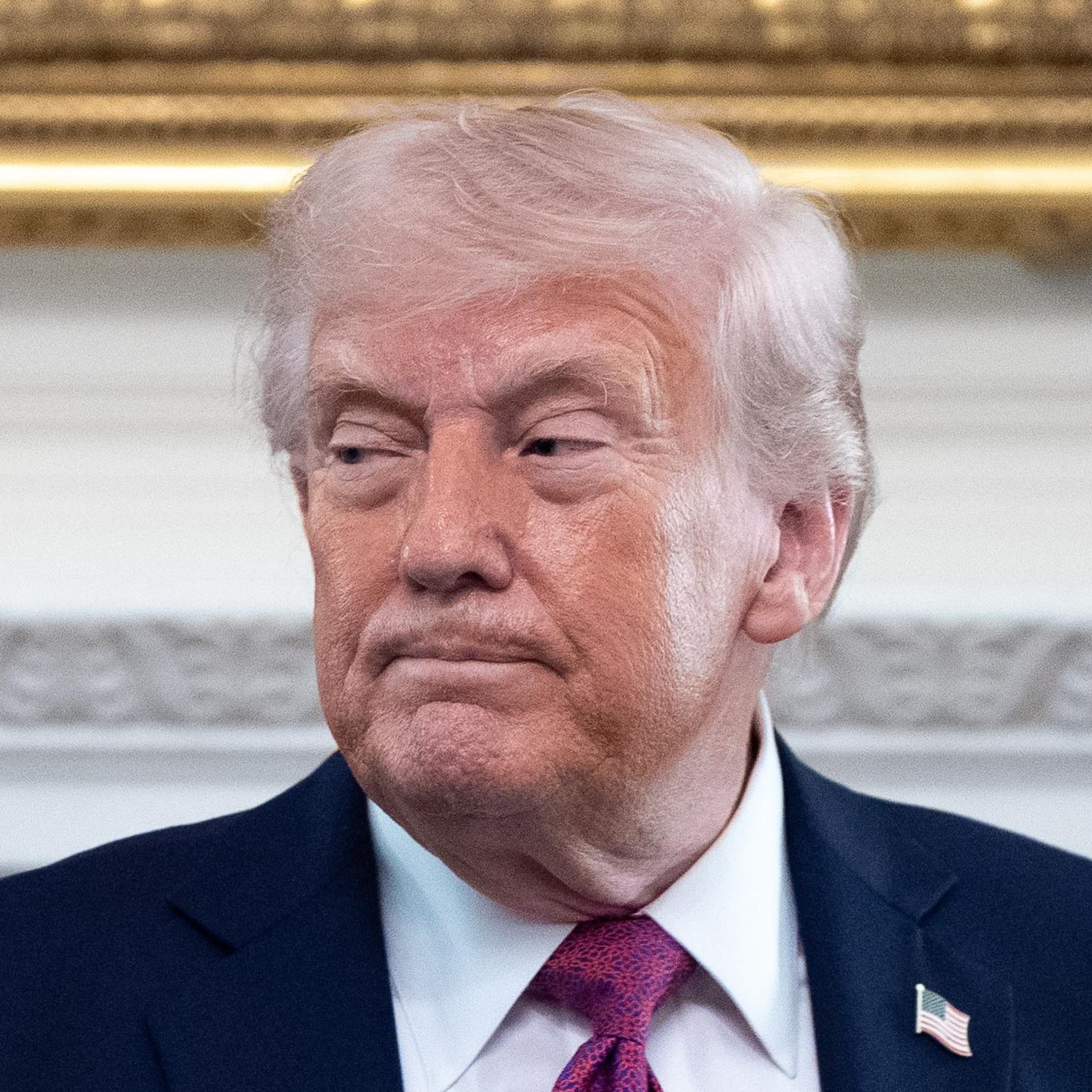
Today in Focus
Trump extends Iran ceasefire: can a deal be made? – The Latest
00:10:36
Donald Trump has indefinitely extended the US ceasefire with Iran after talks looked increasingly uncertain between both sides. Lucy Hough speaks to the Guardian’s diplomatic editor Patrick Wintour
Loading summary
Transcript18 lines
- [00:00]
Lucy Half
This is the Guardian.
- [00:11]
Quo Business Phone System Advertiser
Running a business means juggling a lot of moving parts. And when your communication tools can't keep up, things start to slip. Missed calls, slow replies, scattered conversations. They're not just frustrating, they're lost opportunities and revenue left on the table. That's where quo comes in. Spelled Q U O. Quo is the number one rated business phone system on G2, trusted by over 90,000 businesses. One shared business number for calls and texts. So every conversation stays visible, organized and accountable. It works from an app or computer. You can keep your existing number, add teammates and sync your CRM, letting you scale without adding complexity. And with built in AI, Quo logs calls, summarizes conversations and flags next steps even after hours. Stop missing customers. Stop leaving revenue on the table. Try quo free and get 20% off your first six months at quo.comtech that's quo.comtech quo no missed calls, no missed customers.
- [01:26]
Patrick Wintour
It is significant. They're now starting to seize ships because they need to ram home to the Americans that they feel they're winning this war. Or at least they're not losing this war. Iran's Revolutionary Guard says it is back on the attack in the Strait of Hormuz. Facing a blockade from the Americans, they have attacked three cargo ships this morning. We're in a very difficult position where neither side wants to back down, but neither side really wants to go for all out war. There is a real conflict going on in the Strait and how that plays out is going to be critical to whether the talks recommend.
- [02:00]
Lucy Half
Iran says it seized two ships in the Strait of Hormuz and a third has reportedly been attacked after Donald Trump extends the ceasefire indefinitely. From the Guardians today In Focus, this is the latest. With me, Lucy Half. Well, I'm joined by Patrick Wintour, our diplomatic editor. Thanks for dialing in, Patrick. So it's been yet another slightly confusing week. There was supposed to be a ceasefire that was due to expire at 8pm Eastern Standard Time in the U.S. tonight, according to Pakistan. But Trump has now late last night, extended the ceasefire indefinitely. Prior to that, he threatened yet more bombing, more military violence. Why the U turn? What's going on? Is this pressure from Pakistan, is it the markets or is there something else kind of behind the scenes?
- [02:49]
Patrick Wintour
Well, I mean, such as the confusion is that people couldn't actually agree at the point at which the ceasefire was supposed to expire. People had different timelines for it. Yes, I think it's a multiplicity of reasons why he's decided to do this. And it's not the first Time, he's delayed some kind of deadline or other. But I think it's a mixture of he's actually doesn't really want to return to a full scale conflict. I mean, he was talking about bombing every bridge, every power station and it was all Back to the Stone Ages, part seven. And actually the reality is that I think he's realized that, that the price of full scale aerial action that he's undertaken in the past is too high and he wants to find a peace settlement. So he's switching mode and trying to think about different ways to put pressure on the Iranians. And I think also there is more and more evidence about what's going to happen in the midterm elections. I know this all seem a long way away, but it's starting to bake in a bit about how many seats they might lose in the Senate and how many they might lose in the Congress. And that would be, if it was as bad as some people are predicting, that would be the effective end of his presidency.
- [03:57]
Lucy Half
Goodness, what a thought. And in no small part, and in fact probably mainly to do with this war in Iran, which has so little support from the American public and that opposition increasing. Meanwhile, the situation in the Strait of Hormuz is very febrile, very volatile. When we last spoke, Trump had imposed this US blockade on Iranian ports to prevent those Iranian ships leaving, or at least monitor them. There's now been the seizure of two ships, allegedly by the Iranian Revolutionary Guard Corps, the irgc. A third ship has been attacked this morning, reportedly. We understand. So what's going on? I mean, this doesn't feel like fertile ground for ceasefire negotiations.
- [04:44]
Patrick Wintour
Yes, I mean, I think the ghastly phrase, the kinetic activity has switched from land to sea and there are these two different blockades, one laid over the other. There's the blockade on Iranian ports and the purpose behind that is to in effect make it impossible for Iran to start producing, continue to produce oil. Within a matter of a fortnight. It's been estimated if they can't get their oil out, then the oil production will have to come to a halt. And that could cause some permanent damage to some of the oil installations in Iran. So they lose revenue and their industry, which is the most important revenue generating industry, gets crippled. I mean, that's the American plan and obviously the Iranian plan, which they're stepping up by now, seizing ships, is to keep the chokehold on the straight and 20% of oil and most commodities go through that strait. So the Iranians are continuing to use this metric of what is the price of oil. As long as it's going up, they're happy. But I think it is significant. They're now starting to seize ships because they need to really ram home to the Americans that they feel they're winning this war, or at least they're not losing this war, and that they're in a totally resolute position that then will feed back into what the both sides feel they should do in terms of returning to talks in Islamabad, because they're just both strengthening their hands ahead of those talks ever happening.
- [06:17]
Lucy Half
Yeah. And you've written a great piece about how Trump's erratic strategy is really proving an obstruction to the ceasefire process or at least where it moves from here, given that it's been extended indefinitely. But talks seem to be stalled and very uncertain. I mean, Trump is posting, as per your reporting, kind of at least seven truth social posts a day, often with incredibly contradictory messages. What are the sorts of conversations you've been having with diplomats sort of involved in the various engaged parties?
- [06:50]
Patrick Wintour
It's not just Iranians. I mean, for some strange reasons, I was with some diplomats last week night from the Caucasus and they were just saying that. And they've got their own kind of peace deal going on which Trump supposed to be engineering. And they find it very, very difficult because they get conflicting messages from the White House about the kind of agreement they're supposed to be striking. It's not just an Iranian problem, but particularly over the weekend there was a selection of tweets which were very triumphalist by Trump. And I think it's now become a self standing problem. The way in which Trump is using the media and trying suggest that he's already won this war when I think it's very deep in the Iranian psyche and it might be in many countries psyche, they're not going to feel trampled upon or going to negotiate when they're under threat. And there's a kind of school of thought inside Iran that they've now proved themselves, have gone up the league table of great powers and they prove themselves to be capable of standing up to Trump time and again.
- [07:54]
Lucy Half
So what next for the peace talks? Because J.D. vance, the Vice President, has postponed a planned trip to Pakistan. Right. And Iran says it won't proceed without an end to the blockade. And you know, both sides, the US And Iran are kind of trading military threats. So where do you think we're likely to go from here?
- [08:15]
Patrick Wintour
Well, I think we're in a, we're in a difficulty, to be honest. I mean, I think the Key Iranian demand is that the American blockade ends, and the key US Demand is the Iranian blockade ends. And that is just to get people to the starting gate, which is to recommence negotiations. So it's very difficult. And what's going on at the moment is obviously this back and forth about the various blockades, but there's also behind the scenes negotiations happening about what would happen when the two sides met, because it would all be choreographed. It wouldn't be choreographed to the last minute, but there would be certain assumptions that progress was going to be made on two or three issues. And at the moment, I don't think those behind the scenes talks going on, mediated by Pakistan are going very well either because I think the Iranians have been quite tough in what they're demanding and the Americans aren't relenting. So we're in a very difficult position where neither side wants to back down, but neither side really wants to go for all out war. So we're getting this kind of surrogate battle which I think is more than limbo. Some people describe it as limbo. I don't think it is. There is a real conflict going on in the Strait and how that plays out is to be critical to whether the talks recommence.
- [09:29]
Lucy Half
And just lastly, Patrick, I mean, like you say, it's a limbo, but it's a limbo, particularly for all of us who are, you know, as consumers paying the cost of this war. But for Iranians, there's an estimated 2 million people who've lost their jobs since the start of the conflict, which is, you know, an unbelievably large amount of people. Trump estimates that Iran is. The Iranian regime is losing $500 million a day because of this. But I just wonder if you can give us as a time Iran watcher kind of sense of, you know, how hard this has become for people living in Iran.
- [10:04]
Patrick Wintour
Well, I think the difficulties largely arising out of the blockage on the Internet and this has now gone on for more than 50 days. And certainly when you, when the stuff I'm reading out of Iran, the demand for the restrictions on the Internet to be lifted is repeated, and it's actually now coming from quite senior politicians inside Iran itself. And there's a conflict between the political side and the security side. And the reason it matters so much is that as in any modern economy, which to a degree Iran is, they are dependent on the Internet to trade. And that's why there is such high unemployment. And the numbers starting to come in about inflation, particularly food inflation are really quite frightening as well.
- [10:49]
Lucy Half
Yeah. So an enormous human cost. Patrick, thank you as ever for your time.
- [10:54]
Patrick Wintour
No problem.
- [10:56]
Lucy Half
That's it for today. My huge thanks again to Patrick Wintle, our diplomatic editor. You can keep up with his reporting and analysis over@theguardian.com and I do really recommend his piece. He talks too how Trump's erratic commentary is the real block to an Iran deal. I'd also give a big shout out to yesterday's episode of Science Weekly. Ian Sample talks to our AI reporter Aisha down about a new model from AI company Anthropic that that they say is so powerful they won't release it to the public. Thanks for listening to this episode of the latest Today in Focus. We'll be back in your feeds as usual tomorrow morning. The latest will be back tomorrow night. This episode was presented by me, Lucy Hoff. It was produced by Bryony Moore. The senior producer was Ryan Ramgobin and the lead producer was Zoe Hitch. This is the guardian
- [11:47]
Patrick Wintour
foreign.
- [11:53]
Jackson Financial Advertiser
This message comes from Jackson Taxes aren't something you can only think about once a year with investments planning for tax day is year round. Fortunately, Jackson offers tax efficient products. Visit Jackson.com for more information on how our products can make your tax bill a little bit less painful. Jackson is short for Jackson Financial, Inc. Jackson National Life Insurance Co. Lansing, Michigan and Jackson National Life Insurance Co. Of New York Purchase, New York.