← Today in Focus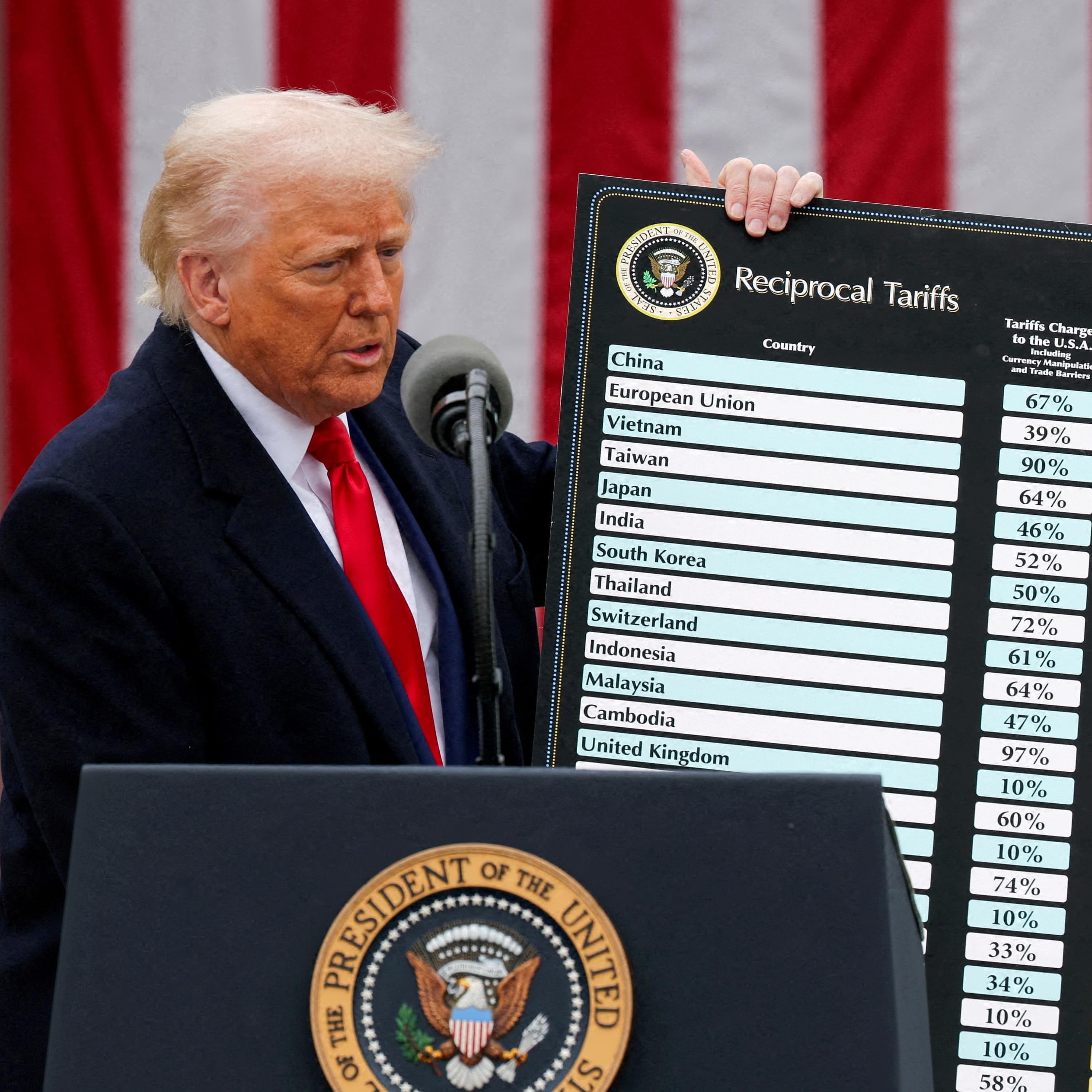
Today in Focus
Trump forced to refund billions in tariffs – The Latest
00:10:58
The US government has been forced to pay billions in refunds to companies that were hit by Donald Trump’s ‘liberation day’ tariffs. Lucy Hough speaks to Chris Michael, International editor for Guardian US
Loading summary
Transcript31 lines
- [00:00]
Lucy Hoff
This is the Guardian.
- [00:10]
Aura Advertisement Voice
Most people don't realize how much of their personal information is being bought and sold every day. Data brokers are making billions, pulling details about you from public records and the Internet, then packaging and selling it, usually without your consent. That's how your information lands in the hands of scammers, science spammers, even stalkers. It's why you get endless robocalls and why ads seem to follow you everywhere. That's where Aura comes in. Aura actively removes your data from broker sites and keeps it off. They also instantly alert you if your information shows up in a breach or on the dark web. But Aura goes beyond data protection. With one app, you get a vpn, antivirus, password manager, spam, call protection, dark web monitoring, and even up to $5 million in identity theft insurance. All backed by 24, 7 US based fraud support. Other companies might sell just credit monitoring or just a vpn. Aura gives you all of it together at the same price. Competitors charge for just one service. Start your free trial today@aura.com safety. Protect yourself now@aura.com safety.
- [01:23]
Chris Michael
It is a huge problem for Trump. He does look sort of weak at the moment. Republicans and Democrats feel that Trump's tariffs have cost them more money. And Trump continues to sort of threaten these other tariffs. It's ludicrous. He doesn't have that power. The reason he thinks tariffs is such a beautiful word is that it was a cudgel that he could use to browbeat other countries into doing what he wants, but the Supreme Court told him he actually can't.
- [01:46]
Lucy Hoff
From the Guardians today. In Focus, this is the latest. With me, Lucy Half. So Donald Trump has often said that his favourite word, the most beautiful word in the dictionary as far as he is concerned, is tap tariff. I wonder if that's something that he is reflecting on somewhat this week, given that the US has paid $81 billion in tariff refunds in the last year. Chris. Michael, you are our international editor for Guardian US people will remember April 2025 when Trump held up that laminated board of tariffs. What's changed since then? That means these refunds have had to be paid out.
- [02:31]
Chris Michael
Yeah, one wonders if refund is his second favorite word. I imagine not.
- [02:35]
Lucy Hoff
Yeah, I think it's safe to say probably not.
- [02:37]
Chris Michael
What's changed is an incredible Supreme Court ruling in February of this year which said that Trump's tariffs were illegal. Trump, you may recall, declared an emergency, a national emergency. He said our trade deficits with other countries, you know, China, but, but many other places are ludicrously. High. And instead of trying to address, you know, the root causes of that, he just said, we're just going to slap tariffs on, on other countries to, to address this national emergency. He's done it with other things as well. He loves declaring emergencies in order to kind of try to get powers that he really doesn't have. But the Supreme Court said, no, you don't have those powers. You aren't allowed to just unilaterally impose taxes, which is what they said it was. You know, the president doesn't have the authority to impose taxes. Only Congress does.
- [03:32]
Lucy Hoff
A word that Donald Trump does not like we should say.
- [03:35]
Chris Michael
Right, absolutely. And, and so, yeah, it was, it was a huge blow to Trump. He said, I'm going to fight back. I'm going to, you know, we'll get the tariffs in through other means. And he has instituted some other ones. But by and large, the ruling stood and Trump and the, you know, the US Government had to repay these sort of massive tariffs that they collected. And, yeah, that's what they've been doing.
- [04:01]
Lucy Hoff
Yeah. So on that list, that laminated list, was a list of nations. So, you know, China had in excess of 60% tariffs. Vietnam had an extraordinary 90%. But there were also two uninhabited islands inhabited mainly by penguins who also had some pretty harsh tariffs imposed on them, which feels unfair considering their probably negligible contribution to the global economy. But. But it's not actually nations who are suing because it's a series of lawsuits. Right. It's companies who've been impacted by these tariffs. Who are they?
- [04:38]
Chris Michael
You know, any company really, that, that, that imports. Famously, Trump was sort of portraying the tariffs as punishing other countries, but it's US Companies that have to pay them, and it's US Consumers that end up eating the cost of that. So that's exactly who have been collecting them. And, you know, so it's big companies as well as individuals. You know, if you had to cross a border and, you know, you had to pay customs duty, you know, for one of these places where there was a tariff, you are eligible, in theory, for a refund. A lot of people obviously won't be claiming those small amounts back, but. And some companies have been set up on Wall street to sort of collect the tariffs, you know, on behalf of large groups. A bit like a class action, okay, suit. And there's another big group, people that will be benefiting, which is the people who bought into a sort of secondary market for tariff refunds before the Supreme Court decision, and they were buying up these tariff Refunds at, like, sort of 10 cents on the dollar, hoping to make a buck in the future.
- [05:39]
Lucy Hoff
I mean, you touched on it in your first answer, but what was the sort of point of the tariffs in the first instance? Because it was both about a kind of geopolitical sign of strength, but it was also about this trade deficit that Trump was very concerned about. But I think we can safely say they have been ineffective if that was their tool. And that's largely because it feels like he didn't think them through in terms of their impact on American companies.
- [06:07]
Chris Michael
Yeah, I mean, the sort of, you know, the argument that he gave was he wanted to bring manufacturing back to the US he wanted to address the trade deficit. You know, there's a rational argument for that. Whether or not you think tariffs is the right way of doing it, who knows? US Manufacturing, however, did not recover. It is in a profound slump and continues to be. So in that sense, it really didn't work at all. But it was central to Trump's economic message. This America, first thing, you know, who cares about the rest of the world? We just want to make T shirts back in the US So that was kind of one element of it, but then the other big part of it, as you say, was the geopolitics of it. The reason he thinks tariffs is such a beautiful word is that it was a kind of cudgel that he could use to browbeat other countries into doing what he wants. It started with the country of Colombia right after he got elected. You know, he threatened tariffs on them. They immediately backed down, and he decided, oh, you know, this is great. I can use it on everybody all around the world, much in the same way as, you know, when he went into Venezuela and took out the. The leader of the country, and now they sort of run Venezuela as a vassal state. He thought, oh, I can apply that lesson elsewhere. And he tried to do that in Iran, and it. And it didn't work. But he has this kind of. Yeah, he sort of thinks, oh, great. Like, you know, this one thing works, and now I can just bully the rest of the world with it. But the Supreme Court told him he actually can't.
- [07:28]
Aura Advertisement Voice
Yeah.
- [07:29]
Lucy Hoff
So there is this still 10% blanket tariff. Right. Why is that still in place? And is that something that the Supreme Court can look at?
- [07:40]
Chris Michael
That's a. It seems to be a sort of legal tariff. It's under Section 1 to 2 of the 1974 Trade act, which you must
- [07:49]
Lucy Hoff
have read in full.
- [07:50]
Chris Michael
I have read it in full. Absolutely haven't. Trump had to fall back on that. It does set a maximum tariff of 10% and it's only for six months.
- [07:59]
Lucy Hoff
Okay.
- [08:00]
Chris Michael
So it actually expires in a week and a half. Now the administration say that they're going to try to extend it. They're accusing other countries of not enforcing labor laws. You know, I don't want to say that's completely made up, but certainly it's a, you know, a useful fiction for them potentially. And so they will try to get it extended. But, you know, 10% is, is nowhere near as damaging. As you noted, some, you know, 90% tariffs in other places. And Trump continues to sort of threaten these other tariffs. You know, last week he was saying he was going to institute 100% tariffs on Europe. I mean, it's ludicrous. He doesn't have that power. Everyone knows it. Yeah, you know, everyone in, in the EU just went, yeah, you know, bring it on, buddy. And so, you know, he does look sort of weak at the moment with this.
- [08:48]
Lucy Hoff
Well, particularly in light of the Supreme Court ruling in February of this year and particularly given the formation of the Supreme Court at the moment, which is padded out with Trump aligned people. So it's very significant. So we know that the economy is absolutely up there in terms of the top issues for American voters. We have the very crucial November midterms. We've had the economic from the tariffs which have hit American consumers hard. And you know, there are reports that people feel that they are directly responsible for an increase in the cost of living. We have also this year had the impact of the Iran war, the impact that that's had on consumers. So how do we know that Americans are feeling about that? And as someone that's right across what's being reported in America, I wonder how this is being reported in sort of traditionally Trump aligned publications.
- [09:45]
Chris Michael
Well, interesting thing, you know, about the impact on energy prices and on costs is that it is a bipartisan issue. You know, both Republicans and Democrats, about 2/3 of both groups feel that Trump, Trump's tariffs have cost them more money quite directly. And you know, the price of the pump affects everybody and is a kind of, in that sense a sort of a, a wedge issue. So, you know, it is a huge problem for Trump. Also just last week the Fed said that a lot of companies have yet to price in some of the worst impacts of the tariffs and so their prices are going to continue to rise.
- [10:26]
Lucy Hoff
Great.
- [10:27]
Chris Michael
So this is bad news for American consumers and it's bad news for Trump politically because of course, people don't, you know, famously high prices and inflation did for Joe Biden. And, you know, Trump is now sort of facing the same thing. So in a sense, you know, you could kind of say that the Supreme Court's ruling back in February has protected Trump a little bit by, by keeping prices from rising so crazily. And in a sense, they've sort of, they've protected him from his own worst impulses.
- [11:01]
Lucy Hoff
Yeah. Gosh, what a thought. Chris, thank you so much.
- [11:04]
Chris Michael
Thank you.
- [11:07]
Lucy Hoff
That's it for today. My huge thanks again to Chris Michael, the international editor for Guardian us. You can keep up with all our reporting on this story over@wtheguardian.com and I really recommend today's episode of our sister podcast, Science Weekly, which is asking the question, could hidden fungal networks be key to the earth's survival? Thanks for listening to this episode of the latest Today in Focus will be back in your feed as usual tomorrow morning. The latest will be back tomorrow night. This episode was presented by me, Lucy Hoff. It was produced by Angus Neil and Sam Gruway. The executive producer was Zoe Hitch.
- [11:47]
Max Russian
The World Cup's entering its final stages. And if you want football punditry from a podcast that's been overanalyzing the game for more than 20 years, then join me, Max, Russian and a host of football experts as we keep delivering shows every day until the end of the World Cup. The Guardians World Cup Daily, available wherever
- [12:01]
Lucy Hoff
you get your podcast, this is the Guardian.
- [12:13]
Boost Mobile Advertisement Voice
He's dribbling the ball with everything on the line. He's driving down the pitch. He's facing price hikes and cuts past him. Carrier contracts, tries to block him. Oh, he leaves him in the dust. He's at the edge of the box. He cuts past the non stop group chat, trash talk. He clears on goal. He shoots. No unlimited data for $25 a month forever.
- [12:31]
Visit your local Boost Mobile store today to get unlimited data with a price that never changes. Boost mobile after 30gb, customers may experience lower speeds. Customers will pay 25amonth as long as they remain active on the Boost 25 Unlimited plan.