← Today in Focus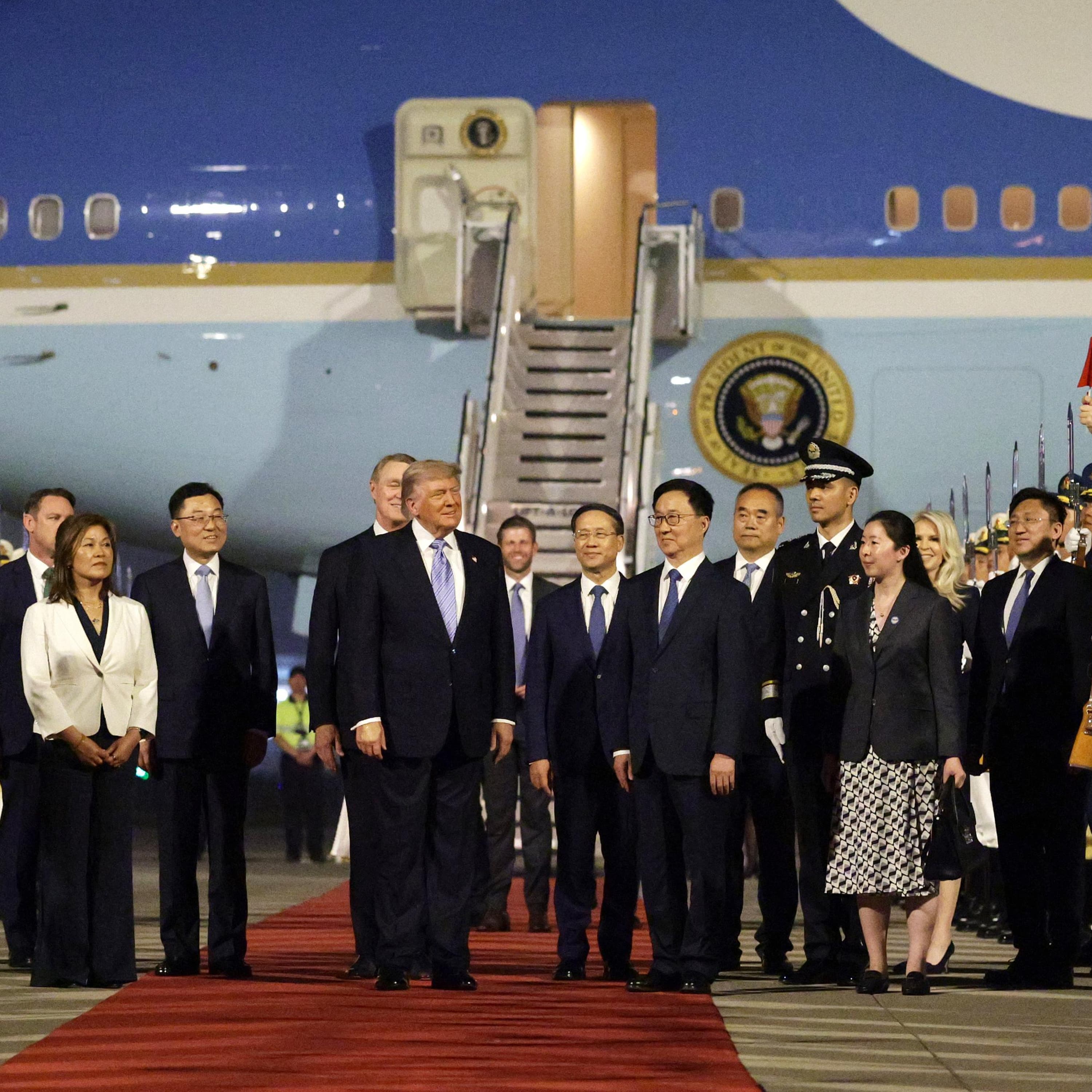
Today in Focus
Trump, Hegseth, Musk: Maga lands in Beijing
00:25:43
Senior China correspondent Amy Hawkins talks through the high-stakes meeting in Beijing between presidents Trump and Xi
Loading summary
Transcript76 lines
- [00:00]
Annie Kelly
This is the Guardian. Today, what does China want from Trump? Let's travel back in time to what feels like a lifetime ago. 2017. A freshly inaugurated Donald Trump arrives in Beijing and steps out of a stretch limo. A military band starts up. Happy children wave American flags. And throughout his trip, China pulls out all the stops to give Trump the kind of treatment he drools over.
- [00:47]
Amy Hawkins
No expense was spared to show him a good time and give him the kind of pageantry which we all now know that he really enjoys.
- [00:55]
Annie Kelly
Every effort is made to make him feel special.
- [00:58]
Amy Hawkins
They gave him a private tour of the Forbidden City, which is quite rare. They took him into rooms in this ancient imperial palace that US Presidents have not stepped into before.
- [01:08]
Annie Kelly
The carpet under his feet is almost always red.
- [01:11]
Amy Hawkins
Back then, you know, China really wanted to impress Trump. Trump was this kind of unknown quantity who China was keen to build a good relationship with.
- [01:22]
Annie Kelly
Fast forward to 2026, and Trump is back in China. Same city, same leaders, same carpet, very different world. In the nine years since his last visit, we've had a US China trade war.
- [01:41]
Donald Trump
It's going to make us a much stronger, much richer nation.
- [01:46]
Annie Kelly
COVID19 that name gets further and further
- [01:49]
Donald Trump
away from China as opposed to calling the Chinese virus.
- [01:54]
Annie Kelly
Trump losing power, then getting it back again. A lot of conflict. Another US China trade war. On Wednesday evening, Beijing time, Trump stepped off Air Force One, Elon Musk in his entourage to start a visit that is expected to be all business.
- [02:18]
Amy Hawkins
We're in a very turbulent geopolitical moment, and so coming at this very delicate moment, kind of China is going, going into this meeting with a slightly stronger posture, and there's kind of less of a sense that Trump can be wooed and more of a sense of this is a businessman who we need to do a deal with.
- [02:36]
Annie Kelly
From the Guardian, I'm Annie Kelly. Today in focus, Trump's back in Beijing. Amy Hawkins, you're the Guardian's senior China correspondent, and you will be reporting on Trump's visit for us from Beijing. And it's been nine years, nearly a decade since Trump traveled to China. This time around, it's a lightning visit. Not much sightseeing going on. So can you tell me what is this meeting even about?
- [03:07]
Amy Hawkins
It's a good question. And I think if you'd asked me this question about a month ago, when the visit was first planned for, I would say this meeting is about the trade war. So last year, Trump launched an aggressive global trade war, but one that was especially targeted at China.
- [03:22]
Donald Trump
China, 67%. So we're going to be charging a discounted reciprocal tariff of 34%, I think. In other words, they charge us, we charge them, we charge them less. So how can anybody be upset? They will be, because we never charged anybody anything.
- [03:37]
Amy Hawkins
Which risked bringing us China trade basically to a halt. That trade war kind of reached a stalemate or a truce or whatever you want to call it in October last year when Trump and Xi met in South Korea. Mr. President, Wall street analysts have coined a new term called the taco trade. They're saying Trump always chickens out on your tariff threats, and that's why markets are higher this week. What's your response to that?
- [03:59]
Donald Trump
I kick out.
- [04:00]
Annie Kelly
Chicken out.
- [04:02]
Donald Trump
Oh, isn't that nice? Chicken out. I've never heard that. You mean because I reduced China from 145% that I set down to 100 and then down to another number six months ago, this country was stone cold dead. We had a dead country. We had a country people didn't think it was going to survive. And you ask a nasty question like that, it's called negotiation.
- [04:24]
Amy Hawkins
Obviously, in recent weeks, Trump has launched strikes on Iran, which has completely kind of upended the global economy, has launched a new war in the Middle East. There has been specific and explicit pressure on China to try and push Iran towards some kind of ceasefire with the us and now, as much as China would rather that wasn't the case, I think Iran is going to dominate the meeting.
- [04:48]
Annie Kelly
It has been a turbulent time in geopolitics, hasn't it, throughout Trump's second term? There's other contexts, isn't there? The AI race, the tariffs. Could you just give us a bit of a picture of where China is in terms of kind of receiving Trump at this moment in time?
- [05:08]
Amy Hawkins
China is kind of looking to build a holistically stable relationship with the us and the most pressing issue for China are trade. The Chinese economy is incredibly dependent on exports. Exports account for about one fifth of China's gdp. And so if China can't export its goods to the us, then it has serious problems in its economy. There are some sectors of China's economy that are doing really well, such as advanced manufacturing and artificial intelligence. And the government has introduced lots of political and financial support for certain sectors, such as AI, green technology, EVs. But it needs the US to cooperate on that. It needs US semiconductors. It needs us to have more open trade policies. It wants to ease some of the export controls which the US has put in place under Biden, which are aimed at kind of slowing China's rise and so it kind of does want to cooperate with the US A bit on those sectors.
- [06:07]
Annie Kelly
How does the Chinese government view the US and by default, Donald Trump and this kind of absolute chaos he's brought to the global world order?
- [06:19]
Amy Hawkins
You know, by some measures, Trump is coming into this visit somewhat weakened. You know, he's approaching the midterms at home where people expect Republicans to lose control of the House of Representatives. He just launched this war, which he obviously hasn't been able to solve as quickly as he said he would be. But if you talk to people in China, quite a lot of people see that Trump's turbulent foreign policy over the last few months has actually been a display of strength. And it shows that whatever the chaos has been unleashed by it, he nonetheless did kidnap the president of Venezuela, he assassinated the leader of Iran, and he's kind of willing to deal with these chaotic and destructive consequences, which presumably many other US Presidents wouldn't have been able to. And it kind of shows that what Trump wants, Trump does. And I think that has injected a dose of slight caution into the way that the Chinese government is approaching these talks, while at the same time probably feeling quite comforted by the fact that they're seen as the more stable, reliable global power at the moment.
- [07:22]
Annie Kelly
And what about people, you know, normal people in China? Have we got any sense of how they feel about Trump or about this visit?
- [07:28]
Amy Hawkins
It's hard to kind of sum up what the average person's opinion is about Trump, but, you know, whereas before, he was definitely seen as kind of an entertainer, a buffoon, definitely, people take him a lot more seriously now. And, you know, people see the US as being the source of global disorder. US Is described as a troublemaker. The world problems are created by the US I think now the average person in China sees Trump more as a kind of a foe who needs to be dealt with, rather than a kind of friendly buffoon.
- [07:58]
Annie Kelly
And we know that Trump, you know, says he likes Xi.
- [08:03]
Donald Trump
It's a great honor to be with a friend of mine, really, for a long time now, if you think about it. But President Xi is a great leader of a great country, and I think we're going to have a fantastic relationship for a long period of time.
- [08:18]
Annie Kelly
I think he's got a photo of them both together in his office, in the Oval Office. So is the same replicated in China?
- [08:28]
Amy Hawkins
Yeah, I mean, they haven't been in person that many times before, but you saw in South Korea last year that she seemed to laugh at a joke that Trump made, but no one knows what that joke was President Trump. It is a great pleasure for me as well, and it feels very warm seeing you again because it's been many years. It is normal for the two leading economies of the world to have frictions now and then. Mr. President, I'm ready to continue working with you. There are people in China who think that basically Trump envies Xi, and he would love to have the system that Xi Jinping has, which is like total authoritarian control. And so, in that sense, I think people are expecting there to be a certain kind of rapport between the two, kind of almost in the same way that you see Trump being a bit more friendly towards Vladimir Putin. I think Trump has a certain respect for fellow strongmen.
- [09:21]
Annie Kelly
Yeah, he likes a strongman, doesn't he?
- [09:22]
Amy Hawkins
Yeah. But I think from the Chinese side, you know, they'll want to show that they're very kind of calm and respectful and open and friendly, but very much in control. And, I mean, she doesn't have that kind of relaxed candor that Trump has.
- [09:47]
Annie Kelly
And, Amy, let's talk a little bit more about these negotiations in detail. You know, obviously, there's going to be masses of stuff for them to talk about, from soybeans to tech deals. But as you said, this all comes in the context of this war in Iran. So what does the US Want from China on that?
- [10:06]
Amy Hawkins
Yes, I mean, the Trump administration has been very clear about wanting China to do more to put pressure on Iran to come to a ceasefire. You know, Scott Bessant recently said that China should step up and make some more diplomatic efforts.
- [10:19]
Kai Wright
What do you hope to achieve with President Xi as it relates to Iran?
- [10:24]
Donald Trump
Well, I have a very good relationship with President Xi. You know, I find him to be a tremendous guy, but I'll be talking about. That'll be one subject. But he's been very nice about this. You know, in all fairness, he gets his oil from hormones, and he's been. I think he's been very respectful. We haven't been challenged by China. They don't challenge us. And he wouldn't do that. I don't think he'd do that because of me.
- [10:48]
Amy Hawkins
And it does put the US In a slightly odd position of they're basically asking for China's help for a war that Trump started and had nothing to do with China. And, you know, definitely isn't going to send in military support to guide ships through the Strait of Hormuz or anything like that. But for the most part, I think China wants Iran to agree to a ceasefire. Sure. And does have some leverage over Iran, given that it buys 80% or more of Iran's oil. But it's not looking to kind of destabilize its own delicate relationships with the Middle east, with Gulf countries, with Iran, for the sake of giving Trump a political win.
- [11:25]
Annie Kelly
And so when it comes to these talks, what kind of leverage does China have in these negotiations with the U.S.
- [11:32]
Amy Hawkins
the big leverage that China has at the moment is rare earths. So in the trade war last year, China banned the export of rare earths, which are these kind of critical minerals which are actually found kind of all over the world. But China dominates about 90% of the supply chain of the mining and processing of these elements. And they are absolutely vital to everything from your smartphone to your car, but also to U.S. military equipment. And China, when it kind of pulled that lever of banning the export of rare earth, America really felt the pain. I mean, car factories in America were forced to close. The US Military suddenly realized that it couldn't produce the technology it needed for certain radars and certain advanced military equipment. The reality is they just want to exert economic control on the world. They started in April with the rare earth magnets. They're using anything else that has happened as a pretext. The reality is we made a promise in May to keep our reciprocal tariff on them at 10%. We kept that promise, and they have not kept theirs. That was kind of something which brought the US to the negotiating table last year. And that's probably one of the major points of leverage that China has in these. In these negotiations, that the U.S. you know, it can't really live without China's rare earth for now.
- [12:48]
Annie Kelly
And we haven't mentioned tariffs yet, but what's going on with that? Like, what will China want to secure from Trump during this visit? When it comes to the tariffs, China
- [12:59]
Amy Hawkins
will want to secure kind of tariffs that are as low as possible, but also as predictable as possible in long term, and some kind of agreement to fix tariffs at a certain rate. Even though the trade war has slightly forced China to export more to other countries, the US Remains the biggest buyer of Chinese goods. And so, yeah, China will just be looking to restore a sense of normality and predictability to its trade relationship.
- [13:26]
Annie Kelly
And what about Donald Trump? What kind of a hand does he have to play in these negotiations? What's his leverage?
- [13:31]
Amy Hawkins
So Trump's leverage is the fact that he can impose the tariffs, although that had been slightly challenged by various Supreme Court rulings in the U.S. but nonetheless, he's shown that he's willing to put incredibly high tariffs on Chinese goods, even though that will increase inflation at home and hurt American consumers. And the other trump card he has is to ban or limit the export of advanced semiconductors to China, such as chips made by Nvidia in particular, which China needs for its advanced AI ambitions. Although China's also trying to build up its domestic industry there so that it's not as reliant on the us.
- [14:20]
Annie Kelly
So as you say, China is still really heavily dependent on its exports. But let's zoom out a bit. Tell me, how is the Chinese economy doing as these talks begin in China?
- [14:31]
Amy Hawkins
In the past few years, there's been a kind of intensification of securitization, increased spending on the military, increased spending on technology and AI. But then the economy as a whole for the average person is doing quite badly. I mean, unemployment is really high, particularly among young people. You go to so many kind of smaller cities in China and it's just like boarded up shops, unemployed people, wages are going down. It's normal as a country transitions from being a developing country into a more like a middle income country for that rate of growth to slow down. But at the same time she has really pivoted the country to say, like, look, what we need to focus on is these areas of national defence and self reliance. And if that means that we don't turn into millionaires overnight, then that's fine. But he's looking for more kind of long term stability for the country.
- [15:19]
Annie Kelly
But that long term stability must have been really shaken by events over the last couple of months, especially, you know, this war with Iran and this kind of shaky ceasefire.
- [15:32]
Amy Hawkins
Now, when it comes to the war in Iran, I think it's really proven the benefits of China's approach because you know that in Asia in particular, there's been a huge energy shock in the Philippines and Vietnam. You've seen schools closing, government workers being told to stay home. You've seen none of that in China. And that's because China has still gets more of half, more than half of its energy from domestic coal reserves. It's built up massive stockpiles of oil, it has massive renewable energy infrastructure. China's successive in building out wind and particularly solar. And that has made China actually very resilient against energy shock and really kind of proven to the Chinese leaders and the Chinese people the benefits of investing in this critical infrastructure which could keep China afloat in the event of a war in Asia, for example. So I think Trump's kind of erratic global foreign policy has just kind of proven to China that They were right to, you know, invest heavily in these certain industries, even if it was at the expense of rapid economic growth in other sectors.
- [16:36]
Annie Kelly
Coming up, we've talked about Tehran and trade, but what about the third T coming up for discussion? Taiwan.
- [16:54]
Kai Wright
I'm Kai Wright.
- [16:55]
Carter Sherman
I'm Kari Sherman.
- [16:56]
Kai Wright
And we are here to tell you about our new show, which is rooted in this feeling that at least I have. I know you have, where, you know, it's kind of like when you wake up in the morning and you pick up your phone and you're just hit in the face with a fire hose of news, right?
- [17:13]
Carter Sherman
Like there's war, there's authoritarianism. Our planet is burning. I could go on and on and
- [17:19]
Donald Trump
on and on and on and on.
- [17:20]
Kai Wright
But like, we're trying to figure out how to manage it, right? Like, how do you manage it?
- [17:23]
Carter Sherman
I manage it by leaning in and trying to learn more and trying to figure out, okay, how can I be smarter about this particular topic and who can I talk to that's going to make me feel better about it and
- [17:34]
Kai Wright
who can tell me who's responsible for the mess that I'm reading about? So that's our mission. That's the show.
- [17:40]
Carter Sherman
Welcome to Stateside with Kai and Carter. We're a new show from the Guardian.
- [17:44]
Kai Wright
We're talking to big thinkers and the best journalists just trying to understand the world through smart conversation and honest reporting.
- [17:51]
Carter Sherman
We don't have billionaires telling us what to say.
- [17:53]
Kai Wright
Stateside with Kai and Carter is out now every Monday, Wednesday and Friday.
- [17:58]
Carter Sherman
Follow on Apple podcasts or catch us wherever you watch or listen.
- [18:10]
Annie Kelly
So in the same vein as other US Administrations that have come before, the Trump administration announced in December this huge arms sale. It's worth about US$11 billion to Taiwan.
- [18:22]
Kai Wright
China urges the United States to abide by the one China principle and the three China US Joint communiques honor its commitments and immediately stop the dangerous actions of arming Taiwan. China will take resolute and forceful measures to safeguard its national sovereignty, security and territorial integrity.
- [18:40]
Annie Kelly
Can you just remind listeners about the current state of the conflict between Taiwan and China and also where the US Stands on this issue?
- [18:48]
Amy Hawkins
Yeah, we're at quite a delicate point of US China Taiwan relations. And in a phone call between China's Foreign Minister Wang Yi and Marco Rubio, the US Secretary of State, recently Wang Yi said it was the biggest risk in US China relations was going to be the Taiwan issue. The Chinese understand our position on that topic. We understand theirs. I think both countries understand that it is neither one of our interests to see anything destabilize happen in that part of the world. We don't need any destabilizing events to occur with regards to Taiwan or anywhere in the Indo Pacific. So China views Taiwan as part of its territory, Taiwan, the self governing island which largely rejects the idea of being ruled by China. It has its own democratically elected president. And the U.S. while it doesn't formally recognize Taiwan, it does supply Taiwan with the means to defend itself and supports Taiwan diplomatically in certain ways to kind of avoid a situation where China decides to take Taiwan by military force.
- [19:49]
Annie Kelly
And previous presidents, Biden being the last one, have been very vocal in their support for Taiwan. That has also been shaken a bit, hasn't it, recently by Trump, that that security that Taiwan has in American support.
- [20:03]
Amy Hawkins
Yeah, definitely. And certainly people in Taiwan feel less and less confident of support from Washington. And Trump has talked about Taiwan as being kind of an economic competitor who stole America's semiconductor industry because, you know, that's kind of Taiwan's biggest asset economically is that it has a very advanced and globally dominant semiconductor industry. And has also kind of accused Taiwan of not being grateful enough for US support and saying it should pay for more US support and this kind of thing. And he definitely doesn't seem to view Taiwan as kind of democratic ally in Asia in the same way that previous presidents, especially President Biden, have done.
- [20:45]
Annie Kelly
Is there anything concrete that China will hope to get from Trump on Taiwan?
- [20:51]
Amy Hawkins
At the moment, the US stance on Taiwanese independence is that it does not support Taiwanese independence, whereas Beijing would like Trump to say that the US opposes Taiwanese independence. And it seems like a quite small and maybe irrelevant semantic difference, but actually kind of gradually reshaping the global conversation and understanding about Taiwan as part of Beijing's goal into pushing the world order to a place whereby if and when it does take over Taiwan, there's the least possible resistance. More practical aim for China is to get the US to stop sending arms to Taiwan. But on that side, that's actually a matter for Congress. Beijing doesn't, I think, have the highest hopes that it will achieve any big wins, but I think at the very least it will seek to be showing that the US is not supportive of Taiwanese independence.
- [21:45]
Annie Kelly
And although I know that the general view is that a kind of military campaign by the Chinese to take Taiwan is kind of unlikely. You know, Xi Jinping did tell the Chinese military to kind of be prepared, didn't he, a few years ago? So there was that kind of more aggressive rhetoric. Do you think that China, looking at Trump's kind of disastrous military intervention so far in Iran, do you think that that will be in any way off putting? You know, it kind of shows that military might doesn't always automatically equate to military success.
- [22:21]
Amy Hawkins
Yeah, I mean, definitely. And I think the war in Ukraine in particular has given China a lot of pause for thought in that regard of, you know, you can't just launch an attempt to annex another country and expect it to be over within a few months. But I think something that Beijing does see happening is that as Trump and the US Are seen to be less supportive of Taiwan, it has an effect on public opinion in Taiwan. And as people feel less confident in the idea of US Support, there are polls showing that the number of Taiwanese people who would be willing to accept some kind of one country, two systems model increases slightly. I mean, it's still a minority of people, but if people in Taiwanese feel less confident of the idea of getting US Support, then they're less willing to say we should proclaim Taiwanese independence, we should fight China, because without the US Support, you know, there's no way Taiwan could fight China.
- [23:12]
Annie Kelly
And, you know, this is Trump's first visit of his second term, but who knows? It could be the last time we see a presidential visit by Trump to China. Do you think China will miss him when he's gone?
- [23:27]
Amy Hawkins
Yeah, I think probably. China is well aware that if you take Trump out of the picture, you have a kind of bipartisan consensus in Washington that China is a threat. And you get China hawks from the Republicans, from the Democrats, these kind of quite loud voices who want to push to have more restrictive policies on China. And Trump, like you say, erratic as he is, has shown some goodwill towards China. And although they do not welcome his unpredictability, his instability, the chaos he's unleashed on the world, I think they have a US Leader who is more amenable than most to China's global ambitions. I think China wants to get to a point where it can, A, be powerful enough that any US Leader will be wanting a good relationship with China no matter what, and B, that it doesn't need the US as much anymore.
- [24:18]
Annie Kelly
Well, an interesting 36 hours ahead for you. Thank you so much for joining us, Amy.
- [24:22]
Amy Hawkins
Thanks for having me.
- [24:28]
Annie Kelly
And that's it for today. My thanks to Amy Hawkins and you can read all of her reporting@theguardian.com this episode was produced by Saskia Colette and presented by me, Annie Kelly. Sound design was by Brian McNamara and the executive producers were Sammy Kent and Homa Khalili. Before we go, I just wanted to tell you about a new video podcast from our New York office that's out now. It's called Stateside with Kai and Carter and is hosted by our colleagues Kai Wright and Carter Sherman. Each week, they're going to be trying to make sense of some of the biggest stories happening right now. The show will feature conversations with some of the smartest thinkers and reporters, not just from the Guardian, but across the world. The launch episode is an interview with Stacey Abrams on how the Supreme Court has taken an axe to voting rights. You can find it in full video on YouTube and wherever you get your podcasts. And we'll be back later today with the latest. This is the Guardian.