← Today in Focus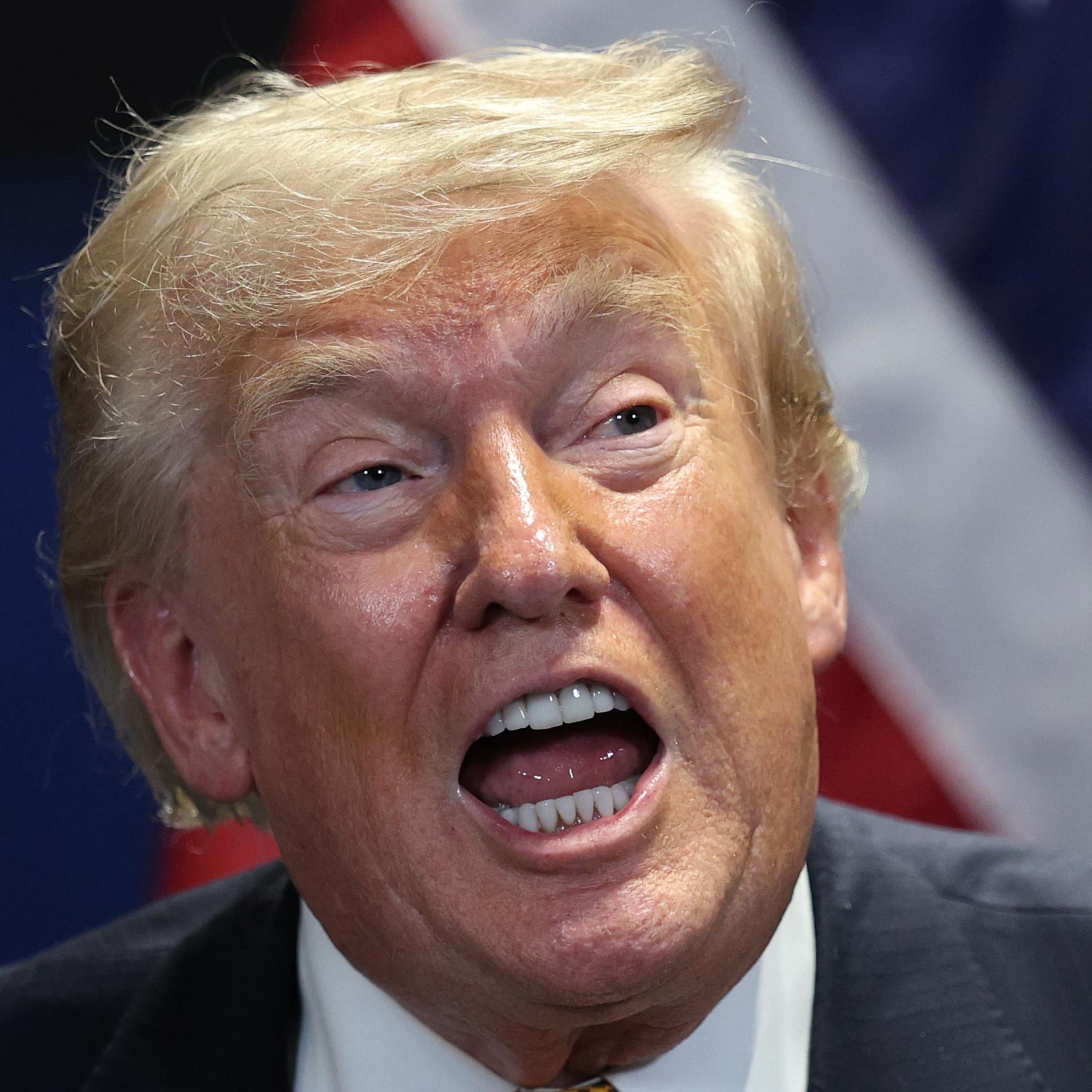
Today in Focus
Trump on rampage at Nato summit: what does it mean for Ukraine? – The Latest
00:10:36
Donald Trump is in combative mood as Nato leaders meet for a two-day summit in Ankara. There are divisions over Russia’s war in Ukraine, defence spending, and the US-Israel war in Iran with signs of the fragile ceasefire collapsing. Lucy Hough speaks to the Guardian’s central and eastern Europe correspondent Shaun Walker
Loading summary
Transcript24 lines
- [00:00]
Guardian Advertiser
This is the guardian. Summer smells like summer road trips, ocean breezes and long evenings under the stars. It's a feeling you want to hold onto. Restore your sense of place with Pura's new summer fragrance collection. We've captured the magic of the season in clean premium scents that transform your home into your favorite destination. Discover the art of scentscaping and bring the summer in. Visit pura.com to explore the collection.
- [00:42]
Sean Walker
Trump is still really crucial to this idea of how do you end the war? Is there a way to put pressure on Putin?
- [00:49]
Unidentified Commentator
We've settled a lot of wars and this one is the one that I thought maybe would be the easiest. But Putin's a difficult character and this guy's a difficult character.
- [01:00]
Sean Walker
There's a kind of strange paradox in the way Trump looks at allies. That kind of tension is perhaps going to come out more and more if Trump continues with this quite rogue foreign
- [01:12]
Lucy Hoff
policy from the Guardians today in focus. This is the latest with me, Lucy Hoff. A two day summit began yesterday in Ankara in Turkey, the main event happening today with a big focus on Ukraine. Sean Walker, you are our Central and East Europe correspondent. You're based in Warsaw. You've just returned from Ukraine. I wonder if we can start there before we look at the summit itself and why the stakes are so high. I mean, there's some reporting in our paper that things are the worst they've been in some time.
- [01:49]
Sean Walker
Well, I think certainly for residents of Kyiv, the capital of Ukraine, things are the worst that they've been for a while in terms of those incoming long range missile and drone strikes that we see from Russia. There was a long time in the war where Ukraine know obviously everything was going on at the front. But if you lived in the center of Kyiv, you'd more or less feel that Ukrainian air defence would take care of you. As Ukraine's getting shorter and shorter on air defence, that equation has changed. Russia is kind of really, really pushing because the front lines are kind of more or less static. So the war has taken to the skies. Ukraine is sending its long range drones towards Russia and, and Russia is smashing up Ukrainian cities. So it was really quite brutal in Kyiv last week. Thousands of people in the metro, lots of people who haven't been concerned up to now, very, really quite concerned in the capital.
- [02:48]
Lucy Hoff
You've also written about how crucial drone warfare has become in terms of some successes from the Ukrainian side against Russia. And that is something that Volodymyr Zelensky, the Ukrainian president, is really pushing for as he attends the this two Day summit in Ankara, isn't it?
- [03:05]
Sean Walker
Well, yeah, that's right. I mean, Ukraine has achieved some really remarkable attacks on Russia, particularly on the oil infrastructure. I mean, just this week, Ukrainian drones hit a refinery in Omsk, which is. Yeah, that's further away from Kyiv than London is. It's way, way, way into Russia. So that's kind of causing a bit of disquiet in Russia, causing, you know, stress and anger over lack of petrol. And I think the hope in Kyiv is that by really putting that economic pressure on Russia and bringing the war to Russia, that it kind of pushes Moscow into getting serious about talks, which we haven't really seen yet.
- [03:48]
Lucy Hoff
Yeah. And obviously crucial to all of this is the ever unreliable Donald Trump, who landed in Ankara yesterday with a vast delegation of 1400 people. I was quite interested in the detail that some of that number are there to collect his toilet waste and take it off site so it can't be analyzed for intelligence on the state of his health, which is protocol that I didn't know about, and definitely a job that I do not ever want to have. How would you describe the state of relations between Zelenskyy and Trump at the moment? Because it is an ever fluctuating one. But he will be hoping, won't he, to have support from NATO allies on this drone deal in particular.
- [04:32]
Sean Walker
Yeah, I was also surprised by that detail. And it's something we used to write about with Vladimir Putin. There's a guy who literally carries a suitcase around that kind of follows Putin on his trips. But I thought that was more like a paranoid Kremlin situation rather than generally a part of, like, world leaders Retinue.
- [04:49]
Lucy Hoff
Crikey.
- [04:50]
Unidentified Commentator
Yeah.
- [04:50]
Sean Walker
I think on Trump, I mean, it's really interesting because in many ways, Kyiv is actually less dependent on the US than it has been at any time in the war. Obviously, the US doesn't send military aid anymore. Europe has stepped up with, you know, Viktor Orban's been kicked out of office in Hungary. Europe stepped up with a huge financial aid for Kyiv. So in some ways, that gives the Ukrainians a little bit more leeway. They're developing their own drones and so on. But, of course, Trump is still really crucial to this idea of how do you end the war and is there a way to put pressure on Putin? You know, Ukraine had a really grim winter last year. They really don't want to be fighting for another winter, if there is any way not to. And so I think that kind of trying to get Trump back in the. In the frame of mind. That, you know, you can't just end this war by ordering Ukraine to give up Donbass. You have to put some pressure on both sides. And I think that's where certainly Western leaders and Zelenskyy will want to see if there's any change in Trump or if we're just sort of back to, you know, I've had a great call with Putin, and, like, Zelenskyy shouldn't have got into this war, which is what we've heard from him in the past.
- [06:04]
Lucy Hoff
But it's really interesting what you were just saying there about Europe and sort of how the dynamics of this NATO summit are different to previous ones in that given that Orban has left power and the European Union was able to agree that whopping 90 billion loan to Ukraine, that has sort of transformed much of its efforts on the battlefield. Europe is pretty solid, united and resolute, and Trump is arriving in the face of that unity. The dynamics are really different to previous NATO summits. Would you agree?
- [06:39]
Sean Walker
Yeah. I think what we've been seeing since Trump comes back 18 months ago is these sort of two tracks, two schools of thought. One is, we have to be. The Americans have so much we can't do without them. We have to be as nice as possible to Trump, because even if we get a little bit from Trump, that's better than breaking this alliance. And, you know, you still see that with Mark Rutter, with the Secretary General of NATO, the way he's really been sort of almost sucking up to Trump. There was one. One diplomat who said to me, you know, it's cringe, but we don't mind as long as it delivers Trump. But obviously, there is this question of does it deliver Trump or is, you know, does Trump just sort of pocket the compliments and. And carry on on his own Trumpian way, which seems to be mostly the dynamics. So I think there's this kind of second school of thought, which is that, you know, okay, we shouldn't try to blow this up like we should. We should try and calm things down where possible. But we have to assume that the US Under Trump, and maybe under whoever follows Trump, is no longer the big strategic ally, the big partner. And we have to try and get ready for some kind of reality where maybe once there's a ceasefire in Ukraine, Putin launches an attack on NATO and the US Isn't there. And I think more and more people are talking about that, but still quite scared of it. And it's still a process because, you know, just to reiterate, I mean, the US Military side in NATO, not to mention the intelligence gathering and so on. I mean, it is irreplaceable in the short term, and a lot of people are cognizant of that.
- [08:15]
Lucy Hoff
Yeah. And of course, it's something that Donald Trump himself has talked about for many, many years about wanting in his time in office, about wanting other NATO allies to increase their defense spend. It does sound like he's arrived in anchor in a bit of a grump about that. He has been talking about Greenland again, which is something we haven't spoken about for a long time, saying he still wants to get his hands on it. He's talked about cutting trade with Spain, who he says are hopeless, bad people. The UK And Italy are also in the doghouse. So is that about defense spending again, or about this sort of general bad vibes given that Europe did not step up to support him in his war with Iran and have got this increasingly hard line on Ukraine?
- [09:01]
Sean Walker
Yeah, I mean, the Iran situation clearly has irritated Trump a lot. I mean, again, perhaps surprising for some allies. You saw Mark Rutter today really kind of supporting Trump on Iran, saying it was, you know, it was essentially a great thing to launch that, that military action. I mean, to me, it feels like the kind of heart of this is, this is kind of strange paradox in the way Trump looks at allies because on the one hand, they're saying, look, we're not the, we're not the global hegemon anymore that's going to come in and sort things out for you. You have to pay your own way. You have to be more independent. But at the same time, when the US Acts unilaterally on something like Iran without even consulting its allies, and Europe says, well, actually, you know, we don't like this. We're not going to facilitate this. They get very offended and upset. So I think that that kind of tension is, is perhaps going to come out more and more if Trump continues with, with sort of this quite rogue foreign policy.
- [10:01]
Lucy Hoff
Yeah. Well, it sounds like it's going to be a testy second day of this summit. Sean, thank you so much for your time.
- [10:06]
Sean Walker
Thanks for having me.
- [10:09]
Lucy Hoff
That's it for today. My huge thanks again to Sean Walker, the Guardian central and Eastern Europe correspondent. You can keep up with his brilliant reporting over@theguardian.com as well as live coverage of the NATO summit. Thanks for listening to this episode of the Latest Today in Focus. We'll be back in your feed tomorrow morning as usual. The latest will be back tomorrow night. This episode was presented by me, Lucy Hoff. It was produced by Sam Grouet and Leo Schick. The senior producer was Ryan Ramgovin.
- [10:41]
Max Rushton
England are still in the USA and so are we. Join me, Max Rushton and a host of football experts as we overanalyze every game every day at the World cup, including England's forthcoming quarterfinal against Norway. It's Haaland versus Gay. It's Herring versus Cod. It's Vikings versus Agonizing tragic failure. The Guardians World Cup Daily Available wherever
- [10:58]
Guardian Advertiser
you get your podcast, this is the Guardian.
- [11:09]
Aviva Advertiser
If you're listening to this, you're ready. Ready to join the Industrial Intelligence generation. A generation defined not by age, but by a shared mindset to connect teams, accelerate efficiency and drive innovation. Using the power of Aviva software to reshape industries, turning real time insights into real world growth. Discover our stories@industrialintelligence.com join Generation I.
- [11:40]
Guardian Advertiser
Summer smells like citrus in the sun. Turn your home into a daily getaway with Pura's new summer collection. Find your flow and fragrance and explore the scents@pura.com.