← Today in Focus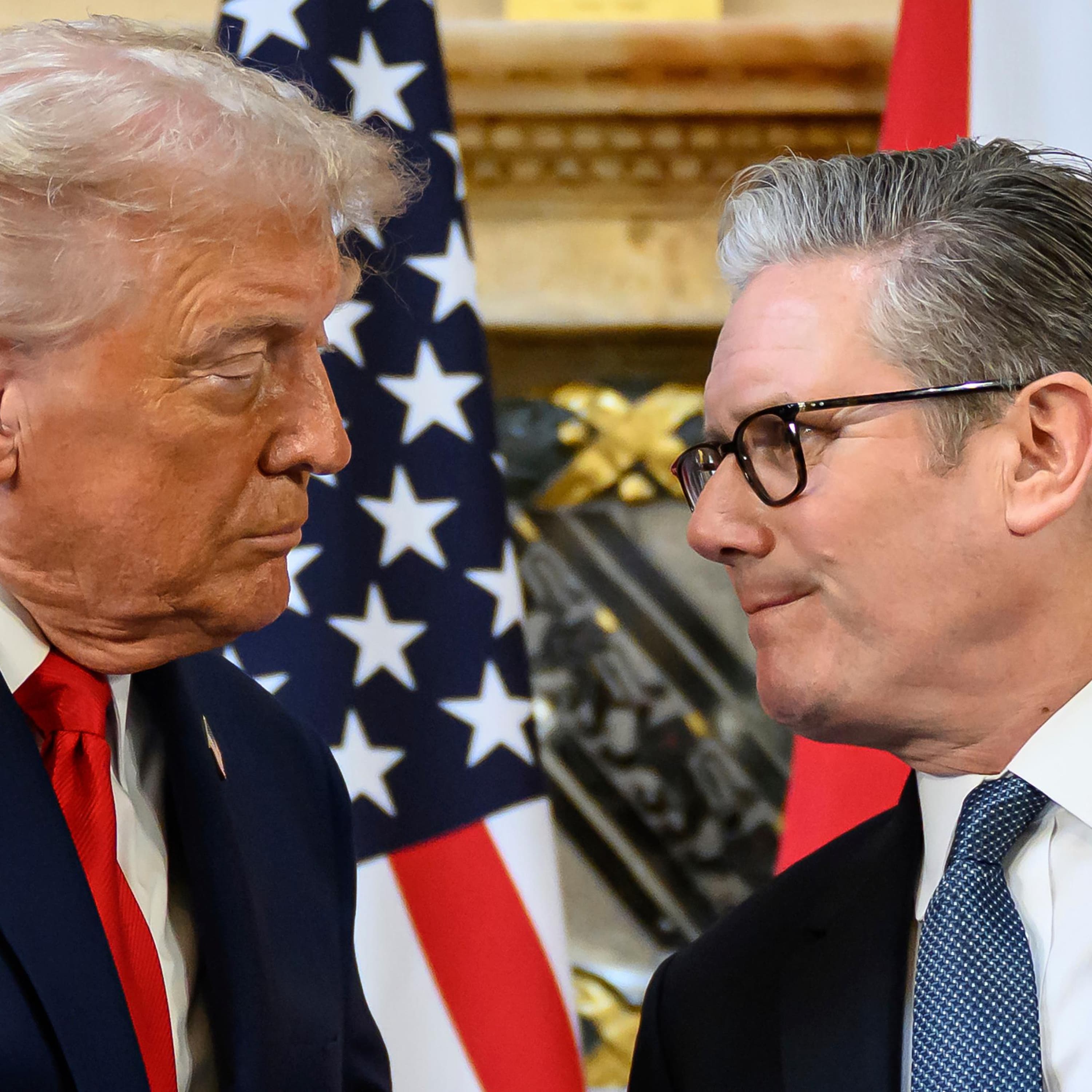
Today in Focus
Can the special relationship survive Trump’s attacks on Starmer? – The Latest
00:11:06
Kemi Badenoch has described Donald Trump’s criticism of Keir Starmer as ‘childish’ and said it ‘sends the wrong signal to our opponents in Iran or in Russia’. Lucy Hough speaks to our senior political correspondent Peter Walker
Loading summary
Transcript22 lines
- [00:00]
A
This is the Guardian.
- [00:12]
B
The words coming from the White House are completely wrong.
- [00:15]
A
I think it's actually quite childish, to be honest.
- [00:17]
B
I think the bulk of the country would probably agree with her, and there's an argument that's maybe why she felt she had to do it, because all the polling shows that amongst UK voters, President Trump has never been popular. And as the months go on, he gets less and less popular.
- [00:29]
A
The leader of the Opposition has issued rare support for the Prime Minister by calling out Donald Trump's repeated personal attacks on Keir Starmer and distancing herself from Trump's war in Iran. So is the special relationship damaged beyond repair? From the Guardians today in Focus, this is the latest. With me, Lucy Hoff. I'm joined by Peter Walker, the Guardian senior political correspondent. Thanks for dialing in from Westminster, Peter, hello. So it's been quite interesting hearing these comments from Camille Badenoch, hasn't it? Effectively supporting Kieran Starmer in the way he's having to defend himself against very personal attacks from the U.S. president Trump, which is, you know, rare, shall we say, from the. From the Leader of the Opposition.
- [01:16]
B
I mean, it's, it's interesting. And she did say that she's the Prime Minister's biggest critic, which is probably fair to say as well. I mean, actually, there's probably. There's probably bigger ones in the Labour Party, but that's a different thing. And it's interesting because she's still differentiating herself from the government position on Iran and the Middle east very slightly. But she decided to basically filmed this social media clip to say that she thought that President Trump was being slightly childish about these endless attacks on the pm. And to be honest, I think the bulk of the country would probably agree with her. And there's an argument that's maybe why she felt she had to do it, because, you know, all the polling shows that amongst UK voters, President Trump has never been popular, and as the months go on, he gets less and less popular. So number 10 have almost realized that being attacked by President Trump, while in many ways is not good. And Keir Starmer has very much tried to keep this relationship as steady as he can. But if you have to be attacked by him in terms of voters impressions of you, it's not always a bad thing.
- [02:14]
A
But there's not just opposition in the polling to President Trump, but also very much opposed to the war in Iran itself as well. So you sense that Kemi Badenoch has seen the way that the wind is moving on that. But of course, for her, as was raised in Prime Minister's questions last week and again today. Her initial response to the war was to say that Britain should absolutely support the US and Israel in getting involved. She's quite quickly had to u turn on that position, which Kirstama has been able to attack her two weeks in a row in the Commons over that U turn.
- [02:49]
B
Yes, she u turned last week, though if you speak to her spokespeople, they will vehemently deny the idea it was any kind of a kind of U turn. We had this slightly strange briefing one week ago where her spokesman was basically saying, well, no, no, we never said we should join the war, but we are in the war and we all kind of go, what? So their position is, well, I mean, when the US Israel attack first took place on February 28, Kerry Badenot was quickly out of the blocks. She was on social media saying, you know, this is basically a just cause, this is a good thing. Iran, something needs to be done. And she basically said that the UK should have been involved, at least to the extent of having UK bases or UK controlled bases being open for US aircrews to carry out the initial attack, which was not the view view of, you know, what the government did. The government was happy to let that happen when it was defending the wider Middle east again. Much as with Trump, as time has gone on, the more the polls show that the British public seem to think that this war is a war without a plan, without an end game, and where the economic and political and potentially military consequences could be very hard to predict, very hard to unravel, and also could have a very real impact on people's lives here. You know, we're geographically some distance away, but people are already noticing if they have a car, if they have a petrol car, that it's going to cost more to fill up. And being on the side of saying, no, this is great, go for it, is increasingly a slightly untenable position to be in. And Nigel Farage, the reform UK leader, has noticed that too.
- [04:18]
A
Yeah, he certainly has. And again, someone that was vocal in his support for the US Israeli action at the beginning, but has rode back in the weeks since. On Tuesday, President Trump hit out at Kirstama again. He said he hasn't been supportive. I think it's a big mistake, unfortunately, Keir Starmer is no Winston Churchill. Trump said of the UK stance that it indicated a lack of gratitude given US efforts on trade with Britain. Is there a world in which this all looks pretty good? For Keir Starmer, who is obviously facing near record unpopularity with the British public, but does seem to have made the right call on the level that the UK is willing to get involved in this conflict.
- [05:02]
B
I think the general consensus, I mean, the polling amongst voters is slightly unclear, but the consensus amongst his peers amongst the Labour Party is that as the months have gone on, he's trod a quite delicate path and done it quite well. So there's this whole period when he was very much trying to butter Trump up. So his first White House visit was the one where he brandished the letter from King Charles inviting Trump for this second state visit. And as time's gone on. So, for example, there was that very resonant Image at the G7 summit in Canada last year where Trump and Keir Starmer were doing a kind of press briefing and Trump dropped his papers and Keir Starmers bent down. He actually said privately to Alfred. So that was basically because he didn't want any journalists. Journalists to go forward and get kind of tackled or shocked by the. By the US side. But the interesting thing is that we always had the Liberal Democrats who were the only people who were almost the kind of little boy at the parade saying, you know, the emperor's got no clothes. They were the only ones who basically saying, this president is not like other presidents, he can't be trusted. It's like, you know, a Christmas dinner and your slightly drunk uncle has been gradually making increasingly kind of off color and racist comments. Everyone's trying to pretend it's not being said and someone said, you know, uncle George, this is wrong. And then no one can pretend the silence has been broken, the kind of dam has burst a little bit. You know, it's within the paradigm of you have to accept that relations between the US and UK are very close. When you have Trump in power, it's difficult, but it's a bigger picture.
- [06:27]
A
Yeah. And a sense that the sort of bromance at the start of Trump's second presidency may be fracturing and not least the special relationship at large. And it's something that Keir Starmer was really credited for at the start of that relationship, wasn't he? But there are other issues at play here, aren't there? King Charles is due to visit Washington next month as part of these sort of diplomatic efforts to keep the special relationship alive. But there are questions about whether that visit should go ahead in the, in the circumstances. And these very targeted attacks against the UK government and Britain more broadly.
- [07:03]
B
I mean, it's an interesting one. The personal relationship between Stump and Trump was always A slightly odd one, because they're incredibly different people. And you had Trump, you know, saying he thought Starmer was great. You know, I don't agree with his politics, but he's a lovely guy. He's praised his accent once, which I think puzzled quite a few people in Britain. And it was interesting that a couple of times, you know, I've been groups where private, we've spoken to Starmer at summits and said, basically, why does Trump like you so much? And he kind of goes, you know, I actually don't know.
- [07:32]
A
Yeah.
- [07:32]
B
But it seemed to work for him. So the fact that that has broken down, I don't necessarily think will be a massive worry, because Trump, you know, basically his comments change day by day or hour by hour. He might say lovely things about you, but you still won't get a better deal on tariffs, necessarily. But in terms of King Charles's visit, I'd be incredibly surprised if it didn't take place. Partly because number 10 never, ever likes to get involved in royal stuff. And also, to be completely honest, the tolerance of, you know, kings and princes of the British royal family, for, you know, slightly dodgy people, their tolerance is pretty great. They've had to shake hands and schmooze with a lot of slightly unsavoury people. So King Charles is a pro. I'm sure he'll cope. And it would be seen as a massive snub. It was called off. I don't think anyone in number 10 wants that.
- [08:19]
A
But it's not just about this special relationship, is it? It's also about the UK's strident support for Ukraine and trying to keep the US onside in as much as is reasonably possible under the current administration in terms of military support. And that is why Starmer is having to butter up to Trump so much. Had Volodymyr Zelensky in London yesterday, who was concerned that the war in the Middle east, the war in Iran will distract from Ukraine. And that's why this really matters to Starmer, doesn't it? And actually, probably to the leader of the opposition, Kemi Badenok as well.
- [08:55]
B
Yes, it does. And I think Ukraine is the issue, which kind of more than tariffs, even more than the economic benefit, is the reason why they want to keep Trump onside, because the defence of Ukraine without US support doesn't really work. And the defense of Ukraine is one of the very, very few, almost universal cross party policies within the uk. It's become this kind of secular religion for politics in the uk. You know, Ukraine is who we back and there's obviously very good vested interest for the UK to, to do that. But this is, you know, again, this is to go back. Why? It's very likely that King Charles's visit to the US will be cancelled because you don't want to do anything that would make Trump basically have a tantrum and say, well, sod the lot of you, I'm going to cut off support because this is the one thing that no British politician of any colour wants to gamble with, basically.
- [09:42]
A
Yeah, well, it's very high stakes, isn't it? Peter, thank you so much for your time.
- [09:45]
B
Certainly is. Thank you. Pleasure.
- [09:47]
A
That's it for today. My huge thanks again to Peter Walker, the Guardian's senior political correspondent. You can keep up with his reporting and that of our wider Westminster team over@wuardian.com and do listen to our sister podcast, Science Weekly, which has a brilliant episode on the deadly outbreak of meningitis B in Kent, which is now being treated as a national level incident. Thanks for listening to this episode of the latest, the new evening edition of Today in Focus. Today in Focus will be back with you as usual tomorrow morning. The latest will be back tomorrow night. This episode was presented by me, Lucy Hoff. It was produced by Bryony Moore. The senior producer was Ryan Ramgobin and the lead producer was Zoe Hitch.
- [10:30]
C
Chicago, 2011, a cop is murdered. Police and prosecutors swear they have the trigger man. He swears he didn't do it. How far will each side go to prove their right?
- [10:43]
A
Like it's just one bombshell after another. You know, you're like, what? What?
- [10:48]
C
The story of a PlayStation, a brain eating amoeba and the relentless pursuit of justice. Off duty, out now. Listen wherever you get your podcasts, this is the Guardian.