← Today in Focus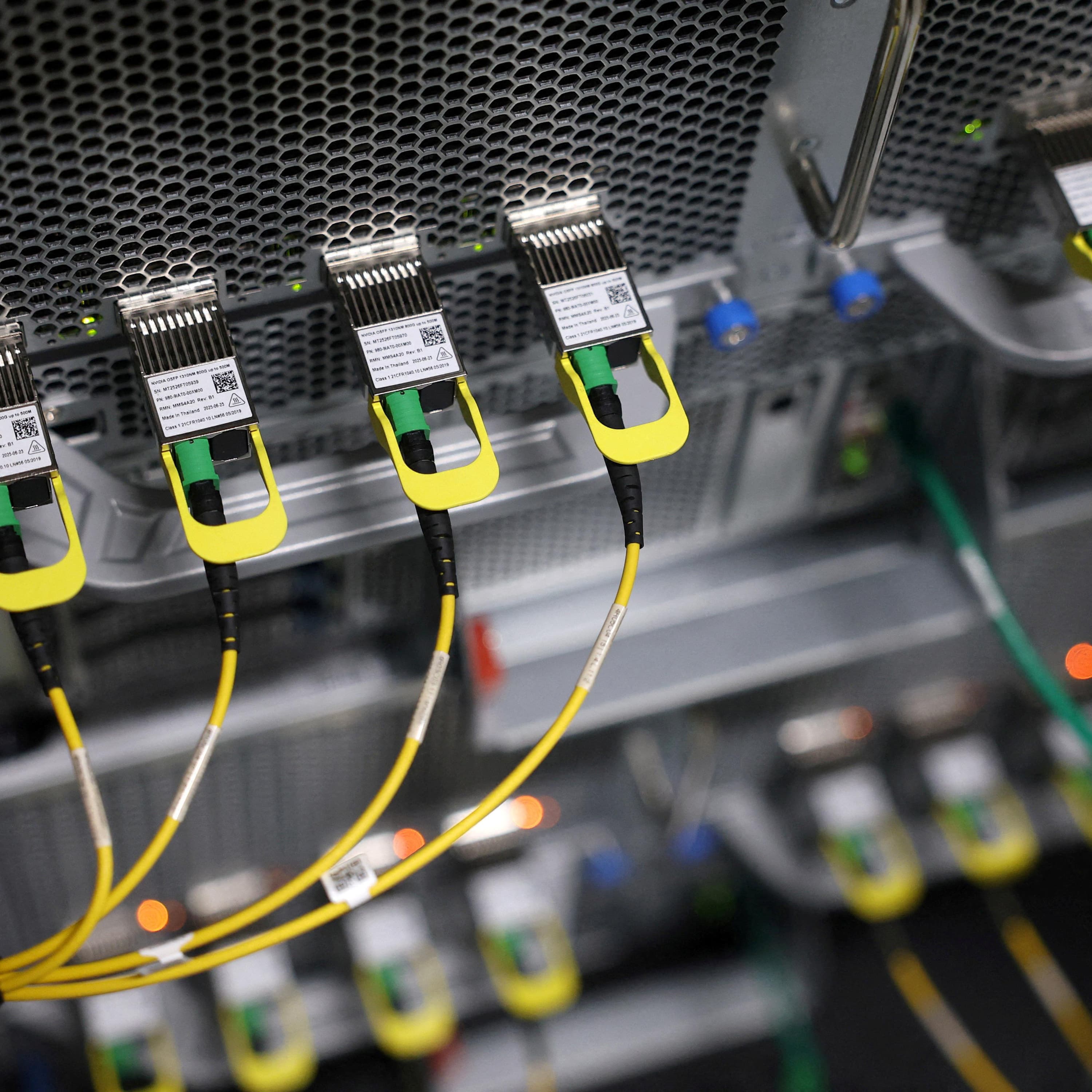
Today in Focus
UK’s big, risky AI bet
00:23:50
Reporter Aisha Down explores the UK’s ‘phantom investments’ in AI, and the risk the government has taken in betting so heavily on the technology if it all goes bust
Loading summary
Transcript48 lines
- [00:00]
A
This is the Guardian. Today, the Prime Minister wants to pump AI into the veins of the economy. What does that really look like? Okay, so phone, keys, wallet, supercomputer, here we come. Good luck. Okay, we are off to Debden. I'm off to this small Essex suburb because my colleague Aisha down has given instructions for finding the future of the UK's economy. A supercomputer.
- [00:48]
B
So the supercomputer is north of an industrial park set next to a district, disused football field and a restaurant, surrounded by sort of a thick hedge.
- [00:58]
A
It's meant to be one of the biggest in the world and it's meant to be ready by the end of the year. This is a Central Line train to Epping. One bus, a train and a tube ride later, I've arrived at where this multi billion pound economic miracle is supposed to be. This is status. I head to the high street to ask locals if they know where the supercomputer is or what it is. Have you heard anything about it? No, I'm sorry, I don't know. I barely know how to work a computer. Yeah, I didn't even know it was a thing. I'm here to find the supercomputer. Have you heard of it? Yeah, me. I am here. But it isn't going well. I do get the odd lead. A lot of people go in this caf, and they're all local people that go in there. Sorry. I've been sent to find Debden's supercomputer. Have you heard of it?
- [01:56]
B
No.
- [01:57]
A
Okay, I'm starting to give up. But then someone who knows. Almost.
- [02:05]
C
Right, so if I'm to actually guess a location for it. As you follow that main road down there, that sounds like the sort of location where it'd be.
- [02:14]
A
I follow that main road, go over a bridge, through a shady alley, but then I think I'm here. Right, so this is it. We are at Debden's AI super future. And what I can see is a scaffolding yard. From the Guardian, I'm Noshi Nikbal. Today in focus, the curious case of the UK's missing supercomputer. Aisha down. You're a reporter investigating AI, artificial intelligence for the Guardian. And you revealed something that some of us might have had an instinctive hunch for, but, you know, no proper evidence to back it up, necessarily. And that is that all the money, billions of pounds of it, being invested in AI in the UK and promoted by successive Tory and Labour governments. It just doesn't add up. Aisha, can you explain where this story begins for you.
- [03:20]
B
Last year saw this massive global hype around AI with sort of eye popping investments, hundreds of billions of dollars devoted to the idea that AI was going to radically transform the economy. It's going to the eyes of some turbocharge growth that make jobs, whatever it is, is going to remake the current moment. And most of these numbers have gone unaudited. And in the early months of this year and late last, we began to see that many of them weren't as they were described. Some background here. The UK has been interested in AI for quite some time and in fact, I mean has made a lot of really significant contributions to it. Geoffrey Hinton, often described as the godfather of AI is British. You know, the UK had an AI Safety Institute before the US did. Rishi Sunak sort of, I think put together the first international summit on AI safety in Bletchley Park. And kind of starting around then, you see the government sort of getting really into this idea of the UK being a potential AI superpower. And then press release after press release started coming out under sunac, but then under the Starmer government where AI became more than just a new technology, it became kind of a way to save the economy.
- [04:36]
A
What was the Prime Minister saying? What were politicians laying out as the plan for this?
- [04:41]
B
We're going to mainline AI into the veins of the uk.
- [04:45]
A
That's it.
- [04:46]
B
Create jobs. AI could be used for healthcare, AI could be used for defense, AI could be used for quantum computing. It's just sort of AI is magic, right? AI is this secret ingredient.
- [04:57]
C
AI isn't something sort of of the future over the next hill. It's the present. It's already here in Britain, changing lives. A chance to turbocharge growth, create the companies of the future and radically improve our public services.
- [05:16]
A
What kind of deals could you see were reportedly being done and what was the promise of those investments?
- [05:25]
B
It's really hard to tell in a lot of cases. So there's a lot of these press releases with huge numbers. One last September that described a £31 billion, £22 billion of that was from Microsoft. Another on that same day described £10 billion from Blackstone. When you read down into the press releases, it would say the £10 billion is a commitment to an AI growth zone, for example. Well, a commitment to what? Who's going to is are you paying £10 billion for construction? I mean, what, what is that commitment? It's not said. With the Microsoft £22 billion, which is one of the bigger ones. We later found out that it, it wasn't really an investment. They were going to lease compute capacity from another tech company which, you know, as far as most people understand, it isn't, isn't an investment. That's just business. Right. That's a transaction.
- [06:22]
A
Yeah.
- [06:22]
B
However, having said this, a lot of these press releases were so vague that it was really hard to say what solidly is, you know, what is an AI growth zone. Where does this money go? Our investigation focused in, you know, amidst these dozens of kind of deals that were named and described in really vague terms, we were able to kind of winnow out key things that were supposed to happen. These key things include a large project called Stargate uk. They were certain data center investments, a massive growth zone in Lanarkshire, and this supercomputer which is supposed to have been built by this year.
- [06:59]
A
Quite intrigued by this detail of a supercomputer. So Aisha, could you actually explain what is one, what do they do?
- [07:08]
B
So early 2025, the government named a little known company Nscale and said that company was going to build a supercomputer. Now, a supercomputer is a data center, but they were branding it and sort of the media reports at the time, you know, which had glowing blue robot faces obviously, and women standing in front of like a futuristic array of terminals, said it would be, you know, the fastest supercomputer in the uk, one of the largest in the world. They were excited about it.
- [07:42]
A
But a year into this exciting project, what did your investigation find?
- [07:48]
B
Focusing in on a few key deals, we found that the money wasn't really money in the sense that we'd understand money. The jobs were unaccounted for, the jobs that were supposed to be created. And supercomputer, when we visited it, still a scaffolding yard. And things were just not what they'd been said to be. Now at the time, the company that was to build the supercomputer is a spinoff from a bitcoin mining startup. It still has not built a data center. Now they'll say that they're in the middle of building one now. That was several years ago. They haven't built one. They are, you know, part of this coterie of companies that are taking advantage of a lot of money being poured into AI and a lot of opportunity being there.
- [08:38]
A
As you know, I went to the site and it really is just a scaffolding yard at the moment with builders sort of coming in and out. So it's not totally clear where the money is. Aisha, what's going on here, what are these investments from tech companies actually made up of?
- [08:56]
B
So these big cash investments, these big promises, these that are supposed to be key to the future, are phantom investments. In a number of these deals, what was framed as capital was framed as money, is actually Nvidia chips, computer chips. And it's computer chips, like sort of hardware designed by a US company, manufactured in Taiwan, relocated to the uk. So when the government says this sum was invested in the uk, what they mean is that, you know, we've been promised like this amount of Nvidia chips.
- [09:30]
A
It's not actually money, it's chips.
- [09:33]
B
Other investments were sort of hinging on this supercomputer. So Microsoft had described a 30 billion investment into the UK, 15 of which was supposed to be the supercomputer. We actually found out that that wasn't, you know, a commitment to build the site. That wasn't a commitment to create jobs, that wasn't a commitment to, you know, buy equipment or land or anything of the sort. It was a commitment to become a customer of N scale when the site is complete. And so, you know, this investment, then this supercomputer represents 17.5 billion of the money that the UK government has described as going into the AI sector. And what it is, is in fact a delayed project with a loose commitment from a large company to rent some of the capacity of that project. It's hard to see how that's an investment in the uk.
- [10:33]
A
Let's get back to these chips, the GPUs, which are at the heart of this story, made by Nvidia. We've talked about both on Today In Focus before, but, Aisha, can you tell me about Nvidia's place in this story?
- [10:47]
B
Nvidia basically made the chips necessary to power AI. And so last year was like a huge year for the company. That was the year when, like Jensen Huang, the CEO of Nvidia, goes on a world tour, basically saying, we are in an AI arms race. If you want to be ahead in AI dominance, you need Nvidia chips. You need this infrastructure that only we can make.
- [11:08]
C
One of the things that has happened is the awakening of every single country, every single society, the awakening that they have to control their own digital intelligence. And so every single country from, from India, Canada's doing this, the uk, France, the list goes on. Just about every single country now realize that they have to invest in their own sovereign AI.
- [11:29]
B
The idea is UK needs to have its own AI infrastructure. NHS data needs to be stored on, you know, data centers in the uk. And so the UK bought into that. Now why is that a problem? There's a couple reasons. Number one, chips go out of date. A really important feature of the AI bubble is that this is also new as a technology, that no one actually knows what that depreciation timeline is. Michael Burry, who you might know from the big short, has just made the argument that tech companies are saying their chips depreciate on a three to five year timeline, even a five to eight year timeline, a longer timeline. Whereas he believes and others have argued that they depreciate on a far shorter typeline.
- [12:21]
A
It's just bonkers. And this matters. The lifespan of a chip, the GPU being limited, because if the supercomputer isn't built on time, that's not just a construction delay, it makes those chips redundant, so they're just not worth very much. But Aisha, is there an argument that once it does come online, it'll be working and we can always upgrade to the newer Nvidia chips and that they can be then installed into this data center? Is that not how it works?
- [12:50]
B
Definitely not. Nvidia is coming out with new models of chips every year. Now what I understand is that it won't necessarily work in the same way for the newer model, but the. But there's another dimension to this which is that there's a very big market out there right now for GPU backed debt. And N scale, which is building this supercomputer has taken out 1.4 billion in loans on its GPUs. And so this is the secondary financial concern here.
- [13:18]
A
Wait, hang on, you're going to have to break that down to me. So companies are buying the debt of owning out of date GPUs because there are going to be regular payments made at least. So it's kind of a source of income for the ones who are willing to take on the debt.
- [13:35]
B
They're treating it like a house.
- [13:36]
A
We've been here before. Yeah, subprime mortgage is right.
- [13:40]
B
So this is taking out loans against GPUs and it's not. There's actually, we've talked to analysts, there's a large market for GPU backed debt out there. But N Scale, which again is going to build this supercomputer has taken out loans against its GPUs. So if the chips are leveraged and the loan can't be paid back, then what happens to the chips? Well, presumably they get taken by a financial institution and sold on a secondary market. But that's where we get into what Are they going to be worth. The same? Companies that we've looked at are now on the line for future projects of kind of even more indeterminate status. So coreweave, if we back up, you know, they were the company that said, we're going to deliver two new data centers and in fact relocated some chips to existing data centers. They are now set to build a key AI site in Lanarkshire, which is supposed to deliver a sort of unthinkable amount of power, a gigawatt, you know, the size of a nuclear reactor and massive AI capacity. While that project is far kind of earlier along than the supercomputer, so it's harder to evaluate, the amount of capacity that is currently either there or exists in planning applications is about 3%, what they say will eventually be there within the next four years. There are no plans in the works to build a gigawatt like a nuclear reactor or an offshore wind farm in association with this project. It is unclear how that amount of electricity, like, where it'll come from. It does take longer than four years, usually to build a nuclear reactor from start to finish in the UK and get permission for it.
- [15:35]
A
Okay, so for everyone listening, whose brains might have exploded at this point, my own included? Aisha, could you define for me how the UK government is dealing with this problem?
- [15:48]
B
I think that was the most shocking part of our reporting. In order for these large sums that represent sovereign investments to work, they're going to need the help of government. Whether that means giving them a privileged place in the queue to get a grid connection, whether that means expedizing planning procedures. It will be a major undertaking to make any of these AI investments happen. And it will probably require these AI investments to get prioritized over other things like hospitals or real estate projects. And yet, when we asked them, what is this money, does that mean that you're paying that money into the UK economy? The government said it didn't really have a way to audit that.
- [16:35]
A
Actually. These are huge companies in a famously secretive sector. And of course, the UK government is also involved. How big a task was it for you to actually try to understand what was really going on?
- [16:47]
B
It was a massive undertaking. And I think also because of the amount of hype and how few voices there are right now that kind of don't believe the hype. And so it's when you sort of start to question the reality of these deals, which exist within a very arcane and complicated ecosystem of venture capital and skyrocketing valuations and technology that is essentially, it's extremely unfamiliar. It's very hard to know how to call it and to say, oh, actually, we just genuinely don't think that this deal is plausible or going to work. Because that was the sort of first point as a reporter where I thought, maybe it's not us, maybe the problem isn't that we don't understand this. Maybe the problem is that these deals aren't really what they're cracked up to be, what we think they are.
- [17:48]
A
So, Aisha, obviously you've gone to all these companies now that you've reported on and put your questions to them. How have they responded?
- [17:57]
B
So, CoreWeave confirmed that it hadn't actually built new data centers, it had just located kind of new chips into existing data centers. But it said this was an industry standard practice. We asked it for more details on jobs and it said that it wasn't going to give us more details on jobs. I believe it might have said that that was up to the government. Right N scale when we first contacted them, sort of didn't have a lot of facts at their fingertips. We gave them a right of reply and then talked to their spokesperson. One point in our reporting was that land records showed that they hadn't bought the site on which the supercomputer was to be built. They said they bought that site in January 2025 after our investigation was out. And they said, well, we have bought the site. They bought the site in September 2025. So eight months after they said they had.
- [18:54]
A
Right.
- [18:55]
B
Which is a shady. It's uncomfortable, right? I mean, it's not exactly reassuring, supercomputer wise. Other than that, Core, we've said that what they'd done was industry standard. Nscale reaffirmed that they admitted the timeline would slide, but that they were committed and they were going to build the supercomputer as quickly as possible, faster than we say they're going to build it, certainly in a shorter timeline than many AI hyperscale sites, which we usually understand to be 18 to 36 months. So they've said it now will be delivered in 2027. It's hard to see 2027, to be frank,
- [19:34]
A
coming up, is the UK trapped in an AI bull? Ayesha, for some of our more cynical listeners, what would you say to them about why this story matters so much? Because, you know, some people might point out, look, it's a government infrastructure project, those things always overrun. And yes, it's filled with all these big numbers, but these things always are and no one's ever quite sure how it works, and it's quite mystified by it. Nonetheless, it will happen and I'm just going to carry on with my life. Why is this so important? What do you say to that?
- [20:19]
B
The UK is a really good place to look at how this is falling apart, at how hype meets reality. Why is it important? Well, some might say, okay, it'll all get built eventually. AI is still a transformative technology. The technology is still really good. But the numbers that have been committed, you know, represent investments that are important to pension funds, to institutions, to our retirement accounts, to the global economy generally. A lot is now writing on these deals and whether or not they come through. What the UK example shows is that while some might say the projects are behind, our reporting indicates that the projects could simply fall apart. If you're talking about the depreciation timelines for chips, if you're talking about money that's hardware and hardware that's leveraged. No one knows when a crash will happen. No one ever. Very few people ever make money by calling when a bubble will burst. But I think our investigation has shown a pathway to what things could look like and how fragile all of these investments are. A road through which what the government describes now is £100 billion of money becomes a pile of hardware that's not very useful. Well, redundant, almost redundant. That also in a time of global war, when energy prices are doing what they are, when the price of oil is soaring, may be doubly redundant. And so to the people who say, well, it'll happen eventually, a data center is not a highway. It goes out of date. Time counts. We're running out of it. And there is kind of a clear road from like where we are now to considerable economic ruin, even if the technology that we built is still viable.
- [22:15]
A
So if the current oil crisis doesn't get us in the cost of living, the collapse of the AI tech bubble might. My God. Aisha, Cheery, cheery thought. Thank you so much for your time.
- [22:27]
B
Been a pleasure. Thank you.
- [22:31]
A
That was Guardian reporter Aisha down. My thanks to her. Do follow aisha's reporting@w.com she is writing some cracking stories about tech and business right now. We contacted the companies involved in this story for comment. A spokesperson for N Scale said that we take a conservative approach to our financing aligned to long term infrastructure. As a UK headquarters company, we remain committed to the UK investment we announced with the Loudoun project in support of Microsoft progressing as we envisaged. We're investing not only in the site itself, but also in off site power infrastructure, local contractors and local suppliers. Asked about the Lanarkshire site, Coreweave said that questions about its power usage should be directed to datavita, its partner, and that the project remains on schedule, with the first phase expand expected to come online later this year. And that's it for today. This episode was presented by me, Noshi Nikbal. The producers were Hannah Adan and Ned Carter Miles. Sound design is by Tom Glasser. The executive producer was Elizabeth Cassin. We'll be back with the latest this evening and Today in focus. We'll be back with you tomorrow morning. This is the Guardian.