← Today in Focus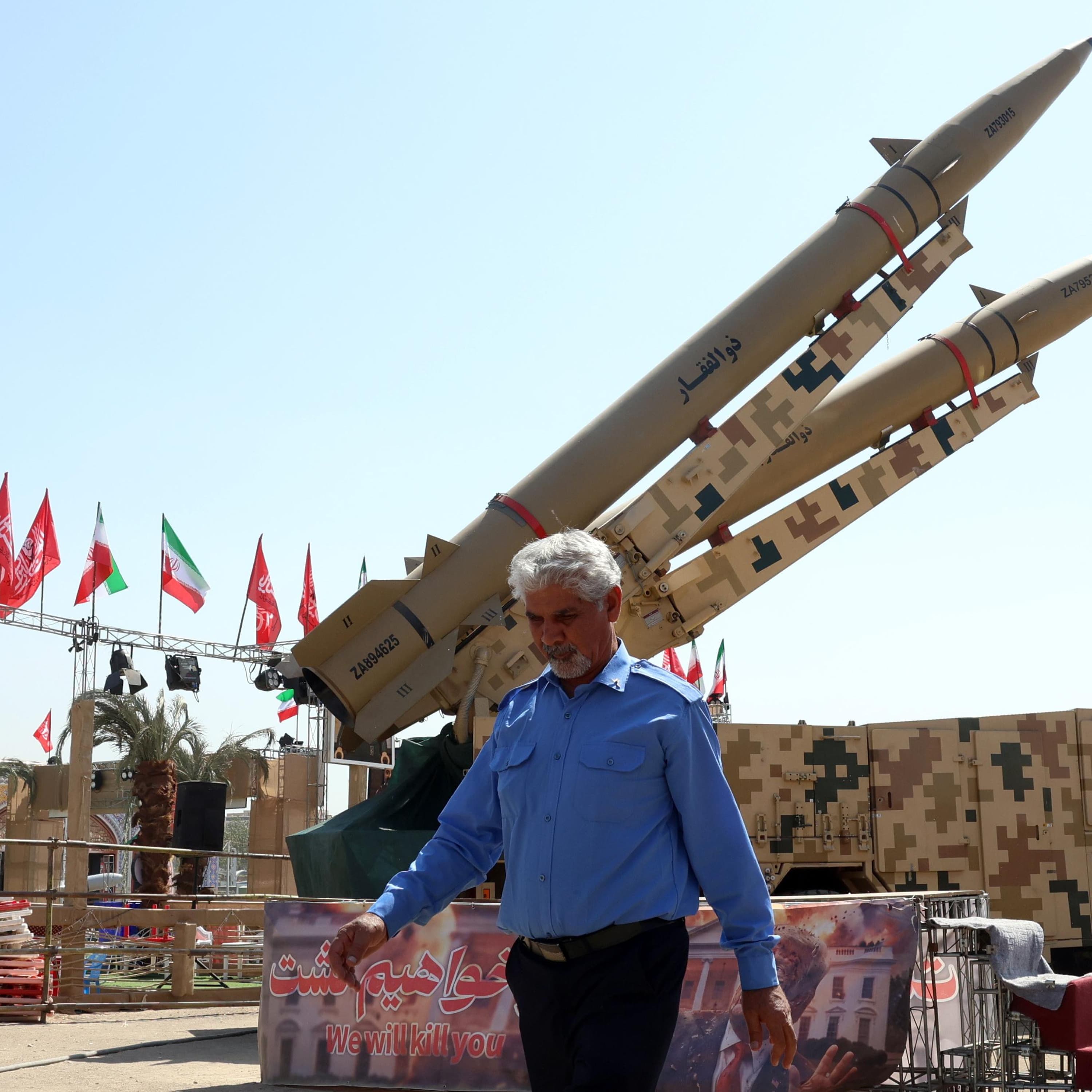
Today in Focus
US-Iran strikes risk regional war in Middle East - The Latest
00:10:55
The US military has carried out a heavy wave of airstrikes against Iran in response to Tehran targeting American bases in Jordan, raising fears of an all-out war. Lucy Hough speaks to Guardian senior international reporter Peter Beaumout
Loading summary
Transcript25 lines
- [00:00]
Podcast Host
This is the Guardian. Today in Focus is supported by Paramount. Plus. This isn't the end of a fight, it's the start of one. Lioness, the critically acclaimed original series from Taylor Sheridan, returns August 2nd only on Paramount. In the new season, hidden networks, foreign operatives and personal betrayals collide. Meanwhile, Jo walks the line between duty and family as unseen forces circle her world, leaving her to reckon with a war that now reaches into every part of her life. Don't miss the new season of Lioness, starring Zoe Saldana and Michael Kelly, with Morgan Freeman and Nicole Kidman. Streaming August 2nd only on Paramount. Plus.
- [01:05]
Peter Beaumont
I don't know that there is a particularly viable strategy. The reality is that his control over this situation is limited. We're going to be hitting them very hard because it's our turn to hit them. They know it's coming. One of the Iranian strategies in this conflict is to hit American interests. They're close by in the Gulf and the Gulf nations are being forced to make sort of very hard decisions. The Saudis in particular are trying to send a message and say, look, we're not an easy meal. We're not a pushover on this from
- [01:34]
Lucy Hoff
the Guardians today in Focus. This is the latest. With me, Lucy Hoff. In the last few weeks there have been strikes and counter strikes between the US And Iran, despite the so called ceasefire agreed at the end of April. Yesterday there was a massive round of strikes from the US in response to Iranian aggression. Peter Beaumont, you're our senior international correspondent, you've been across this. Obviously, what's going on? What's been behind these US strikes in particular in the last 24 hours we've
- [02:08]
Peter Beaumont
had a pause, or there was supposed to be a pause. The Americans, after making very large threats, Trump threatening massive retaliation. There was actually a pause over the weekend in American strikes. And what's happened is that over the last few days, the Iranians have continued both their own strikes and through their proxies. And what's happened is that we've seen strikes on Saudi oil infrastructure. We've seen strikes on Jordanian bases by Iran. In fact, there's been another claims strike just before I came up to do this. And a very frustrated and clearly exasperated Trump has kind of once again gone back to saying, look, this is it. I'm doing it this time in a profanity sort of laced sort of exchange on Fox. He said, I'm gonna beat them up. This is it, you know. But the reality is it's kind of Groundhog Day. I mean, day after day, week after week we hear him making these threats, we see these actions, but it's actually not moving the needle at the moment. And you know, there are real reasons for that.
- [03:16]
Lucy Hoff
Yeah. And there are signs of very different strategies because as you say, we get this sort of aggressive rhetoric of, you know, we're gonna hell and Iran is going to see strikes like it's never seen before. But at the same time Iran is also carrying out its own strikes, but bringing in other nations and striking out elsewhere in the region. What's the strategy there?
- [03:40]
Peter Beaumont
We're seeing two models of escalation. I mean, on the American side the escalation is what's known as vertical escalation, which is where you increase the violence or the military operations in the place that's the focus of, of where you're trying to do things. So bigger explosions, more missiles, the threat of we'll do this, we'll do that, but very much confined to Iran. On the Iranian side, what we're seeing is something called horizontal escalation, which is often used by sort of weaker parties to a war. And what Iran is trying to do at the moment is it's trying to expand the geographical scope of the war. It's trying to make America and its allies defend a bigger territory. It's trying, trying to expand the cost that the United States and you know, the global economy is going to incur from this. And at the moment as a strategy, it feels as though that the Iranian strategy is more successful, although there is a risk of them overreaching because the Strait of Hormuz is effectively closed. The Iranian proxy, the Houthis in Yemen have put an embargo. They're stopping shipping going through the Red Sea and the Bab Al Mandeb. We're seeing strikes in Egypt. We've seen two US Ghana carriers hit in Damietta yesterday. And we're seeing an increasing number of attacks on Saudi refining, including from proxies in Iraq.
- [05:07]
Lucy Hoff
So increasingly this feeling more and more like a regional war. And it's not just Iran that's bringing in allies, not proxy nations, but allies. Saudi Arabia and the US were engaged in strikes on an Iran backed militia in Iraq, killing at least 20. Why would Saudi Arabia decide to become involved at this point?
- [05:33]
Peter Beaumont
There was a big miscalculation I think at the beginning of the war. After the 12 Day War last year, when the US and Israel struck the nuclear sites, there was this assumption that the Iranian response would be against Israel because that's what we saw last time. In fact, there was the period between June 2025, and this war which began in February, there was a massive rethinking by the Iranians about how they would respond to any future war because they thought there would be fight fighting again and soon. One of the Iranian strategies in this conflict is to hit American interests, U.S. bases close by in the Gulf, in Jordan, U.S. economic interests. You know, it's hitting things that are close by in the Gulf. And the Gulf nations are being forced to make sort of very hard decisions. They've always tried to sit on the fence in these kind of, you know, in the conflict and the friction before, but it's got to the stage now where the Saudis in particular, you know, are trying to send a message and say, look, we're not an easy meal. We're not, we're not a pushover on this. And so they've been pushed into reluctantly taking action. And what seems to have been the red line, according to analysts I've spoken to, is the fact that this isn't just some small militia. This is the popular mobilization forces. You know, it's, it's an umbrella of different groups, but it's, it's closely associated with the Iraqi government. It's part of the armed forces. And from, from the Saudi's point of view, this was a step too far. You know, their suspicion that it was kind of malicious and part of this umbrella and it said, no, this must stop.
- [07:14]
Lucy Hoff
Okay?
- [07:14]
Peter Beaumont
And it's part of a, a wider message that Saudi Arabia feels as though it needs to re. Establish some deterrence going forward because they see what everyone else sees. And that is the, you know, a bung is bungling a war in the Gulf. And at the end of the day, you know, if this kind of mismanagement continues, that Iran could emerge much more powerful out of this in the Gulf context.
- [07:43]
Lucy Hoff
Yeah, yeah. And the war would have exactly the opposite, the opposite outcome that Trump intended on that. Benjamin Netanyahu, the Israeli leader, has been in the White House for the first time since the war started in February. Where does Israel stand on all of this as this sort of expands out in the region?
- [08:04]
Peter Beaumont
I mean, Israel seems to have got caught in a bind of its own, having sort of like Netanyahu having pushed and, you know, prodded Trump into this conflict that he's always wanted that turned out not to go the way he thought it was going to go. Seems to have been, at least on the military side, is being excluded. We've had the comments by J.D. vance, sort of very hostile towards Israel on Joe Rogan show. I Mean, the messaging is that Trump really doesn't want the Israelis to get involved. And that is in large part because actually Trump's end, his aim in all this at the moment is to get some kind of a deal. He wants the fighting to stop. He wants the oil price to come down. He wants something that he can present ahead of the midterms as somehow being some kind of a victory. Now, his problem is that the Iranians don't want to give him that at the moment. And they seem to have made a decision. They can withstand any amount of American pressure at the moment and that, you know, they can keep hurting him going forward. And whether that's a correct judgment or not, I mean, time will tell. But I mean, it's been well reported that Trump has been warned that the US Is running out of missile interceptors, that they have really big military problems now in terms of prosecuting this war at a more intense level.
- [09:29]
Lucy Hoff
Yeah, yeah. And with so little international support.
- [09:32]
Peter Beaumont
So little international support and so little to show for it.
- [09:34]
Lucy Hoff
Yeah. So, I mean, where does this all leave Trump? Because he wanted a quick war, a quick victory, he wanted a quick ceasefire, neither of which he got. What is a viable strategy for him moving forward, if there is one?
- [09:51]
Peter Beaumont
I don't, I don't know that there is a particularly viable strategy. I mean, you know, he's, he's perfectly capable of declaring a half cock deal and sort of saying that somehow that they, that he's won. But I mean, the reality is the, his control over this situation is limited. I mean, while there's a threat in the Strait of Hummus, well, this is any kind of threat in the Bible, Manda. But as history has shown us, insurance companies are going to be very, very uncomfortable about insuring gas and oil tankers. There's going to be this continuing issue that until there is some kind of a deal with Iran, there is going to be this continuing threat and we're going to be, I mean, I personally think we're going to be facing now very, very prolonged period of high oil prices unless someone can pull some kind of a rabbit out of the hat. And I can't see what that hat looks like or what that rabbit looks like at the moment.
- [10:47]
Lucy Hoff
Well, perhaps massive losses at the midterms in November.
- [10:51]
Peter Beaumont
Yes, maybe.
- [10:52]
Lucy Hoff
Peter, thank you so much for your time.
- [10:53]
Peter Beaumont
Thank you.
- [10:55]
Lucy Hoff
That's it for today. My huge thanks again to Peter Beaumont, the Guardian senior international correspondent. You can keep up with all his reporting and our live coverage of this story over@theguardian.com and I recommend listening to our sister podcast Stateside with Kyan Carter. Carter Sherman is joined by the Guardian senior international correspondent Julian Borger and Deeper parent and independent journalist who reports on Iran to answer the question, is this a forever war? Thanks for listening to this episode of the latest Today in Focus. We'll be back in your feeds as usual tomorrow morning. The latest will be back tomorrow night. This episode was produced by Angus Neal. The senior producer was Ryan Ramgobin. It was presented by me, Lucy Hoff.
- [11:43]
Podcast Host
This is the guardian
- [11:48]
Lucy Hoff
foreign.
- [11:53]
Jackson Taxes Advertiser
This message comes from Jackson Taxes aren't something you can only think about once a year. With investments, planning for tax day is year round. Fortunately, Jackson offers tax efficient products. Visit Jackson.com for more information on how our products can make your tax bill a little bit less painful. Jackson is short for Jackson Financial Incorporated, Jackson National Life Insurance Co. Lansing, Michigan and Jackson National Life Insurance Co. Of New York Purchase, New York Today's Markets Move fast.
- [12:20]
Barclays Brief Advertiser
Get the insights you need in 10 minutes with the Barclays Brief, a new podcast from Barclays Investment Bank. Through sharp dialogue and scenario based analysis, our leading experts analyze key market themes each week. So whether you're managing a portfolio or leading a business, the Barclays Brief podcast can help you make smarter decisions today. Stay Sharp, Stay Brief Find Barclays Brief wherever you get your podcasts. Summer Smells like summer road trips, ocean breezes and long evenings under the stars, it's a feeling you want to hold onto. Restore your sense of place with Pura's new Summer fragrance Collection. We've captured the magic of the season in clean premium scents that transform your home into your favorite destination. Discover the art of scentscaping and bring the summer in. Visit pur.com to explore the collection.